For a condition as complex as autism, it’s almost certain that both genes and environment play an important role. But teasing apart how much DNA contributes to the developmental condition and how much is due to environmental exposures remains a subject of much debate.
In a study published in JAMA, researchers say they have come up with the most accurate figure to date for the role that genes play in autism. Led by Sven Sandin, an assistant professor of psychiatry at the Icahn School of Medicine at Mount Sinai, the scientists re-analyzed existing data from all children born in Sweden between 1982 and 2006. The team had looked at the same data previously, focusing on pairs of siblings, both of whom were diagnosed with autism. But this time, they applied a different method for tracking the diagnosis.
…
[W]hen Sandin tracked autism diagnoses over time among the sibling pairs, he found that genetics likely accounts for around 83% of the disorder. That compares to nearly 90% reported in previous studies of twins only. Using the new model, environmental factors probably contribute around 17% to the risk of developing autism. “This is why it is important to have different study designs,” says Sandin.
The GLP aggregated and excerpted this blog/article to reflect the diversity of news, opinion, and analysis. Read full, original post: This Is How Much of Autism Is Genetic
[R]esearchers at the European Planetary Science Congress, an annual meeting of that serves as a “dissemination platform” for new space studies, presented a possible solution to the space habitat problem: Humans on Mars and the Moon could build their settlements within the planet’s massive lava tubes.
…
“These results have important implications for habitability and human exploration of the Moon but also for the search for extraterrestrial life on Mars,” says [co-author Riccardo] Pozzobon. “Lava tubes are environments shielded from cosmic radiation and protected from micrometeorites flux, potentially providing safe habitats for future human missions. They are also, potentially, large enough for quite significant human settlements”
…
Lava tubes form when the edges of lava from a volcanic eruption cools and forms a ridge around the flow of lava. When the lava stops flowing the ridge cools, forms a crust, and when drained becomes a tunnel. These tubes become even larger when lava flows into layers of rock and cavities that have been altered by previous eruptions, and networks of connected tunnels can emerge.
…
Lava tube-space cities sound pretty cool. Now scientists have to figure out how to transport and feed the humans that will live there.
Syngenta AG moved closer to putting a troubled biotech corn seed launch behind it with a $1.5 billion settlement with farmers, but grain traders who filed two remaining lawsuits may be less ready to compromise, legal experts said.
The company was sued three years ago by the farmers and traders who said they suffered financial losses over its decision to commercialize a genetically modified (GMO) corn strain known as Agrisure Viptera before China approved it for import.
Its settlement this week with farmers cost it more than half its annual profits and came after it lost a case in Kansas and had to pay $217.7 million in damages to over 7,000 farmers.
Two lawsuits brought by U.S. grain traders Cargill Inc [CARG.UL] and Archer Daniels Midland Co against the seed company, which is now owned by Chinese chemicals firm ChemChina, are still pending.
…
More than 1 million tonnes of shipments of U.S. corn containing traces of Syngenta’s GMO variety corn were rejected by China before it finally approved the strain in December 2014.
The European Commission is exploring ways to bridge the gap between different member state requests regarding the re-authorization of the world’s most commonly used weedkiller, glyphosate, an EU spokesperson told EURACTIV.
On 25 September, France reiterated its opposition to glyphosate, which is used in Monsanto’s Roundup product. Following particular pressure from French farmers who expressed concerns about an immediate ban and the lack of cheap alternatives in the market, Paris said it was open to a five-year phase-out period.
The European Food Safety Authority (EFSA) and European Chemicals Agency (ECHA) have already given it a positive assessment and the European Commission proposed a 10-year re-authorization of the controversial weedkiller, as a compromise.
On the other hand, Copa-Cogeca, which represents EU farmers, has called for a full 15-year re-authorization of the herbicide, which is the normal procedure in such cases.
…
Asked by EURACTIV whether the executive was willing to lower the years of extension in its proposal, an EU spokesperson said, “The Commission is working with member states to find a solution that enjoys the largest possible support, which ensures a high level of protection of human health and the environment – in line with the EU legislation and based on the available scientific data.”
Certain things have a natural order. Breakfast before lunch. Infancy before adolescence. Autumn before winter.
So I was surprised to read a recent t article in Science Translational Medicine about experiments at Duke University treating cancer in human cells and in mice with an engineered poliovirus, when the television news show 60 Minutes had reported on four patients receiving the treatment for brain tumors back in 2015. Doesn’t preclinical work – cells and animal models – come first?
I decided to investigate.
Immunology 101
The idea to redirect an immune response against a pathogen to fight cancer goes back to the late nineteenth century, when Manhattan physician William Coley became intrigued by a man’s neck tumor that melted away after he contracted a nasty Streptococcus skin infection. After he found a few more cases, Dr. Coley began to experiment by rubbing bacteria-oozing goop into skin breaks in a few cancer patients. Every so often, tumors shrank. The approach, ignored for many decades, became known as “Coley’s toxins.”
The immune system attacks other pathogens including viruses, as well as cancer cells and transplanted cells, with two lines of defense—an immediate “innate” response that’s general, and a more specific, slower “adaptive” response.
First, a pathogen encounters “sentinel” (aka “antigen-presenting”) cells, the macrophages and dendritic cells. They’re festooned with proteins, called Toll-like receptors, which bind like Velcro to molecules on broad classes of pathogens. The binding sends out cascades of biochemical signals that launch the innate immune response: cells pour out anti-viral biochemicals (complement, collectins, and interferons) and trigger the adaptive response, causing T cells to secrete more interferons and activate B cells, which produce antibodies. (Bear with me, this is important.)
Astrocyte
Nervous tissue consists of nerve cells (neurons) as well as the much more abundant glia. Immunotherapy against brain cancer targets the glia, specifically the star-shaped astrocytes. Once thought to merely fill spaces and support neurons, a little like the view of housewives in the 1950s, glia are actually a vital part of the signaling that keeps the nervous system going.
Neurons normally don’t divide and so their DNA doesn’t have the opportunity to mutate into cancer. But glia do proliferate. And cancerous glia – gliomas – divide explosively.
Deploying Poliovirus
Matthias Gromeier, MD, had the idea to use poliovirus to combat recurrent glioma in the mid 1990s, while at Stony Brook. He described what’s now called PVSRIPO in a paper in 2000. It stands for Polio Virus Sabin-Rhinovirus Poliovirus.
PVSRIPO, a retooled Sabin live poliovirus vaccine, can’t enter neurons and has a bit of human (cold-causing) rhinovirus. In those early experiments, it vanquished induced brain tumors in mice and entered glioma cells growing in culture from patients undergoing surgery.
Wild poliovirus infects motor neurons in the brainstem and spinal cord of primates only, causing “flaccid paralysis” in 1-2 percent of people. (See Vaccine Memories: From Polio to Autism). The virus also infects glia, by latching onto a protein, CD155, on their surfaces. Glioma cells are especially dense with CD155. Normally, when CD155 isn’t serving as a poliovirus receptor, it links lining (epithelial) cells into sheets. Perhaps poliovirus originated as a borrowed bit of a human genome that encodes a protein that fits, like a puzzle piece, into CD155.
The modified poliovirus doesn’t cause polio, but is a vaccine. It unleashes an army of white blood cells that attack or attract the immune defense to the cancer – neutrophils, dendritic cells, and T cells.
A Monstrous Tumor
The worst of the worst, glioblastoma multiforme originates in astrocytes. Eric Holland, MD, PhD, at the Fred Hutchinson Cancer Research Center, called it “the terminator” in an editorial accompanying Dr. Gromeier’s 2000 report.
“Multiforme” refers to the myriad ways that this tumor takes over a human brain. It produces areas of decay or bleeding, while microscopically unfurling tiny tentacles everywhere, perhaps recapitulating the fast growth of an embryo’s brain. Surgery can “debulk” the tumor, and radiation and the oral chemo drug temozolomide can help, but almost always some tentacles persist. Tumor cells’ genomes are riddled with mutations. Changed, extra, and missing DNA bases sabotage the signaling that regulates the cell division cycle.
Glioblastoma
In 2000, Dr. Gromeier and colleagues hypothesized that their viral invention could coax an immune response against glioma cells. They thought it would do so by bursting, or lysing, the cells. And so was born the “oncolytic poliovirus for human tumors” that finally received a patent on August 3, 2017. I’ll call it OncPo because I can’t remember PVSRIPO. It would turn out to do much more than the investigators imagined in 2000.
Clinical trials
The journey from compelling idea to animal/cell experiments to clinical trial typically takes a decade or longer, and OncPo’s saga is no exception.
The phase 1 clinical trial that Scott Pelley reported on for 60 Minutes in 2015 and updated a year later was filed at ClinicalTrials.gov in late 2011, and the first patient treated on May 11, 2012. The trial was to enroll 61 patients, and the TV show followed four of them. All had grade IV malignant glioma (very bad), and received the viruses through catheters snaked into their tumors under MRI guidance.
The team formed Istari Oncology to sponsor the trial. Now in phase 2, it has added the chemo drug lomustine, which helped earlier patients. A separate clinical trial will test safety and preliminary efficacy in kids, in whom gliomas are rare.
Results were so promising that in May 2016, FDA assigned OncPo “breakthrough therapy” status, which presumably speeds evaluation. A “natural history” study reported in that month’s Journal ofClinical Oncology provided the data backing the designation. It found that median survival for 15 treated patients was 12.6 months compared to 10.5 months for 124 untreated “historical controls.” By 24 months, 23.3% of the treated patients were alive compared to 13.7% of the controls. Higher doses, the investigators suggested, should improve efficacy even more.
60 Minutes updated their story with the breakthrough status. But let’s rewind the tape.
60 Minutes
The TV show followed the clinical trial at Duke for 10 months. The first episode that catalyzed nearly everyone I know to immediately alert me sent my hype detector into overdrive:
“In just a moment, polio will be dripped into the brain of 58-year-old Nancy Justice. Her glioblastoma tumor was discovered in 2012. Surgery, chemotherapy and radiation bought her two and a half years. But the tumor came roaring back. Now, the virus in this syringe, which mankind has fought to eradicate from the earth, is the last chance she has in the world.”
Duke’s Chief of Neurosurgery Dr. John Sampson, used 3D MRIs to guide the delivery of the viruses into Nancy’s brain as she smiled and chatted away.
Pelley credited Dr. Gromeier, calling the idea his “obsession,” and then with a winning entry into the annals of science oversimplification asked the good doctor, “When you went to your colleagues and said, ‘I’ve got it. We’ll use the poliovirus to kill cancer,’ what did they say?”
Cringeworthy quotes from Dr. Henry Friedman, deputy director of Duke’s Brain Tumor Center, followed, continuing the aw-shucks view of how biomedical science works:
“We thought the polio virus might help her. We had no idea what it would do in the long haul. It was a crapshoot. It’s roll the dice and hope that you’re gonna get an answer that is coming up sevens and not coming up snake eyes.”
Try putting that into a submission to the FDA.
Pelley went on to call OncPo “a Frankenstein virus” that “releases toxins that poison the cell.” I’d hardly call the body’s own unleashed interferon a toxin, so perhaps Pelley had heard of Coley’s toxins after all. He then went on to confuse FDA approval of testing the virus with approval of the treatment – a sure recipe for fueling false hope.
Still, despite the hyperbole, OncPo is a success in the world of new cancer treatments, which can mean just a few months of disease-free survival. But the experimental protocol is far too sensitive and complex to be premature primetime fodder, IMHO. Indeed, after those first few patients did well on a low dose, it was upped. But the higher dose caused extreme inflammation in one patient’s brain, paralyzing and then killing her.
All told, out of 21 patients treated in the phase 1 trial, 8 had died by May 2016 – but survival had increased by 6 months. That’s certainly something.
One success is Stephanie Lipscomb, a young nursing student when treated in 2012. According to Facebook she appears to be alive and well, a nurse now and a mother. News reports of course called her “cancer-free,” but that’s a term, as a geneticist who has had cancer, that I never use, because nevertheless, micrometastases persist. Nancy Justice, the first patient profiled who smiled as OncPo dripped into her brain, died April 6, 2016, from a recurrence. The cancer can return from the few glioma cells that don’t bear the poliovirus receptor.
Revelations in the recent paper
Four patients do not a breakthrough make. Meanwhile, Dr. Gromeier, with co-senior author Smita Nair, PhD, an immunologist at Duke, and others, continued to pursue precisely how OncPo highlights glioma cells to the immune system.
The new experiments track the effect on human cancer cell types growing in culture. OncPo bursts the cells, as expected, but they leave behind a clue: double-stranded RNA molecules. The RNAs come from an intermediate stage of the virus that binds to the Toll-like receptors, and that indicates an unexpected activation of the innate immune response, which unleashes inflammation.
(Duke Health)
Remember the bit of rhinovirus stitched into OncPo? It may get the ball rolling, activating dendritic cells, which release interferon and activate the T cells that zero in on the antigens that dot the tumor cell surfaces, as neutrophils rush to the scene. That’s how it happens. The new study also engineered mice that make human CD155, and those mice had an innate immune response to infection with OncPo too.
The overall result: the immune system “sees” the cancer cells.
What the new slew of experiments reveals is that poliovirus doesn’t just burst cancer cells, it also elicits a broader immune response. And that may suggest new ways to treat glioblastoma and other cancers.
“Knowing the steps to generate an immune response will enable us to rationally decide whether and what other therapies make sense in combination with poliovirus to improve patient survival,” summed up Dr. Gromeier. Added Dr. Nair, “Not only is poliovirus killing tumor cells, it is also infecting the antigen-presenting cells, which allows them to function in such a way that they can now raise a T-cell response that can recognize and infiltrate a tumor.”
But a powerful broader lesson emerges: a linear scientific method that leads to a conclusion (or treatment) isn’t the way research works. As I’ve written in dozens of textbook editions, science is a cycle of inquiry. Questioning and learning never cease, even for something as accepted as climate change or how vaccines work. And it’s why continued preclinical experiments are informing the next round of clinical trials to evaluate the promising, if century-old, idea to detour an immune response to infection to fight cancer.
Ricki Lewis has a PhD in genetics and is a genetics counselor, science writer and author of Human Genetics: The Basics. Follow her at her website or Twitter @rickilewis.
[Editor’s note: Karl Haro von Mogel has a Ph.D. in Plant Breeding and Plant Genetics from the University of Wisconsin-Madison.]
I met up with Professor Shelley McGuire at Washington State University and two other members of her team, Kimberly Lackey and Bill Price, who together published the study that showed that breast milk did not contain glyphosate, the active ingredient in Roundup. … Scientifically this was uncontroversial, but McGuire’s team became embroiled in controversy because some organizations found it inconvenient for their political campaigns against the chemical.
At the height of it all, Shelley received a harassing postcard.
…
When people lash out at scientists with such hateful, tasteless, confused artifacts, it means that they are revealing parts of the universe that are dangerous to their identity.
…
I learned that conflicts of interest are not always what they seem. Dr. McGuire’s research was thorough, confirmed, and influential for public policy – everything that the organizations who attacked her were not. This contrast was also explained in Food Evolution (see my review here), which you should see if you haven’t yet done so.
[Members of the European Parliament (MEPs)] have decided to bar lobbyists for Monsanto, the US agrochemical company, from the European Parliament under new rules designed to force companies to submit to more scrutiny by lawmakers. … The presidents of every party in the European Parliament voted to withdraw lobbying access for Monsanto, known for genetically-modified seeds and its herbicide Roundup, after the company refused to participate in a public hearing due to take place on October 11. The Monsanto decision came soon after two influential MEPs involved in investigating the Panama Papers tax scandal similarly called for lobbyists at Caterpillar to be blocked, after the US manufacturer refused to attend a parliamentary hearing. MEPs sought the hearing involving Monsanto after leaked court documents raised concerns about the company’s efforts to influence research into Roundup and revealed internal debate about the product’s safety. Monsanto has said the documents had been taken out of context. Philippe Lamberts, president of the Greens/EFA group in parliament, said: “Those who ignore the rules of democracy also lose their rights as a lobbyist in the European Parliament. US corporations must also accept the democratic control function of the parliament. Monsanto cannot escape this. Monsanto has to face the questions of parliamentarians and should not hinder the clarification process.” The GLP aggregated and excerpted this article to reflect the diversity of news, opinion and analysis. Read full, original post: European Parliament members decide to bar Monsanto lobbyists (behind paywall)
In the annals of deadly diseases, few have plagued humankind as viciously as malaria.
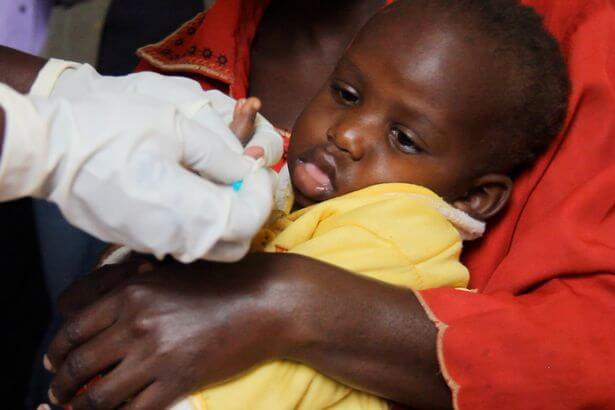
…But the disease continues to take its toll. In 2015, there were roughly 212 million cases of malaria and 429,000 deaths. And the disease has become increasing resistant to drugs.
In recent years, one new tool — genetic modification — has appeared especially promising. Two studies published Thursday in the journal Science illustrate the potential of genetic engineering for fighting the disease. Both studies were conducted at Johns Hopkins University’s Malaria Research Institute.
…
The first study focused on whether mosquitoes that have been genetically modified to be more resistant to the malaria-causing parasite would become weaker and less able to mate and breed.
…
The second study published Thursday uses genetic modification of bacteria found inside mosquitoes to fight malaria. Researchers genetically modified a type of bacteria, which caused it to secrete a substance inside the mosquitoes’ gut that kills off the malaria-causing parasite before it can develop properly.
…
The next step for both approaches — the genetically modified mosquitoes and bacteria — is to test if they work outside the lab in conditions simulating nature. Johns Hopkins has built a “mosquito house” research facility in Zambia designed specifically for such experiments.
While there are legions of plant researchers dedicated to the idea of using GMOs to maximize food production, there’s a lesser-known syndicate of scientists trying to cultivate a different outcome: increasing plant output of biofuels.
By altering sugar levels in leaves through gene manipulation, researchers at the Brookhaven National Laboratory have shown that by making leaves fatter, oil production can be increased.
“Combining genetic mutations that decrease the transport of sugar out of leaves and the conversion of sugars to starch increases sugar levels in leaves,” explains biochemist John Shanklin, who’s leading the research, in a statement from Brookhaven Lab. “That excess sugar drives increased oil production by stabilizing the oil on-switch, and also by supplying the carbon building blocks needed to make more oil in leaves.”
…
[In] his process of converting solar energy to chemical energy, researchers at the Long Island, N.Y.-based lab determined that biofuel benefits could emerge if they could block or slow the mechanism of sugar leaving the leaves. So, they “selectively bred plants to combine a series of traits,” the study reported, “that blocked some of the sugar transport and conversion pathways, which resulted in increased oil production and accumulation.”
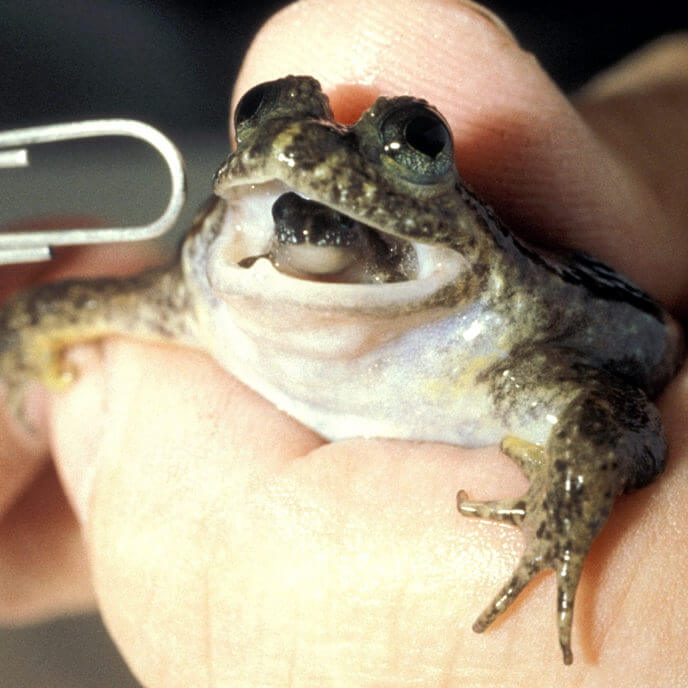
The gastric brooding frog is no regular frog. Like some horror story of ancient myth, it gives birth out of its mouth. […] Rather, it used to do this. The Australian amphibian was discovered in the 1970s, and by the mid 1980s, it had gone the way of 99 per cent of the four billion species that have roamed this planet. It went extinct.
…
Today, the gastric brooding frog is a prime target of the “Lazarus Project” of Michael Archer, a palaeontologist at University of New South Wales, who has injected its frozen DNA into the embryo of a related frog, hoping to create a hybrid.
…
The technology is not perfected. For example, those hybrid gastric brooding frog embryos have so far not made it past a few days of life. But as [journalist Britt] Wray tells it, the hypotheticals of de-extinction are coming true, and as they do, they create new moral quandaries and unforeseen ecological risks.
…
“Now it’s the time to get serious, I think, about really testing ecosystems and looking at whether or not they have the bandwidth to support a genetically modified or backbred or a cloned proxy species to live and thrive there,” Wray says.
[W]e’re finding out that our DNA isn’t always set in stone. Now, a team of researchers from Northwestern University led by anthropology professor Thom McDadehave shown that DNA can also be modified by your environment during childhood. What’s more […] those modifications can affect how or when you develop certain illnesses during adulthood.
Their investigation followed more than 500 children in the Philippines and found that certain childhood situations can create modifications in genes associated with inflammation, which affects how prone we are to suffer from certain illnesses. Specifically, these factors included socioeconomic status, the prolonged absence of a parent, the duration of breastfeeding, birth during the dry season, and exposure to microbes in infancy.
…
The authors determined that the childhood environment of these youths affected the level of inflammation-related proteins (biomarkers) in their blood during adulthood, likely as a result of methylation of some of their inflammation-related genes. The dysregulation of these proteins can affect health and risk of disease.
…
This is […] one of the first and most complete investigations that show that epigenetic modifications created by the environment have lasting effects on human health.
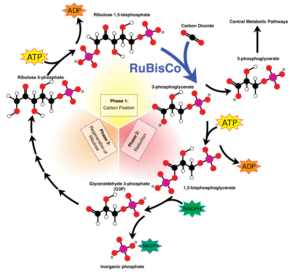
Like our friend Goldilocks, of three bear’s fame, plants like their sustenance just so. Under optimal conditions, photosynthesis is a remarkably efficient process, converting carbon dioxide and light into glucose (a sugar) and oxygen. Glucose can be metabolised to make a molecule called ATP (Adenosine TriPhosphate), which functions like a cellular battery, energizing the various ins and outs of plant physiology.
Carbon dioxide is removed from the atmosphere. The glucose and its various derivatives taste good when we eat the plants. The oxygen does its bit to keep us all alive. Photosynthesis is a fantastically good deal.
Surprisingly though, photosynthesis is inherently inefficient. This is a problem because an increasing global population, coupled with decreasing land availability means that we really need to start turning the screw on agricultural productivity (don’t make me come at you with the UNFAO stats).
Plant breeders have been unable to make gains in photosynthetic efficiency, because of insufficient natural genetic variation. This is where the vast possibilities of genetic engineering come into play.
Balancing photosynthetic responses to light intensity comes with a cost
Plant leaves operate in an extremely dynamic environment. Light intensity rises and falls regularly as a by-product of canopy movement and environmental flux (cloud cover/ mist / position of the earth relative to the sun etc).
When plant leaves are exposed to more light than they can use, they need to protect themselves from the biochemical fallout that comes with uncontrolled energetic input. If left unchecked, the plant leaves would bleach white and become photosynthetically inert — they may be useless to the plant for quite some time. In order to protect the leaf, the photosynthetic pathway is altered such that light is converted to heat, which can then dissipate safely from the leaf surface. This process is termed photoprotection.
Specifically, a mechanism known as nonphotochemical quenching of chlorophyll fluorescence (NPQ) facilitates this energetic venting process. The system has its flaws though. It activates quicker than it deactivates, which means that there is an efficiency cost when exiting NPQ due to the lagging response time.
In fact, the delay between switching the NPQ process off, and returning to peak photosynthesis is exacerbated with repetition of the activation / deactivation cycle.
Huge, seemingly intractable modelling problems, such as that presented by the complexity of photosynthesis and associate variables, tend to get a lot simpler when they are mashed into 1s and 0s and left to simmer overnight in the silicon belly of a computer cluster. Taking sources of environmental and biological variability into account, computational approaches estimate that this biochemical transition bears an efficiency loss of 7.5 percent to 30 percent. This has obvious growth and yield-limiting implications.
Steve and his research group managed to speed the rate of transition from NPQ protective to photosynthetically productive by increasing the abundance of genes required to recharge the system — genetic engineering! They made more copies of the genes available to the photosynthetic leaf cells, and that correspondingly increased the amount of protein and enhanced the speed of NPQ exit. This translated into a handsome productivity gain of 15 percent (Kromdijk et al., 2016).
I’ve seen images of the field trial plants at conferences, and I can tell you that the difference is striking. Steve and his team of genetic engineers have effectively re-tuned the nuclear engine of the plant for higher performance, just as a mechanical engineer would for a high-spec racing car.
That isn’t the end of the story though.
There is also a problem from the other side of this energetic balance — the uplift in photosynthetic activity from light limiting shade to full sunlight. Steve’s latest research paper speaks to this (Taylor and Long, 2017). By his own estimation, optimising this aspect of photosynthesis could yield similar gains in efficiency to that found on optimising the NPQ transition. Collectively, those gains could be transformative in terms of sustainable intensification of agriculture.
Potential fixes to enhance the shade to sun transition
Decreasing the lag to peak photosynthesis on moving from shade to full sunlight could be achieved by increasing the amount of rubisco activase, which is a rate-limiting enzyme involved in kick-starting another enzyme called RuBisCo — the key player in carbon dioxide utilisation and photosynthetic activity. This approach has been demonstrated previously in rice (Yamori et al., 2012).
RuBisCo is a key factor in carbon sequestration and photosynthetic efficiency
Alternatively, genome editing (e.g. CRISPR-cas9) approaches could be used to modify the amino acid composition of rubisco activase. This might be effective as there is a clear link between the amino acid composition of rubisco activasein other plant species, and the activity of the enzyme (Carmo-Silva et al., 2013). Engineering a more efficient rubisco activase response, either by increasing the amount of it (over-expressing by inserting extra gene copies), or modifying the native enzyme to work more efficiently, represent potentially high value targets for crop improvement strategies.
I’m looking forward to catching up with Steve at the Gates Foundation Grand Challenges conference in Washington next month, and learning about their progress. For those that want more information on the topics explored here, check out the lecture and references below.
References
Kromdijk, Glowacka, Leonelli, Gabilly, Iwai, Niyogi, Long. 2016. Improving photosynthesis and crop productivity by accelerating recovery from photoprotection. Science 354, 857–861. doi:10.1126/science.aai8878
Taylor and Long. Slow induction of photosynthesis on shade to sun transitions in wheat may cost at least 21% of productivity. Philos Trans R Soc Lond B Biol Sci.2017 Sep 26; 372(1730): 20160543. Published online 2017 Aug 14. doi: 10.1098/rstb.2016.0543
Yamori, Masumoto, Fukayama, Makino. 2012. Rubisco activase is a key regulator of non-steady-state photosynthesis at any leaf temperature and, to a lesser extent, of steady-state photosynthesis at high temperature. Plant J. 71, 871–880. (doi:10.1111/j.1365–313X.2012.05041.x)
Carmo-Silva, Salvucci. 2013. The regulatory properties of Rubisco activase differ among species and affect photosynthetic induction during light transitions. Plant Physiol. 161, 1645–1655. (doi:10.1104/pp.112.213348)
Johnathan Dalzell is a lecturer in molecular biology and parasitology at Queens University Belfast. His research group is focused on plant-parasite interactions, and is developing novel sources of genetically engineered resistance in plantain with the Bill and Melinda Gates Foundation. Follow him on Twitter @jjdalzell
This article was originally published on his blog as The transition from shade to sunlight can reduce wheat productivity by 21% — Genetic engineering can help with that! and has been published here with permission.
To stay up to date on all the news in human and agricultural genetics, subscribe to our daily and weekly email newsletters in the top right corner of this page, and follow us on Facebook and Twitter.
A great irony about Africa is that, even though it’s the birthplace of our species, we know almost nothing about the prehistoric populations who lived there: the bands of hunter gatherers who moved across the massive continent, interacting with and sometimes replacing other groups. […] Thanks to new research that includes the oldest African DNA ever successfully read, we’re seeing Africa’s prehistory like never before. Archaeologists and paleogeneticists are finally starting to fill in some crucial gaps about the human story.
…
The dearth of aDNA from Africa made it hard to understand the continent’s rich past, and it also fueled a centuries-old myth that Africa was less significant.
…
[Researcher Jessica Thompson] remembered a cave she’d visited as a tourist: it was in Malawi, on a high-plateau mountain called Hora where human skeletons had been excavated in the mid-20th century.
…
The genetic makeup of the seven Malawi aDNA samples was particularly interesting: They indicate a long-standing population, distinctive to all others, that lasted for about 5,000 years but no longer exists. What happened to the ancient Malawi people remains a mystery for now, but it’s a question that archaeologists and paleogeneticists may one day answer through further collaboration.
With all the money we as a society spend on sleep, from $7 billion on beds per year (in the U.S. alone) to nearly 9 million Americans on prescription sleep treatments, to over $1 billion on over-the-counter or alternative sleep therapies and activities, you’d sure think we were all well-rested. I’ve provided some neuroscientific lectures to sleep centers on some of the reasons we think people need to sleep – including the adenosine hypothesis, homeostasis, memory consolidation, parasympathetic restoration of the body, and so forth – but none of the experts in the field are at a consensus of why sleep actually needs to occur. I wrote an article on how losing out on sleep can potentially have epigenetic effects on one’s genome, which could be one factor of many as to why chronic sleep deficits are related to a litany of health problems and diseases.
Does ‘forcing’ sleep work?
Most of the so-called ‘Z’ sleep therapies (zolpidem, eszopiclone, zaleplon), including Lunesta, Ambien, Intermezzo, Sonata, etc. are non-benzodiazepine class drugs that are GABA receptor agonists – they work by modulating neurotransmitters. More recently, a new class of sleep drug (known as orexin receptor antagonists) has been approved (such as Belsomra). Orexin (also called hypocretin) is a neuropeptide produced by neurons in the hypothalamus that induces wakefulness and vigilance (among some other physiological factors). It was identified in part because some humans and animals with narcolepsy are deficient in orthorexin-producing neurons in the brain.
Virtually all medications for sleep work on neurotransmitters, to change our balance of tiredness and vigilance. Even the antihistamines Benadryl (diphenhydramine) and doxylamine succinate are used in a tremendous number of OTC sleep medications, and do produce marked drowsiness in many people. In this way, the antihistamine passes the blood-brain barrier to affect histamine’s regulation of sleep and wakefulness in the brain, inducing sleepiness. Since so many people use so many of these interventions to try to improve sleep, it begs the question ‘how good is the actual quality of the sleep?’
Placebo and sleep
It turns out that there’s a fairly substantial placebo effect within sleep itself. Telling people that they slept longer or more deeply than they actually did, or that results of a (fictitious) sleep EEG were more positive than they actually were leads people to be able to think more quickly and respond more positively to questions about alertness and restedness. Even sleep medications, though approved by statistical superiority compared against placebo, have a very small effect magnitude on sleep itself, and is intertwined with a strong placebo effect. Seeing a physician and filling a prescription for a sleep medication and then taking it at bedtime is a whole chain of behaviors that includes expectancy and formality that a sleeping routine is commencing. But clearly if the entire need for sleep could be eliminated by placebo, we would have evolved a way not to lay dormant and vulnerable for a third of each of our days a long, long time ago. In the distant past, sleep was a risky proposition for early humans and our ancestors, and it’s not much of an energy-saver: Estimates are that sleeping rather than staying awake for the same amount of time only saves about a hundred or so calories.
So we have an interesting irony in society now: We no longer have to congregate in communities for protection and don’t consider sleep a risky endeavor that we need to undertake nonetheless; but we have the technology instead to try to replace or enhance sleep by artificial means. Can drug therapies – from the Z-class drugs, to OTCs, to (in the case of Michael Jackson) propofol (with benzodiazepines) – really be used to force ‘real’ sleep to occur? Does it count? Is it a substantial replacement, or just a short-term workaround? There is research indicating that some stages of sleep seem to be relatively well-recreated by anesthetics and hypnotics, however: they don’t replace all phases of sleep, the sleep quality is not always as substantive, and not every drug treatment affects sleep stages in the same way. Unfortunately, one of the most powerful effects of sleep is to consolidate and reinforce memories, and many sleep aids are associated with impaired memory or memory loss.
So as with everything in nature, there is a balance between risk and benefit, help and hindrance. The act of sleep and artificially assisting sleep are not on the whole a zero-sum game. Artificially inducing sleep can be considered by some to be worth pursuing, even in light of the potential side effects, including parasomnias and other effects. Likewise, to forgo treatment for chronic or acute sleep concerns can be associated with its own health consequences.
What is interesting about sleep is that for something that we’re all invested in spending so much money and time on, sleep hygiene — and quantifying our individual sleep lives — is something that is still quite nascent, and I think is something likely to take a dramatic upswing in the next few years.
Ben Locwin is a behavioral neuroscientist and astrophysicist with a masters in business, and a researcher on the genetics of human disease. BIO. Follow him on Twitter @BenLocwin.
Onerous and expensive regulations have denied farmers’ access to new and existing Genetically Modified (GM) crop varieties and reduced their profitability while stifling the industry’s capacity to innovate, a regulatory review has been told.
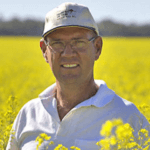
Long-time GM cropping advocate and outspoken WA farmer Bill Crabtree has outlined his chief concerns about the negative social and economic impacts on agriculture, of the heavy-handed legal regime governing farm biotechnology, in a pointed submission to a fresh examination of Australia’s Gene Technology Scheme (GTS).
Mr Crabtree said the Office of the Gene Technology Regulator’s (OGTR) mandate was to ensure the continued protection of human health and safety – one of the review’s primary points of examination.
But he said the “powerful GM tool” has been produced globally for 20 years without causing any harm and could have made “much difference” to Australian agriculture….
Bill Crabtree
“As a passionate supporter and global champion of sustainable no-tillage agriculture, I believe this is a catastrophe for Australian agriculture,” he said while adding the GTS had also stifled agricultural innovation.
…
“As a practicing farmer and agronomist and a champion for sustainable agriculture and winner of the 2009 Federal McKell Medal, I write to express my frustration over the impact of this regulatory process.”
[Editor’s note: Gregory Jaffe is the Director of the Project on Biotechnology for the Center for Science in the Public Interest (CSPI).]
On July 29, 2016, President Obama signed the National Bioengineered Food Disclosure Law, establishing a nationwide standard for disclosing the presence of foods and ingredients from genetically engineered (GE) crops.
…
Under the Disclosure Law, a food manufacturer can choose among different options to disclose the presence of foods or ingredients from GE crops. One option is to use text specified by the USDA on the product’s label…. A second option is to include a symbol, which will be developed by the USDA, on the food package….
The third option is disclosure through an electronic or digital link on the package (such as a QR code, bar code, or SmartLabel). The link would take the consumer to a website containing whatever information the USDA requires the manufacturer to disclose.
…
The goal of the Disclosure Law is to provide a nationwide standard for food producers to inform customers about the foods and ingredients that come from GE crops. The mandatory disclosures have nothing to do with the safety of those foods or ingredients.
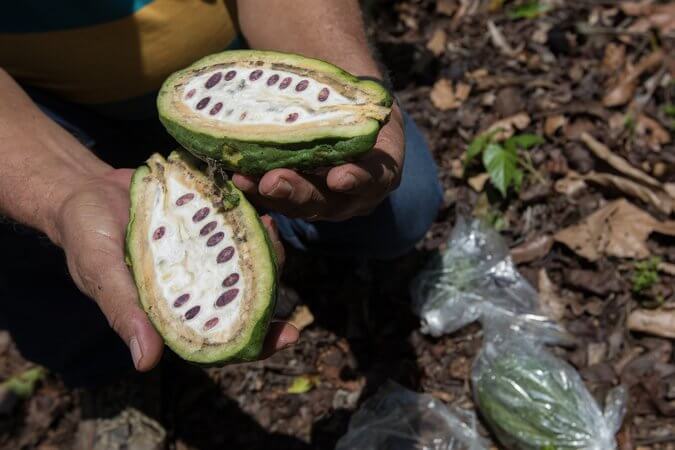
[F]ew cacao varieties are widely cultivated, and that’s a problem: Like many other crops, cacao is under constant threat from diseases and environmental challenges exacerbated by our tendency to grow only a few varieties with similar or identical genetic traits and defects.
…
In the early 1980s, Dr. Phillips-Mora worked to identify the most naturally tolerant and productive cacao trees, then painstakingly hybridized the candidates to create novel varieties.
…
In terms of disease resistance and yield, the differences were astonishing. Dr. Phillips-Mora’s six hybrids produce on average about three times more cacao than standard varieties; under ideal conditions, the most prolific hybrids can produce six times more cacao.
After an 11-year trial, a hybrid called C.A.T.I.E.-R6 experienced a 5 percent frosty pod rot infection rate, compared to 75 percent infection for a control variety….Trees that buck this trend could make the family business look more enticing to the next generation of cacao growers.
Patients who lose consciousness for more than a year are considered extremely unlikely to regain it, but a 35-year-old Frenchman who had been in a vegetative state for 15 years has shown hints of awareness after having key brain regions electrically stimulated, scientists reported on [September 25]. The patient was able to follow an object with his eyes, turn his head when asked to, and widened his eyes in surprise when a researcher’s head came close to his face — none of which he did in a vegetative state.
…
He became minimally conscious, responding to some signals from the outside world, after a month of having his vagus nerve — which runs from the abdomen to the brain, where it has numerous connections to regions that the researchers call “a hot zone for conscious awareness” — stimulated with a device implanted in his chest.
…
Brain recordings offered additional evidence that something significant had changed, however. The man had stronger brainwaves called a theta signal, which is absent in the vegetative state but present with minimal consciousness.
…
[Lead researcher Angela] Sirigu is confident the man did not go from a vegetative state to minimal consciousness spontaneously. His partial recovery coincided with the vagus stimulation, and after 15 years it seemed unlikely his improvement was due to anything else.

















 So we have an interesting irony in society now: We no longer have to congregate in communities for protection and don’t consider sleep a risky endeavor that we need to undertake nonetheless; but we have the technology instead to try to replace or enhance sleep by artificial means. Can drug therapies – from the Z-class drugs, to OTCs, to (in the case of Michael Jackson) propofol (with benzodiazepines) – really be used to force ‘real’ sleep to occur? Does it count? Is it a substantial replacement, or just a short-term workaround? There is research indicating that some stages of sleep seem to be relatively well-recreated by anesthetics and hypnotics, however: they don’t replace all phases of sleep, the