Who benefits most from FDA’s ‘accelerated’ drug approvals? Patients or drugmakers?

fda

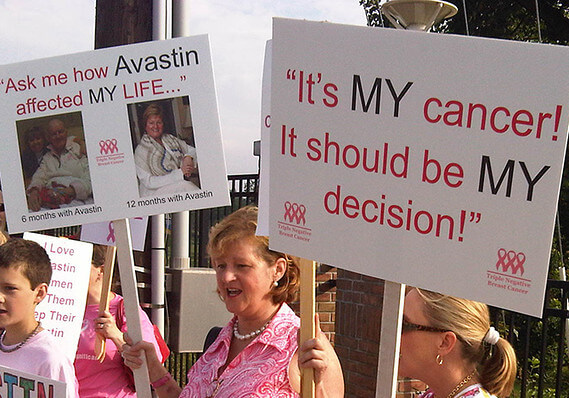
On June 28, 2011, ten police cars descended upon the headquarters of the Food and Drug Administration. Scores of protesters carrying loudspeakers and donning pink shirts had attempted to enter the building, but were thwarted by the officers. One man held a sign that read: “My wife is not a statistic: Save Avastin.”

Avastin was one of the world’s best-selling cancer drugs, first approved in 2004 to treat advanced colon cancer, with high expectations. The first drug of its kind, it was designed to block the blood supply of growing tumors, and it appeared to work well for colon cancer and lung cancer. Riding on a swell of optimism, the FDA decided in 2008 that Avastin could also be used to treat a certain type of advanced breast cancer — but just three years later, the agency seemed poised to reverse that decision.

Inside the building that June morning, a public hearing on that decision was being held. Some members of the audience shouted “Don’t take my drugs away!” Others came with photo albums in the hopes of showing the expert panel weighing the drug’s fate how the cancer drug had saved them from the ravages of breast cancer, and allowed them to live longer, fuller lives.

The pleas didn’t work. The panel concluded that Avastin didn’t improve chances for surviving breast cancer, and in fact, determined that the drug was so toxic — it sometimes caused high blood pressure, heart attacks, and ruptured intestines — that it could be more lethal than the cancer itself. Four and a half months later, the FDA officially rescinded the approval of Avastin for treating breast cancer. The FDA commissioner at the time, Margaret Hamburg, admitted that new evidence showed that the once-promising drug was not actually effective in treating breast cancer. “It is clear that women who take Avastin for metastatic breast cancer risk potentially life-threatening side effects without proof that the use of Avastin will provide a benefit… that would justify those risks,” Hamburg said at the news briefing.

The anger and disappointment of the gathered patients was palpable, but the stunning reversal, and Hamburg’s own words, raised a troubling question: If there was no evidence that Avastin was effective against breast cancer — and even some evidence that it was explicitly harmful — why was it approved as a breast cancer treatment in the first place, and why was the company that made the drug, Genentech, permitted to market Avastin to doctors and breast cancer patients for the better part of three years?
fda 9 21 18 2

It’s a question that cuts to the heart of a program that allows the FDA to approve drugs using a lower standard of evidence. Under what’s known as the Accelerated Approval Program, the FDA can reduce the bar for approval in cases where there is an unmet medical need for a serious condition. In such cases, a drug manufacturer need not show that the drug works. It only needs to demonstrate some reasonable expectation that the drug ought to work.

By definition, that’s a much more subjective threshold, but according to Janet Woodcock, the director of the FDA’s Center for Drug Evaluation and Research, the benefits of accelerated approval more than justify the problems that might come with lowering standards of scientific evidence — particularly when desperate patients are willing to gamble on the additional risk. “It’s not unusual to have differences of opinions about accelerated approval because it’s more uncertain,” Woodcock said. “The patients are saying ‘we want to accept the tradeoffs, we’ll accept more uncertainty.’”

Today, the FDA is increasingly proactive in bringing drugs to market short of full approval and uses accelerated approval to get new drugs to people suffering from devastating diseases. Since 2003, more than 16 percent (66 of 404) of all new drugs were approved through the Accelerated Approval Program, and it seems to be a more popular option. Between 2003 and 2013, about three drugs were approved each year through this expedited route. But during each of the last three years (through 2016), that number has increased to more than seven drugs per year.

The FDA is candid about its commitment to expedited approval programs — in part to speed up what is often characterized as a notoriously drawn-out and bureaucratic approval process. The agency’s former head, Hamburg, wrote about the FDA’s intention of getting new drugs to people as “quickly” as possible, and the FDA’s new leader, doctor and cancer survivor Scott Gottlieb, bemoans the FDA’s slow-moving approval process. While a fellow at the conservative American Enterprise Institute in 2012, Gottlieb lamented the “increasingly unreasonable hunger for statistical certainty on the part of the FDA.” And at Gottlieb’s confirmation hearing last May, he rejected the idea that speeding up drug approvals would compromise their safety, calling it a “false dichotomy that it all boils down to a choice between speed and safety.”

But the increasing reliance on accelerated approval and other means of expediting drug approval have many critics worried — particularly given that the interests most readily served by fast-track approvals are those of the pharmaceutical industry. David Gortler, an associate professor of pharmacology at Georgetown University and a former FDA medical officer, is one such critic. He fears that the drive to get drugs out faster with weaker scientific evidence is already taking a toll — not just on consumers who are taking drugs that should never have been approved, but also on the agency’s credibility.

“I don’t really recognize the agency for which I once worked,” said Gortler, “because they’re making all these crazy decisions.”

The essential problem is that when it comes to drug approvals, speed and certainty are fundamentally at odds. It typically takes years of testing in large numbers of patients to determine if a drug provides a meaningful benefit — including improving an individual’s odds of survival. And it’s impossible to detect potential side effects until a sufficient number of patients have been monitored carefully, and for enough time, for such problems to truly surface. It’s extremely time-consuming to show, scientifically, that a drug really works — and to understand its risks.

But not all patients have the luxury of time. In the early 1980s, for example, an HIV infection meant certain death, as the virus devastated a person’s immune system, leaving them with wasting, sore-ridden bodies. Without drugs available to combat the virus, the afflicted were pushed toward desperate, ineffective treatments. Some tried cooking medicine themselves, while others heard stories of potent drugs and sought them out on black markets. None of it, of course, worked.

Responding to the crisis, the FDA began experimenting with what would formally be called accelerated approval. Instead of requiring ironclad evidence that a potential anti-HIV drug prolonged patients’ lives, the agency asked for indirect evidence that the drug was working as it was supposed to. In 1992, the anti-HIV drug ddC was approved because initial trials demonstrated that patients using it showed an increase in the number of a certain type of immune-system cells in their bloodstream. It wasn’t proof that the drug actually helped patients — the agency asked for a number of follow-up studies to establish that fact — but the consequences of the disease were so grave that the agency decided that it was worth the risk to approve ddC.fda 9 21 18 3


In this case, the gamble paid off. The drug worked. “We approved the AIDS drugs … and over time it came about that those were correct decisions and the epidemic was controlled,” Woodcock said. It also set a pattern for the future. Under certain circumstances — only having to do with serious diseases and unmet needs — the FDA can allow a drug to come to market with a lesser standard of evidence. Instead of proving that a drug prevents heart attacks, a pharmaceutical company might only need to show a reduction of fatty cholesterol molecules in patients’ bloodstreams. Instead of proving that a cancer drug extends lives, the company might have to show only that the chemotherapy delays tumor growth for a while. And instead of showing a direct benefit to a patient, an applicant might need only demonstrate that its drug meets a “surrogate endpoint” that suggests the drug is helping people who take it.

Using these surrogate endpoints saves time; it might take only weeks or months to show that a drug affects patients’ blood chemistry, whereas it takes years to gather enough data — and enough deaths — to determine whether a drug can actually extend a patient’s lifespan. The promise of surrogate endpoints is getting drugs to patients who are in desperate need of them quicker, but the downside is that there’s less careful testing of whether the drug actually works, or whether it kills patients instead of helping them.

“It is likely” said Vinay Prasad, a hematologist-oncologist at Oregon Health and Sciences University, “that many people are being treated with drugs that actually do not make them live longer or live better.”

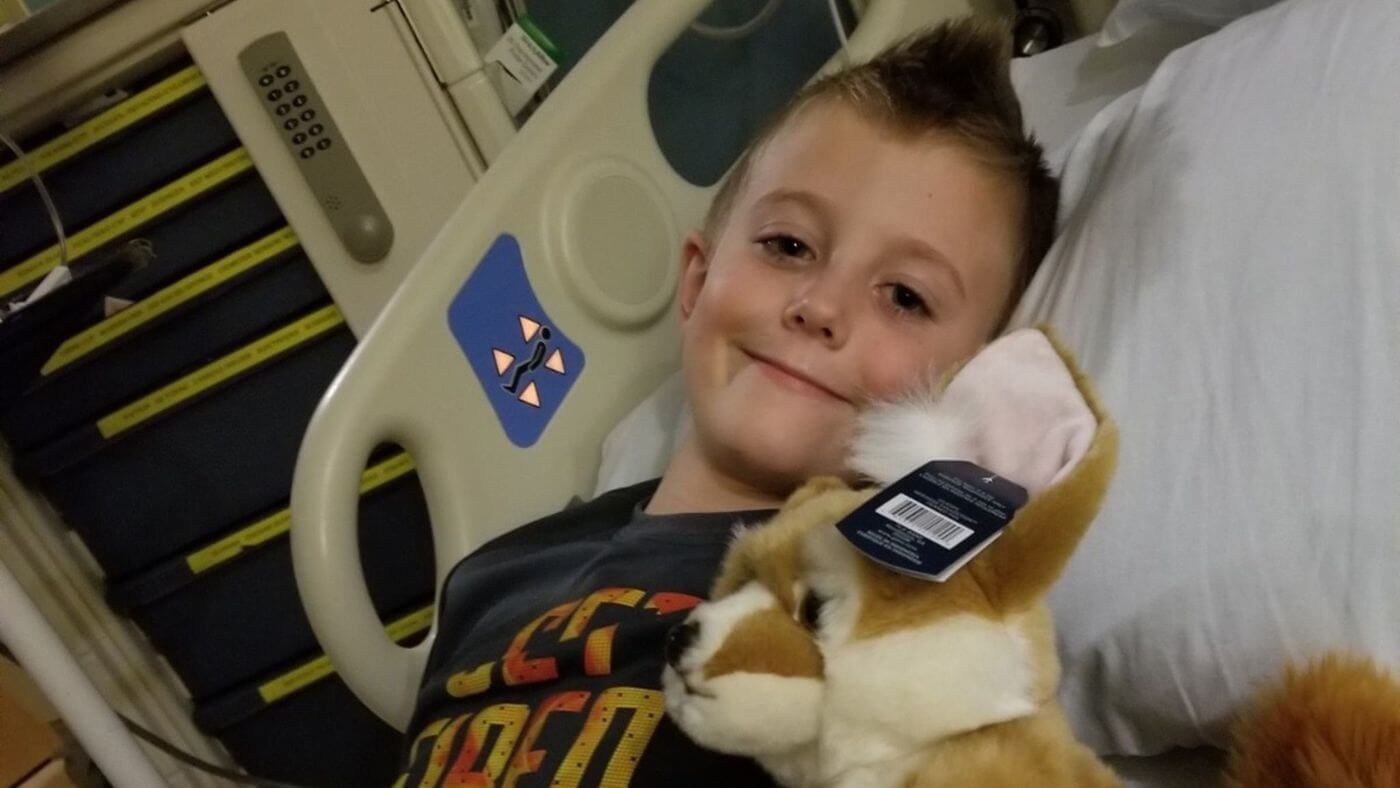
In September 2016, the FDA approved the drug eteplirsen, designed to treat Duchenne muscular dystrophy (DMD), which primarily affects young boys. DMD is an invariably fatal disease that slowly destroys the muscles of its victims. None of the disease’s variants has a cure, although drug therapies like steroids can help slow muscle deterioration. Eteplirsen, however, is the first drug approved to target the root of the disease. Despite the huge expense — starting at around $300,000 per year — eteplirsen is the only real source of hope for children dying of DMD.

The root of the disease is a protein called dystrophin that is necessary for building muscle fibers; but those with DMD have a genetic mutation that interferes with the normal production of this protein. Eteplirsen can be used to specifically counter the effects of one of these mutations.

To speed up the approval process for struggling boys and hapless parents, the FDA put eteplirsen on the accelerated approval pathway. During the drug’s testing, the trials were too short to determine if the drug actually improved how long the boys lived, so “dystrophin production” was used as a surrogate endpoint. The study’s scientists reasoned that if they found increased levels of the protein, it was a good indication that the medication would ultimately improve the children’s condition.

As it was, evidence did suggest that eteplirsen increased the levels of dystrophin in patients’ muscles, but the increase was tiny — far below what would be expected to have any clinical effect. Scientists were baffled, in fact, by the miniscule quantity of dystrophin the drug produced.

Follow the latest news and policy debates on sustainable agriculture, biomedicine, and other ‘disruptive’ innovations. Subscribe to our newsletter.

“I find it difficult to conceive how a treatment effect of three parts per thousand could confer clinical benefit,” wrote Ellis Unger, the director of the FDA’s Office of New Drugs, and who oversaw eteplirsen’s scientific review. “If there were 10 inches of snow on a sidewalk that needed to be cleared, three parts per thousand would amount to 1/32nd of an inch.”

Unger wrote that a drug would need to increase dystrophin levels to around 10 percent of normal, healthy levels to even be considered “reasonably likely” to offer “measurable clinical benefit.” This means that even if dystrophin levels were 32 times higher than the trial results, there would still be big question marks about eteplirsen’s effectiveness.

Indeed, given that the drug didn’t even seem to meet the weakened standard of a surrogate endpoint, Unger and the other FDA scientists on the review panel wanted the FDA not to approve eteplirsen. Still, their recommendation was overruled by Janet Woodcock, who concluded the results met FDA effectiveness and safety standards for drugs on an accelerated pathway. (Two of the eteplirsen panel members resigned after this decision.) DMD patients across the country are now fighting with their insurance companies to get coverage for the expensive new drug.

“They may very well be paying $300,000 for some snake oil treatment,” says Gortler at Georgetown University. “It’s mean too, because these people are very desperate. They’ve been given a death sentence and they want to have hope.”

Prasad also warns that the increasing reliance on surrogate endpoints risks eroding the overall standards of new drugs that are allowed to appear on the market. If the bar for approval becomes so low, he reasons, pharmaceutical companies aren’t incentivized to make any of them truly safe and effective. “We want A-plus drugs, not D-minus drugs. So why are we accepting it?”

Not everyone takes such a hard line on the risk-benefit calculations at the heart of accelerated approval processes. Mikkael Sekeres is an oncologist at the Cleveland Clinic who served on the FDA’s advisory committee for Avastin on whether or not it should be withdrawn. While approval for use of the drug in treating breast cancer was ultimately rescinded, Sekeres says the FDA is right to try certain drugs — based on surrogate endpoints — if a disease is bad enough. “If the risk of disease is awful, then [the FDA] might be willing to consider a drug with more risk than with a disease that isn’t as awful,” Sekeres said.

He pointed by way of another example to lymphoma where patients might survive only 10 years with the disease — a rather long disease course. Running a complete clinical experiment to see if a drug can prolong cancer patients’ survival might take 15 years, Sekeres noted, meaning many patients would be dead before they can ever try the drug.

“So you make an approval based upon a clinical maker,” he said. And if a drug does prove to be harmful, the FDA’s accelerated approval program is designed to pull the drug from use — just like the FDA did for Avastin. “It’s a demonstration that the system works when the FDA reserves its rights to recommend removing the drug from approval,” said Sekeres. “I think the evidence is working and the FDA is exercising its duty to protect the public.”

To be sure, the FDA emphasizes that accelerated approval is designed to help patients with no other options. “This pathway allows for flexibility in new drug approvals for serious diseases with no satisfactory therapies while meeting the appropriate standards for safety and effectiveness,” FDA spokesperson Sandy Walsh wrote in an email. “Accelerated approval recognizes that physicians and patients are generally willing to accept greater risks or side effects from products that treat life-threatening and severely-debilitating illnesses, than they would accept from products that treat less serious illnesses.”

As it stands, the FDA approved 86 cancer drugs in the 15 years prior to October 2017. Twenty-nine cancer drugs were granted accelerated approval in the same time frame, representing about a third of all cancer drug approvals. And cancer therapies are a substantial component of all drugs brought to market, accounting for nearly 22 percent in the last 15 years.

Of course, even under the best circumstances, Walsh noted, the accelerated approval process can lead to approvals that are later revoked. “These limitations are a reason accelerated approval is available only for a limited group of drugs,” Walsh said, including “those intended to treat serious or life-threatening illnesses when the drug is expected to provide a meaningful benefit over existing therapy.”fda 9 21 18 4.jpg
 

Companies (Sarepta included) that approve drugs based on a surrogate endpoint are still required to conduct clinical trials, called Phase 4 confirmatory trials, demonstrating that the medication provides the intended benefit, Walsh added.

Still, there is some evidence that this may well depend on the drug. The drug Mylotarg was originally granted accelerated approval in 2000 with a surrogate endpoint showing a decrease in patients’ leukemia. Following its approval, however, further trials revealed the drug was not only ineffective, but could also be lethal. So in 2001, the FDA issued a so-called black box warning — a notice appearing on a drug’s label that warns users of “life-threatening risks.” Nine years after that, in 2010, Pfizer withdrew the drug completely.

Despite this, Mylotarg is back. The FDA, designating a lower dose and new population for the drug, approved it to treat certain patients with acute myeloid leukemia. But the new approval still relied on surrogate endpoints, which critics say prioritizes speed over compelling proof. One of the Mylotarg clinical trials, for example, found that the drug increased event-free survival by nearly eight months, but did not impact overall survival at all.

“The problem with surrogate outcomes is they’re more convenient because you can observe them sooner, but it’s very, very easy to get a big difference in the surrogate outcomes that does not translate into a big difference in survival,” says Peter Thall, a biostatistician and expert in clinical trial design at the MD Anderson Cancer Center. “The whole game of saying ‘This is statistically significant’ is grossly misleading. This is done again and again and again in oncology.”

This is also what happened in the case of Avastin. The drug was brought to market for the treatment of colon cancer and then lung cancer specifically, and in both cases, there actually was clinical data showing the drug marginally extended patients’ lives. But the 2008 approval of Avastin for breast cancer didn’t have that sort of data, so the FDA put Avastin on the accelerated approval pathway. Early evidence showed that when Avastin was used in combination with the chemotherapy drug paclitaxel, patients experienced an improvement in progression-free cancer survival over those that took the chemotherapy drug alone. However, clinical tests on cancer patients didn’t show that breast cancer patients actually lived any longer overall. Rather, the surrogate endpoint “progression-free survival” only meant that patients lived longer with the tumor after treatment.

Patients taking Avastin did seem to do better on this particular measure, so the FDA took the gamble to let patients start taking the drug. But in this case, follow-up studies showed that the drug didn’t actually increase overall survival. What’s more, Avastin proved unacceptably toxic, including producing gastrointestinal perforations in some patients. The FDA rescinded the approval, much to the disappointment of scores of breast cancer patients who were convinced that Avastin had saved their lives.

The uncertainty that comes with a surrogate-endpoint-based approval is a huge problem when it comes to treating cancer, said Oregon Health and Sciences University’s Prasad. “If you look at big randomized studies in oncology over [the] last few decades, they used to look at survival more. But survival as the endpoint of randomized studies has fallen and it’s largely been replaced by surrogates like progression-free survival,” Prasad says.

What’s worse: These surrogate endpoints often don’t mean the patient benefits. Prasad and his colleague Chul Kim investigated drugs for 55 cancer indications approved by the FDA based upon surrogate endpoints and discovered that only about half of those drugs had any sort of proof that the surrogate endpoint really helped patients in any meaningful way. The analysis was published in the journal Mayo Clinic Proceedings in 2016. “For almost half of these established surrogates, there is no published study ever showing what their correlation is with survival or quality of life,” Prasad said. “We just can’t even find documentation.”

Kim, lead author on the report and an attending physician at MedStar Georgetown University Hospital admits to being surprised. “It was sobering to see,” he said. “I’d expect to see more high-level evidence to support the use of surrogate endpoints. Because progression-free survival and response rate have been used for a long time.”

This lack of proof creates a layer of uncertainty that is extremely hard to explain to patients, Prasad says. People with cancer come to him desperate to find a drug that will prolong their lives. When he explains that a drug was shown to slow tumor growth, patients immediately ask, “Does that mean I live longer?” Prasad simply can’t answer that. And thanks to surrogate endpoints, FDA approval of a cancer drug doesn’t quite mean that it is proven “effective” in the way that patients naturally think it is.

Nonetheless, accelerated approval is likely to become increasingly common, experts say, because patients, politicians, and pharmaceutical companies are all shouting for swifter drug approval. “There’s been an ongoing beating of the drum,” said Joseph Ross, an associate professor and physician at Yale University, “about the FDA needing to be faster,”

But Ross urges caution before the approval process is kicked into an even higher gear. “All evidence suggests that the FDA is reviewing and approving drugs faster than any other peer regulator in the world,” he said. “But we need to do more studies now to show what this means for safety and efficacy.”

About half of new drugs, Ross says, are now approved on standards that might look impressive in the laboratory but might not actually benefit patients. “These drugs are being approved on the basis of lab measures, but will they improve symptoms and mortality?” Ross asked. “We don’t know.”

That’s why Kim and other experts would like to see more study of the impacts of accelerated approval and surrogate endpoints overall. “If a drug is approved on a surrogate endpoint, we must do a follow-up study to make sure that it was not a false sign of efficacy,” Kim said.

“Cancer drugs can be toxic,” he added. “Without those hard outcomes, we may just cause harm to patients.”

Abigail Fagan is a science journalist based in New York City. She’s most passionate about psychology, health, and medicine. Her work appears in Scientific AmericanPsychology TodayThe CutSpectrum, and other publications. Follow her on Twitter @AbigailFagan14

Mark Kaufman is a former National Park Service ranger who left the realm of bears, volcanoes, and salmon to pursue science and environmental journalism. He reports on climate, space, evolutionary psychology and music. Follow him on Twitter @SkepticalRanger  

A version of this article was originally published on Undark’s website asMore and More, New Drugs Clear the FDA With ‘Accelerated Approval’and has been republished here with permission.

Ugandan researchers hit the road to battle anti-GMO propaganda

Photo
As Uganda continues to grapple with its biotech future, scientists have launched an initiative to help local farmers better understand what’s included in the nation’s biotechnology safety law.

The law was approved by the nation’s parliament in December 2017, but still awaits the signature of President Yoweri Museveni, who has expressed reservations about the measure.

As researchers and farmers eagerly await resolution, a battle is still being waged by anti-GMO activists hoping to derail the law. Opponents have organized what they call farmer community outreach meetings, where gatherings of farmers are given information attacking the safety and potential impacts of GMO crops.

To counter these efforts, Uganda’s GMO crop researchers and development partners from the Science Foundation for Livelihoods and Development (SCIFODE) have launched their own educational efforts targeting farmers.

They met recently, for example, with members of the Uganda National Farmers Federation. Among the issues they addressed were common concerns about the impact of GMOs – critics allege GMOs can cause impotence in men, create toxic foods, damage the environment, reduce seed diversity and wreak havoc on agriculture through a variety of legal issues, including prohibitions against saving seeds. There also are concerns about the potential for GMO crops to contaminate non-GMO or organic counterparts growing in the same fields.

Scientist’s explanation

Most of the concerns are addressed by the languishing Biotechnology and Biosafety law, said Dr. Babra Zawedde, of the National Agriculture Research Organization (Naro).

In the case of GMO plants contaminating non GMO varieties, this is handled by the fact that most crops (including soybeans, groundnuts and rice) grown in Uganda are self-pollinating. The only substantial crop that is cross pollinated is maize. The biosafety law covers this by prohibiting growth of GMO maize within 500 meters of non GMO maize.

In the case of seed loss, Zawedde argues that the country is already losing some conventionally bred seed because of a limited gene bank. Already hybrid seeds have become increasingly important, reducing the options for farmers who might prefer to save seeds each planting season, she said.

We have hybrid varieties of maize which farmers must purchase at every planting season to obtain higher yields. If in the breeding process of GMO maize scientists used open pollinated varieties, this means they can still plant preserved seed and get less yield but this will not apply if hybrid maize variety is used. It is also important for farmers to differentiate between grain and seed.

Similarly, health and environmental concerns are addressed in the law, which requires the addressing of those issues before a GMO plant is released to the commercial market.

What is in biotech law?

Among the key provisions of the law is that it provides for approval of research developed by scientists for commercialization. The same applies for exports and imports of GMO foods, said Arthur Makara, executive director of SCIFODE.

Uganda already imports GMO food, but in processed form. There currently is now law to bar a product containing ingredients that don’t meet standards.

The law also provides for risk and safety management. This means that a scientist who violates the law while breeding GMO crops can be penalized and barred from further research. There also is a provision allowing regulators to inspect all aspects of research chain – from the lab, to field trials to packaging.

uganda 10 25 18 2
Image credit: Lominda Afedraru

Reaction from farmers

The educational efforts have drawn positive reviews from farming leaders, who worry over the volume of misinformation being spread. Dick Nuwamanya, president of the Uganda National Farmers Federation, hopes the scientists will team up with the federation, which is in position to reach out to large numbers of Ugandan farmers. Said Nuwamanya:

He argues that Uganda’s president has been misinformed about the biotech law by people with vested interests in keeping GMOs out of the country:

I am aware that science can be complex even to people who are elites but this can be simplified to the simplest terms, there is need for farmers to know about the difference between hybrids, open pollinated crop varieties and GMO crops. This requires a concerted effort and that is where the Federation can come in.

Farmer Mugoya Awali Ogonzaki expressed concerns over the future of Uganda’s agriculture, if its government refuses to allow access to improved seeds. He’s also troubled by what appears to be a failure by Uganda’s leadership to trust its own research arm (NARO). Said Ogonzaki:

If other countries are advancing through technology innovation in the food value chain, why not Uganda? What I know is that scientists are prescribing to us that our soils are getting depleted and we need plant varieties which can grow on such soils.

Follow the latest news and policy debates on sustainable agriculture, biomedicine, and other ‘disruptive’ innovations. Subscribe to our newsletter.

Confusion and funding

Opposition to GMOs in Uganda involves various local groups with strong ties and funding from European and US groups.

Among the leading opponents inside the nation is ActionAid Uganda, which is responsible for a series of radio advertisements claiming that eating GMOs will cause cancer. The organization’s 2016 annual report offers details on a project contract worth millions of dollars. Funds were collected from a range of organization, including the World Bank, European Commission, UN Women, UN Habitat, UN Human Rights, the Netherlands Embassy, DANIDA, Ford Foundation and the Berkeley Trust. The money was meant for humanitarian purposes. ActionAid also receives support from its international offices in the EU, UK, Netherlands and the US. The organization’s relationship with ActionAid UK has created some controversy surrounding how its money is being spent, with the UK unit saying it does not financially support opposition to the biotech law:

ActionAid UK is concerned about reports in the press relating to our involvement in a debate in Uganda about the health effects of genetically modified organisms (GMOs). It is not ActionAid’s policy to take a position on the health impacts of GMOs because health related research is highly contested and we do not have the necessary expertise to make informed decisions.

Other Ugandan organizations include the Participatory Ecological Land Use Management (PELUM)  that receives donor directed grants from the US. Contributions from the Tides Foundation for various anti-GMO activities and the New Venture Fund initiative known as the AgroEcology Fund has provided multiple grants to support seed sovereignty and anti-GMO agroecology programs.

Pellum Uganda’s 2016 report indicated more than 80 percent of their budget came from European donors such as Bread for the World, Swedish Society for Nature Conservation and Oxfam.

Advocates Coalition for Development and Environment (ACODE Uganda) is also known for opposing GMOs in the country.

ACODE receives funding from a range of sources, including Global Greengrants Fund, Democratic Governance Facility Uganda, American World Jewish Service CARE, Ford Foundation, William and Flora Hewlett Foundation, International Institute for Environment and Development, and the MacArthur Foundation.

CARITAS Uganda also has opposed passage of the biosafety law unless it includes strict liabilities.  Its supporters include other CARITAS arms in Norway, Italy, Australia, Japan, Netherlands and Denmark.

The EU and US funded Alliance for Food Sovereignty in Africa (AFSA), based in South Africa, maintains a Uganda presence in opposing GMO’s in Uganda.

Friends of the Earth via their European offices funds and supports National Association of Professional Environmentalists Uganda which opposes GMOs. This is indicated in their 2015 annual report.

Lominda Afedraru is a freelance science journalist in Uganda who specializes in agriculture, health, environment, climate change and marine science. Follow her on the Daily Monitor web site www.monitor.co.ug, Facebook or Twitter @lominda25

Why gender evades easy definitions regardless of what the Trump administration says

trump transgender memo policy gender sex definition
According to a recent report in the New York Times, the Department of Health and Human Services is “considering narrowly defining gender as a biological, immutable condition determined by genitalia at birth.” While the department’s memo purports to be “grounded in science,” the arguments and conclusions are not. Specifically, the memo argues that sex should be determined by—at different points in the purported memo—birth certificates, genitals and genetics. The problem with this argument is that none of these markers of sex is “definitive proof of a person’s sex” and in fact, nothing is.

It turns out that while most people end up with either an X and Y or two Xs, not everyone does. For example, some people get two Xs and a Y. Is such an individual male or female according to the proposed HHS changes?

These cases, along with other known cases in which a person’s genitalia cannot be categorized as clearly male or female, are just a few of the many individuals whose identities are ignored by the memo and whose very existence—along with transgender people—calls into question the claims of the memo.

We are not policy makers, but we can say that any policy that divides the world into two sexes—male versus female—will not be “grounded in science.”

Read full, original post: The Trump Administration’s Proposed “Redefinition” of Gender Is Scientifically Absurd

Global hunger and how agricultural biotechnology firms can profit by giving away technology

Hunger

New research from the University of Nebraska–Lincoln shows that agricultural biotechnology companies can do well by doing good.

Agricultural economists Konstantinos Giannakas and Amalia Yiannaka found that companies can profit by lowering the price of genetic-modification technology in hunger-stricken areas when consumers associate this technology with reducing malnutrition and hunger.

“When a company develops a new innovation, such as a new seed trait, a common assumption is that the company should exercise market power in order to maximize profits,” said Giannakas, Harold W. Eberhard Distinguished Professor of Agricultural Economics. “However, our research shows that the company can actually profit by giving away its technology to hunger-stricken areas.”

[W]hen the association of genetic-modification technology with reduced …. hunger in food-insecure areas lessens consumer aversion to such technology, innovative companies will find it optimal to reduce their prices and increase consumer access to nutritious food in these areas. The reason is that their losses in these areas are more than compensated by their gains in the rest of the world.

Read full, original article: RESEARCH SHOWS FIGHTING WORLD HUNGER CAN BE PROFITABLE FOR AG BIOTECH FIRMS

CRISPR gene editing could fuel fight against evolving cotton pests

x x e
[B]ugs are biting back by adapting to crops genetically engineered to kill them.

A new study published in the Proceedings of the National Academy of Sciences identifies a dominantly inherited mutation that confers resistance to engineered cotton in caterpillars of the cotton bollworm, one of the world’s most destructive crop pests ….

“It’s a remarkable detective story,” said Bruce Tabashnik, Regents’ Professor in the UA Department of Entomology and co-author of the study. “Without the latest advances in genetic technology, it would not have been possible to find the single DNA base pair change causing resistance …. in the bollworm’s genome.”

“In comparing the sequences of those 17 genes between the strains, there was only one consistent difference,” Tabashnik said. “There was one position where all of the resistant bollworms had one DNA base pair and all of the susceptible bollworms had a different DNA base pair.”

With the mutant base pair identified, the second challenge was to determine if this single mutation causes resistance. To find out, the research team used the gene-editing tool CRISPR to precisely alter only the HaTSPAN1 gene. When the gene was disrupted in resistant bollworms, they became completely susceptible to Bt. Conversely, when the mutation was inserted in the DNA of susceptible bollworms, they became resistant – proving this single base pair change alone can cause resistance.

Read full, original article: Genetic search reveals key to resistance in global cotton pest

Cross-country road trip gave AI a chance to write a novel—the result was a bit ‘surreal’

maxresdefault

Last year, a novelist went on a road trip across the USA. The trip was an attempt to emulate Jack Kerouac—to go out on the road and find something essential to write about in the experience. There is, however, a key difference between this writer and anyone else talking your ear off in the bar. This writer is just a microphone, a GPS, and a camera hooked up to a laptop and a whole bunch of linear algebra.

[Creator Ross] Goodwin used the sights and sounds of the road trip to provide these seeds: the novel is written one sentence at a time, based on images, locations, dialogue from the microphone, and even the computer’s own internal clock.

The results are… mixed.

The novel begins suitably enough, quoting the time: “It was nine seventeen in the morning, and the house was heavy.” Descriptions of locations begin according to the Foursquare dataset fed into the algorithm, but rapidly veer off into the weeds, becoming surreal.

Maybe machines can learn the complexities of the human heart and brain, or how to write evocative or entertaining prose. But they’re a long way off, and somehow “more layers!” or a bigger corpus of data doesn’t feel like enough to bridge that gulf.

Read full, original post: The First Novel Written by AI Is Here—and It’s as Weird as You’d Expect It to Be

Why being tall may increase your cancer risk

cc tallpeople x

Taller people have a greater risk of cancer because they are bigger and so have more cells in their bodies in which dangerous mutations can occur, new research has suggested.

Scientists have put forward a number of different explanations for this, including that certain growth hormones could play a role in both height and cancer, or that environmental factors such as childhood nutrition or illness could be a factor.

“One of the major hypotheses was that something was happening early in life that was making your cells more susceptible to cancer and, sort of incidentally, causing you to be tall,” said Leonard Nunney, professor of biology at the University of California Riverside.

But now Nunney says he has crunched the numbers to show it might be down to a simpler matter of size: tall people simply have more cells for something to go wrong in.

Georgina Hill, from Cancer Research UK, said individuals should not be concerned about their stature. “A number of studies over the years have shown that taller people seem to have a slightly higher risk of cancer,” she said. “But the increased risk is small and there’s plenty you can do to reduce the risk of developing cancer, such as not smoking and keeping a healthy weight.”

Read full, original post: Tall people at greater risk of cancer ‘because they have more cells’

‘Goodish’ news for climate change models: They don’t account for plants’ nocturnal behavior

rUykPA

Climate scientists have not been properly accounting for what plants do at night, and that, it turns out, is a mistake. A new study from the Department of Energy’s Lawrence Berkeley National Laboratory (Berkeley Lab) has found that plant nutrient uptake in the absence of photosynthesis affects greenhouse gas emissions to the atmosphere.

“This is goodish news, with respect to what is currently in the climate models,” said William Riley, a scientist in Berkeley Lab’s Earth & Environmental Sciences Area.

Plants’ ability to take in carbon dioxide is limited by the availability of soil nutrients, especially nitrogen and phosphorus. The more abundant nutrients are, the more plants can take advantage of increasing atmospheric carbon dioxide. Microbes in the soil are a factor too because they compete with plants for nutrients.

Microbes, in fact, play an important role in the carbon cycle, and interactions between plants, soil, and microbes are complex, presenting a challenge to climate scientists. Most climate models assume that plants compete for nutrients in the soil only when they’re demanding it for photosynthesis, and not, for example, at night or in non-growing seasons.

“What most climate models have ignored is this pretty robust observational literature showing plants acquire nitrogen from soil even when they’re not photosynthesizing,” Riley said.

Read full, original article: Improving climate models to account for plant behavior yields ‘goodish’ news

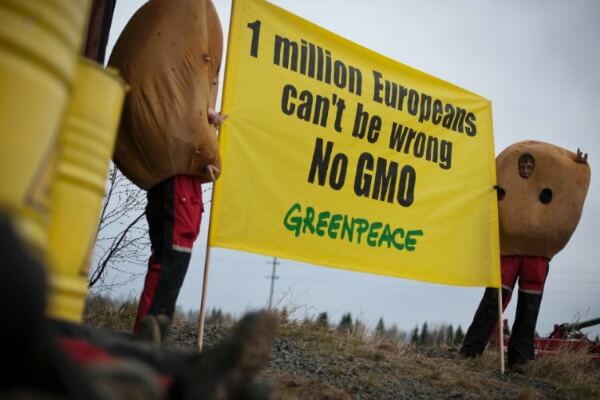
Viewpoint: Europe’s GMO process-based crop regulations are a great way to kill innovation

amflora potatoes

In 2002, Europe establishing a new regulatory agency, the European Food Safety Authority (EFSA) to resolve its regulation problems regarding GM crops and other food safety challenges. This new agency assesses the risk of the process used to create GM crops, rather than the products created by the technology. While EFSA undertakes the risk assessment, the approval of GM crops is a political one, made by the Standing Committee on Plants, Animals, Food and Feed of the European Commission. To me, this decision has proven to be a disaster for Europe.

Since 2002, the Standing Committee has approved only one GM crop variety for production, a GM potato developed by BASF… in 2010….[It] took 13 years to receive approval …. The functional inability of the EU regulatory system to approve GM crops led BASF to move all of its plant biotech research to North and South America.

By comparison, Canada has approved 85 new GM varieties since 2002. Why is Canada’s GM process so different from the EU? Canada regulates the product that will enter the market and doesn’t differentiate on what process was used to create the product….

Read full, original article: How to Kill Innovation Domestically

Inside a couple’s quest to pay for an experimental gene therapy to save their children

IMG

“We need your help, we really do,” Gary [Landsman] says, his voice breaking. The Landsmans’ two sons—Benny, then 18 months, and Josh, four months—both have a fatal genetic brain disorder called Canavan disease. Benny, limp on his mother’s lap, is already affected by nerve loss. Josh isn’t yet. But he will be if nothing is done.

Jennie hit Google and started e-mailing scientists. Here’s what she learned: there may be a way to fix the genetic error in the boys’ brains. But the family would have to pay for it themselves.

The Landsmans had discovered gene therapy, technology that uses viruses to add healthy genes to cells with defective ones.

In Florida, a single boy was treated with a Canavan gene therapy in 2017 after his parents paid for the experiment. They did it under an exemption in federal rules called “expanded access,” which can allow unapproved drugs to be offered to specific patients “whose life is immediately threatened.”

That experiment fell into a gray zone, not quite research and not quite medicine. It is the same pathway the Landsman family is trying to follow.

Their video, posted to Facebook and later GoFundMe, a crowdfunding site, went viral. By now, they’ve been on TV and in People magazine. Eight thousand donors have already given more than $1.5 million.

Read full, original post: Two sick children and a $1.5 million bill: One family’s race for a gene therapy cure

FDA launches initiative to support plant, animal biotechnology innovation

Biotechnology

Today, [October 30] the U.S. Food and Drug Administration announced the Plant and Animal Biotechnology Innovation Action Plan to outline the key priorities the agency will pursue to support innovation in plant and animal biotechnology while advancing the agency’s public health mission. The overall goal of the action plan is to ensure the safety of plant and animal products of biotechnology while avoiding unnecessary barriers to future innovation.

Key next steps from the action plan include:

Animal Biotechnology

The FDA is committed to adopting and clarifying a comprehensive policy framework for the development and oversight of animal biotechnology products, including for drug and food products derived from intentionally genetically altered animals.

In the coming year, the FDA intends to issue several guidance documents in the area of animal biotechnology. Among these documents will be highly anticipated guidance for industry that clarifies FDA’s regulatory approach using risk-based categories for regulatory oversight, gives clear criteria and risk questions or data requirements where relevant for each risk-based category, and provides flexibility to move across categories as science and technology progress and FDA gains greater understanding with product risk profiles.

Plant Biotechnology for Human and Animal Food Use

After reviewing information submitted to the 2017 request for comment on the use of genome editing techniques to produce new plant varieties for use in human or animal food, the FDA intends to publish draft guidance for industry to explain FDA’s current regulatory policy for human and animal foods produced through modern molecular plant breeding techniques.

Continued Collaboration with Stakeholders

As part of efforts to engage with domestic and international partners, the FDA will coordinate with the U.S. Environmental Protection Agency and the U.S. Department of Agriculture as the agency clarifies its oversight of genome edited products, consistent with the U.S. Coordinated Framework for the Regulation of Biotechnology. The FDA will also support international regulatory alignment on risk-based genome editing policies and provide leadership in international forums.

In addition, the FDA will work with domestic and international partners and engage in a dialogue about how transformative biotechnology tools, such as gene drives, may eventually strengthen measures to address vector-borne diseases.

Read full, original article: FDA Announces Plant and Animal Biotechnology Innovation Action Plan

Boltzmann brain: You may be living in your own simulated reality

brain

The paradox of the Boltzmann Brain can really pull the rug from under you if you follow it to all of its logical and illogical extents. This mind-churning idea proposes that the world is quite possibly just an effect of your disembodied consciousness and doesn’t really exist. And your sense of self is just a statistical fluctuation. It’s something that is more likely to come into existence by chance than the Universe that would have had to produce it.

So are you really a Boltzmann Brain? Let’s look at the underlying thinking.

[Physicist Ludwig Boltzmann believed] it would be more likely for random quantum fluctuations in nature to create something simpler than our astounding Universe – for example, a self-aware entity that believes it is a person in a world full of people, history, and particular physics. But such a person – let’s say you – is only full of all the knowledge and experiences because you are made that way by the fluctuation that created you. There is nothing really there but your self-awareness.

Debates of the idea persist, however, especially as it is hard to disprove. After all, if you were a Boltzmann Brain, everything that you could come up with to prove or disprove it would likely be because of the hallucinations your consciousness is having.

Read full, original post: Are you a Boltzmann Brain? Why nothing in the Universe may be real

Human evolutionary theory challenged in global study by diversity of birth canals

birth canals

The shape of a mother’s birth canal is a tug-of-war between two opposing evolutionary forces: It needs to be wide enough to allow our big-brained babies to pass through, yet narrow enough to allow women to walk efficiently. At least that’s been the common thinking. But a new study reveals birth canals come in a variety of shapes in women around the world.

The idea that women’s pelvises have been shaped by an evolutionary compromise—also known as the “obstetrical dilemma”—has been influential in anthropology, says Jonathan Wells, an expert in human evolution.

Lia Betti, a biological anthropologist at the University of Roehampton in London and evolutionary ecologist Andrea Manica of the University of Cambridge in the United Kingdom, measured the pelvises of 348 female human skeletons from 24 different parts of the world. The birth canals were far from carbon copies of each other.

The work could improve practices surrounding childbirth, Betti says. For example, a fetus must rotate to negotiate the twisting passage of the birth canal during labor, and these movements may vary depending on the shape of the birth canal.

The new findings suggest that if a baby’s movements differ from what’s considered normal for a particular region, she says, it’s not necessarily cause for concern. It may simply reflect the range of birth canal shapes seen throughout the world.

Read full, original post: Birth canals are different all over the world, countering a long-held evolutionary theory

We started eating chocolate 1,500 years earlier than previously thought, paper says

download

New archaeological evidence suggests humans were cultivating and consuming cacao—the crop from which chocolate is produced—as long as 5,300 years ago, which is 1,500 years earlier than previously thought. What’s more, cacao was initially domesticated in the equatorial regions of South America, and not Central America.

Humans, as a new paper published today [October 29] in Nature Ecology & Evolution shows, have been consuming chocolate for a very long time.

[T]he researchers found starch grains linked to Theobroma inside pots, along with theobromine residue (a bitter alkaloid) that’s produced by T. cacao but not related wild species. What’s more, they also found bits of ancient DNA linked to T. cacao. With these three independent lines of evidence—starch grains, chemical biomarkers, and DNA sequences—the researchers have scored a hat-trick.

“These three methods combine to definitively identify a plant that is otherwise notoriously difficult to trace in the archaeological record because seeds and other parts quickly degrade in moist and warm tropical environments,” said [Sonia Zarrillo from the University of Calgary, lead author of the study].

Read full, original article: Chocolate Has a New Origin Story

Climate change and rice: How some of the world’s poorest nations may suffer

thailands rice farmers
Rice is the primary food source for more than 3 billion people around the world. Many are unable to afford a diverse and nutritious diet that includes complete protein, grains, fruits and vegetables. They rely heavily on more affordable cereal crops, including rice, for most of their calories.

My research focuses on health risks associated with climate variability and change. In a recently published study, I worked with scientists from China, Japan, Australia and the United States to assess how the rising carbon dioxide concentrations that are fueling climate change could alter the nutritional value of rice. We conducted field studies in Asia for multiple genetically diverse rice lines, analyzing how rising concentrations of carbon dioxide in the atmosphere altered levels of protein, micronutrients and B vitamins.

Our data showed for the first time that rice grown at the concentrations of atmospheric carbon dioxide scientists expect the world to reach by 2100 has lower levels of four key B vitamins. These findings also support research from other field studies showing rice grown under such conditions contains less protein, iron and zinc, which are important in fetal and early child development. These changes could have a disproportionate impact on maternal and child health in the poorest rice-dependent countries, including Bangladesh and Cambodia.

climate 6 21 18 2
Many of poorest regions in Asia rely on rice as a staple food. Image credit: IRRI, CC BY-NC-SA

Carbon dioxide and plant growth

Plants obtain the carbon they need to grow primarily from carbon dioxide in the atmosphere, and draw other required nutrients from the soil. Human activities – mainly fossil fuel combustion and deforestation – raised atmospheric CO2 concentrations from about 280 parts per million during pre-industrial times to 410 parts per million today. If global emission rates continue on their current path, atmospheric CO2 concentrations could reach over 1,200 parts per million by 2100 (including methane and other greenhouse gas emissions).

Higher concentrations of CO2 are generally acknowledged to stimulate plant photosynthesis and growth. This effect could make the cereal crops that remain the world’s most important sources of food, such as rice, wheat and corn, more productive, although recent research suggests that predicting impacts on plant growth is complex.

Concentrations of minerals critical for human health, particularly iron and zinc, do not change in unison with CO2 concentrations. Current understanding of plant physiology suggests that major cereal crops – particularly rice and wheat – respond to higher CO2 concentrations by synthesizing more carbohydrates (starches and sugars) and less protein, and by reducing the quantity of minerals in their grains.

climate 6 21 18 3.jpg
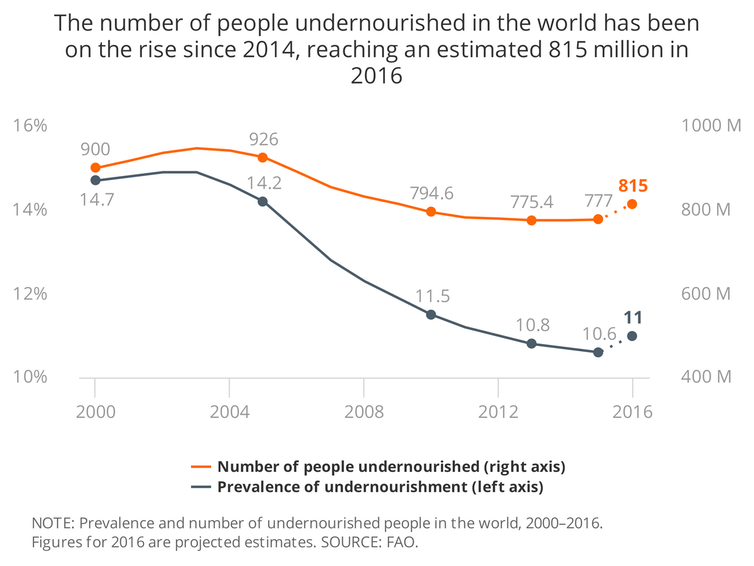
After steadily declining for over a decade, global hunger appears to be on the rise, affecting 11 percent of the global population. Image credit: FAO, CC BY-ND


The importance of micronutrients

Worldwide, approximately 815 million people worldwide are food-insecure, meaning that they do not have reliable access to sufficient quantities of safe, nutritious and affordable food. Even more people – approximately 2 billion – have deficiencies of important micronutrients such as iron, iodine and zinc.

Insufficient dietary iron can lead to iron deficiency anemia, a condition in which there are too few red blood cells in the body to carry oxygen. This is the most common type of anemia. It can cause fatigue, shortness of breath or chest pain, and can lead to serious complications, such as heart failure and developmental delays in children.

Follow the latest news and policy debates on sustainable agriculture, biomedicine, and other ‘disruptive’ innovations. Subscribe to our newsletter.

Zinc deficiencies are characterized by loss of appetite and diminished sense of smell, impaired wound healing, and weakened immune function. Zinc also supports growth and development, so sufficient dietary intake is important for pregnant women and growing children.

Higher carbon concentrations in plants reduce nitrogen amounts in plant tissue, which is critical for the formation of B vitamins. Different B vitamins are required for key functions in the body, such as regulating the nervous system, turning food into energy and fighting infections. Folate, a B vitamin, reduces the risk of birth defects when consumed by pregnant women.

climate 6 21 18 4.jpg
Anemia affects one-third of women of reproductive age globally – or about 613 million women. Image credit: FAO, CC BY-ND

Significant nutrition losses

We carried out our field studies in China and Japan, where we grew different strains of rice outdoors. To simulate higher atmospheric CO2 concentrations, we used Free-Air CO2 Enrichment, which blows CO2 over fields to maintain concentrations that are expected later in the century. Control fields experience similar conditions except for the higher CO2 concentrations.

On average, the rice that we grew in air with elevated CO2 concentrations contained 17 percent less vitamin B1 (thiamine) than rice grown under current CO2 concentrations; 17 percent less vitamin B2 (riboflavin); 13 percent less vitamin B5 (pantothenic acid); and 30 percent less vitamin B9 (folate). Our study is the first to identify that concentrations of B vitamins in rice are reduced with higher CO2.

We also found average reductions of 10 percent in protein, 8 percent in iron and 5 percent in zinc. We found no change in levels of vitamin B6 or calcium. The only increase we found was in vitamin E levels for most strains.

climate 6 21 18 5.jpg
Rice within the octagon in this field is part of an experiment designed to grow rice under different atmospheric conditions. Rice grown under carbon dioxide concentrations of 568 to 590 parts per million is less nutritious, with lower amounts of protein, vitamins and minerals. Image credit: Dr. Toshihiro Hasegawa, National Agriculture and Food Research Organization of Japan, CC BY-ND

Worsening micronutrient deficiencies

At present, about 600 million people — mostly in Southeast Asia — get more than half of their daily calories and protein directly from rice. If nothing is done, the declines we found would likely worsen the overall burden of undernutrition. They also could affect early childhood development through impacts that include worsened effects from diarrheal disease and malaria.

The potential health risks associated with CO2-induced nutritional deficits are directly correlated to the lowest overall gross domestic product per capita. This suggests that such changes would have serious potential consequences for countries already struggling with poverty and undernutrition. Few people would associate fossil fuel combustion and deforestation with the nutritional content of rice, but our research clearly shows one way in which emitting fossil fuels could worsen world hunger challenges.

How could climate change affect other key plants?

Unfortunately, today there is no entity at the federal, state or business level that provides long-term funding to evaluate how rising CO2 levels could affect plant chemistry and nutritional quality. But CO2-induced changes have significant implications, ranging from medicinal plants to nutrition, food safety and food allergies. Given the potential impacts, which may already be occurring, there is a clear and urgent need to invest in this research.

It is also critical to identify options for avoiding or lessening these risks, from traditional plant breeding to genetic modification to supplements. Rising CO2 concentrations are driving climate change. What role these emissions will play in altering all aspects of plant biology, including the nutritional quality of the crops that we use for food, feed, fiber and fuel, remains to be determined.

Kristie Ebi is the Rohm & Haas Endowed Professorship in Public Health Sciences and she been conducting research and practice on the health risks of climate variability and change for twenty years. Her research focuses on the impacts of and adaptation to climate variability and change, including on extreme events, thermal stress, foodborne safety and security, and vector borne diseases. Follow her on Twitter @kristie_ebi

A version of this article was originally published on the Conversation’s website asClimate change will make rice less nutritious, putting millions of the world’s poor at riskand has been republished here with permission.

Not-so-mad scientists and why they’re making human body parts

mad scientists

Halloween brings a cornucopia of candy body parts, so it’s a good time to review recent advances in organoid technology.

I’m missing a few body parts myself, so I have an interest in replacements that are biological: Mini-organs grown from stem cells. They’re even implanted with chips to record and send data, like this smart liver. Organoids more accurately model humans than do mice or monkeys, and can stand-in for experiments done on people. With that in mind, let’s take a look at some of the recent developments in this arena.

Mini-kidneys

Polycystic kidney disease affects about 12 million people, gumming up the intricate, highly symmetrically aligned tubules of the paired organs that filter 50 gallons of blood a day. Researchers from the Kidney Research Institute at the University of Washington describe their mini-kidneys, grown from human stem cells, in Nature. The organoids are providing an unprecedented peek into the origin of the disease. The researchers can make cysts come and go, shrink or balloon, by tweaking the chemical surroundings.

“We’ve discovered that polycystin proteins, which are causing the disease, are sensitive to their micro-environment. If we can change the way they interact or what they are experiencing on the outside of the cell, we might be able to change the course of the disease,” said research scientist Nelly Cruz.

bladder
Bladder balls. Image credit: Columbia University Irving Medical Center

A bladder avatar

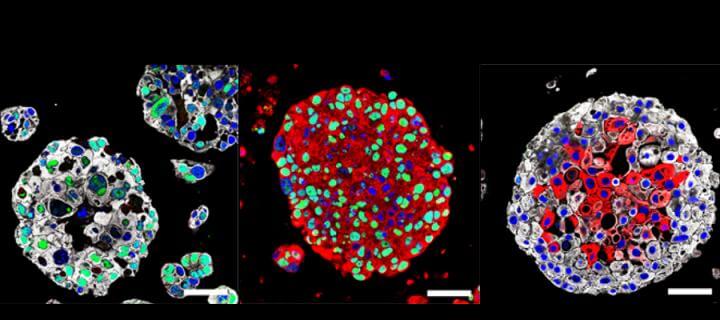
The kidneys release urine through tubes to the bladder, which comes in organoid form too. At Columbia University Irving Medical Center, cells from bladder cancer patients are being nurtured into one-millimeter-diameter spheres that may be helpful in making treatment decisions. The investigators can identify mutations as the cancer progresses in the bladder organoids, which may indicate which drugs would be most effective, and to which the cancer has become resistant.

Michael Shen, leader of the team that published the paper about the organoids in Cell, said:

Organoids are essentially avatars of a patient’s tumor. Having these personalized laboratory models, which we can make in a matter of weeks, will let us test multiple different drugs on the tumor. We’ll be able to study how bladder tumors evolve and perhaps learn how to prevent tumors from becoming resistant to treatment.

To test the predictive power of the bladder spheres, the researchers are conducting “co-clinical” trials that treat patients and their “avatars” with the same drug. That’s precision medicine!

halloween body parts gummy candy a
Gummy organoids

Digestive tract

Someday an entire human digestive tract may gestate in a lab dish, but for now, researchers are sculpting a few of the working parts.

A paper in Nature Communications describes recreating mouse salivary glands. If perfected in people, the glands might stand in for those damaged in cancer treatment or from autoimmune Sjogren’s syndrome.

Researchers from Showa University and the RIKEN Center for Biosystems Dynamics Research, both in Japan, recapitulated development using a biochemical brew to coax embryonic stem cells to form the lining tissue (ectoderm) that gives rise to the gland. Add the genes for two transcription factors (Sox9 and Foxc1) plus a pair of signaling proteins (FGF7 and FGF10) and presto! A salivary gland unfurls. Implanted into mice lacking glands with a smidgeon of surrounding mesenchymal tissue, and saliva poured forth in response to feeding the rodents citric acid.

After a swallow, saliva traverses the esophagus, the tube to the stomach. Researchers at the Cincinnati Children’s Center for Stem Cell and Organoid Medicine have created an esophagus organoid from human pluripotent stem cells, reported in Cell Stem Cell. The organoid grows to just under a millimeter in about two months.

esophagus
An esophagus. Image credit: Cincinnati Children’s

The stand-in food tube can be used to study cancer, birth defects, common conditions like gastric reflux, and also “diseases like eosinophilic esophagitis and Barrett’s metaplasia, or to bioengineer genetically matched esophageal tissue for individual patients,” said Jim Wells, lead investigator of the study.

Just as researchers fashioned the salivary gland organoid from its layer of origin in the embryo, the ectoderm, the esophagus experts reached back in developmental time to the endoderm, the inner embryo layer that gives rise to the digestive organs. They tweaked the transcription factor Sox2, which diverts developmental signals away from forming lungs to forming the esophagus.

A model gut

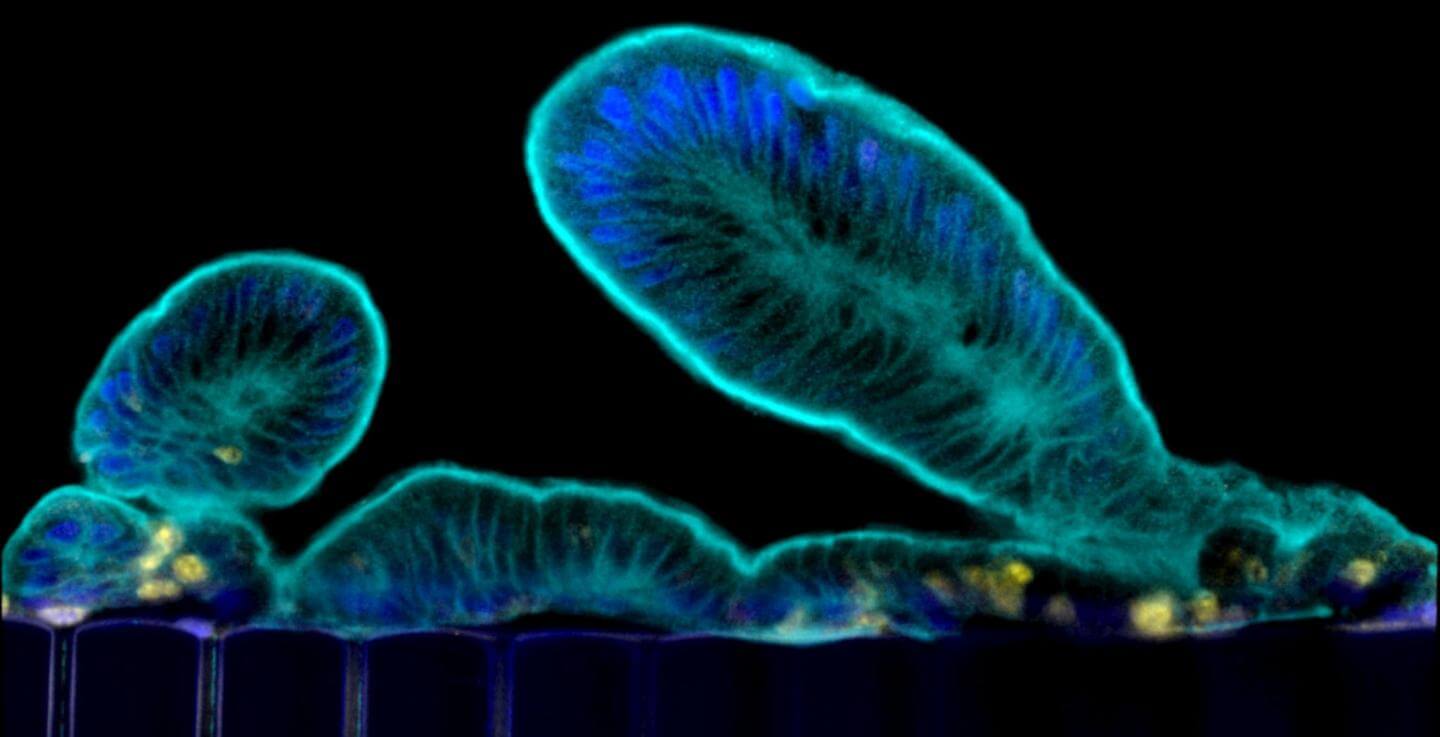
A bit of healthy human small intestine lives at the Wyss Institute for Biologically Inspired Engineering at Harvard, created from intestinal stem cells plucked from biopsies. It’s described in a new article in Scientific Reports.

The small intestine is where digestion completes and nutrients are absorbed into capillaries looped into the finger-like velvety villi that project into the tube, reaching the bloodstream. It’s also the site of many digestive ills, infections, and inflammation.

Creating intestinal organoids had been challenging because they formed thick-walled cysts in culture, not the distinctive lining that withstands the pulsing passage of food. And they lacked a blood supply.

gut
Small intestinal villi. Image credit: Wyss Institute at Harvard University

The researchers developed a protocol that coaxed the recalcitrant organoids to form villi poking inward, just like in a body. “This approach presents a steppingstone for the investigation of normal and disease-related processes in a highly personalized manner, including the transport of nutrients, digestion, different intestinal disorders, and intestinal interactions with commensal microbes as well as pathogens,” said Donald Ingber, founding director of the institute.

The organoids sported the cell types found in the duodenum, the part of the small intestine that receives churned food from the stomach: the enterocytes that absorb nutrients, the Goblet cells that spew mucus, and cells that secrete hormones, sense signals, and regulate the microbiome. The organoids persist happily for weeks in devices called Organ Chips. Next up: the rest of the small intestine and on to the colon.

Brain-in-a-dish

Frankenstein emerges from the StormGrowing human brains in a lab dish has long been more the stuff of science fiction than medical research, until organoids came on the scene. Researchers from the University of California San Diego School of Medicine have published a report in Stem Cells and Development introducing brain organoids directly grown from reprogrammed human cells, skipping the difficult stage of taking them back to an embryonic state. The approach circumvents the fact that nerve cells don’t divide, and rapidly produces “cortical organoids” from hundreds of patients at a time.

The neurons and other cells in the cerebral organoids can knit a variety of brain regions, sending electrochemical messages in step to the same gene expression cues as the neurons of a brain. The organoids already have an impressive track record.

In previous work team leader Alysson Muotri and her colleagues used their brains-in-a-dish to link Zika virus to birth defects, repurpose an HIV drug to treat a genetic brain disease, and to fashion “Neanderthalized mini-brains.”  Muotri mentioned use of the organoids to study the underpinnings of autism. “If we want to understand the variability in human cognition, this is the first step,” he said.

In another variation on the theme, researchers at Wake Forest Institute for Regenerative Medicine have developed brain organoids that mimic the blood-brain barrier, enabling them to investigate drug action.

The eyes have it

Chocolate or jawbreaker eyeballs for Halloween have been around for ages, perhaps presaging human retinal organoids.

Follow the latest news and policy debates on sustainable agriculture, biomedicine, and other ‘disruptive’ innovations. Subscribe to our newsletter.

At University College London, Robin Ali and his colleagues tested six types of viruses on their ability to deliver genes to treat specific layers of the human retina, in eye organoids, published in Human Gene Therapy. The organoids confirmed that photoreceptor cells (rods and cones) and the tile-like retinal pigment epithelium beneath them are the top spots.

Meanwhile, Robert Johnston, at Johns Hopkins University, and his team are using human retinal organoids derived from stem cells to zero in on the three types of cone photoreceptors that confer color vision, published in Science. Most mammals have only two types of cones and live in a duller world.

PA
Eye candy

The researchers saw that as the disembodied human retinas form, blue cones materialize first, then red and green. Surprisingly, the molecular switch to delineate the colors is thyroid hormone, made right there in the eye, not the thyroid gland. Toggling the hormone supply determined the percentages of the different cone types.

The link to thyroid hormone could explain why why pre-term babies have a higher incidence of visual disorders: they don’t have enough of the hormone from the mother. The hope is to use the findings to develop a treatment for other types of colorblindness, and similar work on the macula could tackle macular degeneration.

Johnston put his group’s work into context. “What’s really pushing the limit here is that these organoids take nine months to develop just like a human baby. So what we’re really studying is fetal development.”

With organoids increasingly standing in for animal models and human patient volunteers, body-parts-in-a-dish will continue to replicate parts of us, painlessly, in ordinary laboratory glassware.

Ricki Lewis is the GLP’s senior contributing writer focusing on gene therapy and gene editing. She has a PhD in genetics and is a genetic counselor, science writer and author of The Forever Fix: Gene Therapy and the Boy Who Saved It, the only popular book about gene therapy. BIO. Follow her at her website or Twitter @rickilewis

Chasing the virus behind surging polio-like illness

polio
[Fall 2014] Kevin Messacar, a pediatrician at Children’s Hospital Colorado, started seeing a wave of children with inexplicable paralysis. All of them shared the same story. One day, they had a cold. The next, they couldn’t move an arm or a leg. In some children, the paralysis was relatively mild, but others had to be supported with ventilators and feeding tubes after they stopped being able to breathe or swallow on their own.

The condition looked remarkably like polio—the viral disease that is on the verge of being eradicated worldwide. But none of the kids tested positive for poliovirus. Instead, their condition was given a new name: acute flaccid myelitis, or AFM.

AFM is a new term, but not a new syndrome. Its package of symptoms can be caused by a wide range of factors, [including] poliovirus, West Nile virus, environmental toxins, and genetic disorders.

One particular enterovirus, known as EV-D68, has emerged as the lead suspect.

But it’s not in every patient. So far, the CDC has only found the virus in the spinal fluid of a single child, and in fewer than half of the stool samples or nasal swabs it tested. “I am frustrated that, despite all of our efforts, we haven’t been able to identify the cause of this mystery illness,” [CDC director Nancy Messonnier said.]

Read full, original post: The Main Suspect Behind an Ominous Spike in a Polio-like Illness

Why the patent system could help shape the future of gene editing

cannabis patents the x

A crucial part of the arsenal for shaping the future of gene editing is hiding in plain sight: the patent system. In the past, patents have played an important part in regulating new technologies and research, from the atom bomb to work involving human embryonic stem cells.

How could patents help? These legal instruments — which give inventors the right to prevent others from commercializing their technologies — are usually seen solely as contracts that incentivize innovation. In fact, they can do much more, directly and indirectly.

What I’m calling for, however, [is] more-formal, comprehensive, government-driven regulation using the patent system.

This would cover all domains of gene editing, not just certain areas of research. It would have more transparency and political legitimacy than individual efforts ever could, by involving government institutions that are explicitly charged with representing the public interest. And it would enable governments to exploit the unique vantage point that patent offices have on the early stages of scientific fields and industries.

Under such a framework, the committee could identify inventions that are likely to be so important to the public interest that the government should monitor closely how associated patents are used and licensed, and step in to force broad licensing if a patent holder charges too high a price for access to their invention.

Read full, original post: Use the patent system to regulate gene editing

CRISPR gene editing could save pigs from devastating disease

pig poo happy pigs

As flu season rears its ugly head, humans aren’t the only ones on the virus’ warpath. Pigs are also vulnerable to deadly infections. Porcine illness can mean huge losses for farmers and price hikes for pork. Now, new research shows gene editing could be a solution.

Newborn pigs are particularly susceptible to two viruses: transmissible gastroenteritis virus (TGEV) and porcine epidemic diarrhea virus (PEDV) …. In 2013, infection with the virus killed nearly 7 million pigs ….

Randall Prather, a genetic engineer and molecular biologist …. suspected a molecule called ANPEP helped the deadly viruses take hold in the pigs. He thought deleting ANPEP in the pigs’ genomes might protect them from infection. Prather had seen success with a similar approach a few years ago. Knocking out a gene called CD163 in pregnant pigs protected the offspring from porcine reproductive and respiratory syndrome virus ….

…. Prather and colleagues used CRISPR/Cas9 gene editing to change two letters in the pigs’ 3 billion-letter genome. Pigs with the genetic modification did not make the ANPEP molecule, but appeared healthy, grew normally and produced offspring of their own, the researchers reported. Then they infected the gene-edited pigs with the TGEV and PEDV viruses.

When the researchers examined the pigs for signs of infection, they found getting rid of the ANPEP molecule prevented the TGEV virus from sickening the pigs ….

Read full, original article: Scientists Use CRISPR To Protect Pigs Against Deadly Virus