


Agriculture & Food
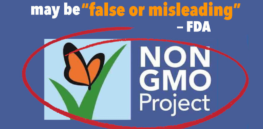
Viewpoint: Will FDA finally crack down on ‘false and misleading’ Non-GMO Project labels?
How much will mega food companies care until FDA decides to enforce the law? ...
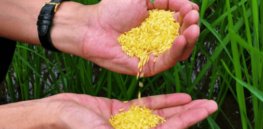
Golden Rice, Part 2: Will nutritionally enhanced rice work and help solve malnutrition in developing countries?
For more than a quarter of a century, vitamin A deficiency (VAD) has been recognized by the United Nations as ...

Podcast: Where blackberries came from—and how genetics made them so delicious
Blackberries are a popular, healthy fruit consumed by people all over the world. Over the last century, significant progress has ...

Organic food sales at $48 billion, now almost 6% of food, despite continued decline in market growth rate
Sales of organic food in the U.S. last year totaled a record $47.9 billion — 5.9% higher than 2017, according ...
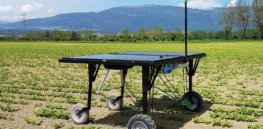
Market for agricultural robots expected to hit $87.9 billion by 2025
A new report by market analysts and consultants Tractica has said that global shipments of robots designed for agricultural use ...

Viewpoint: Why we can’t seem to bridge the gulf that divides pro- and anti-GMO forces
The opposition to GMOs is based not on scientific evidence, but on personal values and ideology. In effect, the two ...
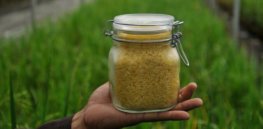
Golden Rice, Part 1: The story of a GMO crop that could benefit billions of children a year
For billions of people, the stakes could not be higher ...
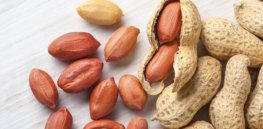
DNA sequencing reveals complicated evolution of peanuts, staple crop grown on 64 million acres worldwide
According to the USDA, farmers around the world grow 44.9 million metric tons of peanuts on more than 64 million ...

Reduced pesticide use in organic farming boosts manual labor as much as 35%
Gleaming organic products have come to occupy an increasingly large portion of grocery store shelves. Many may think that compared to traditional ...
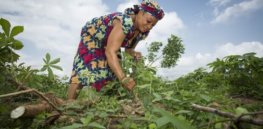
Viewpoint: Anti-GMO forces in Nigeria have abandoned reason and the nation’s best interests
Protecting health and and food security is best done through dialogue and education, not threats and smear campaigns ...

‘Pan genome’ of world’s wheat could supply genetic variation to breed new crop varieties
The growing demand for wheat, the onset of global warming, and the transitioning of Western farming away from intensive agriculture, ...

Video: Fine-tuning beneficial mutations breeds higher yielding tomatoes
Unexpected interactions between mutations can be a thorn in the side for plant breeders, especially when they’re trying to promote ...
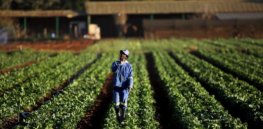
Uganda’s anti-GMO activists blamed for stonewalling nation’s new biosafety rules
A campaign by non-governmental organizations is determined to keep Uganda free of GMOs ...

Video: John Innes Centre battles nutrient deficiency with iron-fortified biotech wheat
Iron is an important micro-nutrient, boosting haemoglobin levels in the blood. Many populations and particularly women and children are currently ...

Viewpoint: Europe’s ‘de facto’ GMO crop ban, mandatory labeling scheme ‘hinder innovation’
An excellent new paper from a trio of Danish researchers, two of whom are based out of the University of Copenhagen, argues that the European ...

Does Big Ag control farmers through seeds patents? Farmers don’t think so.
Farmers have a wide range of choices for seeds, including conventional and GMO. And most, for economic and performance rather ...

Viewpoint: ‘Political populism’ dictates Europe’s bureaucratic anti-GMO crop rules
As individuals, we’re able to decide whether a single action is acceptable to us, or deemed to be too risky ...
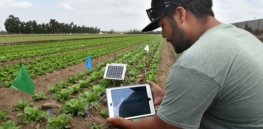
IBM, Yara International announce digital platform to optimize crop production for individual farms
Yara International, a leader in crop nutrition, and IBM announced [April 26] an agreement to build the world’s leading digital ...

Omega-3 oil from GMO plants equivalent to fish oil, human clinical study shows
Research .... has shown that key omega-3 fatty acids within GM plant oils are taken up and processed by the ...

Canadian farmers anticipate access to new GMO crops as US-China trade deal nears completion
Canadian farmers may benefit from the trade dispute between the United States and China to the tune of hundreds of ...
African farmers look to genetic engineering in fight against plant diseases and pests
The benefits of genetic engineering will not come to fruition in Africa if the opponents of the technology continue to ...
Chinese import restrictions block Brazil’s access to latest GMO crops
Brazil Foreign Minister Ernesto Araujo said on [April 25] that the country must work with China to reduce non-tariff barriers ...

Infographic: 1.3 billion tons of food end up in the trash. Here’s how biotech crops can help
Each year the world wastes 1.3 billion tons of food—1/3 of global production. The US throws away approximately 40 percent ...

Taming wild plants with CRISPR gene editing in quest to find new foods
A pilot project with groundcherries demonstrates the huge potential in gene editing wild plants for food ...

Video: Where did the infamous needle-in-a-tomato anti-GMO image come from?
It’s become something of a personal quest: find the original “syringe-in-the-plant” image. For the last 5 years, I’ve been communicating ...

Viewpoint: 5 popular Netflix documentaries serve up pseudoscience about agriculture, chemicals and nutrition
Netflix brought in $15.8 billion in revenue in 2018 in part because the streaming service floods subscribers with a deluge ...

CRISPR could save banana, major food source for 500 million people, from deadly disease, climate change
CRISPR/Cas9‐based genome editing is offering new hope for protecting a critical food security crop by developing climate-smart banana varieties. Research ...
