


Daily Human Digest
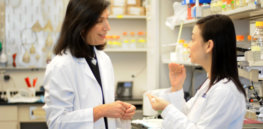
Meet Huda Zoghbi, pediatric neurologist working on rare diseases
Huda Zoghbi has uncovered the molecular mechanisms of normal neurodevelopment and neurodegeneration by probing the complexities of rare neurological diseases ...

African nations push back against proposed UN ban on gene drives
Africa has kicked against a proposed moratorium on the environmental release of organisms containing gene drives now under debate at ...

How DNA tests solved the mystery of this strange, now-extinct monkey
For nearly 100 years, scientists haven’t been able to agree on the evolutionary origins of a strange, now-extinct monkey that ...
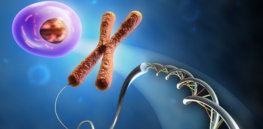
New techniques could transform epigenetics research, ameliorating diseases
Epigenetics, the study of mechanisms by which genes are turned on or off without altering their genetic code or DNA ...

Video: Lab-grown human heart tissue beats ‘like the real thing’
A tiny pulsing strip of muscle could help save the lives of 33 million people. That’s how many people suffer ...

Does being a night owl increase breast cancer risk?
A paper presented at the National Cancer Research Institute [November 5] has made for some flashy headlines, like this confident declaration from India’s Economic Times: ...

Personalized medicine, big data could lead to better control of our own health
At Singularity University’s Exponential Medicine conference in San Diego ... Dr. Ran Balicer, director of the Clalit Research Institute in Israel, painted a ...

Why our shrinking attention spans might be a good thing
Our supposedly shrinking attention spans are a hot topic these days—as you may have seen on TV or heard on a ...

Start up Nebula Genomics offers free full genome sequencing, but there’s a privacy catch
Information wants to be free, says the old internet meme, and a genomics company will now apply that to DNA: ...

Casting doubt on whether our DNA can be tweaked to increase human lifespan
Estimates predict that somewhere between 15 percent and 30 percent of the variability in human lifespan is due to genetics ...

The future is now: Here are the most promising synthetic biology projects
Never has it been more possible to engineer biology (see ‘Tailor, not tinker’). But solving grand problems requires a switch ...

MRI in a ski hat? Seeking better ways to hack our brains
[A]t Singularity University’s Exponential Medicine conference in San Diego, technologists presented new non-invasive devices that seek to simplify and democratize brain modulation ...

Why probiotics could actually be bad for you
Millions of Americans take probiotics—live bacteria deemed useful—assuming there can be only positive effects. The truth is that you really ...

Resurrecting scents that went extinct 100 years ago
Move aside, Chanel No. 5. Scientists have now created a scent that’s even older than the iconic perfume, even if ...

You sound down: Using AI to spot depression in a person’s voice
[T]he notion that artificial intelligence could help predict if a person is suffering from depression is potentially a big step ...

How a father’s stresses alter sperm and can ‘leave his children scarred’
A stressed-out and traumatized father can leave scars in his children. New research suggests this happens because sperm “learn” paternal ...

Three bird species in one? Inside a warbler’s puzzling DNA
A Pennsylvania birder spotted the bird of a lifetime in his backyard this past spring—it was a hybrid of three ...

‘Baby bust’—Why fertility rates are plummeting around the world
There has been a remarkable global decline in the number of children women are having, say researchers. Their report found ...

How we can improve mortality rates for people with mental illnesses
[P]eople with serious mental illness die 10 to 25 years earlier than the general population. It’s not difficult to understand why. Even ...
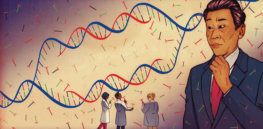
Evolved adaptation: Challenges to Darwin’s belief that mutations are random and neutral
When Charles Darwin articulated his theory of evolution by natural selection in On the Origin of Species in 1859, he ...

Brains of fetuses could suffer from exposure to marijuana
Marijuana has been legalized in some capacity in 31 U.S. states, in large part due to a softening stance around ...

Epigenetic clues could assist crime investigations by revealing age range, lifestyle habits of suspects
[The] field of forensic epigenetics [uses] the markers that sit on top of DNA and modify it’s expression, rather than the ...

‘It’s not too late’: The quest to reverse autism at any age
[T]he average age of diagnosis for a child with autism is over four years. Because of late diagnoses, many of ...

Resurrecting Earth’s ancient enzymes in quest to make more effective drugs and chemicals
In the 1990 Michael Crichton novel "Jurassic Park," scientists resurrect extinct species, with disastrous, page-turning consequences. But what if the ...

If aliens exist, we could signal them with a massive laser…and why that’s a bad idea
If extraterrestrial life exists in our neck of the Milky Way, how would we make our presence known to one ...

Creating life from the ‘bottom up’: Can we make cells from scratch?
There were just eight ingredients: two proteins, three buffering agents, two types of fat molecule and some chemical energy. But ...

‘Blinding speed’: How an ice age led to the populating of the Americas
Tens of thousands of years ago, two gigantic ice sheets smothered the northernmost parts of what has since been named ...
