


Daily Human Digest

‘Synthetic media’: How AI could make the era of ‘fake news’ far worse
In the emerging world of “synthetic media,” the work of digital-image creation—once the domain of highly skilled programmers and Hollywood ...

Can loneliness and isolation damage the brain?
Mice yanked out of their community and held in solitary isolation show signs of brain damage. After a month of ...

Meet Grunya Sukhareva, the forgotten woman who defined autism
[In 1924,] a gifted young doctor, Grunya Efimovna Sukhareva, saw [a 12-year-old] boy. Caring and attentive, she observed him with ...

Did Neanderthals have their own language?
Did Neanderthals have language? Before trying to answer that, I should admit my bias: I’m team Neanderthal. As an anthropologist ...
How emigrating to another country can change our microbiome
When people immigrate to the United States, their microbiomes quickly transition to a U.S.-associated microbiome, according to research published [November 1] in ...
Exercise as a treatment for Parkinson’s and Alzheimer’s?
Researchers have long recognized that exercise sharpens certain cognitive skills. Indeed, [researcher Hiroshi] Maejima and his colleagues have found that ...

Understanding environmental risk factors for autism: What’s real and what’s not
Here, we explain why it is difficult to link autism to environmental factors, and what scientists know about how the ...
Cataloguing brain cells to better understand how our minds work
If you stumbled across a radio or a computer and had no idea how it worked, you would likely first ...

‘Deep learning’ sheds light on natural selection in human DNA
Each person’s genome contains three billion building blocks called nucleotides, and researchers must compile data from thousands of people to ...

Why we should search for alien life within our own Solar System
By examining interstellar asteroids and comets up close, argues Harvard astronomer Avi Loeb, we might be able to tell whether ...

Viewpoint: Why ancestry tests shouldn’t be ‘read as a certainty’
Yes, I’m the kind of person who would take a DNA test with Ancestry and then, curious about whether I’d ...

Tracking autism: ‘Recalibrated’ test may better reflect progression over time
A recalibrated version of a widely used test for autism may accurately reflect autistic children’s development as they grow and ...
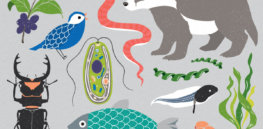
‘Moonshot for biology’: Inside the quest to sequence all life on earth
A mission to sequence the genome of every known animal, plant, fungus and protozoan - a group of single-celled organisms ...

Self-driving cars and life or death decisions: Who gets to define morality for these machines?
You’re driving along the highway when, suddenly, a person darts out across the busy road. There’s speeding traffic all around ...

Search for extraterrestrial life could be hampered by drama surrounding NASA’s telescope dreams
For nearly 20 years, NASA has been planning and constructing a telescope unlike any ever built before: the James Webb ...

Chasing the biology underlying human intelligence
[H]uman intelligence [has increased] over time. Proposed explanations for the phenomenon, now known as the Flynn effect, include increasing education, ...

Using virtual reality to treat social anxiety, post-traumatic stress disorders
Researchers have been developing virtual reality systems that help people overcome specific phobias since the 1990s. VR therapy has since ...

Peering back in time: Engineered synthetic organisms could help answer key evolutionary questions
Evolution is the accepted explanation for life's diversity today, but there are still some holes in the process that we ...

Is ‘interstellar visitor’ an alien probe? ‘We should be appropriately skeptical’
One year ago, in October 2017, astronomers detected the first confirmed interstellar visitor to our solar system – an asteroid dubbed Oumuamua ...

300,000-year-old stone tools found in Saudi Arabian desert could shed light on human migration out of Africa
Stone tools unearthed in Saudi Arabia’s inhospitable Nefud Desert indicate that members of our genus Homo had ventured beyond the ...

Severe autism linked to lower serotonin levels in mothers
Women whose children are severely autistic have lower serotonin levels than do those whose children have mild or moderate autism ...

Was life on Earth ‘just a lucky accident’? Next Mars mission will drill for answers
American rocket engineers are being urged to push their next Mars mission to the limits of technological performance. Space scientists have ...

Explaining CRISPR gene editing to beginners is no easy task
[MIT grad student Avery] Normandin was surrounded by an entirely different kind of laypeople. These folks — or at least ...

Good news for young pot-muddled brains. Study shows impairment is reversible
Taking a monthlong break from pot helps clear away young people’s memory fog, a small study suggests. The results show ...

Directed evolution and Nobel Prize winner Frances Arnold
“Life is a tornado, and I am a leaf,” [Nobelist Frances H.] Arnold says. As the Linus Pauling Professor of ...

Why hyping ‘click-worthy’ autism research can do more harm than good
Click-worthy health and science headlines are an essential currency in today’s media world. When they pertain to autism, they might ...

No, humans haven’t wiped out 60 percent of animals since 1970. But things still look ugly
Since [October 29], news networks and social media have been abuzz with the claim that, as The Guardian among others ...
