


Daily Human Digest
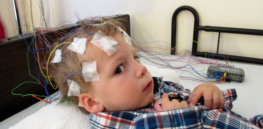
Why electrical brain stimulation to enhance memory or relieve depression may not work
[S]cientists and hobbyists alike look for ways to change the activity of neurons without cutting into the brain and implanting ...

Video: DNA ancestry tests can change the identity of those who see themselves as ‘white’
As more Americans take advantage of genetic testing to pinpoint the makeup of their DNA, the technology is coming head ...
Viewpoint: This flu season is a ‘wake-up call’—we need a universal flu vaccine
Editor's note: Henry I. Miller, a physician, molecular biologist and former flu virus researcher, is the Robert Wesson fellow in scientific ...

3-parent embryos: UK doctors identify two women to undergo breakthrough, controversial procedure
Doctors in Newcastle have been granted permission to create Britain’s first “three-person babies” for two women who are at risk ...

First Britons had dark skin, DNA ear scraps found in 10,000 year-old ‘Cheddar Man’ reveal
The earliest Britons were black-skinned, with dark curly hair and possibly blue eyes, new analysis of a 10,000-year-old Somerset skeleton ...
Genetically attracted: Online dating site wants to use DNA for matchmaking
With the online dating market exploding into a multi-billion dollar business, it's no surprise that entrepreneurs crave a piece of ...

Testing ovarian cancer patients for BRCA gene mutations to better understand risk
Thousands of women diagnosed with ovarian cancer will be tested to see if they are hidden carriers of the gene ...

Future Olympic athletes could be required to have their entire DNA sequenced to test for ‘gene doping’
For years, the World Anti-Doping Agency has considered requiring all Olympic athletes to submit copies of their genetic code. It ...

Should you test your baby for genetic disease risks at birth?
Before Cheryl Connolly gave birth to her first child, Loudon, she ran through the checklist of all the things expecting ...

Video: Watch CRISPR’s cutting skills in action
The CRISPR-Cas9 gene-editing technique is an important concept to know about in these days of biotech advances, but it can be pretty ...
Autism shares gene expression pathways with schizophrenia and bipolar disorder
Gene expression patterns in the brains of people with autism are similar to those of people who have schizophrenia or ...
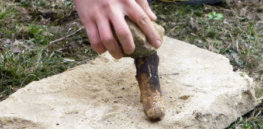
Charred ‘digging sticks’ found in Italy could be oldest Neanderthal tools made with fire
In the spring of 2012, while digging a hole for a thermal pool, construction workers in Grosseto, Italy, hit scientific ...

Female infertility linked to missing egg protein
UC San Diego researchers say they appear to have discovered a previously unknown cause of female infertility. Their study, performed in mice, ...
Our brain is in constant motion—but what makes it tick?
What makes the brain tick? What keeps the constant stream of energy welling up within ourselves when we are alert ...

DARPA: Biohackers should ‘think deeply’ about using themselves as research guinea pigs
[DARPA biotechnology director Justin] Sanchez was not only [at Body Hacking Con] to promote the agency’s expansive research portfolio. He ...

Harvard’s George Church targets consumer genetic testing market, offering royalties for users
Harvard University genetics guru George Church — one of the scientists at the forefront of the CRISPR genetic engineering revolution ...
Viewpoint: Profiteers exploiting complexity of cutting edge science like stem cells
Editor's note: Timothy Caulfield is Canada Research Chair in health law and policy at the University of Alberta and author of Is ...

End of cavities: We may soon be able to regrow our teeth
Currently, the primary way to treat a cavity is to excavate the decay and the surrounding area before filling the ...

Why the ‘Hong Kong’ flu is wreaking so much havoc
In 1968, scientists discovered a new strain of flu circulating around Hong Kong. The virus, though, didn't stay put. It ...

Biohackers forge ahead with independent, unregulated research
Alessandro [Volpato] isn't a hobby chef, nor is he chemist or an electrician. But he might be a mixture of ...
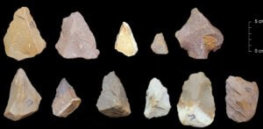
Stone artifacts in India spark new questions about when and how humans developed tools
Sometime around 400,000 years ago human ancestors went on an innovation bender. No longer content to make do with only the large ...

Do cell phones cause cancer? Long-awaited study offers mixed results, no definitive answer
The long-awaited results of a $25 million National Institutes of Health study on the effects of cellphone radio-frequency radiation exposure on animals is ...
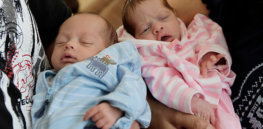
Boys’ and girls’ brains are different as early as 1 month of age
On average, men and women differ psychologically in small but reliable ways, such as in personality, interests, and cognitive performance, but the basis ...

Precision CRISPR repairs blindness in mice, could herald human treatments
In genome-editing, the challenge for CRISPR-wielding scientists is to edit only one of the two copies, or alleles, of every ...

Searching for sleep: Genome mining project looks for insomnia links
In a genetic study of unprecedented size, scientists have searched for inherited causes of insomnia in the DNA [of] 1,310,010 ...
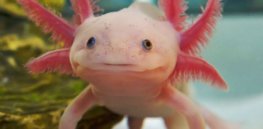
The regenerating axolotl: What can we learn from its giant genome?
Scientists have decoded the genome of the axolotl, the Mexican amphibian with a Mona Lisa smile. It has 32 billion ...
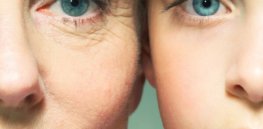
Chasing the ‘Fountain of Youth’ through stem cells
Editor's note: The following is part of a Q&A interview with Vittorio Sebastiano, a research professor of reproductive biology at ...
