


Science Literacy Project Daily Digest

Reducing plastic waste: Recyclable eco-friendly, plant-based packaging in development could dramatically reduce microplastic pollution
Nowadays, those who shop for food in discount stores will almost always be buying plastic packaging as well. The vast ...

Viewpoint: Sri Lanka announces plans to ban agrochemical imports on path toward going 100% organic. It didn’t work in Cuba and here’s why it won’t work here
[Sri Lankan President Gotabaya Rajapaksa's] decision to shift totally to organic agriculture, from conventional, could lead to widespread hunger and ...
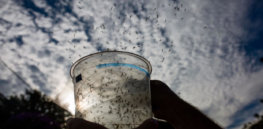
Genetically modified mosquitoes are now hatching in the Florida Keys. Scientists and residents concerned about Zika and other viral diseases couldn’t be more pleased. Here’s why
[M]osquito eggs placed in the Florida Keys are expected to hatch tens of thousands of genetically modified mosquitoes, a result ...
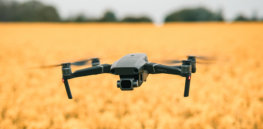
Robotics, sensors, drones, and more: Agricultural technology enables farmers to go green without going broke
While always stewards of the land, [farmers have] faced a continuous squeeze over the decades with the real price of ...

Impact of the pandemic: US birth rate falls to lowest level in almost 50 years
New provisional data released [May 5] by the Centers for Disease Control and Prevention shows the birthrate in 2020 dropped ...

Dunbar’s number: Is the human brain’s capacity for friends really limited to 150?
It's called Dunbar's number: an influential and oft-repeated theory suggesting the average person can only maintain about 150 stable social ...
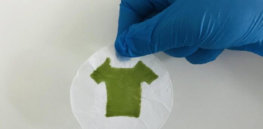
Using 3D printing to create algae-based novel, environmentally-friendly ‘living materials’, from skin to bio-garments
[A] solution that can help save our environment and change the world is 3D printing, which has been used in ...

Podcast — ‘We’re growing food now in a way that doesn’t leave room for other biodiversity’: How GMO crops are affecting the monarch butterfly and what can be done about it
[su_panel color="#3A3A3A" border="1px solid #3A3A3A" radius="2" text_align="left"]Editor's note: The following is an excerpt from an interview with University of Georgia ...

Tired of eating strawberries that taste like cardboard? CRISPR gene editing poised to improve ‘fruit quality’ and disease resistance of next-generation fruits
Recent technology has been developed to precisely engineer genes for traits of interest. This approach is known as "CRISPR" gene ...

Meet Tom, Dick and Wilma: These precision farming robots can ‘maximize yields at the individual plant level’
[A] UK startup called the Small Robot Company is about to change how farming is done. SRC uses two autonomous ...

Mexican court upholds 2024 government ban of Bayer’s Roundup weedkiller
Mexico's plan to phase out weed-killer glyphosate amid concerns the pesticide causes cancer has seen it clash with Bayer and ...

Brain size v body size: ‘There is no single evolutionary path to a bigger brain’
Over nearly 200 million years of mammal evolution… researchers have shown that brain size is actually secondary to body size ...
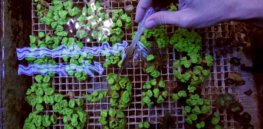
Viewpoint: Here’s one key thing the Biden administration can do to seriously address climate change
President Biden and his administration need to take concerted actions to advance an area of research that could prove decisive ...

Book review: Jennifer Thompson’s ‘GM Crops and the Global Divide’ offers lessons drawn from the history of the agricultural biotechnology revolution, for activists to CRISPR advocates
I’ve spent the last few weeks reading “GM Crops and the Global Divide,” the new book by Jennifer Thomson, emeritus professor at ...

‘Imposing expansion of organic farming by decree counterproductive’: Farmer, ag industry executive challenges Europe to rethink its anti-biotech, anti-nuclear ideology
In the midst of the Farm to Fork (F2F) debate and the renegotiation of the Common Agricultural Policy (CAP), the ...

Genetically modified Bt cotton helped eradicate pink bollworm — and saved US farmers $200 million over five years. Now, scientists and farmers are deploying technology to target other pests
A recent study from the University of Arizona shows that farmers were able to eradicate [pink bollworm] with the help ...

Viewpoint: ‘Crops were in the fields, but folks were going hungry’: How Artificial Intelligence (AI) can optimize how produce gets from the farm to your plate
"I can't think of a better or more noble application of artificial intelligence than into the food supply chain," says ...

60 years monitoring 60 million stars and no trace of alien life
[R]adio signals continue to be the most popular SETI target, as focused radio emissions could signal the presence of an ...

Challenging ‘infodemics’: How AI helped create — and maybe could help contain — the growing boom in disinformation
There’s nothing new about conspiracy theories, disinformation, and untruths in politics. What is new is how quickly malicious actors can ...

Why do some people cheat? The science of infidelity
There are many reasons why people cheat, and the patterns are more complex than common stereotypes suggest. A fascinating new ...

Evolutionary tradeoffs: Here’s why birthing a child is so difficult
To pass through the birth canal, human infants have to perform a series of twists and turns, a process called ...

Methane emissions from burping cattle are major contributor to global warming. Here’s an innovative way to address that using a ‘cow cocktail’
Branded Kowbucha, a nod to the popular fermented drink kombucha, it’s being tested by one of the world’s biggest dairy ...

Israeli startup makes real cow’s milk and human breast milk directly from cells — no animals required
Founded in 2018, BioMilk is an offshoot from over a decade of research by scientists at the Hebrew University of ...

Viewpoint: If the EU is serious about its Farm to Fork goals, it must address massive ‘yield gap’ between conventional and organic farming. Ag biotechnology is the solution
The EU’s Green Deal has a “Farm to Fork” strategy designed to meet the global sustainable development goals and increase ...

Viewpoint — ‘By 2050 agricultural land will increase by an area twice the size of India’: The US should use its ‘influence’ to encourage adoption of crop biotechnology
If crop and pasture yields continue to grow as projected, by 2050 agricultural land will need to increase by an ...

Sleepy during the day? Struggle with sleep apnea? Both are genetically linked to telomeres, parts of your chromosomes that reflect biological age
A predilection for afternoon naps does not necessarily mean you need to worry about your own mortality, but the scientific ...

Did Homo sapiens really outcompete Neanderthals? Genetics is rewriting the story of human evolution
Homo sapiens evolved in Africa around 300,000 years ago, and between 177,000 and 194,000 years ago they colonized what is ...
