First patient to undergo optogenetic therapy hopes to restore sight

The GLP aggregated and excerpted this blog/article to reflect the diversity of news, opinion and analysis.

A blind woman in Texas is the first person to undergo therapy based on an emerging technology called optogenetics. If successful, the therapy will create light-sensing cells in one of her eyes and enable her to see again.

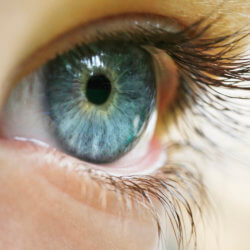
This patient and others being recruited for a clinical trial have a degenerative disease called retinitis pigmentosa. In this disease, the light-sensitive cells of the retina gradually die off. These cells pass electrical signals on to nerves that convey them to the brain.

The therapy uses optogenetics, a technology that uses a combination of gene therapy and light to precisely control nerves. The therapy should make certain nerve cells in the woman’s eye, called ganglion cells, light-sensitive. The eye was injected with viruses carrying DNA from light-sensitive algae. If it works, the cells will do what the healthy retina’s cones and rods do: fire off an electrical signal in response to light, restoring some vision.
Beyond the implications for treating blind people, this trial is also being watched by the neuroscience community. If it’s successful, it suggests that optogenetics has promise not just as a lab tool for studying the brain circuits that underlie diseases like Parkinson’s and schizophrenia, but also as a potential therapy for treating people afflicted with them.

Read full, original post: Texas Woman is the First Person to Undergo Optogenetic Therapy

Related Articles

Infographic: Global regulatory and health research agencies on whether glyphosate causes cancer

Infographic: Global regulatory and health research agencies on whether glyphosate causes cancer

Does glyphosate—the world's most heavily-used herbicide—pose serious harm to humans? Is it carcinogenic? Those issues are of both legal and ...

Most Popular

ChatGPT-Image-Mar-10-2026-01_39_01-PM
Viewpoint—“Miracle molecule” debunked: Why acemannan supplements don’t work
ChatGPT-Image-Sep-2-2026-02_03_32-PM
How much of a problem is AI’s water use?
ChatGPT-Image-Sep-10-2026-01_44_53-PM
Viewpoint: Why medical and health nonsense spreads so casually on pop culture media
Screenshot-2026-09-16-at-3.14.20-PM
19%: Plunging support for Trump-RFK, Jr. measles vaccine safety oversight
ChatGPT-Image-Sep-17-2026-12_28_43-PM
Vitamin D, omega-3 fish oil and glucosamine supplements could cause brain damage 
Screenshot-2026-09-16-at-2.26.42-PM
Viewpoint: How to ecologically damage America’s forests: Ban glyphosate
ChatGPT-Image-Sep-16-2026-11_28_54-AM
Viewpoint: Study links childhood vaccination to autism!!! Here’s how anti-vaxxers twist evidence to corrupt science
ChatGPT-Image-Sep-17-2026-11_03_54-AM-2
AI sparks a bioweapons race
ChatGPT-Image-Sep-21-2026-10_55_04-AM
Viewpoint: America’s food-safety system is being methodically dismantled by the Trump administration.
ChatGPT-Image-Sep-21-2026-02_35_25-PM
22-year frozen embryo: In one of the longest delayed births ever, middle-aged Greek couple gives birth to a daughter
Screenshot-2026-09-10-at-12.20.19-PM
'Jet fuel didn't melt the steel': 9/11 conspiracy theories debunked
ChatGPT-Image-Aug-26-2026-12_46_16-PM
Viewpoint: The fake controversy over whether combining childhood vaccines is dangerous— a debate science resolved 25 years ago
glp menu logo outlined

Get news on human & agricultural genetics and biotechnology delivered to your inbox.