The anticipated world population growth emphasizes a need to produce more food on less land. Cutting-edge technologies, including genetic engineering, can help to develop improved crop varieties and protect natural resources. In spite of the potential for genetically-modified (GM) crops to make crop production more efficient, they remain a polarizing issue due to safety concerns …. The safety of Bacillus thuringiensis (Bt) proteins is used as an example for how risk assessment is applied to GM crops. Risks associated with GM crops have proven to be low to non-existent. Developing countries would benefit from GM technologies as one tool to improve crop yields and reduce production challenges.
…
Currently there are only two countries in Africa, South Africa and Sudan, growing commercialized GM crops. Eleven additional countries in Sub-Saharan Africa are engaged in GM research trials. Given the increasing food demand and the threats of emerging insect pests to crop production, there is a need to expedite the approval and commercialization of GM crops, such as Bt maize, to benefit farmers and consumers. There has been significant scrutiny of GM technology with no substantial evidence of risk to humans. Making GM technology available provides farmers with another option to protect crops from pests and increase crop yields.
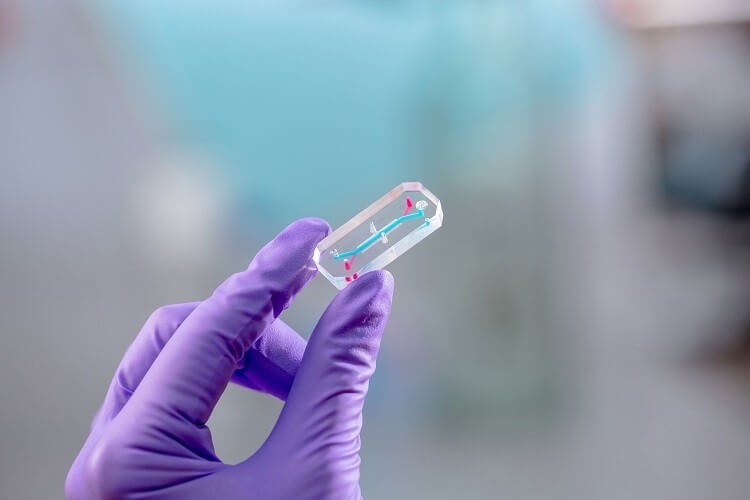
The future of medical research may fit on a clear chip not much bigger than a quarter.
In theory, organ-on-a-chip devices are aptly named. The engineered silicone modules contain small “organs,” represented by specific types of human cells. Fluid courses through thin channels — like veins, but only a fraction of the size — which interconnect the various cells, and expose them to drug treatments carefully administered by lab scientists. They may look like gadgets from the future, but these organ-on-a-chip devices have already garnered attention from scientists hoping to fix a broken drug discovery process.
Within the last decade, scientists began designing organ-on-a-chip devices. The scientific ambition tethered to these devices has been lofty from the start. Scientists promise more realistic pre-clinical results compared to the existing gold standard in labs: traditional in vitro studies. But early iterations of this new technology have had their own limitations, and the way many researchers grow the “organs” may not be as realistic as promised. Recent work out of Harvard’s Wyss Institute addresses this concern. At Wyss, researchers have pioneered a method to develop what may be the most accurate representation of kidney function to-date.
“We had not been able to develop a functional model of the kidney,” said Samira Musah, post-doctoral fellow at Harvard and lead author of the recent study published in Nature Protocols. “And that challenge was partly due to the lack of human kidney cell types.”
Musah is referring to podocytes — a key component in the kidney’s filtration unit. Directly obtaining these cells is an invasive and rare event. Even when researchers do get their hands on podocytes, they find that the cells are notoriously challenging to grow in lab. But podocytes are critical in regulating filtration of the bloodstream.
“In terms of modeling human kidney function, it is essential that you would have a source of those cell types,” said Musah.
Musah and her colleagues combined expertise in stem-cell biology and engineering to grow podocytes on a novel flash drive-sized chip that reproduces the kidney’s filtration function. The method opens avenues for modeling disease, and may further advance organ chip technology from nascent lab science to robust pseudo-clinical test.
Edward Kelly, associate professor at the University of Washington School of Pharmacy, holds a kidney-on-a-chip. Image credit: University of Washington/Flickr
Traditionally, once scientists identify a promising new drug with in vitro lab experiments, the drug passes to live animal models, followed by human clinical trials, to verify safety and efficacy. An estimated 90 percent of drugs shown safe and effective in animals, however, go on to fail in humans. Conventional in vitro studies seemed too low a bar, so researchers devised a platform to more reliably predict how humans would respond to new treatments.
In 2004, biomedical engineers led by Cornell’s Michael Shuler developed a chip lined with lung, liver, and fat cells, and modeled exposure to a toxic chemical. The work proved the technology’s pharmacological relevance, but lacked the three-dimensional, multi-cell architecture necessary to comprehensively represent a human organ. In 2010, researchers at the Wyss Institute created a lung-on-a-chip that showed real, lung-like functionality. Now, Wyss researchers have modeled more than 10 different organs on chips.
Advancements in organ-on-a-chip devices bring medical research closer to the field’s goals: faster drug discovery, better understanding of the body, and, perhaps, replacing animal trials. Still today, advancements in the field largely remain in the lab, but according to Musah, motivation is easy to come by.
“A lot of people don’t probably know about it, but more than 10 percent of the world’s population has kidney disease. It’s striking,” said Musah, adding that more people have kidney disease than cancer or diabetes. “Almost every genetic mutation associated with kidney disease has products that localize to the glomerulus.”
Follow the latest news and policy debates on sustainable agriculture, biomedicine, and other ‘disruptive’ innovations. Subscribe to our newsletter.
We can think of the glomerulus as a sort of perforated, three-layer blood vessel in the kidney. Podocytes make up the slotted outside layer, while another type, called endothelial cells, line the inside. A porous membrane separates the two.
As far as human cells go nowadays, endothelial cells are relatively easy to maintain. Order a batch online, pre-heat the incubator to 37 degrees Celsius, add some salts, sugar, water, and incubate. Podocytes are more challenging. Primary podocytes — those taken directly from a living tissue — quickly lose their distinctive function when isolated.
“No one really knows how to maintain the [characteristics] of primary podocytes in vitro,” said Musah. “So they’re really not mimicking what you would have in a functional kidney.”
If growing endothelial cells is like baking from a cake-mix, growing realistic podocytes is more like finding yourself on salt flat with a bale of wheat, a hen, and a sugarcane. Musah needed to truly start from scratch. In biology, working “from scratch” often implicates induced pluripotent stem cells, or iPS cells, which can give rise to almost every type of cell. Podocytes and iPS cells are, of course, different though. What makes for healthy conditions for one may not be so for the other.
To develop one cell-type into the other, Musah analyzed the molecular receptors found in the starting material — human iPS stem cells — and compared them to those from the desired product, mature human podocytes. The commonalities served as a sort of ingredients list to promote healthy growth from start to finish. But focusing exclusively on chemical signals was not enough.
“We imagined that the mechanical forces in the microenvironment could also influence the cell’s biology,” said Musah. Cells in the kidney glomerulus are subject to many types of mechanical forces, such as stretching and relaxation from pulsing blood flow. “So we designed a microenvironment that allowed us to address these parameters: the molecules present, but also the mechanics,” she said.
Through meticulous engineering, specialized pumps, and vacuums, they recreated the conditions on a novel chip. The glomerulus chip not only maintained healthy podocytes and endothelial cells, but its realistic mechanical environment actually developed the podocytes even further than any other method. The lab-grown podocytes looked and behaved just like the mature versions found in our bodies. This innovation could revolutionize how we understand and treat kidney disease.
“Being able to recapitulate some of these complex in vivo structures in vitro is really something that we’re very excited about,” says Musah. “And that is something that we absolutely couldn’t have observed if we had used a traditional culture environment.”
To be sure, Musah acknowledges the limitations of the group’s work. The novel chip does not reproduce the entire function of a kidney, instead focusing on the filtering function. Also, the complex methods presented surely have their place in advancing the science, but less complex and lower-cost methods could make the technology more accessible. For example, the Shuler lab recently documented a chip modeling the gut and liver. The complexity and (consequently) rigor of their chip are lower. But so too are the cost and difficulty of operation.
“Most stem cell work is not that cheap,” says Musah, adding that chip design also requires expertise. “But the content of the results is quite rich.”
Musah is only beginning what will surely be a long, illustrious career as a research professor at Duke University next January. By putting stem cells on a chip, she not only validated the hunger for realistic organ models, but whet the appetite for more. Of course, no disrespect to Duncan Hines, but cakes just taste better from scratch.
Max Levy is a PhD student in chemical engineering at the University of Colorado, Boulder. He designs nanoparticles to kill multi-drug resistant bacteria. Follow him on Twitter @laxmevy
It’s been a busy summer for food-based biotech. The U.S. Food and Drug Administration made headlines when it approved the plant-based “Impossible Burger,” which relies on an ingredient from genetically modified yeast for its meaty taste. The European Union sparked controversy by extending heavy restrictions on genetically modified organisms by classifying them as gene-edited crops.
You probably heard less about a public meeting hosted by the FDA on “cultured meat” – meats that don’t come directly from animals, but instead from cell cultures. Lab-grown meats will be increasingly big news as they draw closer to entering the marketplace. But research suggests that consumers may not readily accept the idea of burgers sourced from a lab instead of a farm once they’re widely available. Would you?
Opinion polls seem to indicate that public attitudes about cultured meat are currently all over the place, depending on who’s asking and who’s being asked. Overlooking the details may spell trouble for its acceptance in the U.S. and internationally.
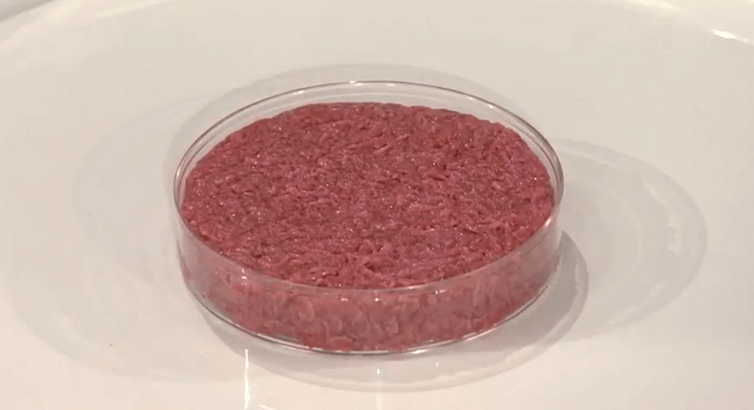
First cultured hamburger, before being cooked. Image credit: World Economic Forum
Out of the lab, onto the grill
This emerging biotechnology captured attention in 2013 with a live tasting of a lab-grown burger, which had a US$330,000 price tag. Production has gone largely under the radar since then, but researchers and companies have been racing to lower the price and, they say, are finally on the cusp of an affordable product.
Production of cell-cultured meat involves retrieving a live animal’s adult muscle stem cells and setting them in a nutrient-rich liquid. Proponents claim future techniques could allow these cells to make many burgerswithout collecting more cells from an animal. Groups of these multiplying cells eventually look like patties or nuggets because they grow around a “scaffold,” which helps the meat take on a desired shape. The result is a product that looks and tastes like meat because it’s made from animal cells, rather than plant-based products that lack animal tissue but try to look and taste like it.
Because cultured meat doesn’t involve livestock, and thus avoids the associated environmental impacts and ethical issues, it’s been highly anticipated by environmental groups, animal welfare advocates and some health conscious consumers. Producing cultured meat, it’s claimed, could consume fewer natural resources, avoid slaughter and remove the need for the growth hormones used in the traditional meat industry.
Follow the latest news and policy debates on sustainable agriculture, biomedicine, and other ‘disruptive’ innovations. Subscribe to our newsletter.
Before cell-cultured meat goes on the market, regulators need to decide what it can be called. Possible names include “clean meat,” “in vitro meat,” “artificial meat” and even “alt-meat.”
But opinions and critiques vary widely. Most notably, the U.S. Cattlemen’s Association worries that the term “meat” will confuse consumers since these products will directly compete with traditional farm-raised meat. The industry group prefers what are perhaps less-appetizing terms, like “cultured tissue.”
Jumping onto the “clean eating” craze, the Good Food Institute – a nonprofit that promotes alternatives to animal-products – favors the term “clean meat,” claiming the language evokes a positive image with consumers and may increase its acceptance.
The Consumers Union – the advocacy arm of the magazine Consumer Reports – counters that the public wants to know how the product was made, requiring a more visible distinction from farm-raised meat.
Meanwhile, the American Meat Science Association – an organization focused on the science of producing and processing animal-based meat – worries that the term “meat” may inaccurately suggest that lab-grown protein is as safe and nutritious as traditional meat.
This summer’s FDA meeting sparked even more discussion over labeling. The debate is reminiscent of the one over what to call non-dairy beverages, like almond and soy “milk,” that do not originate from an animal.
Yet even as regulators and industry lobbyists spar over names, they are overlooking a far more important factor in the viability of lab-grown meat: consumers.
Who’s most likely to show up at a cookout with cultured meat? Image credit: Zac Cain/Unsplash
Everyone has an opinion
In Michigan State University’s Food Literacy and Engagement Poll, we surveyed over 2,100 Americans in 2018 asking, “How likely would you be to purchase foods that look and taste identical to meat, but are based on ingredients that are produced artificially?” We intentionally didn’t use terms like “cultured meat” and “lab-grown meat” to avoid influencing the response based on a particular term.
We found just one-third of Americans would be likely to purchase cultured meat, with the other two-thirds veering toward caution. Forty-eight percent told us they’d be unlikely to buy this product. The question did not provide much detail about cell-cultured meats, so our results represent a general reaction to the idea of purchasing “traditional” versus “artificial” meat.
When we split the poll results out by income, participants in households earning over $75,000 per year were nearly twice as likely to say they’d purchase cultured meat (47 percent), compared to those in households earning less than $25,000 per year (26 percent). It seems that the more people earn, the more likely they are to switch from being undecided about cultured meat to being willing to give it a try. But the proportion who said they were unlikely to try cultured meat didn’t vary much at all as income rose.
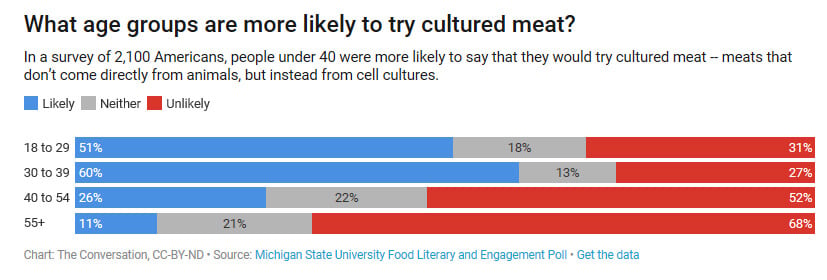
A more striking difference was seen with the poll participant’s age. Eighteen to 29-year-olds were nearly five times more likely (51 percent) to say they’d purchase cultured meat products compared to those 55 and over (only 11 percent). And college graduates were substantially more likely to say they’d purchase cultured meat products (44 percent) compared to non-college graduates (24 percent).
We also found that 43 percent of men said they’d likely try artificial meats but just 24 percent of women did – a gender difference that was also seen in a separate 2007 study. Notably, the same study also found that politically liberal respondents are more likely to eat cultured meat than their more conservative counterparts.
Consumer behavior is often more complex than a single, aggregate snapshot of the entire population can convey. While many people could respond differently at the grocery store than in an online poll about a product that’s not yet on the market, our findings and others suggest that attitudes related to cultured meat – however it ends up being labeled – are complicated and likely influenced by one’s values and experiences.
Cultured meat may have environmental and ethical appeal, but its success in the marketplace depends on far more than technological and economic viability. Regulators and producers will need to consider the wide spectrum of opinions and attitudes held by consumers if the benefits of this technology are to be widely enjoyed.
Walter Johnson is a JD Candidate at Arizona State University. Follow him on Twitter @WaltGJohnson
Andrew Maynard is the Director of Risk Innovation Lab at Arizona State University. Follow him on Twitter @2020science
Sheril Kirshenbaum is an Associate Research Scientist at Michigan State University. Follow her on Twitter @Sheril_
Over the past 90 years, scientists have discovered hundreds of antibiotics—microbe-killing drugs that have brought many pernicious diseases to heel. But every time researchers identify a new drug, bacteria inevitably evolve to resist it within a matter of years.
…
Houra Merrikh from the University of Washington thinks she has found a way of improving our odds. She and her team have identified a bacterial “evolvability factor”—a molecule these microbes need to rapidly evolve into drug-resistant strains. If she can find a way to block this molecule, she could pave the way for a new kind of drug: an anti-evolution drug that doesn’t kill microbes, but stops them from powering up into superbugs.
…
[H]er team showed that a bacterial protein called Mfd can increase the rate at which genes mutate—that is, change their DNA.
…
The team repeated the experiment with other species of bacteria, and got results that were either similar or even more striking. For example, when it tested the bacterium behind tuberculosis, it found that Mfd-carrying strains became up to 1,000 times more resistant to antibiotics than the Mfd-less ones.
…
But wouldn’t bacteria eventually evolve resistance to the anti-Mfd drugs? “The chances are very low,” Merrikh says. “You’re turning off the mechanism that would do that in the first place.”
The Chinese scientist who sparked an international outcry after alleging to have helped create the world’s first genetically edited babies, has raised the possibility of a third child being born, after announcing that a separate woman was pregnant at an early stage with a modified embryo.
Speaking in front of a packed hall of around 700 people at the Second International Summit on Human Genome Editing on Wednesday [November 28], He Jiankui publicly defended his work, saying he felt “proud” of his achievement.
He, an associate professor at the Southern University of Science and Technology in Shenzhen, sent shock waves through the scientific community on Monday when he announced in a video posted online that two ostensibly healthy twin girls had been born this month from embryos altered to make them resistant to HIV.
“For this specific case, I feel proud. I feel proudest, because they had lost hope for life,” said He, Wednesday, referring to the parents of the twins, the father of whom is believed to carry HIV. “But with this protection, he (the father) sent a message saying he will work hard, earn money, and take care of his two daughters and his wife.”
…
He said his research has now been submitted to a scientific journal for review, without naming the publication and apologized for the result leaking “unexpectedly.”
For someone who has caused a worldwide uproar over what many fellow scientists consider an ethical outrage, He Jiankui of China spent a remarkable amount of time discussing his work — which he claims led to the births of the first babies whose genomes had been edited when they were IVF embryos — with bioethicists, policy experts, and social scientists.
Two of them are father and son: Dr. William Hurlbut of Stanford University, a member of the U.S. President’s Council on Bioethics in the early 2000s, and J. Benjamin Hurlbut of Arizona State University, a biomedical historian. The Hurlbuts have discussed the ethics of human genome editing with He more than any other scholars in the West and probably the world.
Though neither Hurlbut supports what He has done, both came away from these conversations with an impression of He as a well-meaning and thoughtful scientist — and, as the younger Hurlbut put it, not a “rogue.”
…
He asked Hurlbut whether opponents of such research in the U.S. were members of fringe groups, or reflected a majority view. “He wanted to understand what that was about,” Hurlbut said.
…
“I knew where he was heading and tried to give him a sense of the practical and ethical implications,” Hurlbut said. “But he kept returning to the good that could be done.”
Mom Monica Glover said the family discovered Ellis’ peanut allergy when she was about 3.
…
Glover seized the opportunity to participate in a study on the safety and effectiveness of an experimental treatment that could give her daughter protection against accidental exposure to peanuts. Despite the risk, it was “a gift,” she said, adding that her family hoped their efforts might help “lots of other children.”
The risk paid off: Two-thirds of the kids in the study were able to eat the equivalent of two peanuts without any symptoms after following the months-long experimental treatment regimen, the researchers found.
…
The treatment, which comes in powder-filled capsules, is an oral immunotherapy, and the concept is “treating an allergy by gradually exposing people to the very same thing they’re allergic to,” [researcher Brian] Vickery said. Essentially, the treatment is a peanut powder.
…
“It’s what a lot of families call trying to be ‘bite safe.’ it’s not that you’re curing the allergy; it’s not that you’re going to be able to eat peanut butter sandwiches,” said [pediatrician Scott] Sicherer, who was not involved in the study. “It’s really just to have a better threshold so that if you accidentally ate something that had a little bit of peanut in it, maybe you wouldn’t have a reaction or the reaction wouldn’t be so bad.”
From elongated oblongs to near-perfect spheres, vegetables come in almost every size and shape. But what differentiates a fingerling potato from a russet or a Roma tomato from a beefsteak? Researchers at the University of Georgia College of Agricultural and Environmental Sciences have recently found the genetic mechanism that controls the shape of our favorite fruits, vegetables and grains.
In article published Nov. 10 in the journal Nature Communications, Esther van der Knaap, professor of horticulture, and her team at UGA detail the genetic traits, shared by multiple plants, that have been shown to control fruit, leaf and seed shape. “We may be able to explain the shapes of many fruits and vegetables through a similar mechanism to the one we described in tomatoes,” van der Knaap said.
…
“We found that in tomatoes, plant cells in the fruit divide in a column or in a row and that will determine their shape,” van der Knaap said. “We also found that this mechanism is likely the same in several other plant species: melons, cucumbers, potatoes. We’ve even been able to go as far as finding that the same mechanism controls the shape of rice grains as well as leaves.”
…
The discovery of the genetic pathways that control shape are important for plant breeders but the information is also crucial for a better understanding of plant evolution and development.
In recent years, a significant amount of attention has been paid to the numerous threats that are facing the honeybee. But contrary to what many people believe …. numbers of the Western honeybee …. in the United States have actually been rising slowly in recent years (there around 2.9 million colonies today …. and the species is not at risk of extinction.
…
This is not to say that the situation is good. Huge numbers of hives are being lost every winter and spring, with some beekeepers reporting losses exceeding 40 percent ….
…
A number of policy and conservation initiatives have been put in place to address these kinds of issues. But according to a 2016 paper in Conservation Biology, while such efforts may sound beneficial, they may actually be exacerbating …. the decline of native bee species, such as bumblebees …. Unlike the honeybee, a small portion of these native species are classified at risk of extinction.
“We argue that North American honeybee losses are not a conservation problem,” the authors wrote. “Rather, they are a domesticated‐animal‐management problem. By focusing attention on honeybees, policies and funding priorities may undermine native bee conservation and have negative impacts, ecologically and socially.”
To find out more about why native bees have been overlooked …. Newsweek spoke to Robert Gegear a professor with Worcester Polytechnic Institute’s Department of Biology and Biotechnology, in Massachusetts ….
‘Mini brains’ grown in a dish have spontaneously produced human-like brain waves for the first time — and the electrical patterns look similar to those seen in premature babies.
The advancement could help scientists to study early brain development. Research in this area has been slow, partly because it is difficult to obtain fetal-tissue samples for analysis and nearly impossible to examine a fetus in utero. Many researchers are excited about the promise of these ‘organoids’, which, when grown as 3D cultures, can develop some of the complex structures seen in brains. But the technology also raises questions about the ethics of creating miniature organs that could develop consciousness.
…
“This is very intriguing and very amazing,” says Hongjun Song, a developmental neuroscientist at the University of Pennsylvania in Philadelphia. Although the work is preliminary, he adds, the similarities to preterm infant EEG patterns suggest that the organoids could eventually be useful for studying brain-development disorders, such as epilepsy or autism.
…
Nevertheless, the project raises ethical questions about whether organoids could develop consciousness, says neuroscientist Christof Koch.
…
[Researcher Alysson] Muotri says that he would consider halting the project if there were evidence that the organoids had become self-aware, but right now they are very primitive. “It’s a very grey zone in this stage, and I don’t think anyone has a clear view of the potential of this.”
As consumers strive to become more aware of food-production terms and practices, they often bludgeon farmers with a body of opinions based on quippy distillations of complex research …. and nothing more than a reactionary response to terms such as GMO. Those who live and work in this arena wrestle with how to give them the space to learn — to catch up — like my farm did.
[Editor’s note: Toban Dyck is a farmer in Manitoba, Canada.]
The agriculture industry needs the public to understand what it is, what it does and how it operates, before it makes itself vulnerable to a group that seems ready to pounce. If 2018 was the public’s intro to agriculture class, 2019 will require more from its students.
…
I would think twice about offering my opinion on whether I think Monsanto had its hand in and/or attempted to steer pro-glyphosate research submitted to the [Canadian government] until I’m certain my reading public understands that research projects are usually funded through a variety of sources …. And that the researchers accepting these funds do not traditionally allow their credibility to be jeopardized by allowing others to determine outcomes.
…
In 2019, let’s commit to cooler heads prevailing and tackling agricultural issues with the open minded, philosophical and scientific rigour they require.
TIME magazine has a story on DeWayne ‘Lee’ Johnston who took Monsanto to court claiming RoundUp caused his non-Hodgkin lymphoma. The story has obvious appeal, but is crying out for balance and its provenance is, to be kind, awkward. I’d love to read his account of his experiences since the trial — but from a source I can trust. I’m dubious that [the author, Carey Gillam] employed by an [anti-GMO] advocacy organization [U.S. Right to Know], can be sensibly used as a journalist.
[Editor’s note: Dr. Grant Jacobs is a computational biologist based in New Zealand.]
I responded on TIME’s Facebook page:
I’d encourage TIME to use independent science writers to cover contentious science-related stories. Your magazine has, or should have, a higher standard than drawing emotive pieces from advocacy groups unchallenged by balance.
…. The science claims made are presented without any balance …. The editors could, for example, have offered a short “fact check” box next to the article, or a matching article from a (biology/medicine) science writer ….
The writer is not a science writer, nor independent of the topic she is covering.
She is [a] ‘researcher’ …. for an advocacy organisation opposed to GMOs …. describing her group as “a nonprofit food industry research group” leaves out that [its] aim [is] to oppose these products …. These groups …. are not sound sources for independent journalism ….
For 140 years, scientists have been trying to explain what Charles Darwin described as “an abominable mystery”.
Darwin was bothered by evidence suggesting the sudden occurrence of angiosperms – seed-producing flowering plants – in the mid-Cretaceous period. The evidence rather flew in the face of his theory of evolution, which implied that all organisms should increase gradually. “Natura non facit saltum,” he wrote. Nature does not make a leap.
Earlier this year, as reported in Cosmos, a US-led team suggested the answer lies in the ability of these plants to downsize their genomes, giving them the infrastructure and energy to spread rapidly.
Now Chinese researchers have suggested it’s a question of timing of a rather different nature.
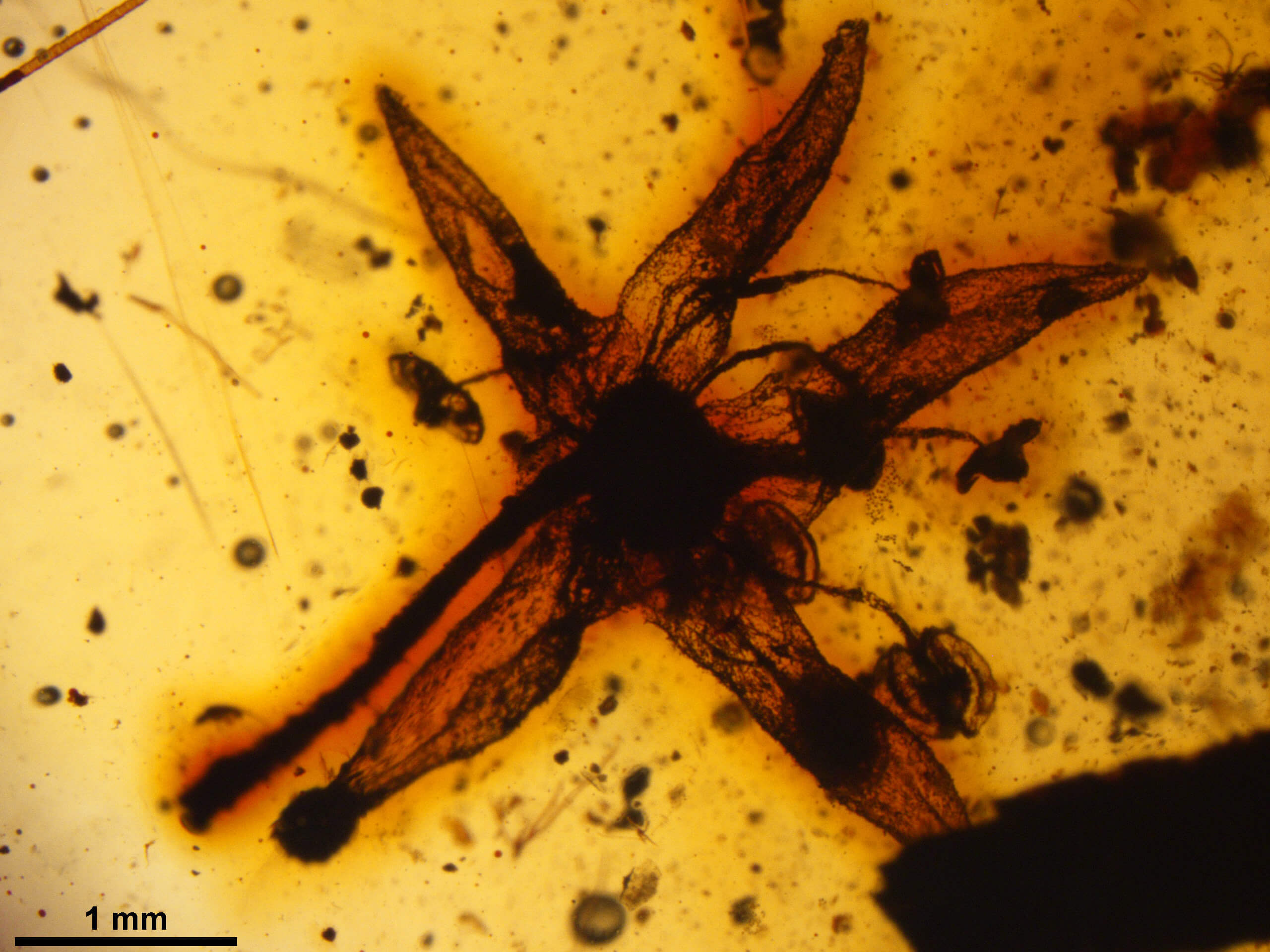
Writing in the journal Scientific Reports, a group led by Wang Xin from the Nanjing Institute of Geology and Palaeontology describe a flower, Lijinganthus revoluta, found embedded in Burmese amber dating to 99 million years ago.
…
Together with contemporaneous flowers and fruits, the researchers say, Lijinganthus indicates that core eudicots flourished on Earth about 100 million years ago, although did not dominate vegetation until about 20 million years later, the mid-Cretaceous.
“Various molecular clocks indicate that angiosperms and eudicots have a significantly earlier origin than the earliest fossil record indicates,” the authors write.
In other words, they suggest, what Darwin thought was the origin of angiosperms was, in fact, a blooming that was millennia in the making.
Read full, original post: Darwin’s ‘abominable mystery’ more apparent than real
Even plants that are modified with modern genetic engineering methods such as …. CRISPR / Cas9 are to be tested and regulated …. as genetically modified organisms (GMOs). This July decision [by] the European Court of Justice [was] criticized by 130 scientists in an open letter to the [German] Federal Minister of Education and Research, Anja Karliczek, and her colleague Julia Klöckner in the Federal Ministry of Food and Agriculture.
Under the heading “Politics is on the right track,” [the] researchers demand that existing laws “at least adapt the GMO definitions to scientific progress …. The application of genome editing needs clear guidelines, but – and this is essential – on a much more differentiated level than banishing it under the strict regulations of the Genetic Engineering Act.”
…
Comprehensible scientific facts are thereby the best basis for social decisions, say the authors of the letter. If the ECJ ruling is the last word and the EU laws continue to be as they are, the applications of genome editing in the European Union would have little chance. The consequences would be permanent disadvantages for research and development, for example in terms of climate-resilient, nutrient-rich and higher-yielding crops, as well as the emigration of experts who no longer see any development opportunities in Europe.
[Editor’s note: This article was originally published in German. This summary was prepared with Google Translate and edited for clarity.]
TBR1 is among a select set of genes with strong ties to autism. The new findings explain that connection: Mutations in TBR1 may disrupt gene expression in a way that alters brain circuits.
When the gene is disabled in layer 6 — the deepest layer — of the cerebral cortex of mice at birth, the neurons there do not wire up the way they typically do.
…
[The researchers] created two sets of mice with mutations in TBR1 only in layer 6. Some of the mice have no TBR1; others lack just one copy, akin to what happens in people with a TBR1 mutation. In both cases, the approach enables researchers to curtail TBR1 expression starting around birth.
…
Looking in the brains of these mice, the researchers found that many of the dendrites — the signal-receiving branches of neurons — of layer 6 neurons extend to layer 1, which is typical of layer 5 neurons. “That never happens in normal layer 6 neurons,” [researcher John] Rubenstein says.
These dendrites also form significantly fewer connections, or synapses, with other neurons than typical layer 6 neurons do.
…
The researchers used viruses to deliver functional versions of the four genes involved in synapse formation to both sets of mutant mice. One of these replacements, WNT7b, restores the number of synapses to the typical number. “That’s exciting, because it opens the possibility to think about therapy for at least the TBR1 type of autism,” Rubenstein says.
Hundreds of research studies that have been reviewed showed no proof that genetically modified (GM) crops had side effects, according to Prof Nina Fedoroff from Penn State University. She was speaking at a programme held at the University of Agricultural Sciences (UAS) [in India] regarding the distrust among consumers towards genetically modified crops ….
She said [a] misinformation campaign …. kept Bt [eggplant] out of India and …. led to the debate surrounding Bt Cotton. Prof [Fedoroff ], who has 40 years of experience in researching GM crops, said people are concerned about consuming GM food as they anticipate hazards but these hazards haven’t been found ….
“The European Union has spent more than 300 million Euros on biosafety and has gathered no credible evidence that either people or animals are harmed by GM crops,” she said, adding that 130 research projects spanning over 25 years from 500 research groups were reviewed by a committee which included 1,800 studies.
[I]n the next decade, the phrase [“have and have nots”] might mean “modded or unmodded”—as in, “have you been modified?” With biotech advancements such as brain-implanted neural chips, stem cell research, and gene editing, enhanced humans could usher in a new phase of evolution.
…
I spoke with Dr. Amanda Mason, Assistant Director for Strategy and Planning at MESH Academy.
…
[PCMag:] What’s your vision of biotech’s future?
[Mason:]I see a wide use of CRISPR, which is a type of gene editing, to correct disease—especially in the blood, which is easier to do [than other tissue types]. Then, as the technology matures, we will see editing in other tissues, and a movement away from the existing focus on cancer treatments.
…
[PCMag:] Do you then see a threshold emerging of those “with mods” and those without? Essentially cyborgs versus those who, well, are the “basic bio model”?
…
[Mason:] I guess my interpretation is quite different from a black and white “have versus have not” scenario. With real consideration on the subject, I’ve realized the pace of these discoveries have been robust over these past few decades, and I hope for a continual gradual process of innovation. Through our work in biotech, I hope these breakthroughs keep being deployed to improve and save lives.
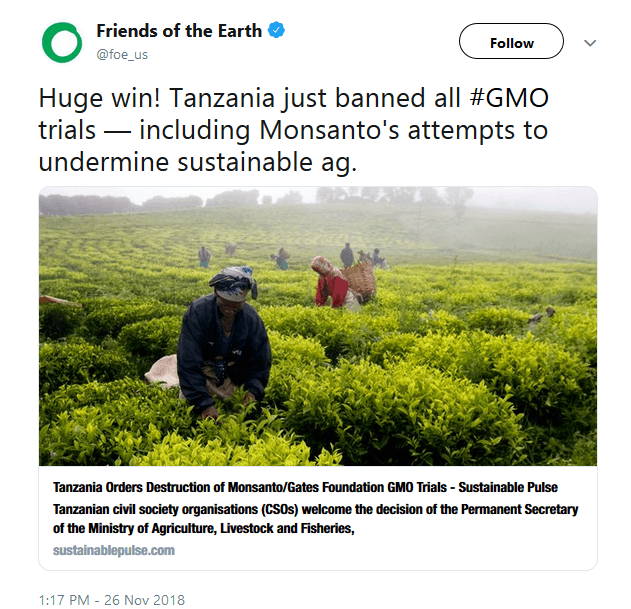
When the Tanzanian government announced Friday [November 23] they were ending field trials of genetically engineered crops in the country and calling for the destruction of the crops, the country’s research community was aghast, with a local paper reporting:
Members of the research community were in shock that the government did not only ban ongoing trials on GM seeds but also directed the Tanzania Agriculture Research Institute (Tari) to immediately destroy evidence of the research.
…Some researchers used their social network groups to express their disappointment over the development, saying their hard work will go down the drain. “If the order is from above, we need to be patient and wait for the official letter,” wrote one of the researchers.
Another Scientist said their work was to help bring change to the society but if the same society was not ready to accept the change there was nothing they could do.
“Science is about facts and figures and nothing else… Truth could not be changed into something else,” he said.
What happened?
The Tanzania Agriculture Research Institute (TARI) is a semi-autonomous body of the government under the Ministry of Agriculture, responsible for conducting, regulating and coordinating all agricultural research activities in the country. TARI has been carrying out two field trials of GE crops at two locations. In Makutopora, in the Dodoma region, they were testing the county’s first ever approved confined field trial of GE maize, a water-efficient variety stacked with biotech traits for insect resistance and drought tolerance.
Researchers took a conventionally bred water-efficient maize from the Water Efficient Maize for Africa project – sold under the brand name Drought TEGO – and introduced the Bt insect resistance trait to produce the new TELA maize – which has been approved and distributed royalty free to South African small holder farmers in South Africa with marked success for the past couple years. TARI applied for approval of the Makutopora trials in 2010 but were only allowed to proceed beginning in 2016 with the window of approval ending in 2022.
At the Mikocheni Agriculture Research Institute in Dar es Salaam, researchers were conducting a trial of cassava resistant to virus and whiteflies. That program was in earlier stages, while the maize trials were getting ready to start tabulating results.
There was a lot of recent upbeat reporting on how well those trials were going and how well outreach to government officials and legislators was going. Then, seemingly out of nowhere, newly appointed Agriculture Minister Japheth Hasunga announced that TARI was out of compliance in sharing results with his ministry and the trials needed to be ended and the crops and seeds destroyed.
Several commenters found the move an overly brusque response to a bit of red tape non-compliance. Was the new minister laying down a marker to solidify his authority? A local commentator pointed out to me that Hasunga had the full backing of Tanzanian President John Magufuli.
The French anti-GMO website inf’OGM reported out some greater details on Hasunga’s rationale:
This decision was taken following the publication by TARI of the results of these tests without having obtained the necessary authorization. TARI has indeed communicated widely on the success of these tests and organized various lobbying actions, including inviting the Parliamentary Committee for Food and Agriculture to visit its facilities. But the tests are not supposed to be open to the public. The ministry holds that by organizing these lobbying actions, TARI went beyond its mission. Hasunga also denounced the instrumentalization by some pro-GMO activist researchers of smallholder peasants as “poor and hungry” for pro-GMO propaganda purposes.
The WEMA program is also seeking to weaken the current framework, in particular by asking for a change in liability for damage caused by these crops. Currently, the standard applied is that of strict liability. The WEMA program would like to replace that with fault-based liability. Strict liability means that anyone who introduces GMOs into the environment is directly liable for any damage or harm while fault-based provisions mean that the fault or negligence of anyone who introduces GMOs must first be proven.
This is a very strange rationale. While if it’s true that TARI overstepped their bounds, that needs to be addressed in some way. However, it’s odd that the rules governing the trial work to limit transparency and public confidence in the results. In addition, it’s hardly a solid pretext for ending the trials and destroying the evidence. Visits from NGOs and local government officials, even if prohibited, have no bearing on the findings of the trials or the safety and efficacy of the crops. As was so well stated above, “Science is about facts and figures and nothing else. Truth could not be changed into something else.” It might make sense to sanction TARI officials in some way, it makes no sense to destroy their work over these apparent transgressions.
Follow the latest news and policy debates on sustainable agriculture, biomedicine, and other ‘disruptive’ innovations. Subscribe to our newsletter.
I reached on Twitter to the environmental writer Mark Lynas to ask what he thought had happened, knowing that he’d traveled to visit the TARI maize trial and had contacts in the country through his association with the Cornell Alliance for Science which maintains a large and active network in Africa. His answer was short and sweet – or rather short and sour: “Mischief by the antis.”
Does anyone know if the sudden ban on #GMO crop trials in #Tanzania were due to legitimate bureaucratic screw up by TARI or a fit of pique in the govt? https://t.co/nQVgly3VxU
The influence of the anti-GMO, anti-technologically progressive agriculture of Western, especially European environmental NGOs is out-sized throughout Africa.
In his 2009 book Starved for Science, Robert Paarlberg lays out the case that “rich country attitudes” – a fetishization of naturalness resulting in a preference for organic and peasant farming and an opposition to industrial farming in particular and biotech in ag in particular – are transmitted to Africa via the European based NGOs headquartered in African cities. Also coming into play are attitudes absorbed during the European university of educations of many African urban elites. Paarlberg sees this as a fundamentally neo-colonial dynamic. From a review of the book by Irish horticulturist Graham Strouts:
Paarlberg is scathing about some of the approaches by NGOs. The German organization Networking for Ecofarming in Africa has partners in 13 African countries to warn them of the dangers of “Western agriculture” supplanting indigenous knowledge, yet promotes biodynamic farming in its workshops.
German trainers at one NECOFA session in Kenya in 2005 took the time to introduce local participants the importance of light rhythms from the planets and to instruct them in developing manure preparations that included essential bits of stinging nettle, chamomile, and cow horn (NECOFA 2005). Such knowledge is neither farmer-derived nor indigenous to Africa. Nor is it even knowledge.
Pedaling pseudo-science to hungry people is akin to quack therapists promoting homeopathy for AIDS or malaria. Paarlberg details the political process used by NGOs, aided and abetted by the UN and supported by a complacent governments in the west and corrupt urban-based officials in Africa, to block the use of science to improve the farmers lot there.
How much of this is to support lifestyle choices of the rich in western countries? Paarlberg sees it as neo-colonial in its effects: nearly all certified organic produce in Africa is specialty crops destined for the west, not food for the locals. “Organic farming advocates from IFOAM nonetheless like to assert that organic agriculture in developing countries is not a luxury but somehow a precondition for attaining food security.”
I would add that this all comes with the bitter twist of being compounded and multiplied by a sensitivity to neo-colonial incursion and exploitation that is fully understandable given the tragic history of European colonialism in Africa. Anti-GMO sentiment in Africa often comes in the virulently paranoid and conspiratorial bent we associate with Alex Jones’ InfoWars in the US.
This applies beyond the GMO “debate”. Recently President Magufuli came out against women practicing birth control. His opposition wasn’t solely based on what he sees as a need to grow the workforce. His comments had a distinct paranoid and anti-colonial flavor.
Speaking at a public rally in Meatu in Simiyu Region President Magufuli told the people not to listen to those advising about birth control, some of it coming from foreigners, because it has sinister motives.
Meanwhile Magufuli has a policy of denying education to schoolgirls who become pregnant. This is all the more distressing as 70 percent of Tanzanians live on under $2 a day while there are few things more tightly correlated with development and rising living standards than women gaining control over their reproduction, smaller family size, and greater education for girls. For African farmers, there are fewer agronomic developments that would go further than seeds that conferred drought tolerance and resistance to virus and infestation by pest insects.
On the heels of the tragic announcement of the GMO trial ban in Tanzania, we get news out of neighboring Kenya of their government enacting a moratorium on foodstuffs developed through synthetic biology.
What’s at stake?
As late as just a month ago local reporting covered results from the TELA maize trials, with yield gains of at least 8 percent and as high as 53 percent.
“A maize test that endures average drought and stem borer was planted on the 16th and 17th of August 2018, the test consists of 16 species of maize as follows: 7 varieties are GMO maize and 7 varieties are non- GMO maize, and 2 types are maize certified in agriculture in the country.
In order to ensure that maize is attacked by pests, 20 stem borers of maize were introduced twice (3 and 5 weeks after planting).
In addition, he said, another experiment involving infected maize and spraying seven times to control pest damage, where the evaluation of the amount of pests made by insects was held on the 1st and 2nd of October this year (7th week after planting). Transgenic hybrids showed higher yields to 8.3 -58.0 per cent than their conventional counterparts.
In laying out the importance of TELA maize, the CIMMYT blog explains:
Stem borers affect maize production on about 30 million hectares in developing countries, feeding aggressively on leaves, stems and ears and significantly reducing grain yield.
In eastern and southern Africa, two stem borers – Busseola fusca and Chilo partellus – are the most damaging pests. In South Africa, reported annual yield losses in maize range between 10 and 75 percent. Yield losses in maize and sorghum as a result of Chilo partellus have exceeded 50 percent.
Likewise losses to Cassava Mosaic and Cassava Brown Streak in cassava production are estimated to run as high as 50 percent.
It’s estimated that whitefly is affecting the food security of more than 40 million African families in sub-Saharan Africa, with production losses in nine East and Central African countries have been estimated as high as 47 percent and annual losses of more than USD 1.25 billion.
CIMMYT’s Drought Tolerant Maize for Africa (DTMA) project increased yields for African maize farmers by 20-30 percent, benefitting more than 30 million people since 2006. Building on that success would seem to be a no-brainer.
The seeds that the Tanzanian government just ordered destroyed don’t represent the marginal improvement of Bt traited and herbicide tolerant commodity crops in the US and Canada, giving farmers with good options new better options for pest and weed control. These seeds represent revolutionary changes for farmers who can afford seeds, but not tractors, not irrigation, not insecticides, their crops beset by insects, viruses, scarce water. The glee with which this tragic news has been met with by the anti-GMO movement in Africa and abroad has been ghoulish to watch.
From the Twitter feed of Nicholaus Johaness, a Tanzanian agronomist who touts the ideological version of agroecology.
Marc Brazeau is the GLP’s senior contributing writer focusing on agricultural biotechnology. He also is the editor of Food and Farm Discussion Lab. Follow him on Twitter @eatcookwrite
Lurking in the layers of the human appendix lie deposits of alpha-synuclein, a protein prone to gumminess, like sticky rice. Known mostly for its clumping in the brains of people with Parkinson’s disease, alpha-synuclein aggregates found in the appendixes of healthy people made headlines a few weeks ago.
Isn’t the appendix fairly useless, even dangerous when inflamed? Is it also a gateway to a brain disease?
Actually, a link between the Parkinson’s protein and the appendix has been known for a few years. Now, new experiments reported in Science Translational Medicineconfirm the connection and suggest a protective role for appendectomy. But rather than advising people to shed their appendixes, the researchers see their findings as opening up a new target for drug discovery for Parkinson’s.
“We have shown that the appendix is a hub for the accumulation of clumped forms of alpha-synuclein proteins, which are implicated in Parkinson’s disease. This knowledge will be invaluable as we explore new prevention and treatment strategies,” said Bryan Killinger, first author of the report and a post-doctoral researcher in the laboratory of Viviane Labrie at the Center for Neurodegenerative Science, Van Andel Research Institute in Grand Rapids.
The much-maligned appendix is quite active. It produces 71 percent of all of the nearly 20,000 types of human proteins, so it must be doing something. The most abundant 200 proteins also are prominent in the spleen, tonsils and lymph nodes, creating a quartet of body parts that protect us from infection. Plus, the tiny organ regulates the microbiomes of the small and large intestines, serving as a reserve to replenish resident bacteria.
Shape shifters
Alpha-synuclein is one of several proteins that naturally folds into more than one three-dimensional shape, based on chemical attractions and repulsions between their parts. (Imagine how a dropped strand of cooked spaghetti might land in different ways.) Although a single gene tells a cell how to synthesize a single molecule of a protein – a monomer – rare alternate shapes can trigger a stickiness that clumps the monomers into deposits.
The brain is particularly vulnerable to diseases of protein aggregation. Misfolded TDP-43 protein lies behind a familial form of ALS, as do amyloid beta precursor protein and tau proteins for some forms of familial Alzheimer’s disease.
The substantia nigra’s dopamine-producing cells degrade in Parkinson’s disease Image credit: Geoff B Hall – Own work. Licensed under Creative Commons via Wikimedia Commons
Parkinson’s has a different protein culprit. “Alpha-synuclein is normally present in the tissues of the body in a native state that is referred to as a ‘disordered monomer.’ When alpha-synuclein clumps, forming aggregates, this is associated with the hallmark pathology of Parkinson’s disease, the Lewy bodies, and is neurotoxic in the brain,” Viviane Labrie told Genetic Literacy Project.
The harmless form of alpha-synuclein was known to be in many organs, including the brain and the appendix. “In our study, we found that aggregated forms of alpha-synuclein, the clumped form that is relevant to Parkinson’s disease, were abundant in the human appendix. If aggregated alpha-synuclein protein leaves the GI tract, from the appendix, to go to the brain, we think that this could be a trigger for Parkinson’s disease,” Dr. Labrie said.
Links to the appendix
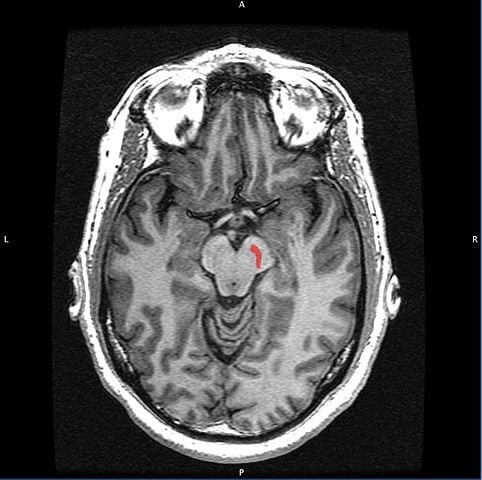
Alpha-synuclein inhabits a different neighborhood of the pouch-shaped organ than the abundant lymphoid tissue. It accumulates inside the neurons that are part of the meshwork that innervates the gastrointestinal (GI) tract, called the enteric plexus. From there, the vagus nerve sends its axons up to the brainstem.
Might alpha-synuclein occasionally hitch a ride aboard the vagus nerve to the brainstem, and from there, to the substantia nigra, the epicenter of Parkinson’s? An origin in the appendix might explain why gastrointestinal symptoms, particularly constipation, may begin up to 20 years before the motor symptoms of Parkinson’s.
In 2007, a trio of researchers from Essex Neuroscience Centre in the UK proposed a scenario linking the GI tract to the brain: swallowing viruses and bacteria in nasal mucus, which travel along the enteric nerves from the stomach to the brain. But Parkinson’s isn’t an infection.
A study in 2014 found non-clumped alpha-synuclein in the lining of the appendixes in healthy people. That led the researchers from the University of Ottawa to hypothesize that having had an appendectomy might affect Parkinson’s risk.
In 2015, researchers in Denmark added another piece to the puzzle. They found a lower incidence of Parkinson’s among people who’d had their vagus nerves cut to treat ulcers.
Yet other studies found that alpha-synuclein forms deposits in the GI tract years before motor symptoms of Parkinson’s arise. The time frame is critical, because young people tend to have appendectomies, whereas older ones develop Parkinson’s. That’s why it’s important for a study to cover decades of data. Several previous investigations might not have identified an appendectomy-Parkinson’s link because they only went back a few years, the researchers write.
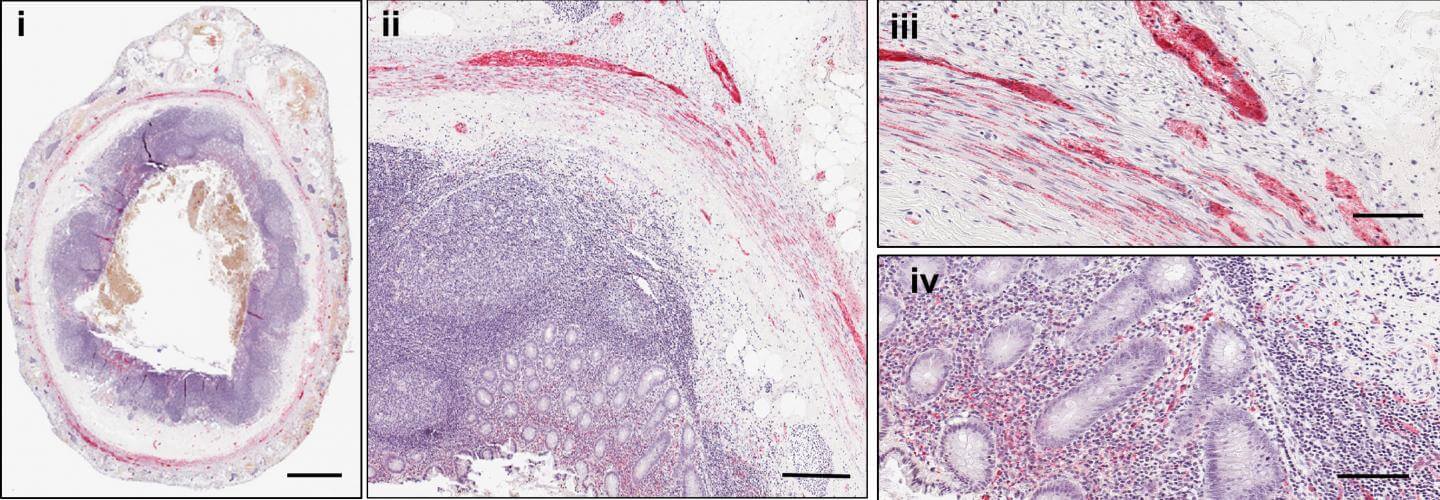
Alpha-synuclein stains red in these views of the appendix. Image credit: B. A. Killinger et al, Science Translational Medicine
Biochemistry meets epidemiology
The new work investigated two databases. The Swedish National Patient Registry followed all people in Sweden with any diagnoses since 1964, meeting the criterion of time. Of 1,698,000 individuals, 551,647 had appendectomies, and 2,252 of those developed Parkinson’s. That’s a risk 19.3 percent lower than for people who developed the disorder but retained their appendices. And age at diagnosis was on average 1.6 years later among people who’d had appendectomies.
A second database, the Parkinson’s Progression Markers Initiative, covered people diagnosed with the disorder and included the age that symptoms began, demographic factors, and genetic information (most cases of Parkinson’s are not inherited). Of the 849 cases, 54 had had an appendectomy.
Having had an appendectomy 30 or more years before the first symptoms of Parkinson’s was associated with an average delay of onset of 3.6 years. However, the delay didn’t happen for people known to have a Parkinson’s mutation, suggesting that any protective effect of having an appendectomy might apply only to cases associated with exposure to environmental risk factors, such as pesticides used in agriculture.
The severity of Parkinson’s was similar whether or not a person had had an appendectomy. That suggests that the influence of the appendix is to seed the neurological disease, not accelerate it, the researchers wrote.
Follow the latest news and policy debates on sustainable agriculture, biomedicine, and other ‘disruptive’ innovations. Subscribe to our newsletter.
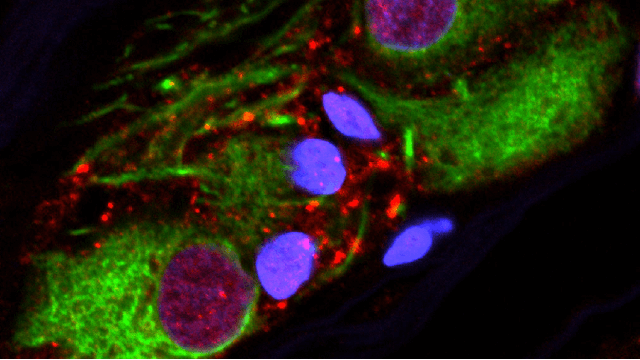
The researchers also probed the appendices of 48 healthy (other than their appendicitis) folks of varied ages, and were surprised to find that 46 of them had lots of the gummy form of alpha-synuclein thought to only be associated with Parkinson’s. The protein was squirreled away in neurons and a few macrophages, the blobby giant scavenger cells of the immune system.
Aggregated alpha-synuclein stains red in the neurons of the appendix. Image credit: Viviane Labrie/Van Andel Research Institute
Yet another set of experiments caught the appendix in action, in vitro. The researchers made a soup of sorts out of healthy appendixes and added monomers of the alpha-synuclein manufactured using recombinant DNA technology – that is, outside the body. Sure enough, the appendix soup knit the monomers into a sticky mess, like in a Parkinson’s brain.
“We were surprised that pathogenic forms of alpha-synuclein were so pervasive in the appendixes of people both with and without Parkinson’s. It appears that these aggregates – although toxic when in the brain – are quite normal when in the appendix. This clearly suggests their presence alone cannot be the cause of the disease,” Dr. Labrie said. Something else, perhaps a confluence of events, enables the appendix to raise risk of Parkinson’s, which affects less than 1 percent of the population, she added. “That’s what we plan to look at next: Which factor or factors tip the scale in favor of Parkinson’s?”
Will “prophylactic appendectomy” become a thing? Not likely, because any protection offered by appendix removal isn’t huge. The researchers put it this way in their paper: “In total, PD was diagnosed in 1.17 out of every 1,000 people who had an appendectomy compared to 1.4 per 1000 in the general population.”
While young people should hardly be volunteering up their appendixes to protect against a neurological condition unlikely to show up for decades, the link between the maligned digestive organ and the Parkinson’s brain offers an enticing new drug target.
“Our results point to the appendix as a site of origin for Parkinson’s and provide a path forward for devising new treatment strategies that leverage the gastrointestinal tract’s role in the development of the disease,” Dr. Labrie said.
Ricki Lewis is the GLP’s senior contributing writer focusing on gene therapy and gene editing. She has a PhD in genetics and is a genetic counselor, science writer and author of The Forever Fix: Gene Therapy and the Boy Who Saved It, the only popular book about gene therapy. BIO. Follow her at her website or Twitter @rickilewis