Viewpoint: Coffee cancer warning illustrates failure of California’s Prop 65 law

coffee

On August 29, the FDA threw its hat into California’s eternal does-or-doesn’t-coffee-cause-cancer fight.

“Requiring a cancer warning on coffee, based on the presence of acrylamide, would be more likely to mislead consumers than to inform,” the federal agency’s statement read. That’s because scientists are in near uniform agreement that coffee doesn’t cause cancer – its safety is reinforced by some of the most comprehensive data available. But since coffee contains a chemical called acrylamide, California’s Proposition 65 law requires the beverages to bear a warning. The law is broken, and its inconsistency is just part of the reason why Californians pay these warnings little mind.

So in August’s waning days, the rules governing Proposition 65 warnings changed to make them more informative. Now, rather than vague notices about cancer and reproductive harm, California law requires manufacturers to identify which specific chemical on the state’s list of roughly 900 carcinogens and reproductive toxins an item might expose consumers to.

The change is both good and wholly insufficient for addressing Proposition 65’s failures.

At the very least, consumers can google the newly identifiable chemical to discover whether a warning should actually be heeded – as might be the case for items containing lead or the plastic softener DEHP when destined for a house with young children. Googling the acrylamide warning on coffee would inform consumers of the warning’s needlessness and the clamor to restore coffee’s good name.
disney prop

This whole coffee brouhaha speaks to the most dangerous failure of Proposition 65, one which these more elaborate notices fail to rectify: overwarning.

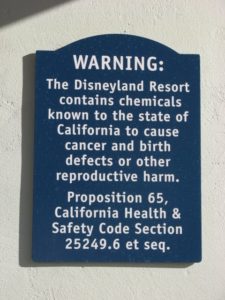
It’s no exaggeration when pundits call these warnings ubiquitous. As a youngster in Southern California, I remember reading the notices that Disneyland’s parking garage and my local mall contained chemicals known to cause cancer, birth defects, or reproductive harm. Better yet, I remember my mother dispelling my alarm with the first rule of being Californian: Everything is made up and the warnings don’t matter.

The signs were so common, appearing on everything from mugs to flip flops, that I also began to tune them out. Unfortunately, there’s evidence that this kind of warning fatigue is taking its toll. California’s rate of several common cancers — Non-Hodgkin’s lymphoma, and ovarian, testicular, and stomach cancers among them – are either no different from or higher than the national average. That’s not a great outcome for a law aimed at protecting public health. And though Californians are ignoring the warnings, a group of serial litigants have made a $300 million cottage industry suing companies that fail to display them.

Even state officials know they have a problem. “There’s a danger to overwarning — it’s important to warn about real health risks,” a spokesperson of California’s Office of Environmental Health Hazard Assessment (OEHHA) told The New York Times. A major contributor to the problem is that Proposition 65 doesn’t require a causal link between a product and an adverse health effect, nor even between the amount of a chemical in a product and an adverse health effect. As a result, items like coffee are under legal obligation to bear warnings when no real risk exists.

How does this happen? OEHHA sets acceptable exposure levels for reproductive toxins by arbitrarily dividing the chemical’s observed safe exposure level by 1,000. For suspected carcinogens, the safety threshold is set low enough that someone exposed to the chemical every day for life would have less than a 1 in 100,000 chance of developing cancer. These cutoffs are meaninglessly low.
formaldehyde2567
Image Credit: listsurge.com

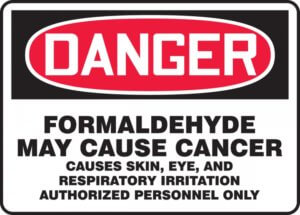
Certainly, no one wants to flirt with the line between safe and unsafe exposure. But for those who believe such a wide margin of safety is justified, consider this: The level of formaldehyde that requires a Proposition 65 warning in California is less than the amount of formaldehyde we naturally exhale throughout the day. According to California law, human breath poses an unacceptable cancer risk.

All of the law’s shortcomings can be boiled down to this single flaw. If California only required warnings on products that truly yielded an unacceptable health risk, people would see them less often. They’d likely take the warnings more seriously. And businesses selling harmless products wouldn’t face broad daylight extortion simply because a listed chemical is present in trace amounts in their products. After all, it’s the dose that makes the poison.

Follow the latest news and policy debates on sustainable agriculture, biomedicine, and other ‘disruptive’ innovations. Subscribe to our newsletter.

For more than 30 years, Proposition 65 has operated with little change to how it evaluates chemicals, despite major toxicological advancements in the past decade. If we truly want to protect public health, we can’t simply wait for state officials to intervene every time something as safe as coffee lands under the law’s black list, nor can we be complacent in allowing the warnings on less familiar products that carry an equally negligible risk.

OEHHA should base its chemical safety thresholds on real data: typical exposure patterns, modern toxicological and epidemiological data, and considerations for vulnerable populations, like pregnant women and newborns. If businesses losing millions each year to the law isn’t compelling enough, perhaps the consequences of overwarning will finally inspire action.

Breanne Kincaid is a California native and Research Director at the Washington, DC-based Center for Accountability in Science

A version of this article originally appeared at RealClearScience as In California, Human Breath Is a Cancer Risk and has been republished here with permission.

Earth’s carrying capacity and why the status quo ‘could be collectively suicidal’

earth

In his article, “The Earth’s Carrying Capacity for Human Life is Not Fixed,” Ted Nordhaus, co-founder of the Breakthrough Institute, a California-based energy and environment think tank, seeks to enlist readers in his optimistic vision of the future. It’s a future in which there are many more people on the planet and each enjoys a high standard of living, while environmental impacts are reduced. It’s a cheery vision.

If only it were plausible.

Nordhaus’s argument hinges on dismissing the longstanding biological concept of “carrying capacity” — the number of organisms an environment can support without becoming degraded. “Applied to ecology, the concept [of carrying capacity] is problematic,” Nordhaus writes, arguing in a nutshell that the planet’s ability to support human civilization can be, one presumes, infinitely tweaked through a combination of social and physical engineering.

Few actual ecologists, however, would agree. Indeed, the concept of carrying capacity is useful in instance after instance — including modeling the population dynamics of nonhuman species, and in gauging the health of virtually any ecosystem, be it ocean, river, prairie, desert, or forest. While exact population numbers are sometimes difficult to predict on the basis of the carrying capacity concept, it is nevertheless clear that, wherever habitat is degraded, creatures suffer and their numbers decline.

overpopulation 8 13 18 2

The controversy deepens in applying the carrying capacity concept to humans. Nordhaus seems to think we are exceptions to the rules. Still, as archaeologists have affirmed, many past human societies consumed resources or polluted environments to the point of collapse. Granted, societies have failed for other reasons as well, including invasion, over-extension of empire, or natural climate change. Yet in cases where societies depleted forests, fisheries, freshwater, or topsoil, the consequences were dire.

But that was then. The core of Nordhaus’ case is that we are now living in a magical society that is immune to the ecological law of gravity. Yes, it is beyond dispute that the modern industrial world has been able to temporarily expand Earth’s carrying capacity for our species. As Nordhaus points out, population has grown dramatically (from less than a billion in 1800 to 7.6 billion today), and so has per capita consumption. No previous society was able to support so many people at such a high level of amenity. If we’ve managed to stretch carrying capacity this much already, why can’t we do so ad infinitum?

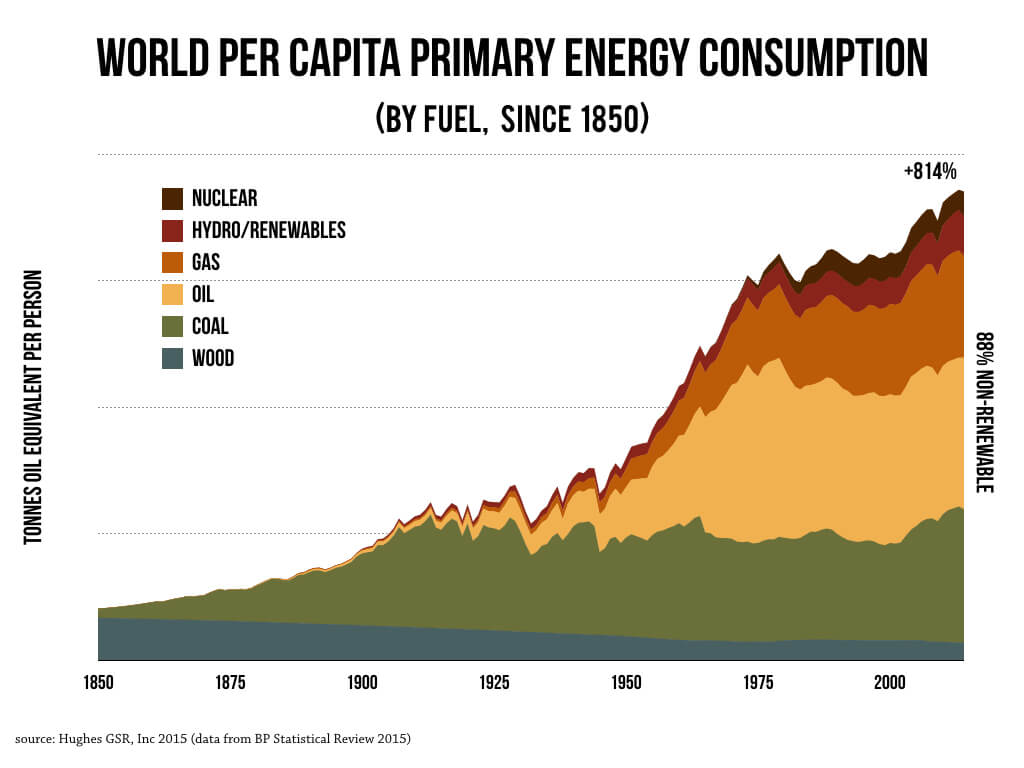
To answer the question, it’s first important to understand the basis of our success so far. Science and technology usually glean most of the credit, and they deserve their share. But sheer energy — the bulk of it from fossil fuels — has been at least as important a factor.

population 8 13 18 2

With lots of cheap energy, we were able to extract raw materials faster and in greater quantities, transport them further, and transform them through industrial processes into a breathtaking array of goods — including fertilizers, pesticides, and antibiotics, all of which tended to reduce human death rates.

But there was still another essential factor in our success: nature itself. Using science, technology, and cheap energy, we expanded farmlands, chain-sawed forests, exploited fisheries, mined minerals, pumped oil, and flattened mountains for their buried coal. And we did these things in a way that was not remotely sustainable. By harvesting renewable resources faster than they could regrow, by using non-renewable resources that could not be recycled, and by choking environments with industrial wastes, we were borrowing from future generations and from other species.

Nordhaus writes: “For decades, each increment of economic growth in developed economies has brought lower resource and energy use than the last.” This trend of severing the tie between GDP and energy/materials throughput is called “decoupling.” Many economists make big claims for past decoupling and promise much more of it in the future. But careful analysis of decoupling to date shows that most is attributable to accounting error. And to get the developing world up to the level of an average American’s energy usage would require nearly quadrupling global energy consumption, even assuming advances in efficiency. So, unless we find ways to make decoupling actually happen in the future more reliably and at higher rates, growing the global economy will require us to use more of the Earth’s depleted resources.

It is true that some past warnings about the consequences of overpopulation and overconsumption, framed as forecasts, proved wrong. Thomas Malthus famously thought famine would engulf humanity within decades; it didn’t. He failed to foresee industrial agriculture. Paul Ehrlich thought rapid population growth would lead to catastrophe in the 1980s, but he failed to anticipate the impacts of globalization and debt — which enables us to consume now and pay later. Peak oil analysts didn’t foresee the fracking frenzy. Yet cornucopian economists who perceive no problem in the expectation of endless growth on a finite planet likewise failed to foresee climate change, the exponential increase in extinction rates primarily as a result of human-caused habitat degradation, the collapse of fisheries from overfishing, and much, much more.

How can we judge whether cornucopians, or so-called Malthusians, will be right in the long run? One way would be to keep a running account of key biophysical factors on which the prospering of our species depends. If an alarm bell sounds for any of those key factors, we should sit up and pay attention. After all, Liebig’s Law (another foundation of ecology) tells us that growth limits are set not by total resources available, but by the single scarcest necessary resource.

Follow the latest news and policy debates on sustainable agriculture, biomedicine, and other ‘disruptive’ innovations. Subscribe to our newsletter.

Fortunately, somebody is keeping those accounts. Indeed, a cottage industry of environmental scientists, led by Johan Rockström of the Stockholm Resilience Center and Will Steffen of the Australian National University, has identified nine planetary boundaries that we transgress at our peril: climate change, ocean acidification, biosphere integrity, biochemical flows, land-system change, freshwater use, stratospheric ozone depletion, atmospheric aerosol loading, and the introduction of novel entities into environments.

We are currently exceeding the “safe” marks for four of these boundaries:

Another way of keeping track is the ecological footprint, which measures human demand on nature in terms of the quantity of land and water it takes to support an economy sustainably. The Global Footprint Network calculates that humanity is currently exceeding Earth’s sustainable productivity by 60 percent. We do this, again, by drawing down resources that future generations and other species would otherwise use. So, as a result of our actions, Earth’s long-term carrying capacity for humans is actually declining. Nordhaus is right that it’s not a fixed quantity; the problem is that we’re reducing it rather than adding to it in a way that can be maintained.

Devise your own scorecard. What warning signs would you expect to see if we humans were pressing at the limits of global carrying capacity? Resource depletion? Check. Pollution? Check. Dying oceans? Check. Human populations subjected to increasing stress? Double check.

Here’s one more that we probably should be paying more attention to: Wild terrestrial mammals now represent just 4.2 percent of terrestrial mammalian biomass, the balance — 95.8 percent — being livestock and humans. Maybe we could make some inroads on that remaining 4.2 percent, but it’s pretty clear from this single statistic that we humans have already commandeered most of the biosphere.

Optimism is essential; it draws us toward the best possible futures. But when it turns into wishful thinking, it can blind us to the consequences of our present actions. In the worst potential case, the results could be collectively suicidal.

Richard Heinberg is the author of 13 books and a Senior Fellow with the Post Carbon Institute. His essays and articles have appeared in print or online at Nature, Reuters, The Wall Street Journal, The American Prospect, Public Policy Research, the Quarterly Review, Resilience, The Oil Drum, and Pacific Standard, among other publications. Follow him on Twitter @richardheinberg.

A version of this article was originally published on Undark’s website asTed Nordhaus Is Wrong: We Are Exceeding Earth’s Carrying Capacityand has been republished here with permission.

Why probiotics may or may not help you—and could even harm you

probiotic gty hb hpMain x

From pickles and candy bars to pills and protein powders, probiotics are touted as a health boon in all flavors of foodstuffs. Consuming these beneficial bacteria can bolster the gut’s microbiome, allegedly enhancing everything from digestion to brain function. But regardless of what shape or size these probiotic supplements come in, they appear to have one thing in common—many people simply don’t benefit from them, and in some specific cases, they may actually do harm.

pair of studies published [September 6] in the journal Cell examines probiotic dietary supplements to determine if the supposed wonder bacteria actually provide the kind of benefits that have been claimed. The results paint a more complicated picture.

Senior author Eran Elinav, an immunologist at the Weizmann Institute of Science in Israel, and colleagues found that many people’s gastrointestinal tracts reject generic probiotics before they can get to work. Even worse, Elinav’s team found that microbial competition from off-the-shelf probiotics can prevent natural gut bacteria from reestablishing themselves after being wiped out by antibiotic drugs.

“[I]t is generally important for everyone to realize that we are unlikely to find simple rules (e.g., take this probiotic for this health issue) that work well across a large diversity of people in a wide range of conditions,” [Jonathan Eisen said].

Read full, original post: The Benefits of Probiotics Might Not Be So Clear Cut

Experts press UK regulators for clarity on biotech crop regulations

brexit

The John Innes Centre is today joining a call for the [UK] government to address the implications of a European Union judicial ruling that classes gene-edited crops as Genetically Modified Organisms (GMOs).

An open letter, signed by leading research institutions, universities, plant breeders, crop agronomy companies and biotech multinationals, was delivered to Defra Secretary of State Michael Gove on [September 13th].

The group of 33 signatories …. collectively undertakes hundreds of millions of pounds of private and public-funded research and development into plant science every year, employing hundreds of scientists and crop specialists across the UK.

“We feel there are significant questions that must be addressed urgently by government if the UK is to retain its strength in plant genetics, to use innovation to boost productivity and competitiveness, and to meet the challenges of nutritional health and environmental protection,” [the letter reads].

Defra has since reiterated its view that “gene-edited organisms should not be regulated as GMOs if the changes to their DNA could have occurred naturally or through traditional breeding methods”.

Professor Wendy Harwood, of the department of Crop Genetics at the John Innes Centre said: “The CJEU decision could have major negative impacts on our ability to respond rapidly to the challenges of providing sufficient, nutritious food, under increasingly challenging conditions.”

Read full, original article: Call for clarity after EU ruling on gene-edited crops

USDA aims to debut ‘bioengineered’ GMO food labels by December 1

BioengineeredLabels Lead x

The USDA by Dec. 1 is aiming to publish a final rule on labeling food containing genetically engineered ingredients, Greg Ibach, undersecretary for marketing and regulatory programs, said [September 12th].

The department wants to start enforcing the rule [on Jan. 1, 2020] at the same time as FDA’s update to the Nutrition Facts panel takes effect so food manufacturers only have to change labels once ….

The final GMO labeling rule — formally known as the National Bioengineered Food Disclosure Law — was sent to the White House Office of Management and Budget on Aug. 31, where it is pending review.

Editor’s note: For more information about the USDA’s new bioengineered GMO food labels, please read this GLP article.

Read full, original article: USDA eyes Dec. 1 for final GMO labeling rule (Behind paywall)

‘Incredibly rare’ extinct Siberian horse to be cloned

ancient foal video

Scientists recently extracted an almost perfectly preserved prehistoric baby horse from the permafrost of Siberia’s “Mouth of Hell” crater in Yakutia. At potentially 40,000 years old, researchers praised the “incredibly rare” ancient find.

Now, scientists from Russia and South Korea are trying to clone the mysterious baby horse, The Siberian Times has reported. But a key figure in the mission is well-known for fabricating scientific evidence.

Although he was once considered a pioneer in the realm of stem cell research, [researcher Woo Suk] Hwang is perhaps best known for violating study ethics and falsifying some of his findings. In the mid-2000s he admitted to using eggs from paid donors in a groundbreaking study that claimed to reap stem cells from a cloned human embryo. Much of his data was later exposed as fake.

Hwang plans to use a modern horse as a surrogate mother for a cloned Equus lenensis embryo, The Times reported. Just one cell, he said, is needed for the clone.

‘If we have one live cell, we can multiply it and get as many embryos as we need…[and] if we get the living cell from the ancient tissue it will be unique by itself, because no one [has] managed to do this before,” he told the publication.

Read full, original post: Scientists are trying to clone an ancient horse discovered in Siberia’s ‘Mouth of Hell’ crater

Quaker Foods vice president says breakfast cereals aren’t tainted by weed killer glyphosate

quaker oats x

Quaker Oats had an “aha moment” about a year ago, said Robbert Rietbroek, senior vice president and general manager for Quaker Foods North America.

The brand, which traces its history back to 1877, was largely being marketed to consumers with a focus on emotion and nostalgia — not health …. As temperatures drop this fall to prime oatmeal weather, prepare to hear plenty from Quaker on the health benefits of oats.

Last month, Quaker was one of the cereal companies named in a report by the Environmental Working Group, an environmental advocacy organization, as having unsafe levels of glyphosate, the most commonly used herbicide on genetically modified crops …. Rietbroek recently answered questions about that and other aspects of the Quaker Oats business.

The Environmental Working Group recently found traces of glyphosate in Quaker products. Is that a concern for the business?

A: Glyphosate has been used since the 1960s. It’s been used for a lot of crops — carrots, peas, quinoa, corn, potatoes. It’s a widely used pesticide that farmers use across the U.S., Canada and Europe …. We obviously make sure our products our safe and comply with the regulations of the FDA, the EPA and the European Union — all of which have very strict guidelines on the presence of traces in products ….

Read full, original article: With oatmeal growing in popularity, Quaker pitches to health-conscious consumers

Scientists ‘turn off’ pathogenic genes to protect cotton from devastating wilt disease

cotton wilt

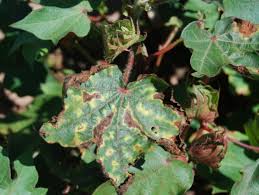
Verticillium wilt (VW) is a devastating disease that affects a wide range of crops, causing major losses in agriculture …. One of these crops is cotton, the most important fiber in the textile industry …. The most effective way to combat this disease is through the use of resistant [crop varieties] ….

To address this problem in cotton, scientist Wangzhen Guo and colleagues from Nanjing Agricultural University [in China] utilized RNA interference (RNAi) to turn off pathogenic genes of Verticillium dahliae, the fungus in infected cotton seedlings.

Silencing this gene in cotton plants infected through agro-infiltration created enhanced resistance to VW. This finding allows future establishment of resistance in cotton and other crops using the technology.

Editor’s note: For more information about RNA interference, the technique used in this study, listen to this episode of the Talking Biotech podcast.

Read full, original article: RNAI USED TO CONFER VERTICILLIUM WILT RESISTANCE IN COTTON

‘Foot soldiers’ of disease: Plasma proteins could be key to understanding genetic risks

Plasma
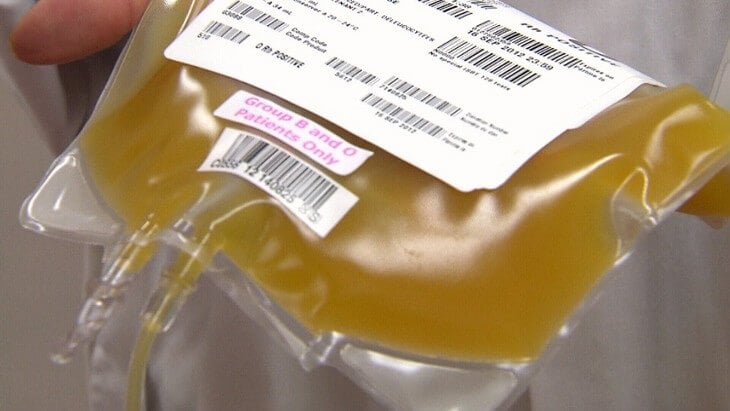
[Blood plasma] is the home of the “secretome,” a host of proteins that serve as inter-cell communicators. These proteins are the foot soldiers in both homeostasis and disease, carrying messages from one area of the body to another. While we have studied these messengers in isolation, we are only beginning to look at them dynamically, how they change over time and their relationship to one another. Looking at the interactions opens up a new world of understanding.

Could the genetic variations, and each of us in unique in our secretome profile, be our predisposition to disease? Consider this example. Our arteries are not inert tubes, but are dynamic structures, rebuilding themselves continually. What if there was just a slight change in the chemical signals involved in the rebuilding; and as a result, the rebuilt artery was every so slightly weaker. Now add in another variable, like hypertension where the pressure inside the weakened artery is increased. The combined effect of an ever so subtle genetic variation and high blood pressure would become expressed phenotypically as an aortic aneurysm.

A recognition that a genetic variation results in the predisposition to specific a disease and is not the cause of the disease helps to explain a host of contradictory findings – disease is a result of interactions.

Read full, original post: Linking Genetics To Disease – The View From Our Chemical Messengers

Lessons learned from Twitter GMO debates with David Crosby and other celebrities

davidcrosby hero

When we are passionate about a topic, it is natural for us to become overly emotional when someone gets it wrong. Twitter, being the cesspool of the internet, sees this a lot. It can get even more stressful when a celebrity, with potentially millions of followers, gets something wrong.

…. Often thousands of people reply to the celebrity and are just ignored. Sometimes, like when Fran Drescher accused me of being a white man trying to sell cancer food, they respond by attacking.

Earlier last week I was tagged in a post replying to singer/songwriter David Crosby. Crosby had retweeted someone complaining about “glyphosate staying in the corn”. Looking further back the original discussion was about the insanely high cost of insulin for diabetics, but as usual, the topic got derailed. Because he is diabetic, because he is rightfully upset, and because the life saving insulin itself is made with genetic engineering ….

Hesitantly I replied to someone on the thread who thought glyphosate was a problem in regards to groundwater. According to the Chesapeake Stormwater Network, farmers switching to glyphosate from its alternatives have actually improved the groundwater.

…. David Crosby liked my tweet …. he accepted that he might not know everything about a topic outside his expertise.

Gwyneth Paltrow and Mark Ruffalo should take note.

Read full, original article: What David Crosby just taught me about science communication

How human evolution—and racism—could be altered by climate change

climate

Evidence suggests that a warming planet could melt away differences between human races — or population groups, as scientists more accurately call them. The reason why climate change could reduce racial differences is that it will trigger massive migrations.

One consequence of large-scale migrations is what biologists call gene flow, a type of evolution caused by the blending of genes between populations. When people from different populations mate and reproduce, their genes intermingle in their children.

Because skin color is controlled by many genes, parents whose skin color differs tend to have children with intermediate skin tones. And so in five to 10 generations (125 to 250 years), we may see fewer people with dark skin or pale skin and more with a brown or olive complexion.

Blending of races is already well underway in ethnically diverse countries like Brazil, Singapore and the U.S. A Pew report from 2017 found that the number of multiracial births in the U.S. rose from 1 percent in 1970 to 10 percent in 2013. And the increase will continue — the multiracial population is projected to grow by 174 percent over the next four decades.

The bottom line? As people around the world become more physically similar to one another, it’s possible that racism might slowly fade.

Read full, original post: Climate change could affect human evolution. Here’s how.

Pregnancy and depression: Do antidepressants increase risk of autism?

pregnancy

Among the many things a woman is supposed to avoid when pregnant are antidepressants, particularly a subtype of the drugs that some studies have linked to an increased risk of autism and attention deficit hyperactivity disorder.

Does taking antidepressants during pregnancy increase the odds that your child will have autism?

Maybe, but even if so, the risk is small. Several studies have looked at the health records of thousands of women for any boost in autism rates among the children of those who took antidepressants while pregnant. Some of these studies found up to a doubling of the odds of the women having a child with autism. However, because the initial risk of autism is small, this increase still adds up to a low absolute risk.

More importantly, women who take antidepressants may have other traits that are responsible for the increased rates of autism in their children. Many studies that control for these traits conclude that there is no risk from the antidepressants themselves.

Should women stop taking antidepressants while pregnant?

Women grappling with this question should consult their doctor. The risk of autism from taking antidepressants is small, if it exists at all. And severe depression during pregnancy or afterward can be harmful to both the mother and the child. But the risk-benefit analysis for the drugs will be different for each woman.

Read full, original post: The link between antidepressants and autism, explained

CRISPR gene editing speeds breeding of Cassava and other staple food crops

cassava

Cassava plays a big role as a staple food and a highly favored commodity in the multibillion starch industry. However, its genetic improvement is hindered by …. poor fertility of farmer-preferred varieties ….

Herve Vanderschuren from the Institute of Molecular Plant Biology in Switzerland and colleagues utilized genome editing to accelerate breeding for modified starch in cassava. Their study was recently published in Science Advances.

For the study, researchers used CRISPR-Cas9 to edit genes controlling flowering …. and amylose production …. Results showed reduced or eliminated amylose content in cassava starch. Such starch quality is favored by farmers and consumers due to its low pasting temperature and high viscosity. Modification of the flowering gene allowed them to hasten flowering …. The next step in the research is the production of more of these mutant seeds … for breeding in the field.

Editor’s note: This summary was lightly edited for clarity.

Read full, original article: SCIENTISTS USE CRISPR-CAS9 TO ACCELERATE BREEDING FOR MODIFIED STARCH IN CASSAVA

Using engineered gut bacteria to fight genetic disease

synbio

A Boston-based synthetic biology company is taking a novel approach to treating the rare genetic metabolic disorder Phenylketonuria. Synlogic uses genetic engineering; but instead of trying to alter patients’ genes, the company is focused on modifying gut bacteria.

 Phenylketonuria (PKU) is a genetic metabolic disorder, where the patients cannot properly metabolize the amino acid phenylalanine (Phe). It is an inherited condition, caused by low levels of the enzyme phenylalanine hydroxylase (PAH) (or non-functional recycling pathway of the co-factor THB, required by phenylalanine hydroxylase).

PKU is a serious condition. If untreated, PKU symptoms include mental and behaviour disorders, seizures, light skin, and musty smell. Newborn screening can reveal very quickly the imbalance in the amino acid metabolism, and patients can lead a normal life if they have extremely low-phenylalanine diet. Maintain a lifelong prescription diet is challenging, associated with high costs and social limitations.

There is a very limited amount of non-dietary treatment options and no cure is available. One approved therapy is the continuous injection of PEGylated phenylalanine ammonia lyase (PAL), an enzyme that degrades phenylalanine; however this treatment comes at a high cost and with severe anaphylaxis risk. KUVAN is a PAH activator—effective in patients with poor availability of co-factor THB—is not applicable to many patients and cannot replace low-phenylalanine diet. Gene therapy could solve the problem once and for all, essentially fixing the patient’s non-functional enzyme at the DNA level. However, there is no such treatment approved yet.

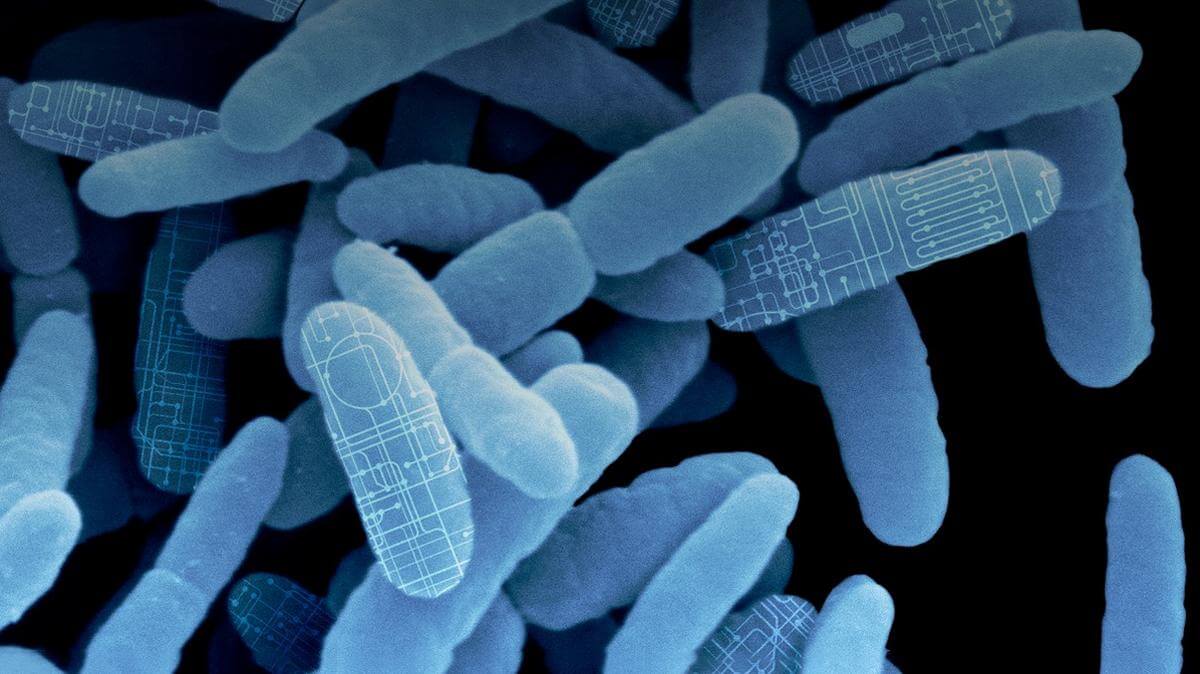
Synlogic decided to take a different approach. Instead of attempting to modify the genome of the patient, the company decided to focus on the microbiome. Their idea is to modify Escherichia coli Nissle, a bacterium naturally occurring in the human microbiome, to break down phenylalanine before it damages the host.

The results of this effort were recently reported in Nature Biotechnology, while a clinical trial is underway. The researchers engineered E. coli with two Phe-catabolising enzymes: one is PAL, a cytosolic enzyme; the other is the L-amino acid deaminase (LAAD), which converts Phe to phenylpyruvate. Both enzymes have different limitations. As PAL is located inside the cell, it requires a phenylalanine importer to bring Phe in and catabolise it. LAAD localises in the external membrane, but requires oxygen for its function—oxygen that is scarcely found in the human intestines. Both pathways work, as they reduce Phe concentration in the assays; however, the bacteria expressing them were growing really slowly.

Given the first encouraging results, the Synlogic researchers proceeded to construct the final strain. The researchers wanted a strain that would activate the Phe-degrading pathways only when in the gut, in a precise manner. They also wanted the LAAD enzyme to be expressed in microaerobic environment (where it has activity). Moreover, the strains would need to harbour no antibiotic resistance cassettes (to be used in humans) and have the transgenes incorporated in the genome (for stability). The final E. coli strain SYNB1618 satisfied all these requirements, with the addition of a biocontainment switch to prevent it from release into the environment.

Follow the latest news and policy debates on sustainable agriculture, biomedicine, and other ‘disruptive’ innovations. Subscribe to our newsletter.

The final strain’s efficiency as a phenylalanine regulator was experimentally tested in mice with PKU and in healthy monkeys. In both cases, the researchers detected degradation products caused by the heterologous enzymes secreted in the urine, without any side effect. Also, they report that unhealthy mice injected with the probiotic strain reduced their phenylalanile blood levels by 38%. As clinical trials proceed, Synlogic just announced positive initial results for the ongoing Phase 1/2a clinical trial.

This treatment approach is pioneering. Things looks promising so far, so I am looking forward to the clinical results. SYNB1618 could act as a regulator of Phe, especially in adult PKU patients that have trouble maintaining a prescription diet. Synlogic has a rich portfolio of probiotic strains as treatment to metabolic disorders (trademarked as Synthetic Biotics™), in various stages of trial as therapeutics. Their metabolic disease portfolio includes other conditions, such as hyperammonemia and maple syrup urine disease. Exploiting the microbiome for therapeutic applications is a fascinating and promising direction, and I expect to see more in the future.

Dr. Konstantinos (Kostas) Vavitsas is a postdoctoral fellow at the University of Queensland, on expanding the synthetic biology potential of cyanobacteria. He is a member of the executive board of Synthetic Biology Australasia, and community editor for PLOS synbio. Follow him on Twitter @konvavitsas

A version of this story originally ran at PLOS as Synthetic probiotics for genetic disease treatment and has been republished here with permission.
Predictability: Why there’s no reason to be looking for ‘unexpected surprises’ in GMO breeding

gmo

If you put a fish gene into a tomato, is it sill a tomato? Or might it morph into something new and unexpected – a fish-mato, perhaps?

A common objection voiced by activists opposed to genetic modification is that the crop will go through some sort of fundamental change. That’s where they came up with the term “Frankenfood.”  The fear is that breeders will mess around and create some novel trait or characteristic – a surprise, if you will. It’s an argument leveled, in particular, at transgenic breeding practices, where genetic material from unrelated species is combined. The fast-growing AquaBounty salmon, for example, includes material from the eel-like ocean pout. It should be noted, however, that breeding increasingly is shifting to cisgenic techniques, where no foreign DNA is involved.

Critics argue that these unexpected results will compromise the integrity of the food and possibly create unexpected and hazardous situations, as described by the anti-GMO Earth Open Source, in its list of “GMO myths”:

The GM transformation process may produce mutagenic effects that can disrupt or alter gene structure, disturb normal gene regulatory processes, or cause effects at other levels of biological structure and function. These effects can result in unintended changes in composition, including new toxins or allergens and/or disturbed nutritional value.

The problem with this line of thought is that “unintended” and “unexpected” are not the same thing, though critics — and regulators generally use the terms interchangeably, says Wayne Parrott, a professor of plant breeding and genomics at the University of Georgia. As a result, he says GM plant breeding has been subjected to a great deal of unnecessary testing.

Parrott maintains that unexpected or surprise effects have never happened in either GMO or traditional breeding. What has happened are “unintended” effects that were actually quite predictable. Traditional breeders have always been watchful for these “unintended” effects and avoid used strains that might cause them. And since breeders are well aware of the properties of the strains they are attempting to cross, he said there’s no need to regulate GMOs based on the potential for “unintended effects.”

fish matoThat’s not to say that new traits aren’t created. According to a 2012 paper by a consortium of scientists, conventional breeding in 19 crops took 111 genes from wild relatives and integrated them without using transgenic techniques into new varieties. These traits resulted in disease resistance, as well as resistance to abiotic stresses things such as drought or excessive water and enhanced plant quality. The paper also points out a regulatory gap between conventional and GM food:

Although the genetic and biochemical bases for these traits are usually not well understood, conventional breeding has successfully stacked traits to create stable crop varieties that are considered safe and that, in most cases, were not subjected to safety assessments prior to commercialization.

Same monitoring, but more for GMOs

Genetically modified plants, are required to undergo testing for changes in phenotype that might result in allergenicity or other harmful effects. Traditional breeders, on the other hand, are free to go about their business of making new strains without having to report their crops to the government.

The reality is that the traits appearing in these traditional plants can vary a great deal possibly more than the variation seen in GMO plants. According to a 2014 paper by Monsanto regulatory affairs manager Daniel Goldstein, and a National Research Council report in 2004:

It has long been recognized that conventional technologies (which include wide or forced crosses, plant embryo rescue, and chemical or radiation induced mutagenesis) can also result in unanticipated phenomenon and that the risk of GM technologies falls within the range of risks entailed with conventional methods.

A review paper published in 2013 by Dow AgroSciences scientist Rod Herman and retired US Food and Drug Administration official William Price observed that FDA evaluations of 148 transgenic products were substantially equivalent to conventional varieties.

Variation resulting from traditional breeding and environmental factors dwarf any changes observed in the composition due to introducing a trait through transgenesis. For example, white potatoes contain high levels of toxic glycoalkaloids, and up-regulation of these compounds due to traditional breeding can cause sickness. In the aforementioned case of up-regulation of glycoalkaloids, this actually occurred when endogenous insect resistance was selected for by breeders without knowledge of the mechanism for this resistance.

Follow the latest news and policy debates on sustainable agriculture, biomedicine, and other ‘disruptive’ innovations. Subscribe to our newsletter.

Still, there have been reports, including this one by National Academy of Sciences in 2005, urging scrutiny of all plant breeding. Among its findings:

All foods, whether or not they are genetically engineered, carry potentially hazardous substances or pathogenic microbes and must be properly and prudently assessed to ensure a reasonable degree of safety.

History provides examples of traditional breeding that resulted in potentially hazardous foods. Solanaceous (tobacco family) crops, such as potato and tomato, naturally produce various steroidal glycoalkaloids. These substances are toxic not only to humans, but also to insects and pathogenic fungi. During the course of ordinary plant breeding assessments, breeding lines with increased levels of glycoalkaloids may be identified by the breeder as showing superior insect or disease resistance and retained for possible commercial release.

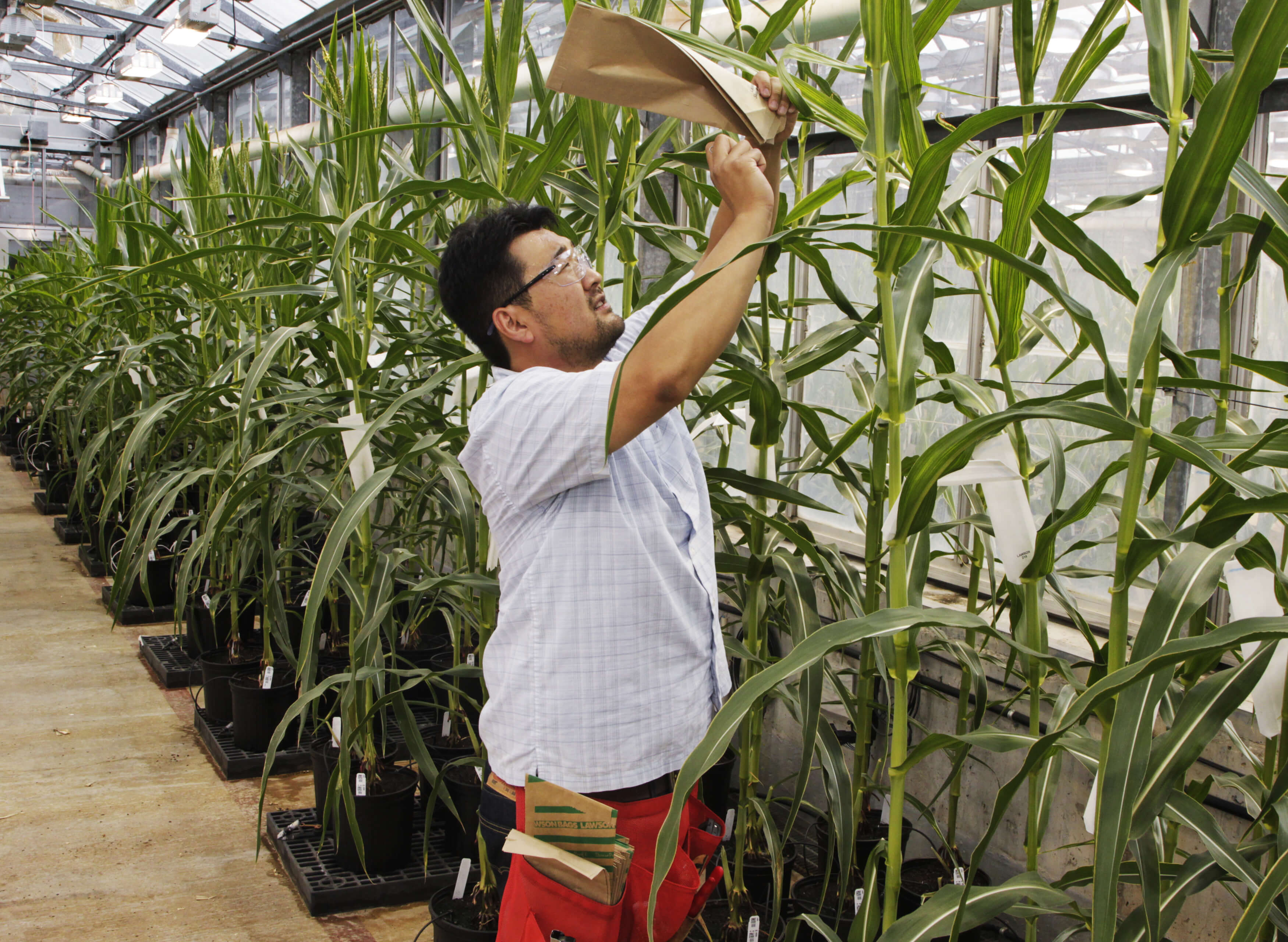
A plant specialist examines corn plants in the Monsanto research facility in Chesterfield, Missouri, in 2014.

Still waiting for surprises from modified genetics

Critics looking for evidence of a “surprise” event might be tempted to point out the troubles that surrounded the development of kiwifruit, as detailed in the NAS report:

Originally it was an edible but unpalatable plant producing small, hard berries in China. Breeders in New Zealand developed what we know now as kiwi fruit (Actinidia deliciosa) into a food during the twentieth century, and commercialized in the United States during the 1960s. There does not, however, appear to be any official record of a premarket safety analysis of the fruit. As a consequence, some humans who were not previously exposed to kiwi fruit developed allergic reactions.

Still, Parrott argues that there was no surprise, but rather a lack of expertise that would have identified the potential for problems. The effects cited by the NAS as “surprise” effects of genetic engineering were in fact, not surprises but effects that could be predicted, and in traditional breeding, often are. “They could have used some plant breeders on that study,” he said. “Nobody has had a true surprise effect.”

A version of this article originally ran on the GLP on Jan 25, 2017.

Andrew Porterfield is a writer, editor and communications consultant for academic institutions, companies and non-profits in the life sciences. He is based in Camarillo, California. Follow @AMPorterfield on Twitter.

New environment minister says France will stick to 3-year phase out of weed killer glyphosate

france roundup

The [French] President Emmanuel Macron has committed to phase out the herbicide glyphosate in three years. The new Minister …. of ecological transition Francois de Rugy said [September 10th] that the commitment is still good. He also said that he had already spoken to the Minister of Agriculture about this issue so that they could work together.

“I have always been for the phase out of this product within three years. It is the commitment that was made by the President of the Republic, and it will be held, ” he said ….

For his part, the French head of state assured that France will leave glyphosate behind in three years. Former environment minister Nicolas Hulot also defended this position, but was opposed by the Minister of Agriculture Stéphane Travert, who pleaded for an exit in five to seven years.

All stakeholders have been invited to propose possible replacements for glyphosate, the new environment minister said.

Editor’s note: This article was originally published in French. This summary has been prepared with Google Translate and edited for clarity.

Read full, original article: Glyphosate : la France tiendra son engagement

Viewpoint: What was right and what was wrong with the CRISPR patent decision

crispr

The CRISPR patent dispute between the University of California, Berkeley, and the Broad Institute is finally over. … In plain English: Broad researcher Feng Zhang’s CRISPR patents were sufficiently inventive over the UC Berkeley’s patent applications with Jennifer Doudna and Emmanuelle Charpentier.

Many scientists disagree with the decision, believing that it fails to comport with how molecular biology is actually practiced. I agree with them. But that doesn’t make the Federal Circuit’s decision wrong. In fact, I think its decision is absolutely correct.

The reason has to do with standards of review — the standards courts use to weigh evidence, limit their authority, and make decisions.

This doesn’t mean I agree with the patent office’s interpretation of the science. In its original decision, the patent office wrote that moving previous gene-editing systems from bacteria to eukaryotic cells suffered from numerous problems: …

These problems were real and shouldn’t be discounted. But, as I wrote in article for EMBO Reports last year, they were widely known to scientists at the time who could have solved each with a road map of solutions…As a matter of patent law, however, this experimental road map isn’t enough — it does not provide, in patent parlance, a “reasonable expectation of success.”

Read full, original post: The CRISPR patent decision didn’t get the science right. That doesn’t mean it was wrong

Targeting breast cancer through the genes of Sub-Saharan African women

c c ca

For the first time, DNA contributed by Sub-Saharan African women has been thoroughly evaluated with innovative genomics technology in an effort to understand the genetic bases for breast cancer in African populations.

African and African American women are more likely than women of other ancestries to develop and to die from triple-negative breast cancer. In the August 21, 2018 issue of the Journal of Clinical Oncology, a multinational research team identifies the genes responsible for inherited breast cancer in Nigerian women.

For their study of “Inherited Breast Cancer in Nigerian Women,” the authors sequenced 25 genes associated with increased risk of breast cancer and identified all damaging mutations in each of those genes.

They found that one out of eight breast cancers in the study was caused by an inherited mutation in one of four of these genes. Mutations in BRCA1 (7 percent of patients) and BRCA2 (4 percent) were the most common, followed by PALB2 (1 percent) and TP53 (0.4 percent).

“Genomic sequencing to identify women at extremely high risk of breast cancer could be a highly innovative approach to tailored risk management and life-saving interventions,” the authors wrote. Given the limited treatment resources available in this setting, “prevention and early detection services should target these highest-risk women.”

Read full, original post: Sequencing genomes of Nigerian women could help prevent many lethal breast cancers

‘Jumping’ genes responsible for strawberry sexes show how fast plants evolve

px Bowl of Strawberries
[S]eparate sexes may seem fundamental to nature, but they’re an oddity for most plants. Now, scientists have figured out how strawberries …. made their recent transition to male and female. The unusual “jumping” genes responsible could mean sex differences can change faster in plants than anyone realized.

Animals have ancient sex chromosomes with a common origin. But in plants, sex chromosomes have arisen only …. in the last few million years, and most plants are generally hermaphrodites …. Strawberries, as one uneducated Ohio farmer discovered in the 1840s, come in three flavors: male, female, and combo.

[E]cologist Tia-Lynn Ashman at the University of Pittsburgh …. has spent nearly 20 years showing that different locations on the strawberry genome can control sex …. Unlike humans …. strawberries have a whopping eight copies of seven chromosomes, for a grand total of 56.

Ashman’s first stroke of luck came when she and her team found the first evidence of male- and female-determining regions in an East Coast variety of a common North American wild strawberry ….

[The researchers] sequenced 60 F. virginiana and F. chiloensis plants …. to see whether any DNA was unique to the females. They asked what genetic sequence was present in all females, but absent in all males. Sure enough, all females shared a short sequence that had jumped at least twice as the plants reproduced over many generations.

Read full, original article: The secret sex life of strawberries