Researchers have long looked to the plants of our world to solve many of the medical problems we face. But new technologies are rapidly opening new opportunities for those scientists.
And while much of those efforts are taking place in the US, Europe and China, that doesn’t mean there aren’t opportunities for work in nations like Uganda, where there is an abundance of plant species with potential medicinal value.
Health scientists in the African nation, under the ministry of health, have developed a number of drugs using various plant species and accepted biotech applications.
Evidence of this was seen during a recent agriculture show at Jinja, where pharmacists displayed a number of well-packaged drugs created from plants.
Ismail Senkungu, a pharmacist from the Uganda Pharmaceutical Society, said the nation’s scientists are using basic biotechnology applications to make drugs such as DEI Anti-malaria, Prunus herbal powder for treating prostate cancer, Zanthoxylum for sickle cell and diabetic patients, and herb sugar as a sweetener for patients with diabetes.
But there are greater opportunities on the horizon – if the nation’s legislators take steps to approve new biotechnology regulations that would allow for greater use of tools for genetic modification of plants. The issue is further complicated by the fact that some of these critical medicinal plants are on the verge of extinction.
“At the moment we can use grafting or tissue culture but for faster growth we need to apply genetic modification,” Senkungu said.
Here are several examples of existing drugs – and how they were created from plants.
Prunus Africana
Prunus herbal powder
The herbal powder, also known as Pygeum, offers treatment for enlarged prostate glands, was processed at Ugandas National Chemothrapy Laboratory using bark from the Prunus Africana plant.
Plant extracts are dried and ground into a powder that is mixed with sterile water. The mixture interacts with the hormones that cause enlargement of the prostate glands and helps them return to normal, Senkungu said.
This particular medicine is already in the Ugandan market, packages in a variety of forms, including capsules, granular tablets and in powdery form in bottles.
This has been possible through a partnership of the scientists who conducted the research for the Uganda Biotechnology and Biosafety Consortium (UBBC) a coalition of stakeholders promoting development of products using biotechnology.
Mis- and disinformation are distorting science and public policy. Subscribe to our Daily and Weekly Digests for incisive coverage of ‘disruptive’ innovations in AI, agricultural biotechnology, food, chemicals, nuclear energy, vaccines, and other disruptive innovations.
This drug was developed using the Artemisia plant as a treatment for malaria, according to Dr. Patrick Ogwang a pharmacist and lecturer at Mbarara University of Science and Technology. He was the lead scientist for the team that developed the drug, which was blended with avocado extract and lemon grass for a better aroma.
The drug has been approved by the National Drug Authority and is already available on the commercial market. Initial success have prompted farmers in some communities to begin growing the plant. This is particularly true in Western Uganda, where the weather favors its growth.
A study by Dr. Ogwang and his team showed that the natural extracted compounds are capable of killing malaria-causing parasites within the human body. The study used parasites collected from malaria patients at Mulago Hospital.
“They were all killed by the compounds of the drug. It was also tested on mice and it killed all the parasites without causing any toxicity to body organs,” Dr. Ogwang said.
Zanthoxylum diabetes treatment
Moses Agwaya a biochemist at the ministry of health, was part of an effort to develop a diabetes treatment using extracts from the Zanthoxylum plant. Initial testing of the drug, relying on diabetic mice, suggested it could be successful in treating the disease in humans.
He is in the process of formulating the extract to come up with a final product that can be released for commercial use – though some patients who’ve heard about its promise have started developing their own versions of the oily extract.
Agwaya said many chemists in Uganda are trying to develop drugs from medicinal plants to treat a number of sicknesses. Whatever the type of drug is developed the procedure is more or less the same, he said.
Zanthoxylum
After identifying a plant with desireable traits, testing must be done to establish that the extract will be safe for human consumption. Initial testing is done on mice, rats and rodents to make certain the final product is nontoxic and not a potential problem for allergy sufferers.
And while these methods have proven their historic value, he argues that Ugandan scientists are missing out on advantages offered by genetic modification. Instead, they are limited to more natural processes. Consider, he said, the value of using genetic engineering to synthesize human insulin in 1982. The development allowed for unlimited production of human insulin at a time when there were fears declining supplies of animal pancreases would lead to shortages of insulin for a rising population of diabetics.
Currently, this type of research is something that Ugandan scientists can only engage in at the research level, with permission from the Uganda National Council of Science and Technology. Yet even if that permission were granted, he said researchers lack access to the necessary equipment.
Agwaya argues that Uganda needs to embrace modern advances, incuding gene edit ing, to help solve the challenges presented by existing and emerging diseases. But that can’t happen unless the adopts a new legal framework freeing its scientists to expand their research activiites.
Lominda Afedraru is a freelance science journalist in Uganda who specializes in agriculture, health, environment, climate change and marine science. Follow her on the Daily Monitor web site www.monitor.co.ug, Facebook or Twitter @lominda25
A new CRISPR technique could prevent humans from passing on a potentially life-threatening disorder, according to Chinese researchers.
An estimated 1 in 5,000 people across the globe suffers from Marfan Syndrome, a genetic disorder that affects the body’s connective tissue.
…
If a person has Marfan Syndrome, there’s a 50 percent chance their child will too. But according to a new study published in Molecular Therapy, CRISPR might be able to improve those odds.
Typically, CRISPR works a lot like a word processor’s cut and paste function; a researcher can use the tool to target a specific spot in an organism’s genetic code, cut the DNA strands, and either insert a new gene into the gap or let the strands repair themselves.
Unfortunately, past research has shown that these cuts to both strands of DNA can produce unwanted edits and potentially even cause cancer.
The Chinese researchers … tried something called “base editing,”… . With base editing, the CRISPR system simply changes one DNA letter to another (for example, swapping an A for a G).
…
According to the study, the researchers were able to correct the mutation that causes Marfan Syndrome in 18 viable human embryos — embryos created by joining a sperm and an egg that doctors could conceivably implant into a person to induce pregnancy.
At a time when we should be focussed on building a robust agriculture system that can cope with global climate changes, we …. insist that farmers work with one hand tied behind their back.
Just last month, the Court of Justice of the European Union ruled that a novel plant breeding method known as CRISPR/Cas should be regulated in the same way as ‘traditional’ genetically modified (GM) crops.
…
The regulations that govern the use of GM technology at [the] EU level have served only to halt research and development on GM in Europe with no credible scientific evidence for such a go-slow.
Now, some would seek to use the same restrictive regulations to halt this new technology.
…
We also note the Irish government’s recent decision to prohibit the cultivation of genetically modified crops in Ireland. As the rubber-stamping of an EU directive, this was heralded as “copper-fastening” Ireland’s GM cultivation-free status.
…
[C]ultivating GM crops …. has reduced pesticide application in agriculture by 6191 million kg worldwide for the first 20 years of their use (1996-2015). The technology has also reduced greenhouse gas emissions from agriculture equivalent to taking 11.9 million cars off the roads.
A report on 18 June highlighted how Ireland is ranked “second worst in EU for tackling climate change” and will not meet EU 2020 commitments ….
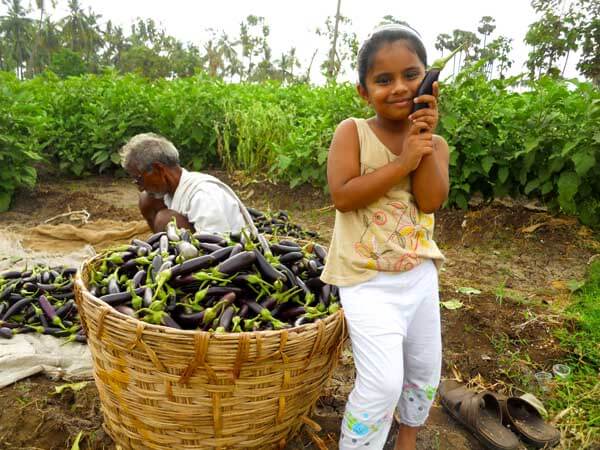
Eggplant is a staple in vegetarian diets throughout South Asia, and one of the cheapest vegetables to procure by resource-poor communities in Bangladesh, [but] a large percentage of the crop does not make it to the market because of [eggplant fruit and shoot borer, EFSB] infestation.
In little over four years’ time nearly a fifth of Bangladeshi [eggplant] farmers are now cultivating – Bt brinjal – a [pest-resistant] eggplant, making it one of the fastest adopted biotech crops ever.
In January 2014 Bangladesh was the first country in South Asia to introduce genetically modified (GM) [brinjal] in the region.
…
This year …. four Bt brinjal varieties reached 27,012 farmers across the country, which constitute roughly 18 percent of Bangladesh’s estimated 150,000 brinjal growers.
…
Net returns per hectare were $2,151 per hectare for Bt brinjal as compared to $357 per hectare for non-Bt brinjal, a six-fold difference …. farmers saved 61 percent of the pesticide cost compared to non-Bt brinjal farmers, experienced no losses due to EFSB
…
EFSB ravages brinjal fields and can cause loss of the crop by as much as 70 percent unless a heavy dose of pesticide is used.
…
[S]cientists …. engineered local varieties of brinjal …. by inserting a …. gene (Cry1Ac) taken from the soil bacterium Bacillus thuringiensis, known as Bt, back in 2005. Bt gene insertion in brinjal made it resistant to EFSB.
Read full, original article: A fifth of brinjal farmers adopt Bangladesh’s first GM food crop
You know your cholesterol, your blood pressure … your heart gene score? Researchers say a new way of analyzing genetic test data may one day help identify people at high risk of a youthful heart attack in time to help.
…
[August 13], researchers reported a new way to measure millions of small genetic variations that add up to cause harm, letting them calculate someone’s inherited risk for the most common form of heart disease and four other serious disorders. The potential cardiac impact: They estimated that up to 25 million Americans may have triple the average person’s risk for coronary artery disease even if they haven’t yet developed warning signs like high cholesterol.
…
If the approach pans out and doctors adopt it, a bad score wouldn’t mean you’d get a disease, just that your genetic makeup increases the chance — one more piece of information in deciding care. For example, when the researchers tested the system using a DNA database from Britain, less than 1 percent of people with the lowest risk scores were diagnosed with coronary artery disease, compared to 11 percent of people with the highest risk score.
“There are things you can do to lower the risk,” [researcher Sekar] Kathiresan said — the usual advice about diet, exercise, cholesterol medication and not smoking helps. On the flip side, a low-risk score “doesn’t give you a free pass,” he added.
The United States has approved, for the first time, a compound derived from marijuana to treat certain types of epilepsy. The ruling may spell good news for autism research.
The approval of Epidiolex, the new drug, will require a change in the U.S. Drug Enforcement Agency’s classification of marijuana compounds as Schedule 1 drugs — meaning they have no medical use and strong potential for abuse — to something more benign.
…
Epidiolex has been approved to alleviate seizures in two epilepsy syndromes: Dravet syndrome and Lennox-Gastaut syndrome. The Food and Drug Administration (FDA) has previously approved synthetic forms of marijuana’s psychoactive ingredient, THC, to treat certain conditions. But this is the first federal approval of a product derived from the marijuana plant.
…
In the meantime, many parents have turned to dispensaries for marijuana to treat their autistic children, despite the lack of evidence.
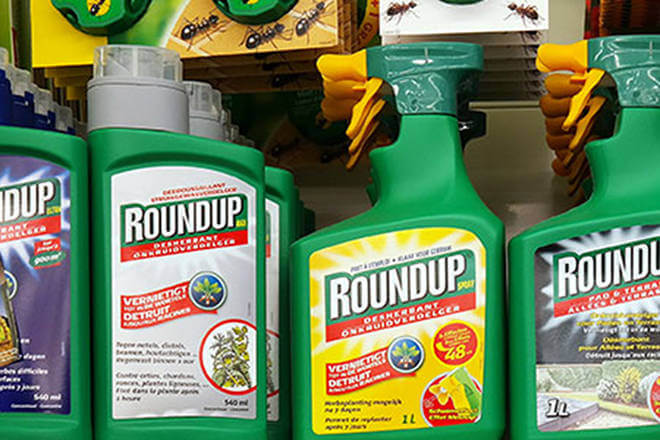
A North American day care company with nine Chicago-area locations has stopped serving Cheerios in response to a recent report from [the Environmental Working Group on August 15th] showing [traces] of [the] weed killer [glyphosate] in the popular finger food for toddlers.
“I think we need to err on the side of caution and make the decision that any possibility is too great,” said Jackie Kardesh, director of marketing and operations for Kids & Co., which operates centers in Chicago, Schaumburg and Geneva ….
Meanwhile, local pediatricians caution that …. the report from the Environmental Working Group should not spark panic about dangers in popular breakfast foods.
“Whenever you see a one-off article like that, you have to do more investigation,” said Dr. Scott Goldstein, a pediatrician for the Northwestern Children’s Practice ….
…
Dr. Nicola Orlov, an assistant professor of pediatrics at the University of Chicago, said the barrage of reports on potential risks in products can be overwhelming for parents, and she hears from many of them in her practice.
“It’s easy to go crazy as a parent if you read every study that comes out, and you can probably be led to decide that exclusively breastfeeding your child for their entire life is the only option,” Orlov joked.
Patients with glioblastoma, a malignant tumor in the brain or spinal cord, typically live no more than five years after receiving their diagnosis. And those five years can be painful — in an effort to minimize the tumor, doctors often prescribe a combination of radiation therapy and drugs that can cause debilitating side effects for patients.
Now, researchers from MIT Media Lab have developed artificial intelligence (AI) that can determine the minimum drug doses needed to effectively shrink glioblastoma patients’ tumors.
…
[T]hey created a testing group of 50 simulated glioblastoma patients based on a large dataset of those that had previously undergone treatment for their disease. Then they asked their AI to recommend doses of several drugs.
…
When the AI prescribed a tumor-shrinking dosage, it received a reward. However, if the AI simply prescribed the maximum dose all the time, it received a penalty. According to the researchers, [the AI needed] to strike a balance between a goal and the consequences of an action.
…
The AI will still need to undergo further testing and vetting by the Food and Drug Administration (FDA) before doctors could put it into practice. But if it passes those tests, it could eventually help people with glioblastoma attack their brain tumors without causing them more pain in the process.
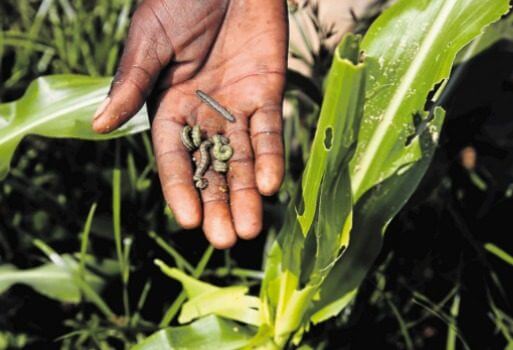
[T]he fall armyworm, an invasive crop pest …. has now been officially confirmed for the first time on the Asian continent …. The pest, which is a voracious eater of maize along with at least 80 other plant species, was found on a maize plant in Karnataka [in India] and according to a pest alert from the Indian Council of Agricultural Research (ICAR) has already been shown to have a 70 percent infestation rate there.
…
[T]here is very little hope of eradication, only control. In Africa, farmers used chemical pesticides to try and combat the fall armyworm, but the pesticides were not generally very effective and have negative repercussions when it comes to environmental and human health ….
Biological control, such as the rearing and release of natural enemies, is also being explored in Africa and will likely be in Asia as well …. finding local predators of the fall armyworm in Asia will be an important step.
[G]enetically modified corn is a common tool in the fight to control the pest [in America]. And Asia, unlike Africa, widely uses genetically modified crops …. Asia’s broader acceptance of these crops could allow for the adoption of transgenic resistant maize varieties in hopes of controlling fall armyworm.
Since the invention of bypass machines in the 1950s, which can artificially maintain circulation and respiration, death has come to be defined by an absence of brain activity – brain death.
…
But even permanent brain death, which is considered undisputed, does not hold as an adequate criteria for some. The field of cryonics rests on the belief that if one’s brain is frozen and kept intact, future scientific advances will enable reanimation. Although often considered outlandish, new advances are being made that involve a process called aldehyde-stabilised cryopreservation.
…
Novel approaches to neurobiology based on information-theory, however, go a step further, making the bold claim that it is possible to accurately emulate the brain’s connectivity, and therefore the mind, in the form of digital information.
According to this perspective, permanent death occurs only when the neural connections that support one’s memory, personality and self are annihilated. It is underpinned by the emerging possibility that one’s connectome can be scanned entirely, transformed into a digital code and then ‘uploaded’ to any new, viable substrate.
…
The boundary between life and death seems like it will never be clear. Yet the connectome and the information it contains regarding critical aspects of consciousness mark a digital-age transcendence of current thinking regarding biological brain and heart activity as supporting life.
Many corporations provide funding to environmental groups and the level of funding has been growing …. Corporate funding of environmental groups amounts to hundreds of million of dollars per year. In 2007, the World Wildlife Fund (WWF) and Coca-Cola announced a multi-year partnership worth over $20 million to WWF.
…
Greenpeace, the largest environmental organization in the world, will take in more than $10 million this year to support its US operations. The group has an organizational membership of more than 3 million and offices in more than 40 countries ….They oppose GMOs. In fact, they are perhaps the world’s leading opponent to of ‘golden rice,’ the genetically engineered miracle food that can prevent debilitating deficiencies in millions of children worldwide.
…
The Natural Resources Defense Council (NRDC) is one of the largest and most well-funded environmental groups in the United States. In 2013, NRDC had $268.1 million in financial assets and $116 million in income …. In addition to the money NRDC wields to influence elections and energy policy, NRDC has developed cozy relationships with federal agencies. NRDC staff members have held 50 positions on 40 federal advisory committees….
…
NRDC throws lavish parties for EPA and have even gotten their own employees hired ….The government’s own GAO criticized the administration for engaging in ‘propaganda’ related to environmental goals.
Long ago, before your four-legged best friend learned to fetch tennis balls or watch football from the couch, his ancestors were purely wild animals in competition—sometimes violent—with our own. So how did this relationship change? …
The new drama Alpha answers that question with a Hollywood “tail” of the very first human/dog partnership.
….
Just how many nuggets of fact might be sprinkled throughout this prehistoric fiction?
…
Pugs and poodles may not look the part, but if you trace their lineages far enough back in time all dogs are descended from wolves. Gray wolves and dogs diverged from an extinct wolf species some 15,000 to 40,000 years ago.
…
[P]hysical changes that appeared in dogs over time, including splotchy coats, curly tails, and floppy ears, follow a pattern of a process known as self-domestication. It’s what happens when the friendliest animals of a species somehow gain an advantage.
…
The relationship has become so close that even our brains are in sync. Witness a study showing that dogs hijack the human brain’s maternal bonding system. When humans and dogs gaze lovingly into one another’s eyes, each of their brains secretes oxytocin, a hormone linked to maternal bonding and trust.
…
We may never know the exact story of how the first dogs and humans joined forces, but dogs have undoubtedly helped us in countless ways over the years.
Carpooler In Chief, Homework Enforcement Officer, President of Lunch-Packing, Bedtime Efficiency Strategist…
When you’re a mom, you never wear just one hat.
And over the years — as a working mom of two kids; a registered dietitian nutritionist (RDN) and a farmer who’s grown with organic, GMO and conventional methods — I’ve worn them all.
…
I see a lot of talk about which farming method is best — organic, GMO, conventional — but we’ve just always farmed. It’s not about one practice or another; it’s about using the best tools from each approach to grow the healthiest crops with the least environmental impact.
On our farm, there’s a place for any method that helps us farm smarter, and we test every good idea we find — which is why we’ve not only been using GMO Farming since the late 90’s, we’ve also been certified organic.
We first tested organic farming on about 100 acres, hoping to make our farm even more sustainable. But we quickly found that pure organic methods made our environmental impact worse, not better. For one, we had to start tilling our fields again, ripping up our soil and causing more erosion and sediment runoff — a non-starter given our proximity to the Chesapeake Bay.
Editor’s note: Jennie Schmidt is a registered dietitian nutritionist (RDN) and farmer in Maryland.
Read full, original article: Organic, Conventional or GMO? This Farming Mom Tested Them All
In a rapidly urbanizing sector of Karachi, Pakistan, dry and dusty hills rise up from the city below. Migrants to the area, many of them escaping violence and drone attacks along the border between Pakistan and Afghanistan, have built homes in rows on the steep hillsides. In one of these, Nasreen*, a young mother, sits in the living room of her small, immaculate flat.
Karachi is one of the world’s last reservoirs of polio. Earlier in the week, a team of vaccination workers had visited Nasreen’s house with an oral polio vaccine; they planned to return in a few days. But Nasreen is unsure whether to allow the workers to immunize her 1-year-old son. “I know polio is a horrible disease,” she says, “but those vaccinators weren’t clean—they looked like beggars. What do they know about polio and health?”
Nasreen has a college degree and doesn’t doubt the science behind immunization. “I’m in favor of vaccination,” she says. However, she adds, “I don’t think these door-to-door polio campaigns are a good thing.” She pauses. “Some people say these polio campaigns are part of an international plot to sterilize our children. Tell me, are these polio drops really safe, or not?”
Rumors that the polio vaccine causes sterility in children circulate not just in Pakistan but also in many parts of Africa. To outsiders, these rumors might appear to be the result of ignorance or of odd cultural beliefs. But on closer examination, such rumors are found to be a natural and logical consequence of distrust. When international agencies and governments that locals already have reasons to doubt swoop in and focus intensely on one disease, it does not inspire confidence—it does the opposite.
There is a way to both strengthen the fight against polio and begin to build a core of trust between the people at risk and those trying to help. It isn’t simple, nor is it easy to raise funding for the changes that are required: prioritizing basic health care, providing reliable sanitation, and improving infrastructure. But these basic services would build trust, and, along with immunization, they could help break the chain of polio transmission in the disease’s last strongholds.
Mis- and disinformation are distorting science and public policy. Subscribe to our Daily and Weekly Digests for incisive coverage of ‘disruptive’ innovations in AI, agricultural biotechnology, food, chemicals, nuclear energy, vaccines, and other disruptive innovations.
Polio is caused by a virus that travels through fecal-oral transmission. It spreads when sanitation systems are ineffective, through flies that land on food, and in drinking water contaminated with fecal matter, among other pathways. (In the United States in the 1950s, the poliovirus was commonly transmitted in swimming pools.) In most cases, a person with the infection is asymptomatic, or they experience mild flu-like symptoms that pass without major incident. But in less than 1 percent of cases, the poliovirus has much more severe effects. In these cases, victims experience sudden paralysis, usually on one side of their bodies; a limb that was healthy hours before will become terrifyingly floppy and unresponsive. Many of these people never walk again. If paralysis strikes the lungs, polio can be deadly.
Such paralysis is often irreversible. But it is preventable with a vaccine. The Global Polio Eradication Initiative, started in 1988, has reduced the number of cases of paralysis globally from an estimated 350,000 in the late 1980s to about 120 cases a year today. Yet polio subsists in Pakistan, Afghanistan, and Nigeria. Getting rid of the last cases is the hardest: It means succeeding in eliminating the poliovirus in populations where it has persisted despite repeated vaccination campaigns for 30 years. For 2018, the initiative has budgeted about US$231 million and deployed more than 200,000 people to chase down polio in Pakistan alone.
Over decades, armed conflict in Pakistan has had a long-term, serious impact on health services. The country has poured its resources into national defense, at the expense of sectors like education and health care. In 2015, the government spent just 3.7 percent of its total budget on health—one of the lowest allotments of any country in the world. The result is that Pakistan’s public health care system often does not provide basic services like childhood vaccines to all citizens, which is a serious problem for the poor and marginalized, who can’t afford to pay for care in the private sector.
A health worker gives polio vaccine to children in Peshawar. Image credit: Associated Press
In Karachi, there has been a week-long door-to-door polio campaign, carried out by the Pakistani government but funded and supported by the Global Polio Eradication Initiative, nearly every month for the past 10 years. Houses are visited by vaccinators attempting to find and immunize every child under 5 as often as 10 times a year.
Multiple doses of the vaccine are often necessary because the oral polio vaccine has low efficacy in places where many children have competing infections in their guts. As a result, many of them have been vaccinated against polio up to 30 or 40 times. Yet polio transmission continues because some children are under-vaccinated—either because they are repeatedly missed by the campaign teams or because their parents refuse the vaccine. (According to one estimate, approximately one-third of unvaccinated children in Karachi are a result of refusals—some 34,000 children.)
In 2012, my colleagues and I visited eight sites in seven countries, interviewing more than 300 people, from parents to vaccination teams to policymakers, to uncover the reasons behind polio vaccine refusals. A member of our Pakistani research team met Nasreen in Karachi during this project.
The area where Nasreen lives has few government services. There is no municipal water, and the narrow street outside her house is littered with garbage and animal dung. You have to watch where you step. Open ditches next to the narrow alleyways flow with raw sewage; in the 100-degree heat of the summer, the air takes on a thick tang from the smell, and people cover their faces with headscarves or handkerchiefs.
The public health center servicing this area is in an older neighborhood with narrow, maze-like alleyways. The center is literally falling apart: Large chunks of plaster are missing from the ceiling and the walls, and there’s a ramshackle pile of broken furniture in a corner of the dingy waiting room. There’s no backup electricity for handling the city’s frequent blackouts—the two generators are both broken, and in any case, neither has fuel.
On the day that one of our team members visits this health center, a young mother, Roshina, is in the waiting room, sitting patiently with a small, listless 4-year-old in her arms. Roshina’s burqa marks her as a migrant, like most women in this part of town. Her young daughter has severe diarrhea, and she’s been vomiting; Roshina is concerned. She should be: Dehydration from diarrhea is one of the leading causes of death in Pakistani children. Patients fill the waiting room, and although the doctor was supposed to be there at 9 a.m., it is now almost 10 a.m., and she hasn’t arrived yet.
When the doctor finally appears, she powers through seeing her patients, spending less than a minute with each one. There is not so much as a curtain for privacy; people describe their health issues in front of everyone waiting. In many cases, the doctor tells patients to come back to her private evening clinic (when she charges for services). The doctor has no supplies—no stethoscope, not even a prescription pad. When Roshina’s turn comes, the doctor barely glances at her daughter before throwing a prescription at them, written on the back of a polio pamphlet (the only paper in the health post). Roshina tries to ask a question, but the doctor does not speak Pashto, the language that most migrants like Roshina speak.
Image credit: Associated Press
The city of Karachi has world-class health services for those who can afford to pay, but these are out of reach for mothers like Roshina and Nasreen. In her living room, Nasreen reflects on negative experiences she has had with the government health post. “There are never any medicines there,” she says. “The health workers, they take the medicine and sell it on the side.” She is visibly anxious when she talks about the delivery services provided at the maternity center. “Some people have problems during pregnancy,” Nasreen says, “but that hospital doesn’t even have an operating theater.”
It’s reasonable that mothers would distrust health interventions that are heavily pushed on them by the same government that doesn’t seem to care when their children are seriously ill. That’s exactly what our study confirmed: Refusals were most common and vehement when a lot of emphasis was placed on polio in a context where other health services were neglected. In such circumstances, many parents begin to fear that a vaccination campaign may not be what it seems.
The people who fight polio in Pakistan’s cities, most of them Pakistani, are true heroes, working under often dangerous conditions to rid the world of a scourge. Polio workers have been attractive targets for insurgents because polio eradication is an obvious priority of international actors and the Pakistani government. The violence has lessened now, but between 2012 and 2015, militants murdered at least 30 and perhaps as many as 80 polio workers, many of them in Karachi.
Given these challenges, eradication of polio is extremely tough. The original target date for eradication by 2000 has been extended again and again—to 2005, 2008, 2010, and so on until the current target of 2021. The success of polio eradication in other parts of the world, such as India, suggests that the work in Pakistan would have been finished by now if basic water, sanitation, and appropriate infrastructure existed. Preventing fecal matter from entering the streets, for example, would make eliminating polio from this area much easier. But funding for such services, either from international donors or from the government, can be hard to come by.
Recently, polio eradicators in Karachi have instituted mobile clinics in an attempt to alleviate some of the most severe health care shortages. They have renewed focus on routine immunization against a range of diseases. And, in some of Karachi’s slums, they have installed water filtration plants that dispense clean drinking water to everyone. They realize that public trust is affected by the quality of a variety of services. These efforts represent a small fraction of the funding and energy directed toward eradicating polio. Still, for Nasreen, who said what she wanted most was a mobile clinic with free medicine to come to her area, such services could make a real difference. They would build trust in the health system by providing the services she needs.
But these are small steps. It’s time for international donor agencies—and those of us who give to those agencies—to prioritize basic health care, sanitation, and infrastructure alongside disease-specific programs. These services are not sexy, and building them is a complex and difficult task. But if we are going to eradicate communicable diseases, we have to start with the basics.
* To protect people’s identities, all names in this piece (other than the author’s) are pseudonyms.
The author would like to acknowledge Sarwat Jehan and Patricia Omidian for their interview data and field notes, some of which were used in this article.
Svea Closser is a medical anthropologist who works in public health. Her research focuses on the interaction between global health policy and local health systems. Follow her on Twitter @sveac
A government panel has decided not to regulate some genome editing procedures.
The latest technology involves changing an organism’s genomes by targeting a specific location in the DNA sequence and causing a mutation.
…
The panel decided that the regulation governing genetic recombination would apply to organisms that have had new genes inserted into a targeted location. However, the panel says the regulation will not apply to genome editing in which mutations are produced at a targeted site without new genes inserted.
It will also not apply to cases in which nothing remains of the inserted gene and its derivative in the final products, even if the organism is genetically recombined temporarily.
…
[T]he United States has decided not to …. restrict any of the methods of genome editing. But in Europe, the EU’s Court of Justice [called] for the application of the same rules governing genetic recombination to genome editing.
…
Hideharu Anazawa of the Japan Bioindustry Association says there are few risks associated with genome editing and that stricter regulations are unthinkable. He says the panel’s conclusion appropriately reflects the risks of genome editing.
Read full, original article: Govt. panel to not regulate some genome editing
[The recent] media frenzy — and large dose of scientific criticism — over the Environmental Working Group’s glyphosate residues report, which found trace amounts of the herbicide in popular foods like cereal, oatmeal and snack bars, has prompted a renewed focus on what FDA is up to on glyphosate these days.
…
Senate Minority Leader Chuck Schumer jumped into the fray on [August 19th], calling on the agency to release the results of its residue testing. “Simply put, the FDA must not only weed out the facts on glyphosate, but they must update the public on their progress,” he said. “I have full confidence in their ability to effectively continue this study, but we are here to send them a message: get going.”
…
FDA said its testing project has been completed and “the results are being evaluated and those results will be included when the agency releases the 2017 pesticide report.” It could be a two-year process for the results to be posted, the agency added.
FDA said it found no pesticide residue violations for glyphosate in “preliminary testing” of samples of soybeans, corn, milk and eggs conducted between 2016 and 2017.
Unfortunately for his “That ’70s Show” co-star Laura Prepon, the love for truth and science isn’t mutual. This was one of her most recent tweets:
Tweets such as Prepon’s make our jobs as farmers so much more difficult, while completely forgetting the fact that we are so fortunate to have such a safe, abundant food supply. First-world problems indeed, facts be damned.
It’s true that corn is one of the 10 genetically engineered crops that are commercially available to farmers in the U.S. But this isn’t a bad thing. It’s thanks to GMOs that crops are higher quality and allow farmers to use fewer chemicals and safer herbicides. She brags about her organic corn, but organic does not mean free from pesticides.
A new machine-learning system is as good as the best human experts at detecting eye problems and referring patients for treatment, say scientists.
The groundbreaking artificial intelligence system, developed by the AI-outfit DeepMind with Moorfields eye hospital NHS foundation trust and University College London, was capable of correctly referring patients with more than 50 different eye diseases for further treatment with 94% accuracy, matching or beating world-leading eye specialists.
…
The two-stage AI system takes a more human-like and intelligible approach to analysing the highly complex optical coherence tomography (OCT) scans of patient retinas.
…
The referral decisions are combined into one result, with a confidence rating expressed as a percentage. The maps and any differing or ambiguous results can be shown visually to a clinician for their own interpretation and explanation of the referral result. Most other AI-based systems essentially appear as a black box; data is fed in one end and the result is outputted from the other, with no way to check how the system came to its decision.
…
The next stage is to put the AI system through clinical trials and regulatory approval before it can be used in hospitals for patient referrals.
…
Experts said AI systems such as those created by the researchers had the potential to help clinicians treat more patients and make the NHS’s limited resources go further.
Scientists are edging closer to defeating a longtime enemy of human health: hemophilia, the inability to form blood clots.
After trying for decades to develop a gene therapy to treat this disease, researchers are starting to succeed. In recent experiments, brief intravenous infusions of powerful new treatments have rid patients — for now, at least — of a condition that has shadowed them all their lives.
…
For now, “we are anticipating that this is a once-in-a-lifetime treatment,” said Dr. Steven Pipe.
…
People with hemophilia often are taught as children to avoid most sports and to find professions that will not require much physical activity. Many move to cities to gain easier access to treatment.
They may change jobs to get insurance needed to cover medical bills for hospitalizations and surgeries that can reach $1 million a year, plus an average of $250,000 to $300,000 a year for the clotting proteins. (The shots alone can cost as much as $1 million per year.)
Despite their vigilance, most with severe disease eventually develop permanent joint damage from bleeds, often leading to surgery for ankle fusion or hip or knee replacements at an early age. Most live with chronic pain from past bleeds.



 University of Science and Technology. He was the lead scientist for the team that developed the drug, which was blended with avocado extract and lemon grass for a better aroma.