Protecting pollinators: New logging practices triple wild bee populations in one year

bees

New research suggests the removal of timber harvest residue during harvesting may be a boon for wild bees, an important step toward better understanding the planet’s top group of pollinators.

The findings are important because bees are the driving force behind $100 billion in global economic impact each year, with insect pollinators enhancing the reproduction of 90 percent of the Earth’s flowering plants, including many food crops.

…

Researchers at Oregon State University spent two years studying 28 contiguous 1-acre clearcut sites. They assessed whether the abundance and diversity of wild bees was affected by the removal of timber harvest residue, also known as slash, and the soil compaction that goes along with it.

…

“The combination of the most intense timber residue removal and soil compaction treatment made for the greatest number and diversity of bees,” said Jim Rivers of the OSU College of Forestry.

Over the two years of the study, scientists collected more than 7,500 bee specimens representing 92 distinct species of wild bees from five of the seven bee families. The number of trapped bees tripled from year one to year two despite identical sampling techniques.

Read full, original article: Logging site slash removal may be boon for wild bees in managed forests

Mapping worm neurons to learn more about human memory

worms

Although memories seem ethereal, scientists believe that they may be stored in the connections between neurons called synapses. In theory, a map of a person’s brain charting the location of each neuron and synapse could be a record of memories spanning a lifetime. Having such a map, known as a connectome, would transform our understanding of the human brain and consciousness

…

Eugene Lee is toiling in a windowless room — part laboratory, part library — on the campus of the Massachusetts Institute of Technology. Lee, a Ph.D. candidate in the Department of Brain and Cognitive Sciences, has spent the past four years working with the connectome of worms. It is a project that, while lacking the grandeur of mapping the human connectome, could answer a fundamental question: How do animals learn?

…

The worm’s connectome — which was first mapped 30 years ago — tells him which nerve cells, amid the otherwise indecipherable tangles of neurons strung across the worm’s body, could be working together during the learning process. But only by teaching them to respond to stimuli can he understand how information actually flows through the nervous system.

…

Like Lee meticulously training his worms in the deep of night, neuroscientists believe that the incremental process of mapping the brain neuron by neuron will result in a breakthrough.

Read full, original post: In lofty quest to map human memories, a scientist journeys deep into the mind of a worm

Americans think they know about GMOs, but poll shows consumers still badly confused

confused

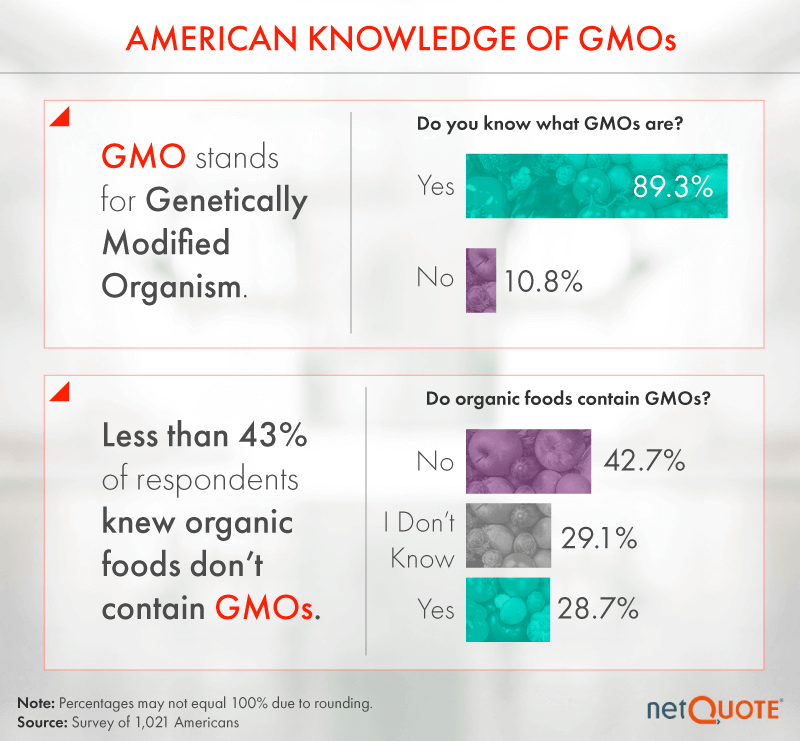
As a non-expert consumer, it’s hard to know what to think about GMOs. Of course, we’re already consuming them, with 10 crops in the U.S. having so far received the go-ahead for commercial production: alfalfa, apples, canola, corn, cotton, papaya, potatoes, soybeans, squash and sugar beets. Insurers netQuote recently surveyed 1,021 Americans to find out how we’re feeling about GMOs these days and the degree to which we even understand what they are.

American Knowledge of GMOs

…

While 89.3% of respondents claimed to know that “GMO” stands for “Genetically Modified Organism,” it’s not at all clear they’ve given much thought to what that phrase actually means.

…

[W]hen we think genetic mishaps, we tend to think of cancer. netQuote asked people if they believe GMOs cause cancer …. While nearly two-thirds of respondents felt GMOs could cause cancer, basically no one believed it could help prevent it.

…

We’re confused about GMOs. Or not. 60 other countries currently insist on rigorous labeling of GMO foods, so the U.S. is an outlier. 300 regions have banned GMOs altogether.

We — baffled as we may be — nonetheless have daily choices to make regarding what we put into our own bodies. The best we can do is keep reading up on GMOs and try and sort out the science from the fiction.

Read full, original article: Is the American public finally okay with GMOs? Um…

DNA links Nevada inmate to 34-year-old unsolved murders in Colorado

x

The murders were as inexplicable as they were gruesome: separate killings six days apart in 1984 near Denver that claimed the lives of four people, including a mother and father and their 7-year-old daughter.

…

The killings haunted the police officers who responded to the scenes, the authorities would later say, and for decades detectives in the two communities where the murders occurred, Aurora and Lakewood, Colo., pursued leads and developed theories. Some of them retired or died, but the search for answers eluded them — until last month.

On [August 10], officials said that the DNA profile of a man in a Nevada prison on unrelated attempted murder charges matched with evidence found at the Colorado murder scenes.

…

An arrest warrant has been issued for the inmate, Alexander C. Ewing, 57, and the authorities will seek to extradite him to Colorado, where he faces murder, sexual assault, burglary and related charges in connection with the four killings.

…

The break in the Colorado murders began after Nevada in 2013 mandated the collection of DNA samples from all inmates convicted of felonies.

…

It was not immediately clear when Mr. Ewing’s DNA sample was collected, but on July 11, Lakewood detectives were told that the national database had linked his DNA to that found at the murder scenes, court records said.

Read full, original post: DNA Links Colorado Murders From 34 Years Ago to an Inmate

Did laziness drive early human relative, Homo erectus, to extinction?

homo erectus e

Homo erectus may have gone extinct because they were lazy, according to research from the Australian National University.

Scientists claim the ‘least-effort strategies’ for tool making and collecting resources led to the downfall of the primitive human species.

This ‘laziness’ paired with an inability to adapt to a changing climate likely led to the species going extinct, their paper suggests.

To make their stone tools they would use whatever rocks they could find lying around their camp, which were mostly of comparatively low quality to what later stone tool makers used, according to researchers who looked at ancient populations in the Arabian Peninsula.

At the site researchers looked at there was a big rocky outcrop of quality stone just a short distance away up a small hill.

But rather than walk up the hill they would just use whatever bits had rolled down and were lying at the bottom.

When researchers looked at the rocky outcrop they found there were no signs of any activity, no artefacts and no quarrying of the stone.

This is in contrast to the stone tool makers of later periods, including early Homo sapiens and Neanderthals, who were climbing mountains to find good quality stone and transporting it over long distances.

Read full, original post: Homo erectus went extinct because they were lazy! Scientists claim ‘least-effort strategies’ for tool making and collecting resources contributed to the downfall of the primitive species

Viewpoint: German regulators shouldn’t trust Testbiotech and other anti-biotech ‘lobbyists’ to guide public about CRISPR gene editing

ttip gmo demonstration berlin si

Yes, it is important to inform the public about the opportunities and risks of new genetic engineering techniques—but not by state-paid eco-lobbyists.

…

The Federal Agency for Nature Conservation and its super-ordinate authority, the Federal Ministry for the Environment, have commissioned a well-known lobby organization for a stately sum of 200,000 euros to classify the opportunities and risks of the new genetic engineering tool CRISPR Cas-9 for the public. Clearly, classifications are becoming increasingly important in a complex world of unclear technologies …. Enlightenment, information and dialogue are essential to create a basis for discussion.

However, it is completely wrong to entrust this task to an organization that …. is part of a clearly established network of genetic engineering opponents. This organization, Testbiotech …. strongly opposes any form of genetic engineering in plant breeding.

Editor’s note: This article was originally published in German. This summary was prepared with Google Translate and edited for clarity.

Read full, original article: Gentechnik Gefaellige Fakten Gesucht Und Gefunden

Why the ‘distorted memories’ of people with dementia are so important

memories
What is the best way to help people who have dementia? Many interventions are aimed at enabling them to retain self-defining memories and beliefs. In reminiscence therapy, they are invited to talk about past events or experiences with the help of prompts such as photographs or significant objects. In validation therapy, there is an explicit recognition that they may no longer be in touch with reality due to memory impairments, and could benefit from exploring their own sense of reality, building trust with caregivers and reducing anxiety. In life story work, people with dementia are helped to come up with a story that reminds them of key events and aspects of their lives, promoting connections with friends and family. In the controversial contented dementia approach described by Oliver James’s book of the same name, the caregiver is encouraged to enter the often-delusional world of the person with dementia and ‘play along’, following a script and without contradicting.

What these different approaches all have in common is an acknowledgement that, in people with dementia, core beliefs about who they are (what is often called identity or sense of self) are threatened by memory loss, and need to be preserved to enable socialisation and improve function. Scientists have observed that when we get older we seem to have more memories and more detailed recollections of the events experienced in adolescence or early adulthood (from 10 to 30 years old), during the so-called reminiscence bump. This is because we take those events to be self-defining, central to who we are.

We tend to underestimate the extent to which we change through time due to a consistency bias – we simply fail to update our self-image in the light of new developments. But this is particularly evident for someone with dementia, who often sees herself as she was before the onset of illness, when she was active, busy and independent. By being encouraged to remember the achievements and passions of our younger selves, we can hang on to the sense of who we are.

In her book Keeping Mum (2011), the British philosopher Marianne Talbot describes how her mother was a great storyteller before she had dementia. One of her best stories was how one day, when she was 14, Marianne’s mother was late for school because her own mother had just given birth to twins. The headmistress did not believe that that was the reason for being late and punished her, which she felt was a great injustice. When dementia advanced, the story about the twins’ birth ended up being merged with other stories (for instance, other stories about being late for school) and was repeated many times.

dementia 7 20 18

In their research on narrative and identity in Alzheimer’s disease, Lars Christer Hyden and Linda Örulv both of Linköping University in Sweden, studied stories told by two women with Alzheimer’s disease, one of them called Martha.

Martha often told the story of how she had learned to drive and bought a car, defying the doubts of her husband and her own family. This was something she was proud of because not many women at the time would have done the same. Aspects of her story were repeated frequently, even during the same conversation, and presented a number of inconsistencies.

The distorted and repetitive memories that Marianne’s mother and Martha reported are problematic because the inconsistencies meant that some of their beliefs were likely to be false. The repetitions suggested that they had no awareness of having told the story before, to the same audience. It is, nonetheless, important to repeat stories that we find central to our lives, even if they contain inaccuracies and audiences stop being engaged. Why so?

When we no longer have access to autobiographical information, we can progressively lose our identity – that is, we retain fewer beliefs about ourselves and our past, and the content of those beliefs becomes ever more vague. This has a negative effect on our wellbeing: we lose the confidence to answer questions and participate in conversation with others, and find it particularly challenging to integrate information from the lives we lived before the illness began.

Mis- and disinformation are distorting science and public policy. Subscribe to our Daily and Weekly Digests for incisive coverage of ‘disruptive’ innovations in AI, agricultural biotechnology, food, chemicals, nuclear energy, vaccines, and other disruptive innovations.

In the face of a threatened identity, the ability to tell a story that played a key role in our lives and underlies our self-conceptions (the unfairly punished teenager, the defiant woman) is vital on two counts. First, we reap psychological benefit from a greater sense of wellbeing. The telling of the story is likely to enable social exchanges and enhance self-confidence at a time when the risk of isolation is high.

Such psychological benefits can easily translate into epistemic benefits – a positive effect on the capacity to acquire, retain and use relevant knowledge. All those social exchanges, after all, allow us to continue sharing information with others and receiving feedback from them. Repeating the same story increases the chances that the story will be remembered for longer, reinforcing our conception of ourselves.

In the case of Marianne’s mother, it was the sense that she was an honest girl who had been unfairly punished; in Martha’s case, it was the sense that she would follow her own mind and not be conditioned by the views of others. Self-defining beliefs are retained as a result of repeatedly reporting memories that are distorted.

aeon logoObviously, an accurate memory report would play these positive roles and avoid all the trouble with inaccuracies and inconsistencies: reality would not be misrepresented. However, in the clinical context of dementia, accurate memories are hard to come by because there are fewer constraints on memory reports and fewer opportunities for self-correction. Challenging a report as inaccurate might not have the desired outcome of prompting more accuracy, but could result in a refusal to engage further. The story would be lost.

This has some interesting implications for how the reporting of distorted memories in dementia is managed. Trading serenity for authenticity by encouraging people with dementia to live happily in a delusional world rather than miserably in the actual world might sound patronising and disrespectful. However, a careful examination of the positive epistemic role of distorted memories in the preservation of self-defining beliefs – and an acknowledgement of the fragility of both personal stories and storytellers in dementia – should promote a reassessment here.

Martha might have forgotten all about being a strong-willed woman if not for the broken record of her inconsistent story about getting a driving licence and buying a car. And that is why we should be open to the possibility that, in some circumstances, false beliefs are incredibly useful and, as counterintuitive as it might seem, essential to the retention of the knowledge that matters.Aeon counter – do not remove

Lisa Bortolotti is professor of philosophy at the University of Birmingham. She is leading an ERC-funded project on the psychological and epistemic benefits of false and irrational beliefs (PERFECT). Follow her on Twitter @lisabortolotti  

A version of this article was originally published on Aeon’s website as “How validating their distorted memories helps people with dementia” and has been republished here with permission.

USDA reveals plans to regulate GM plants based on traits, not breeding method

regulation
USDA’s Sid Abel and Doug McKalip just briefed me on the new regulatory framework that is shaping up for the oversight of plants modified by what they are now calling “plant breeding innovations.” These include the much-touted CRISPR/Cas-based gene editing, as well as other new approaches to the modification of plants’ genetic material.

I could barely believe what I was hearing. So here goes…..

To begin with, as announced in late March by USDA Secretary Perdue, the agency does not and will not regulate plants that could have been developed using what are now considered “traditional” methods of genetic modification. I drilled down a bit, since I know what kinds of things happen when plants are subjected to such “traditional” methods of genetic modification as radiation and chemical mutagenesis. These include breaks in the DNA, the repairs of which are often a bit untidy, resulting in small insertions and deletions (elided into “indels”), in addition to single base changes. And yes, they intend to exclude such minor changes from regulation.

It’s worth mentioning here that such DNA sequence changes occur all the time in all organisms – they’re the stuff of evolution. 20thcentury scientists figured out how to increase the frequency of such genetic changes using chemical and radiation mutagenesis. This was a very widely used strategy in 20th century plant breeding. So widely used that half or more of the food crops grown today (including organic crops) have such a mutagenesis step in their pedigrees.  Mutagenized plants and seeds are grown in untold millions and examined for useful genetic changes, aka mutations. These techniques for genetic modification were not, and are not, regulated.

It is also perhaps worth mentioning that artificially induced mutations are indistinguishable from naturally occurring mutations at the DNA sequence level. They are also indistinguishable from the genetic changes produced by the newer methods, such as CRISPR/Cas-based gene editing. New plant varieties produced using chemical and radiation mutagenesis have never been regulated. Nor have they produced either human and animal health or agricultural disasters. So is quite sensible not to regulate new plant varieties with the same kinds of mutations produced by the newer, more specific techniques.

The indistinguishability of genetic changes made by nature, 20th century mutagenesis and 21st century gene editing highlights the absurdity of regulating genetic modification based on the process used, as the Court of Justice of the European Union (CJEU) ruled in July of 2018. Specifically, the CJEU ruled that gene-edited organisms must be regulated, assessed for their health and environmental impacts, and labeled because they constitute genetically modified organisms (GMOs) under the original directive.

But I digress. There’s more good news….

USDA plans to confine its regulatory oversight to organisms that might actually damage agriculture, as specified under the Plant Protection Act (PPA). If the organism is neither a weed nor a plant pest, it does not come under the jurisdiction of the PPA. And it won’t be subject to regulation. But even if it is a plant pest or weed, the proposal is to issue permits that will allow developers to proceed to commercialization, even as the USDA regulators determine whether the modification might increase the organism’s potential to harm agriculture.

This is a really important change. The decision will be based on the actual properties of the organism and the small number of traits that could be problematic, not on the method by which the trait was introduced. And new instances (previously called “events”) of organism/trait combinations that have already passed through the regulatory process will not have to do it again.

Yes, there are some fine points yet to be worked out. When the proposed regulations are published for comment, probably early next year, there will be a good bit of controversy. And of course this puts US policy at odds with the biotechnology regulatory policies of a number of other countries.

But the fact of the matter is that we are now able to modify plants with exquisite precision to make use of the enormous fund of molecular and physiological knowledge about them accumulated over the past century. Taking apart the regulatory thicket will make it possible for scientists in all kinds of institutions and not just big biotech companies to use the most advanced molecular techniques to solve the many local agricultural problems that are becoming ever more acute as the climate warms and agriculture intensifies.

Nina Fedoroff is Emeritus Professor of Biology at Penn State University. 

This article was originally published at AgriPulse as Opinion: Trait-based regulation of GM plants is on the horizon – at last! and has been republished here with permission.

Genetic crystal ball? Forecasting 5 serious diseases with algorithm that checks 6.6 million DNA spots

forecasting

Scientists have created a powerful new tool to calculate a person’s inherited risks for heart disease, breast cancer and three other serious conditions.

By surveying changes in DNA at 6.6 million places in the human genome, investigators at the Broad Institute and Harvard University were able to identify many more people at risk than do the usual genetic tests, which take into account very few genes.

Of 100 heart attack patients, for example, the standard methods will identify two who have a single genetic mutation that place them at increased risk. But the new tool will find 20 of them, the scientists reported on [August 13] in the journal Nature Genetics.

The researchers are now building a website that will allow anyone to upload genetic data from a company like 23andMe or Ancestry.com. Users will receive risk scores for heart disease, breast cancer, Type 2 diabetes, chronic inflammatory bowel disease and atrial fibrillation.

People will not be charged for their scores.

…

[The researchers] tried their algorithm on 20,000 patients who were seen at Brigham and Women’s Hospital and Massachusetts General Hospital.

They found that those who had a high risk score for a heart attack were indeed four times more likely to have had a heart attack than other patients.

Read full, original post: Clues to Your Health Are Hidden at 6.6 Million Spots in Your DNA

Seeking to optimize athletic performance through DNA analysis

SportsandGenes final

Athletic Genetix promises to help athletes gain an edge (with reports personalized to individual sports) and to assist consumers in reaching their weight, strength and endurance goals. Raffaele Lauretta, the founder and chief executive of the company, and a former soccer player, believes DNA testing could usher in a new era of hyper-personalized nutrition and fitness.

…

The DNA test (which, similar to Ancestry.com uses a mailed-in spit sample and returns results a few weeks later) looks at single nucleotide polymorphisms (SNPs, pronounced “snips”) within genes. SNPs are variations of single genetic letters (A, C, G, and T). Athletic Genetix uses each person’s SNPs to identify predispositions to conditions such as a lactose intolerance or iron deficiency. It also promises to determine how certain vitamins—the BCM01 gene, for example, is linked to vitamin A production—foods, and exercises can enhance athletic output. The company then analyzes a number of genes together to make more complex conclusions about subjects such as power, endurance, and muscle composition.

…

The test has been used by amateur athletes in high school, collegiate athletes, and even a few pros, according to Lauretta, but it’s being marketed as a tool that can be used by anyone to improve their fitness. The test, results and consultation cost $249.

Read full, original post: DNA Tests Promise Keys to Athletic Performance, Weight Loss

USDA patents provide glimpse of coming GMO and bioengineered food labels

usda

On August 7, 2018, USDA filed six new bioengineered food symbols with the U.S. Patent and Trademark Office, to “certify that a product…is a bioengineered food”

…

Interestingly, two of the newly filed symbols include the text, “made with bioengineering,” which was not explicitly contemplated in the proposed rule. Further, the new filings do not utilize the “smiley faces” …. which received much attention in the comments to the proposed rule. Whether USDA adopts any of the newly filed symbols remains to be seen, but nevertheless, the filings do serve as a signal of USDA’s thinking as the Department works to finalize the regulations to implement its [GMO ingredient disclosure regulations].

Read full, original article: USDA Files New Bioengineered Food Symbols with U.S. Patent and Trademark Office

Sequenced wheat genome will help scientists combat disease in earth’s most widely-grown crop

wheat weaving twisted grain like

The complete sequence of the huge wheat genome [was published August 16th], and the enormous dataset will accelerate innovation in breeding resilient and disease resistant crops to feed a growing global population.

Wheat is the most widely-cultivated crop on Earth. It provides more protein than meat in the human diet, and contributes about a fifth of calories consumed by humans …. But wheat is susceptible to drought and flood, and swathes of the crop are damaged each year by diseases such as wheat rust. The sequencing of its genome paves the way for much faster production of wheat varieties adapted to climate challenges, with higher yields, enhanced nutritional quality ….

…

Ricardo Ramirez-Gonzalez, a Scientific Programmer at the John Innes Centre adds:

“The genome is really a tool that allows us to address the challenges around food security and environmental change. We believe that we can boost wheat improvement in the next few years in the same way that rice and maize were refined after their sequences were completed.”

Read full, original article: Previously grainy wheat genome comes into focus

‘Very reassuring’: Vaccinating pregnant women does not increase risk of autism in children

image ed aer

New research has shown that a common childhood vaccination given to pregnant women does not put their children at any increased risk of autism.

A Kaiser Permanente study published [August 13] in the journal Pediatrics found no association between the prenatal Tdap (for tetanus, diphtheria and pertussis, also known as whooping cough) vaccine and autism spectrum disorder when looking at tens of thousands of children in the hospital system. It is the latest in a long line of studies showing that there is no link between vaccines and autism. Despite the abundant scientific evidence, a persistent conspiracy theory has misled some parents into fearing vaccines.

…

The research showed that 569 children (or 1.5 percent) whose mothers received the vaccination were later diagnosed with autism, compared with 772 children (or 1.8 percent) whose mothers did not get the shot. [Researcher Tracy] Becerra-Culqui said in an email that after taking into account other differences between the vaccinated and unvaccinated groups, “there was no association found between the Tdap vaccine received during pregnancy and autism in children.”

…

Saad Omer, a professor of global health, epidemiology and pediatrics at Emory University, said the study was comprehensive and well-designed.

The results, he said, are “not surprising” but “very reassuring.”

Read full, original post: Tdap vaccine given to pregnant women did not increase risk of autism in children, study says

Video: Looking back at groundbreaking twins research—and its impact on genetics

identical twins alike but not alike peter zelewski

“I have looked at the data, and I’m collecting the data, and I’m still absolutely astounded. I still haven’t settled down and absorbed this kind of a finding yet. How long is it going to take me?”

These words were uttered by Dr. Thomas J. Bouchard, research director of the Minnesota Study of Twins Reared Apart (MISTRA), during a conversation with the Danish professor of psychiatry, Niels Juel-Nielsen, in May 1981. Bouchard was trying to come to terms with the revolutionary implications of his own research into identical and fraternal twins reared apart.

…

An archived recording of their remarkable exchange was rediscovered in 2011 by the twin researcher Dr. Nancy L. Segal. In her 2012 book Born Together—Reared Apart, Segal writes that Bouchard’s incredulity reveals the degree to which his new findings contradicted his own assumptions and the prevailing wisdom about the importance of environment in shaping a person’s traits, prospects, and outcomes. The scholars’ amazement is palpable as they discuss the exciting and groundbreaking conclusions suggested by Bouchard’s new data.

…

Twin studies have uncovered the enormous importance of genetics. They have laid to rest the notion that parents are omnipotent sculptors, and a child is a piece of clay. They have hammered another nail into the coffin of the Freudian guilt complex, where everything that goes wrong in an individual’s life may be attributable to poor parenting.

Read full, original post: A Striking Similarity: The Revolutionary Findings of Twin Studies

Organic pet food is ‘considerably more expensive’ than traditional alternatives but nutrient benefits insignificant

dog food products

Perceived as being healthier alternatives to conventionally farmed foods, organics are often significantly more expensive – according to Consumer Reports, organic foods are on average almost 50% more expensive than conventional foods!

What about for pets? Compared to human foods, there are relatively few organic pet food options – any given retailer may only stock one or two brands. And like human foods, organic pet foods are considerably more expensive than traditional pet foods …. The obvious question is whether the added expense is an investment in good health for us, our pets, and the environment or whether we’re being taken for a ride.

In general, nutrient differences between conventional and organic foods seem to be minimal. Three large studies on organic foods …. showed that compared to conventional foods, organic foods had:

  • Small increases in antioxidants
  • Small increases in phosphorus
  • Higher amounts of omega-3 fatty acids in organic meat and milk.

While these all seem like good things, the differences between the nutrient levels in the foods were small and unlikely to result in any health benefits. Nutrient levels in food can vary widely based on season, soil type, temperature, growing method, and shipping/storage times so that organic piece of fruit doesn’t necessarily have more nutrients than the conventional one next to it ….

Read full, original article: Organic Pet Foods: Optimal Health or Overhyped?

Growing GMO soybeans in South America cut greenhouse gas emissions equivalent to removing 3.3 million cars from the road

bigstock agricultural concept

This study assesses the economic and environmental impacts that have arisen from the adoption and use of genetically modified (GM) herbicide tolerant (HT) and insect resistant (IR) soybeans in South America in the five years since first planted in 2013/14.

…

For every extra $1 spent on this seed relative to conventional seed, farmers have gained an additional $3.88 in extra income. These income gains have arisen from a combination of higher yields (+ 9.2% across the four countries using the technology) and lower costs of weed and pest control. The seed technology has reduced pesticide spraying by 10.44 million kg (−15.1%)

Screen Shot at PM

[Editor’s note: This graph, derived from Brookes study, illustrates the environmental benefits generated by herbicide-tolerant, pest-resistant soybeans. Note the dramatic change in the Environmental Impact Quotient (EIQ) for Ht and Bt soybeans, 10.3% reduction and 21.5% reduction, respectively.]

…

The seed technology has reduced pesticide spraying by 10.44 million kg (−15.1%) and, as a result, decreased the environmental impact associated with herbicide and insecticide use on these crops (as measured by the indicator, the Environmental Impact Quotient (EIQ)) by 30.6%. The technology has also facilitated important cuts in fuel use and tillage changes, resulting in a significant reduction in the release of greenhouse gas emissions from the GM cropping area. In 2017/18, this was equivalent to removing 3.3 million cars from the roads.

Read full, original article: The farm level economic and environmental contribution of Intacta soybeans in South America: the first five years

Are mental disorders linked to the tweaking of genes in human evolution?

mental

The same recent evolutionary changes that make humans prone to bad backs and impacted wisdom teeth may also tweak genes in ways that make people vulnerable to schizophrenia, bipolar disorder and other mental disorders, a new study finds.

Scientists have long suspected that common ailments like lower back, knee and foot pain are likely due to the evolution of upright walking in the human family tree.

…

[Researcher David] Kingsley reasoned this vulnerability to mental disorders might also stem from recent evolutionary changes controlling human brain size and structure. To find out, Kingsley and his colleagues focused on DNA regions found in humans but not other animals.

…

Specifically, the scientists focused on the gene for a protein called CACNA1C, which helps direct the flow of calcium in and out of cells. Calcium influences the electrical activity of neurons and helps control the release of the neurotransmitters that neurons use to communicate with each other. Previous research has tied CACNA1C to risks for both schizophrenia and bipolar disorder, as well as anxiety, depression, obsessive-compulsive symptoms and autism.

…

The research team’s analysis of the 1,000 Genomes Project’s data suggested that changes in this particular region could be increasing or decreasing the activity of the CACNA1C gene in ways that might influence risk for mental disorders.

Read full, original post: Could Human Evolutionary Changes Be Behind Mental Disorders?

Ancient genetic oddity makes whales and other aquatic mammals deadly susceptible to common pesticides

px southern right whale

Over the past 50 million years, a group of small, hoofed mammals gradually evolved into today’s whales and dolphins. In the process, they gained much: a watery, planet-wide habitat and bountiful sources of food. But they lost a lot, too. Surrounded by endless blue, they became color-blind. Immersed in water, their sense of smell disappeared. And for some reason, they lost a gene called PON1.

PON1 helps humans and other mammals process fatty acids and cholesterol, but whales—and other marine mammals like manatees and seals—seem to have lost the need for it. For most of their existence, the gene’s absence was inconsequential.

Not anymore.

…

Today, organophosphates are widely used as pesticides, and they occasionally become environmental pollutants. And as it happens, our main defense against these chemicals is a gene that can break them down—PON1, the same gene that whales have lost.

For millions of years, the loss of PON1 was just another quirk of evolution. Now it’s a tragic vulnerability. It means that whales and other marine mammals are uniquely susceptible to toxins that have only existed for a few decades.

…

“People have the impression that mammals are only susceptible to these pesticides at high levels, but marine mammals might be susceptible at low levels,” [researcher Wynn] Meyer says. “We need data on how much these compounds are getting into the environment and accumulating in the animals.”

Read full, original post: An Ancient Genetic Quirk Could Doom Whales Today

Viewpoint: IARC’s defenders ignore cancer agency’s flawed research, conflicts of interest

IARC

I woke up …. to find an article by Neil Pearce, a professor at the London School of Hygiene and Tropical Medicine, entitled “Independent, rigorous, vilified – why attacks on the International Agency for Research on Cancer are unfair.”

…

The IARC Working Group which reviewed [the herbicide] glyphosate distorted the findings of animal studies, ignoring the consistent absence of increased tumors in rats and mice exposed to increasing does of the chemical …. IARC has [also] ignored rigorous re-analyses of the animal data exposing these improprieties.

…. Pearce – conveniently – ignores the fact that IARC’s assessment of glyphosate stands in sharp contrast to the judgment of virtually every other health and regulatory agency. These have found glyphosate to be safe …. To have pointed out this glaring disagreement with other international and national agencies might have undermined Pearce’s desire to attribute any criticism of IARC to pro-industry vested interests.

…

[A] key figure in the Agency’s glyphosate assessment has his own glaring conflict-of-interest. In 2014 an American scientist Chris Portier initially proposed that the Agency review glyphosate. He then participated on the glyphosate panel as an outside expert. Then, within weeks of the publication of IARC’s glyphosate judgment in March, 2015, Portier became a litigation consultant for two law firms that were bringing lawsuits against Monsanto ….

Read full, original article: With Defenders Like These, The International Agency for Research on Cancer Hardly Needs Enemies