Not everyone who is close to death—or thinks they are, at least—has a “near-death experience.” But those who do often hallucinate that they leave their bodies, meet otherworldly beings, see bright flashes and tunnels of light, and more. Those who take the psychedelic drug dimethyltryptamine, or DMT— a compound found in the hallucinogenic Amazonian brew known as ayahuasca—experience many of the same things. New research suggests that DMT really can simulate what it feels like to have one of these near-death experiences.
…
The research team administered both a predetermined dose of DMT and a placebo to a group of 13 volunteers.
…
After enough time passed for the participants to stop feeling DMT’s effects, the researchers had them take a standardized questionnaire related to near-death experiences. It asked them things like, ‘Did scenes from your past come back to you?’ and ‘Did you see, or feel surrounded by, a brilliant light?’, as noted in the study.
…
Their responses were compared to those of 67 other people who had taken the same questionnaire after having genuine near-death experiences. The answers were remarkably similar—all 13 volunteers scored above the minimum for determining that someone had gone through a near-death experience.
…
[I]t’s an important step forward in understanding the experience of death, and how we explain phenomena associated with near-death experiences.
In a remarkable twist in the story line of early human evolution, scientists have announced the discovery of “Denisova 11”—a female who was at least 13 years old, lived more than 50,000 years ago and was a child of mixed parentage. Her parents were not just of different races, but two different and now-extinct early human types. Their exact taxonomic designations—whether they were separate species or subspecies—is still a matter of scientific debate. But the bottom line for Denisova 11 is that mom was a Neandertal and dad a Denisovan.
…
Molecular dating indicates that Denisovans, who are so far known only from Denisova Cave, and Neandertals, known mainly from sites in Europe, diverged from each other almost 400,000 years ago. They coexisted, probably in relatively small populations scattered across the vast Eurasian landmass, until both became extinct some 30,000 to 40,000 years ago.
But the genetic evidence from Denisova 11 and other recent studies suggests that, on the occasions when they met, Denisovans and Neandertals commonly mated with each other—and with modern humans.
…
The hybrid offspring from such divergent populations, [geneticist David] Reich says, may have experienced biological problems.
…
The dream that scientists could document such interactions in the prehistory of humankind “used to seem impossible,” Reich says. “But now we are getting to witness the dream.”
As legal cannabis farms take the spotlight, safer methods of pest control are also taking root in more ‘mainstream’ agriculture.
…
Regulators point out that there aren’t any pesticide products with federal approval specific to cannabis yet, but states like California and Colorado have set forth lists of acceptable and unacceptable methods under their own laws. Those seemingly safer methods include common substances like citric acid and sulfur as well as numerous biopesticides, which use living microorganisms and certain natural chemicals to fight plants’ tiny pests.
According to Pam Marrone, founder and CEO of Marrone Bio Innovations(MBI), these kinds of bio-methods have the potential to protect consumers, crop revenues, and the environment on a whole new level — and cannabis farms could help lead the way to this all-around greener future.
…
Marrone has worked continuously to develop and promote such biologically based methods for deterring pests and strengthening plants, including during intrapreneurial stints at Monsanto and Abbott Labs.
In 2006, she founded MBI in order to “discover and develop effective and environmentally responsible, biologically-based products for pest management and plant health,” and has since taken the company public and shown impressive sales growth to date.
With a new initiative, NGOs in Germany are seeking authority over the approval of biotechnology products such as pharmaceuticals and seeds. They want to impose a special tax on biotech companies. The money would be used to fund regulatory-relevant “precautionary risk research.” The fund would be controlled by environmental and consumer protection associations.
For several years now, not only regulatory agencies but the entire approval process of controversial products and new technologies have been under constant fire from NGOs as well as from left and green parties (including parts of the ruling coalition). If the scientific review by the relevant authorities does not support the political expectations and demands of the NGOs, they immediately accuse government officials of being too close to the industry (“revolving door”) and reviewing industry studies only superficially and uncritically.
Image Credit: SlideShare
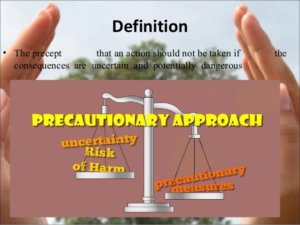
Meanwhile, their criticism is being expanded to include the regulatory approval process. It is common in all industrialized countries that, for approval, manufacturers have to certify that their products are fully compliant with all tests and regulations required by law (often through expert opinions and studies by independent institutes). NGOs attack this process by suggesting it opens the door to manipulation (“approved on the basis of industrial studies!”). They also claim the approach does not recognize the precautionary principle, which they attribute to the shortened formula of philosopher Hans Jonas: “Preferring bad prognosis over good prognosis means acting responsibly in respect to future generations.”
Their goal is therefore to transfer the approval of new products from state agencies into the hands of “civil society organizations.” This would move decision making into the hands of non-profit organizations that claim to stand for the common good and the protection of future generations.
NGO tax for biotechnology companies
Already, there are concrete political and legal considerations and strategies in place to enforce this concept. One of the documents, a legal opinion commissioned by an NGO in 2017, is now public. Already, a central demand of the report was raised in December 2017 by the NGO BUND (The German branch of Friends of the Earth), however at that time still focused on the authorization of plant protection products: “The necessary registration tests must not be carried out any longer by the applying pesticide companies but have to be carried out by independent scientific institutes. The regulatory authorities have to commission the studies. They must be financed through an industry-independent, managed fund, which is fed by fees charged to the applicant companies.”
It has now become clear: NGOs want their say in all products produced by genetic engineering and biotechnology. As a result, they are effectively reopening discussion about the approval of genetic engineering production methods and biotechnology medicines.
The author, Dr. Cornelia Ziehm, is an environmental lawyer and has long been advising Deutsche Umwelthilfe (German Environmental Aid), BUND, Foodwatch, IPPNW and others on environmental issues. The report, entitled “Models for the financing of precautionary risk research in the field of genetic engineering and biotechnology,” calls for a special tax to be imposed on biotech companies (an amount is not yet indicated). The funds would be used for “precautionary risk research” covering the “manufacturing and marketing of genetic engineering and biotechnology products” in the broadest sense, i.e., not only seeds, but also medicines.
Image Credit: NGO Pulse
It remains unclear whether it also would apply to genetically engineered enzymes, flavors, dyes, production organisms, cell cultures, vitamins, etc. The report calls for the appointment of an advisory board with members from environmental and consumer protection associations. This board would then decide about the details and scope of the respective “precautionary risk research” and the suitable contractors. Ziehm believes that such a levy or tax can be legally established and imposed on all companies of the biotechnology sector Germany.
Use of the funds and selection and details of the respective “precautionary risk research” organizations are not the subject of the report. But in the first chapter, the author offers suggestions on who should be trusted in the process: In her view, not credible are researchers “with ties to the gene and biotechnology industry” and academic researchers from universities and research institutions that used third-party funds from industry and business. She also mistrusts researchers funded by the Deutsche Forschungsgemeinschaft (DFG), as DFG also promotes “research oriented towards innovation and competitiveness rather than systematically reviewing risks to people and the environment.”
Who is left to judge? The standard answer, recently given by green veteran Simone Peter in a discussion about genome editing: “Did we deal in the 1980s in detail with nuclear researchers to argue against nuclear power plants? No. Because ethical, economic or social aspects are important for technology assessment, as with #CRISPR. I stick to it: No to #GMO!”
That leaves assessment by humanities scholars with no expertise in the intricacies of science and research who already constitute the majority of agricultural and genetic engineering experts at environmental and consumer protection NGOs.
The report follows the well-known NGO narrative. Conventional risk research is “driven by its own interest” and the competent governmental agencies pursue a “mere plausibility check” only, which “just understands the research results presented.” It also states:
However, original risk research does not take place in the state institutions or only in a relatively limited scope. In addition, one can identify a more or less close ‘proximity’ of employees of the state research and / or regulatory agencies to the biotechnology industry.
Thus, the arguments suggests that these groups do not sufficiently exercise their “duties to protect the population and the environment”. Explicitly mentioned are the Federal Office for Consumer Protection and Food Safety (BVL), the Federal Institute for Risk Assessment (BfR) and the European Food Safety Authority (EFSA).
Biotech industry as a threat
The report even goes one step further and states:
Neither the Genetic Engineering Act nor the Chemicals Act or the Food and Feed Code or any similar laws incorporate concrete rules for funding research. The same applies to the drug law. Research conducted in or on behalf of state institutions in the areas governed by these laws is therefore expected to be financed by non-earmarked tax via the general budget and the respective cost centers.
The author seems to consider this a scandal. She suggests, according to the polluter-pays-principle, companies bringing biotechnology products to the market need to pay not only for possible consequential damage, but also for all risk assessments and precautionary measures. “The polluter-pays-principle not only legitimizes measures that impose costs on the polluter in a direct sense (such as rehabilitation costs), but also costs for avoiding and reducing damage or burden.”
[irp]
Biotechnology companies, whether they manufacture drugs or plant varieties, are no longer measured by their products saving lives and costs and creating quality of life, but by being responsible for all sorts of potential risks the public has to bear, just because they want to market products out of pure commercial interest. “Genetic engineering and biotechnology companies share a common interest, namely the production and marketing of substances and products from this very sector.” Therefore, producers of medical biotechnology products should also be required to finance the “independent” evaluation by NGOs of crops or plant protection products created with biotechnology.
Mis- and disinformation are distorting science and public policy. Subscribe to our Daily and Weekly Digests for incisive coverage of ‘disruptive’ innovations in AI, agricultural biotechnology, food, chemicals, nuclear energy, vaccines, and other disruptive innovations.
The report concludes: “In the light of the above, it does not seem impossible to impose a levy on the manufacture and placing on the market of genetic and biotechnology substances and products in order to ensure precautionary risk research.”
The report states that the need for action arises primarily from the fact that the German Constitution and also relevant EU directives demanded “precautionary risk research.” This, however, has not taken place in government agencies, i.e. the state did not adequately fulfill its mission of providing “existential protection” for the lives and health of its citizens, of natural resources and animals.
Good chances for implementation
While it will not be easy to rebuild the approval process in Europe according to the demands of the NGOs, a modified German system seems entirely possible. It could mean adding further requirements to the approval procedures already in place.
First, despite all medical advances in the field, genetic engineering and biotechnology is still met with great mistrust by the public and viewed as a high-risk technology. The disapproval extends to a large part of the media, the judiciary and subordinate authorities. As an example, in the past, German judges have often granted some kind of legitimate right to self-defense to so-called field liberators, who devastated fields or greenhouses with GE test plants, just because the vandals claimed they had seen the living basis and the natural resources of the planet as being endangered by genetic engineering and biotechnology and that they thought it was their duty to intervene in this case of immediate danger.
Second, environmental and consumer protection associations already enjoy extensive special rights via a law granting them collective rights to initiate proceedings, which allows them to appeal against any major construction or infrastructure project. Objection has now become the rule, as it is lucrative to negotiate “donations” to wave objections.
Third, parallel licensing of many consumer goods (food, textiles, furniture, etc.) has been established already. Numerous associations issue meaningless seals and certificates (“GMO-Free”) and evaluate products according to non-transparent criteria. Anyone who does not submit to the rules of the game of these institutions, will sit on his goods after a public devaluation.
Fourth, the ruling coalition in Germany already has made clear it has no confidence in the relevant regulatory agencies by establishing a “Center for Environmental and Genetic Engineering” (FUG). The center — financed without a tender by the Ministry of Research (led by the Christian Democrats) and the Ministry of the Environment (led by the Social Democrats) — is run by an anti-GMO NGO, whose director is scientifically “qualified,” among others, through joint publications with the discredited anti-GM activist and homeopathy “researcher” Gilles-Eric Séralini.
The advisory board of the center only includes anti-GMO NGOs. FUG has been entitled to educate public authorities, politicians and the public about genome editing and other modern molecular biology procedures — which is an original task of federal authorities such as the Federal Office for Consumer Protection and Food Safety (BVL) and its Central Commission for Biological Safety (ZKBS) and the Federal Institute for Risk Assessment (BfR). Basically, it’s like the Ministry of Health commissioning an anti-vaccine organization, whose leader denies the existence of viruses, to educate the public on new vaccines.
Fifth, the co-governing SPD has entered the government with the explicit aim of reorganizing the approval of GM products by “putting more weight on GMO-critical research”.
In this climate, at least in Germany, everything that harms genetic engineering research and the biotechnology industry seems possible.
Ludger Wess is a science writer who has covered molecular biology and biotechnology since the 1980s. Prior to his career as a science writer, he was a molecular biology researcher at the University of Bremen, Germany. Follow him on Twitter @LudgerWess
Malaria is a tremendous world health problem, affecting the lives of hundreds of millions of people in the developing (and industrialized) world. One of the most effective therapies is derived from a natural compound produced in the plant Artemisia annua. In this week’s podcast Dr. Ian Graham from the University of York describes the problem of malaria, historical treatments, the use of artemesia and the isolation of artemisinin. Breeding and engineering of plants and microbes to enhance production is discussed.
Even though plans to colonize Mars are progressing rapidly, it is very hard to actually comprehend what a permanent life out there would be like. One can’t help but imagine it to be pretty Earth-centric; we will need to design spaces and resource solutions that provide what we need and use down here, out there. Food will definitely be an issue; sushi is probably off the menu entirely and fresh produce will become a rare and precious commodity. Hydroponic greenhouses, which are already in the testing phase at the International Space Station, are one solution for growing fresh produce on site. The success of these greenhouses, and other Mars-based initiatives, is based on their ability to mimic conditions on Earth. However, maintaining these conditions will be hugely energy-intensive to support, as well as require constant refuelling from Earth, which greatly hinders the feasibility of long-term life on Mars. But like many challenges, sometimes we need to look at the problem from a different angle to find a solution.
Image by Llorente et al 2018 (CC-BY 4.0)
It is said that the most innovative and revolutionary ideas are forged at the boundaries of different disciplines of thinking. Perhaps, instead of taking our Earth-based living to Mars, we could design our Earth-based living to be more Martian. When research at the macro, astronomical level meets research at the micro, molecular level, this radical and unrealistic idea starts to get some traction. Synthetic biology, and the designing and reshaping of living organisms, could offer new solutions for these daunting outer space challenges. Recently, three local, Aussie-based synthetic biologists published a paper outlining some of synbio-based solutions for realistically establishing human life on Mars. Briardo Llorente, Thomas Williams, and Hugh Goold, based at Macquarie University in New South Wales, outline some accomplishments in the synbio field that could already offer some solutions, as well as provide new and exciting synbio goals for novel, Mars-focused solutions.
Llorente et al. focus on plants, a vital Earth-based life source for inhabiting Mars for longer than just an outer space visit. They describe how cold-tolerant and drought resistant plants, engineered for increased survival on Earth, could be useful. Such traits would be important in a Martian-adapted version of our Earth-based plants, given that conditions on Mars are significantly colder and more arid. Excitingly, they also propose new and feasible biological designs for these hypothetically Martian plants. Modifying biological processes and transferring pathways from one organism into another are not trivial goals, but are a hallmark accomplishment of synbio research. For example, the authors suggest that plants growing on Martian land could acquire nitrogen (an essential nutrient supplied in fertilizers), by sucking it up directly from the atmosphere, through synbio accomplishment of transferring the nitrogen fixation pathway from microbes into plants.
Increasing edible biomass would also be extremely beneficial to these “Mars-adapted” plants, and the authors suggest numerous synbio approaches for doing so, including redesigning root architecture for improved nutrient uptake, or improving photosynthetic productivity. Photosynthesis is sub-optimal in plants with a lot of room for improvement. Increasing photosynthetic productivity would be highly beneficial, as Mars only experiences about 43% of Earth’s sunlight intensity. Earth-based plants are also only able to use light from the visible part of the light spectrum, but synbio engineering could generate plants that can photosynthesise using non-visible, UV light, which is abundant on Mars. These are just some of the ideas proposed in the article for creating Mars-adapted plants and we highly recommend checking out their paper for more.
While the article focuses on plant synbio, the authors have not neglected the potential for engineered microbes to make Mars more habitable for humans and carbon-based life. A huge amount of work in the synbio field has focused on engineering microbes to manufacture a variety of products, such as chemicals, medicines, fibers, and polymers, in a more sustainable and efficient manner than traditional methods. Since it is vital that production systems on Mars be as sustainable and efficient as possible, these already existing microbes could offer realistic solutions for reducing reliance on supplies from earth. There is even more possibility when the Mars-specific problems are built into the design brief. For example, the authors describe a hypothetical microbe engineered to condition Martian soil by expressing enzymes to reduce perchlorates, the toxic compounds found on Mars, while also expressing extracellular polysaccharides to promote soil adhesion.
Mis- and disinformation are distorting science and public policy. Subscribe to our Daily and Weekly Digests for incisive coverage of ‘disruptive’ innovations in AI, agricultural biotechnology, food, chemicals, nuclear energy, vaccines, and other disruptive innovations.
The publication by Llorente et al. offers an exciting overview of the potential for synthetic biology to bring life on Mars to reality. A Mars bio foundry compiling synbio parts and pathways for solving many production and food-based limitations on Mars would decrease reliance on Earth based resources. This is critical, not only because of resource limitations, but also because of the cost of time and monies on continuous cargo delivery. However, it is strange to think that one of the most realistic solutions to overcome these limitations is in fact not Earth-centric at all, but instead require a great deal of creative thinking within the rules of biological design. On Earth, plants and microbes adapted over hundreds of millions of years through random mutations to become what we depend on today. The tools and knowledge we have acquired to understand, design and manipulate these biological systems at a genetic level means we have a new type of technology- a living, breathing, biological technology- to make this spectacular endeavour a reality.
Jestin George is a PhD student at the University of Technology Sydney, working on genetically engineering the diatom Phaeodactylum tricornutum for applications in biotechnology. She is member of the executive board and assistant communications officer of Synthetic Biology Australasia. Read more about her work here, or follow her on Twitter @jestinARgeorge
Victor Suarez, who has been named as the new [Undersecretary of Food Self-Sufficiency] by President-elect Andres Manuel Lopez Obrador (AMLO), has said that genetically modified (GMO) corn will be banned from Mexico when the new government takes office.
“There is no possible doubt about the ban on transgenic (GMO) corn,” Suarez said, during a Transgenic Corn and The New Government forum. In July, AMLO assigned a team to be in charge of the agricultural matters, with Victor Villalobos as the new Secretary for Agriculture, Livestock, Rural Development, Fishing and Food ….
…
“Transgenic seeds are not going to be planted [by] this government …. there is a need to increase production and since there is a sufficient technology to produce what we are importing, we are going to do it with conventional technological tools,” said Villalobos in a press conference in July ….
Mothers with high levels of the pesticide DDT in their blood during pregnancy are more likely to bear children who develop autism, according to a study of blood samples from more than one million pregnant women in Finland.
…
Although the authors stress that the findings do not prove that autism is caused by DDT—whose use has been banned in many countries for decades over concerns about its effects on wildlife—it is the first such association using a direct measure of exposure to the pesticide.
…
[Researchers] found that mothers with high concentrations of this chemical—those in the top quartile—were 32% more likely than women with lower DDT levels to give birth to children who developed autism. The likelihood that a child with autism accompanied by intellectual disability was twice as high in mothers with elevated DDT levels compared to those with lower levels.
…
It’s unclear how exactly DDT could raise the risk of autism, but [researcher Alan] Brown proposes two hypotheses. DDT has been shown to cause low birth weight and premature birth, which are known risk factors for autism. DDT is also known to bind to proteins in the body called androgen receptors, which allow cells to respond to testosterone and other hormones.
[A] new study out of the University of California, Berkeley suggests that poor sleep can be a nightmare for our social lives too. It just might turn us into lonely outcasts, capable of spreading our misery to others.
…
[Researchers] recruited 18 healthy college students who were screened for any sleeping problems. The volunteers were asked to come by the sleep lab for two sessions.
…
In one session, they arrived at the lab and had electrodes attached to measure their sleep activity, then were sent home to sleep as normally as they could. In the other session, they instead stayed the night at the lab, and were monitored to make sure they didn’t sleep at all.
…
Without knowing anything else about them, including how they slept the night before, the online volunteers were asked to rate the interviewees on characteristics like loneliness and social desirability, as well as how active they looked.
Even from afar, the sleep-deprived volunteers were more often seen as anti-social. And interestingly enough, when the online volunteers were asked about their own moods after watching these clips, they reported feeling worse about themselves after seeing clips of people who felt lonely.
The chain of events the authors stumbled upon might be enough to send sleep-deprived people and those they come into contact with spiraling down further into social ostracization.
Rice, wheat and other grains that have been bred to produce larger harvests using less land have been critical to feeding Earth’s population in the past 50 years. But these crops come with a significant cost: Their thirst for the chemical nutrients in fertilizer contributes to pollution that threatens air, land and sea. Now a team of scientists has genetically engineered new high-yield grain varieties that require less fertilizer ….
The green revolution of the 1950s and ’60s supercharged agricultural production worldwide, thanks to breeding innovations, added fertilizer and other management technologies. Crop yields boomed, nourishing millions. “In that time people just wanted food security,” says Xiangdong Fu, a plant geneticist at the Chinese Academy of Sciences. But it soon became clear the heavy use of nitrogen fertilizer wreaks havoc on ecosystems.
…
Fu and his team think they’ve found the key in grains’ genes. Their survey of the DNA of 36 rice varieties revealed a gene encoding growth-regulating factor 4 (GRF4), a protein that enhanced both nitrogen uptake and growth. But the nitrogen-hungry crops also owe their efficiency to a family of growth-suppressing proteins called DELLA, which yield more diminutive plants that can better withstand strong weather. Using genetic engineering, the team tipped the GRF4–DELLA balance by increasing expression of the GRF4-producing gene, the authors wrote …. in Nature.
Although the latest analysis of experimental Alzheimer’s drugs finds that literally zero are being tested in late-stage clinical trials to treat moderate to severe Alzheimer’s, no patient advocacy groups uttered a peep in protest.
…
For more than 20 years drug makers and academic scientists pursued treatments to slow or reverse dementia by targeting amyloid plaques in the brain. Every last one failed. Now companies and investors are instead focused on trying to prevent Alzheimer’s in younger people — potentially a huge, and hugely lucrative, market — or trying to ameliorate agitation and other behavioral symptoms of the disease. Meanwhile, alternative strategies for treating the disease have been largely ignored and underfunded, with little outcry.
…
“These are the very patients we have to help,” said Dr. Daniel Alkon, president and chief science officer of Neurotrope, which is running a Phase 2 clinical trial of a compound called bryostatin in patients with moderate to severe Alzheimer’s. That makes it literally the only Phase 2 or Phase 3 study of whether a drug can alter the course of disease in patients with severe dementia. “I absolutely do not think it’s hopeless.”
…
Neurotrope is a complete outlier, however, and even Alkon can understand both the scientific and business case for drug developers’ decision to target mild Alzheimer’s, or even pre-symptomatic but at-risk (i.e. healthy) people.
After 13 years of study, a consortium …. of …. 60 countries [sequenced] the wheat genome. [T]he scientific community now has a high-quality map of this grain that represents 20% of the average daily human being’s diet. Based on this innovation, [scientists say] that production can be expanded without increasing the amount of cultivated land thanks to a grain that demands less water and fewer pesticides.
…
[But] this development must overcome the “green” opposition that, paradoxically, claims to defend the planet.
“Using biotechnology, we can achieve varieties that are [pesticide] resistant, but there is an environmental lobby [standing in the way], which is a pity because we want to reduce the use of pesticides and we have the solution,” said Cristobal Uauy, researcher at the John Innes Center and one of the leaders of the International Consortium for the Sequencing of the wheat genome.
Editor’s note: This article was originally published in Spanish. This summary was prepared with Google Translate and edited for clarity.
Read full, original article: El genoma del trigo y el ambientalismo estúpido
The public seems to loathe Monsanto. A recent poll ranked the company among the 20 most hated in America (nearly every other name on the list is a consumer-facing company the public deals with regularly, like health insurers, telecoms, and airlines) and entire marches are organized against them. As German corporation Bayer AG folds Monsanto into its portfolio, Bayer is making what is probably a shrewd business choice: killing the Monsanto name.
In a press release, Bayer announced the decision: “Bayer will remain the company name. Monsanto will no longer be a company name. The acquired products will retain their brand names and become part of the Bayer portfolio.” In other words, you’ll no longer find Monsanto-brand Roundup in your Home Depot; it’ll be Bayer-branded Roundup. (That is if Roundup continues to be sold.)
…
What’s more interesting is whether the general public, which is highly aware of Monsanto but not particularly aware of the movements of agribusiness corporations, will associate Monsanto with Bayer. “Monsanto” reads as “evil” to many Americans. “Bayer”? That might just read as “aspirin.” (Bayer was the first mass-market seller of aspirin, back in the 19th century.)
[Jinghui Zhang wondered] how much faster cancer research could move if data sets were freely and immediately available to computational biologists who wanted to work on them, so in April she partnered with Microsoft to release St. Jude Cloud, a web-based data processor that offers access—within 48 hours—to the largest publicly available set of childhood cancer stats in the world, the whole genomes of more than 5,000 St. Jude patients.
…
Case Study 2: Machine Learning for Doctors
…
In January 2018, Microsoft also partnered with the charity Stand Up to Cancer on an $11 million research program called Convergence 2.0 to solve a problem that is essentially the reverse of the one Zhang faced: researchers who have data sets or ideas worth studying, but little or no computer programming expertise.
…
Convergence 2.0 funded seven teams of researchers and medical doctors, matching each with machine-learning experts from places like Microsoft and MIT.
Case Study 3: Sharable Tumor Samples
Meanwhile, for clinicians, a new company called Paige.AI made an agreement with Memorial Sloan Kettering Cancer Center in New York to train machine-learning algorithms on its absolutely massive collection of 25 million digitized tumor slides. The software will eventually be able to help doctors all over the country diagnose cancer from biopsies the same way a top MSK pathologist would.
General Mills Inc.’s Nature Valley bars will no longer bear the “Made with 100% Natural Whole Grain Oats” label, after the company settled a lawsuit by consumer groups alleging the snack contained glyphosate—a pesticide better known as RoundUp.
…
The alleged presence of the chemical made the label deceptive, the consumer groups argued in their complaint. RoundUp is big agriculture’s most popular pesticide. The consumer groups alleged that laboratory testing had found traces of the chemical in Nature Valley bars. General Mills hasn’t commented on that claim.
“In a perfect world, we’d like to see food companies stop using these chemicals,” said Katherine Paul of the Organic Consumers Association, or OCA, one of the plaintiffs ….
Editor’s note: Please see GLP’s recent story on glyphosate in breakfast foods for more information.
…
“Nature Valley is confident in the accuracy of its label,” General Mills said in a statement about the settlement, in which it didn’t admit or deny any wrongdoing …. Last summer, a federal judge in Minnesota dismissed a [similar] class-action lawsuit brought against General Mills …. The court [said] it wasn’t plausible to interpret the statement to mean there were no traces of [glyphosate] in the bars.
Scientists like Michael Levin of Tufts University have discovered that cellular charges control how and where a structure forms in a developing embryo. Even more surprising, he’s found that it’s possible to manipulate bodily forms just by changing the voltage patterns of its cells.
…
[Levin] recently spoke with Knowable Magazine about the state of bioelectric research and his thoughts on its future prospects. This conversation has been edited for length and clarity.
…
What applications could this have in the medical world?
I think about that a lot. The most obvious ones are things like fixing birth defects. If we can understand and manipulate bioelectric signaling, we could potentially repair things that go wrong as an embryo forms.
…
Another one is fighting cancer. There’s a fair amount of research being done now on bioelectric signals as both a cause and a potential suppressor of cancer cells. You can normalize certain tumors by exposing them to specific drugs that change their electrical potential.
…
A third area is regenerative medicine. If we can use electrical signaling to convince tissues and organs to grow after injury, we could replace entire structures or organs for patients. Bioelectricity gives you a great new set of control knobs with which to regulate cell behavior.
In a position paper, [published August 23rd] the government said that EU GMO rules would continue to apply in the U.K. if it leaves the [European] bloc without a deal in March 2019 and that “there would be no significant implications for U.K. stakeholders.”
However, decisions on whether to grant new GM authorizations would take place in the U.K., rather than in Brussels, if negotiators fail to clinch a deal. The government promised that the “same risk assessment process will be applied” in Britain as in the EU in that event.
Editor’s note: See the GLP’s recent analysis of the European Court of Justice decision regarding gene editing and GMO regulations for more information.
[Y]ou’ve probably seen a headline or two (or twelve) touting a new discovery about our long extinct human relative, Homo erectus. According to a recent study, some outlets claimed, laziness may have contributed to the extinction of our predecessors. But the study, published in the journal PLOS One, reads quite differently than those sensationalized summaries.
…
“The inference that laziness typifies Homo erectus and that such a failing might have hastened their extinction is moronic,” says Neil Roach, a biological anthropologist at Harvard University.
…
[T]here’s a lot of evidence pointing to H. erectus as anything but lazy. The species survived for more than 1.5 million years. That’s pretty impressive compared to our measly 300,000 or so years on Earth. They may have been one of the first species to migrate out of Africa, says Roach, and are thought to be the first to hunt for food.
…
[The paper] describes the early hominins as a “technologically conservative” species that used “least-effort strategies” to survive. But accomplishing tasks like hunting and foraging using the least amount of energy doesn’t quite equate to going hungry because you don’t feel like peeling yourself off the couch.
“The calories they got from hunting and gathering were not easily come by, so wasting efforts for no reason wasn’t a good strategy,” says Roach.
Sometimes it’s difficult to know who is defending science and who is more concerned about identity politics and cheap laughs.
Politics makes for strange bedfellows and as science has become more political, it is no surprise that people pick and choose what science to believe based on their votes and values. Think Bill Maher for example. He admirably understands that climate change is real, and denying its impact borders on idiocy. But on a range of issues, from the ‘dangers’ of vaccines and GMOs to the wonders of alternative medicine, he is nothing short of an ignorant, anti-science dufus, no better than a Creationist denying evolution. Neil deGrasse Tyson has taken him to the woodshed for smugly opining about how Republicans are anti-science but ignoring the black hole on many science issues in the middle of the ‘progressive’ community.
Maher is an anti-science embarrassment, and well recognized as such here, here, here, here and here, in just a few of dozens of blogs by mainstream scientists and science journalists. Why does he hold these views? He probably believes them. It also suits him politically in his appeal to what might be called ‘superficial’ progressives—those who hold opinions based more on tribal affiliations, what their friends believe, rather than on a grounding in science.
Which brings us to John Oliver. Why is he clamoring to join Bill Maher in the Science Hall of Shame despite otherwise solid credentials as a level-headed, and quite amusing, thinker?
It’s always disappointing when someone tries to make a cultural point for a political audience and does something unintentional that we can be sure does not speak to their science values. Is that the position Oliver finds himself in? We know Oliver is not a vaccine denier; he ridicules them on his show. And we know he is not a fan of Russian interference in the United States; nary a week goes by that he doesn’t talk about it. So why would he rely on the word of a trade group that is involved in both of those things to attack a science organization whose values he would expect to largely and enthusiastically embrace?
No one likes “astroturf” organizations, defined as those that seek to appear “grassroots” but are fake, which was the theme of his HBO program on August 12. Oliver talked about one organization that paid protesters. That certainly sounds bad and he claimed to be outraged by that. Yet environmental activist Bill McKibben, founder of 350.org, is well-known for paying college students—a “scholarship” of $100 or more to show up at his protests. Oliver apparently has no problem with that, which seems kind of hypocritical. It shouldn’t make any difference what the issue is if the tactics clearly cross an ethical line. That is if you are genuinely ideologically independent.
Which brings us to Oliver’s bizarre attack on the American Council on Science and Health on that program. ACSH has been in existence since 1978. In recent years, it’s cultivated a reputation for extreme independence and a fealty to science rather than playing strictly to the liberal tribe. It is just as apt to go after activists who think the U.S. food supply is dangerous, that chemicals are mutating or killing us all, vaccines cause autism, or that alternative energy like wind and solar will solve global warming. It takes no prisoners. Whether you agree with ACSH or not, the organization is not mealy-mouthed and does not try to be politically correct—like say Bill Maher, or in this case, it seems, John Oliver. I don’t always agree with ACSH, but I always admire its directness and transparency.
Oliver’s attack on ACSH as an astroturf organization was just plain cheap. There are hundreds of scientists and physicians, many of them leading global experts in their field, who have voluntarily lent their name as endorsers of the ACSH. To criticize a science-based organization and not bother to criticize anyone on the over-the-top radical ‘progressive’ side is cheap and ideological, and it comes across as if Oliver is engaging in a politically correct form of science denialism, ala Bill Maher.
So what was the editorial source of Oliver’s vicious attack? His producer cited a hit piece put out by U.S. Right To Know, an advocacy group well known in the science community as quack, anti-GMO campaigners who relish in trying to destroy the reputations of independent scientists, science journalists and science organizations. Its funded by one of the most notorious fringe advocacy groups in the United States, the Organic Consumers Association, whose claim to fame is its vaccine denialism, promotion of kooky alternative therapies like homeopathy, a belief that Zika is a conspiracy caused by global chemical companies and a host of other anti-science crackpot ideas.
Where does OCA get its funding? Its primarily funded by corporations that sell organic products by trying to scare people that conventional farming and food is killing us. In other words, it’s the very definition of an astroturf organization. And its creation, USRTK, is the source of ‘dirt’ on ACSH. What is USRTK’s main allegation about ACSH—the origin of the nasty astroturf claim. About 3% of ACSH’s funding comes from corporations. Obviously, according to USRTK, ACSH can’t be trusted.
Except that USRTK gets 85% of its funding from the OCA and the anti-science wing of the organic industry. Oops.
As for the ACSH, whose leadership I know well and respect, its financials are transparently posted right on its website. Anyone who genuinely cares about editorial balance can see it has minuscule industry funding (and being honest, the science community does not care, since 66% of science funding in the U.S. is corporate, and the very idea that openly-disclosed industry funding of advocacy groups should be considered green kryptonite is kind of silly when you really think about it).
Mis- and disinformation are distorting science and public policy. Subscribe to our Daily and Weekly Digests for incisive coverage of ‘disruptive’ innovations in AI, agricultural biotechnology, food, chemicals, nuclear energy, vaccines, and other disruptive innovations.
Take a look at the financials of other advocacy groups, like the virulently anti-science Environmental Working Group; it too takes in about 3% of its donations from corporations. But the actual corporate revenue EWG receives from industry is 1,000% more because its budget is so huge. Compared to ACSH, EWG is rolling in corporate largesse. It’s an astroturf organization. Where are you when we need you, John Oliver.
Oliver did not do his homework. Or he did, and just swallowed his hypocrisy to brazenly play to his tribe. Or he has revealed himself to be a garden variety hypocrite. Not sure the real story but whatever it is it’s not flattering to Oliver and does not dignify his cheap hit piece.
Jon Entine is a life-long independent journalist and winner of 19 major journalism awards, and is the executive director of the Genetic Literacy Project.














 Politics makes for strange bedfellows and as science has become more political, it is no surprise that people pick and choose what science to believe based on their votes and values. Think Bill Maher for example. He admirably understands that climate change is real, and denying its impact borders on idiocy. But on a range of issues, from the ‘dangers’ of vaccines and GMOs to the wonders of alternative medicine, he is nothing short of an ignorant, anti-science dufus, no better than a Creationist denying evolution. Neil deGrasse Tyson has taken him to the woodshed for smugly opining about how Republicans are anti-science but ignoring the black hole on many science issues in the middle of the ‘progressive’ community.
 It’s always disappointing when someone tries to make a cultural point for a political audience and does something unintentional that we can be sure does not speak to their science values. Is that the position Oliver finds himself in? We know Oliver is not a vaccine denier; he ridicules them on his show. And we know he is not a fan of Russian interference in the United States; nary a week goes by that he doesn’t talk about it. So why would he rely on the word of a trade group that is involved in both of those things to attack a science organization whose values he would expect to largely and enthusiastically embrace?
 Which brings us to Oliver’s bizarre attack on the
