Opposition to artificial intelligence has intensified over the past year. A majority of Americans worry that AI will kill jobs, distrust the information it generates, and doubt that tech leaders will develop the technology responsibly. Opposition has crystallized in environmental concerns about data centers. More than 70% of Americans oppose their construction, and 10 times as many Americans told Pew Research that data centers are bad for the environment than said they are good for the environment.
The environmental movement has jumped on the bandwagon. The National Wildlife Federation calls the AI boom “an environmental justice crisis.” Student activists from the Sunrise Movement stormed the Washington lobbying offices of OpenAI last month, insisting that AI threatened their job prospects and access to clean drinking water.
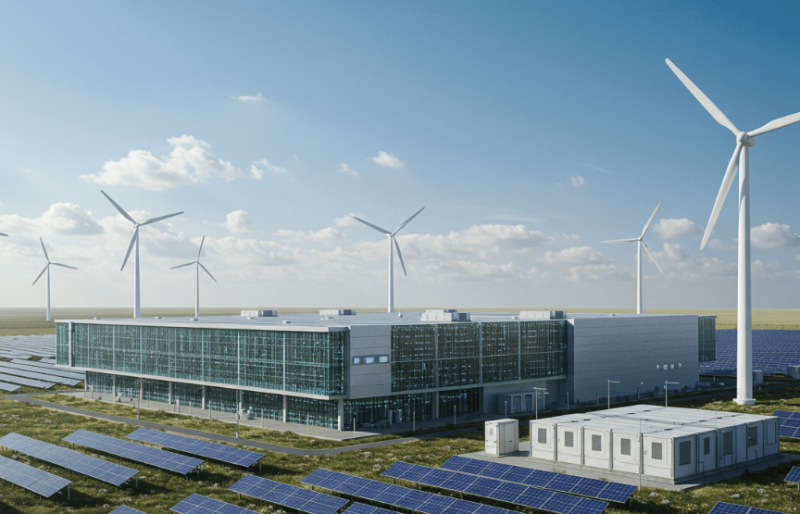
But what if AI holds the key to a better environment? While concern about data centers focuses on dubious claims about water use, water quality, electricity prices and (somewhat more credibly) short-term carbon emissions, the environmental promise of this moment is being overlooked. AI and the build-out of data centers may offer a generational opportunity to clean up our electricity grid, improve water quality and water-use efficiency, and accelerate technologies to lighten the burden we impose on the planet.
How is this possible when hyperscalers are scrambling to build data centers and often powering them with carbon-emitting natural gas and sometimes even coal? Surging growth in electricity demand historically has accelerated the deployment of clean electricity-generation technology. The golden age of nuclear energy in the U.S. in the 1960s and ’70s was a response to the rapid expansion of the grid in the postwar era. Rapid expansion of electricity grids in China, India and other developing countries has supercharged the adoption of solar, wind and batteries globally over the past 15 years. New research suggests this may be happening with the build-out of data centers in the U.S.




Ted Nordhaus is a leading global thinker on energy, environment, climate, human development, and politics. He is the founder and executive director of the Breakthrough Institute and a co-author of An Ecomodernist Manifesto. Follow Ted on X @TedNordhaus
A version of this article was originally posted at The Ecomodernist and has been reposted here with permission. Any reposting should credit the original author and provide links to both the GLP and the original article. Find Breakthrough Institute on X @TheBTI