


Sustainability & Climate Change
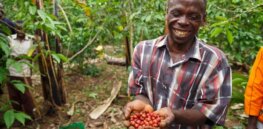
Ugandan scientists developing drought tolerant coffee varieties to save valuable cash crop
After releasing coffee varieties resistant to wilt disease, Ugandan agricultural scientists have begun developing Robusta varieties that are drought-tolerant as ...
Lab grown coffee could cut deforestation and greenhouse gas emissions, but may also upend the lives of poorer plantation workers
The coffee industry is both a contributor to the climate crisis and very vulnerable to its effects. Rising demand for ...
Viewpoint: ‘The definition of agroecology has become lost in translation’
Agroecology has become the latest buzzword in the agriculture sector—a mashup of the words “agriculture” and “ecology” with the latter ...

Could seaweed replace synthetic fertilizers?
When it comes to ocean health, the work of convincing farmers to ditch their synthetic fertilizers can’t happen fast enough ...
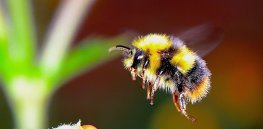
The American bumblebee species is in decline in the US. Here’s why
The [American bumblebee] species has vanished from at least eight states, mostly in the Northeast, according to the Center for ...

‘Protein expansion’: Modified wheat developed in England and Chile could increase yields by 12%
Wheat is one of the most important food crops in the world, providing 20 per cent of human calories; with ...

Why technology alone will not save us from climate change — Book review: The Human Scaffold
Josh Berson, an independent anthropologist, invites readers into a world that turns upside down conventional arguments about how we are ...

Precautionaria: Risk-averse Europe is undermining innovation in sustainable farming and battling climate change
Europe has been suffering from a disease outbreak that is debilitating its population, leading to economic malaise and destroying its ...
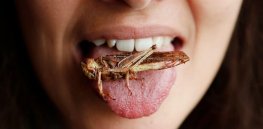
To feed billions more people in coming decades, bugs will likely be on the global menu
Filling in the gaps in the world’s food web requires unlearning some tastes and preferences. Consider the insect. Around 1,900 ...
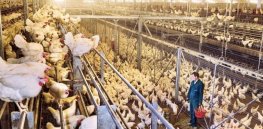
Switching from beef to chicken can have big environmental benefits — but it also means many more animals to miserable lives and death
We often talk about steak, lamb chops, bacon and chicken nuggets as if they’re on a level playing field. Just ...
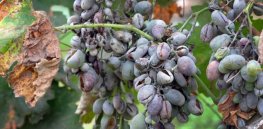
Viewpoint: By rejecting biotechnology and synthetic pesticides, France is ill prepared to address mildew and organic copper pollution crisis
2021 was a difficult year for the production of French farmers: tomatoes and potatoes were devastated by various pests. The ...
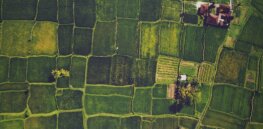
Study: ‘Land sparing’ — Farming has to be pragmatic, concentrated and as high-yield as possible to prevent an ecological catastrophe
Farming should be as high-yield as possible so it can be limited to relatively small areas, allowing much more land ...
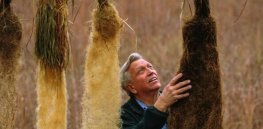
Meet Kernza, the climate change-fighting seed: Wheatgrass perfect for baking that sustainably grows back year after year
Most commercial crops are annual. They provide only one harvest and must be replanted every year. Growing these foods on ...

CRISPR making inroads in aquaculture — but commercial viability is still a ways off
The gene editing tool CRISPR is now being used to generate a range of traits in a variety of farmed ...

What’s on the menu in a climate-sensitive diet — and will we eat it?
What if people who shared the distaste for today’s food system could encourage the building, seed by seed and cell ...
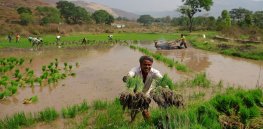
Two new herbicide-tolerant — but non-GMO — rice varieties released for sale in India
The Indian Agricultural Research Institute (IARI) has developed the country’s first-ever non-GM (genetically modified) herbicide-tolerant rice varieties that can be ...
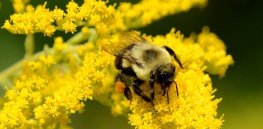
American bumblebee has declined in numbers by more than 90% in 8 states across the northern US
American bumblebees are a vital pollinator for wildflowers and crops, and their decline could have severe consequences for the environment ...
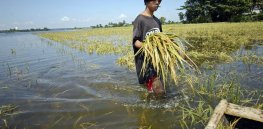
Climate change-induced droughts and floods put one of the world’s most important staples — rice — in peril
Farmers in China, India, Bangladesh, Indonesia, Vietnam — the biggest rice-growing countries — as well as in Nigeria, Africa’s largest ...
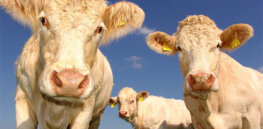
Genetics and chemistry could make cow meat and milk extinct
Henry Ford, an early industrialiser of plant-based milks as well as a carmaker, production-system innovator and anti-Semite, saw animals as ...
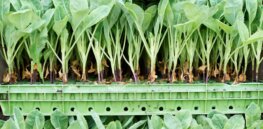
Vertical farming and sustainability: We can now grow fruits and vegetables in urban areas without soil or sunlight
Most vertical farms share a few attributes. One is a lack of soil. Their stacked rows of crops are grown ...
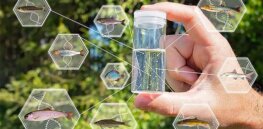
How monitoring environmental DNA (eDNA) can help us conserve forests, rivers and other ecosystems
Today, about 1 in 4 freshwater creatures face extinction. Wetlands are disappearing three times faster than forests. Across the globe, ...

GLP podcast: Scrutinizing anti-GMO ‘rock star’ Vandana Shiva’s recent ‘Earth Democracy’ lecture
Last week, high-profile anti-GMO activist Vandana Shiva lectured (via zoom) at the University of Missouri, Kansas City (UMKC). Amplifying the ...

Simulating nature: South African biorefinery modeled after four-stomach system found in cows
For billions of years, nature has perfected ways of dealing with the recycling of materials. Like a good housekeeper who ...

No more coffee or chocolate? Climate change could turn many everyday foods into rare luxuries
While historically certain foods such as coffee, chocolate and spices were luxury items, today these foods are supermarket staples in ...

Powerful argument for lab-grown meat: Although low- and middle-income countries contain only 40% of the world population, they make up 75% of deaths from food-borne illnesses
The Global Alliance for Improved Nutrition found that low- and middle-income countries make up 75% of the deaths from food-borne ...

Seed Speaks Video: Are GMOs sustainable? Can organic feed the world? One size doesn’t fit all
The debate about GMO safety and sustainability is ongoing, but one fact remains: food security is paramount. Does the absence ...
Infographic: US honeybee population reverses declines, shows sharp 8% increase over past decade, documents USDA
Over the last 20 years, the U.S. beekeeping industry has experienced significant changes that have included fluctuating honey bee colony ...
