


Daily Food & Ag Digest

Kenya poised to greenlight GMO disease-resistant cassava cultivation to protect key food source
Kenya is planning to green-light the cultivation and sale of genetically modified cassava in a move to improve food security ...
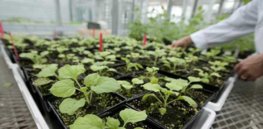
How GMO and CRISPR gene-edited plants are playing key roles in developing coronavirus vaccines and treatments
Questions about the origin of the COVID-19 virus (SARS-CoV-2) were raised, and some even speculated that the virus is a ...

‘Sell by’ dates not backed by science, study shows, leading to $32 billion in wasted food every year
.... [T]he lack of regulation, standardization, and general understanding of date labeling on food products (such as “best by” and ...

‘Bad stuff is just easier to believe’: Why GMO disinformation captures consumer attention
A couple of years ago, a former company data scientist and I tapped into our common fascination with social networks ...

Viewpoint: California pesticide regulation battle highlights influence of politically connected activist groups
[California] Gov. Gavin Newsom is calling for strong regulatory enforcement to “protect children from pesticide exposure” in a new directive ...
Book review: Activist-friendly ‘GMOs Decoded’ paints a misleading picture of crop biotech
Sheldon Krimsky’s latest book, GMOs Decoded, has a foreword by Marion Nestle, an emeritus professor at New York University and ...

Viewpoint: The real ‘dirty dozen’? 12 organic foods that could make you sick in 2020
It is that time of year again. The Environmental Working Group put out their annual list of food it considers ...

Science majors less skeptical of GMOs than other undergraduates? Yes, but not by much
For the past few years, I’ve been fortunate to supervise a number of students working on their undergraduate thesis in ...

Can we prevent another pandemic with lab-grown, plant-based meat?
In September 2019—two months before the first reported case of the coronavirus—the World Health Organization published a report that said, ...

Artificial photosynthesis: Synthetic chloroplasts as solar-powered drug factories
There’s a new way to eat carbon dioxide. Researchers have built an artificial version of a chloroplast, the photosynthetic structures ...

Why local food production doesn’t prevent shortages in a pandemic
Throughout this pandemic, there have been many prognostications about the future of eating and proposals to make sure we are ...
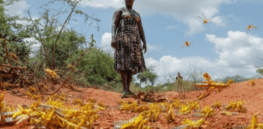
Africa saves food for 5 million people from destruction as battle against locust swarms rages
Despite the COVID-19 pandemic and other challenges, significant gains have been made against Desert Locust encroachment in East Africa and ...
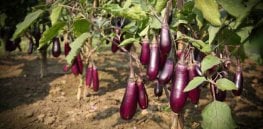
How insect resistant Bt eggplant has made Bangladesh a global ‘role model’: A photo essay
Brinjal — also known as eggplant, aubergine and talong — is a very popular and important vegetable in South Asia ...

Non-GMO gene editing: New technique edits plant DNA without use of ‘foreign’ bacterial genes
An NC State researcher has developed a new way to get CRISPR/Cas9 into plant cells without inserting foreign DNA. This ...

Microscopic algae diet could help honeybees fight off deadly pathogens and other threats
A microscopic algae ("microalgae") could provide a complete and sustainably sourced supplemental diet to boost the robustness of managed honey ...
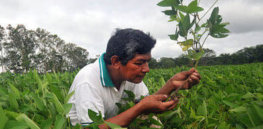
Bolivian farmers reject activist opposition to GMO seed approvals, expecting crops yields to triple
The Federation of Peasant Workers of Cochabamba (FTCC) announced its discontent against the use of transgenic seeds promoted by the ...

She’s baaaack! ‘Plandemic’ anti-vaccine disinformation ‘star’ Judy Mikovits now warning glyphosate, GMOs boost COVID-19 risk
[In early May], I wrote about Plandemic, a viral video featuring disgraced scientist turned antivaxxer turned COVID-19 “Fire Fauci” conspiracy ...

Sens. Elizabeth Warren, Cory Booker propose phased in ‘factory farming’ ban to clamp down on ‘Big Ag’
Sen. Elizabeth Warren announced [May 7] that she would be co-sponsoring Sen. Cory Booker's bill to phase out large-scale factory ...

EU Food Safety Authority defends pesticide risk studies activists call ‘unfit for purpose’
The European Food Safety Authority (EFSA) has published the results of its two pilot assessments on the risks posed to ...

Video: Iceland breeds heat-tolerant trees to restore native forests amid climate change
The landscape of Iceland has changed a lot in a thousand years. When the Vikings first arrived in the ninth ...
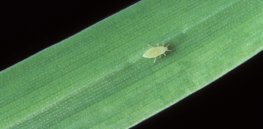
As anti-pesticide sentiment builds, USDA backs plan to combat invasive Russian wheat aphid with wasps
Turning loose a non-native wasp to sting and kill an aphid that feasts on wheat and barley in the Western ...

Viewpoint: Coronavirus pandemic accelerates progress toward tech-driven, sustainable food system
COVID-19 presents our food system with unprecedented challenges that we must learn from. We must also remember that COVID-19 is ...

USDA, FDA should streamline ‘fragmented’ lab-grown meat regulation, Government Accountability Office finds
General information about the process of making cell-cultured meat—food products grown from the cells of livestock, poultry, and seafood—is available ...
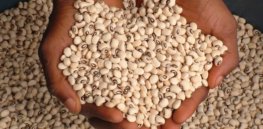
COVID-19 may stall Nigeria’s rollout of GMO cowpea
The COVID-19 pandemic may delay the rollout of pest-resistant Bt cowpea, Nigeria’s first genetically modified (GM) food crop. The country’s ...
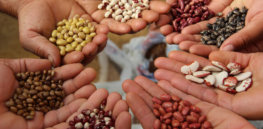
COVID pandemic illustrates how seed banks help combat hunger in times of crisis
In our daily search for pasta and flour, not to mention toilet paper, we are now learning the hard way ...
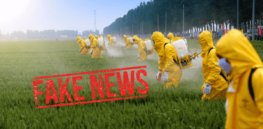
Viewpoint: Modern ‘post-truth’ politics ignores sustainability benefits of GMOs and pesticides
As Africa shows, locust plagues can be devastating for food security, and climate science enables us to detect that certain ...

Agriculture is ‘ecocide’? Third-generation farmer takes on environmental objections to modern food production
When times are tough and people are struggling, we tend to look for someone to blame. The op-ed “Link between ...
