


Science Literacy Project Daily Digest

Europe could become an ‘agricultural museum’ unless it embraces crop gene editing, officials warn
Speaking during the AGRI Committee debate, right-wing MEP Mazaly Aguilar raised a concern that, by imposing new restrictions on the ...
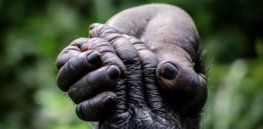
Generous apes: What explains the evolution of human kindness?
With chimpanzees, the prospect of food can lead to aggression. But bonobos take a different approach, says Suzy Kwetuenda, a ...

3 science communication tips from a pro: Geneticist Kevin Folta explains how to build trust with GMO skeptics
Kevin Folta, professor at the University of Florida, has dedicated much of his professional life to not only pushing the ...
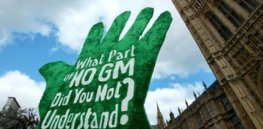
Opposition to crop biotechnology fuels ‘global trade concerns,’ Congressional Research Service finds
When foods containing GE ingredients were first introduced in the 1990s, some members of the public called for banning them ...

Honey without bees? A synthetic version that mimics the ‘real thing’ could be available in 2021
MeliBio, the Berkeley-based startup claiming to make real honey without bees, has closed $850,000 in pre-seed funding as it gears ...

‘My position is not ideological’: Why some agroecology advocates accept GM crops and synthetic pesticides
[Head of advocacy and programs at the Peasant Farmers Association of Ghana, Dr. Charles Nyaaba] said that modern technological inventions, ...

What’s your biological age? There’s a genetic clock that could tell you
Biological age isn’t as simple as counting the number of birthday candles you’ve blown out like your chronological age. Rather, ...

Neil deGrasse Tyson on our distrust of scientists: Why do we love our smartphones but reject science when it comes to COVID?
We have apparently passed through a portal where pseudoscience, anti-science, fear-of-science and science-denial all thrive in our culture. Where systems ...

Grapevines that spent a year in space may help researchers breed crops better suited for climate change
Researchers in France are studying a dozen bottles of French wine and hundreds of snippets of grapevines that returned to ...

Nigerian farmers welcome new cassava varieties: ‘My joy knows no bounds’
Nigerian farmers are enthusiastic about the government’s approval of five new varieties of NextGen cassava that promise to double yields ...

Viewpoint: COVID-19 vaccine success should prompt us to rethink our fear of GMO ‘Frankenfoods’
[COVID vaccines are] one of the biggest, and certainly the most high-profile, utilizations of genetic technology in the history of ...

Here is the consensus theory of why Neanderthals went extinct
Noting over “a dozen serious hypotheses'' about the enigmatic disappearance of our nearest cousins [the neanderthals, researchers] conducted a poll ...

Exploring the mystery of consciousness: Is it everywhere in nature?
Accounting for the nature of consciousness appears elusive, with many claiming that it cannot be defined at all, yet defining ...

Anorexia nervosa, bulimia nervosa and binge-eating disorder are all in part genetically hard-wired
To understand the similarities and differences between the genetic patterns of anorexia nervosa, bulimia nervosa and binge-eating disorder, the research ...

Viewpoint: ‘Science-based trade’ — Why the US should dispute Mexico’s glyphosate, GM corn bans at the WTO
Mexico’s president, Andrés Manuel Lopez Obrador, issued a decree that has U.S. agriculture worried. The decree bans glyphosate, a herbicide, ...

Food of the future: Will plant-based and lab-grown proteins become household staples?
Plant-based meats are now a fixture at fast-food restaurants around the world, and plant-based milk is a household staple. Alternatives ...

UK sugar beet farmers could be growing gene-edited, disease-resistant crops within 5 years
[British Sugar] is investigating gene-edited beet seed as a long-term solution to [virus yellows] disease, which devastated crops across eastern ...

Following glyphosate ban, Belgian gardeners find ‘eco-friendly’ weedkillers mostly ineffective
The majority of weed-killing products on the market today were rated “weak” or “bad,” according to results from the Belgian ...

Early humans endured bitter cold without fire during the Plesitocene era
The Middle Pleistocene (125,000-780,000 years ago) was marked by periodic oscillations between a climate similar to today's and much cooler ...

Lunar DNA ark? Scientists want to cryogenically store the genes of 6.7 million species on the moon, just in case
[A “lunar ark” gene bank, could] be safely hidden in [the moon's] hollowed-out tunnels and caves sculpted by lava more ...
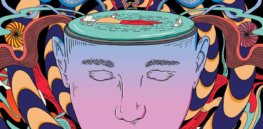
Is psychedelic-assisted group therapy the wave of the future?
Researchers are beginning to investigate psychedelic-assisted group therapy as a way to let patients connect more deeply, exploring the inner ...

Survival of the brainiacs: Controversial new thesis says humans evolved smarter to capture smaller prey
As the largest animals on the landscape disappeared, the scientists propose, human brains had to grow to enable the hunting ...

‘Peak meat’ 2025? As plant-based proteins grow more popular, beef consumption will drop, study predicts
An increasing number of people are eating meat and dairy alternatives as concern grows over health, the environmental impact of ...

Natural GMO: Whiteflies stole a gene from plants millions of years ago that can protect them from pesticides
Pale, squishy, and smaller than a sesame seed, these sap-sucking bugs terrorize more than 600 plant species, infecting them with ...

Viewpoint: Animal agriculture offers potentially ‘game-changing solutions’ to climate change
Cows are often assigned disproportionate climate change blame, but recent weeks in Washington bring hope that political leaders may begin ...

Twin peak: Global twin rates at historic highs, and here’s why
Researchers analysed records from more than 100 countries and found a substantial rise in twin birthrates since the 1980s, with ...

Some animals engage in heinous behaviors — cannibalism, eating offspring, torture and rape. Why did evolution make that happen?
While it is true that rape, torture and murder are more commonplace in the animal kingdom than they are in ...
