


Science Literacy Project Daily Digest

Can training make you a premier long distance runner — or are your abilities determined at birth?
All of our skeletal muscles are made up of a combination of two types of fibre: slow-twitch muscle fibres and ...

CRISPR ‘super corn’ with more kernels could reduce land, fertilizer and water use
Thanks to selective breeding over the course of some 9,000 years, humans were able to transform an ancient wild grass ...

Could lab-grown wood halt deforestation around the world?
[P]lant cells that have similar properties on mass to wood can be used to create materials that could be used ...

Thanks to gene editing, another biotech-driven farming revolution might be ‘just around the corner’
The basic principle of crop breeding is to first discover and then select for variants with desired traits. While selection ...

Mexico’s proposal to phase out glyphosate, GM corn spurs ‘across-the-board’ farmer opposition, USDA says
On December 31, 2020, Mexico published a decree which announced a revocation of existing permits for genetically engineered (GE) corn, ...

Author Simon Baron-Cohen on how autism has driven human innovation
In [cognitive neuroscientist Simon] Baron-Cohen's new book [The Pattern Seekers: How Autism Drives Human Invention], he argues that humans became ...

‘What we have right now does not work’: Gene editing aims to relieve chronic pain
In experiments on laboratory mice, researchers found that temporarily repressing a gene involved in sensing pain increases pain tolerance, lowers ...
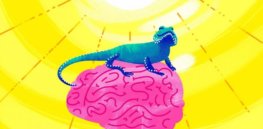
Pop psychology and the myth of the ‘lizard brain’
“As a neuroscientist, I see scientific myths about the brain repeated regularly in the media and corners of academic research,” ...

Lab-grown tuna could satisfy growing demand for fish without the severe environmental impact
From 1961 to 2015, according to the UN Food and Agriculture Organization, global fish consumption grew from 9kg to 20.2kg ...

‘No shortage of dangers’ and no easy answers for the monarch butterfly
North America’s monarch butterfly population is in trouble. That much has been clear for decades but scientists have found that ...

Viewpoint: USDA, FDA should abandon ‘tangled’ gene-edited animal rules and collaborate to commercialize more products
The science says and continues to say that foods made from genetically modified crops are safe for consumption, they can ...

Bowing to political pressure, India scraps plans to trial GM, insect-resistant, Bt eggplant
[The Indian government] has junked its decision of allowing scientific field trials of transgenic crops including indigenously developed Bt brinjal. ...
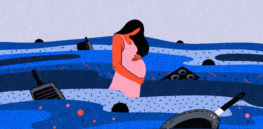
More than 50 environmental chemicals found in pregnant women and their newborns
Researchers have detected more than 50 new environmental chemicals lurking in people's bodies, the vast majority of which are little ...

Prehistoric men hunted and women gathered? New evidence suggests that’s too simple
Archeological evidence from Peru has revealed that some ancient big-game hunters were, in fact, women, challenging what science writer James ...

Bolivia will repeal rules expediting GM crop approvals, inciting pushback from farmers who want access to new technologies
It's official. The [Bolivian] Central Government will seek to annul the supreme decrees that paved the way for the use ...

Biden Administration backs aerial glyphosate spraying to combat Colombia’s cocaine trade, drawing criticism from some drug policy experts
Biden’s administration celebrated Colombia’s decision to restart aerial eradication of coca in its annual International Narcotics Control Strategy Report. Colombian ...

‘Stop conflating all biotechnology with genetic engineering’: The case for more refined USDA regulations
Policymakers had known for years that the U.S. regulation of crop biotechnology was out of date, and by 2016, discussions ...

Poverty and hunger follow Africa’s fall armyworm invasion
Africa’s fall armyworm invasion has contributed to poverty and hunger among smallholder farmers, a pioneering study shows. Severe levels of ...

Bionic eyes: Generating visual perceptions and hope for those who cannot see
In the 1970s, [biomedical engineer William] Dobelle had shown that electrically stimulating visual brain areas (the visual cortex) caused people ...

Are humans wired by evolution to be couch potatoes? This evolutionary biologist believes so
A professor at Harvard and a keen marathoner – sometimes barefoot – [Daniel Liberman’s] life’s work in evolutionary biology makes ...

Video: What the lungs of newborns look like when they take their first breaths
[U]sing a delicate sensor-belt wrapped around the chests of full-term newborns moments after their delivery, a team of researchers from ...

Viewpoint: Public investment in farming technology could cut land use by 63 thousand square miles—’about the size of Iowa’
Using existing research on the relationship between R&D and productivity and SIMPLE, a global economic model of agriculture, we find ...

First lab-grown chicken nuggets just hit restaurants in Singapore, and more ‘slaughter-free’ meats could arrive in 2021
The company behind [an in vitro cultured] poultry product, Eat Just, has since sold more than 200 servings of the ...

Here’s how GM canola-derived fish feed could make aquaculture more sustainable
Fish feed ingredient Aquaterra, derived from genetically modified canola, has been certified for sustainable aquafeed production by Friend of the ...

Bayer won’t appeal first glyphosate-cancer verdict to the U.S. Supreme Court
Bayer will not appeal a $20.5 million Roundup verdict—the first Roundup verdict in the nation—to the U.S. Supreme Court, the ...

Our ‘evolutionary superhighway’: How the brain connects smells and memories
Whereas other sensory systems are thought to have been re-routed during human evolution, [a new] study suggests that olfactory-hippocampal functional ...

While teenage medical claims fell during COVID lockdowns, mental health claims jumped by more than 20%
[T]he New York nonprofit [Fair Health’s] seventh [report] in a series on the pandemic is the result of analysis of ...
