Lab-grown fish? How biotechnology might save the endangered bluefin tuna

px Thunnus orientalis Osaka Kaiyukan Aquarium

For several years, biotech companies have been promising “clean” meat, “cell-based” meat, “cultured” meat — whatever you want to call it — as a way to enjoy the taste of chicken, pork and beef without the brutality of animal slaughter or the environmental damage of big agriculture. But what about fish? What about something as prized as buttery bluefin tuna, a delicacy that has become the forbidden fruit of the sea because of the many threats that have landed the fish on threatened and endangered species lists?

Well, there is at least one scientific pilgrim: Brian Wyrwas is the co-founder and chief science officer for Finless Foods, a Bay Area biotech dedicated to growing bluefin tuna in a lab. He can tell you all about the difficulties of his task, starting with the bone-weary process of securing bluefin tuna samples, the pristine source material for much of the science that follows in this field known as cellular agriculture.

Unlike scientists who grow chicken or cow cells in a lab, Wyrwas can’t exactly biopsy a living animal for tissue, given that bluefin tuna travel the world’s oceans at speeds approaching 40 miles per hour. Nor can he grab a sample from one of the precious few bluefin tuna farms, which would view him as competition. Nor can he walk into a fish processing plant and request a sample. Bluefin tuna die on ship, many miles from shore, their cells slowly decomposing even when frozen or on ice.

Read full, original article: Can we save the prized bluefin tuna, and its habitat, by growing it in a lab?

Viewpoint: An argument against using genetically modified mosquitos to fight malaria in Africa

bccmalaria

Some scientists have proposed genetically modified (GM) mosquitoes as a solution to controlling malaria, a scourge that has been around for centuries and is spread by mosquitoes.

I am skeptical that this is the answer.

First, more studies need to be done on GM mosquitoes to ascertain safety and avoid unintended consequences before releasing them into the field. African countries do not have the infrastructure needed to regulate or solve any problem that may arise from this technology.

Second, it is unethical to release such a technology without consulting or speaking to the actual residents.

Finally, I think it is important for us to learn from the experience of other places where more conventional tools, including conventional vector control, have worked against malaria—most recently, in Sri Lanka, which has been certified as malaria-free by the World Health Organization without resorting to genetically modified mosquitoes. Even in the age of drug resistance, some countries have still managed to attain elimination status. Why should Africa be different?

While innovations in science have been important in controlling malaria in Africa, they should never be the only focus. Sanitary engineering; getting rid of mosquito breeding sites; and swamp drainage are some of the interventions that have helped in the past and have proven to be sustainable solutions.

Read full, original post: Africa Doesn’t Need Genetically Modified Mosquitoes

Casting doubt on whether our DNA can be tweaked to increase human lifespan

hands

Estimates predict that somewhere between 15 percent and 30 percent of the variability in human lifespan is due to genetics. But in a study published in Genetics [November 6], researchers have shown that those are likely overestimates and that assortative mating—that is, people choosing partners with traits that resemble their own—can account for most of what looks like heritability.

The Ancestry team aggregated family trees containing more than 400 million individuals, mostly American customers of European descent and their relatives. They used an algorithm to eliminate duplicates and to evaluate the accuracy of the entries—specifically, the names, dates, and locations indicated in the trees—and then de-identified the data.

The researchers used the pedigrees to calculate how similar lifespan is within families, compared to the population as a whole. Their estimates were consistent with other groups’ previous findings: somewhere between 20 percent and 30 percent of longevity appeared to be due to genetics. But the team also found correlations between lifespan in spouses that were higher than that of opposite gender siblings.

The scientists hypothesized that the similarities in length of life between spouses could be due to their shared living situation in adulthood, assortative mating, or both.

“They make a pretty convincing case that most of the previously published estimates of the heritability of longevity are probably inflated by” assortative mating, says Richard Kerber.

Read full, original post: Lifespan Less Heritable than Previously Thought

Faster GMO crop import approvals in China could boost Brazil’s already record-breaking soy exports

Brazil soy cultivation

Brazil’s record soy exports to China could grow further, an Agriculture Ministry official told Reuters …. as the Asian nation’s trade war with the United States boosts its demand for South American beans.

Odilson Ribeiro e Silva, vice minister of international affairs, traveled to China [the second week of November] and said he hopes the high demand will also open the country up to Brazilian soymeal.

…. Brazil has sent roughly 80 percent of its soybean exports to China this year, with grain trader Agribrasil forecasting it hitting a record 83 million tonnes …. “It can go up further, but we hope that it won’t be only beans, but meal as well,” Silva said in an interview.

Brazil submitted a list of soymeal producers to China for export authorization last year. It is unclear when they will respond, he said. The country currently exports little soymeal to China and few plants are licensed, he said. Chinese approvals of genetically modified crops have slowed recently, he said, and there is no sign it will accelerate.

Some GMO products approved five years ago in Brazil have yet to be approved by China, preventing their widespread use in Brazil and the productivity gains they would bring, Silva said.

Read full, original article: Brazil record soy exports to China could expand further -official

Soil salinity cuts crop yields worldwide, but salt-tolerant crops are on the horizon

Soil salinity [affects] large areas in the world and millions of farmers are faced with decreasing yields and many are even forced to migrate. In coastal Bangladesh alone, 27 million people may need to migrate by 2050 due to increasing salinity. Salt tolerant  can help these farmers to increase their yields [in the] affected areas.

One of the problems is that crop salt  is a complex matter and numerous publications show great differences in reported salt tolerance levels between crops, between (similar) varieties, and between locations or years. This inconsistent data is holding back the development of salt tolerant crops and saline agriculture in the field.

Now, Dutch scientists [have developed] an improved methodology to evaluate crop salt tolerance, that can alleviate and overcome many of the causes of …. inconsistent data. [Their research] provides a robust methodology and focuses on …. the ECe90, or the salinity level at which 90 percent yield is reached. This method [could provide a] basis for reliable assessment of the cultivation potential of crops [grown in] salt-affected soils.

…. A robust and uniform approach to evaluate crop  can be the starting point for the development of new salt tolerant crop varieties that can help millions of farmers and contribute to global food security ….

Read full, original article: Improved method to identify salt tolerant crops

The future is now: Here are the most promising synthetic biology projects

screen shot at pm

Never has it been more possible to engineer biology (see ‘Tailor, not tinker’). But solving grand problems requires a switch from demonstrating that something is feasible in a laboratory to homing in on a few ambitious goals. The time has come to decide where to focus this emerging ability to engineer biology — and to commit resources to doing it.

My ‘wish list’ is as follows:

Artificial blood cells. Blood transfusions are crucial in treatments for everything from transplant surgery and cardiovascular procedures to car accidents, pregnancy-related complications and childhood malaria.

Designer immune cells. Immunotherapy is currently offering new hope for people with cancer by shaping how the immune system responds to tumours.

Smart delivery vehicles. The relative ease of exposing cells in the lab to drugs, as well as introducing new proteins and engineering genomes, belies how hard it is to deliver molecules to specific locations inside living organisms. One of the biggest challenges in most therapies is getting molecules to the right place in the right cell at the right time.

In ten years’ time, this wish list could seem either ridiculously myopic or foolishly ambitious. That is what makes this era of engineering biology so exciting. Whether or not these goals are reached, the attempt to build systems from known parts will focus our attention on the significant gaps in our understanding of how such systems work.

Read full, original post: Which biological systems should be engineered?

MRI in a ski hat? Seeking better ways to hack our brains

brain hacking
[A]t Singularity University’s Exponential Medicine conference in San Diego, technologists presented new non-invasive devices that seek to simplify and democratize brain modulation.

Being inside an MRI machine is not a pleasant experience. You’re in a tiny claustrophobic tube surrounded by a giant magnet, and instructed to lie extremely still.

To Dr. Mary Lou Jepsen, CEO and founder of Openwater, the solution is simple in concept: shrink the machine down to the size of a ski hat, a bra, or a bandage, and manufacture the gadget at the cost of a smartphone. The trick, she explains, is to move away from magnets and instead turn to light. The human body is translucent to red and near-infrared light, allowing our tissues—including both skull and brain—to be illuminated.

Dr. Eric Leuthardt, a neurosurgeon at Washington University in St. Louis [is] experimenting with ways to capture the brain’s movement instructions using wearables.

….

Leuthardt found that using a cap embedded with electrodes, he could reliably pick up the low-frequency signals generated by the premotor cortex. These “planning” signals are then sent to a machine learning algorithm to parse out the intended movement. Finally, the results of the computation are used to control a prosthetic to carry out the movement.

[This could democratize] the technologies, allowing more people to manipulate their brain activity without first going under the knife.

Read full, original post: Hacking the Mind Just Got Easier With These New Tools

Using gene editing to improve animal welfare may quell fear of ‘Franken-animals’

Screen Shot at PM

A company wants to alter farm animals by adding and subtracting genetic traits in a lab. It sounds like science fiction, but Recombinetics sees opportunity for its technology in the livestock industry.

But first, it needs to convince regulators that gene-edited animals are no different than conventionally bred ones. To make the technology appealing and to ease any fears that it may be creating Franken-animals, Recombinetics isn’t starting with productivity. Instead, it’s introducing gene-edited traits as a way to ease animal suffering.

“It’s a better story to tell,” said Tammy Lee, CEO of the St. Paul, Minnesota-based company.

For instance, animal welfare advocates have long criticized the way farmers use caustic paste or hot irons to dehorn dairy cows so the animals don’t harm each other. Recombinetics snips out the gene for growing horns so the procedure is unnecessary.

Last year, a bull gene-edited by Recombinetics to have the dominant hornless trait sired several offspring. All were born hornless as expected ….

Another Recombinetics project: castration-free pigs.

When male piglets go through puberty, their meat can take on an unpleasant odor, something known as “boar taint.” To combat it, farmers castrate pigs, a procedure animal welfare advocates say is commonly performed without painkillers. Editing genes so that pigs never go through puberty would make castration unnecessary.

Read full, original article: Farm animals may soon get new features through gene editing

Why probiotics could actually be bad for you

x x

Millions of Americans take probiotics—live bacteria deemed useful—assuming there can be only positive effects. The truth is that you really don’t know how any probiotic will affect you. To quote the American Gastroenterological Association Center for Gut Microbiome Research and Education, “It remains unclear what strains of bacteria at what dose by what route of administration are safe and effective for which patients.”

Things can go very wrong in the ill: Among patients with severe acute pancreatitis, one study found that a dose of probiotics increased the chance of death. Even randomized controlled trials of probiotics rarely report harms adequately and the effect over the long-term has not been studied.

In June, [gastroenterologist Satish] Rao created a stir when he and his coauthors reported that a cluster of his patients with “brain fog” [improved] dramatically when they were taken off their probiotics and given antibiotics as well.

His idea was that lactobacilli and other bacteria colonized their small intestines, rather than making it to the colon as intended—a condition known as “small intestinal bacteria overgrowth” (SIB0) that some gastroenterologists treat with antibiotics.  In this group, he argues, the small intestine produced the brain fog symptoms as a consequence of D-lactic acidosis, a phenomenon usually associated with damaged intestines. “If you have brain fogginess along with gas and bloating, please don’t take probiotics,” Rao says.

Read full, original post: Could Your Probiotic Be Making You Sicker?

Glyphosate-cancer lawsuits spur farmers to embrace ‘precision farming’ to help reduce chemical inputs

precision farming

American juries are well known for the generosity of their awards in civil cases …. So Bayer, a German chemicals giant, told shareholders not to worry when a Californian jury in August ruled that Monsanto, an American firm it bought two months before, had to pay $289m to Dewayne Johnson, a former school caretaker. Mr Johnson alleged that Roundup, a glyphosate-based weedkiller, had caused his terminal cancer. The jury made a judgment based on “junk science”, Monsanto said. It would surely be overturned on appeal.

Last month a judge reaffirmed the verdict; the damages were trimmed, but to a still-hefty $78.5m. With Bayer’s admission on November 13th that the number of similar lawsuits had reached 9,300, it is clear that the bill for compensation could reach tens of billions of dollars.

Farmers in turn are switching to “precision” methods, entailing more targeted use of chemicals or robots to do weeding. Bayer executives fear this shift could hit demand for its pesticides by as much as 20-30% over the next decade ….

Precision farming “will change how we think about farming,” says Sam Watson Jones of the Small Robot Company …. It is developing three small autonomous robots—called Tom, Dick and Harry—which will only feed and spray the specific plants that need it rather than dusting an entire field …. He claims that his company’s system will cut chemical use, and carbon emissions, by up to 95%.

Read full, original article: Upheaval in the chemicals industry

Podcast: GLP’s Jon Entine on the spread of ‘chemophobia’

toxic roundup

XfwfI cYL SX BOChemicals are used to grow, process, preserve and package our food, and are ubiquitous in many products and in our environment. Consequently, trace amounts of chemicals can be found in all of us—the result of sophisticated bio-monitoring tests than can identify chemicals in our urine at the parts per billion or even parts per trillion range. In almost all cases, say regulators at the EPA, FDA and USDA, and at health and environmental agencies around the world, this level of trace chemicals poses little risk to human health. Many environmental groups, on the other hand, say there are shortcomings in regulations and studies showing that chemicals in our food supply, even in minuscule amounts, pose a real threat, which scares many consumers.

x crop chemophobiaOn this episode of Farm to Table Talk, host Rodger Wasson and science writer and Genetic Literacy Project executive director Jon Entine tackle common questions and concern about chemicals, with a special focus on residues in our food supply. Should we be worried that these chemicals pose genuine harm or are we just victims of chemophobia? Jon is the author/editor of two books on chemical hysteria: Scared to Death: How Chemophobia Threatens Public Health; and Crop Chemophobia: Will Precaution Kill the Green Revolution.

[Editor’s note: For Jon Entine’s analysis of the surge in chemophobia, read: Viewpoint: Chemophobia epidemic—Fanning fears about trace chemicals obscures real risks and ‘damages public health’]
Jon Entine, executive director of the Genetic Literacy Project, has been a journalist for more than 40 years as a writer, network television news producer and author of seven books, four on genetics and risk. BIO. Follow him on Twitter @JonEntine

This podcast originally ran at Farm to Table Talk as Chemical Fears – Jon Entine and has been republished here with permission.

As arguments rage over the sources of transgender identity, science weighs in

trans
A cloud of controversy hovers over scientific research on transgender identity, but not necessarily because of the research itself. Ideologues threatened and unsettled by gender fluidity question research they don’t like, while activists on the opposite side do the same. Bias is antithetical to properly assessing scientific findings, so slanted discussions often don’t get anywhere.

Today, I’ll turn to the scientific literature to tackle three controversial questions about transgender identity.

1. Can gender dysphoria, in which a person’s gender identity does not match their gender assigned at birth, be affected by social factors?

Maybe. A recent study published to PLoS ONE drew condemnation from some and praise from others. Lisa Littman, an Assistant Professor of the Practice of Behavioral and Social Sciences at Brown University, surveyed 256 parents of teens experiencing rapid-onset gender dysphoria. The collected surveys revealed that gender dysphoria was linked to a prior increase in social media/Internet use and “seemed to occur in the context of belonging to a peer group where one, multiple, or even all of the friends have become gender dysphoric and transgender-identified during the same timeframe.” This suggests that social interactions may affect feelings of gender dysphoria.

Upon the study’s release some called for it to be censored and retracted, while others hailed it as a “very important, peer reviewed study” of an “awful epidemic.”

Both reactions are overblown. The study is very preliminary and carries the same flaws inherent to social science in general – a biased sample group, lack of controls, results open to interpretation – which Littman duly noted. If you retract this study, you might as well retract half of all social science research. At the same time, it is outlandish to label gender dysphoria an “awful epidemic” – self-reported transgender identity in children, adolescents and adults ranges from 0.5 to 1.3%. Moreover, it is a gross overextension of the research to for anyone to conclude that gender dysphoria is purely the result of social factors.

Follow the latest news and policy debates on sustainable agriculture, biomedicine, and other ‘disruptive’ innovations. Subscribe to our newsletter.

2. Is being transgender a mental illness?

No. While some outspoken commentators espouse this notion, there’s no good evidence to back it up. According to the American Psychological Association, “A psychological state is considered a mental disorder only if it causes significant distress or disability. Many transgender people do not experience their gender as distressing or disabling, which implies that identifying as transgender does not constitute a mental disorder.” Moreover, the World Health Organization no longer classifies being transgender as a mental illness.

While transgender identity is not a mental illness, transgender people and those experiencing gender dysphoria are more susceptible to depression, anxiety, and ADHD. However, a systematic review found that psychiatric symptoms vastly improve following gender-confirming medical interventions. It seems that when transgender people are permitted to assume their gender identities, they become happier and healthier individuals.

3. Are there brain differences associated with being transgender?

Yes. Male and female brains are structually different, and fascinatingly, studies show that the brain structure and brain activity of transgender people more closely resemble those of their gender identity versus their birth gender. This suggests that sexual differentiation of the brain during the development is not necessarily linked to sexual differentiation of the genitals.

“During the intrauterine period a testosterone surge masculinizes the fetal brain, whereas the absence of such a surge results in a feminine brain. As sexual differentiation of the brain takes place at a much later stage in development than sexual differentiation of the genitals, these two processes can be influenced independently of each other,” researchers Ai-Min Bao and Dick F. Swaabb wrote.

Though we don’t know exactly what biological mechanisms influence transgender identity, we can conclude with a fair amount of certainty that being transgender is heavily influenced by biology.

Steven “Ross” Pomeroy is Chief Editor of RealClearScience. A zoologist and conservation biologist by training, Ross has nurtured a passion for journalism and writing his entire life. Ross weaves his insatiable curiosity and passion for science into regular posts and articles on RealClearScience’s Newton Blog. Additionally, his work has appeared in Science Now and Scientific American. Follow him on Twitter @SteRoPo  

A version of this article was originally published on Real Clear Science’s website as “Navigating the Controversial Science on Transgender Identity” and has been republished here with permission.

10 African countries passed plant breeding protection laws to boost food security. Will Ghana join them?

Scientists, politicians and farmers are urging the government of Ghana to pass new laws that will strengthen the local seed industry and make improved seeds more available to farmers.

Specifically, they are asking the government to re-introduce the Plant Breeders’ Bill, which is expected to help make the country more competitive in the seed industry and ensure food security.

If ultimately approved, the bill will give scientists and science institutions intellectual property over new plant varieties they develop so they can earn royalties on the products. Scientists say this will encourage more private investments in the seed sector for the benefit of farmers and the nation as a whole.

“What it seeks to do is to give the scientists who develop the seeds some royalties to enable the scientists and organizations developing the seeds to continue doing it,” explained Dr. Richard Ameyaw Ampadu, a research scientist at the Council for Scientific and Industrial Research (CSIR).  “The government is not giving the scientists money to develop seeds for our farmers. But we need different seed varieties for farmers to have optimum choice.”

In Africa, more than 10 countries, including Kenya, Morocco, South Africa, Tanzania, Tunisia, Uganda, Zambia and Zimbabwe, have passed a Plant Breeders’ Bill into law. This has accelerated the introduction of new plant varieties and led to the transformation of their agricultural sector.

Read full, original article: Ghana urged to pass law to encourage improved seed breeding

Resurrecting scents that went extinct 100 years ago

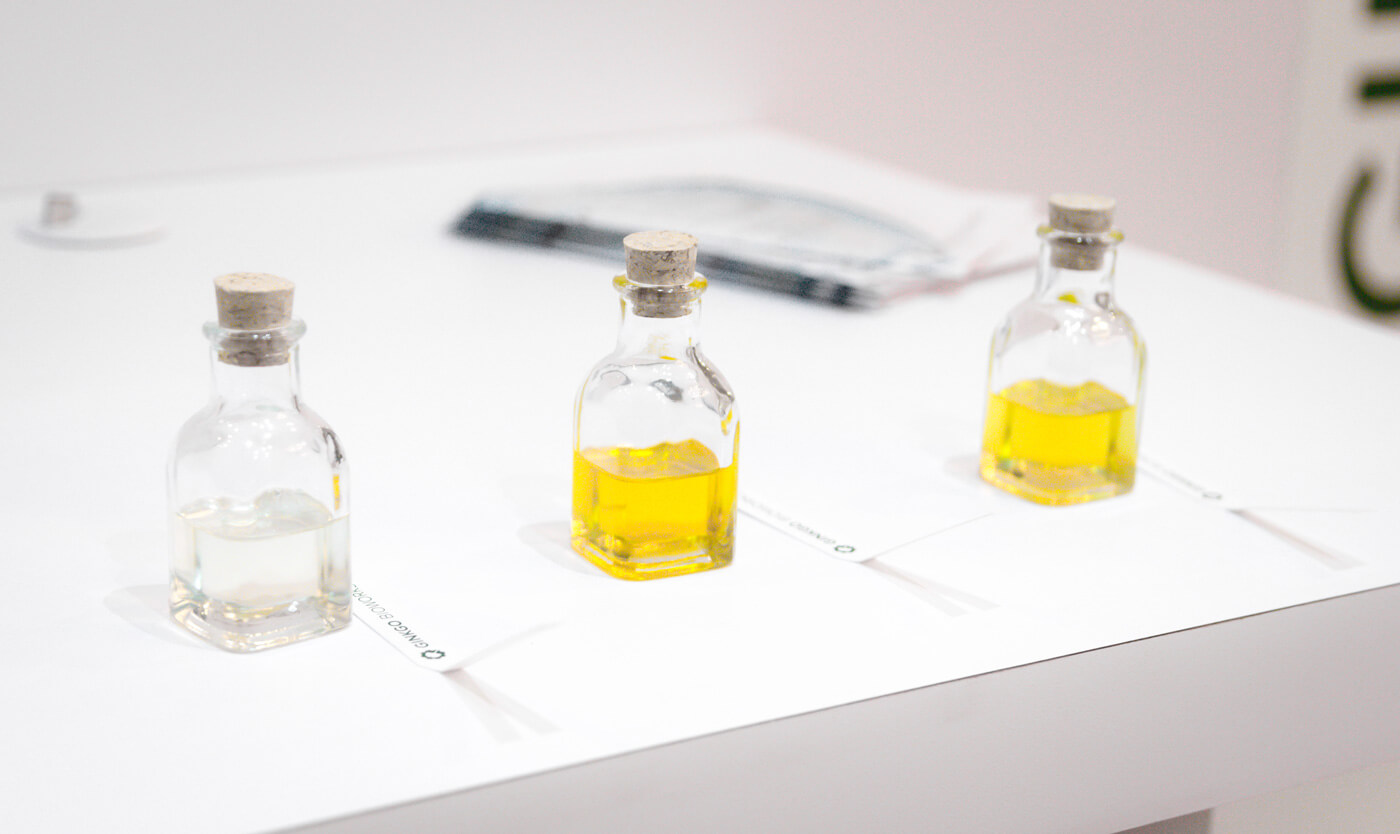
ginkgovials

Move aside, Chanel No. 5. Scientists have now created a scent that’s even older than the iconic perfume, even if it has only just wafted into human nostrils for the first time in more than 100 years.

That’s because the piney, earthy perfume derives its fragrance compounds from a Hawaiian hibiscus flower that vanished from the dry-land forests of Maui in the early 1910s.

Researchers at Ginkgo Bioworksone of the largest synthetic-biology companies in world, succeeded in resurrecting the smell by expressing the genes needed for making the defunct flower’s pungent aroma molecules in microbes.

They took small snippets of tissue from around a dozen plants, including the Falls-of-the-Ohio scurfpea (last seen in 1881), the Wynberg conebush (last seen in 1806), and the Hawaiian mountain hibiscus (presumed extinct around 1912). They then worked with Beth Shapiro, a paleogenomicist at the University of California, Santa Cruz, to isolate and decode the ancient DNA, before taking a Jurassic Park–like approach to genetic reconstitution.

According to [Ginkgo’s creative director Christina] Agapakis, the de-extincted hibiscus perfume will be available for purchase as part of an art installation going on tour around the world next year, starting in February [2019] at the Georges Pompidou Center in Paris.

The goal, says Agapakis, is to show, through art, the immense potential of synthetic biology and genome engineering.

Read full, original post: Jurassic Park for Perfume: Ginkgo Bioworks Reconstructs Scents From Extinct Plants

California judge orders expedited trial for couple alleging glyphosate caused their cancer

monsantolaw

A California judge on [November 15] granted an expedited trial in the case of a California couple suffering from cancer who sued Bayer AG’s Monsanto unit, alleging the company’s glyphosate-containing weed killer Roundup caused their disease.

The order by Superior Court Judge Ioana Petrou in Oakland, California, comes on the heels of a $289 million verdict in the first glyphosate trial in San Francisco, in which a jury found Monsanto liable for causing a school groundskeeper’s cancer. Damages were later reduced to $78 million, and Bayer, which denies the allegations, said it would appeal the decision.

The trial of California residents Alva and Alberta Pilliod is scheduled to begin on March 18, 2019, according to a court filing.

The Pilliods, who are in their 70s, allege their regular use of Roundup between 1975 and 2011 caused them to develop non-Hodgkins lymphoma, a cancer of the lymph system.

The couple filed their lawsuit in June 2017, after being diagnosed with the cancer in 2011 and 2015 respectively. Their lawyers earlier this year asked for an expedited trial, citing the couple’s risk of a relapse and their short life expectancy.

Read full, original article: California judge orders next Monsanto weed-killer cancer trial for March

You sound down: Using AI to spot depression in a person’s voice

depression
[T]he notion that artificial intelligence could help predict if a person is suffering from depression is potentially a big step forward—albeit one that brings with it questions about how it might be used.

What makes that possible, says Tuka Alhanai, a researcher at MIT’s Computer Science and Artificial Intelligence Laboratory (CSAIL), is the ability of a machine learning model to identify speech and language patterns associated with depression. More importantly, the model she and fellow MIT scientist Mohammad Ghassemi developed was able to recognize depression with a relatively high degree of accuracy through analyzing how people speak, rather than their specific responses to a clinician’s questions.

It’s what Alhanai refers to as “context-free” analysis; in other words, the model takes its cues from the words people choose and how they say them, without trying to interpret the meaning of their statements.

The potential benefit, Alhanai notes, is that this type of neural network approach could one day be used to evaluate a person’s more natural conversations outside a formal, structured interview with a clinician. That could be helpful in encouraging people to seek professional help when they otherwise might not, due to cost, distance or simply a lack of awareness that something’s wrong.

Read full, original post: Can Artificial Intelligence Detect Depression in a Person’s Voice?

Gene-edited foods are coming, but how will they be regulated, and will consumers eat them?

GMO Maize and Gene Editing x

The next generation of biotech food is headed for the grocery aisles, and first up may be salad dressings or granola bars made with soybean oil genetically tweaked to be good for your heart.

By early next year, the first foods from plants or animals that had their DNA “edited” are expected to begin selling. It’s a different technology than today’s controversial “genetically modified” foods, more like faster breeding that promises to boost nutrition, spur crop growth, and make farm animals hardier and fruits and vegetables last longer.

Yet governments are wrestling with how to regulate this powerful new tool. And after years of confusion and rancor, will shoppers accept gene-edited foods or view them as GMOs in disguise?

“If the consumer sees the benefit, I think they’ll embrace the products and worry less about the technology,” said Dan Voytas, a University of Minnesota professor and chief science officer for Calyxt Inc., which edited soybeans to make the oil heart-healthy.

Despite her concerns about adequate regulation, Kuzma expects about 20 gene-edited crops to hit the U.S. market over five years — and she notes that scientists also are exploring changes to crops like cassava that important in the poorest countries.

“We think it’s going to really revolutionize the industry,” said [Jennifer Kuzma of the Genetic Engineering and Society Center at North Carolina State University].

Read full, original article: Gene-edited food is coming, but will shoppers buy?

How a father’s stresses alter sperm and can ‘leave his children scarred’

father with crying infant baby

A stressed-out and traumatized father can leave scars in his children. New research suggests this happens because sperm “learn” paternal experiences via a mysterious mode of intercellular communication in which small blebs break off one cell and fuse with another.

Carrying proteins, lipids and nucleic acids, these particles ejected from a cell act like a postal system that extends to all parts of the body, releasing little packages known as extracellular vesicles.

[E]xtracellular vesicles can regulate brain circuits and help diagnose neurodegenerative diseases—in addition to altering sperm to disrupt the brain health of resulting offspring.

Striking evidence that harsh conditions affect a man’s children came from crop failures and war ravaging Europe more than a century ago. In those unplanned human experiments, prolonged famine appeared to set off a host of health changes in future generations, including higher cholesterol levels and increased rates of obesity and diabetes.

[By] analyzing sperm from [a] group of healthy young men, the researchers plan to build a basic understanding of molecular changes linked with mild stresses such as taking final exams. In the future [neurobiologist Tracy] Bale and colleagues hope to compare these baseline fluctuations with changes induced by more prolonged life stressors such as post-traumatic stress disorder or neurological diseases such as autism and schizophrenia.

Read full, original post: How Dad’s Stresses Get Passed Along to Offspring

‘Secret Ingredients’: Expert says the latest anti-GMO ‘shockumentary’ is clever, provocative—and wrong

n

We’ve all see this in a science classroom or conference: The monotone reading from a prepared script, coupled with PowerPoint visuals = snoozefest. As any educator can attest, this is a surefire way to tune out your audience.

I marvel at how anti-ag “shockumentaries” never fall into that rut. You know, in the time-honored, inflammatory vein of “Food Inc.”, “Cowspiracy,” “Farmageddon,” etc. Through clever wordplays, provocative imagery, and anecdotes, they appeal to the everyman/woman in us all.

I recently had the opportunity to review a new entry to the shockumentary genre: “Secret Ingredients.” True to form, it’s an alphabet soup of common gripes, all rolled into a tidy package. Essentially, the duo of GMOs and Roundup are responsible for all our chronic health ills. The tabloid-esque assertions are so absurd, and the visuals so comically overblown …. a butterfly fleeing in terror from a cropduster …. it seemingly borders on self-parody. But it’s deadly serious.

One of my biggest gripes with this piece is the positioning of doctors. We have a motley crew of legitimate doctors working outside their area of expertise, as well as a chiropractor and naturopath. The chiropractor exhorted people to adopt an organic diet, chiropractic, and a positive mindset …. In addition, film called out the lack of nutritional training in med school, but feels comfortable with these doctors “prescribing” organic diets?

Read full, original article: ‘Secret Ingredients’ review: A menu of deceit