A Pennsylvania birder spotted the bird of a lifetime in his backyard this past spring—it was a hybrid of three species across two genera in a single bird. He’d found a three-in-one warbler.
Natural hybrids can be of conservation concern, since animals mating with the wrong species can give birth to sterile offspring or birds that no one wants to mate with. But one hybrid warbler seems to have found love, albeit with a bird from a completely different genus, leading to the strange results.
…
[Birder Lowell Burket and ornithologist Dave Toews] successfully caught the bird in a net and took a blood sample before letting it free. Toews ran an analysis of the bird’s mitochondrial DNA, and found what he was looking for—a Vermivora warbler mother—he presumed a golden-winged warbler—had mated with the chestnut-sided warbler. But when he shared his results with his colleagues and Twitter followers, they asked him to keep going. Mitochondrial DNA only stores information on the maternal lineage, so it wouldn’t reveal whether the strange bird’s mother was a hybrid herself or not.
Further testing revealed that Toews’ Twitter followers were right: The mother was a hybrid herself. Burket’s bird was thus three species and two genera in a single bird.
Scientists …. have shed further light into the mechanisms through which the potato blight pathogen interacts with plant cells to promote disease.
Late blight played a major role in the historical Irish potato famine, and is still a huge problem for farmers today, causing massive crop losses and proving difficult to manage by chemical control and traditional breeding methods.
…
The potato blight pathogen delivers proteins called effectors into plant cells to manipulate host processes and promote disease. Knowledge of where they localize inside host cells is important in understanding their functions.
…
“Forty-five effectors enhanced the pathogen’s ability to colonise leaves when expressed inside the plant cells, revealing that they can indeed assist infection, [said Dr Petra Boevink, lead author of the research]. “Given that the pathogen produces many effectors this indicates that these effectors work in combination to suppress the many different strategies the plants use to defend themselves.”
…
This new research is another milestone in the quest to provide potato breeders with the knowledge needed to develop disease-resistant varieties suited to the requirements of consumers and industry.
There has been a remarkable global decline in the number of children women are having, say researchers. Their report found fertility rate falls meant nearly half of countries were now facing a “baby bust” – meaning there are insufficient children to maintain their population size.
The researchers said the findings were a “huge surprise”.
…
The study, published in the Lancet, followed trends in every country from 1950 to 2017. In 1950, women were having an average of 4.7 children in their lifetime. The fertility rate all but halved to 2.4 children per woman by last year.
…
The fall in fertility rate is not down to sperm counts or any of the things that normally come to mind when thinking of fertility.
Instead it is being put down to three key factors:
Fewer deaths in childhood meaning women have fewer babies
Greater access to contraception
More women in education and work
In many ways, falling fertility rates are a success story.
…
The report, part of the Global Burden of Diseases analysis, says affected countries will need to consider increasing immigration, which can create its own problems, or introducing policies to encourage women to have more children, which often fail.
Scientists at the RIKEN Center for Sustainable Resource Science in Japan have found that the protein NGA1 is critical for plants to have normal responses to dehydration. In plants, dehydration response is regulated by the hormone abscisic acid (ABA). Successful rehydration requires accumulation of ABA during the early stages of dehydration, among other things. While scientists know how ABA does its work, they did not know much about how ABA begins to accumulate in response to dehydration stress. RIKEN scientist Hikaru Sato and his team screened 1,670 transgenic plant lines and performed a series of experiments to address this issue.
The team found a plant line with an overexpression of NGA with a chimeric repressor domain which resulted in reduced levels of the enzyme NCED3 during dehydration stress. This was very promising because plants need NCED3 to make ABA. The team hypothesized that NGA was a transcription factor that could control the production of NCED3, and ultimately the biosynthesis of ABA. They also found out that there is a whole family of NGA proteins, and showed that all of them bind to the region of the NCED3 gene that triggers its transcription.
The researchers then created transgenic plants for each member of the NGA family and found that NGA proteins are naturally found in different parts of plants, with different expression patterns during dehydration stress. The timing of NGA expression also varied among different plant lines which meant that not all of them function the same way during drought stress. From the mutants they created, they found that after withholding water until the plants withered, NGA1 mutants remained dried up and could not be revived through rehydration. All the other mutants could be rehydrated.
[P]eople with serious mental illness die 10 to 25 years earlier than the general population.
It’s not difficult to understand why. Even in the wealthiest countries, people living with serious mental illness face everyday challenges that complicate their ability to adopt healthy choices and seek needed care. The same is true in low- and middle-income countries, but with added barriers. In those countries, 90 percent of people with serious mental illnesses are outside the formal health care system because they are confined to their homes or in social or penal institutions.
We can do something about these disparities, and a growing set of global evidence is showing the way. That is the main message of new care guidelines released [by the World Health Organization.]
…
One requires changing perceptions among health care workers and caregivers that people with serious mental illness are “beyond help.”
…
People with serious mental illness, for example, are two times more likely than the general population to use tobacco and often die younger due to preventable tobacco-related health conditions. The new global guidelines make clear that the smoking-cessation interventions recommended for the general population should also be offered to people with serious mental illness.
The new WHO guidelines demonstrate that everyone who provides health services to individuals with serious mental illness can make a difference in their health.
What are emotions? They are the source of deep love and the driving force behind destructive behavior. They steel us or break us down. Strong emotions can cause you to take actions you might not normally perform, or avoid situations that you generally enjoy. Why exactly do we have emotions? What causes us to have these feelings? For centuries, poets and philosophers have mused about the how and why behind human emotions. Now scientists are refining their own theories.
Could it even be that the wild emotions experienced by artists through the course of history (Van Gogh, Gauguin, Cobain, etc., etc.) were partly a result of some genetics of perception (in addition to some well-classified cases of other co-existing psychiatric disorders)?
How much of our emotion is conjured up by an experience seems to be partly related to our genes – from tears of sorrow to tears of joy, and everything in between.
In a study published in the Journal of Neuroscience, researchers have found that a certain gene variant is associated with relatively more (or less) perceptual vividness – how powerfully an image strikes us, called ‘emotionally-enhanced vividness.’ It also seems not just to be related to the memory or thought we have about the experience either: Some of the research was set up to measure how clear, and certain vivid images were when shown to participants.
Follow the latest news and policy debates on sustainable agriculture, biomedicine, and other ‘disruptive’ innovations. Subscribe to our newsletter.
Pictures of different themes were treated with artificial visual noise, and ‘emotional’ pictures (desserts, pets, and erotica) were ranked categorically as more vivid (clear) than more neutral pictures. This was the case across all the study participants, but those with a particular gene variant showed even more visual enhancement (more disregard for the overlaid visual noise) than the subjects who weren’t classified with this variant.
So what is going on?
To summarize the neuroscience underpinning the research: we all have emotional feedback which stems in part from the amygdala, a small brain region located near the base of the brain. All of the subjects had emotional response stemming from the amygdala (which is unsurprising), but participants who had a deletion in the gene ADRA2b had more activity in the ventromedial prefrontal cortex (vmPFC) of their brains. This brain area handles internal emotional experiences, external rewards, and social inferences.
So the path is presumed to operate as follows: People with this genetic deletion (‘deletion carriers’) have different exposure to the neurotransmitter norepinephrine (because they, therefore, lack some receptors for norepinephrine), which leads to the enhanced vividness of perceiving events, and this, in turn, is hypothesized to increase the emotional content – and thus the power of the memories. Large groups of Europeans and Africans have this ADRA2b gene deletion, leading potentially to the most vivid storage of emotional memories.
As with all of the nuances of the human condition, they are a complex interplay of genetics and experiences – so this research doesn’t investigate the multifactorial components of other genetic variants, neurotransmitters, and life exposures which undoubtedly are all part of the picture. In fact, many of these studies were conducted using images, and it could also be possible that such emotional vividness crosses over into other sensory information, such as sounds and music, or even gustatory (taste) experiences. There are also potential connections with the vmPFC (and perhaps this gene variant) and post-traumatic stress disorder (PTSD), thus putting a genetic component squarely in the discussion of differences in the experiences of some PTSD sufferers.
A version of this article previously appeared on the GLP on November 18, 2016.
Ben Locwin is a behavioral neuroscientist and astrophysicist with a Masters in business, and a researcher on the genetics of human disease. BIO. Follow him on Twitter @BenLocwin
When Charles Darwin articulated his theory of evolution by natural selection in On the Origin of Species in 1859, he focused on adaptations — the changes that enable organisms to survive in new or changing environments. Selection for favorable adaptations, he suggested, allowed ancient ancestral forms to gradually diversify into countless species.
That concept was so powerful that we might assume evolution is all about adaptation. So it can be surprising to learn that for half a century, a prevailing view in scholarly circles has been that it’s not.
Selection isn’t in doubt, but many scientists have argued that most evolutionary changes appear at the level of the genome and are essentially random and neutral. …
But now some scientists are pushing back against this idea, known as neutral theory, saying that genomes show much more evidence of evolved adaptation than the theory would dictate.
…
As useful as the neutral theory has been in its various forms over the past half-century, the future of evolutionary theory may inevitably depend on finding ever-better ways to do the hard work of figuring out exactly how — and how much — selection is inexorably shaping our genomes after all.
Quinine (Scientific name: Cinchona) is a plant that has influenced the course of human history. Used for centuries by the indigenous people of the Andes as a cure for fevers, Cinchona became known to Jesuits stationed in Peru in the early seventeenth century. The “Jesuit powder” was subsequently introduced to Europe as a medicine against malaria and remained the only effective treatment well into the twentieth century.
…
Britain prospected Peruvian bark trees and grew them in India, having first transplanted them to Kew, one of many botanical gardens that served as a center for medical and colonial botany. In fact, the success of British rule in India depended partly on the control of malaria through the establishment of local Cinchona plantations.
…
Plants have shaped human societies even before the establishment of agriculture by providing food, clothing, shelter, remedies and poisons. As the source of psychotropic substances, they have facilitated communion with the sacred in some societies, and bestowed on others the ravages of addiction. As the focus of ethnobotany and archaeobotany, plants yield invaluable insights into the past. In art, they have served as both an ornament and as an index of wealth, networks and values ….
Marijuana has been legalized in some capacity in 31 U.S. states, in large part due to a softening stance around the potential harms of the drug and recognition of its medical benefits. As a result, cannabis has become the most commonly used illicit drug during pregnancy.
…
Whereas marijuana is not a major health risk for most adults, prenatal drug exposure can be harmful to unborn babies. Previous research has shown infants exposed to cannabis in the womb are 50 percent more likely to have a lower birth weight. Now three new studies presented [November 6] at the Society for Neuroscience annual meeting here suggest prenatal cannabis exposure—at least in rodents—could have serious consequences for fetal brain development.
…
In one study researchers at Washington State University in Pullman showed rat pups born to mothers exposed to high amounts of cannabis vapor during pregnancy had trouble with cognitive flexibility.
…
In a similar study, scientists at Auburn University in Alabama found rats born to mothers that had been injected with a low, continuous dose of synthetic cannabis during pregnancy were significantly impaired on several different memory tasks involving mazes.
…
[The results] show “that there are indeed multiple systems being affected,” [Yasmin Hurd] says, “and given that more pregnant women today are starting to smoke marijuana, it’s really important for us to get that word out.”
SCIENTISTS CONTINUE TO find new ways to insert genes for specific traits into plant and animal DNA. A field of promise—and a subject of debate—genetic engineering is changing the food we eat and the world we live in.
In the brave new world of genetic engineering, Dean DellaPenna envisions this cornucopia: tomatoes and broccoli bursting with cancer-fighting chemicals and vitamin-enhanced crops of rice, sweet potatoes, and cassava to help nourish the poor …. A plant biochemist at Michigan State University, DellaPenna believes that genetically engineered foods are the key to the next wave of advances in agriculture and health.
…
Just what are genetically engineered foods, and who is eating them? What do we know about their benefits—and their risks? What effect might engineered plants have on the environment and on agricultural practices around the world? Can they help feed and preserve the health of the Earth’s burgeoning population?
…
Q: Are biotech foods safe for humans? A: Yes, as far as we know.
“Risks exist everywhere in our food supply,” points out Dean DellaPenna. “About a hundred people die each year from peanut allergies. With genetically engineered foods we minimize risks by doing rigorous testing”
….
“When it comes to addressing concerns about health issues, industry is being held to very high standards” says DellaPenna, “and it’s doing its best to meet them in reasonable and rigorous fashion.”
[The] field of forensic epigenetics [uses] the markers that sit on top of DNA and modify it’s expression, rather than the genetic sequence itself, to gather information that could help identify a suspect in a crime. Forensic scientists and law enforcement agencies around the world think leveraging epigenetics could add key tools to the investigative arsenal.
…
[B]lood cells have a different purpose in the body than skin cells do, so different proteins will appear in unique patterns in both cells to help them carry out their specific tasks. By identifying these patterns, it’s possible to differentiate between the DNA that came from blood, and the genetic coding that came from skin.
…
Going forward, epigenetics might also help predict if a suspect is a smoker, if they drink heavily, or even what their diet is. All of these behaviors leave traces, and it might be possible to predict, say, if a person is a long-time vegetarian by looking at their epigenome.
…
The information isn’t enough to identify a single person—epigenetic markers aren’t fingerprints, and there’s a lot scientists still don’t know about gene expression. But knowing the age range and lifestyle habits of the person that they’re looking for might help law enforcement officers narrow down a suspect pool, in cases where there isn’t a DNA match in a database.
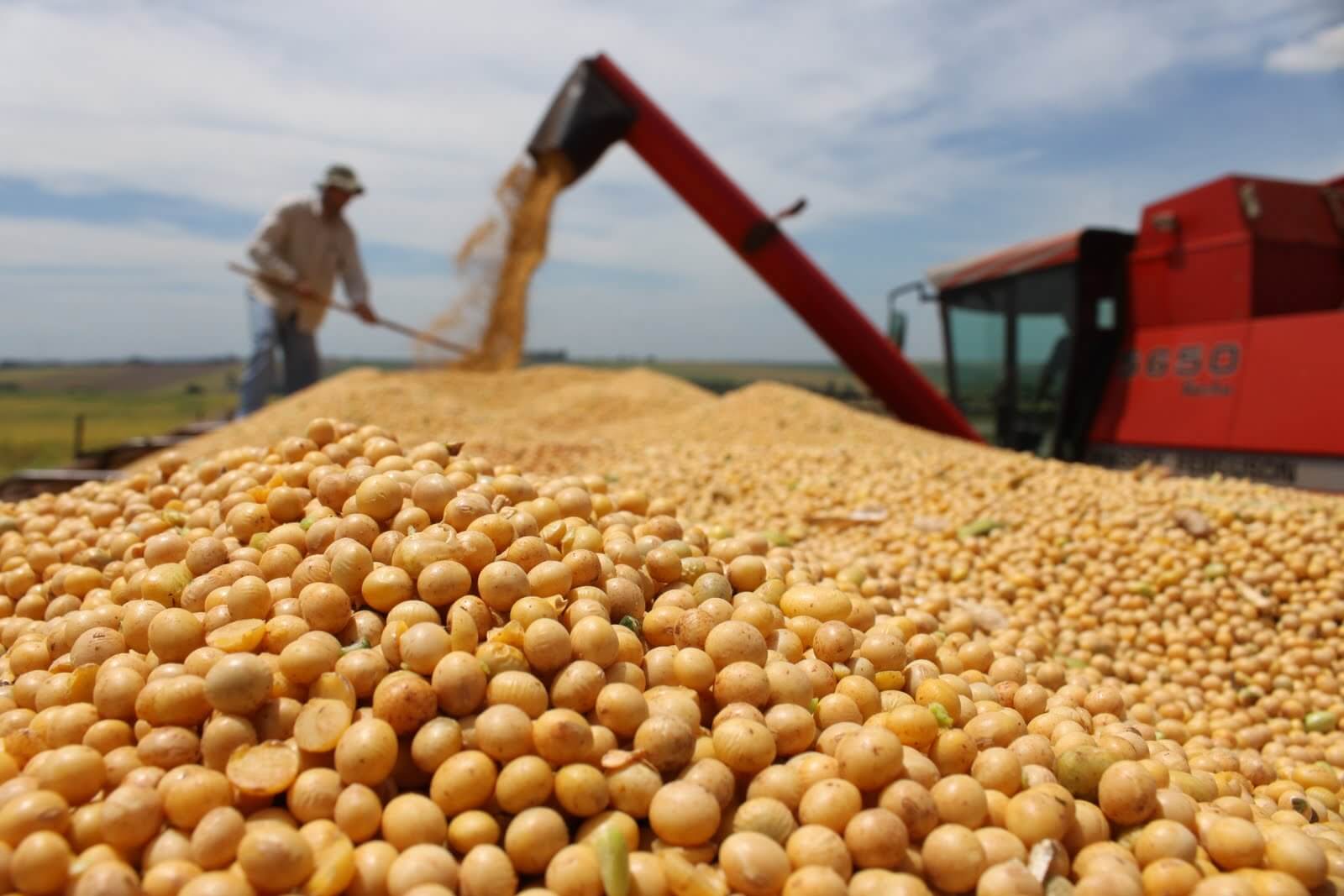
By temporarily silencing the expression of a critical gene, researchers fooled soybean plants into sensing they were under siege, encountering a wide range of stresses. Then, after selectively cross breeding those plants with the original stock, the progeny “remember” the stress-induced responses to become more vigorous, resilient and productive plants, according to [Sally Mackenzie, professor in the departments of Biology and Plant Science at Penn State.]
…
Researchers identified a gene they call MSH1 that exists in all plants, and when they down-regulate or turn off its expression, the plant becomes “convinced” it is encountering multiple stresses, even though it is growing under perfect conditions. The plant senses it is dealing with drought, extreme cold, heat and high light levels, etc., simultaneously …. so it amplifies the expression of gene networks to respond to those stimuli.
…
Important for the political reality of these times, this is a technology that could be readily applied because it is not a genetically modified organism, so it doesn’t require any special regulatory approval. It can go right into the field, Mackenzie pointed out, and be deployed in any crop, not just in soybean. Her research group has already demonstrated the approach works in tomatoes and sorghum.
Laws in the EU should be changed to allow plants developed through controversial gene-editing techniques to be more easily put on the market, the European Commission’s scientific advisers said [November 13].
In July, the European Court of Justice ruled that such techniques, whereby organisms are obtained by mutagenesis — a breeding technique that edits the plant’s genes — should be subject to the same strict EU laws that apply to genetically modified organisms (GMOs).
That interpretation of the law was a major setback for …. scientists working to develop high-tech crops in the EU. It also raised questions over whether CRISPR/Cas9, one of the newest genome-editing tools it is hoped could treat disease in humans, would be caught up in the EU’s GMO laws.
But a group of senior scientists appointed to advise the Commission said …. that the interpretation of the law could leave Europe straggling behind other regions in the area of developing plant technologies, which many argue are necessary to make plants more resilient to climate change and to feed a growing world population.
…
“There is danger that unless the EU improves the regulatory environment for products of gene-editing, it will be left behind in this field, which could also diminish EU influence on ongoing debates at the international level,” the report added.
[T]he average age of diagnosis for a child with autism is over four years. Because of late diagnoses, many of these children aren’t able to complete therapy during those early, well-documented time windows that are associated with optimal outcomes.
But a series of recent research gives me hope that it may not be too late for these children, or the adults with autism who we previously may have thought had missed their windows for early intervention.
A recent study from my lab shows that autism-related social deficits may be able to be corrected well into adulthood. These findings are in pre-clinical animal models only, yet they hold implications for the wide range of people with autism.
…
Results from my research and others show promise that modulating brain circuits may also be beneficial for autism behaviors, even when those treatments have been initiated during adulthood. With researchers delineating the precise circuits involved in specific autism behaviors, these findings raise the possibility that targeting specific neural circuits may provide benefit to autism behavior and complement genetic-based treatments.
Further studies and clinical trials still need to be performed to validate these promising pre-clinical data, but they give us hope that when parents ask their child’s doctor whether it’s too late for treatment, the response will be—regardless of age: “No, it’s not too late.”
When we talk about the food of the future, we conjure images from science fiction: the pureed brown stuff in “2001: A Space Odyssey,” the blue milk of “Star Wars.” It’s not far off from the modern food movements we latch on to today …. what we call the new powders, isolates, mixes, and drinks of the future might help determine whether they become the powders, isolates, mixes, and drinks of the future …. When the foodstuffs of tomorrow suddenly emerge from the lab, where will they get their names?
…
“Soylent” …. The engineered meal replacement, purportedly popular in Silicon Valley, has gotten more attention for its name than for the product itself …. “Everyone’s told us to change the name,” co-founder Rob Rhineheart told The New Yorker in 2014.
…
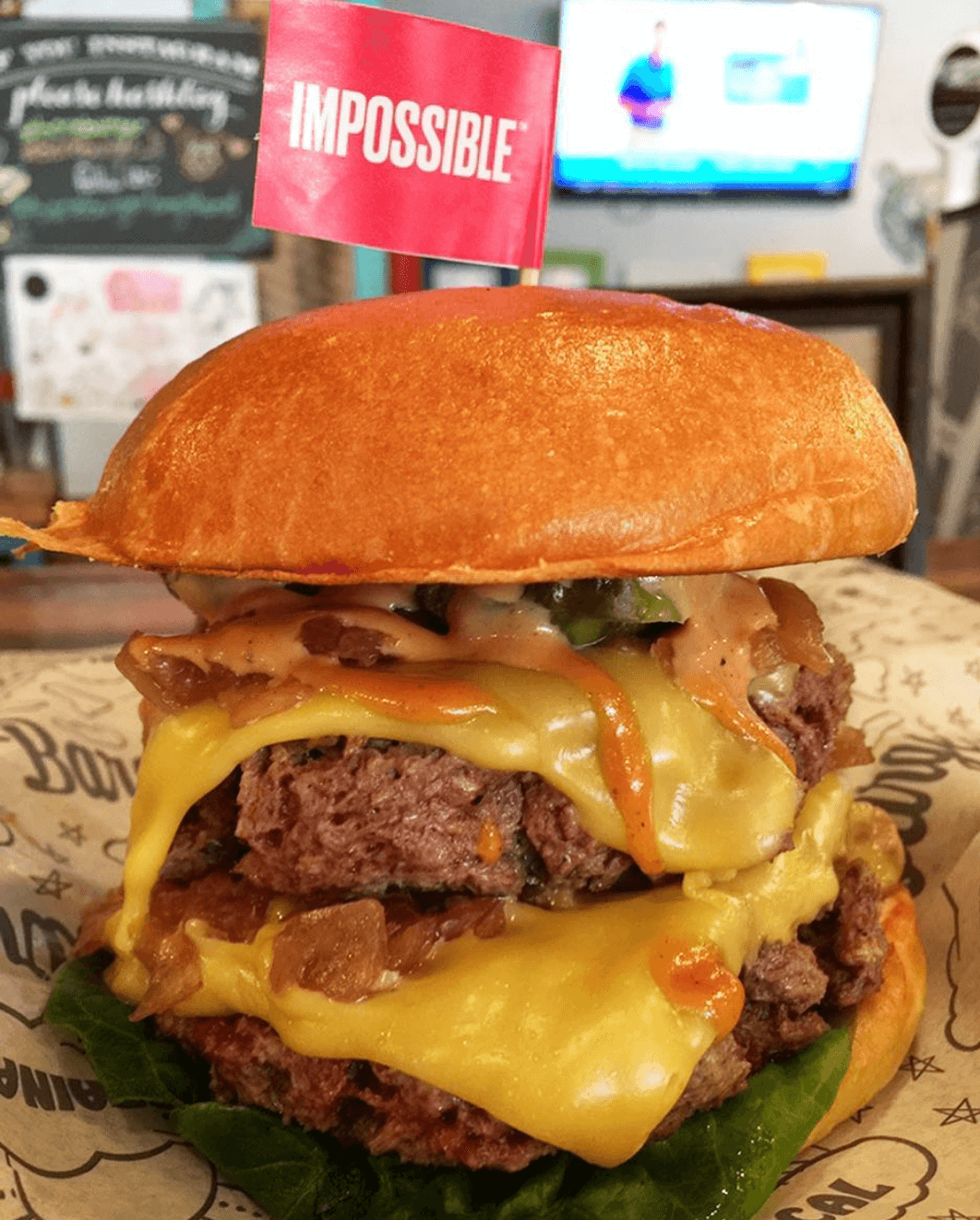
Engineered meat substitutes pose a distinct challenge. There are two different kinds of engineered substitutes that lay claim to being the “meat” of the future: ones that are plant-based, and ones that are based on animal tissues grown in a lab …. More familiar are the plant-based meats. The Impossible Burger and Beyond Burger are two well-known examples ….
…
Naming and branding consultant Nancy Friedman …. underscores an important point: the foods of the future will only become so once they’re widely adopted, which means their names rely heavily on marketing. “A general principle of branding is: make the unfamiliar seem familiar and the familiar seem unfamiliar,” writes Friedman.
In the 1990 Michael Crichton novel “Jurassic Park,” scientists resurrect extinct species, with disastrous, page-turning consequences. But what if the scientists hadn’t wanted to re-create whole organisms, just a part of their long-lost molecular machinery?
…
Engineers are interested in using these versatile natural machines to speed up industrial chemical reactions in environmentally friendly ways. Unfortunately, enzymes tend to unravel in the harsh conditions often used in commercial processes.
…
In the new research, the team used the same basic technique to resurrect additional ancient enzymes from both before and after multicellular life emerged on Earth. The enzymes themselves are long gone, but the scientists studied the genes of many different species that have a modern version, and then used a computer algorithm to take a best guess at how the genes evolved and what the most likely form in a common ancestor would look like.
Using this process, the researchers resurrected an enzyme that the first vertebrate animals likely used to help eliminate foreign chemicals from their bodies, as well as an enzyme that likely helped ancient bacteria make the building blocks for proteins. Modern relatives of both enzymes have attracted industry interest, the first for its potential to aid drug development and make specialized chemicals such as flavors and fragrances, and the second for its potential use in making biofuels.
When a new virus crops up in people, health authorities face an urgent question: Where did it come from?
Thousands of viruses are out there in the wild, circulating in animal hosts and only gaining attention when they infect people. Viruses can make that jump in various ways — sometimes through direct contact, sometimes via an intermediary like a mosquito or tick. But researchers don’t have great tools to quickly determine the reservoirs that house the viruses or the “vectors” by which they were transmitted.
On [November 1], researchers unveiled a new system, based on machine learning models, that identifies patterns in the genomes of viruses to offer a hypothesis.
…
The system, which was described in a paper published in Science, remains fairly crude for now; it can tell you that a virus likely resides in bats, for example, but not which species. And it’s not entirely accurate: For known viruses, it was able to identify the general type of vector 90.8 percent of the time and host reservoir type 71.9 percent of the time.
…
[T]he prediction program arrives as scientists have embarked on ambitious efforts to catalogue viruses around the world, including an endeavor called the Global Virome Project, in which [disease ecologist Peter] Daszak’s group is participating. Researchers aim to get ahead of future viral threats before they strike.
Hortense Dodo has genetically engineered a hypoallergenic peanut. But she isn’t targeting people with peanut allergies. Not directly, anyway.
…
Her quest began in the 1990s, when she became close to a family whose young child had a very severe peanut allergy. …. When she graduated from Pennsylvania State University with a PhD in molecular biology, she saw an opportunity: If she couldn’t fix the allergy, perhaps she could fix the peanut.
The modern food industry is a story of fixes. We engineered mass production — of crops, of livestock, of processed foods — to nourish people by the millions …. But it’s mostly been up to the minority of people with potentially lethal allergies to avoid foods that might trigger a severe reaction. We didn’t try to fix foods that caused allergies, in large part because we didn’t think we needed to.
…
As Dodo was figuring out how to use RNA interference technology to silence the genes responsible for the proteins that trigger the majority of allergic reactions in sufferers in the early 2000s, the number of sufferers in America tripled …. Today, as many as 2.5 percent of US children have an allergy to peanuts, and that number is rising.
…
Researchers from Northwestern’s allergy and asthma team found that insurance claims for anaphylactic episodes related to food allergies increased 377 percent between 2007 and 2016 …. food allergies are responsible for more than 30,000 emergency department visits annually.
To feed the burgeoning human population, it is vital that the world figures out ways to boost food production.
Increasing crop yields through conventional plant breeding is inefficient – the outcomes are unpredictable and it can take years to decades to create a new strain. On the other hand, powerful genetically modified plant technologies can quickly yield new plant varieties, but their adoption has been controversial. Many consumers and countries have rejected GMO foods even though extensive studies have proved they are safe to consume.
But now a new genome editing technology known as CRISPR may offer a good alternative.
I’m a plant geneticist and one of my top priorities is developing tools to engineer woody plants such as citrus trees that can resist the greening disease, Huanglongbing (HLB), which has devastated these trees around the world. First detected in Florida in 2005, the disease has decimated the state’s US$9 billion citrus crop, leading to a 75 percent decline in its orange production in 2017. Because citrus trees take five to 10 years before they produce fruits, our new technique – which has been nominated by many editors-in-chief as one of the groundbreaking approaches of 2017 that has the potential to change the world – may accelerate the development of non-GMO citrus trees that are HLB-resistant.
HLB yellow dragon citrus greening disease has infected orchards in Florida and around the world devastating the citrus crops. Image credit: Edgloris Marys/shutterstock.com
Genetically modified vs. gene edited
You may wonder why the plants we create with our new DNA editing technique are not considered GMO? It’s a good question.
Genetically modified refers to plants and animals that have been altered in a way that wouldn’t have arisen naturally through evolution. A very obvious example of this involves transferring a gene from one species to another to endow the organism with a new trait – like pest resistance or drought tolerance.
But in our work, we are not cutting and pasting genes from animals or bacteria into plants. We are using genome editing technologies to introduce new plant traits by directly rewriting the plants’ genetic code.
This is faster and more precise than conventional breeding, is less controversial than GMO techniques, and can shave years or even decades off the time it takes to develop new crop varieties for farmers.
There is also another incentive to opt for using gene editing to create designer crops. On March 28, 2018, U.S. Secretary of Agriculture Sonny Perdue announced that the USDA wouldn’t regulate new plant varieties developed with new technologies like genome editing that would yield plants indistinguishable from those developed through traditional breeding methods. By contrast, a plant that includes a gene or genes from another organism, such as bacteria, is considered a GMO. This is another reason why many researchers and companies prefer using CRISPR in agriculture whenever it is possible.
Changing the plant blueprint
The gene editing tool we use is called CRISPR – which stands for “Clustered Regularly Interspaced Short Palindromic Repeats” – and was adapted from the defense systems of bacteria. These bacterial CRISPR systems have been modified so that scientists like myself can edit the DNA of plants, animals, human cells and microorganisms. This technology can be used in many ways, including to correct genetic errors in humans that cause diseases, to engineer animals bred for disease research, and to create novel genetic variations that can accelerate crop improvement.
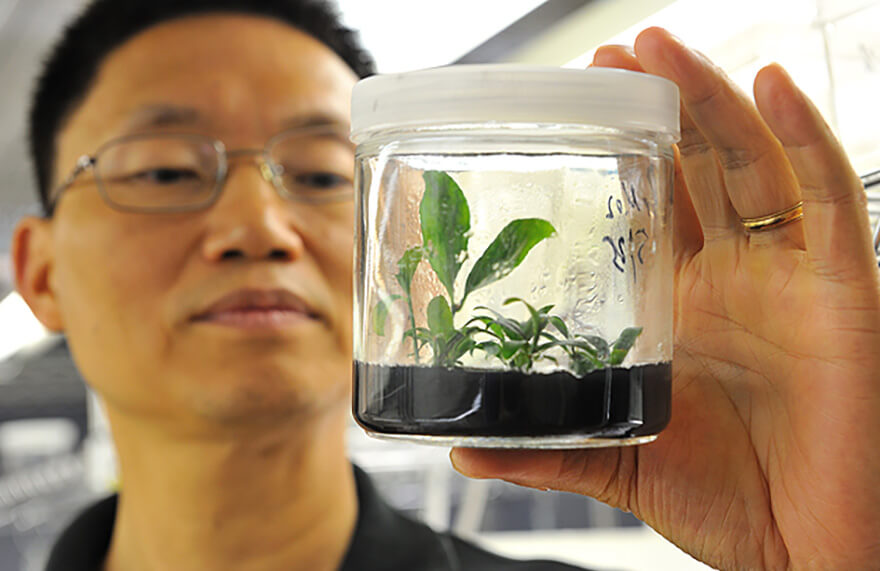
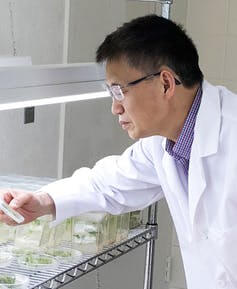
Yi Li inspects his CRISPR altered plants in his lab. Image credit: Xiaojing Wang, CC BY-SA
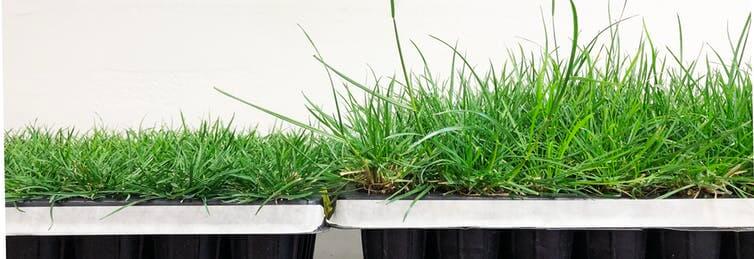
To use CRISPR to introduce a useful trait into a crop plant, we need to know the genes that control a particular trait. For instance, previous studies have revealed that a natural plant hormone called gibberellin is essential for plant height. The GA20-ox gene controls the quantity of gibberellin produced in plants. To create a breed of “low mowing frequency” lawn grass, for example, we are editing the DNA – changing the sequence of the DNA that makes up gene – of this plant to reduce the output of the GA20-ox gene in the selected turf grass. With lower gibberellin, the grass won’t grow as high and won’t need to be mowed as often.
The CRISPR system was derived from bacteria. It is made up of two parts: Cas9, a little protein that snips DNA, and an RNA molecule that serves as the template for encoding the new trait in the plant’s DNA.
To use CRISPR in plants, the standard approach is to insert the CRISPR genes that encode the CRISPR-Cas9 “editing machines” into the plant cell’s DNA. When the CRISPR-Cas9 gene is active, it will locate and rewrite the relevant section of the plant genome, creating the new trait.
But this is a catch-22. Because to perform DNA editing with CRISPR/Cas9 you first have to genetically alter the plant with foreign CRISPR genes – this would make it a GMO.
A new strategy for non-GMO crops
For annual crop plants like corn, rice and tomato that complete their life cycles from germination to the production of seeds within one year, the CRISPR genes can be easily eliminated from the edited plants. That’s because some seeds these plants produce do not carry CRISPR genes, just the new traits.
But this problem is much trickier for perennial crop plants that require up to 10 years to reach the stage of flower and seed production. It would take too long to wait for seeds that were free of CRISPR genes.
We first engineered a naturally occurring soil microbe, Agrobacterium, with the CRIPSR genes. Then we take young leaf or shoot material from plants and mix them in petri dishes with the bacteria and allow them to incubate together for a couple of days. This gives the bacteria time to infect the cells and deliver the gene editing machinery, which then alters the plant’s genetic code.
In some Agrobacterium infected cells, the Agrobacterium basically serves as a Trojan horse, bringing all the editing tools into the cell, rather than engineering plants to have their own editing machinery. Because the bacterial genes or CRISPR genes do not become part of the plant’s genome in these cells – and just do the work of gene editing – any plants derived from these cells are not considered a GMO.
After a couple of days, we can cultivate plants from the edited plant cells. Then it takes several weeks or months to grow an edited plant that could be planted on a farm. The hard part is figuring out which plants are successfully modified. But we have a solution to this problem too and have developed a method that takes only two weeks to identify the edited plants.
Genetically designed lawns
The shorter lawn grasses on the left (perennial ryegrass) need to be mowed less frequently than their conventional counterpart, shown on the right. The shorter grasses were produced using a traditional plant breeding technique. Yi Li is currently using the CRISPR technique to create grasses of other species that require less maintenance. Image credit: Yi Li, CC BY-SA
One significant difference between editing plants versus human cells is that we are not as concerned about editing typos. In humans, such errors could cause disease, but off-target mutations in plants are not a serious concern. A number of published studies reported low to negligible off-target activity observed in plants when compared to animal systems.
Also, before distributing any plants to farmers for planting in their field, the edited plants will be carefully evaluated for obvious defects in growth and development or their responses to drought, extreme temperatures, disease and insect attacks. Further, DNA sequencing of edited plants once they have been developed can easily identify any significant undesirable off-target mutations.
In addition to citrus, our technology should be applicable in most perennial crop plants such as apple, sugarcane, grape, pear, banana, poplar, pine, eucalyptus and some annual crop plants such as strawberry, potato and sweet potato that are propagated without using seeds.
We also see a role for genome editing technologies in many other plants used in the agricultural, horticultural and forestry industries. For example, we are creating lawn grass varieties that require less fertilizer and water. I bet you would like that too.
Yi Li is a Professor of Plant Science at the University of Connecticut