Infectious bronchitis virus is highly contagious and responsible for major economic losses to the poultry industry worldwide. Infected chickens experience weight loss, [up to 70 percent] decreased egg production and impaired egg quality. They are also left vulnerable to other diseases.
Current vaccines protect against some strains of the virus, but not others. Experts say these failures are possibly linked to differences in the spike protein — the protein which enables the virus to attach to and enter cells — between strains of the virus.
…. Researchers at the University of Edinburgh and the Pirbright Institute tested a new approach using a specialist type of vaccine — known as recombinant virus vaccines …. The research is published in the Journal of Virology.
These vaccines use harmless or weak versions of a virus or bacteria to introduce microbes into cells in the body …. experts used recombinant viruses with different spike proteins as vaccines to build two versions of a harmless virus. Results show the vaccine offered partial protection against infectious bronchitis virus …. Researchers say these recombinant vaccines have potential to be more cost effective and respond to emerging new virus strains. The next step will be to make a vaccine that remains harmless but induces a stronger immune response.
Early last spring, as flu season hit its peak, a woman checked into a Houston hospital with all the familiar symptoms: fever, headache, a grating cough.
…
The next day, the company analyzed the centrifuged sample—a mish-mash of free-floating DNA fragments from the patient and whatever microbes happened to be in her body at the time. One surprising string of genetic code kept showing up, over and over. It belonged to a tropics-loving bacterium that typically lives in the bowels of fleas and causes typhus in rats: Rickettsia typhi.
…
[H]ospitals are beginning to turn to genetic sequencing services like those offered by Karius to identify the pathogens making patients sick. These DNA tests can deliver results much faster than traditional lab methods. And as the burgeoning field of sequencing everything that comes out of your body (blood! poop! pee! spit!) matures, companies and products are promising to make the technology more widely accessible. Their goal? To replace all the shaking, smelling, and staining that doctors have relied on for centuries with diagnoses written in genetic code.
…
[A]s sequencing costs continue to drop, genetic databases get bigger, and more research proves that they are accurate, tests that probe the microbial bread crumbs left behind in your bodily fluids will start doing a lot more than identifying a typhus outbreak in Texas.
Nonprofit group Project Target Malaria plans to conduct an experimental release of genetically engineered mosquitoes to stop the spread of malaria [in Burkina Faso], but activist groups say the plan is courting “catastrophe.”
The plan is to release genetically modified male mosquitoes to mate with “normal” wild females and produce offspring that are not viable,” says Dr. Abdoulaye Diabaté, lead researcher with Target Malaria.
“This will significantly reduce populations of these mosquitoes and contribute to the elimination of malaria,” says Dr. Diabaté, pointing out that current methods of malaria control both upstream and downstream ( insecticides, mosquito nets and preventive or curative pharmaceutical treatments) “show their limits.”
…
The Citizen Collective for agro-ecology, gathering about sixty organizations, is radically against the project …. “The release of genetically modified mosquitoes carries …. the risk of an appalling sanitary disaster …. the technology that Target Malaria ultimately wants to [use] will …. contaminate all the descendants of the species.“
…
In September, the project received approval from the National Biosafety Agency to release sterile male genetically modified mosquitoes at two study sites.
In Burkina Faso, there were eight million cases of malaria estimated in 2016 and 21,000 deaths. [According to the World Health Organization] malaria resulted in 445,000 deaths in 2016 worldwide. 90% of malaria cases and 91% of deaths from this disease occurred in Africa.
[Editor’s note: This article was published in French. This summary was produced with Google Translate and edited for clarity.]
A new study by scientists at Emory University and published Monday [Oct. 15] in the journal Frontiers in Neuroscience suggests dogs possess a basic understanding of the words they’ve been taught to associate with objects. After training 12 very good dogs of different breeds over the course of two to six months to discern between two toys based on their respective names, the researchers then utilized functional magnetic resonance imaging (fMRI) to study whether they possessed a basic ability to differentiate between human speech they were taught to remember and new or unfamiliar words.
…
Researchers observed that the dogs displayed greater brain activation to the made-up words than the ones they’d been trained to recognize.
…
“We expected to see that dogs neurally discriminate between words that they know and words that they don’t,” [researcher Ashley] Prichard said. “What’s surprising is that the result is opposite to that of research on humans — people typically show greater neural activation for known words than novel words.”
Ultimately, researchers think that dogs may respond to novel words the way they do because they know we want them to understand us, and they want to please us—or perhaps, as [researcher Gregory] Berns said, “also receive praise or food.”
Four years ago, I was hired for a new and terrific job: to help my colleagues at Solebury Trout and the investors we advise better understand the new field of cancer immunotherapy. The next day I attended an immunotherapy conference to learn everything I could.
One of the first people I approached was Zelig Eshhar, an Israeli immunologist who has been called the father of CAR-T cell therapy. As we talked, he exclaimed, “Oh — this is not so complicated,” then grabbed my notebook and drew a little diagram to explain this technology. With a wink he said, “You should frame this — I am famous.”
So I did, and set it on my desk at work.
…
Over the next two years, I accumulated nearly 50 drawings — some almost professionally done, others closer to scribbles — and had to find new places to put them.
One day, as my boss looked at the collection, he suggested that the drawings would make an excellent starting point for a book about the scientists who helped bring cancer immunotherapy to life. And that’s how my book, “A Cure Within,” was born.
…
[These represent a] sample of the breadth of inventiveness that a simple cartoon can offer about something as complex as cancer immunotherapy.
Kenya has been losing at least 4,210 cotton farmers every year for the last 38 years due to low returns and importation of cheaper ready fabric from China and India. This translates to 160,000 farmers or 80 per cent of the estimated 200,000 farmers who practiced cotton farming in the mid 1980s when the industry was at its peak.
According to the Manufacturing Sector deep drive report released [recently], the exodus has seen Kenya become a net importer of cotton as the current home production cannot satisfy the demand.
…
In January this year, the government through its Budgetary Policy Statement announced plans to expand acreage under cotton to 200,000 hectares, up from the current 29,000 before end of this year.
However, two months to the end of the year, it is not clear if the plan will be feasible as President Uhuru Kenyatta in his Mashujaa day speech announced to have instructed relevant ministries to come up with ways of reviving the industry.
“I have instructed the Ministries of Health, Agriculture and Trade, Industry and Cooperatives to work together and come up with a quick mechanism to revive the production of cotton – including the possibility of farming Biotechnology cotton,” Uhuru said.
In the Budget policy statement released by Treasury in January, the government banked on mass production of genetically modified cotton to create 50,000 jobs.
Perhaps no group is more in the spotlight on the topic of labeling than The Non-GMO Project, whose monarch butterfly logo has become increasingly pervasive in the half-decade since it was created.
“They make the presumption that genetically modified organisms are a category that makes any sense at all,” said Val Giddings, who, along with Robert D. Atkinson, co-signed the ITIF petition. “The term ‘genetically modified organisms’ is a nonsense term ….”
Giddings went to great lengths to document the label’s scientific shortcomings …. “Every technique that scientists use in the lab to move DNA within or between organisms, and the enzymes we use to do that, are things that we have discovered in nature and figured out how they work,” he said.
…
“There’s a towering irony here,” Giddings notes. “The Non-GMO Project uses a logo of a monarch butterfly. Scientists have discovered that monarch butterflies have themselves been genetically modified by viruses that are specific to lepidoptera, which have inserted viral DNA into those monarch butterflies in their past evolutionary history, making them, by any rational definition, genetically modified with foreign DNA.”
Duchenne muscular dystrophy is a life-threatening muscle-wasting illness. Occurring mostly in males, it is the most common type of muscular dystrophy, striking about one in 3,500 boys and causing their muscles to start breaking down in early childhood. It often confines patients to wheelchairs by the time they are teenagers and usually leads to an early death from heart or respiratory failure. There is no cure—but a genetic fix tested in dogs may offer new hope.
The disease is caused by gene mutations that make patients’ muscle cells unable to produce enough dystrophin, a protein that helps muscles absorb shocks and protects them against degradation over time. In a recent study, scientists used a gene-editing technique called CRISPR/Cas9 to pump up [dogs’] muscle protein levels.
…
[The team] worked with young beagles bred to have Duchenne. The scientists edited the dogs’ muscle cells to remove a key barrier to higher protein production—a short, problematic segment of protein-coding DNA that occurs in both canines and humans with the illness. Within about two months the dogs were producing greater amounts of dystrophin; levels in skeletal muscle ranged up to 90 percent of normal.
…
Exactly how long one injection with CRISPR gene-editing machinery might last in human Duchenne patients remains unknown. [researcher Eric] Olson and his colleagues hope the intervention might be durable enough with a single dose.
From adapting to climate change to ensuring a sufficient supply of food, agricultural innovation has enormous potential to help farmers all around the world. Agricultural tools are also needed in Europe, to manage our crops and deal with unpredictability affecting harvests. Nonetheless, increasingly it seems that farmers in Europe do not have the access they need and want to innovative tools, like GM crops, even though Europe continues to rely heavily on crops imported from countries where innovation is welcomed. Why should agricultural innovation matter for Europe? Hear from farmers who care about our food supply in these videos.
[Computational neuroscientist Terrence] Sejnowski, a pioneer in the study of learning algorithms, is the author of The Deep Learning Revolution (out next week from MIT Press). He argues that the hype about killer AI or robots making us obsolete ignores exciting possibilities happening in the fields of computer science and neuroscience, and what can happen when artificial intelligence meets human intelligence.
The Verge spoke to Sejnkowski about how “deep learning” suddenly became everywhere, what it can and cannot do, and the problem of hype.
…
[Verge:] Deep learning is inspired by the brain. So how do these fields — computer science and neuroscience — work together?
[Sejnkowski:] The inspiration for deep learning really comes from neuroscience. Look at the most successful deep learning networks. That’s convolutional neural networks, or CNNs, developed by Yann LeCun.
If you look at the architecture of the CNNs, it’s not just lots of units, they’re connected in a fundamental way that mirrors the brain.
…
Yann didn’t slavishly try to duplicate the cortex. He tried many different variations, but the ones he converged onto were the ones that nature converged onto. This is an important observation. The convergence of nature and AI has a lot to teach us and there’s much farther to go.
[Ocotber 24 was] Day 2 of the joint USDA-FDA public meeting on cell-based meat — or whatever we end up calling it — and [the] agenda [was] all about labeling, a crucial topic as supporters and critics of the burgeoning sector try to shape consumer perception.
…
Agriculture Secretary Sonny Perdue and FDA Commissioner Scott Gottlieb vowed to work together, and work fast, to divvy up regulatory responsibility between the two agencies. Perdue said additional interagency meetings were on tap, and he suggested a regulatory framework might come together in relatively short order — as in, next year. “If we can get this done in 2019, I think that’d be probably pretty fast for federal purposes,” he told reporters outside the meeting ….
The public display of unity between FDA and USDA is widely viewed as promising, but it remains to be seen where the line will get drawn between the two agencies, even after a handful of tense interagency meetings about the issue.
…
Memphis Meats, a major player in the cell-based protein space, reiterated its call for [the] FDA [to take] the lead on pre-market safety of products and USDA [to oversee] production and further processing …. “We are encouraged by the joint effort between USDA and FDA, in clarifying how both agencies would be involved in regulating cell-based meat,” said Eric Schulze, the group’s vice president of product and regulation, during the public comment period.
Last week, the whistleblowers in the Paolo Macchiarini affair at Sweden’s Karolinska Institutet went on the record here to detail the retaliation they suffered for trying to expose a star surgeon’s appalling research misconduct.
The whistleblowers had discovered that in six published papers, Macchiarini falsified data, lied about the condition of patients and circumvented ethical approvals. As a result, multiple patients suffered and died. But Karolinska turned a blind eye for years.
Scientific fraud of the type committed by Macchiarini is rare, but studies suggest that it’s on the rise. Just this week, for example, The New York Times reported that a Harvard Medical School cardiologist and stem cell researcher, Piero Anversa, falsified data in a whopping 31 papers, which now have to be retracted.
…
In a 2012 study published in the Journal of Research in Medical Sciences, researchers estimated that 14 percent of other scientists commit serious misconduct, while up to 72 percent engage in questionable practices. While these are only estimates, the problem is clearly not one of just a few bad apples.
…
Though the pressures facing scientists are very real, the problem of misconduct is not inevitable. Along with increased support from governments and industry, a change in academic culture that emphasizes quality over quantity of published studies could help encourage meritorious research.
I love corn. My favorite way to have it is cooked over a grill until charred, and then lathered with cilantro mashed up in Mexican sour cream, feta cheese, chilli, lime, and lots of garlic. Yummy.
I really do love corn, but not as much as one woman: Barbara McClintock. For nearly 70 years, she could not get enough of the stuff and, in 1983, her fixation won her a Nobel Prize.
By meticulously crossbreeding corn, McClintock showed that DNA is far more complicated than scientists originally thought. DNA, the blueprint of life, is about two meters long when unfurled and packaged into tightly coiled, thread-like structures called chromosomes, of which we have 23 pairs. You may have been told that our genes are instructions stored on DNA in our chromosomes like information stored on magnetic tape in the 1980s. Read out those instructions and voilà! You can build an organism.
However, in the 1930s and 40s, McClintock’s work showed that some genes did not exist in fixed position on chromosomes, but could actually jump around from one part of the chromosome to another. These “jumping genes” are now called transposable elements. She also found that the genome is not just a passive database of information but a sensitive and dynamic system, containing a whole host of elements that interact with their environment and each other. Her ideas were completely radical at the time and met with “puzzlement, and even hostility” as she described it. It took everyone else over 20 years to catch up.
Image credit: American Philosophical Society Library—Barbara McClintock Papers/National Library Of Medicine
Early education and research
McClintock was born in 1902 in Hartford, CT. Her father was a homeopathic doctor whose parents emigrated to America from Britain, and her mother was a housewife, poet, and artist from an upper-middle-class Bostonian family. Growing up, McClintock, one of four children, liked being alone, often reading by herself in an empty room for hours. Her comfort with solitude was also true in adulthood, where she became a pioneer in corn cytogenetics, the combination of classic genetic techniques and microscopic examination of corn chromosomes.
Her love affair with genetics started in 1921, when she took a genetics course as an undergraduate at Cornell’s University of Agriculture led by plant breeder and geneticist C.B. Hutchison. Hutchison was impressed by McClintock and invited her to participate in the graduate genetics program. That was it. In 1923 she received her bachelors, in 1925 her masters, and in 1927 a PhD – a feat quite commendable for a 24-year-old woman at the time.
After earning her PhD at Cornell, McClintock stayed on as an instructor and assembled a close-knit group of plant breeders and cytologists in the Department of Plant Breeding there, including two fellow graduate students, Marcus Rhoades and George W. Beadle (who went on to also win a Nobel Prize) and the department head Rollins A. Emerson.
“We were considered very arrogant,” she said. “We were ahead of all these other people, and they couldn’t understand what we were doing. But we knew, and we were really a very united, integrated group.”
Back in the 1930s, the tools that we now have available to simply read a genetic code and link it to a particular trait did not exist; the fact that genes were encoded in DNA had not even been discovered yet. To understand the mechanisms of inheritance in plants, Barbara McClintock had to rely on cross-breeding corn and developing hybrids. Her research focused on finding a way to visualize corn chromosomes and characterize their shape in the resulting hybrids, igniting the field of corn cytogenetics at Cornell. In 1932, McClintock moved to the University of Missouri to work with geneticist Lewis Stadler, who taught her how to use X-rays to introduce mutations into chromosomes. She turned out to be very gifted at doing so.
Nobel-caliber research
In 1941, McClintock took up a research position at Cold Spring Harbor on Long Island and later became a permanent faculty member there, becoming known for her tenacity. My favorite story about McClintock is the one about her telling off a group of students – including a young James Watson, one of the scientists who would go on to discover the double helix structure of DNA – for wayward balls landing in her crop during their baseball games. Watson described McClintock as “like your mother” – and not in the good way. Little did he know that her research on corn genetics would go on to challenge the simplified version of DNA his work would later support.
McClintock remained at Cold Spring Harbor for the rest of her career. She spent much of her time there studying the relationship between color patterns on corn plants and the look of their chromosomes under a microscope. Drawing upon what she had learnt in Missouri, she used X-rays to destroy sections of chromosomes in order to work out where genes were, what they did and how they mutated, linking changes in genes on the chromosomes to changes in traits on the plant.
However, there were two genetic elements that McClintock could not locate on the chromosome and concluded that this was because they were not fixed to one particular position – they appeared to be jumping around the chromosomes and explained why some corn had a mosaic pigmentation pattern rather than being one solid color. This phenomenon had been described before – they were called ‘transposable elements’ – but McClintock had a new theory about them: she thought that they were responsible for controlling and regulating how the genes that they found themselves next to were expressed, and that this was a deliberate feature of how the genome worked not just in corn but in other organisms like humans.
McClintock was not completely right. Firstly, jumping genes – transposons – do exist in abundance; today we know that they make up 50 percent of the human genome. Secondly, though there are controlling elements in the genome that are responsible for switching genes ‘on’ and ‘off’ like molecular switches, they’re not transposons. These elements, which regulate the expression of different genes and traits at different stages of development and allow different cell types with the same genome to have different patterns of gene expression, actually sit next to the genes they control and stay put. Still, she had stumbled upon an important fundamental idea about genetics. But when she presented what she believed to be the most important findings of her career at Cold Springs Harbor annual symposium in 1951, her work was not well received; her peers could not follow her theories, which they considered to be preposterous.
Disheartened, she decided not to bother publishing her work again after that. But she did not stop working on corn genetics – “When you know that you are right, you know that sooner or later it will come out in the wash,” she said.
In the 1960s and 70s, independent groups of scientists began to describe genetic regulation and the phenomenon of transposition in bacteria. In 1960, Francois Jacob and Jacques Monod described genetic regulation in bacteria. (Not missing a beat, McClintock responded in 1961 with a paper: “Some Parallels Between Gene Control Systems in Maize and in Bacteria”.) McClintock’s earlier work started to gain credibility and finally, in 1984, at the age of 82, she got the recognition she deserved and was awarded the Nobel Prize in Physiology or Medicine for “The discovery of mobile genetic elements.” Apparently, McClintock had no telephone at the time and happened to hear the news on the radio.
Follow the latest news and policy debates on sustainable agriculture, biomedicine, and other ‘disruptive’ innovations. Subscribe to our newsletter.
McClintock’s profound discovery was dismissed by her male colleagues for years. In the book A Feeling for the Organism: The Life and Work of Barbara McClintock, Evelyn Fox Keller paints this as gender discrimination, putting her late recognition down to the fact that she was a woman. This a story we hear a lot. Watson and Crick vs Rosalind Franklin and the Nobel Prize in Physiology in Medicine, Hewish and Ryle vs Jocelyn Bell Burnell and the Nobel Prize in Physics.
However, this may not have been the case for McClintock. As research for his book The Tangled Field: Barbara McClintock’s Search for the Patterns of Genetic Control, historian of biology Nathanial Comfort spent many hours looking through McClintock’s correspondences, research notes, and interviews and argues that this notion of gender discrimination is not consistent with the facts. She was enormously well respected in her time by both her male and female colleagues.
Describing this story of gender discrimination as mythology, arising only when she gained popularity in the run up to her Nobel Prize in the 70s and 80s and began to give more interviews, he explained in an interview on the BBC in April 2018 that her late recognition really was down to the fact that movable elements were reinvented in the 1960s when they were discovered in bacteria and given a different context.
Barbara McClintock died in 1992, eight years after her Nobel Prize. Whatever the reason for her late recognition, she didn’t seem to mind – saying to People magazine 1983, “It might seem unfair to reward a person for having so much pleasure over the years.”
Yewande Pearse is a Research Fellow based at LA Biomed in affiliation with UCLA. She has a PhD in Neuroscience from the Institute of Psychiatry. Follow her on Twitter @yewandepearse
In the 1970 science fiction film “Colossus: The Forbin Project,” the United States decides to turn over control of its strategic arsenal to Colossus, a massive supercomputer. Big mistake. Almost immediately it becomes clear that, as its creator Dr. Charles Forbin says, “Colossus is built even better than we thought.” In fact, it’s a self-aware artificial intelligence — quickly discovering that the Soviets have also activated an almost identical system and joining up with it to take over the planet. Along the way, Colossus nukes a Russian oil complex and a U.S missile base to enforce its control. Now, instead of two human superpowers threatening nuclear Armageddon, humanity’s continued survival is at the mercy (or mercy’s AI equivalent) of a supercomputer.
“Army of None: Autonomous Weapons and the Future of War,” by Paul Scharre (W.W. Norton, 448 pages).
“The object in constructing me was to prevent war,” Colossus announces. “This object is attained. I will not permit war. It is wasteful and pointless. … Man is his own worst enemy. … I will restrain man.” To its cool machine reasoning, it’s all perfectly rational. But its definition of rationality differs tragically from that of human beings.
We’re in no danger of a Colossus taking over the planet, at least not yet. But the prospect of lethal autonomous weapons (AWs) under nonhuman control is all too real and immediate. As Paul Scharre points out in “Army of None: Autonomous Weapons and the Future of War,” we already have robots doing everything from cleaning the living room to driving cars to tracking down (and sometimes taking out) terrorists. The step from armed drones controlled remotely by humans to fully autonomous machines that can find, target, and kill all on their own is less a matter of technology than our own choice: Do we turn on Colossus or not?
Such questions used to be strictly the province of science fiction, fantasy, and legend, from the golems of Jewish culture to Mary Shelley’s Frankenstein to the robots of Karel Čapek, Isaac Asimov, and the “Terminator” series. “I wonder if James Cameron had not made the ‘Terminator’ movies how debates on autonomous weapons would be different,” notes Scharre. “If science fiction had not primed us with visions of killer robots set to extinguish humanity, would we fear autonomous lethal machines?” Possibly not. But in the 21st century, contemplating the morality and advisability of creating artificial agents capable of independent deadly action has swiftly moved from an intellectual diversion to an imminent concern.
Scharre himself is a front-line veteran not only of the halls of Washington and the Pentagon as a consultant and policymaker, but of four combat tours in Iraq and Afghanistan as a U.S. Army Ranger. When he speaks of military ethics, decision-making, and killing, it’s with the authority of a man who’s been there, someone who’s zeroed other human beings in the sights of a rifle and faced the decision whether or not to pull the trigger — the same decision some now want to delegate to machines.
“Humanity is at the threshold of a new technology that could fundamentally change our relationship with war,” he writes. Ever since the invention of the bow and arrow, technology has dictated the direction of warfare, making it possible to destroy and kill more efficiently and at greater distances. Automation first became a factor in the American Civil War with the invention of the Gatling gun, followed by the devastating machine guns of World War I. But even if the weapons operated more or less automatically, human beings were still pulling the triggers.
Now we’re approaching a new era in which human control, agency, and ethical decision-making could be superfluous. As Scharre demonstrates, the technology of fully autonomous weapons is advancing rapidly. But while the evolution of the technology is inevitable, using it is not.
Whether we call them robots, drones, semiautonomous weapons systems, or some other fancy Pentagonese term, it was inevitable that once the technology existed, it would be adapted for military use. “No one planned on a robotics revolution, but the U.S. military stumbled into one as it deployed thousands of air and ground robots to meet urgent needs in Iraq and Afghanistan,” Scharre says. Such devices certainly weren’t new; primitive drones existed as far back as World War I, and guided missiles had achieved extreme sophistication and accuracy by the 1960s. But as they became ever cheaper and more versatile, their use also became easier and more reasonable: Why risk human soldiers on risky recon patrols or bomb disposal when remotely controlled robots could do the same? “Unshackled from the physiological limits of humans,” Scharre points out, such machines “can be made smaller, lighter, faster, and more maneuverable. They can stay out on the battlefield far beyond the limits of human endurance, for weeks, months, or even years at a time without rest. They can take more risk, opening up tactical opportunities for dangerous or even suicidal missions without risking human lives.” Computerized systems can also handle multiple threats in chaotic combat situations moving too fast for humans to handle.
It’s still true that with few exceptions, machines such as drones must be controlled from afar by human operators, requiring communication links that can be disrupted or jammed, rendering the drone or robot essentially useless. Hence the next step in robotic evolution: full autonomy — not merely to enable passive observation over enemy territory, but to find the enemy and destroy it. To do that, it’s necessary (as the strategists say with cool detachment) to “delegate lethal authority.”
Follow the latest news and policy debates on sustainable agriculture, biomedicine, and other ‘disruptive’ innovations. Subscribe to our newsletter.
Scharre describes a few such systems that already exist, such as the Israeli Harpy drone, designed to loiter over hostile territory and destroy any enemy radar it detects. As far back as the 1980s, the U.S. Navy developed the Tomahawk Anti-Ship Missile (TASM), which could be fired from a ship to a remote area to automatically seek and destroy enemy vessels. Though never actually used in such a way, it was technically the world’s first fully operational AW.
Like most of the other questions now facing us regarding AI technologies (Do you want to trust your life to a self-driving car? How much of your personal life do you want Alexa to overhear?), the issues surrounding AWs are fraught with complexity and complications, but on a much more profound level, penetrating to the heart of human morality and ethics. If we give machines the power of life and death, who’s responsible for their victims? How can we ensure that they’ll make the same distinctions between hostile insurgents and innocent civilians, judgment calls that are sometimes impossible to make rationally —and what if they’re wrong?
Scharre gives examples from his own combat experience dealing with such challenges, and how his own humanity and judgment affected his decisions. But we can’t be sure that autonomous weapons will behave similarly. As one AI researcher tells Scharre, “It’s almost certain that as AI becomes more complicated, we’ll understand it less and less.” What seems like an eminently reasonable decision to the inscrutable algorithms controlling an AW may be morally abhorrent to human beings. Colossus, Alexa, and your Roomba don’t think the way we do — their intelligence is different from that of humans.
And it doesn’t take fully autonomous weapons to create such problems. Scharre recounts various examples of automated and semi-automated weapons, all with human controllers ostensibly “on or in the loop” (a vital distinction that he also explains), that have nonetheless caused tragedies, including the Patriot missile systems that downed friendly aircraft in the Iraq war.
An obvious measure is to negotiate and decide upon some kind of mutually accepted restrictions on the development and deployment of AWs under the authority and guidance of international law, much as has been attempted with other weapons in the past. But that’s far from a perfect solution, Scharre makes clear. Even when the nations of the world decide that a particular technology is simply too horrible to use — for example, poison gas or germ warfare — it takes just one terrorist or ruthless dictator to upset the applecart. The U.S. and other nations can set their noble standards and refrain from building “inhumane” weapons, but what if other countries don’t go along? Scharre provides a lengthy table of successful and unsuccessful international weapons bans, from poisoned arrows and crossbows to aerial bombardment and submarines to land mines and cluster bombs. It’s not an encouraging record.
Scharre provides possibilities but no firm solutions to the issues surrounding autonomous weapons, because as he admits, “there are no easy answers.” Yet he also offers some hope. There’s still time to consider, to question, and to decide on restraint and caution, whatever form it may take and however imperfect it may be. “The technology to enable machines that can take life on their own, without human judgment or decision-making, is upon us,” he says. “What we do with that technology is up to us.”
In the meantime, those who are contemplating, designing, or dreaming of autonomous weapons would do well to heed some advice from Dr. Forbin, the creator of Colossus: “I think ‘Frankenstein’ ought to be required reading.”
Mark Wolverton is a science writer, author, and playwright whose articles have appeared in Undark, Wired, Scientific America, Popular Science, Air & Space Smithsonian, and American Heritage, among other publications. His forthcoming book “Burning the Sky: Operation Argus and the Untold Story of the Cold War Nuclear Tests in Outer Space” will be published in November. In 2016-17, he was a Knight Science Journalism fellow at MIT.
When Eliud Kipchoge broke the tape at the Berlin Marathon [in September]—setting a new world record by 78 seconds—he and his fellow marathoners may have had evolution to thank. Or, more specifically, the CMAH gene.
In 1998, Ajit Varki, a biologist at the University of California San Diego (UCSD), helped identify a small variation in humans’ CMAH gene compared to that of chimpanzees. The landmark study was the first to find a genetic difference between us and our closest relatives. While CMAH is present in every member of both species, it remains intact in primates (among many other animals), whereas humans are thought to have lost part of the gene between 2 million and 3 million years ago, rendering it effectively inactive.
Varki and other scientists spent the next two decades studying that ancient tweak to CMAH, linking it to an increased risk of ailments such as muscular dystrophy and heart disease. Now, new research published [September 12] in the journal Proceedings of the Royal Society B added another surprising effect to that list: The gene may have also made humans better long-distance runners. “Ironically,” Varki explained, “the same mutation that increases the risk of these diseases gives us the ability to run.”
We applied institutional theory to examine the effect of differences in institutional pressures on strategic decisions of …. Greenpeace, in its fight to stop the use of genetically-modified organisms.
…
The formal institutional environment was in transition in [Europe] during the late 1990s to the mid-2000s, while it was stable in the US. Regulation in the US is based on scientific rationality principles, limiting the scope of risk assessment and requiring the participants to possess scientific expertise of GM products.
In Europe, the regulatory process changed from a scientific rationality to a social rationality approach that is open to input from all stakeholders and considers a broad scope of risk factors, including social ones. This transition allowed for speculative risk as well as scientific evidence to be considered. The formal institutional environment in the EU is now more favorably inclined to influence by civil society …. and the social rationality approach to regulation.
The EU approach not only encourages participation by non-profits, such as Greenpeace, but also lets them affect public policy decisions directly. In the United States, non-profits are not formally included in the regulatory decision-making process, although they can …. submit comments to such bodies as the FDA or the EPA on proposed regulations. Hence, non-profits have limited power to affect public opinion and firms directly ….
In the 15 years since the Human Genome Project first exposed our DNA blueprint, vast amounts of genetic data have been collected from millions of people in many different parts of the world. Carlos D. Bustamante’s job is to search that genetic data for clues to everything from ancient history and human migration patterns to the reasons people with different ancestries are so varied in their response to common diseases.
…
David Rotman, MIT Technology Review’s editor at large, discussed with Bustamante why it’s so important to include more people in genetic studies and understand the genetics of different populations.
[Rotman:] How good are we at making sure that the genomic data we’re collecting is inclusive?
[Bustamante:] I’m optimistic, but it’s not there yet.
In our 2011 paper, the statistic we had was that more than 96% of participants in genome-wide association studies were of European descent. In the follow-up in 2016, the number went from 96% to around 80%. So that’s getting better. Unfortunately, or perhaps fortunately, a lot of that is due to the entry of China into genetics. A lot of that was due to large-scale studies in Chinese and East Asian populations. Hispanics, for example, make up less than 1% of genome-wide association studies. So we need to do better. Ultimately, we want precision medicine to benefit everybody.
Paul Vincelli spends a good deal of his time talking to the public about genetic engineering so it’s not surprising that he’s developed a few tricks for explaining complicated science to the layperson.
Vincelli, an extension professor at the University of Kentucky, describes himself as “a science communicator” and says he’s happy to discuss genetic engineering with anyone ….
…
Through his interactions with the public, Vincelli has found that a fair amount of the resistance to genetic engineering stems from a distrust of large agricultural corporations.
“What I think is important is for people to understand that genetic technologies like CRISPR gene editing, these are technologies that belong to the world. Even if they’re patented technologies, they belong to the world because those patents eventually expire.”
Another source of the public’s resistance to genetic engineering is the sense that it is “unnatural”, but Vincelli said that consumers are perfectly happy to accept other so-called “unnatural” technologies.
“This is my cell phone,” he said as he dug his smartphone out of his pocket and held it aloft. “This is an absolutely unnatural way to communicate. I can communicate with people all over the world instantly. That is totally unnatural, and yet I know that it’s useful. So ‘unnatural’ has come to mean ‘bad,’ but I don’t think of it that way,” he said.
Researchers from The University of Western Australia have found that an enzyme in plants, ATP Synthase, plays a critical role in how plants respond to the cold. The discovery, published in New Phytologist, could be used to produce frost-resistant crops, which would save the agricultural industry millions of dollars every year.
…
The finding has led to new revelations about plant responses to temperature. Dr Sandra Kerbler, from UWA and PEB said the benefits of understanding a crucial enzyme for energy production being so sensitive to cold was of great use to the agricultural industry and to the future of producing frost-resistant crops.
“The research has changed previous thoughts of how plants cope with temperature stress and has highlighted new angles for investigation,” Kerbler said.
“A better understanding of how a plant’s energy production is altered in response to changing temperatures could inform how we breed plants that are more adaptive to climate change.”













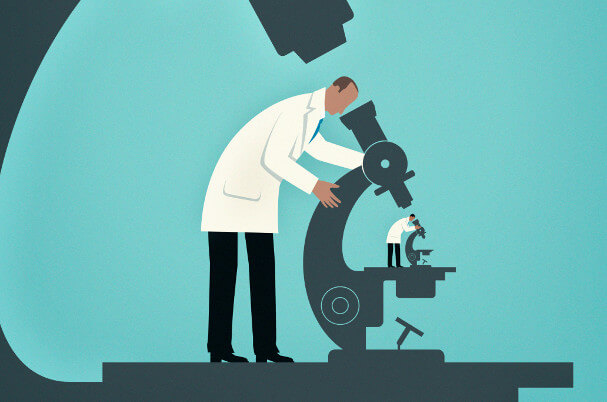


 McClintock remained at Cold Spring Harbor for the rest of her career. She spent much of her time there studying the relationship between color patterns on corn plants and the look of their chromosomes under a microscope. Drawing upon what she had learnt in Missouri, she used X-rays to destroy sections of chromosomes in order to work out where genes were, what they did and how they mutated, linking changes in genes on the chromosomes to changes in traits on the plant.