


Chemical Controversies
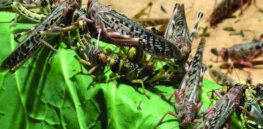
Africa cracks down on ravenous locust swarms by ignoring Greenpeace’s anti-pesticide rhetoric
As nations around the world struggle with COVID-19 and related economic lockdowns, African countries are fighting another plague: swarms of ...
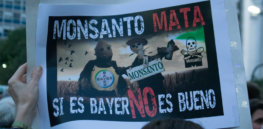
Viewpoint: Mexico’s ‘cut-off-your-nose-to-spite-your-face’ glyphosate ban — Why prohibiting one of the safest herbicides in the world will dramatically increase the use of a demonstrably more harmful alternative
It appears that the proposed Mexican government plan to ban all genetically engineered corn and the widely used herbicide glyphosate ...
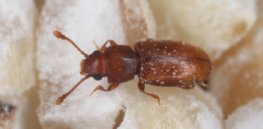
Viewpoint: Glyphosate is great at killing weeds, but there are concerns its use could imperil the microbiome of some insects — both beneficial and harmful
[A] study, published in the journal Communications Biology, showed that glyphosate inhibits a biochemical pathway in bacteria that was previously ...

‘Flawed process leads to flawed science’: Why the WHO’s International Agency for Research on Cancer claims glyphosate causes cancer
The recent excellent article by Josh Bloom, “NYC Pol Uses Phony Cancer Scare & ‘Children’ to Ban Glyphosate in Parks,” ...
RNA technology brought us effective COVID vaccines. Next up: ‘Precisely targeted, environmentally-friendly’ techniques that dramatically reduce use of problematic chemicals
[RNA-based COVID vaccines let] a vaccine-recipient’s immune system learn to recognise a crucial part of the enemy before the real ...

Bayer says it will reconsider ‘the future of glyphosate-based products in the U.S. residential market’ after a federal judge rejected its $2 billion settlement proposal to resolve pending and future cancer lawsuits
Bayer said on [May 26] it will review the future of its Roundup and other glyphosate-based weedkillers in the U.S ...

Mexican judge upholds 2024 ban of GMO corn and glyphosate, threatening to upend US trade relationship
A Mexican federal judge ruled against a request by the [Mexico] National Farm Council (CNA) to freeze a government plan ...

Roundup regulation revision? Biden EPA asks federal court to allow it to reassess glyphosate, weighing ‘ecological risks and benefits’
The Biden EPA has asked a federal court for a chance to review and possibly revise parts of the agency's ...

‘Devastating repercussions’: Sri Lanka’s plan to ban agrochemicals and go 100% organic could result in famine, expert says
Can Sri Lanka with a population of nearly 22 million and a landmass of 65,000 square kms and a per ...

As Bayer awaits ruling on its $2 billion glyphosate settlement proposal, judge floats idea of adding controversial safety warning label
A U.S. judge suggested on [May 19] that Bayer include a warning label on Roundup as part of a proposed ...

‘Risks are acceptable’: On verge of banning neonicotinoid imidacloprid, Canada reverses course, says bees will not be adversely impacted
Canada’s pesticide regulator said on [May 18] that farmers could keep using the chemical imidacloprid to control crop-destroying insects under ...

Can the Biden Administration challenge Mexico’s decision to ban glyphosate weedkiller and GMO corn?
Mexico may be one of the U.S.’s top agricultural trading partners, but this relationship has plenty of problems. Consider the ...

The central challenge for regenerative agriculture advocates: Not undermining the movement by ‘overselling’ its limited and targeted advantages
The term regenerative farming first popped up in the mainstream media in a 1987 New York Times article about what ...

Viewpoint: ‘Things only got worse’ — DDT bug spray curbed malaria-spreading mosquitoes but led to a host of unintended consequences. Here’s how to understand risk and environmental ‘trade offs’
DDT is a bug spray [used to kill malaria-spreading mosquitoes]. It was outlawed in many countries because once you spray ...

Mexican court upholds 2024 government ban of Bayer’s Roundup weedkiller
Mexico's plan to phase out weed-killer glyphosate amid concerns the pesticide causes cancer has seen it clash with Bayer and ...
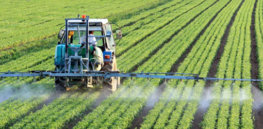
Prevention first, pesticides second: Why regenerative agriculture does not mean chemical-free farming
The philosophies of regenerative agriculture, sustainable agriculture, and holistic agriculture are generating a great deal of interest these days. While ...

Top EU court upholds partial ban on 3 neonicotinoid pesticides, in bid to halt alleged honeybee losses
The European Union’s top court on [May 6] upheld the EU’s partial ban on three insecticides linked to harming bees, ...

Viewpoint — ‘We’re trying to mimic mother nature’: Why healthy soil is key to cutting back on pesticides and growing climate-resilient crops
[Les Seiler and his brother] have been practicing “no-till” farming [in Ohio] for 36 years and counting. That means they ...

Viewpoint: Organic farming offers some sustainability benefits, but ‘fear-driven marketing campaigns’ exaggerate advantages and demonize acceptable alternatives
When the “Risk-Monger’s Dirty Dozen” list of pesticides used in organic farming was published, I had broken a taboo. Before ...

Viewpoint: Advocacy disguised as journalism? Meet Carey Gillam, the prolific purveyor of crop biotechnology and agri-chemical disinformation
When it comes to science, how much do media narratives influence public opinion and policy? The answer is, a lot ...

Podcast: NatGeo promotes pesticide fears; How weed affects your brain; Real-life Jurassic Park?
Despite its long history as a reputable science magazine, National Geographic has recently embraced simplistic narratives about the environmental impact ...

Back to court? 300 lawyers challenge Bayer’s $2 Billion settlement proposal for future Roundup class-action lawsuits
Tens of thousands of people have sued Monsanto owner Bayer AG alleging their non-Hodgkin’s lymphoma and other cancers were caused ...

Viewpoint: Phase out neonicotinoids? Walmart’s new farmer mandates promote alarmist misinformation about bee health
Walmart is making two big asks from its producers. First, it’s encouraging fresh produce suppliers to “protect, restore, or establish ...

Mexico 2024 glyphosate ban put on hold after Bayer successfully challenges presidential decree
A Mexican judge has sided with Bayer AG in a legal challenge to a government plan to prohibit glyphosate, according ...

‘Tools for sustainable agriculture of the future’: Biopesticides will be able to control pests, diseases, and weeds — and make crops more resistant to climate change
Biologicals are tools for the sustainable agriculture of the future... Biologicals are a class of agricultural products that include biopesticides, ...

Viewpoint: Is our western food system based on ‘intensive agriculture’ broken? Not if the environment and alleviating poverty and hunger matter
In the popular bourgeois imagination, the idealized farm looks something like the ones that sell produce at local farmers markets ...

Worth the higher price tag? What benefits are you really getting when you garden using organic seeds?
Whether a seed is labeled organic or not depends on the parent plant. If the parent plant was only treated ...
