


Chemical Controversies

Viewpoint: Pesticides can be harmful—but they’re also ‘vital to human health and global food security’
As much as pesticides are a threat to certain ecosystems, they’re also responsible for providing the planet with food in ...
Bayer strikes $2 billion deal to settle future glyphosate-cancer suits
Bayer has been struggling to finalize the settlement of claims that Roundup and other glyphosate-based herbicides cause non-Hodgkin's lymphoma, a ...
Bayer asks federal judge to toss lawsuit demanding cancer warning label on glyphosate weedkiller
Monsanto is again asking a Delaware judge to toss a lawsuit that demands a cancer warning label on its weedkiller ...

Fritz Haber and Carl Bosch: The chemists who revolutionized fertilizer production and ‘changed the world for the better’
Without the efforts of Haber and Bosch, the world’s population would be much smaller ...
Podcast: Glyphosate boosts cancer risk 41%? How a questionable claim from a flawed study went viral
As a rule, scientific research is relegated to obscure technical journals and goes unnoticed by most people. Every few months, ...

Roundup on trial: Law firms spent $91 million in one year to recruit plaintiffs for glyphosate-cancer suits
In 2019, an estimated $91 million was spent on ads seeking clients to pursue Roundup-related claims, making it the No ...

New crop-destroying locust swarms hitting East Africa ‘nearly every day,’ UN warns in renewed call to fight major food security threat
Dominique Burgeon, FAO’s [the UN's Food and Agriculture Organization] Director of Emergencies and Resilience, said the huge [African] desert locust ...

Nitrogen-efficient rice could preserve crop yields while cutting environmental impact of fertilizer
Nitrogen fertilizer has an indispensable role in increasing crop yields, but on the other hand, it creates a severe threat ...

Viewpoint: UK decision to rescind neonics pesticide restrictions a welcome win for science
Activists like George Monbiot and Dave Goulson are parroting their environmental allies when it comes to neonics, but the science ...
GM plant grows insect sex pheromones as alternative to crop pesticides
Scientists have discovered how to genetically modify the camelina plant to produce pheromone precursors that can control agricultural insect pests ...

With sugar beet production dropping, UK approves emergency neonicotinoids pesticide use to combat beet yellows virus
In 2018 the [UK] government supported new rules which prohibit the outdoor use of 3 neonicotinoids - clothianidin, imidacloprid and ...

‘All foods contain pesticides, and 99.99% are natural’: 8 critical facts about chemicals that help us grow food
In the United States, we live in an affluent culture whose standard of living is high compared to other nations ...
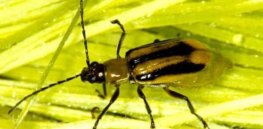
RNA technology gave us a COVID vaccine. It could also help control plant pests without insecticides
With the development of Pfizer’s COVID-19 mRNA vaccine, RNA technology has been dominating the news cycle. … A decade ago, ...

Viewpoint: Glyphosate and cancer—How ideology and bad science turned a safe herbicide into a carcinogen
Glyphosate has long been considered as an herbicide with no unacceptable health risk. In 2015, its classification as "probably carcinogenic" ...

Viewpoint: ‘Celebrate pesticides!’ Why farmers should defend technology that produces our abundant food supply
Social media is really one of the best ways to reach people nowadays. As much as we might hate to ...

Mexico could completely ban glyphosate weedkiller and GM corn by 2024
The [Mexican] National Commission for Regulatory Improvement published a new draft Presidential decree on Wednesday, [December 9], which orders the ...

Decoded locust genome could help develop ‘intelligent pesticides’ that only kill crop-ravaging insects
The complete set of genetic information for the desert locust could have major international implications for countries in regions such ...

Viewpoint: Glyphosate-cancer trials illustrate how tort lawyers undermine science in the courtroom
Should we be fair to chemical manufacturers when they are sued? First of all, who are they? Since everything in ...

French Constitutional Council temporarily rescinds neonic pesticide ban, ‘much to the chagrin of environmentalists’
The Constitutional Council on [Dec 10] gave the green light to the law re-authorizing for three years the use of ...

‘We have to be profitable’: French winegrowers protest costly glyphosate weedkiller restrictions
Three hundred winegrowers gathered in Narbonne [on Dec. 8] at the call of the winegrowers’ union and the FDSEA. They ...
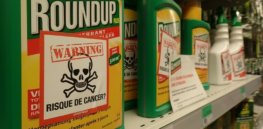
France will pay farmers to give up popular glyphosate weedkiller after proposed ban fails
France will give financial aid to farmers who agree to halt use of glyphosate, the farm ministry said on [Dec ...

With sugar output down nearly 25%, UK beet farmers pressure government to lift ban on neonic pesticides
Sugar beet processor British Sugar said that just over two months into the beet harvesting campaign, white sugar production is ...
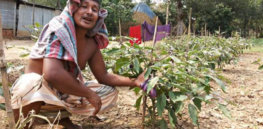
GM eggplant helps farmers reduce pesticide use and increase profits, study finds
Bangladeshi farmers significantly reduced pesticide use and increased their profits by growing genetically modified (GM) eggplant, a new study confirms ...

EPA pitches new rules to limit risks linked to chlopyrifos insecticide exposure
EPA announced a proposal on [Dec. 4] to improve the safety of using the insecticide chlorpyrifos. The proposal follows a ...

EU Court of Justice tosses Brussels lawsuit seeking to ban glyphosate weedkiller
Europe’s highest court on [Dec. 3] tossed out a challenge from Brussels to the European Commission decision that lets Europeans ...

Sweeping glyphosate-cancer settlement could leave many plaintiffs with just ‘a few thousand dollars’
Monsanto owner Bayer AG is making progress toward a sweeping settlement of thousands of U.S. lawsuits brought by people alleging ...

Podcast: COVID killed anti-GMO activism? Environmentalists split over glyphosate; Predatory journal Pokémon hoax
Could the COVID-19 pandemic end anti-GMO activism as we know it? Environmentalists are split over the controversial weedkiller glyphosate; some ...
