Despite ongoing opposition from some activists to genetically modified organisms, a number of development donors are investigating and funding research of the technology as a means of addressing a range of development challenges. Feeding a growing population, improving nutrition and health, increasing yield, and responding to environmental challenges are among the reason donors give for funding GMO research.
…
The Bill & Melinda Gates Foundation is one of the most prominent donors in this debate. For more than a decade, it has been providing funding for innovative agricultural research, including hundreds of millions of dollars for GMO projects.
…
The information available on which donors are working in the GMO space is diverse and scattered — donors are not always promoting work in this area because of a perceived negative response.
…
But donor-backed GMO projects are slowly becoming more accessible.
…
[The United States Agency for International Development], along with [the United Kingdom Department for International Development], support Uganda’s banana wilt project and have also invested in a public-private partnership with DuPont Pioneer and the Government of Ethiopia in an effort to improve agricultural production using GMO seed. Their leadership team also shows strong interest in this space with the current USAID Chief Scientist Robert Bertram acting as a member of the Golden Rice Humanitarian Board along with a former Rockefeller Foundation food security expert.
Read full, original post: Who are the donors taking on GMOs?
In a study appearing [February 6] in Nature Communications, […] a team of researchers succeeded at enhancing memory more reliably, by stimulating an area of the brain mostly ignored in earlier studies and by applying that stimulation more strategically and selectively.
…
[T]he experiment [was conducted] in patients with epilepsy whose treatment already involved invasive neurosurgical procedures. As the patients were shown a series of words they would be asked to remember later, the researchers recorded activity in several regions of their brains. They then used a machine-learning algorithm to build a “memory model” for each individual: It could read a patient’s neural response — more specifically, changing patterns of low- and high-frequency activity throughout the memory network — when first presented with a word, and predict how likely he or she was to remember it. If the model predicted the patient had more than a 50 percent chance of forgetting, it triggered stimulation to the left lateral temporal cortex, a surface area of the brain known to be active during memory tasks, including ones related to language.
“We essentially built a control system” for the subjects’ memory, [researcher Michael] Kahana said. He and his colleagues found that the control system enabled patients to remember approximately 15 percent more of the task’s words than they could without it.
More than 2,500 years ago, the philosopher Anaxagorus suggested that life existed on multiple worlds, due to “seeds” propagating through the cosmos. Nealy a century later, another philosopher, Epicurus, noted explicitly that Earth could be just one of many inhabited worlds, and five centuries after him, still another Greek thinker, Plutarch, noted that probably the Moon was inhabited by creatures.
For centuries, people speculated about how those extraterrestrial creatures might look and behave. Meanwhile, about a century prior to Anaxagorus, the philosopher Anaximander proposed that humans came into existence through an evolutionary process beginning with fish. It was a forerunner idea of evolution by natural selection that Charles Darwin would propose and then turn into a theory through years of observation and study.
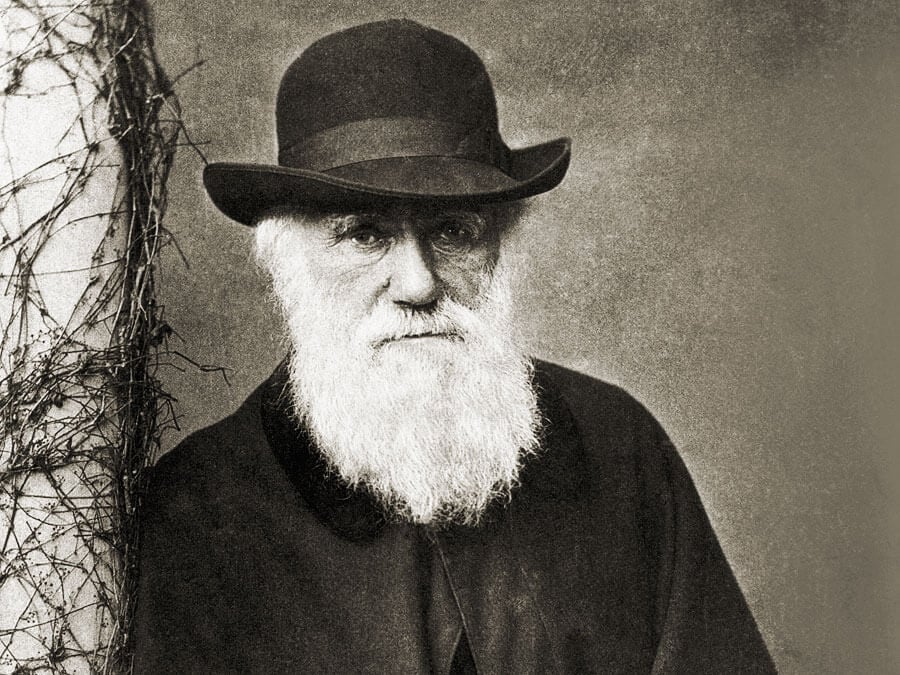
Charles Darwin
Natural selection achieved the status of being a scientific theory, because it makes predictions that could be tested and today it continues to pass the tests. Consequently, in biology we consider natural selection as the prime evolutionary force. We see it as the basis for the presence of life on Earth, and the numerous directions that life on this planet has taken over 4 billion years. And new research suggests there’s no reason to think the forces of natural selection are limited to our own planet.
In astrobiology, we assume that natural selection must be the prime mover of evolution of life everywhere else. This makes perfect sense, given that Darwin had no idea about the mechanisms of genetics. He knew traits were passed down through generations, but he didn’t know what carried those traits any more than Anaximander knew. And despite not knowing the mechanism, his natural selection works just as well to explain today’s molecular data as it worked in the 19th century to explain observations of animal forms.
Natural selection is worked into our investigations of possible prebiotic chemical systems that could have led to biology here on Earth, and elsewhere. On Saturn’s moon, Titan, for instance, hydrocarbon compounds comprise lakes, rivers, and rain that could act as a model for chemistry on Earth prior to life. Moreover, when scientists experiment with prebiotic chemical systems, the idea that prebiotic chemicals should evolve through natural selection is axiomatic, because such selection can enable complex molecules to improve their capability to make copies of themselves. Thus, a research team at Cambridge University in the UK published a study in the International Journal of Astrobiology. Using the a natural selection framework, they make specific predictions about the direction that evolution should take on other worlds, namely that complexity should increase over time, just as it did here on Earth.
This is a perfectly rational approach. Moreover, failing to acknowledge that natural selection should be as central to biology throughout the Cosmos as it is here would imply that life here is special, and thus it would constitute a regression to a mindset that for centuries placed humanity at the center of the universe.
Appreciating that natural selection must drive biology everywhere does not fall in the same category as assuming that life everywhere must utilize the same 20 amino acids that Earth life uses to make proteins, or that extraterrestrial life must use DNA to store genetic information. The very fact that natural selection was discoverable so many decades prior to the discovery of DNA illustrates that it is really a kind of universal principle of life. Natural selection enjoys a status in biology similar to what gravitation, electromagnetism, and other forces enjoy within physics.
Now, appreciating how natural selection should be a universal phenomenon is not a reason to forget that evolution of life also depends on other forces. Mutation is one of those forces. In order to become more complex, living forms must accumulate reproductive errors, in order to provide natural selection with some working material. There also are numerous mathematical phenomenon that drive evolution one way or another. These include genetic drift, founder and bottleneck effects, and gene flow — forces that shape species almost as much as natural selection does. But like natural selection, these mathematical forces must also generalize to off-Earth environments.
This means that when we finally do identify living systems on another world and seek to classify and understand the various organisms that comprise it, we won’t be starting entirely from scratch. We’ll have a lot to learn in terms of the chemistry, what the particular extraterrestrial system uses to carry hereditary information, which chemical compounds it uses for energy metabolism and the like. But the forces driving evolution will be same as they are here. This means not just natural selection, but mutation and all the other forces too.
David Warmflash is an astrobiologist, physician and science writer. BIO. Follow him on Twitter @CosmicEvolution.
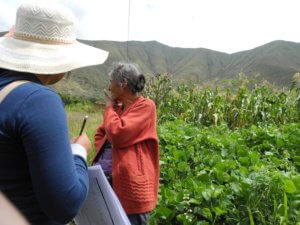
One day last March I talked with Juliana and Elisa, a mother and daughter who farmed just outside the city of Huánuco, Peru. Although they had only one acre of land in this mountainous landscape, they grew dozens of local varieties of potatoes and corn, along with other crops. And they knew each of their varieties by a common name – mostly in their Quechua language.
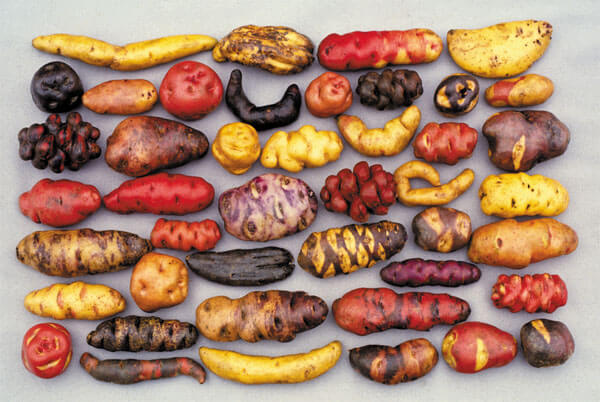
Potatoes are native to the Andes, and over 4,000 varieties are grown there now. They come in numerous shapes, sizes and colors – red, yellow, purple, striped and spotted. A colorful mound of them resembles the bold, burnished colors of locally woven shawls.
Farmers near the city of Huánuco continue to grow many species and varieties of food plants in their fields and gardens in this mountainous landscape.
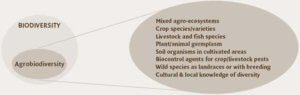
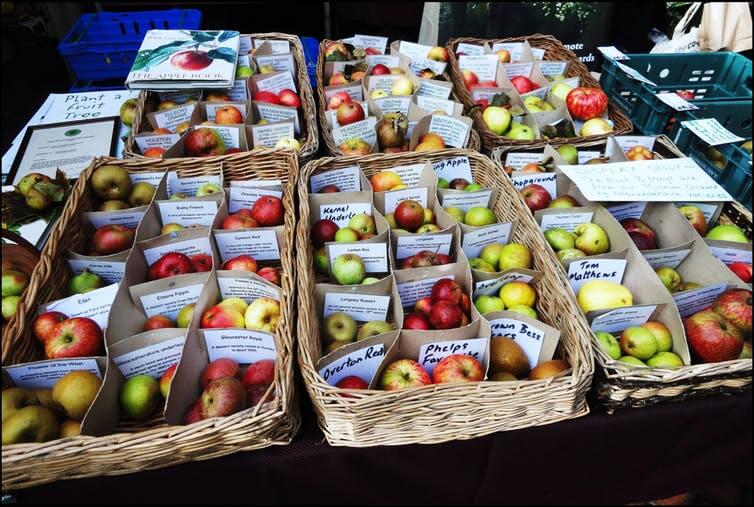
This wide array of types is an example of agrobiodiversity – a genetic legacy created by natural selection interacting with cultural practices over thousands of years. Today, however, agrobiodiversity is declining in many countries. In Mexico farmers are cultivating only 20 percent of the corn types that were grown there in 1930. Chinese farmers are producing only 10 percent of 10,000 varieties of wheat that were recorded there in 1949. More than 95 percent of known apple varieties that existed in the United States in 1900 are no longer cultivated.
According to Bioversity International, an international research and policy organization, just three crops – rice, wheat and maize – provide more than half of plant-derived calories consumed worldwide. This is a problem because our diets are heavy in calories, sugar and saturated fat and low in fruits and vegetables.
But there also are bright spots, such as Andean potatoes. In a recent article, Stef de Haan of the International Center for Tropical Agriculture and I call for a major effort to strengthen agrobiodiversity for the future. Consuming many different species and varieties provides a diet that offers many unique tastes and a wide selection of nutrients that humans need to thrive. It also can help ensure more stable food systems and the needed variety of desirable genetic traits, such as hardiness.
Wealthy nations have less-diverse diets
Generally, agrobiodiversity is significantly lower in wealthy nations, where the industrial food system pushes toward genetic uniformity. For example, federal agriculture policy in the United States tends to favor raising large crops of corn and soybeans, which are big business. Crop subsidies, federal renewable fuel targets and many other factors reinforce this focus on a few commodity crops.
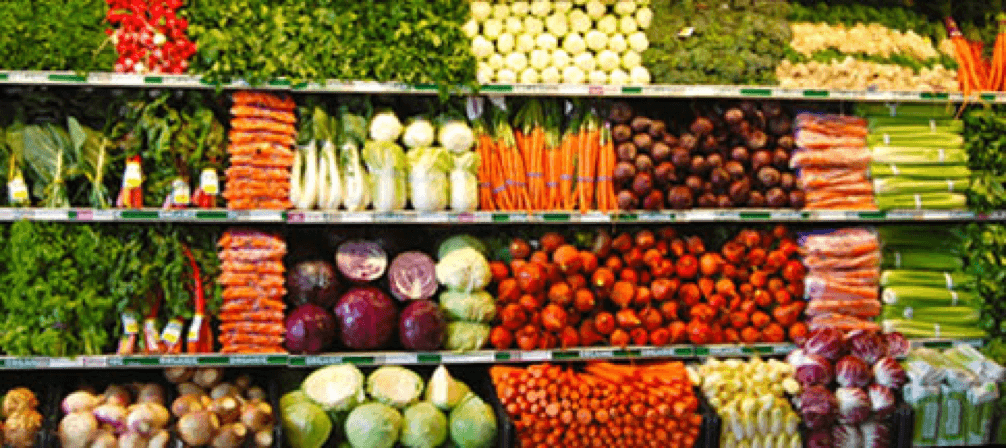
In turn, this system drives production and consumption of inexpensive, low-quality food based on a simplified diet. The lack of diversity of fruit and vegetables in the American diet has contributed to a national public health crisis that is concentrated among socioeconomically disadvantaged groups. Low agrobiodiversity also makes U.S. agriculture more vulnerable to pests, diseases and climate change.
Agrobiodiversity is a set of genetic resources in food and agriculture.
To connect these conditions to diversity, consider potatoes. Although the United States has 10 times more people than Peru, only about 150 varieties of potato are sold here. Six varieties account for three-quarters of our national potato harvest. They dominate because they produce high yields under optimal conditions and are easy to store, transport and process – especially into french fries and potato chips. Federal policies have helped these varieties become established by reducing the cost of irrigation.
Ironically, rich agrobiodiversity in many low- and medium-income nations supports more standardized and genetically uniform breeding industries in wealthy nations. U.S. and European scientists and seed companies have used the diversity of Andean potatoes and their relatives to create commercial varieties that are the roots of modern industrial agriculture.
How change can promote agrobiodiversity
To protect and increase agrobiodiversity, we have to know how to value it in a rapidly changing world. In the GeoSynthESES Lab that I lead at Penn State, we are developing an ambitious new framework to analyze whether and how agrobiodiversity can continue to be produced and consumed in the future.
Thanks to our fieldwork in Peru and other countries, we’re finding that certain global dynamics, such as urbanization and migration, can be compatible with agrobiodiversity production and consumption. For example, Elisa and Juliana live within a few miles of the Huánuco urban area, and they both work jobs in the city. Their “traditional” farming and eating patterns blend with their part-time farming.
Such changes can even support the innovative use of local food varieties, but only under the right conditions. Farmers must have sufficient land and water. They have to continue preferring these food flavors and tastes. Vibrant local markets for these foods make producing them economically viable.
Together with collaborators working in Huánuco, our lab is assessing ways in which global trends could undercut agrobiodiversity in Peru. One concern is local adoption of “improved varieties” of both potatoes and corn that are being created by national and international breeding programs and private seed companies.
Under favorable conditions, these types provide high yields and potentially good sales income. But the seeds can be expensive by local standards, and growing them requires more inputs, such as fungicides and irrigation. Farmers who use them are less resilient if it’s a bad growing year or if cash is low. For these reasons more than one-half of the potato and maize seed being grown by the Huánuco farmers still comes from local sources such as nearby markets, neighbors and family members.
So far, farmers in Huánuco and elsewhere in Peru prefer to growth both their traditional crops and new ones if possible. But discussions of new initiatives to extend the reach of such “improved varieties” reflect how these challenges will continue to evolve.
Shifting diets
We also are analyzing local impacts of the global spread of inexpensive, low-quality industrial foods. Juliana, Elisa and their Huánuco neighbors increasingly depend on staples such as rice and sugar and on heavy use of cooking oil. Many of them still grow high-agrobiodiversity crops, but on a smaller scale, and these crops play a shrinking role in their diets. It is important to counter this trend by revaluing these nutritious foods, both for human health and for the environmental benefits that agrobiodiversity brings.
On the positive side, middle-class Peruvians are embracing agrobiodiverse foods sold through markets and food fairs, such as the huge annual Mistura food festival in Lima. Internationally renowned elite restaurants and celebrity chefs are potentially important, nontraditional allies. It is crucial to find ways in which Elisa, Juliana and other producers of agrobiodiverse foods can earn rewards from these new markets.
There also is growing interest in agrobiodiversity in the United States. Potato farmers here in central Pennsylvania and across the Northeast are reviving more than 100 local varieties that until recently had been considered lost. In the Southwest, research groups recently uncovered evidence of the ancient “Four Corners Potato,” the first known wild potato in North America, which was used some 10,000 years ago. DNA from this species could provide genes to make modern potato strains more resistant to drought and disease.
Conflicting trends
Global shifts of urbanization, migration, markets and climate can potentially be compatible with agrobiodiversity, but other powerful forces are undermining it. The imperatives of producing food at lower cost and higher yield clash with efforts to raise high-quality food and protect the environment. The future of agrobiodiversity hangs in the balance.
Karl Zimmerer is a professor of geography at Pennsylvania State University.
We’ve already seen the first cellular medicines, human immune cells genetically reprogrammed to attack cancer cells. Now the first bacterial medicines — bacteria programmed to dispense therapeutics — are on the horizon. Although they represent an exciting opportunity, they raise questions about their use, their control, and their financing.
So far, three therapies based on engineered bacteria have made it to early clinical testing in humans. The results have been mixed. A mouthwash made from a protein secreted by recombinant Lactococcus bacteria successfully reduced inflammation of the inner lining of the mouth in patients undergoing chemotherapy for head and neck cancer. Bacteria programmed to make the anti-inflammatory cytokine IL-10 were orally administered to patients with Crohn’s disease, but the results were disappointing and the trial was terminated. A company called Synlogic is now testing bacteria engineered to reduce blood ammonia levels in patients with liver disorders.
…
Bacterial medicines hold immense potential to provide durable therapies for chronic diseases. They may well succeed where traditional pharmaceuticals have largely failed. But they may also require new economic models to fund their development. The standard pharma business model relies heavily on exclusivity. If for-profit drug developers are not confident that they will get paid by every user of bacterial medicines, they may never invest the effort needed to perfect them.
Scientists have moved a step closer to identifying how an obscure gene from rice can dramatically improve yields in some of the world’s most important staple crops, while at the same time conferring resistance to climate-related stresses such as drought.
…
Details of the discovery, which was made by a British-American team comprising researchers from the publicly-funded plant science institute Rothamsted Research and the company Syngenta, have been published in the journal Plant Physiology.
The scientists confirmed that the rice gene, when introduced into maize, altered the distribution of energy resources within the plant, with more sugars being diverted to seed production, thereby raising yield. The gene also protected yield against drought by preventing the loss of developing kernels earlier in the season during flowering.
The Rothamsted/Syngenta scientists used genetic engineering to introduce the rice gene, called TPP1, into maize plants.
…
Earlier work by some members of the team, published in 2015 in the journal Nature Biotechnology, reported field data at several sites and over multiple seasons, which showed that the engineered trait “improved yields from 9% to 49% under non-drought or mild drought conditions, and from 31% to 123% under more severe drought conditions, relative to yields from nontransgenic controls.”
Recent tests of car exhaust on monkeys have renewed the debate around animal testing. While researchers say eliminating animal testing is impossible, they agree there are alternatives that are less cruel.
…
Science has a tradition of testing on non-human animals like chimpanzees, rats, guinea pigs, and fruit flies to understand how life functions, and how chemicals alter any function in a positive (drugs) or negative (toxins) way. But many scientists from the UK, European Union and the United States are greatly altering their scientific practice due to their own commitment to animal welfare — or to pressure from the public.
For example, researchers have found that catching a rat by its tail is far more stressful than with cupped hands. So, more researchers are using cupped hands these days instead. Because in the end, animal welfare is not merely an abstract construct.
…
Now, the National Institute of Health is planning to retire lab chimps to a chimp sanctuary, and the National Toxicology Program has come up with a collaborative roadmap to promote the 3Rs in toxicology testing on animals wherever possible.
More than 20% of food sampled by the U.S. Department of Agriculture in 2016 show no detectable pesticides and less than 0.5% of food had pesticide residue levels above Environmental Protection Agency limits.
“Again this year, the (Pesticide Data Program) results shows that the U.S. food supply is one of the safest in the world,” according to “What consumers should know,” a breakdown of the USDA’s Agricultural Marketing Service 2016 Pesticide Data Program Annual Summary.
Fresh and processed fruit and vegetables accounted for 90.3% of the 10,365 samples collected by the program in 2016, according to the 200-page report. The USDA said 502 of samples (4.8%) were organic.
According to the report, more than 99.5% of the samples had pesticide residues well below levels established by the EPA and 22% had no detectable residue.
…
The USDA report is one source of residue data interpreted by the Environmental Working Group to create its annual Dirty Dozen/Clean 15 ranking of fruits and vegetables.
…
The results are reported to the Food and Drug Administration and EPA in monthly reports as testing takes place throughout the year, according to a news release.
FDA and EPA would be immediately notified if a test discovered residue levels that could pose a public safety risk.
…
Residues exceeding the tolerance were detected in 0.46%; of these 48 samples, 26 were domestic, 20 were imported, and 2 were of unknown origin.
Read full, original post: USDA: Pesticide residue levels show no risk to consumers
Out on an old Navy dry dock, a biotech company called Ginkgo Bioworks is growing genetically modified organisms by the billions, and it would very much like to tell you about them.
“I think people should love GMOs,” Gingko’s CEO and cofounder, Jason Kelly, told me. “We’re super proud of them.”
It helps the message, perhaps, that Ginkgo is not a big ag corporation shrouded in secrecy, but a small company founded by a band of exuberant nerds from MIT. Ginkgo reprograms single-celled organisms like yeast and bacteria into mini factories churning out useful molecules for food, perfumes, and industrial applications. For fun, its scientists also brew beer with their genetically modified yeast.
…
Kelly and many other biotech entrepreneurs I’ve spoken to take their lessons from the backlash to Monsanto. Monsanto’s mistake, in their telling, was focusing on genetic modifications that benefited farmers applying pesticides and herbicides but which seemed confusing to the average mom or dad at the grocery store. That made it easy for activists to tap into people’s fear of big corporations doing nefarious things. But what if you only made GMOs that were fun, cool, and socially conscious—like vegetarian burgers or cow-free leather or spider-silk ties?
Much of the excitement around gene editing is fueled by its potential to treat or prevent human diseases. There are thousands of genetic disorders that can be passed on from one generation to the next; many are serious and debilitating.
…
Genes are the biological templates the body uses to make the structural proteins and enzymes needed to build and maintain tissues and organs. They are made up of strands of genetic code, denoted by the letters G, C, T and A. Humans have about 20,000 genes bundled into 23 pairs of chromosomes all coiled up in the nucleus of nearly every cell in the body.
…
Most drugs are small molecules that can be ferried around the body in the bloodstream and delivered to organs and tissues on the way. The gene editing molecules are huge by comparison and have trouble getting into cells. But it can be done. One way is to pack the gene editing molecules into harmless viruses that infect particular types of cell.
Free-from labelled foods seem healthier, with GM-free and palm oil-free labels having the strongest effect, according to a study of almost 2000 French, Swedish, British and Polish individuals.
The researchers, from Switzerland’s ETH Zurich and the Brussels-based European Food Information Council, wanted to find out how various free-from labels – lactose-free, gluten-free, GM-free and palm oil-free – shape perceptions of foods.
They found that products bearing a free-from label were considered healthier than products without such a label, with the strongest effects occurring for labels indicating that products were free of GMOs and free of palm oil.
However, the more nutritionally informed an individual was, the smaller the ‘health halo’ effect was.
…
Not all nationalities had the same free-from perceptions. Both Polish and French participants saw GMO-free GM products as healthier compared with Swedish and British respondents….
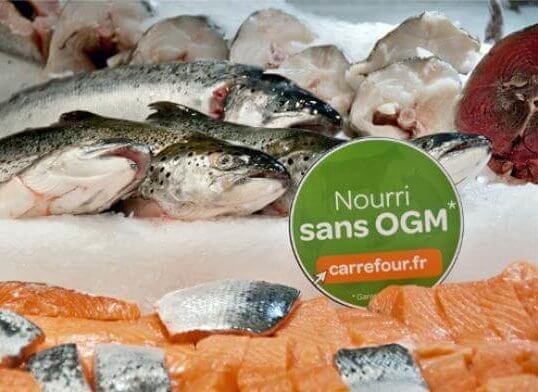
Perhaps unsurprisingly, French respondents were most receptive to palm-oil free and GM-free claims. The GM researchers suggested this may be due to French government policy. “Public debate and negative media coverage [in France] as well as the contemplated tax ban on palm oil and restrictive regulation of GMO in food and GM crops could be drivers of the negative image these ingredients have in the French consumer sample,” they wrote.
[Editor’s note: Read the full study (behind paywall)]
When researchers made the astonishing suggestion last year that early humans settled the Americas 100,000 years earlier than thought, they asked doubters to keep an open mind and consider the evidence backing their claim. But their study, which proposed that mastodon bones from California were broken by an as-yet-unidentified group of early humans 130,000 years ago, was instantly questioned by archaeologists. Most researchers agree that humans settled the Americas around 15,000 years ago.
Nearly a year later, the skeptics are still not convinced. In a rebuttal to the work, published on 7 February in Nature, archaeologists say that modern construction equipment better explains the mastodon bone damage than does the handiwork of ancient hominins. They present an analysis of mammoth bones from Texas that, they say, have similar-looking damage, which was caused by natural wear and tear and heavy equipment.
…
David Meltzer, an archaeologist at Southern Methodist University in Dallas, Texas, who co-wrote an earlier critique of the 2017 study, is glad to see other groups questioning the strength of the evidence. Meltzer says that he is open to the idea that humans reached the Americas more than 100,000 years before he thought — just not on the basis of such equivocal data.
“Given everything we know, it makes no sense,” he says.
Nufarm is turning its attention to Asian markets after Australian regulators approved its genetically modified omega-3 canola for human consumption and use in animal feed.
The Australian Office of Gene Technology Regulator announced [Feb. 13] that Nuseed’s omega-3 canola had been approved for cultivation and use in animal feed.
The approvals clear the way for Nufarm to begin the regulatory process in China and other markets….
…
It is hailed as the world’s first plant-based source of long-chain omega-3 fatty acids, important to human and fish health.
Nufarm general manager of innovation and strategy Andy Thomas said the proprietary product could relieve pressure on wild fish stocks which are used as a source of omega-3.
Modelling shows one hectare of omega-3 canola has the potential to provide the omega-3 yield from 10,000 kilograms of wild caught fish.
Nufarm is focusing commercialisation of the product on the United States where it has received approval for a significant step up in production trials under the USDA notification scheme.
…
The USDA has approved a significantly larger pre-commercial crop to be grown in Montana this year.
Mr Thomas said Nufarm was on track to begin commercial scale production in the US next year.
Myth 1: Organic Food Is Safer Because It Doesn’t Touch Pesticides
“The levels we are exposed to are far, far less than levels that would be expected to cause any harm to our population. So reducing our exposure a little bit more — in this case by purchasing organic food — really isn’t going to cause any appreciable health benefit to us as consumers,” [said Carl Winter, food toxicologist at the University of California, Davis].
…
Myth 2: Organic Food Is Healthier
After analyzing 240 studies about the nutritional value of organic food, the authors of a 2012 review study published in the Annals of Internal Medicine concluded that they “[lack] strong evidence that organic foods are significantly more nutritious than conventional foods.”
…
Myth 3: GMOs Are Dangerous to Eat
[A]s of right now, there is no trustworthy evidence that any GMO-derived food poses health risks to humans. If anything, genetic modifications make crops safer for agricultural workers (genetic tweaks make crops more resistant to damage from insects and viral infections, so plants need fewer pesticides) and even make them more nutritious, bringing a healthful variety to more people worldwide.
…
Myth 4: GMOs Are Bad for the Environment
Scientists are still not completely sure if GMOs are better for the environment than other types of crops. But they at least demand fewer resources than organic crops.
In a landmark development, scientists have been able to replicate the process where egg cells mature in the ovaries outside of the body. Using strips of ovarian tissue removed in a biopsy, it represents an advance on IVF (in vitro fertilisation), where a mature egg is fused with a sperm in the lab and the fertilised embryo is implanted. Under the new process, in vitro maturation (IVM), the maturation of eggs takes place in the lab, raising the prospect of new hope for women who lose their fertility.
The study’s senior author, Professor Evelyn Telfer of the MRC Centre for Reproductive Health at the University of Edinburgh, told The Independent: “If we can show these eggs are normal and can form embryos, then there are many applications for future treatments.”
…
Young girls, in particular, have very few options for preserving their fertility before chemotherapy or radiotherapy. Currently the ovarian tissue is stored in the hope that this could be transplanted back when they’re in remission to restore some fertility.
…
While the eggs in the study are at the final stage of maturation, it is not known whether they could form a healthy embryo. Prof Telfer said they have a significant ethical and regulatory process ahead before they can attempt fertilisation.
It’s right there in the fine print of any consumer DNA test, if you bother to read it: DNA testing can come with identity-disrupting surprises, be it an unexpected relative, genetic condition, or, in our case, heritage. But something about [the genetic test results] didn’t feel quite right.
…
I suspected the error might lay not in my family narrative, but in the DNA test itself. So I decided to conduct an experiment. I mailed my own spit samples to AncestryDNA, as well as to 23andMe and National Geographic. For each test I got back, the story of my genetic heritage was different—in some cases, wildly so.
…
Four tests, four very different answers about where my DNA comes from—including some results that contradicted family history I felt confident was fact. What gives?
…
A big problem is that many of us have a basic misunderstanding of what exactly we’re reading when Ancestry or 23andMe or National Geographic sends us colorful infographics about how British or Irish or Scandinavian we are. It’s not that the science is bad. It’s that it’s inherently imperfect, an estimation based on how much our DNA matches up with people in other places around the world, in a world where people have been mixing and matching and getting it on since the beginning of human history.
Editor’s note: This is the final installment in a four-part series examining genetic engineering’s impact on our lives. The first explored the potential for CRISPR and gene editing to change the food we eat. The second examined regulatory obstacles blunting the potential of genetically engineered animals. The third looked at the role of gene editing in medicine. Photo by Orin Langelle / photolangelle.org
Genetic engineering began modestly in 1972 with the direct transfer of DNA from one organism to another. The first GMO crop was produced in 1983 when an antibiotic-resistant gene was inserted into a tobacco plant. GE has come a long way since and it is now commonly used to design many of our crops, medicine and even the clothes we wear. There is even a fast-growing genetically engineered salmon now being sold in Canada.
In the near future, these GE innovations may appear to be pulled from the realm of science fiction, as researchers look for ways to make crops resist diseases, fortify their nutritional content and adapt to climate change. It will be used to create drugs that can extend life expectancy and develop new types of materials for clothing, biofuels and plastics.
One of the most recent promising GE developments involves trees, many of which are threatened by diseases, pests and climate change. Researchers in Brazil, for example, have developed a eucalyptus tree that grows 40 percent faster and can be used for paper, fuel pellets for power stations and to potentially power cars. In the US, the Department of Agriculture is moving towards approving the commercialization of a freeze-tolerant eucalyptus tree.
Scientists have developed blight-resistant chestnut trees, and are anticipating approval. Pest-resistant poplar trees have been commercialized in China and in the UK, research is being conducted to develop a disease-resistant ash tree.
ArborGen, a US company that specializes in GE trees, has developed a pine tree engineered for greater wood density. Scientists are also working on engineering trees with fibers that are easier to break down to reduce the amount of chemicals and energy needed to produce paper.
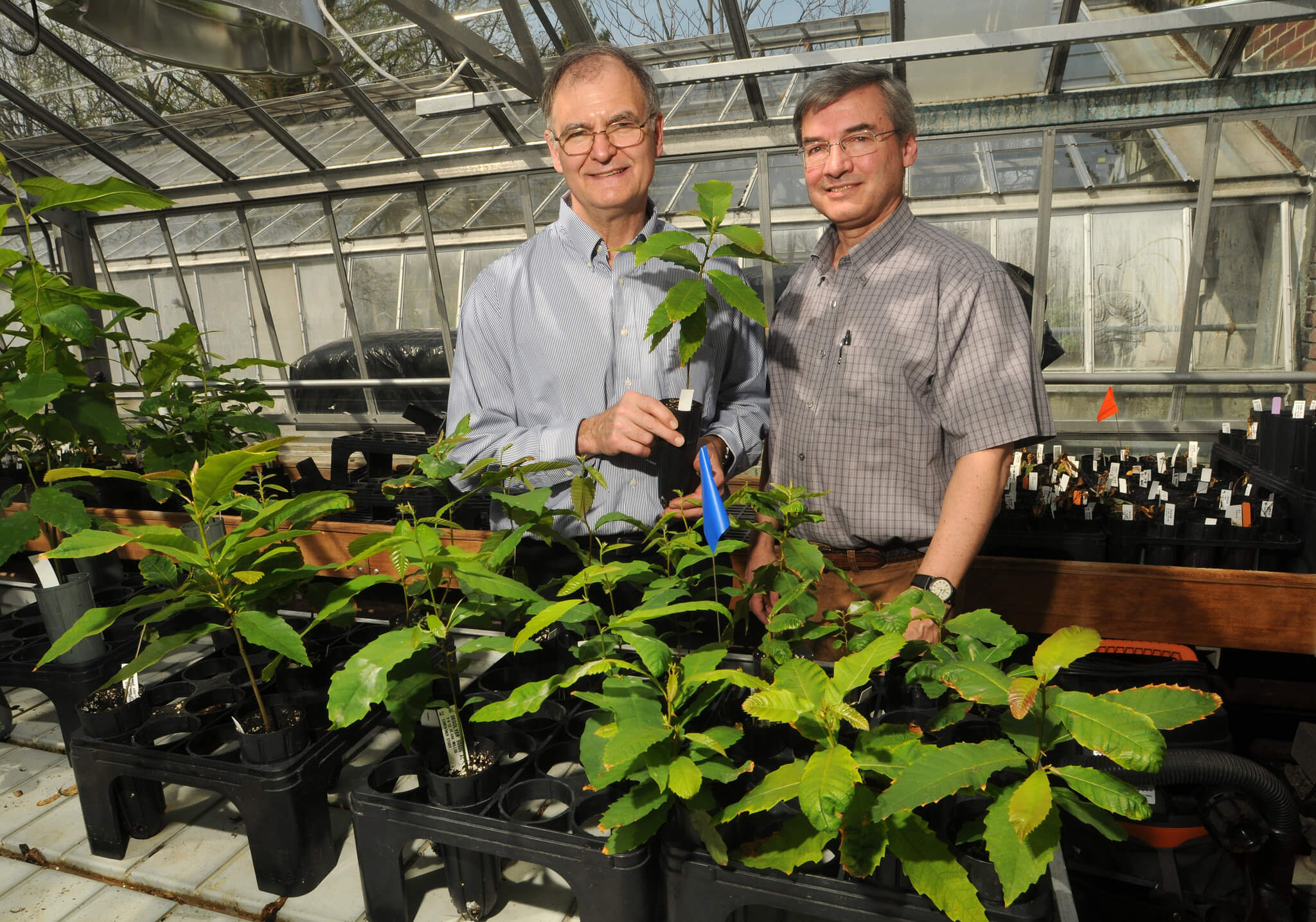
Researchers Charles Maynard, at left, and William Powelll, from the SUNY College of Environmental Science and Forestry, developed a GE American chestnut.
Flowers are a new frontier for genetic engineering, although most are still in the development stage. Blue roses and blue chrysanthemums have been created. Scientists in Japan have changed the color of the Japanese morning glory plant to violet from white. A team of researchers at the University of Florida have discovered some of the genes that control the chemicals responsible for creating a flower’s scent, opening the way for manipulating those genes to produce desired fragrances. Scientists in Spain have created plants that do not spread allergens. The Australian company Bioconst is working to create glow-in the dark flowers using fluorescent genes isolated from jellyfish.
We’ve already seen GMO orange petunias on the market, though these accidental creations (available for 20 years) were discovered, pulled from the shelves and destroyed last spring in a fit of regulatory hysteria. The first commercially grown GM flower may end up being a version of baby’s breath — used in bridal bouquets — developed by researchers in Kenya.
There’s also the potential for a GMO grass developed by Scotts Miracle-Gro. The grass requires less fertilizer then regular grass, grows at half the speed and is resistant to glyphosate. It was approved in January 2017 by the USDA, which said it had no jurisdiction to regulate it. Still, there are no current plans to sell it for a host of reasons, including potential liability from glyphosate drift.
How will synthetic biology impact GE innovation?
One of the most exciting new fields of genetic engineering, still in its early stages, is synthetic biology. Examples of synthetic biology involve the engineering of yeast, algae and bacteria for a variety of purposes. Ginkgo BioWorks, for example, is engineering yeast to produce chemicals for the flavor, fragrance and food industries. The company has created microbes that are the basis for perfumes, cosmetics, organic pesticides and sweeteners for corporate clients. One product in development is a yeast that produces a rose scent used by the French fragrance company Robertet. Producing the scent via genetic engineering is cheaper and less time consuming than the traditional method, which involves squeezing oils from flower petals.
Algae is considered the new frontier of synthetic biology because it can be used as the basis for making so many things. As Popular Science noted:
With genetic engineering, scientists can develop algae that grow faster and ward off deadly bacteria. They can create algae that produce more oil — which can then be turned into biofuels or biodegradable plastics. Or, they can engineer algae to be more nutritious, whether consumed by livestock or people.
Cargill has teamed up with Evolva to create a synthetic biological form of stevia via a process that involves GE yeast. It will be marketed this year. Stevia is currently derived from a plant and is used as a sweetener. The Dutch chemical company DSM also is working on a synthetic biological form of stevia and Evolva has created a synthetic vanilla. Next Natural Foods is working on developing a chocolate.
Genomatica has engineered bacteria to help convert garbage into plastics. A team of scientists in Norway and Romania have developed yeast that has the potential to clean up heavy-metal pollution. Genetic engineered bacteria could be used to clean up oil spills. Green Biologics is engineering bacteria to produce chemicals such as butanol that are used in paints, adhesives, cleaners and flavors. Lygos has engineered sugar into specialty chemicals that are used in manufacturing.
Synthetic biology can be used to manufacture new types of fabrics that can be used to make clothing. Bolt Threads, a California based company, has produced spider silk neckties made through a yeast fermentation process that produces silk proteins, which then is used to create fibers.
Modern Meadow, based in New Jersey, is working on a non-animal based leather produced via a process that involves engineering yeast to make a protein identical to bovine collagen, which is the main protein in cattle. The first product the company will make is a T-shirt.
Anti-GE backlash
Many of the novel ways in which genetic engineering will be used is meeting strong resistance from those opposed to the technology no matter its use. There is, for instance, strong opposition to genetically engineering trees from dozens of activist groups, including the Dogwood Alliance, Food Democracy Now, Popular Resistance and the Campaign to Stop GE Trees, which makes these claims on its website:
GE trees pose a huge risk of contaminating forests, damaging ecosystems and harming communities…People living near the GE plantations face health risks from the altered tree pollen and the toxic agrochemicals used on the plantations (pesticides, herbicides, fertilizers)…There is no way to accurately assess all the risks posed by trees that live so long and have such intricate interactions with so many species, including humans.
Nothing in that statement is scientifically accurate.
Each GE product is assessed on its own merits. The revived American chestnut has been evaluated by various independent government agencies for a range of potential ecological hazards, including every one of those raised by the ‘Campaign,’ and rejected. The scare effort is anti-science at its worst. There is particular antipathy in the anti-GMO community toward synthetic biology since, unlike GMOs, it remains loosely regulated. The activist site Econexus writes:
The behavior of synthetic biological systems is inherently uncertain and unpredictable, yet the precautionary principle is not guiding research and development of synthetic organisms.
Friends of the Earth attacked the creation of a vanilla substitute developed via synthetic biology, calling it “an extreme form of genetic engineering.” Its food and technology campaigner urges the kind of strangulating regulations that have blocked GMOs—absolute guarantees of safety, which is not possible for any technology:
Claims of sustainability for this technology are questionable at best. We need regulations specific to these new technologies. We need safety assessments that can guarantee the absence of long-term health and ecological impacts.
GE blue rose.
The Non-GMO Project updated its standards to specify that ingredients derived from synthetic biology are included in the definition of genetically engineered organisms and are therefore prohibited substances.
There is no scientific rationale provided for this decision. Instead it appears to be driven by a desire to demonize all forms of genetic engineering in food because they do not fit into the box that the Non-GMO Project considers to be natural.
Synthetic biology is an experimental form of artificial gene manipulation, and as such carries many of the same consumer concerns as genetic engineering…because of this, our Standard treats synthetically modified organisms (SMOs) just as rigorously as GMOs.
Once again, anti-GMO forces are using scare tactics to try to derail a technological advance already providing great benefits for humankind because it does not fit into their ideological world view. The reality is that we are in the early stages of a genetic engineering revolution that will profoundly impact the way we grow trees and flowers and the way we make plastics, biofuels, chemicals and flavors. We should welcome this scientific revolution and not be afraid of it.
Steven E. Cerier is a freelance international economist and a frequent contributor to the Genetic Literacy Project.
Does electromagnetic radiation from cell phones pose a public health risk? To some people, the question seems paranoid. To others, convinced that their devices are proven hazards, the question seems dangerously naïve. And therein lies a vexing challenge for science journalists: How do you cover an issue when the stakes for human health seem so high, scientific questions still linger, and passions run so deep?
At issue here is the low-energy radiation emitted by cell phones and other personal electronics. These kinds of electromagnetic fields don’t directly damage bonds in DNA, and the Federal Communications Commission, the Food and Drug Administration, and other government agencies generally consider them safe at the levels associated with cell phones. “The majority of studies published have failed to show an association between exposure to radiofrequency from a cell phone and health problems,” the FDA states unequivocally on its website.
It’s true, of course, that some individual studies have suggested potential links between this sort of radiation and a range of health problems. And in the next few weeks, the U.S. National Toxicology Program, part of the National Institute of Environmental Health Sciences, is expected to release the final results of a $25 million study of the effects of cell phone radiofrequency radiation on rats. Preliminary results from the study, released in May of 2016, suggested a link between cell phone radiation and tumor formation.
At the same time, it’s possible to find data suggesting low-level risks from many things, ranging from fluoride to vaccines, even though there is little aggregate evidence of a public health crisis. And it’s worth noting that the NTP study also inspired skepticism from some scientists.
Still, as more people — and more and more children — spend time with cell phones, the murky margins of scientific evidence and lingering uncertainty are very likely to stir more concern and debate. And for reporters who step into this conversation and raise advocates’ ire, the backlash can be swift and robust. That response was on display last month, after the California Department of Public Health released new guidelines for “individuals and families who want to decrease their exposure to the radio frequency energy emitted from cell phones.”
In response, the magazine Popular Science ran a story under the headline “There’s no evidence that cell phones pose a public health risk, no matter what California says.” In the piece, Popular Science reporter Sara Chodosh gave a rundown of why it’s so difficult to study the safety of phones, concluding: “There’s no evidence that cell phones are dangerous to your health. Period.” She also accused the State of California of fear-mongering about phone safety, and ended her piece by telling readers, “Heck, you could duct-tape [your phone] to your face if you so choose.”
Shortly afterward, in a brief segment on the public radio show Science Friday, host Ira Flatow and his guest, Popular Science senior editor Sophie Bushwick, built on Chodosh’s story. “There’s no strong evidence to suggest that these devices aren’t safe,” said Flatow. “It’s creating a lot of fear around an issue that we’re not sure people actually need to be afraid of,” Bushwick explained on air.
Within days, activists began writing to Science Friday, accusing the show of spreading misinformation, endangering public health, and dramatically misrepresenting the science. The activists connected through email lists, and many of the irate messages seemed to follow a pre-written template. (One email writer in Maryland, for example, after receiving a query from Undark, admitted that she had not actually listened to the Science Friday show.)
But the email messages — dozens of which were copied to staff at Undark — also included personalized, furious commentary on Flatow and Bushwick’s conversation. “I will not mince words. Your radio program about cell phones and the [California Department of Public Health] document was appalling,” began a message from Ellie Marks, a longtime advocate for safety warnings on cell phones and the founder and director of the California Brain Tumor Association. When I called up Marks, who became interested in this issue after her husband was diagnosed with brain cancer in 2008, she took particular issue with the tone of the coverage. “There’s an extensive amount of science on this. And Popular Science and [Science Friday] ignored that — to the point of sarcasm,” Marks said. “Saying that it’s okay to duct tape your phone to your face? I mean, even if you look at the user manual, they all tell you that you should not put a phone to your body!”
During our conversation, Marks suggested — without offering evidence — that both national cancer statistics and the Popular Science article could have been influenced by industry pressure. “We feel that they use people — they have certain people that they use to get their message out,” she said.
The Environmental Health Trust, a Wyoming-based nonprofit, has criticized the Science Friday segment and called on Popular Science to retract its original piece, offering a point-by-point challenge to large sections of the article. “This is a classic example, if you get a naïve reporter who doesn’t know much about the issue, and you give them the information that comes straight from the industry propaganda,” said Devra Davis, an epidemiologist and the founder of EHT, in an interview with Undark.
Davis, who has written books about tobacco and cell phone safety, described the Popular Science article as “a remarkable piece of disinformation,” and expressed disappointment that Science Friday had picked it up. “That was really a tragedy, as far as I’m concerned, and really irresponsible on their part,” Davis said.
It’s certainly true that Davis and other advocates can point to numerous peer reviewed studies suggesting a possible link between non-ionizing radiation — of the kind emitted by cell phones and other personal electronics — and a host of health conditions, including miscarriage, glioma, neurological problems, and male infertility.
And it’s not necessarily the case, as the Popular Science article and other coverage sometimes suggests, that because these sorts of non-ionizing radiation cannot break the bonds in DNA, they cannot have an impact at the cellular level. “We know they interact with biological tissue. Period,” said Jerry Phillips, a biochemist at the University of Colorado-Colorado Springs who has published extensively on the effects of such radiation on cells. “We don’t know what the nature of that interaction is, number one. And number two is, we still don’t have an idea of what the active component is, or components are, because we don’t have a clue as to what constitutes a dose.”
For Davis, this kind of uncertainty is worrying. “We are currently in the middle of the largest experiment in human history, for which people have never given consent,” she said.
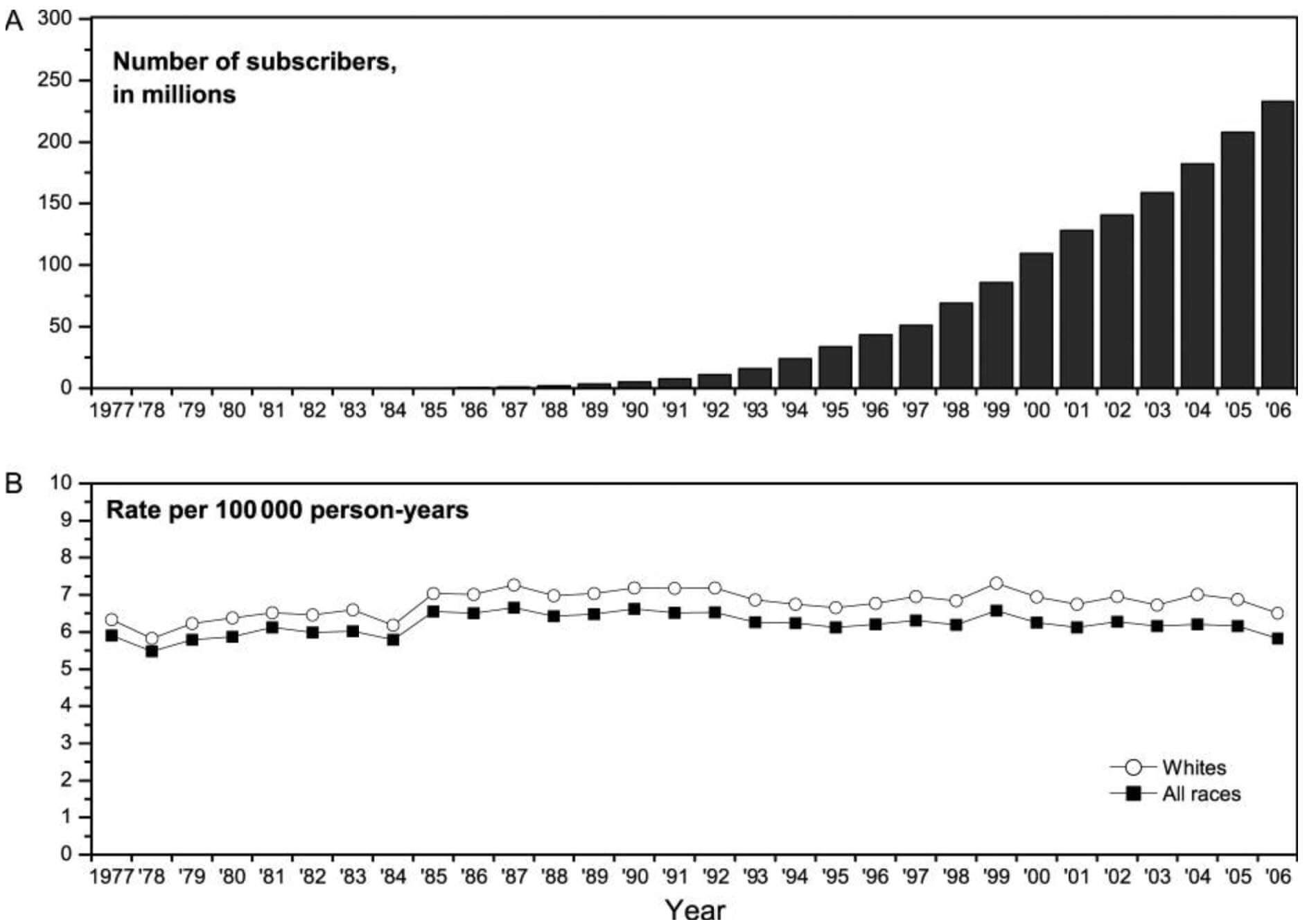
Not everyone is convinced, though, that these findings add up to anything remotely like a full-blown public health emergency. Much of the most-cited research in this field has been performed on rats or tissue cultures, not human beings. Large epidemiological studies can suggest correlations, but they struggle to establish clear lines of causation. And perhaps most tellingly, nearly two decades after the widespread introduction of cell phones in industrialized countries, brain cancer rates have not spiked.
From a 2010 study in the journal Neuro-Oncology. The top chart shows cell phone subscribers in the U.S. The bottom shows age-adjusted incidence of brain cancer.
“There’s nothing much happening with brain cancer. It’s just flat. The same rates per 100,000 people are getting brain cancer today as they were before cell phones,” said Simon Chapman, an emeritus professor at the University of Sydney School of Public Health and the lead author of a 2016 study of the relationship between cell phone adoption and brain cancer rates in Australia. “I’m not seeing any major international or national cancer bodies who can gather together the best evidence, the best experts, and publish consensus statements saying that this is something the public should be worried about,” Chapman told Undark.
“The only groups waving the red flag and saying ‘stop’ are fringe groups, people like Devra Davis and her group of cohorts,” he added. For her part, Davis simply counters that brain tumors take a long time to develop — and there is evidence that glioma rates are, in fact, beginning to rise.
Science Friday’s Flatow did not respond to multiple requests for comment, though in an email to one of his many agitated email correspondents, which was forwarded to Undark, the host indicated that upon release of the looming National Toxicology Program report, Science Friday plans to “revisit the issue in depth, as we have done in the past.” In a phone interview, Rachel Feltman, the science editor at Popular Science, stood by the magazine’s story. “All the reputable health agencies have looked at the available studies and the available evidence and concluded that cellphones almost certainly are not a health risk,” Feltman said.
“I think we make it very clear in our piece that, yes, there are individual studies that can be interpreted that way,” she added. “But when you look at the body of evidence as a whole, the scientific consensus is clear.”
In some ways, the disagreement here seems to hinge on how different stakeholders understand the word “evidence,” and how much of it they believe is necessary to present an actual risk. Does “evidence” simply mean that there is some reputable research out there that points, however tentatively, to a possible effect or impact — and if so, is that by itself something to fret over? Or does “evidence” mean, as Feltman suggests, that a clear scientific consensus has coalesced around one particular conclusion or another?
These aren’t, of course, strictly scientific questions. They’re moral and political — and even emotional and psychological ones, too. And all of that cuts to the heart of a quandary facing science journalists everywhere: On questions of scientific uncertainty and health, what does the public need to know? Should the press, in covering cell phone safety, give equal weight to every incremental study suggesting some possible health risk — or provide a platform for worried advocates each time such a study turns up in the scientific literature? Such a world would be a paralyzing and fearful place. And of course, some preliminary scientific concerns do prove overblown in the fullness of time.
At the same time, it’s sobering to think of a world where the public is simply assured that everything is definitely okay — at least until a consensus forms and enough scientists get together and tell them that it’s not. Science is littered with examples of toxins and pollutants that were long thought to be safe, or at least not demonstrably dangerous — tobacco, lead paint, or even the radium-laced products for which this very publication is named — only to be revealed later as hazardous.
So are studies that suggest a possible risk from the low-energy radiation emanating from cell phones and other tools of modern life something to worry about — particularly against the backdrop of far more numerous studies that, at least to date, have found no real cause for concern? Probably not — until they are. And it’s that sort of fuzziness — always just shy of absolute certainty — that makes reporting on the issue so dicey.
“If a single study shows a result of something, that’s not quite the same as saying there’s evidence that that thing is true,” PopSci’s Feltman said. “It means one study suggested that there might be evidence that that thing was true.”
That’s exactly right. But it’s also cold comfort for folks like Ellie Marks, who are unshakably convinced that technology makers — and the press — are ignoring too many of those single studies.
“No one is saying give up your cell phone,” Marks said. “We want people to make informed decisions for themselves and their families about something that even children are using.”
Michael Schulson is an American freelance writer covering science, religion, technology, and ethics. His work has been published by Pacific Standard magazine, Aeon, New York magazine, and The Washington Post, among other outlets, and he writes the Matters of Fact and Tracker columns for Undark.
Alison Campbell, writing on BioBlog, has been alerted to–and challenged–an article purporting to tell consumers how to distinguish between GM and “regular” tomatoes.
An article headed “We’re Eating A Poison! Here’s How To Identify GMO Tomatoes In Two Simple Steps!” was published at babiesdailynews.com in 2016. This year variations of the article have been reproduced HERE and – the version at Foodatory drawn to Campbell’s attention – HERE.
Campbell, Associate Dean (Teaching & Learning)and Senior Lecturer (Biological Sciences) at Waikato University, thunders the claim is wrong, wrong, wrong.
There aren’t any genetically-engineered tomatoes on the market, she points out.
…
Campbell then notes that the tomatoes we grow (or buy) and eat are themselves the result of centuries of modification by conventional selective breeding – and also techniques such as mutagenesis, which are not exactly “natural”.
…
Then there’s the misleading image (above).
They’d obviously like us to think that one – perhaps the lushly rich red one to the left? – is natural/organic, and the other, a GMO. Especially when they ask, “can you tell the difference between a regular tomato and a genetically modified one?” But, as we know, all commercially-available tomatoes are produced by conventional means.




 But there also are bright spots, such as Andean potatoes. In a