


Food & Ag Features

Are GMO critics more open to gene editing that targets plant and human diseases?
The early generations of transgenic plants focused primarily on increasing productivity, either by reducing pest damage or increasing yields by ...

13 nations say it’s time to end ‘political posturing’ and embrace crop gene editing
Agricultural scientists have been excited about gene editing since it debuted several years ago. The technology dramatically cuts the time ...

Absolut failure: Kansas farm family takes stand against fear-based non-GMO vodka marketing
I don’t throw the word hero around very often, but in this case the cape fits. Out on the vast ...
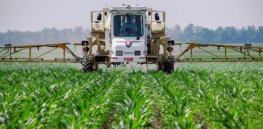
Viewpoint: Why a jury verdict against Monsanto doesn’t change anything regarding the safety of Roundup herbicide
The common weed killer Roundup (glyphosate) is back in the news after a US court ruled it contributed to a man’s terminal cancer (non-Hodgkin ...

Ugandan researchers hit the road to battle anti-GMO propaganda
As Uganda continues to grapple with its biotech future, scientists have launched an initiative to help local farmers better understand ...

Climate change and rice: How some of the world’s poorest nations may suffer
Much of the world relies on rice. What happens when climate change threatens rice nutrition? ...

Viewpoint: Why we have to fight for what biotechnology can offer us
“Tea. Earl Grey. Hot.” That’s how fictional star ship captain Jean-Luc Picard from Star Trek orders his tea, 300 years ...

Countering the impact of climate change through new breeding techniques
It is imperative that we breed new varieties of plants to make agriculture more sustainable, given increasing food demand and ...

With GMO soybean market booming, is there a future for conventional varieties?
Almost all the world's soybean grown today is GMO, which it is very difficult to find non-GMO soybeans. Begging the ...

Jumping genes: How Barbara McClintock won a Nobel Prize by crossbreeding corn
Through meticulous crossbreeding, she showed that DNA is far more complicated than scientists originally thought ...
Viewpoint: Chemophobia epidemic—Fanning fears about trace chemicals obscures real risks and ‘damages public health’
When is a chemical dangerous? This is not a question we consciously ask ourselves much, but in fact, we interrogate ...

Using gene editing to control forest fires? It could be a reality if anti-biotechnology activists don’t block it
The American west has experienced devastating wildfires in recent years; while the number of fires has decreased a little over ...

Boosting crop yields by using genetic engineering to help plants discard natural toxins
Can you imagine the entire population of the United States, Canada, Mexico, Brazil, the United Kingdom and France going hungry? ...
Mother Nature? More like ‘Mad Scientist Mama’—creator of chemicals good and bad for humans
Nature is not some sort of cosmic mother figure. On the contrary, nature is composed of diverse biological and physical ...

After successful demonization campaign against herbicide glyphosate, anti-GMO activists and environmental groups take aim at atrazine
In July, the US Environmental Protection Agency issued an extensive report that reviewed decades of science and declared that a ...

Viewpoint: It’s time to replace our fear-based genetic engineering regulations
In the early 1970s a group of scientists -- none involved in agriculture or food -- raised concerns about the ...

Costs and benefits need to be assessed in weighing bans on glyphosate and neonicotinoids
The continuing debates over whether the herbicide glyphosate or the insecticide class of neonicotinoids (neonics) could—or should—remain available for farmers ...

Viewpoint: How anti-GMO activist-journalist Carey Gillam primes the glyphosate litigation pump
The Guardian published an article by Sam Levin and Carey Gillam [on October 7] about the “new era of cancer lawsuits ...
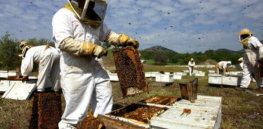
‘Gold standard’ assessing neonicotinoids: Field bee hive studies find pesticides not major source of health issues
Some lab studies but almost no field ones suggest neonicotinoid pesticides are harming bee health. Why is there such a ...

Viewpoint: Link between bee death and glyphosate still a ‘far-fetched’ story
Glyphosate is a herbicide, in other words, it is toxic to plants. Its target enzyme is not found in insects ...

Why Ugandan banana breeders say it’s critical to add genetic engineering to their toolbox
Ugandan researchers have been successful at developing robust hybrid bananas through conventional breeding techniques. Yet they see a strong need ...

Viewpoint: Activists promotion of ‘fog of misinformation’ about GMOs challenges science communicators
Activists spend all day peddling nonsense. If they spent that kind of time on constructive issues…sigh. [A] local radio station ...

Viewpoint: Frankenstein’s legacy is a ‘distrust of science’—and GMOs
The novel ushered in a concept that actively harms the Global South two centuries later ...

Canada’s suspect move to phase out neonicotinoids to ‘protect bees’ sets stage for US regulatory battle
Canada’s PMRA—its environmental regulatory agency, part of HealthCanada—rolled out for public comment its tentative decision to phase out almost all ...

Who should we thank for all those wonderful fruits and vegetables? ‘Not Mother Nature’
Half of the vegetables grown in the United States are from California. “California is famous for three things: “Hollywood, Silicon ...

Sustainability advantage: ‘High-yield’ intensive agriculture outpaces organic farming, large study shows
Opposition to “high-yield” agriculture has taken many forms: Accusations of corporate takeover of the idealized family farm; preference for organic ...
Trust issues: Scientific credibility suffers when industries sponsor research
Industry plays a central role in scientific research and development. But research shows that when companies fund science, credibility suffers ...
