


Daily Food & Ag Digest

EPA backs Bayer appeal in glyphosate-cancer case, arguing juries shouldn’t override expert scientific judgments
The U.S. Environmental Protection Agency is backing the Monsanto Co.’s claim that federal law should have pre-empted a lawsuit alleging ...

Philippines earns an extra $972.6 million over 16 years of growing GM crops
Renowned economist Graham Brookes presented the global economic and environmental impacts of biotech crops from 1996 to 2018 for Thai ...

From disease-resistant bananas to biofortified potatoes, gene editing could make our food more plentiful and nutritious
Molecular biologists at multiple CGIAR [Consortium of International Agricultural Research] centers shared information about gene editing work underway at the ...

EPA re-registers drift-prone dicamba weedkiller, relieving some farmers and frustrating others who fear crop damage
Farmers can continue to use dicamba for five years, EPA Administrator Andrew Wheeler said [October 27], offering certainty to cotton ...

GM insect-resistant Bt cowpea could add $638 million to Nigeria’s economy over 6 years
The Open Forum on Agricultural Biotechnology (OFAB), a biotechnology informative platform, says Nigeria could rake in 638 million dollars in ...

Why are food allergies on the rise, and what can we do about it?
More of the population has food allergies than ever before – and around the world, they are sending more and ...

GMOs unnatural? So are strawberries, Brussels sprouts and many other popular foods
By definition, a genetically modified organism is an organism produced through the production of heritable improvements in plants or animals ...

Epigenetic breeding could yield enhanced crops—and end run public’s fear of ‘GMOs’
Novel grafted plants — consisting of rootstock epigenetically modified to “believe” it has been under stress — joined to an ...

Bayer urges court to overturn $20M glyphosate-cancer verdict, objecting to ‘unreliable expert testimony’
Roundup manufacturer Monsanto urged three Ninth Circuit judges on [Ocotber 23] to overturn a jury’s verdict finding the weed killer ...

‘Science diplomacy’: What the Cold War can teach Africa about battling hunger with GM crops
It can be said the main problems facing the world are international in nature. No country can stand up today ...

How do you make ice cream without animals? Train fungi to ‘act like cows’
The food company Perfect Day has found a way to replicate whey—a milk protein that’s partially responsible for dairy’s creamy ...

Engineering soil bacteria could help develop enhanced, ‘non-GMO’ crops for Europe
Plant breeding – a method of selecting plants from a group that have the desired properties – is central to ...
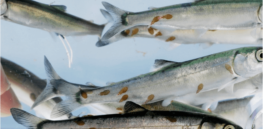
CRISPR could help protect Atlantic salmon from sea lice, reducing need for harsh chemical treatments
Researchers at Norwegian institute Nofima are investigating whether gene editing could provide an answer to the problem of sea lice ...

5 steps African governments should take to keep food systems intact when the next pandemic hits
COVID-19 has hit world economies hard, and the agricultural sector is no exception. Restrictions imposed to prevent the spread of ...

Glyphosate on trial: California Supreme Court rejects request from Bayer to review first Roundup-cancer verdict
Bayer AG’s Monsanto Co. lost a bid for the California Supreme Court to review the first multimillion-dollar jury award to ...
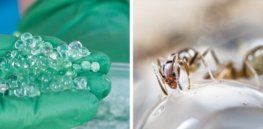
Replacing pesticides: Expected chlorpyrifos ban spurs development of more sustainable insecticides
A broad-spectrum insecticide that kills all arthropods in its path, chlorpyrifos was used for decades throughout the US .... But ...

GM Impossible Burger hits 200 grocery stories in Asia, as effort to ‘replace’ meat moves forward
[Impossible Foods'] flagship imitation beef product went on sale in 200 supermarkets across Hong Kong and Singapore on Tuesday. Impossible's ...

Video: GM insect-resistant cotton boosted India’s crop yields 29% and farmer incomes $24.31 billion
Insect-resistant (IR) cotton has impacted the lives of Indian farmers since it was introduced in 2002. This is according to ...

Drought, cropland expansion push Great Plains toward ‘Dust Bowl 2.0,’ climate scientists say
Earlier [in October], a storm front swept across the Great Plains of the United States, plowing up a wall of ...

Plant-based burgers….now milk? Impossible Foods aims to make realistic dairy alternative without cows
.... Impossible Foods, makers of the Impossible Burger and other plant-based meat alternatives, are working on another food replacement that ...

Cowspiracy? GMO OMG? Beware of misleading food ‘documentaries,’ ex-organic farmer warns
Not long ago, I spoke to a teacher who had recently shown Food, Inc. to her class, and she asked me my ...

Doctor breeds better livestock for Africa
When Dr. Baker Bakashaba graduated from Uganda’s Makerere University Medical School in 2014, a close family friend gave him the ...

Thank India and Pakistan for dairy. They’ve been producing milk and cheese since 2500 BC
The lands that make up modern-day Pakistan and India have been producing dairy for almost five thousand years now, according ...
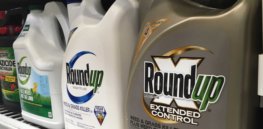
Despite federal court ruling, California may put Prop 65 cancer label on glyphosate weedkiller
On October 6, 2020, the California Developmental and Reproductive Toxicant Identification Committee (DARTIC) announced it will be meeting on December 11, ...

Wealthy countries fear GM crops, while developing nations say they will ‘mostly help,’ poll shows
Up to 60 percent of people worldwide are worried the food they eat will harm them in the next two ...

World Food Day: Post-pandemic food security and resilience in Bangladesh
As the second wave of the COVID-19 pandemic lays waste to lives and livelihoods in countries around the globe, [October ...

Genetic engineering reveals how Venus flytrap spots prey, shedding light on plant’s short-term ‘memory’
A Venus flytrap’s short-term “memory” can last about 30 seconds. If an insect taps the plant’s sensitive hairs only once, ...
