


Daily Human Digest

Are some people just ‘jerks’? New study identifies four major personality types
Personality type tests are hugely popular, though if you ask working psychologists, they’ll tell you the results are little better ...
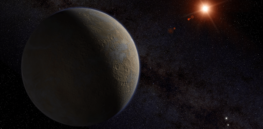
Proxima Centauri b: Why Earth’s cosmic neighbor could be suitable for life
Ever since the discovery of the exoplanet—known as Proxima Centauri b—in 2016, people have wondered whether it could be capable of ...

Viewpoint: Precision medicine promises a lot, but has delivered little
Doctors and hospitals love to talk about the patients they’ve saved with precision medicine, and reporters love to write about ...

Viewpoint: Everyone needs to feel the benefits of an ‘AI-reliant society’
[A]rtificial intelligence technology could actually boost the global economy. If it’s allowed to play a major role, AI will make our ...
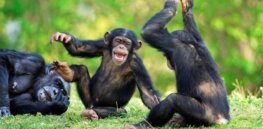
What do toddlers and chimpanzees have in common? They use the same unspoken language
Prior to developing the capacity for speech, toddlers communicate their desires, demands, and discontent using a diverse repertoire of physical ...
Cancer will be the ‘single biggest barrier to increasing our life expectancy,’ report says
The number of people around the world who have cancer is "rapidly growing," with 18.1 million new cases and 9.6 ...

This natural defense strategy could help some genes fend off CRISPR edits
Sowbugs, armadillos, hedgehogs… and DNA? The same strategy that some animals use to avoid being attacked — roll into a ...

How a broken gene may have given us the ability to become ‘marathoners’
A new study in mice pinpoints how a stretch of DNA likely turned our ancestors into marathoners, giving us the ...
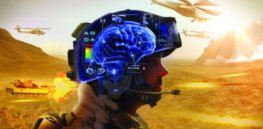
Soldiers of the future could be supercharged with brain upgrades
[T]he way the military fights wars is changing, and so must DARPA’s priorities. At a conference last week to celebrate DARPA’s 60th anniversary, ...

‘Blitzkrieg of biology’ reveals secrets of BRCA1 breast cancer mutation
For 22 years Myriad Genetics, one of the oldest genetic testing companies, has refused to make public its proprietary database of BRCA1 ...
ALS patients more likely to have other mental, behavioral problems
Because ALS primarily affects a person’s motor neurons, it has been assumed that the disease spares a person’s mental faculties ...

New opioid promises ‘gold standard’ pain relief without the addiction
Opioid drugs like morphine and Oxycontin are still held as the gold standard when it comes to relieving pain. But ...

What good is eternal life if we can’t stay young?
Longer lives seem attractive, but as we age we become susceptible to a host of late-life diseases that can prevent ...

Why is former basketball player Shawn Bradley so tall? His DNA could offer the answer
As a first-round draft pick from Brigham Young University, Shawn Bradley caused a hubbub during the 1993 NBA draft. That ...

Searching for alien life: Why we shouldn’t ignore low-oxygen ‘dead planets’
Until recently, little was known about oxygen’s abundance in the atmosphere [when] microbes were the only life on the planet ...

Viewpoint: Why the transhumanist movement promises far more than it can deliver
Transhumanism is a movement that, based on advances in biology and artificial intelligence, champions the idea of transforming or going ...

Could a pill replicate the Alzheimer’s defense gained through exercise?
Mice that model a severe form of Alzheimer’s disease tend to exhibit improved memory after exercise-induced neuron production, according to ...

Can a blood test find your body’s internal clock
Your body has a clock—and thanks to the travails of modern life, that clock may not line up with the timing ...

Why probiotics may or may not help you—and could even harm you
From pickles and candy bars to pills and protein powders, probiotics are touted as a health boon in all flavors ...
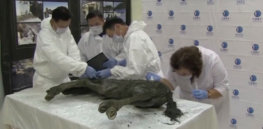
‘Incredibly rare’ extinct Siberian horse to be cloned
Scientists recently extracted an almost perfectly preserved prehistoric baby horse from the permafrost of Siberia’s “Mouth of Hell” crater in Yakutia. At ...

How human evolution—and racism—could be altered by climate change
Evidence suggests that a warming planet could melt away differences between human races — or population groups, as scientists more ...

Pregnancy and depression: Do antidepressants increase risk of autism?
Among the many things a woman is supposed to avoid when pregnant are antidepressants, particularly a subtype of the drugs ...

Viewpoint: What was right and what was wrong with the CRISPR patent decision
The CRISPR patent dispute between the University of California, Berkeley, and the Broad Institute is finally over. … In plain English: Broad researcher ...

Targeting breast cancer through the genes of Sub-Saharan African women
For the first time, DNA contributed by Sub-Saharan African women has been thoroughly evaluated with innovative genomics technology in an ...

Confusion over the origins of smallpox vaccine could leave us ‘vulnerable to a future outbreak’
Not only is there the potential for smallpox (or at the very least, something very similar) to resurge, but unbeknownst ...

White noise dangerous to your brain? There’s ‘reason to be skeptical’ of study
A recent research review suggests that white noise, the soothing, fuzzy soundtrack so many of us rely on to sleep ...

Olympic genes? China will use genetic tests to help choose its athletes
Chinese athletes aiming to represent their country in the 2022 Winter Olympics will undergo genetic testing as part of the ...
