


Genetic Literacy Project

Proceed with caution: National Academies offers ‘qualified support’ for gene editing ‘abnormal’ embryos
The door to gene-edited humans was opened a crack by a joint National Academy of Sciences and National Academy of ...

Without Glyphosate, What Would Farming Look Like?
Dave Walton--who grows corn, soybeans, alfalfa and hay, and is director of the Iowa Soybean Association—discusses the ecological consequences if ...

Trump Administration has opportunity to base biotech regulations on science, not fears
At least when it comes to biotechnology, the president's order freezing recent regulations provides a chance to get regulations right ...

Talking Biotech: Clay nanoparticles deliver plants gene-silencing virus-protecting RNA spray
Revolutionizing crop protection? Biotechnologist Neena Mitter on 'bioclay' — spray that protects plants from a virus using nanoparticles to deliver ...

Enhancing humans: Becoming a cyborg could end up as a privilege of the wealthy
Within the next 200 years, humans will have become so merged with technology that we’ll have evolved into “God-like cyborgs” ...

Epigenetics Around the Web: Chemo affects sperm? Cancer causes. Younger looking skin?
Epigenetics Around the Web is a weekly roundup of studies and news in the field of epigenetics presented by GLP ...

Pesticides just one tool in the modern farmer’s pest management toolbox
Modern farming involves much more than just spraying pesticides to keep pests at bay. Farmers must employ a broad array ...

Viewpoint: Scientists’ duplicity and conflicts of interest distort regulation and harm farmers
This article originally ran at Forbes and has been republished here with permission of the author. Scientists prostituting themselves by ...

Could life have emerged multiple times on Earth, in the universe?
If we discover that life forms on Mars or Europa do not share an origin with Earth life, we'll have ...

Will – And Should – Gene Edited Animals Be Regulated?
Regulations proposed by the FDA on the final day of the Obama Administration suggest the agency wants to regulate gene ...
Will Biotechnology Regulations Squelch Food and Farming Innovation?
The GLP's 18-part 5-week series -- GMO: Beyond the Science -- begins with a look at the regulatory web that ...

Battle over America’s waistline: How obesity affects having children and their health
On one side are social forces behind a “fat acceptance” movement seeking to normalize obesity or at least reduce discrimination ...

Talking Biotech: Why broccoli, collard greens, kale and other brassica are like dog breeds
University of Missouri biologist J. Chris Pires discusses the many vegetables that began as Brassica oleacea--wild cabbage ...

Resurgence in ‘mad cow disease’? Recent death sparks focus on mystery prion protein
The original wave of mad cow only infected a limited number of people with a very specific genetic signature. Can ...

Genetic Literacy Project’s Top 6 Stories for the Week, February 6, 2017
From this past week, here are the #GLPTop6 among many great stories on human and agriculture genetics around the world ...

Epigenetics Around the Web: The dangers of romance?
Epigenetics Around the Web is a weekly roundup of studies and news in the field of epigenetics presented by GLP ...

Scientist for hire? Does anti-neonic activist David Goulson produce pre-determined ‘research’ for funders?
Leading UK sustainability researcher embroiled in a scandal over alleged manipulation of European bee health advisory group takes NGO advocacy ...

Collateral damage from Trump’s family planning aid ban? What it means in fight against thalassemia blood diseases
Reversal of current US policy that provides aid for countries around the world for family planning, including abortion counseling, could ...

Wisconsin farm couple to Rachel Ray: Stop spreading pseudo-science about antibiotics in milk
Scientists are increasingly alarmed about the junk science passed along in America's talk shows. Here, a celebrity nutritionist, encouraged by ...

Star Trek-like ‘tricorders’ promise DNA analysis on the go
We are rapidly approaching a time when Star Trek-style "tricorders" will offer rapid handheld analysis of genetic samples. It could ...

Glyphosate-based Roundup herbicide linked to liver disease in rats? Researcher Séralini under fire again
Animal geneticist Alison Van Eenennaam walks us through a new study by controversial researcher Giles-Eric Séralini, who once again links ...

Talking Biotech: Fred Gould, chair of National Academies of Sciences GMO report, reaffirms safety of biotech crops
Fred Gould, chair of National Academies of Science review of biotech crops, reaffirms GMO safety and sustainability ...

Genetic Literacy Project’s Top 6 Stories for the Week, January 30, 2017
From this past week, here are the #GLPTop6 among many great stories on human and agriculture genetics around the world ...

Epigenetics Around the Web: Can changes acquired during an organism’s life be passed on?
Epigenetics Around the Web is a weekly roundup of the latest studies and news in the field of epigenetics presented ...

Will the Arctic Apple usher in a wave of genetically engineered fruits and vegetables?
The non-browning Arctic Apple is the latest food genetically engineered to help tackle the global food waste problem. These types ...

Genetics for public health: A lost cause?
Its power for discovering rare diseases is well proven. But genetics’ impact on public and preventative health has a long ...
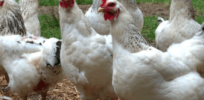
Breeding slower growing chickens: Is that a good idea?
Chickens are the most efficient of our meat animals in terms of how much grain it takes to produce each ...

Can probiotics help those suffering with metabolic syndrome, obesity?
In recent years, efforts to manage metabolic syndrome have fallen in with the lucrative, but untested weight loss market. Chief ...
