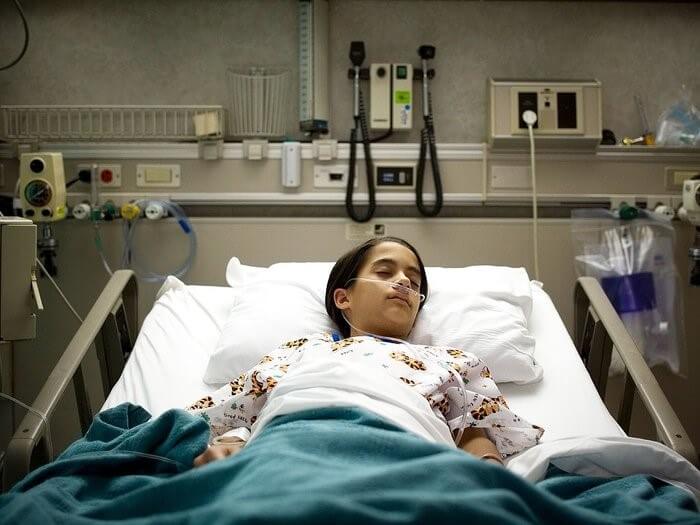
A runny nose or cough are normal symptoms during the fall, but this year doctors in the United States and Canada are reporting an escalation of symptoms among a small but notable number of kids. One day children have a cold, and the next they’re experiencing polio-like paralysis.
…
The condition is called Acute Flaccid Myelitis, or AFM, and it’s a rare disorder that impacts a person’s nervous system. Over the last couple of months, a rise in AFM cases among kids has puzzled doctors.
…
Doctors have been able to isolate viruses in the noses of the sick children, but have not actually been able to find evidence of enterovirus in the spinal fluid of affected patients. According to [pediatrician Jeremy] Friedman, this could be a sign that children’s immune systems could be to blame for some of the symptoms they’re experiencing.
…
There’s currently no cure for AFM, but doctors can alleviate its symptoms. Treatment strategies are different based on what a person is experiencing. Currently, doctors use physical therapy in combination with intravenous anti-inflammatory medication to reduce the damage on the spinal cord.
…
While some children appear to be improving more rapidly than in previous years’ outbreaks, some will require more intensive treatments. With our current understanding of AFM, predicting individual outcomes has proven to be very challenging.
Three letters can quickly turn lackadaisical shoppers at a farmers market, diners at a restaurant or families at dinner tables quite sour: GMO.
When challenged to expand this acronym into its full form, vehement oppositionists to this technology are often found fumbling for the words “genetically modified organism.” What is it about this technological innovation specifically that has incited such a crazed frenzy?
…
Many arguments for the fervent opposition to genetic modification, or GM, technology exist, but few of these arguments consider how this innovation could actually service marginalized groups, namely the smallholder farmer. Smallholder farms are defined as having access to less than 10 hectares of land, with a minimum share of labor coming from the property-holding family.
While seemingly distant, your participation in food politics is intimately linked to your role as a consumer of food and information here in Berkeley [, California]. We cast ballots every time we shop. Our dollars spent are direct endorsements of ideologies and movements that have the capacity to influence people greatly beyond our purview.
…
As consumers, we have the capacity to influence international acceptance of GM technology. Our purchasing power cannot be overstated. Money spent on non-GMO-verified goods endorses campaigns that distance smallholders from empowering technologies …. Your monetary or signatory endorsement can be harmful if you don’t know exactly what you’re endorsing.
It is important to keep in mind that psychopathy is a personality disorder. As such it is classified as a mental illness, and many such illnesses manifest differently in men than in women.
…
So, if you want to be able to spot a female psychopath, you need to know how female psychopaths may differ from males. Here are two key differences:
1. Differences in Narcissism
All psychopaths are high in narcissism. This means they see themselves as superior to those around them. But how this narcissism is expressed differs for men and women.
…
[Women are] more covert about their narcissistic tendencies. They smile and praise you face-to-face, but think they are better than you behind your back.
2. Differences in Aggression
Male psychopaths tend to display their aggression behaviorally. They engage in physical assault, abuse animals, or commit violent crimes.
…
Female psychopaths are better equipped to fly under the radar. This is because they tend to display their aggression relationally. They [spread] gossip about you at work. They gaslight you to the point that you doubt your own sanity. They leech off you and manipulate you into doing their bidding.
…
In the end, the difference comes down to this: Male psychopaths throw punches; female psychopaths throw shade.
[There are a] number of methods that are being used to break down the [blood-brain] barrier that keeps drugs for cancer and other diseases from getting to the site where they are needed. Here are two of them.
Ultrasound.
Scientists at the University of Toronto recently published the results of a Phase I safety trial in Nature Communications. Nir Lipsman and colleagues used a method called magnetic resonance-guided focused ultrasound (MRgFUS) in conjunction with injected microbubbles of air to temporarily open the BBB.
…
Trojan Horses.
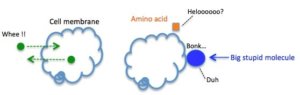
1. Small and fat-soluble molecules (green circles) can easily move in and out of cells by passive transport. But big stupid molecules (blue circle) cannot. Neither can amino acids (orange square); they are water-soluble, not fat-soluble.
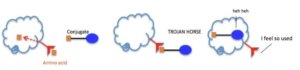
2. Fortunately, there are active transporters (red) that “pump” necessary nutrients like amino acids and glucose into the cell. Chemists can take advantage of the active transporters by chemically hooking the big stupid molecule (BSM) to another molecule that gets actively transported, for example, an amino acid. This forms what is called a conjugate. The amino acid part of the conjugate gets “sucked” into the cell and the BSM comes along for the ride. Hence, the Trojan Horse.
So, by proper use of their brains, scientists have made it possible to trick other brains into giving up the defense mechanism that evolved to protect them. Rather existential, no?
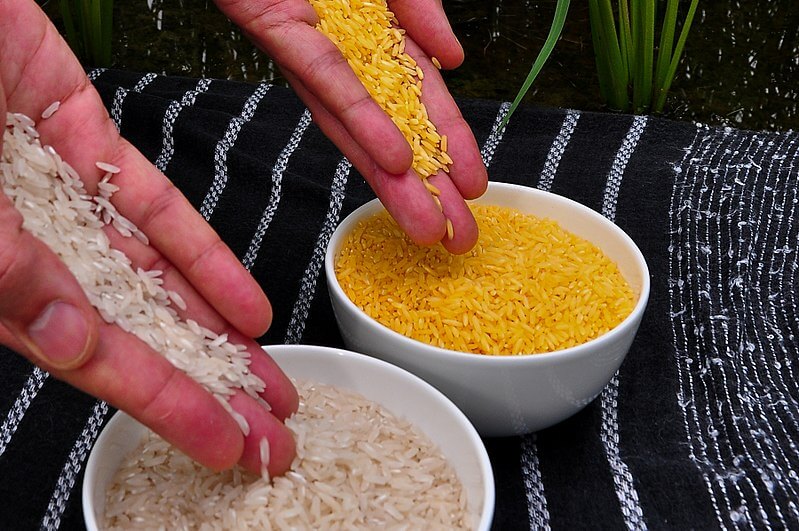
A variety of Oryza sativa (rice) genetically engineered using recombinant DNA technology, Golden Rice contains beta carotene, an antioxidant which the body converts into Vitamin A. This gives the rice grain the yellow-orange or gold color that inspired its name.
However, the Golden Rice project is still on its way to completion. Its path, as expected, has not entirely been bright and shiny.
…
The Department of Agriculture’s Philippine Rice Research Institute (PhilRice) is working with the International Rice Research Institute (IRRI) towards further developing and completing the Golden Rice project in the Philippines.
The process involves different stages: research, confined field testing, field trials, safety assessments, market tests, and nutrition studies. Nevertheless, multiple rounds of trials and errors are bringing scientists closer to fully developing safe, genetically modified rice varieties with benefits that conventional varieties do not provide.
…
Now, the Golden Rice project is entering its fourth stage. In this phase, researchers will plant and grow Golden Rice in the same normal field environment as unmodified rice varieties. Further tests and assessments will be involved after the field test to ensure that Golden Rice is efficacious and will reach the communities that need it the most.
…
Once commercialized, Golden Rice is expected to become an affordable and sustainable way to combat vitamin A deficiency in the Philippines, particularly in its most remote and underdeveloped areas.
Nigeria is moving forward with plans to boost its textile industry through the approval of its first GM crop, BT cotton. Not unexpectedly, the decision has been met with criticism from anti GMO groups raising a variety of concerns about the safety of the new seeds.
It is, therefore, a good time to reflect upon the obstacles that must be overcome by any GMO crop on its journey from the research lab to farmers’ fields.
These crops are thoroughly analysed for potential health and environmental risks. Such analysis are often done by scientists or experts in nutrition, toxicology and allergenicity. A typical question that must be addressed among several other questions is: Do the new substances in the GM crop have a history of safe use?
It’s not news that Nigeria’s textile industry was once the country’s second biggest employer (providing about 350,000 direct jobs and 1.2 million indirect jobs). Today, only 33 factories remain standing. Problems of low yield and high production costs have made the local cotton industry comatose. The principal cause of this is insect infestation: Bollworms attack cotton plants at various stages, reducing yields by 60 percent.
Long awaited intervention
As a means to awaken the slumbering textile industry, Nigeria has approved its first GM crop – a cotton seed designed to fight off pests. Experts suggest that Nigeria’s success with GM cotton could open up the entire African continent to greater acceptance of agricultural biotechnology. Nigeria’s BT cotton can produce 4.1 to 4.4 tonnes per hectare, compared with just 600 to 900 kilograms per hectare for the non GMO varieties. Aside from pest-resistant traits, the GM cotton also offers early maturity and improved fibers. But there are still critics spreading fears in the hearts of farmers about the safety of this crop.
Is it safe?
There have been multiple food safety and risk assessment studies of GM cotton conducted over the past two decades. Findings have shown: GM cotton hybrids do not have any toxic effects on non-target species, including aphids, honeybees and spiders. Further studies conducted to assess the possible risk of accumulation of GM protein in the soil indicated that Cry1Ac protein was rapidly degraded in the soil. The evaluation of the impact of GM protein leached by roots of GM cotton on the soil microflora showed that there was no significant difference in population of microbes and soil invertebrates (like earthworms) between GM and non GM samples.
Food safety assessments have showed that: There was no change in the composition in the GM and non GM cotton seeds with respect to proteins, carbohydrates, oil and calories. Also, there were no significant changes in allergens of GM seed compared to non GM cotton seed and no significant toxic effects found for animals fed with GM and non GM cotton seed. The feeding experiments using GM cotton seed meal indicated that GM cotton seed meal was nutritionally as wholesome and safe as the non GM cotton seed meal.
Follow the latest news and policy debates on sustainable agriculture, biomedicine, and other ‘disruptive’ innovations. Subscribe to our newsletter.
Australia, Mexico and the USA were the first countries to approved GM cotton in the 1990s. GM cotton has a sound track record of safe use around the world, with no negative incident since its introduction. Currently in Australia, over 94 percent of the cotton grown is GM. By 2014, 96 percent and 95 percent of cotton grown in the United States and India respectively was GM.
Since the introduction of GM cotton in Australia, there has been a 93 percent decrease in insecticide use. Other benefits include improved populations of useful wildlife and insects in cotton fields; reduced pesticide run-off; increased yield; improved soil quality; more time for farmers to spend with families; and lower labor and fuel costs. Since 2010, the total farm income gain derived by Australian cotton farmers using this technology has been $395 million. (source: National Press Club Address 2012, Graham Brookes).
In 2011, India grew the largest GM cotton crop at 10.6 million hectares. The US was second at 4 million hectares, followed by China with 3.9 million hectares and Pakistan with 2.6 million hectares.
Socio-economic surveys confirm that GM cotton continues to deliver significant and multiple agronomic, economic, environmental and welfare benefits to Indian farmers, cutting insecticide use in half while doubling yields. In China, GM cotton was first planted in 1997 in response to an outbreak of cotton bollworm, that farmers were struggling to control with conventional pesticides. Since then, farmers have been able to increase yields and reduce pesticide spraying. Generally, 50 percent more cotton is produced worldwide today on the same amount of land as compared to 40 years ago. Positive yield impacts from the use of this technology have occurred in all user countries.
Conclusion
Foods derived from GM crops are safe. Major issues and safety concerns on the biosafety of foods derived from GM plants have been addressed. Protein products of the inserted genes in the commercially available GM cotton have passed the rigorous tests and showed that they have a history of safe use. That track record shows that fears being stoked by critics in Nigeria are unwarranted.
Abraham Isah is a bioinformaticist and editorial assistant with Nigerian Journal of Biotechnology. He has a keen interest is genome wide association studies, computational biology and proteometabolomics. Follow him on twitter@ABRAHAM2637
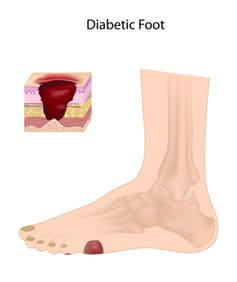
People with severe burns, bedsores or chronic diseases such as diabetes are at risk for developing wounds known as cutaneous ulcers, which can extend through multiple layers of the skin.
Apart from being extremely painful, these wounds can lead to serious, sometimes deadly, infections or amputations. Typically, these ulcers are treated by surgically transplanting existing skin to cover the wound. However, when the ulcer is especially large, it can be challenging to graft enough skin. In such cases, researchers may isolate skin stem cells from a patient, grow them in the laboratory and transplant them back into the patient. But the procedure is time-consuming, risky for the patient and not necessarily effective.
A diabetic foot with a cutaneous ulcer. Such ulcers destroy multiple layers of skin, leading to infections. If untreated, the tissue damage may require that the toes or entire foot be amputated. Image credit: Alila Medical Media/Shutterstock.com
The dramatically rising rates of diabetes alone underscore an urgent need to develop new, effective methods for the treatment of cutaneous ulcers.
My laboratory at the Salk Institute focuses on developing stem-cell-based approaches to “reprogram” cells from one type into another for the purpose of regenerative medicine.
In a report in the journal Nature, we describe a new technique to directly convert the cells naturally present in an open wound into new skin cells by reprogramming the wounded cells to a stem-cell-like state, in which cells revert to an earlier, more flexible state from which they can develop into different cell types.
A postdoctoral research associate in my lab, Masakazu Kurita, who has a background in plastic surgery, knew that a critical step in wound healing was the migration of stem-cell-like cells called basal keratinocytes – from nearby, undamaged skin – into wounds.
Basal keratinocytes are precursors to many different types of skin cells. But large, severe wounds such as cutaneous ulcers no longer have any basal keratinocytes. Moreover, as these wounds heal, the cells multiplying in the area – known as mesenchymal cells – are involved primarily in closing the wound and inflammation, but they cannot rebuild healthy skin.
We wanted to convert these mesenchymal cells into basal keratinocytes, without ever taking them out of the body.
To do so, we compared the levels of different proteins inside the two cell types – mesenchymal cells and keratinocytes – to figure out what distinguished them and find out what we would need to change in order to reprogram one cell type into the other.
We identified 55 proteins, which we call “reprogramming factors,” that are potentially involved in determining and maintaining the cellular identity of basal keratinocytes. We conducted further experiments on each potential reprogramming factor and narrowed the list down to four factors that would transform mesenchymal cells into basal keratinocytes in vitro in petri dishes. These keratinocytes then formed all the cells present in healthy new skin.
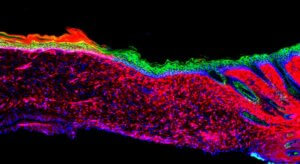
This image is a cross-section of regenerated skin with different cell types indicated with fluorescent tags. Green is keratinocytes, red is mesenchymal cells, blue is the cell nucleus and magenta marks the innermost layer of skin epithelium. Image credit: Juan Carlos Izpisua Belmonte, CC BY-SA
We then tested the power of these four factors to treat skin ulcers on mice. Just 18 days after we applied a topical solution containing these four factors directly onto the ulcers, we saw healing happen. These four factors reprogrammed the mesenchymal cells in the wound into keratinocytes which then grew into the many cells types that make up healthy skin, closing and healing the sore. These cells continued to grow and join the surrounding skin, even in large ulcers. When we examined the mice three months and six months later, we saw that the newly generated cells functioned like healthy skin. Rodent skin heals differently from human skin, so there was no visible scar tissue, though it should have been there.
Further work is necessary to ensure the safety of this approach, especially over a much longer term, but as an initial test of the concept, the results are very promising.
We are optimistic that our approach represents an initial proof of principle for in vivo regeneration of an entire three-dimensional tissue, like the skin, not just individual cell types. In addition to wound healing, our approach could be useful for repairing skin damage, countering the effects of aging and helping us to better understand skin cancer.
Juan Carlos Izpisua Belmonte is a professor at the Gene Expression Laboratory at Salk Institute for Biological Studies. He rolls back cells’ development to a pluripotent state. In addition, he follows new, more flexible strategies with the goal of providing safer and higher quality products for regenerative medicine
Breeding is the foundation of plant genetic improvements. While modern techniques like gene editing sometimes steal the spotlight, scientists need high quality plant varieties before they begin modifying crops with CRISPR or other recent genetic engineering tools.
Today, plant breeders are in high demand, both in industry and academia. Drs. Patricio Muñoz and Marcio Resende are two early-career plant breeders, working on blueberry and sweetcorn, respectively. Both implement the most modern genomics approaches to breeding and selection, with an eye toward accelerating production of new varieties. As relatively recent graduates, both provide their insights into the preparation necessary to find a fulfilling career in plant breeding.
Arsenic accumulation in rice grains is one of the serious agricultural issues in India. To address this, researchers at Lucknow-based CSIR-National Botanical Research Institute have developed transgenic rice by inserting a novel fungal gene, which results in reduced arsenic accumulation in rice grain.
In their latest study, researchers have cloned Arsenic methyltransferase (WaarsM) gene from a soil fungus, Westerdykellaaurantiaca, and inserted the same into the rice genome with the help of Agrobacterium tumefaciens, a soil bacterium which has natural ability to alter the plant’s genetic makeup.
The newly developed transgenic rice along with normal rice was then treated with arsenic. Comparison of transgenic and non-transgenic rice showed that transgenic plants accumulated less arsenic in root as well as shoot as compared to non-transgenic lines.
…
“Our study provides an understanding into arsenic transport mechanism in plants, predominantly rice grain. This knowledge can be applied to develop practices to decrease accumulation of arsenic in rice grain by molecular breeding, gene editing or transgenic approaches. It can have tremendous public health consequences,” explained Debasis Chakarabarty, [one of the study’s authors].
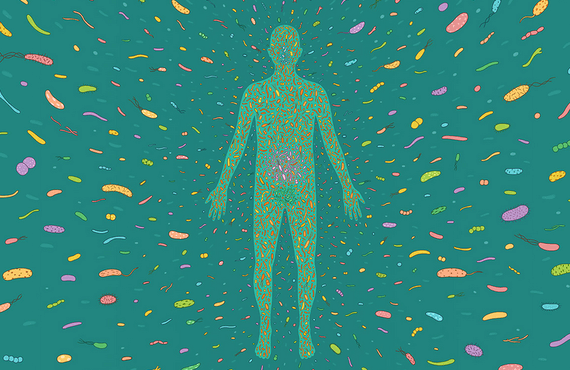
Our microbiome is an inner ecology of Planet Us. And thought of in that context, two new small, exploratory studies, may provide lessons about change and resilience.
The current understanding of the gut microbiome is anchored by the belief that both diet and geography influence its composition. In the first study, researchers looked at the diversity of our gut flora as individuals immigrated and assimilated, changing diet and geography.
…
Microbiologic richness and diversity were greatest in current Thai residents. 30% of that diversity was lost in the first generation immigrants, and the diversity continued to decline and resemble that of the control group as time in the US increased and in the 2nd generation, American born Thai children.
…
A second, “proof of concept” like study, looked at 12 healthy men treated for four days with an antibiotic cocktail meant to mimic common first-line choices for intensive care patients.
…
[The microbiome] can show resilience when a one-off force, like a course of antibiotics, alters the relative hostility of their environment. It recovers but may bear a few scars. And that same population when subject to more consistent evolutionary pressures, specifically of diet, shows more long-term changes, perhaps we can characterize them as a new accommodation to the environment rather than a failed restoration.
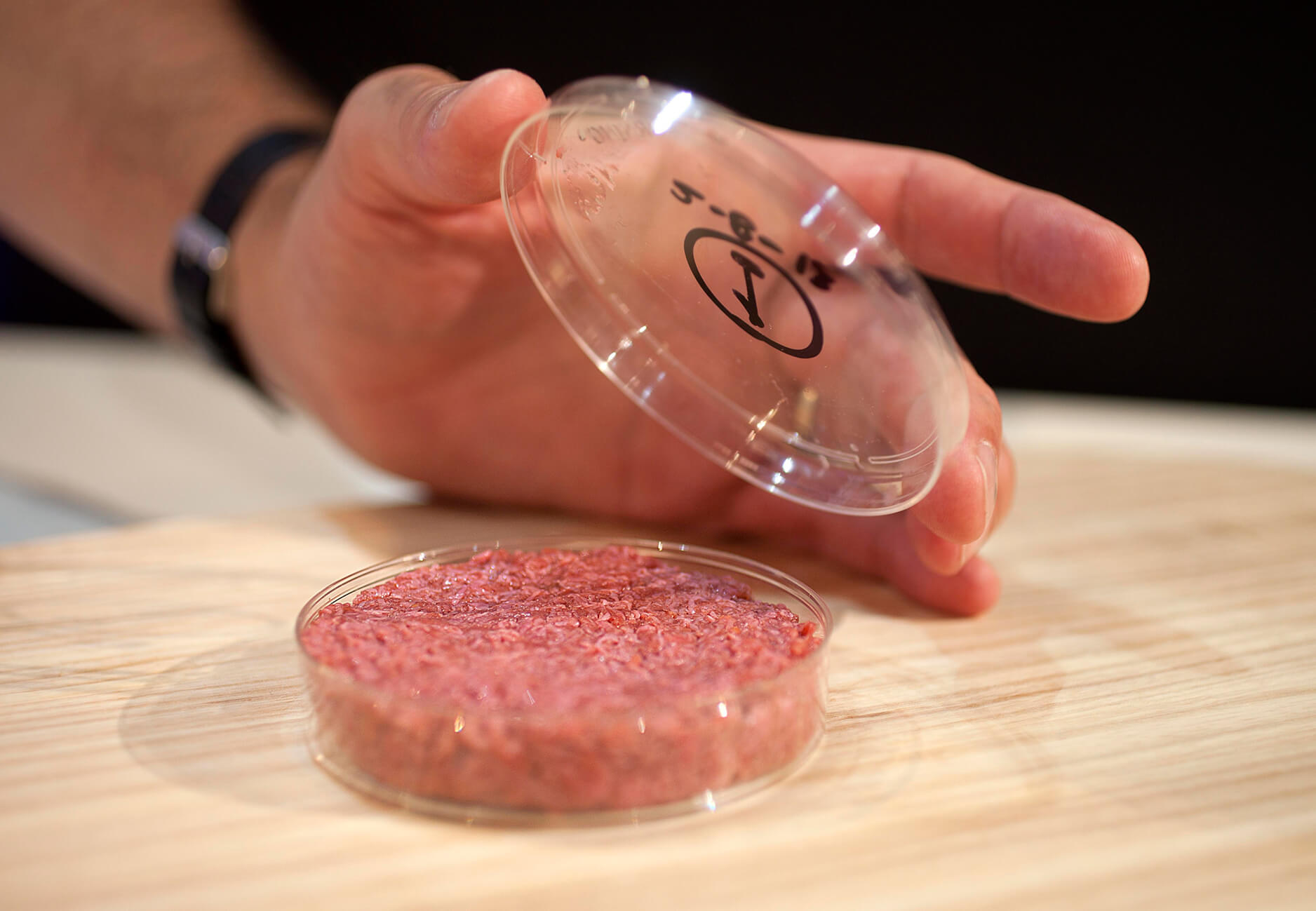
The virtual super nova of interest in clean meat has arrived at the regulatory stage. The FDA and USDA are to jointly regulate lab grown meat, in a major new development. Clean meat is heading for the shelves with big money backing.
…
Clean meat will be under the same laws as “normal” meat. The clean meat will be appropriately labelled, and according to a statement by the USDA, the USDA and FDA will oversee different parts of the manufacturing process, but that’s about all that will happen.
That bit of news is likely to be the catalyst for all-out development, and there’s a lot of new money pouring in to clean meat and other “agrifoods” …. Lab-grown meat is avoiding the predicted obstacle course and likely to hit the supermarkets quickly, with huge investments and a lot more information arriving daily as well.
…
Interestingly, a survey of American consumers shows that 66% of Americans were open minded about clean meat when the idea was explained to them. Rather less impressively, only 25% of the survey had heard of clean meat. Obviously there’s a bit of public information required, and the message has to get out there ASAP, but the market should take care of that in the next few years.
One of the most exciting prospects about gene technology is the development of precision or personalized medicine. The field, which enables interventions specific to a patient or population of genetically similar individuals, is expected to reach $87 billion by 2023. Historically, cost and technology limited the implementation of personalized medicine, but machine learning techniques are helping to overcome these barriers. Machines help identify patterns within genetic data sets and then computer models can make predictions about an individual’s odds of developing a disease or responding to interventions.
Google’s tool DeepVariant uses the latest AI techniques to turn high-throughput sequencing (HTS) into a more accurate picture of a full genome.
…
The Canadian start-up Deep Genomics uses its AI platform to decode the meaning of the genome to determine the best drug therapies for an individual based on the DNA of the cell. The company’s learning software analyzes mutations and uses what it’s seen in the hundreds of thousands of mutation examples it’s analyzed to predict the impact of a mutation.
New cancer cases number millions annually, but chemotherapies and drugs have inconsistent success. Companies such as Sophia Genetics hope that by using artificial intelligence to identify genetic mutations, physicians will be able to prescribe the best drug treatment for each individual patient.
…
Artificial intelligence and machine learning help make gene editing initiatives more accurate, cheaper and easier.
Stem cells, famous for replenishing the body’s stockpile of other cell types throughout life, may have an additional, unforeseen ability to cache memories of past wounds and inflammation. New studies in the skin, gut and airways suggest that stem cells, often in partnership with the immune system, can use these memories to improve the responses of tissues to later injuries and pathogenic assaults.
…
But when those responses go wrong, they may cause or contribute to a variety of enduring health problems involving chronic inflammation, such as severe allergies and autoinflammatory disorders.
…
[The team] had set out to understand why some people suffer from debilitating chronic allergies to airborne dust, pollen and other substances. Most people experience at most a passing bout of coldlike symptoms from these irritants, but about 12 percent of the population has a severe reaction.
…
They removed cells from the airways of allergy patients, grew them in culture for about five weeks, and then profiled their gene activity. They found that the genes involved in allergic inflammation were still active, even though the allergic threat of dust and pollen was long gone. In addition, the researchers described many of the cells as “stuck” in a less-than-fully-mature state.
For [Alex] Shalek, this result signals “that stem cells may transfer ‘memories’ to future generations of cells and this can cause near-permanent changes in the tissue they replenish.”
A U.S. judge overseeing the federal litigation against Bayer AG’s Monsanto unit over glyphosate-based weed-killers allegedly causing cancer on [November 20] selected the first case to be tried in federal court in February 2019.
U.S. District Judge Vince Chaabria in San Francisco in an order said the case of California resident Edwin Hardeman will be the first out of more than 620 cases pending in the federal litigation to go to a jury.
Hardeman’s case will mark the second trial in the U.S. litigation over glyphosate, after a California state court jury in August awarded $289 million to a school groundskeeper, finding Monsanto liable for the man’s cancer.
…
Hardeman’s case was picked as a so-called bellwether, or test trial, frequently used in U.S. product liability mass litigation to help both sides gauge the range of damages and define settlement options.
…
Hardeman began using the Roundup brand herbicide with glyphosate in the 1980s to control poison oak and weeds on his property and sprayed “large volumes” of the chemical for many years on a regular basis, according to court documents. He was diagnosed with non-Hodgkin lymphoma, a cancer of the lymph system, in February 2015 and filed his lawsuit a year later.
Agribusiness giant Monsanto on [November 20] appealed a $78 million verdict in favor of a dying California man who said the company’s widely used Roundup weed killer was a major factor in his cancer.
The company filed a notice of appeal in San Francisco Superior Court challenging a jury verdict in favor of DeWayne Johnson. In August, the jury unanimously found that Roundup caused Johnson’s non-Hodgkin’s lymphoma and awarded him $289 million.
…
“We continue to believe that the liability verdict and reduced damage award are not supported by the evidence at trial or the law,” Bayer, which acquired Monsanto in June, said in a statement. Bayer said none of the science presented at trial supported the conclusion that Roundup was a substantial cause of Johnson’s cancer.
An email to a spokeswoman for Johnson’s attorneys was not immediately returned.
…
Many government regulators have rejected a link between glyphosate and cancer. Monsanto says hundreds of studies have established that glyphosate is safe.
Huda Zoghbi has uncovered the molecular mechanisms of normal neurodevelopment and neurodegeneration by probing the complexities of rare neurological diseases.
…
She was frustrated by the fact that medical science could only ease the symptoms of the many children she worked with who suffered from untreatable neurological disorders. It was then that a patient caught her attention: a girl with Rett syndrome, a rare, poorly characterized disorder that leads to severe learning disability and motor impairments.
…
Over the next 10 years, she and her lab members began to collect tissue samples from families with two affected sisters, systematically comparing each of their X chromosome genes.
…
[I]n 1999, Zoghbi and her collaborators identified the exact gene, MECP2, which is mutated in Rett syndrome sufferers. The researchers showed that Rett was indeed an X-linked dominant disorder, meaning that just one mutated copy of MECP2, which normally encodes a methyl-CpG-binding protein, was enough to cause the disorder.
…
Recently, in collaboration with a biotechnology company, Zoghbi’s lab has developed a potential therapy for decreasing MECP2 expression.
…
“When I started working on Rett, most researchers didn’t think that sporadic disorders could be genetic, but here we found a disease that is genetic but a result of a de novo, not an inherited, mutation,” she explains. “This has opened up the search for other genetic forms of disabilities that are sporadic but still caused by a genetic defect.”
Americans are closely divided over whether genetically modified foods are worse for one’s health than foods that are not genetically modified, according to a new Pew Research Center report.
About half of U.S. adults (49%) say foods containing genetically modified (GM) ingredients are worse for one’s health than foods containing no GM ingredients, while a slightly smaller share (44%) thinks foods with GM ingredients are neither better nor worse for one’s health ….
The survey finds a 10-percentage-point increase in the share of adults who say foods with GM ingredients are worse for one’s health from a 2016 Pew Research Center survey, when the share was 39%. The uptick in concern has come primarily among those with low levels of science knowledge; there has been no shift in this belief among those with high levels of science knowledge (based on a nine-item index of factual knowledge across a range of topics).
…
Roughly three-in-ten Americans (31%) say it’s very likely that GM foods will increase the food supply and 25% say it’s very likely these foods will result in more affordably priced food. About four-in-ten or more consider each of these possibilities “fairly likely.”
At the same time, about a quarter of U.S. adults (24%) say GM foods are very likely to lead to problems for public health, while 21% say it’s very likely that these foods will create problems for the environment.
Africa has kicked against a proposed moratorium on the environmental release of organisms containing gene drives now under debate at the United Nation’s biodiversity conference in Egypt.
Work is currently ongoing in Burkina Faso that could possibly lead to the deployment of the gene drive technology in the fight against malaria. That prospect mobilized some convention delegates to call for a moratorium on releasing organisms into the environment, even in limited field trials.
Parties to the Convention on Biodiversity are being asked to decide between two texts that would define the technology: “Apply the precautionary principle (with regards) to gene drives,” or “apply the precautionary principle (and refrain from) releasing gene drive organisms.” Adopting the latter will effectively mean a ban on the release of gene drive organisms into the environment in the more than 190 countries that are signatory to the convention.
During a working group meeting at the conference on Sunday, South Africa led the African group rejecting the text seeking a refrain. …
That stance reflects the views of more than 100 scientists who signed an open letter opposing the proposed moratorium. “Closing the door on research by creating arbitrary barriers, high uncertainty, and open-ended delays will significantly limit our ability to provide answers to the questions policy-makers, regulators and the public are asking,” the letter stated.
There are an estimated 80,000 people, mostly men, in solitary confinement in U.S. prisons. They are confined to windowless cells roughly the size of a king bed for 23 hours a day, with virtually no human contact except for brief interactions with prison guards. According to scientists speaking at [Society for Neuroscience conference], this type of social isolation and sensory deprivation can have traumatic effects on the brain, many of which may be irreversible. Neuroscientists, lawyers and activists such as [ex-inmate Robert] King have teamed up with the goal of abolishing solitary confinement as cruel and unusual punishment.
…
Chronic stress damages the hippocampus, a brain area important for memory, spatial orientation and emotion regulation. As a result, socially isolated people experience memory loss, cognitive decline and depression. Studies show depression results in additional cell death in the hippocampus as well as the loss of a growth factor that has antidepressant-like properties, creating a vicious cycle. When sensory deprivation and an absence of natural light are thrown into the mix, people can experience psychosis and disruptions in the genes that control the body’s natural circadian rhythms. “Social deprivation is bad for brain structure and function. Sensory deprivation is bad for brain structure and function. Circadian dysregulation is bad,” said Huda Akil, a professor of neuroscience at the University of Michigan who was also on the panel. “Loneliness in itself is extremely damaging.”