What’s more important, genes or environment? …The advent of genomics has given us a new perspective on the role of genetic variants in a lot of traits, but it hasn’t necessarily stopped the arguing. The reasons are nicely highlighted by a new paper that describes a massive genetic screen for factors associated with educational success.
The study screened more than a million people for genetic variants associated with time spent in school.
…
Time spent in school is a rough measure of educational achievement.
…
[The study identified] 1,271 sites in the genome that appear to be associated with time spent in school…, [but] the entire set of 1,271 sites can only account for about 12 percent of the total variation in educational attainment, meaning nearly 90 percent of the variation is caused by something else. We do know a couple of those causes—these genes edge out household income in terms of the strength of their impact but come in behind having a parent with an extended educational background.
Put differently, if your mom has a PhD, it will probably have a stronger impact on your educational trajectory than your genes will.
Scientists at the Department of Agrobiotechnology research facility in the Vienna University of Natural Resources and Life Sciences in Tulln, Austria, are tracking about 80 varieties of grains in outdoor plots and greenhouses, in some cases right down to the molecular DNA.
The work matters because about a billion people are malnourished …. ensuring there is enough food for the rapidly growing global population …. is a big challenge, says plant ecologist Hermann Bürstmayr ….
…
The latest advances in genetic technology have revived fundamental ethical debates about human manipulation of genetic material in plants and animals ….
…
When you view the question of secure food supplies at the global level over time, a clear picture emerges from the observed patterns, says Karlheinz Erb, a social ecologist at the University of Vienna
…
“When food production becomes more efficient, the increasing efficiency is over-compensated by increasing consumption.”
Erb believes addressing issues around global food solely by steering the production side is a false approach. “We have to look at the consumption side. We can’t combat malnutrition by forever producing more.”
Simply put, the Global North has an overconsumption and waste problem, which is leading to heart disease, obesity and diabetes — also a form of malnutrition. Eliminating global hunger requires a recognition of that imbalance ….
Complex organisms have complex genomes. While bacteria and archaea keep all of their genes on a single loop of DNA, humans scatter them across 23 large DNA molecules called chromosomes; chromosome counts range from a single chromosome in males of an ant species to more than 400 in a butterfly.
There have been indications that chromosomes matter for an organism’s underlying biology. Specialized structures within them influence the activity of nearby genes. And studies show that areas on different chromosomes will consistently be found next to each other in the cell, suggesting their interactions are significant.
So how do we square these two facts? Chromosome counts vary wildly and sometimes differ between closely related species, suggesting the actual number of chromosomes doesn’t matter much. … To explore this issue, two different groups tried an audacious experiment: using genome editing, they gradually merged a yeast’s 16 chromosomes down to just one giant molecule. And, unexpectedly, the yeast were mostly fine.
…
The resulting strains of yeast (with only one or two chromosomes, depending on the lab) were… remarkably normal. They grew more slowly than a normal strain but still grew under a variety of conditions. They were more sensitive to how they obtained critical building blocks, like nitrogen and carbon, but could still survive no matter how they were fed.
A handful of unwelcome plants growing on the side of a road in Alberta were all it took to stop two Asian governments from accepting Canadian wheat.
The stalks were found to be genetically modified wheat …. But …. Canadian Food Inspection Agency (CFIA) representatives still can’t explain how they got there.
Canada …. has a cereal killer on its hands and suspects range from activists to sloppy geneticists.
Alan McHughen [a molecular geneticist] at the University of California …. said this seemingly loopy hypothesis about the wheat’s origins should be taken seriously.
Occasionally, wheat plants will naturally cross-pollinate …. If the mating plants are not identical, the resulting kernels will contain genetic traits from both contributors, creating hybrid seeds.
This is called outcrossing and it is rare in wheat …. Outcrossing, however, is detectable thanks to DNA fingerprinting of the plants. The CFIA has determined [that the illegal wheat] did not sneak out of old test plots …. this way.
…
“It sounds more and more like a rogue breeder was doing his [or] her own breeding …. ,” Mr. McHughen said.
Tom Clemente, a biotechnology professor at the University of Nebraska-Lincoln …. says activists opposed to genetically modified plants …. are to blame ….
…. “The way it occurred sounds more like somebody sprinkled some seeds. They knew it was there.”
The remains of a man killed during the Sept. 11 terror attack in New York have been identified 17 years later.
The New York medical examiners’ office on [July 25, 2018] identified the victim as Scott Michael Johnson, 26, who worked at an investment banking company at the World Trade Center.
…
He was identified after his DNA was re-tested using a new and improved technique, Chief Medical Examiner Barbara Sampson said in a statement.
“In 2001, we made a commitment to the families of victims that we would do whatever it takes, for as long as it takes, to identify their loved ones,” Sampson said. “This identification is the result of the tireless dedication of our staff to this ongoing mission.”
The medical examiner’s office received about 20,000 human remains… It has been working to identify the remains, some as small as a fingertip, primarily through DNA testing.
More than 1,100 victims remain unidentified, Sampson said.
During the attack nearly two decades ago, 19 men hijacked four US commercial airplanes and crashed them in New York City, Washington and outside of Shanksville, Pennsylvania, killing a total of 2,977 people.
Most of the remains are hard to identify because of the effects of heat and chemicals from the jet fuel. The new DNA system helps with testing of degraded samples, Sampson said.
The idea to use DNA testing to reunite families separated at US borders due to the Trump administration’s “zero tolerance” policy arose quickly. But confusion ensued when early media reports didn’t distinguish the types of tests, which have different implications for privacy.
On June 21, in response to the heart-wrenching separation stories pervading the media, California Representative Jackie Speier first floated the idea of direct-to-consumer (DTC) genetic testing companies like 23andMe donating kits. Nice idea or outrageous, depending on one’s viewpoint.
Either way, the heavily-advertised 23andMe testing kits aren’t valuable for reuniting families, because they don’t catalog the statistically powerful short tandem repeats (STRs) that the FBI and immigration authorities rely on to identify individuals. Desperate, distraught parents and crying, terrified kids — or children traumatized into eerie silence— aren’t going to find each other from cheek swabs at the border revealing visible traits, disease risks, earwax consistency, or whether cilantro tastes foul or yummy.
But testing DNA to reunite relatives has worked before, although under wildly different circumstances. A precedent is the Grandmothers of the Plaza de Mayos project. It began in 1977, a year into the eight-year “Dirty War” when the Argentinean military and police abducted at least 210 “niños desaparecidos,” selling them or giving them away. The Grandmothers project built cases using conventional evidence, such as documents, to attempt to reunite kidnapped children with relatives. Why grandmothers? Because so many mothers had been murdered.
But the evidence wasn’t enough.
So in 1984, the American Association for the Advancement of Science sent a team of geneticists to Buenos Aires to assist the Grandmother project, including Mary-Claire King, not yet famous for discovering the BRCA breast cancer genes. (Dr. King, the American Cancer Society Professor of Medicine and Genome Sciences at the University of Washington in Seattle, will receive the 2018 Advocacy Award from the American Society of Human Genetics at their annual meeting in October.)
The Grandmothers project would solve 50 cases, while serving as a backdrop to the evolution of DNA profiling (initially called fingerprinting).
Building a better DNA profile
Sir Alec Jeffreys, of Leicester University, had just developed a way to track DNA pieces 10 to 80 bases long that repeat differing numbers of times at specific sites in the genomes of individuals. These markers don’t impart traits, because they’re like DNA stutters, not encoding proteins. Sir Jeffreys solved some pretty colorful crimes, and I covered one of the first cases in the US for Discover magazine in June 1988.
By 1991, forensic scientists settled on 4-base repeats, which came to comprise the FBI’s Combined DNA Index System (CODIS). STRs’ diminutiveness renders them more resistant to damage, such as from a fire or explosion. Until last year, CODIS profiles tracked 13 STRs, adding up to 26 per person considering that chromosomes come in pairs. In 2017 the FBI upped the forensic marker number to 20 (times two). The chance that two strangers share a profile is effectively zero, because the number of ways that people can vary for the repeat sizes greatly exceeds the global human population of 7.6 billion.
When Dr. King joined the Grandmothers project, Dr. Jeffreys’ DNA fingerprinting was still brand new. Instead, the standard technique to match people tracked the variability of the six human leukocyte antigen (HLA) genes, far less powerful because people can share profiles by chance. (That would have been the same problem with festooning the border with 23andMe spit kits — lots of people share a hatred of cilantro and have dry earwax.) The HLA proteins dot blood cells and for many years were used to type organs for transplant.
To improve the genetic testing, Dr. King developed a new tool, cataloging repeats in a highly variable part of the mitochondrial genome, which is passed from mothers to children. Tracking female relatives was practical, because documentation and conversation tended to focus on women. In addition, mitochondrial DNA is more abundant in cells than the nuclear DNA that yields STRs because cells have hundreds to thousands of mitochondria. The technology worked so well that Argentina established a voluntary DNA databank.
Mis- and disinformation are distorting science and public policy. Subscribe to our Daily and Weekly Digests for incisive coverage of ‘disruptive’ innovations in AI, agricultural biotechnology, food, chemicals, nuclear energy, vaccines, and other disruptive innovations.
Of the 50 cases solved, 44 children had been “gifts” to military leaders. Adoptive parents of the other six were likely unaware of the kidnapping. Bioethical implications were profound. “What would be the effect on a young person to learn he or she has lived with people involved in the murders of his/her parents and that his/her surviving relatives did nothing to find him/her?” wrote Dr. King in 1991 in a chapter, “An Application of DNA Sequencing to a Human Rights Problem,” in a book, Molecular Genetic Medicine.
Mary-Claire King
The stories were brutal. Dr. King described five young adults from three linked families kidnapped in 1977, two pregnant. “Their parents later heard that their daughters had been kept alive until they gave birth, their newborn infants taken, and the young women then murdered,” as were the others.
A decade later, the Grandmothers learned of a 10-year-old, the biological child of one of the young mothers, who’d been given away. The adoptive mother finally came forward when her military boyfriend was arrested.
Dr. King has written and spoken about the Grandmothers project, but the effort doesn’t seem to be widely known. For example, several media outlets have quoted Jennifer K. Falcon, from the non-profit Refugee and Immigrant Center for Education and Legal Services (RAICES), which provides free and low-cost legal services to immigrant families and refugees in Texas, referring to the recent separation of families. She has claimed that the organization “never heard of conducting DNA tests to reunite families before and they don’t support the move.”
OK. But using DNA testing to reunite families didn’t vanish after the Grandmothers of the Plaza de Mayo effort.
DNA testing at borders post-Grandmothers
The U.S. DNA Identification Act of 1993 declared DNA data confidential and restricted access to criminal justice agencies and defendants. The act also called for stripping of information that could identify an individual in other ways, like a distinctive mutation or an observable trait.
Today the U.S. Citizenship and Immigration Services requires testing of the STR forensic markers through labs accredited by the American Association of Blood Banks. The list of nearly four dozen labs doesn’t include the spit-in-a-tube consumer-friendly companies bandied about in media coverage, but places like LabCorp, academic centers, the American Red Cross, and forensics/legal companies. Most of the websites for the companies that supply the tests skim over or omit the technical details to the point of being nearly useless, perhaps leading some folks to think all DNA tests are the same. But here’s an excellent testing lab website.
In the current crisis at the borders, the DNA saliva tests are used when other evidence isn’t available. They’re fast, are statistically powerful enough to provide a nearly-100% “probability of relationship” in matching kids to parents, and are non-invasive. But although STR profiles alone don’t reveal any traits, identifying surrounding DNA sequences could allow correlation to other types of DNA data, such as those at genetic genealogy websites, revealed in the recent Golden state killer case. And STRs aren’t as useful beyond identifying parents or full siblings because the percentage of the genome shared drops.
Most kids have been reunited with their parents, albeit some after many weeks, and DNA testing has not commonly been necessary. But with hundreds of kids still separated from their parents at this writing, to avoid permanent splits, more DNA testing, not less, may become necessary.
Bioethicists and civil rights lawyers were quick to object to DNA testing of detained children. And digging into DNA information can have down sides, such as revealing that a parent is not biologically so – unofficial adoptions are common. But I think painless DNA testing of children desperately seeking reunion with their parents in a foreign land is by far the lesser of two evils.
The Trump administration’s “zero tolerance policy” has likely already irreversibly harmed many young people. We should use STR DNA testing, sparingly, to aid in righting the current wrong. The chance that someone, someday, might learn about a person’s 40 meaningless short DNA repeats seems worth the risk.
Ricki Lewis is the GLP’s senior contributing writer focusing on gene therapy and gene editing. She has a PhD in genetics and is a genetic counselor, science writer and author of The Forever Fix: Gene Therapy and the Boy Who Saved It, the only popular book about gene therapy. BIO. Follow her at her website or Twitter @rickilewis.
The House Committee on Appropriations has withheld funding for the WHO International Agency for Research on Cancer—which receives about $2 million from the United States per year—because of controversy over the agency’s label for glyphosate, a chemical commonly used in weedkillers.
In a March 2015 review …. IARC labeled the weedkiller as “probably carcinogenic in humans,” based on limited evidence in humans for non-Hodgkin lymphoma, and “sufficient evidence” in animals.
….
IARC’s conclusions on glyphosate, made by a working group of 17 scientists from 11 countries, ran counter to guidelines of the U.S. Environmental Protection Agency and the European Food Safety Authority. EPA said glyphosate has “low toxicity to humans,” and an EFSA study in November 2015 found glyphosate “unlikely to be carcinogenic.”
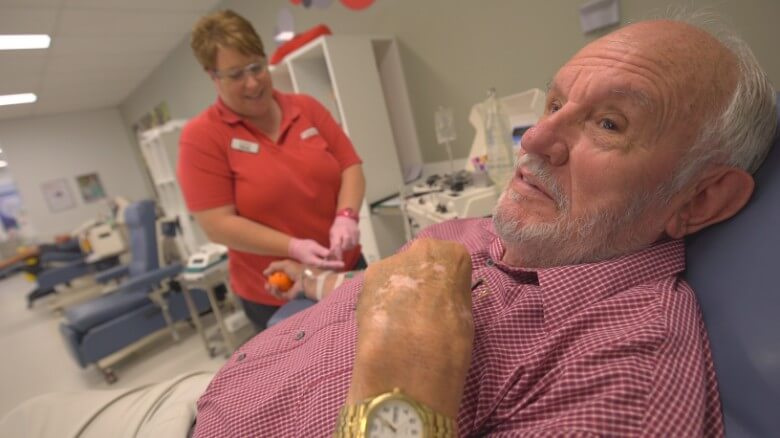
James Harrison, known as the “Man With the Golden Arm,” has donated blood nearly every week for 60 years. After all those donations, the 81-year-old Australian man “retired” [on May 11, 2018].
…
According to the Australian Red Cross Blood Service, he has helped saved the lives of more than 2.4 million Australian babies.
…
Harrison’s blood has unique, disease-fighting antibodies that have been used to develop an injection called Anti-D, which helps fight against rhesus disease.
This disease is a condition where a pregnant woman’s blood actually starts attacking her unborn baby’s blood cells. In the worst cases, it can result in brain damage, or death, for the babies.
…
Doctors aren’t exactly sure why Harrison has this rare blood type… He’s one of no more than 50 people in Australia known to have the antibodies, the blood service says.
…
“In Australia, up until about 1967, there were literally thousands of babies dying each year, doctors didn’t know why, and it was awful. Women were having numerous miscarriages and babies were being born with brain damage,” Jemma Falkenmire, of the Australian Red Cross Blood Service, told CNN in 2015. “Australia was one of the first countries to discover a blood donor with this antibody, so it was quite revolutionary at the time.”
Farmers at Janga in the West Mamprusi municipality of the Northern Region [in Ghana] are learning how to use drones and other newly introduced chemicals meant to fight an invasion of fall armyworms in the area. The intervention comes at a time when the worms have wreaked havoc on maize and rice farms.
The exercise was scheduled in response to a recent report by the Daily Graphic that the pest had resurfaced in the Nanumba South District and West Mamprusi municipality, destroying hectares of farms.
RMG Ghana Limited, an agro-input company, which organized the …. exercise …. took farmers through the use of drones, recommended time to spray, and how to apply pesticides that could help fight the worms.
…
The drones sprayed a hectare of farmland within 15 minutes, compared to the manual knapsack sprayer which often took about three hours to spray the same area of land.
[J]ust 10 minutes after spraying with the new pesticide…. the worms and other insects that were feasting on the crops died and fell off.
Editor’s note: This article was originally published on a foreign news website. This summary has been edited for clarity.
Read full, original article: Drones, new chemicals introduced to fight army worms
In June of [2017], five researchers at Facebook’s Artificial Intelligence Research unit published an article showing how bots can simulate negotiation-like conversations.
…
A month after this initial research was released, Fast Company published an article entitled “AI Is Inventing Language Humans Can’t Understand. Should We Stop It?” The story focused almost entirely on how the bots occasionally diverged from standard English – which was not the main finding of the paper – and reported that after the researchers “realized their bots were chattering in a new language” they decided to pull the plug on the whole experiment, as if the bots were in some way out of control.
Fast Company’s story went viral and spread across the internet, prompting a slew of content-hungry publications to further promote this new Frankenstein-esque narrative: “Facebook engineers panic, pull plug on AI after bots develop their own language,” one website reported.
…
Zachary Lipton, an assistant professor at the machine learning department at Carnegie Mellon University, watched with frustration as this story transformed from “interesting-ish research” to “sensationalized crap.”
…
A growing number of researchers working in the field share Lipton’s frustration, and worry that the inaccurate and speculative stories about AI, like the Facebook story, will create unrealistic expectations for the field, which could ultimately threaten future progress and the responsible application of new technologies.
The Interior Department announced plans [August 3rd] to reverse a rule that banned the use of pesticides in national wildlife refuges.
The decision …. reverses an Obama-era ban on the use of neonicotinoid pesticides as well as genetically engineered crops within refuges where there is farming.
…
The announcement from Fish and Wildlife Service (USFWS) deputy director Greg Sheehan said the rollback is to benefit land specifically purchased to become refuges to help waterfowl and migratory bird species. Some of the land has historically been used to maintain crops to support the birds.
…
“Some National Wildlife Refuge Lands are no longer able to provide the amount or quality of food that they once did due to changes in cooperative food practices within the Refuge system,” Sheehan wrote. “Realizing that farming practices will continue into the foreseeable future within the NWRS …. we must ensure that we are appropriately making use of farm practice innovations as we actively manage farm areas.”
Those innovations …. include incorporating genetically modified seeds into the farming practices.
“A blanket denial of Genetically Modified Organisms does not provide on-the-ground latitude for refuge managers to work adaptively and make field level decisions about the best manner to fulfill the purposes of the refuge,” Sheehan wrote.
The World Health Organization on [July 24] declared the official end of the latest outbreak of Ebola in the Democratic Republic of the Congo, which tallied 54 cases, including 33 deaths. But a study published…in the Lancet Infectious Diseases highlights just how tenuous such declarations can be when it comes to Ebola.
The study, led by researchers at the Centers for Disease Control and Prevention, traced a puzzling cluster of Ebola cases in Liberia to a mother who appeared to have had a stealthy, undiagnosed infection for more than a year. The cluster came to light when the woman’s 15-year-old son arrived at a hospital in Monrovia on November 17, 2015—more than two months after the country had been declared free of the disease in the wake of a massive outbreak that began in 2013.
…
Such a scenario isn’t unheard of for Ebola. Earlier studies have found that the virus can lurk in men’s semen for up to 18 months after a victim recovers. It has also been spotted in the vaginal fluids and breast milk of asymptomatic women.
…
While researchers say such poorly understood, stealthy cases are rare, they still “highlight the risk of Ebola virus disease flare-ups even after an outbreak is declared over.” They urge continued vigilance and surveillance.
Ever since India adopted genetically modified Bt cotton in 2002, a bitter battle has been raging to define the narrative over its impact …. Stories have begun appearing pointing to a supposed new “failure” in India’s GM cotton revolution — an invasion of the pink bollworm pest, which appears to be becoming resistant to the insecticidal proteins in Bt cotton.
…
So what is the real story? …. We reached out to Bt cotton experts …. According to Dr. Ronald Herring [an authority] on …. Bt cotton in India, “the pink bollworm problem is real,” albeit “till recently isolated in India. I’d first want to rule out counterfeit seeds.” He noted that fake GM seeds are “a huge problem in India” …. farmers who thought they were growing Bt cotton had …. varieties with little or no expression of any Bt gene.”
…
Dr. Srinivasan Ramasamy, a visiting scientist …. at Cornell University, [said]: “I don’t agree that Bt cotton has failed in India.”
…
“After the introduction of Bt cotton, the yield has almost doubled within six years. However, the decline in yield is only about 15 percent in the last six or seven years,” [Ramasamy said]. Therefore, Bt cotton still outperforms conventional varieties ….
Herring noted “…. All pest protection eventually becomes less useful because plants adapt faster than humans can devise new preventatives …. Bt offers some terrific advantages but is no silver bullet ….”
If you haven’t heard of CRISPR yet, the short explanation goes like this: In the past six years, scientists have figured out how to exploit a quirk in the immune systems of bacteria to edit genes in other organisms — plants, mice, even humans. With CRISPR, they can now make these edits quickly and cheaply, in days rather than weeks or months.
…
Let that sink in. We’re talking about a powerful new tool to control which genes get expressed in plants, animals, and even humans; the ability to delete undesirable traits and, potentially, add desirable traits with more precision than ever before.
…
But there are real limits to what CRISPR can do, at least right now. Scientists have recently learned that the approach to gene editing can inadvertently wipe out and rearrange large swaths of DNA in ways that may imperil human health.
…
As scientists work to overcome these limitations, much of the hype around CRISPR has focused on whether we might engineer humans with specific genetic traits (like heightened intelligence). But in some ways, that’s a sideshow. “Designer babies” are still far off, and there are enormous obstacles to making those sorts of complex genetic modifications. The stuff that’s closer at hand — from new therapies to fighting malaria — is what’s most exciting.
23andMe customers might just play a role in helping create one of Big Pharma’s next blockbuster drugs. On [July 25, 2018], the genetic testing company announced it was entering a partnership with pharmaceutical giant GlaxoSmithKline (GSK) to develop new drugs and therapies. As part of the collaboration, the company will allow GSK to peek at the (voluntarily shared) genetic data of millions of people who have taken 23andMe’s DNA home testing kits, NBC News reports.
…
According to NBC News, GSK will invest $300 million into 23andMe. The companies have also signed a four-year deal that will grant GSK exclusive rights to drugs developed with the help of 23andMe’s data. In a statement to Gizmodo, a 23andMe spokesperson described the fundraising deal as “separate from this [research] collaboration.”
…
Given 23andMe’s windfall, some ethics experts are advocating that customers should get a slice of the pie, too.
“It’s one thing for NIH to ask people to donate their genome sequences for the higher good,” Peter Pitts, president of the Center for Medicine in the Public Interest, told NBC News. “But when two for-profit companies enter into an agreement where the jewel in the crown is your gene sequence and you are actually paying for the privilege of participating, I think that’s upside-down.”
A Fresh Look is one of the newest efforts to give farmers a voice about GMOs and speak directly to the public, specifically from farmer moms to consumer moms. When it comes to the use of biotechnology in the food system, the public has noted concerns over health, control of the food supply, and the effects of chemical use on the environment.
“This is a family-farmer-led initiative. What makes A Fresh Look unique compared with some of the other GMO education campaigns that have happened in the past is that there isn’t industry involvement here. It really is a family-led program,” says Rebecca Larson, the campaign’s lead scientist.
…
The voice of a farmer mom is relatable to consumer moms. A Fresh Look uses a variety of digital platforms to speak with folks: Social media platforms such as Facebook, Twitter, and Instagram, activity on consumer publications online, and, of course, A Fresh Look’s website itself.
…
As part of the outreach, those farmers will talk about yields being up 30 percent, and the fact that they’re now using half as much fuel, or fewer and safer pesticides every year.
“When a farmer talks about what they’re seeing on their farm, it’s really difficult to argue with someone’s reality,” Larson says.
The surprising truth about cake is that it’s astonishingly inefficient.
So are lollipops, pies, sticks of gum, and cookies, each an imperfect vehicle used to deliver the sweet sensation people crave. And these foods are loaded with sugar.
…
[S]ugar molecules have to land on our sweet-tasting receptors, most of which sit on the tip of the tongue. But sugar is notoriously bad at actually hitting those receptors, so bad that only 20% actually makes it, the rest washing down our gullets and into the digestive system. This is one reason why many foods contain so much sugar.
…
Enter DouxMatok, a small Israeli startup with aims of shaking up the global sugar market …. [The Company has] created …. a pathway to reducing the sugar in their products while keeping tastes the same.
…
Food-grade silica is commonly found in lots of foods …. The scientists at DouxMatok like using it for two reasons. The first is that it’s porous …. and can be filled with smaller sugar molecules. The second reason is that silica is really good at finding its way to our taste buds.
…
When sugar-loaded silica hits saliva, it’s able to diffuse more effectively than sugar molecules alone, which gives it a better chance at hitting the taste buds on our tongues ….
When Science published a monkey study nearly 2 years ago that showed an anti-inflammatory antibody effectively cured monkeys intentionally infected with the simian form of the AIDS virus, the dramatic results turned many heads. But some skeptical researchers thought the data looked too good to be true and predicted the intervention wouldn’t work on HIV in humans. They were right.
Anthony Fauci, head of the U.S. National Institute of Allergy and Infectious Diseases in Bethesda, Maryland, and a co-author of the Science paper, today [July 25] reported the failure of a clinical trial that attempted to translate the remarkable monkey success to humans.
…
In the monkey experiment, the animals infected with the simian immunodeficiency virus (SIV) were treated with antiretroviral (ARV) drugs that suppressed the pathogen, and then given repeated injections of an antibody that blocks a receptor called α4β7 found on immune cells.
…
That cellular receptor is found on the surface of CD4 white cells, HIV’s favorite target.
…
If people reacted like monkeys to the antibody treatment, once vedolizumab blocked α4β7, they could stop ARV drugs and the HIV that inevitably remained would start to copy itself, but would have difficulty infecting cells and creating new virions.
…
In all but two of the 18 people, HIV sprang back once they stopped ARVs.
In about 1980, I visited several International Maize and Wheat Improvement Center (CIMMYT) research sites in Mexico. The trip included a tortuous drive to a low-elevation research station near Poza Rica. As we rounded one bend, I vividly remember seeing an ejido farmer hoeing weeds in his half-hectare corn field. “He is always there,” I was told, day after day under the hot sun. When he progressed to one side of the field, newly emerged weeds already needed hoeing on the other.
What a tedious task I thought, as I compared that to my own corn fields in Ontario. For me, one spray application at a cost of about $20 per half-hectare, and less than 5 minutes of field work, meant near weed-free conditions for the whole growing season.
Efforts to control pests are as old as farming. With weeds at least there has always been the option of hand-pulling, hoeing, and/or small cultivators pulled by animals (more recently, tractors). Diseases and insects were worse because mechanical control was usually impossible and high pestilence meant extreme crop losses, and often starvation.
John Unsworth in History of Pesticides states, “The first recorded use of insecticides is about 4,500 years ago by Sumerians who used sulfur compounds to control insects and mites.” Over the millennia, lots of approaches have been tried.
A big change occurred in about 1940 with the discovery, manufacture and usage of two synthetic compounds – 2,4D for weed control and DDT for insects. Many other synthetic herbicides, insecticides and fungicides soon followed.
I remember the excitement in about 1962 when Professor George Jones of the Ontario Agricultural College (now part of University of Guelph) applied atrazine to a small field of corn on campus and killed almost every weed for the full season – thereby eliminated the historic need for “scuffling” (inter-row cultivation after planting) for weed control in corn.
Crop pests, if not controlled, mean less food
In years since, crop agriculture everywhere in the developed world (most developing countries too) has become highly dependent on chemicals for pest control.
This did not mean a diminished effort by plant breeders to develop new pest-resistant crop varieties. But plant breeding is slow; genetic sources of pest resistance are often hard to find or unavailable; and genetic resistance usually ‘breaks down’ (pests become resistance) with time. Plant breeding is highly important to pest management but it’s insufficient by itself.
Of course, genetic resistance of pests to pesticides also develops, and herbicide usage has meant a shift in weed populations; new species tolerant to specific herbicides become more prevalent when competition from herbicide-susceptible ones disappears.
Notwithstanding the challenge of evolving pest resistance, the combination of better plant breeding techniques and new pesticides means pests are controlled far more effectively now than in times past. That’s one major reason why yields of many crops have increased dramatically in recent decades.
The advent of chemical weed control also triggered some important changes in cropping techniques. One was no-till crop planting which now represents a very common cropping practice for many crops and regions.
The increased usage of chemical pesticides also meant growing awareness of the negatives. Rachel Carson’s book, Silent Spring, published in 1962 was pivotal.
That event coincided with a growing public awareness of many environmental issues, and greater restrictions were soon placed on pesticide usage. Many early pesticides were banned for usage, DDT being one. Newer pesticides are safer to both human health and environment than those of earlier years.
Sustainability is a strong driver of twenty-first-century agriculture. Virtually every agricultural and food organization now lists sustainable development as a priority. Despite the common goal, sustainable agriculture has come to mean many different things.
Organic agriculture which rejects the use of synthetic pesticides and some modern crop breeding technologies often defines itself as ‘sustainable’ even though the environmental benefit is mixed (see also here) and this approach generally means significantly lower productivity per hectare and higher food prices.
Genetic engineered (GE) crops, commonly called genetically modified crops or organisms, or simply GMOs, have generally meant reductions in pesticide usage and/or the use of pesticides safer to human health. Many view this as more sustainable.
Despite their differences, a common view shared by supporters of both organic agriculture and genetic engineering is that pesticide usage is inherently bad. It’s seen as a necessary evil, with a goal of sustainable agriculture being to minimize and ultimately eliminate pesticide usage.
UK environmentalist, Mark Lynas, who I admire a great deal, stated in a recent talk, “let’s get serious about getting crop protection chemicals out of farming.” He’s not unique in equating sustainability with ‘pesticide free.’
But when you search deeper, the rationale for a goal of elimination seems vague and weak.
Yes, there are and will always be risks with pesticide usage, risks that are larger where reasonable precautions are not taken to minimize human exposure (too common, I’m told, in many developing countries). Off-target pesticide drift is also an issue. Farmers and other pesticide users too often apply pesticides prophylactically rather than in response to specific threats. Better means of predicting need are required. Finally, pesticides cost farmers money and require the use of some energy for their production and transport to users.
Risks to health and environment with pesticide usage must be balanced against the often-larger risks associated with pests and pest-induced toxins in food which pesticides help control.
Alternatives to pesticides also have notable downsides for both health and ecology. Take soil cultivation as an example. It causes the more rapid oxidation (breakdown) of soil organic matter, renders soils more vulnerable to water and wind erosion and can be devastating to soil organisms. Pests adapt to cultural controls just as with pesticide usage and plant breeding.
Soil tillage means more soil erosion
Everything we do in agriculture involves a balance among competing needs for food productivity, environmental integrity, and the ability of farmers to earn a living.
A reduction in pesticide usage in agriculture makes sense where effective alternative controls are available at affordable cost, and where the health and environmental risks of the alternatives are less than that of the chemicals they replace.
But reduction is not the same as elimination.
A recent Bloomberg news article about some entrepreneurs developing robotic weeders is telling: “After months of research [with robots on non-chemical weed control] they faced a disappointing truth: There was no way around herbicides….Their challenge became applying the chemicals with precision.”
The nature of pesticides will likely change. New approaches show great promise, such as ‘RNA interference’ which involves the use of compounds designed to block the action of specific genes and the enzymes they code for in specific pest organisms and/or crop plants.
But even as these are introduced, the pests will inevitably evolve to develop resistance, just as occurs with plant breeding and more traditional pesticides.
So it comes down to the subtle but important distinction between low and no pesticide usage. Reductions in pesticide usage are to be applauded where possible and net beneficial, but hopes for a total elimination of all pesticide usage in crop/food production are not realistic – at least with technologies now available or on the horizon.
This assumes of course that the goal truly is sustainable agriculture – and sustainable in the sense that agricultural technology must continually evolve and improve to address ever-changing needs and pest threats.
Of course, if the goal is pesticide elimination per se regardless of sustainability, then I suppose pesticide elimination makes sense. (Just make sure you don’t eliminate DEET-based mosquito repellents, Lysol® use in bathrooms, or common pesticides used for flea control on pets and head lice on children; insert emoji for irony here.)
It would not be possible to feed 7.6 billion people today without pesticides – let alone the 9-10 billion expected by 2050. So as well as being cautious and sparing in pesticide usage, let’s also give them some praise. Let’s thank pesticides for what they have contributed to human well-being for so many years, and will in decades to come.
And let’s stop assuming that complete pesticide elimination is a laudable and realistic goal – for it is neither.
Terry Daynard is a grain-crop farmer near Guelph, Ontario, Canada. He’s a former professor of crop science and associate dean at the University of Guelph, and former executive vice-president of the Ontario Corn Producers’ Association. Follow him on Twitter @TerryDaynard.