


Agriculture & Food

8 pressing questions about GMOs, human health and the environment
[W]hen the International Service for the Acquisition of Agri-biotech Applications (ISAAA) sent ... its latest report, stating that, “Biotech crops ...

Viewpoint: Why a Thanksgiving dinner using GMO ingredients is safer and healthier than an organic meal
Thanksgiving is upon us, which means families across the U.S. will soon be enjoying the most mouth-watering of meals. This ...

USDA, FDA announce plan to split regulatory oversight of lab-grown meat
The Agriculture Department and FDA laid out new details on [November 16] about how the two agencies plan to split ...
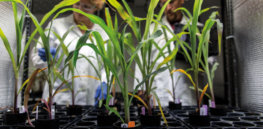
Can genetic engineering deliver a natural microbial fertilizer for crops?
At the turn of the previous century, German scientists Fritz Haber and Carl Bosch got all the credit for finding ...

In boon to poor farmers, Ghana poised to introduce GMO crops
Though the nation already imports genetically modified organisms (GMOs), Ghana is ready to introduce genetically modified (GM) crops into its ...

Faster GMO crop import approvals in China could boost Brazil’s already record-breaking soy exports
Brazil’s record soy exports to China could grow further, an Agriculture Ministry official told Reuters …. as the Asian nation’s ...

Soil salinity cuts crop yields worldwide, but salt-tolerant crops are on the horizon
Soil salinity [affects] large areas in the world and millions of farmers are faced with decreasing yields and many are ...

Gene-edited foods are coming, but how will they be regulated, and will consumers eat them?
The next generation of biotech food is headed for the grocery aisles, and first up may be salad dressings or ...

‘Secret Ingredients’: Expert says the latest anti-GMO ‘shockumentary’ is clever, provocative—and wrong
We’ve all see this in a science classroom or conference: The monotone reading from a prepared script, coupled with PowerPoint ...

How GMO crops can be engineered to ‘rehydrate’ after intense drought
Scientists at the RIKEN Center for Sustainable Resource Science in Japan have found that the protein NGA1 is critical for ...

Genetic engineering is changing our food. An expert explains everything you should know
SCIENTISTS CONTINUE TO find new ways to insert genes for specific traits into plant and animal DNA. A field of promise—and ...
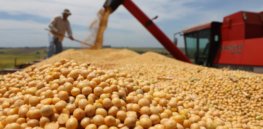
Gene silencing could ‘fool’ plants into surviving harsh environments
By temporarily silencing the expression of a critical gene, researchers fooled soybean plants into sensing they were under siege, encountering ...

‘Soylent,’ ‘clean meat,’ ‘Impossible Burger’: What we call food is just as important as how it tastes
When we talk about the food of the future, we conjure images from science fiction: the pureed brown stuff in ...
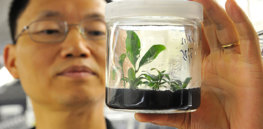
How scientists are using CRISPR to create non-GMO crops
To feed the burgeoning human population, it is vital that the world figures out ways to boost food production. Increasing ...

Epigenetic changes in plants could help produce food crops better suited to harsh environments
The sequence of genes passed on to daughter cells or offspring isn't the only factor that determines the traits of ...

Gene sequencing could help researchers breed cold-resistant crops
When temperatures fall below 32 degrees, crops exposed to the elements undergo biochemical changes designed to protect cells from cold ...
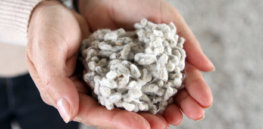
Edible cotton: How genetically modified cottonseed could revolutionize food and feed production
Here’s a somewhat boring fact you might already know about cotton: It doesn't make a good food, for humans or ...

‘Transcontinental pollination’: How migrating insects enable plants to mix
Metabarcoding, a technique of mass DNA sequencing, allows for tracing migratory routes of insects, an understudied subject due to technical ...

Activists ‘storm’ Philippine Rice Research Institute to protest field trials of vitamin-fortified Golden Rice
A group of farmers [on November 7] stormed the headquarters of the Philippine Rice Research Institute (PhilRice) to protest the ...

Identifying genetic basis for plant biodiversity could help boost crop yields
Diverse communities of plants and animals typically perform better than monocultures. However, the mechanisms that are responsible for this have ...

Cell-based, synthetic, cultured? Debate intensifies over what to call lab-grown meat
Lab-grown. Cell-based. Clean. In vitro. Cultured. Fake. Artificial. Synthetic. Meat 2.0. These are all terms that refer to the same kind ...

Uganda’s GMO biosafety bill ensuring ‘no dangers’ likely to pass after embrace of president’s proposed changes
Legislators on the Parliamentary Committee on Science, Technology and Innovation have changed their positions on the GMO Bill and considered ...

America’s risk paradox: Flu killed 80,000 people this year, but we’re more worried about GMOs
We had a really bad flu season this year. The CDC just announced that about 80,000 Americans were killed .... H3N2 ...

Talking Biotech: Meet the liquor store owner boycotting Smirnoff’s ‘non-GMO’ vodka
Meet Allison Nondorf, a farmer and co-owner of A&C Liquid Assets in Kansas. The liquor store refuses to sell Smirnoff's ...

How one farmer and his family convinced a fearful skeptic that GMOs are safe
With fearmongering headlines and the general misunderstanding of what goes into our food (hello, image of a syringe in a ...

Edible GMO cotton could supply protein to 600 million people daily
It turns out cotton seed is a great source of protein, except it’s currently toxic for humans. Cotton naturally produces gossypol, ...

Why monocultures might be the most sustainable option when choosing cover crops
It's long been believed, without much empirical evidence, that biodiversity in crop cover mixtures increases crop productivity, improves soil ecosystems ...
