


Agriculture & Food

Are GMO critics more open to gene editing that targets plant and human diseases?
The early generations of transgenic plants focused primarily on increasing productivity, either by reducing pest damage or increasing yields by ...
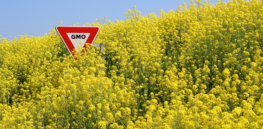
How Omega 3-fortified GMO canola can help save our oceans
In 2017, over 100,000 acres of canola was grown in Montana, according to the United States Department of Agriculture ...
Video: Scientists take on Uganda’s tough questions about GMO crops
Uganda’s NTV features panel discussion on biotechnology and biosafety with Dr. Nina Fedoroff of Penn State University and Dr. Theresa Sengooba ...

Is organic produce hazardous to your health?
We’ve all heard the reports. Toxic organic pesticides cause problems for the environment. Organic pesticides are linked to Parkinson’s Disease, ...

Absolut failure: Kansas farm family takes stand against fear-based non-GMO vodka marketing
I don’t throw the word hero around very often, but in this case the cape fits. Out on the vast ...

Can we ‘build’ a better banana with genetic engineering?
Reproductively, domesticated banana plants are self-copying machines .... With the emergence of the 20th century, the confluence of the Industrial ...

Teen farmer challenges myths about GMOs, ‘factory farming’
Growing up on a production agriculture farm .... I help to produce the food that we enjoy on a daily ...

China struggling with consumer skepticism in push to introduce GMO corn
China’s central government set a goal two years ago for commercializing genetically modified corn by the end of 2020, but ...
Ugandan researchers hit the road to battle anti-GMO propaganda
As Uganda continues to grapple with its biotech future, scientists have launched an initiative to help local farmers better understand ...

Global hunger and how agricultural biotechnology firms can profit by giving away technology
New research from the University of Nebraska–Lincoln shows that agricultural biotechnology companies can do well by doing good. Agricultural economists ...

Viewpoint: Europe’s GMO process-based crop regulations are a great way to kill innovation
In 2002, Europe establishing a new regulatory agency, the European Food Safety Authority (EFSA) to resolve its regulation problems regarding ...

FDA launches initiative to support plant, animal biotechnology innovation
Today, [October 30] the U.S. Food and Drug Administration announced the Plant and Animal Biotechnology Innovation Action Plan to outline the key ...

We started eating chocolate 1,500 years earlier than previously thought, paper says
New archaeological evidence suggests humans were cultivating and consuming cacao—the crop from which chocolate is produced—as long as 5,300 years ...

Climate change and rice: How some of the world’s poorest nations may suffer
Much of the world relies on rice. What happens when climate change threatens rice nutrition? ...
CRISPR gene editing could save pigs from devastating disease
As flu season rears its ugly head, humans aren’t the only ones on the virus’ warpath. Pigs are also vulnerable ...

6 things agroecology can do for farming and the environment
Agroecology has returned to the global spotlight, as one approach to bring farmers closer to meeting challenges [like rising food ...

Video: Why many food companies won’t pick a side in the GMO debate
In this video, Know Ideas Media founder Nick Saik explains why farmers and agriculture companies have to get involved in ...

Viewpoint: Why we have to fight for what biotechnology can offer us
“Tea. Earl Grey. Hot.” That’s how fictional star ship captain Jean-Luc Picard from Star Trek orders his tea, 300 years ...

How Frankenstein and 200 years of horror stories have haunted the biotechnology revolution
It was a dark and stormy night in 1818, when something sinister was loosed upon the world. Okay, so it ...

Grass genes could help scientists breed crops better adapted to drought, high temperatures
Researchers from Cornell and the United States Department of Agriculture will tap into genetic information found in more than 700 ...

We don’t grow enough vegetables to feed everyone a healthy diet, study claims
If everyone on the planet wanted to eat a healthy diet, there wouldn't be enough fruit and vegetables to go ...
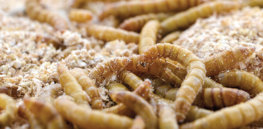
Talking Biotech: How insects could make our food supply more sustainable
Producing feed for animals we eat has led to overfishing and other environmental challenges. Feeding our livestock insects might solve ...
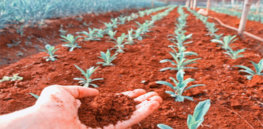
Food crops treated with synthetic plant hormone could grow in space, study suggests
With scarce nutrients and weak gravity, growing potatoes on the Moon or on other planets seems unimaginable. But the plant ...
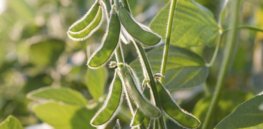
With GMO soybean market booming, is there a future for conventional varieties?
Almost all the world's soybean grown today is GMO, which it is very difficult to find non-GMO soybeans. Begging the ...

Bronchitis in chickens can cut egg production 70%. New vaccine may stem outbreaks
Infectious bronchitis virus is highly contagious and responsible for major economic losses to the poultry industry worldwide. Infected chickens experience ...

Video: European farmers push for greater access to GMO crops to ensure better harvests
From adapting to climate change to ensuring a sufficient supply of food, agricultural innovation has enormous potential to help farmers ...

FDA, USDA tackle lab-grown meat label regulations at joint agency conference
[Ocotber 24 was] Day 2 of the joint USDA-FDA public meeting on cell-based meat — or whatever we end up ...
