


Featured in Weekly Newsletter

Viewpoint: “On the wrong side of humanity and science”, Greenpeace Philippines launches last gasp effort to derail GMO Golden Rice approval
The time has come for all parties to embrace this humanitarian innovation ...

Boosting Australia’s fire recovery by ‘terraforming’ damaged lands with synthetic biology
Biotechnology can provide valuable tools for fire prevention and restoration ...

GLP’s Global Gene Editing Regulation Tracker and Index: Will politicians embrace innovation or fear?
We hope this gene editing regulation tracker and index will encourage science-based scrutiny and advocacy ...

If you face a life-or-death medical crisis, can you trust artificial intelligence (AI) to make the best decision?
Deep learning will radically change aspects of our medical care. How well do we need to understand how AI tools ...

Plant-based meat critics say it’s not as healthy or sustainable as proponents claim. Let’s look at the nutrition and ecological science.
Education is not enough. Taste, cost, and convenience play dominant roles in shaping food choices ...

Reconsidering LSD and other psychedelic drugs for treating depression and anxiety
There is a movement underway to reconsider how LSD and other psychedelic drugs are regulated. If restrictions were loosened, these ...

GMO sustainability advantage? Glyphosate spurs no-till farming, preserving soil carbon
Skeptics of GMOs decry the growing practice of no-till farming and its connection to herbicide-tolerant crops. Yet, agronomists say good ...

Viewpoint: Prohibiting treatment of transgender teens ignores reality of gender dysphoria
New study delves into the genetics of individuals with gender dysphoria ...

Podcast: The phrase ‘Who’s Your (Grand) Daddy’ has shocking relevance to Jack Nunn, as the Australian geneticist learns of his surprising link to Britain’s most notorious ‘sperminator’
Consumer genetic tests are becoming widespread - but what happens when an innocent investigation reveals dark family secrets? ...

The Varroa destructor mite is the greatest threat to US honeybees, and why things could get worse.
Researchers are looking at a long-term solution: develop bees that can fend off Varroa themselves ...

How fertile are you? ‘Ovarian reserve’ DTC tests that count your eggs offer mixture of control and misinformation
Joining the reproductive fray are tests designed to assess fertility by counting the number of eggs left in a woman's ...

Exercise Rx: Physical activity is ‘personal regenerative medicine’ and ‘acts like pharmaceutical drugs’
As researchers learn more about how exercise fights chronic ills like heart disease and diabetes, doctors may soon be able ...

Afraid of glyphosate and other synthetic pesticides? You eat 10,000 times more of the natural ones made by plants
Fruits and vegetables have evolved thousands of built-in pesticides chemically similar to the ones created in labs ...

Viewpoint: GMO crops should become a bigger part of the food system if we want a sustainable society
If we all work towards understanding science rather than being afraid of it, we can build a world where we ...
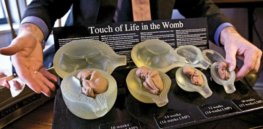
Artificial wombs could create seismic shift in the debate over abortion, reproductive rights
The ability to develop a fetus outside the mother's body could be here within decades. That means society will face ...

Does organic mean ‘pesticide free’? 5 things to know about the USDA organic label
Here's what you're actually getting for that 'organic' premium price ...

Growing tiny brains for research: Should we ‘frantically panic’ that something might go awry?
As mini-brains become more advanced, some researchers are worried they'll develop consciousness ...

Famine in Africa and the Middle East? Devastating stem rust fungus threatens global staple crop, but genomic solution may finally be on the horizon
These tools could give wheat, one of our most important staple crops, some much-needed relief ...
遺伝子治療-x--263x129.jpg)
Viewpoint: Pricey gene therapies fuel debate over drug prices—and why there is no easy fix
By scrapping value added and sales taxes, we can cut down on drug pricing by up to 25% ...

39 biotech experts’ open letter protests anti-GMO activist Vandana Shiva’s ‘anti-science’ talks at Stanford and UC Santa Cruz
An activist who compares GMOs to rape and fertilizers to war should not be given a platform ...

Novels ‘All About Evie’ and ‘The Family Upstairs’ illustrate how DNA tests can reveal ‘dark secrets’, from rape to unknown siblings
It was inevitable that fiction writers would begin weaving unexpected DNA test results into their narratives ...

Viewpoint: After years of bashing agriculture and GMOs, Chipotle reverses course with ‘Cultivate the Future of Farming’ campaign
Given Chipotle's past cozy relationship with organic food marketers, this seems more like a marketing stunt ...

Podcast: Why some of the most iconic images and stories depicting evolution are wrong
Kat Arney tackles the myths and misconceptions around two of the most iconic images in evolutionary biology: the 'March of ...

Teaching evolution to college students with creationist views requires innovative approaches
University instructors employ a variety of methods when teaching evolution in classes in which large numbers of students reject the ...

Do GMO foods or glyphosate cause gluten allergies?
Anti-GMO campaigners continue to link GMOs and the herbicide glyphosate to gluten allergies--even though there is no commercialized genetically engineered ...

Can synthetic biology help deliver an AI brain as smart as the real thing?
To create artificial general intelligence, we need to study the brain ...

Viewpoint: At least 200,000 people die every year GMO Golden Rice is kept off the market
This is not a story of incompetence and ignorance, but of an antediluvian hostility to science and technology ...
