Autism is more heritable than anorexia, alcohol dependence, depression and obsessive-compulsive disorder, according to an analysis of data from nearly 4.5 million people.
At 64 percent, its heritability is similar to that of schizophrenia, attention deficit hyperactivity disorder (ADHD) and bipolar disorder, the new study shows.
Heritability refers to the degree to which differences in people’s genes, as opposed to environmental factors, account for their traits. The new study measures the heritability of these conditions by calculating how often pairs of siblings — who share about half their DNA — have the same diagnosis compared with half siblings.
…
[Tinca Polderman, assistant professor of complex trait genetics at VU University Amsterdam in the Netherlands] and her colleagues combed through Sweden’s Multi-Generation Register to identify siblings born in Sweden since 1932. For each sibling pair, they included the two eldest siblings in a family who were born within five years of each other. They looked at full siblings and half siblings who share a mother. The final sample includes 4,408,646 people.
The researchers identified people diagnosed with any of the eight psychiatric conditions. For autism, the study included people born since 1990, when diagnoses of the condition first appeared.
…
She and her colleagues are looking for common variants that can help explain the overlap in traits of autism, schizophrenia and ADHD seen in siblings. They are also using the data to predict a person’s odds of being diagnosed with one of the conditions.
U.S. sanctions against Iran and a slide in Turkey’s currency are contributing to an uncertain short-term outlook for seed maker Vilmorin as it seeks to recover from a disappointing past year, the French company said.
Vilmorin, one of the world’s largest suppliers of seeds for grain and vegetable crops, saw its shares tumble as much as 13.5 percent in Paris on Thursday after reporting weaker-than-expected profits for its financial year to June 30.
…
The firm, which has been hit by high inventory levels among vegetable seed distributors and a decline in maize (corn) planting in North and South America, said it remained confident of long-term growth prospects for agricultural seed.
…
It also announced an agreement with the Broad Institute in the United States to have access to CRISPR-Cpf1 technology, which is among so-called gene-editing methods being explored to accelerate development of sturdier crops.
Like other seed firms, Vilmorin sees gene-editing as a valuable tool and Jacquemond criticized an EU court ruling this year that such technology should fall under regulations for genetically modified crops, which remain controversial in Europe.
Scientists have long understood the psychological benefits of computerized companions. Studies have shown they can help combat loneliness among the elderly, motivate students in isolated communities, and even improve symptoms in dementia patients.
Still, despite all of this research, one big question remains: are robotic pets as good as the real thing?
…
[W]e need to determine what makes dogs so lovable in the first place. According to Ronald Arkin, director of the Mobile Robot Laboratory at Georgia Institute of Technology, it all comes down to basic biology.
…
Arkin calls this area of study “behavioral simulation ethological modeling,” and he’s been doing it for a longtime. He believes all aspects of animal behavior — “movement, emotion, even morality” — can be authentically simulated in robotic companions. He says he holds patents on robot “emotions” and is currently working on simulating feelings like guilt, shame, embarrassment, and empathy in robots to prove out his theories. For Arkin, though, it isn’t enough to build a robotic dog that’s as good as the real thing. He believes he can build one that’s better.
…
While Arkin’s “perfect” robotic dog may not be here for a few years, he’s pretty enthusiastic about where the field seems to be headed.
Preserving human microbiomes today, especially the more diverse ones from traditional peoples in developing nations, may provide treatments for diseases in the future, propose four microbiome experts in the October 5 issue of Science.
In the sci-fi classic The War of the Worlds, Martians attacking the Earth drop from the sky, dying, victims of bacterial infections to which humans have become immune. H.G. Wells wrote the novel from 1895 to 1897, set in Victorian England.
Then on October 30, 1938, a radio version aired in the US, with Orson Welles narrating so convincingly that many listeners panicked, thinking that Martians were truly invading. The first of five film adaptations debuted in 1953, set in California.
The 2005 film has Tom Cruise running around as Dakota Fanning screams her head off, this time in New Jersey. The closing lines summarize the microbiology of the situation:
“From the moment the invaders arrived, breathed our air, ate and drank, they were doomed. They were undone, destroyed, after all of man’s weapons and devices had failed, by the tiniest creatures that God in his wisdom put upon this earth. By the toll of a billion deaths, man had earned his immunity, his right to survive among this planet’s infinite organisms. And that right is ours against all challenges. For neither do men live nor die in vain.”
I’m assuming that quote echoes the original, given the sexist language.
Microbes are us
Humans have not only adapted to the many microbial species with which we share the planet, but some are essential to our survival. Our microscopic bodily residents form the microbiota, their genomes our microbiome. While we’re still learning about this otherness within and on us, already a new field of medicine has arisen to manipulate or restore the microbiome. Most familiar is the fecal transplant (see 15 Facts About Fecal Transplants: The Straight Poop).
The communities of bacteria, viruses, fungi, archaea and more complex singled-celled organisms that occupy our bodies are shifting, plunging in diversity in lockstep to industrialization. And that is hazardous to our health, according to Maria G. Dominguez Bello, from the department of biochemistry and microbiology and of anthropology at Rutgers University and colleagues. They argue in the Science article that “dramatic increases in metabolic, immune, and cognitive diseases” – diabetes, asthma, obesity, allergies, autism, inflammatory bowel disease – parallel striking decreases in microbiota diversity.
But the distribution of microbiota ups and downs isn’t geographically equal. For example, the diversity of gut bacteria in South American Amerindians is double that of US human intestinal residents.
Disruption is dangerous
The microbes passed along at birth play crucial roles in establishing such physiological functions as immunity, digestion and nutrition, hormonal activity and neural transmission. The nooks and crannies of the human body harbor distinct variations on the microbiome theme, such as the armpit, penis, vagina, mouth and nostrils.
Everyday activities that are part of what we consider civilization actually derail the functions of our microbiota, including:
Taking probiotics and antibiotics
Circumcising infants
Delivering newborns surgically
Formula feeding
Using nasal sprays, mouthwash, toothpaste, deodorant, and soap
Eating refined and processed foods
Drinking chemically treated water
Living in unnatural environments
When our natural microbial inhabitants depart, others fill the vacated niches, sometimes not to our benefit. For example, Oxalobacter formigenes are bacteria that occupy the human colon, where they normally dismantle oxalate. We can’t digest it, and accumulating oxalate causes kidney stones. Will eradication of these bacteria increase incidence of kidney stones?
Microbiome biology is complex. “This is just the beginning of our knowledge about the impacts of living in an industrialized world—we need to better understand which strains in human populations are diminishing and what the functional and pathological implications are for these losses,” write the authors of the new paper.
Changing microbiomes in response to industrialization will only accelerate, because more than half of the global human population lives in cities and that proportion is growing. According to the researchers:
We suspect that the microbes disappearing in urban societies are those that are needed to maintain health and prevent many metabolic, immune, and cognitive diseases. If microbial disruption due to urbanization increases the diseases of industrial societies, then the current global pandemics will worsen, with economic impact jeopardizing health care systems.
Taking action
We can slow the decline in microbiota diversity: eat more whole foods, minimize use of antibiotic drugs and antimicrobial cleaning products, emphasize breastfeeding over bottlefeeding, and perform cesarean sections and circumcisions only when medically necessary. But people aren’t likely to give up deodorants and drugs and the other comforts of modern civilization to restore something essential that they can’t see.
Other efforts at slowing the loss of diversity are more directed, such as taking metabolites that “good” bacteria require, like lactate to restore the vaginal microbiome. The authors call on nutrition researchers to develop “dietary additives to replace our lost chemistry.” But the microbiome is intricate and ever-changing; adding or removing a species can have unforeseen effects.
Any active approach to maintain, restore, or alter the microbiome should consider the effect of natural selection over generations, the researchers maintain. We differ. The roster of bacteria in the intestines of a person whose ancestors came from France isn’t the same as that from someone whose ancestors lived in Patagonia, China or Ethiopia. One study found quite different gut microbial communities in healthy children and adults from Venezuela, rural Malawi and US cities. The same probiotic given to individuals from these different backgrounds and ancestry had different effects on the microbiota.
A global human microbiota vault emphasizing traditional peoples
Because it’s so hard to get people to change their habits, coupled with the challenge of altering microbiota, the authors suggest developing a microbial version of Noah’s Ark to preserve today’s diversity before it plunges further, to counter helpful species disappearing entirely or harmful ones gaining a toehold.
The microbe bank would be modeled after seed banks. (Image source: Krishi Jagran)
“We’re facing a growing global health crisis, which requires that we capture and preserve the diversity of the human microbiota while it still exists. These microbes co-evolved with humans over hundreds of millennia. They help us digest food, strengthen our immune system and protect against invading germs. Over a handful of generations, we have seen a staggering loss in microbial diversity linked with a worldwide spike in immune and other disorders,” said Dr. Dominguez-Bello in a news release.
They suggest collecting and storing microbes from the least urban parts of the planet, from “traditional peoples in developing countries,” to preserve the diversity. Several intriguing studies have compared microbiomes of people in different societies.
One investigation examined seasonal cycling in the gut microbiome from 350 stool samples of the Hadza hunter-gatherers of Tanzania, for more than a year. These people eat what they can catch, kill, or gather, finding berries and honey in the wet season and hunting for meat in dry times, supplementing throughout the year with tubers and baobab. The populations of microbial species that wax and wane with the seasons differentiate the Hadza from 18 other human populations, and the Hadza maintain a more diverse microbiota. For example, Hazda guts house a more diverse array of microbes whose enzymes digest plant-based carbs than do the innards of US residents.
Follow the latest news and policy debates on sustainable agriculture, biomedicine, and other ‘disruptive’ innovations. Subscribe to our newsletter.
In another study, researchers discovered the most diverse human microbiomes in samples from the mouths, forearm skin and feces of 34 Yanomami. These Amerindians live in the High Orinoco state of Venezuela and are one of the last peoples to have had no contact with modern societies. Surprisingly, the Yanomami microbiome includes antibiotic resistance genes, even though they and their ancestors had never been treated with antibiotics. Perhaps these genes illustrate what paleontologist and science writer Stephen Jay Gould called “exaptation” – a new function for an existing gene.
Inspiration for the Noah’s Ark of Microbes comes from the Svalbard Global Seed Vault, a storage facility “deep inside a mountain on a remote island in the Svalbard archipelago, halfway between mainland Norway and the North Pole.” The vault is the world’s largest collection of crops seeds, preserving botanical diversity so that people can replenish crops in the aftermath of natural or human-made disasters.
Preserving our microbiomes is possibly even more crucial than saving seeds. “We owe future generations the microbes that colonized our ancestors for at least 200,000 years of human evolution. We must begin before it is too late,” the team concludes.
Ricki Lewis is the GLP’s senior contributing writer focusing on gene therapy and gene editing. She has a PhD in genetics and is a genetic counselor, science writer and author of The Forever Fix: Gene Therapy and the Boy Who Saved It, the only popular book about gene therapy. BIO. Follow her at her website or Twitter @rickilewis
Nowhere on the agenda of the annual meeting of the American Society of Human Genetics, being held in San Diego…is a topic plaguing many of its members: the recurring appropriation of the field’s research in the name of white supremacy.
…
Instead of long-discounted proxies like skull circumference and family pedigrees, according to experts who track the far-right, today’s proponents of racial hierarchy are making their case by misinterpreting research on the human genome itself.
…
One slide [biologist John] Novembre has folded into his recent talks depicts a group of white nationalists chugging milk at a 2017 gathering to draw attention to a genetic trait known to be more common in white people than others — the ability to digest lactose as adults.
…
In the post, the link is accompanied by a snippet of hate speech urging individuals of African ancestry to leave America. “If you can’t drink milk,” it says in part, “you have to go back.”
In an inconvenient truth for white supremacists, a similar bit of evolution turns out to have occurred among cattle breeders in East Africa. Scientists need to be more aware of the racial lens through which some of their basic findings are being filtered, Dr. Novembre says, and do a better job at pointing out how they can be twisted.
Days after Harvard Medical School said it found extensive falsified or fabricated data from the laboratory of a prominent heart researcher, doctors and scientists are urging a halt to a medical trial based in part on his work. They say that sick people should not be subjected to the risks of an experiment whose underlying science has been called into question.
…
[Piero] Anversa is not directly involved in the heart failure trial, which is being run by a national clinical trial network supported by $63 million in federal funds. But given the turmoil and uncertainty over the work that helped lay the foundation of the trial, outside researchers called for a pause and careful examination of whether it should proceed. The trial carries inherent risks, because it requires an invasive biopsy that can cause serious complications.
One patient died after their heart was perforated during a biopsy.
“I think that the trial should be halted, and they should have an external review,” said Darryl Davis, a cardiologist at the University of Ottawa Heart Institute studying how to regenerate heart tissue. “The Anversa data comprised part of the rationale for that trial, and I think we have to understand better what these cells actually can do before we subject the patients to the risk of having an invasive procedure.”
The Argentine government approved the first soy that is tolerant to drought and that also combines better weed control by having herbicide tolerance. The crop was developed by a national company (Bioceres) and presents clear commercial possibilities in agro-industrial production in the face of climate change.
…
The Secretary of Government of Agribusiness, Luis Miguel Etchevehere, said, “this crop will provide a real advantage for producers by reducing yield losses, without dispensing with options for weed control.”
…
It is appropriate to mention that this product showed a remarkable efficiency in reduction of losses due to the lack of irrigation during the drought that affected the soybean crop during the last season. This was verified in field tests carried out in different parts of the country.
In a world first, international scientists …. have used whole genome sequencing to help diagnose a plant pathogen destroying crops on African farms, potentially paving the way for preventing crop failures, vital to the African economy.
Dr. Jo-Ann Stanton, a Senior Research Fellow in the University of Otago’s Department of Anatomy, helped develop the PDQeX, one of the two prototype technologies which have made it possible to carry out the whole genome sequencing on remote African farms.
“This achievement opens the way to rapid and accurate pathogen identification, permitting immediate corrective action to prevent crop failure,” Dr. Stanton explains.
…
Using hand-held molecular diagnostic devices, Dr. Stanton and the team has been able to carry out whole genome sequencing on the farms. A device (PDQeX) from New Zealand company ZyGEM that permits on-site DNA extraction, was used together with the MinIT base-calling mini-supercomputer made by UK company, Oxford Nanopore.
Bringing these technologies together …. it was possible to select either leaf, stem or insect samples on the farms, prepare the DNA for sequencing and then covert raw data to DNA sequence reads for data interpretation, all in real time.
…
Cassava …. is under attack from viral pathogens that reduce or destroy the crop …. “800 million people worldwide depend on cassava as their main source of calories and virus spread is a significant global threat,” Dr. Stanton says.
Two years ago, researchers from the University of Wollongong in Australia shook the science world by claiming to have discovered 3.7 billion-year-old fossils in a rock formation in Greenland, a finding that pushed back the origin of life on Earth by 200 million years. New research is now casting doubt on this discovery, with scientists saying the rock structures are of non-biological origin.
In the original 2016 study, geologist Allen Nutman and colleagues identified cone-like structures, ranging between 1 and 4 centimeters in length, in 3.7-billion-year-old rock found in the Isua formation in southwest Greenland. These structures, the researchers said, were evidence of stromatolites—sedimentary formations created by the layered growth of microbial organisms in shallow waters.
…
Abigail C. Allwood, a geologist from the California Institute of Technology, Minik T. Rosing, a geochemist at the University of Copenhagen, and colleagues decided to visit the Isua formation in Greenland and take a look at these rocks for themselves. Their resulting analysis, published [October 17] in Nature, suggests Nutman and his colleagues got it wrong. The observed structures in the rocks are just products of tectonic processes, they say, and there’s absolutely nothing biological about them.
…
But if there’s anything Nutman, Allwood, and Rosing do agree on, it’s that the formations were created in a marine environment.
One of the impressive things about biochemistry and cell biology is how it can produce physical correlates to things that we know and experience, but have no detailed explanation for. There’s a really interesting example out in Cell that has to do with the effects of sunlight on mood and learning.
…
Sunlight (generally speaking, its ultraviolet component) is well-known to be used by the body in vitamin D synthesis, and its other effects on the skin are very well known, both bad (sunburn, various forms of skin cancer) and good (relief from psoriasis and several other conditions). Those all make sense, and you can come up with reasonable hypotheses involving inflammation, damage/repair mechanisms, and so on.
…
The increased glutamate downstream of UV exposure does indeed set off more brain activity (as shown by electrophysiology experiments), and also shows significant effects on memory and motor-learning activity.
…
We are all aware that the knee bone is connected to the thigh bone, but did you know that the brain was connected to the skin? You’d have to think that beta-endorphin and glutamate are not going to be the end of it (although those two are powerful enough for plenty of effects). One immediately wonders about the well-known effects of sunlight on seasonal depression, among other possibilities. Everything in the body is more or less hooked up to everything else at some level.
The European Union Court of Justice’s (ECJ) recent decision that new gene-editing techniques must go through the same lengthy approval process as traditional transgenic genetically modified (GM) plants has sent shock waves around the world and its greatest impact will be on those who are hungry and food insecure.
The decision will have a direct impact on European biotech companies trying to compete in a global market. According to Sarah Schmidt of the Heinrich Heine University of Düsseldorf in Germany, the ruling is “the death blow for plant biotech in Europe.” It will force gene-edited plants to go through a regulatory process that typically costs about $35 million …. effectively pricing out universities, nonprofits, and small companies.
…
The EU Parliament needs to …. initiate an honest conversation …. on the newer mutagenesis seed technology. The EU Court of Justice can’t be the last word on this subject. The EU must follow sound science for the world to be able to feed itself. If that requires a change in the EU statutes to exempt CRISPR and other such technologies from the GMO regulatory requirements, then so be it. The scientific community is doing its best to keep the Malthusian theory at bay. It is time for the EU Parliament, Council and Commission to step up and do their part.
The International Food Information Council Foundation’s (IFIC) 2018 Food & Health survey identified carcinogens or cancer-causing chemicals in food as a leading consumer food safety concern. Such apprehension is at the heart of several trends swaying consumer purchasing patterns and is why the Food and Drug Administration’s recently issued Pesticide Residue Monitoring 2016 Report merits greater attention.
…
The report shows the agency tested for 711 pesticides and industrial chemicals from 7,413 total samples, and the F.D.A. emphasized the results were consistent with the findings from previous years. Two groups of samples were taken — those from domestic foods and those from imported products.
Ninety-nine per cent of the samples from domestic products and 90 per cent of those from imported foods comply with federal standards. No detectable levels of pesticide residues were found in 52.9 per cent of domestic and 50.7 per cent of imported human food samples.
…
The F.D.A.’s annual Pesticide Residue Monitoring statistics are not the type of information that will go viral. Beyond a handful of industry-specific news outlets, the release of this year’s report was hardly noticed.
Yet it is just the type of science-based supporting information companies may use to counter the onslaught of misinformation about the safety of the nation’s food supply. It is available on the F.D.A.’s web site and, best of all, it’s free.
As ketamine clinics pop up across the U.S. to offer experimental infusions for depression, anxiety, and a slew of other conditions, training programs to teach providers how to run these businesses have also started to appear. They promise to teach everyone from anesthesiologists to advanced practice nurses the ins and outs of ketamine, which has been used for decades as an anesthetic but is still under study as a therapy for psychiatric disorders.
The doctors and nurse anesthetists offering the courses say they’re urgently needed to try to bring some standardization to the booming ketamine treatment business. I’d like to see that be done appropriately,” said Dr. Gerald Grass, an anesthesiologist who runs the Ketamine Institute, a training program.
…
But some mental health experts say there isn’t yet enough evidence about how to use ketamine to offer training. They fear some of those signing up for the programs might be trying to break into the business to make a quick buck.
…
Some clinics don’t thoroughly screen patients, and experts worry they’re offering the drug to anyone who can afford it. Providers charge anywhere from $350 to close to $1,000 per infusion and many patients get at least six rounds of the treatment. Some clinics, too, offer ketamine for uses that haven’t been well-studied, overhype its efficacy, and tout special blends that experts say aren’t supported by published evidence.
A paper published October 11 in Science uses a retina grown outside the body to show how cones develop into the eyes’ color sensors.
…
Robert Johnston, a developmental biologist at Johns Hopkins University, and his colleagues wanted to understand how, exactly, developing cells in the human eye decide to become blue, green or red.
…
Johnston’s team decided to use human stem cells to grow mini retinas, or retinal organoids, in the lab. They then let these miniature organs mature in a dish for nine months to a year “We were growing for them for basically the time that it takes to make a baby,” he says.
At the end of maturation the mini retinas looked remarkably like real human ones.
…
According to Johnston, this research could help develop future therapies for eye disorders such as color blindness or macular degeneration, age-related damage to the retina that can result in vision loss. Organoids could not only provide a platform to study those conditions in more detail, but now the fact scientists can control the types of photoreceptors that grow in laboratory retinas means it might be possible to one day “transplant these things directly [into patients] or preprogram stem cells and let them grow up to be the particular cells that we want.”
Researchers at the University of Missouri have found that an individual’s perception of genetically modified organisms might impact their judgments about whether or not nanotechnology-enabled products should be labeled in stores.
…
“Most people do not have the time nor resources to keep up with every scientific advancement, and so they might rely on past experiences or judgments to make decisions about new technologies,” said Heather Akin, an assistant professor in the Missouri School of Journalism.
…
Akin surveyed nearly 3,000 adults in the U.S. to collect their views on GMOs, nanotechnology and labeling products available for purchase. She found that those who believe GMOs are beneficial are less likely to support labeling of nano products, even if they don’t believe nanotechnology has many benefits. Akin also found that those who are less trusting of scientific authorities are more inclined to favor labeling nano products if they do not think GMOs are beneficial to society.
For several decades in modern medicine history, human race has been used as a constant variable to predict and/or determine our disease risks, biometric profiles, health behaviors and outcomes. It drives many of our medical standards, including clinical guidelines, medical school curricula, and clinical decision support tools and algorithms. This reductionist approach to medicine, however, has proven questionable and risky for biracial and multiracial individuals with high levels of phenotypical (physically-apparent) and genotypical (physically non-apparent) variation.
Some clinical study reports describe how race-based approaches to health diagnosis and management have led to inaccurate assessments in medical practice, especially in cases of bone marrow transplants for multiracial populations. Susan Graham is the president of Project RACE (Reclassify All Children Equally), an organization advocating for multiracial classification in health care settings for people of two or more races. In an interview with the Genetic Literacy Project, she explained that “a multiracial person’s best chance of bone marrow donor acceptance must take [multi]race into account to get as perfect a match as possible.” That’s why we need to do more, as a society, to expand the number and diversity of bone marrow donors to help solve this issue for multiracial populations, she said.
Race versus genetics: Social constructs or health determinants?
The idea of race as a social construct has been well researched, with some classically defined racial groups experiencing greater hardships – including poor access to health care services –
than other racial groups in the US.
Questions also have arisen regarding the use of race as a health determinant, due to recent advancements and novel findings in genomics, ancestry, and medicine.
For instance, single- and multi-gene tests for harmful genetic variations inBRCA1 and BRCA2 are used by doctors to identify people with increased risk of developing breast cancer. As a result, those people undergo closer medical surveillance, take more aggressive prevention measures, and are more likely to receive appropriate treatments when needed.
From an epidemiological standpoint, the concept of race as a determinant of breast cancer diagnosis follows: According to the National Cancer Institute (NCI), American women of Ashkenazi Jewish ethnicity or descent, followed by women of northern European ethnicity or descent, hold the highest prevalence of breast cancer-associated BRCA1 and BRCA2 variations.
This finding may be influenced by personal, social, economic and environmental factors that influence health care service utilization among racially-defined groups.
However, if women of Ashkenazi Jewish and northern European descent in BRCA1 and BRCA2 are overrepresented in genetic databases, then the NCI’s findings are incomplete and warrant investigation to see if larger genetic representations of single race, biracial and multiracial individuals are required for greater epidemiological accuracy. The All of Us research program, sponsored by the National Institute of Health (NIH) and supported by the Precision Medicine Initiative, are examples of steps forward in this direction to increase diversity in genetic health databases.
Stakeholder discussions about race, genetics and clinical guidelines
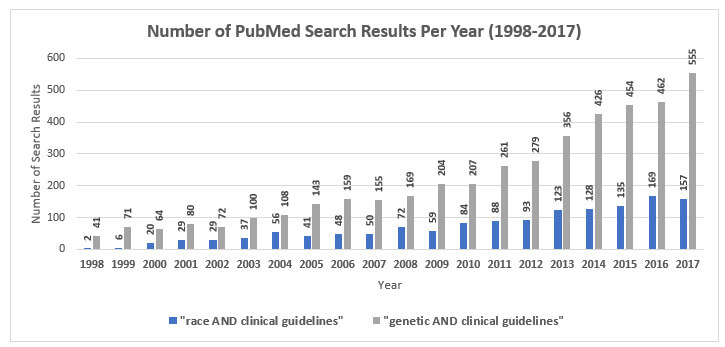
The graph below displays the number of articles searchable within www.PubMed.gov between 1998-2017 using search phrases “race AND clinical guidelines” and “genetic AND clinical guidelines”. The graph shows that clinical guidelines discussions about genetics have drastically outpaced those about race within the past 20 years.
Similar discussions about multiracial populations, however, have been scant, leaving this area ripe for scientific exploration. “The multiracial population is very new to the concept of precision medicine, as we are still fighting for recognition in medicine and race-based data,” Graham said.
The medical community is lagging in its inclusion of biracial and multiracial Americans, she said. Multiracial populations seemingly add layers of complexity to standard race-based clinical guidelines.
So, is the medical community really lagging here? Or, are biracial and multiracial patients lumped into single racial categories by clinicians who must adhere to race-based clinical guidelines?
Also, how can members of the medical community effectively engage with growing multiracial populations to improve racially-driven clinical guidelines that may not adequately serve the unique needs of multiracial populations?
Follow the latest news and policy debates on sustainable agriculture, biomedicine, and other ‘disruptive’ innovations. Subscribe to our newsletter.
Dr. Elizabeth Clayborne is a multiracial emergency medicine physician and educator at the University of Maryland School of Medicine who has worked with the National Human Genome Research Institute to address race, ethnicity and genetics in medicine. She offered her take on the issue: “If a patient is labeled as ‘multiracial,’ they are included in a group that has extreme genetic diversity and no specificity to any particular genetic roots.”
She argued that the use of a simple “multiracial” category is a reductionist and low-value approach to understanding a patient’s disease risk at the genetic level. “This kind of lump-labeling does a disservice to population and personalized health frameworks that rely on geographic ancestry, versus race, to determine disease risk,” she said.
The medical community continues to debate race as an indicator of social and economic factors, which in turn effect health outcomes. “Health disparities that are present within African American/Black patient populations, may be actually be tied to low socioeconomic status, poor diet, lifestyle habits and other non-genetic determinants of health,” she said.
Looking ahead
Although few and far between, discussions about the benefits of precision medicine for multiracial populations continue to emerge among experts in health law, genomics and medical-legal partnerships. Graham expressed hope that “precision medicine may very well help our population become aware of health disparities, which could be critical to our wellness and healthcare in providing useful information.”
Diversity and inclusion in precision medicine and genetic discovery followed by an overhaul of racially driven clinical guidelines and racial labeling in clinical settings appear to be key actions needed to address these health care challenges for multiracial populations.
Dr. Clayborne believes that, as the precision and personalized medicine movement grows – due to advances in genomic sequencing – the medical community could eventually steer away from racial categories to focus more on individual family history and known genetic markers for disease.
Rachele Hendricks-Sturrup holds a doctor of health science degree and is a freelance health science writer. Follow her at her website or on Twitter @AcesoIngenuity
Can you imagine the entire population of the United States, Canada, Mexico, Brazil, the United Kingdom and France going hungry?
You don’t need to imagine. That is exactly what happens every day when an estimated 815 million people around the globe go hungry. In the short term, the problem is likely to get worse as the population grows, diets change and urban sprawl forces farmers to produce more food on less land. Recentreports suggest that by the time children born today reach their 30s, the planet must increase food production by at least 70 percent.
As a biochemist, I started my career in biomedical research, but I shifted to agricultural research in 2013 because everybody needs to eat. Now I’m working with an international research project exploring how to boost food production. The goal of Realizing Increased Photosynthetic Efficiency (RIPE) is to increase the efficiency of photosynthesis – the process plants use to convert energy from the sun into the food we eat. In our most recent publication we’ve shown that it is possible to dramatically boost crop yield, by enabling the plant to get rid of its toxins more quickly.
It’s critical that we begin developing new crops now because it can still take at least a decade for agricultural innovations to reach farmers.
Photorespiration is an energy-demanding process
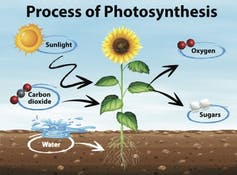
When it comes to photosynthesis, plants use sunlight to power a chemical reaction that converts carbon dioxide and water to sugars, oxygen and energy. But that isn’t the only chemical reaction that occurs in plants. A quirk in the evolution of the protein, called Rubisco, is that sometimes instead of converting carbon dioxide during photosynthesis, it uses oxygen instead. This produces waste products such as glycolate and ammonia, which can be toxic to plants and slow or stunt their growth.
By BlueRingMedia/shutterstock.com
To remove these toxic chemicals, another process needs to kick into gear. Photorespiration is a part of natural plant metabolism that recycles these toxins. It is a necessary process in major crops including rice, wheat and soybeans, as well as most fruit and vegetable crops.
Recycling these toxic byproducts sucks up a huge portion of the plants’ energy – and can inhibit the plant’s growth by more than 30 percent. At higher temperatures, plants tend to increase the amount of oxygen they convert, so as growing season temperatures rise and heat waves strike, up to 50 percent of the energy generated from photosynthesis can be required for photorespiration to recycle toxins in major crops like wheat and soybeans. That slashes yields in the hotter and drier regions of the world, such as sub-Saharan Africa and Southeast Asia, where food is most needed.
To meet the growing demand for increased food production, I worked with an international team to explore whether speeding up photorespiration might boost crop yields.
Making photorespiration faster
The work, led by Professor Christine Raines and lead author Patricia Lopez-Calgano from the University of Essex and the United States Department of Agriculture-Agricultural Research Service (USDA-ARS), explored whether this modification could boost the production of tobacco plants.
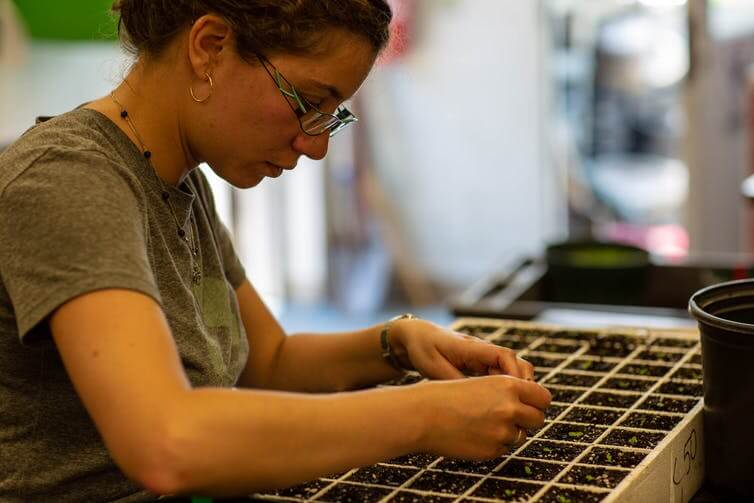
Researcher Patricia Lopez working with tobacco seedlings in the lab. Image credit: Monica Kennedy, CC BY-ND
We managed to speed up the recycling of these toxins by designing plants that produce more of a protein, called the H-protein, that is already present in our crop plants and plays a role in photorespiration. Previouswork in the lab using the small plant Arabidopsis, the “lab rat” of plant research, suggested that increasing the quantity of H-protein could speed up photorespiration and enable our plants to grow larger. Our team translated this idea from the lab to the field using a strain of tobacco, Nicotiana tabacum, which we grew outside at a research field station near the University of Illinois at Urbana-Champaign where I work as a USDA-ARS scientist.
We discovered pretty quickly that we had to carefully control the quantity of the H-protein we engineered plants to produce. Too much H-protein in all parts of the plant was harmful, stunting growth and reducing yield of tobacco leaves. Thus, we fine-tuned our approach and engineered plants that manufactured the H-protein only in the leaves. This increased photosynthesis and plant growth, probably because of faster recycling of the toxic chemicals.
Follow the latest news and policy debates on sustainable agriculture, biomedicine, and other ‘disruptive’ innovations. Subscribe to our newsletter.
We tested our hypothesis in tobacco because it is an excellent model for proof-of-concept research. It is easy to genetically engineer and only has a four-month life cycle, allowing us to conduct several trials in one field season. This allows us to test various genetic modifications in tobacco and then translate those discoveries to make improvements in targeted food crops.
To fine-tune the expression of the H-protein, the team engineered the tobacco using DNA from a close relative, Solanum tuberosum, or potato. Using a known sequence of potato DNA, we were able to boost the H-protein specifically in the desired leaf tissue. That proved to be the key to increasing yield without harming the plant.
Initially, I was skeptical that boosting the production of a single protein out of thousands in the plant could have such a dramatic impact on crop yield. But, after two years of field trials, my colleagues and I have demonstrated that increasing H-protein levels leads to larger plants, boosting the crop yield by 27-47 percent.
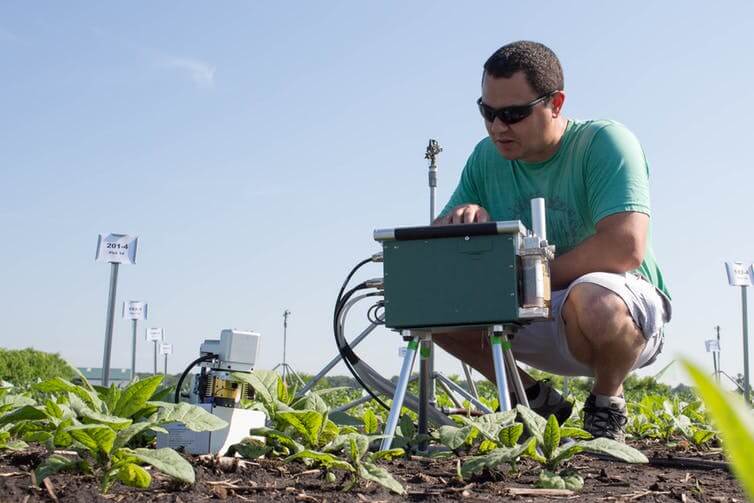
Author Paul South measures the rate of photosynthesis in the tobacco plants in a field site in Illinois. Image Credit: Claire Benjamin, CC BY-ND
You might wonder whether plants with extra H-protein are safe to eat? It is too early to answer that question. Once we have engineered “high H-protein food crops” these plants must be proved safe, which includes allergen and environmental impact before these transgenic plants will be approved by the FDA and USDA.
These higher-yielding crops would be genetically modified organisms
Because part of the DNA comes from a foreign source (potato), these plants are considered genetically modified organisms, or GMOs. There’s no doubt that the idea of using GMOs as part of our food source is quite controversial.
Many individuals have rejected the use of GMO technology, and some countries have prohibitions or restrictions of the use in their food supply. However, many studies have shown extensive evidence that GMOs are safe to eat, including this definitive report by the National Academies of Sciences, Engineering and Medicine. We believe it is important to have this technology to increase crop productivity so farmers and consumers will have many high-yielding options available to them.
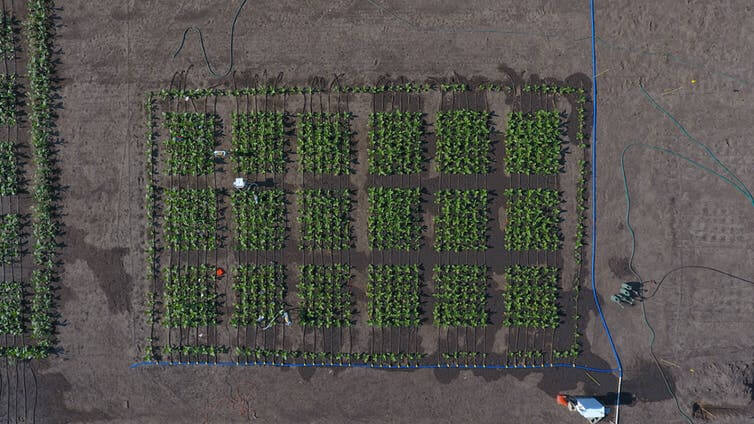
A shot of the field where South and his colleagues test their genetically modified tobacco plants. This image was taken by a drone in 2017. Image credit: Beau Barber, CC BY-ND
There are different techniques to create new crops, including traditional crop breeding techniques, GMOs and more recently CRISPR-based gene editing technology – which allow us to directly rewrite a plant’s DNA without adding foreign genes. But regardless of the technique, the goal is the same: produce plants that can thrive in farmers’ fields to create a more secure and sustainable food supply for everyone.
Our next goal is to bump up levels of the H-protein in important food crops including legumes – soybean and cowpea – as well as the root crop cassava, which are major staple foods worldwide. If we can increase the production of these target plants by between 27 and 47 percent, similar to what was observed in this study, it will go a long way toward meeting the goal of feeding another 2 to 3 billion people by 2050.
Paul South is a Postdoctoral Researcher at the Carl R. Woese Institute for Genomic Biology at the University of Illinois at Urbana-Champaign
The mango is an incredibly important fruit worldwide, yet little is known about its precise origins or domestication. Today’s podcast explores this important fruit with Dr. Emily Warschefsky, who studied this fruit during her doctoral training. She reveals a surprising background story about this popular fruit.
The late physicist and author Prof Stephen Hawking has caused controversy by suggesting a new race of superhumans could develop from wealthy people choosing to edit their and their children’s DNA.
Hawking, the author of A Brief History of Time, who died in March, made the predictions in a collection of articles and essays.
The scientist presented the possibility that genetic engineering could create a new species of superhuman that could destroy the rest of humanity.
…
“I am sure that during this century, people will discover how to modify both intelligence and instincts such as aggression,” he wrote.
“Laws will probably be passed against genetic engineering with humans. But some people won’t be able to resist the temptation to improve human characteristics, such as memory, resistance to disease and length of life.”
…
“Once such superhumans appear, there will be significant political problems with unimproved humans, who won’t be able to compete,” he wrote. “Presumably, they will die out, or become unimportant. Instead, there will be a race of self-designing beings who are improving at an ever-increasing rate.”
The comments refer to techniques such as Crispr Cas9, a DNA-editing system that was invented six years ago, allowing scientists to modify harmful genes or add new ones.