Viewpoint: Costly regulations prevent consumers from enjoying benefits of biotech crops

tomato forks x
[T]hree papers [recently published] from research groups around the world detail attempts to make a new type of super-tomato: one that does not sacrifice taste for convenience. To do this, the researchers used CRISPR–Cas9 gene editing, which allowed them to modify specific genes in wild relatives of tomatoes. The result — according to a scientist who has tasted one of the fruits — is an “aromatic” tomato that could re-energize taste buds.

To achieve the same product through conventional breeding would have taken decades, says Jörg Kudla at the University of Münster in Germany, a lead author on one of the papers. Instead, it took his team three years. It’s an example of science serving a need of society …. In July, the European Court of Justice ruled that foods produced by CRISPR–Cas9 gene editing must be bound by the same onerous regulations as genetically modified crops. The resulting mandatory tests and trials will massively increase the cost of developing a commercial product ….

The expense is one reason why genetically modified crops have so far yielded little benefit for consumers: because it has cost so much to produce such plants, companies focus on developing commodity crops and traits that appeal to farmers ….  if [gene-edited] crops have no commercial future in Europe, it might be a struggle to justify paying for the crops’ development.

Read full, original article: Super-tomato shows what plant scientists can do

Genetic tests are used to determine antidepressant efficacy – but science might not back up claims

Screen Shot at PM

It can be notoriously difficult for psychiatrists and patients to determine which antidepressant might be most effective, or which might cause side effects.

And so Color Genomics, a company that already sells genetic tests to determine someone’s risk of developing certain cancers, said this week that it will also begin to offer a DNA test to determine how well widely used antidepressants are likely to work for patients.

With the new test (part of a $249 product), Color joins several dozen companies probing patients’ DNA in search of insights to help inform decisions about which psychiatry medications patients should take. They’re touting applications for depression, bipolar disorder, attention deficit hyperactivity disorder, and post-traumatic stress disorder.

But some top psychiatrists say the evidence doesn’t support the commercial rush.

In a review published this [April 2018], a task force of the American Psychiatric Association’s research council concluded that such genetic testing is not ready for prime time in their field. “Although some of the preliminary published data sound promising,” the task force members wrote, “there is insufficient evidence to support widespread use of combinatorial pharmacogenetic decision support tools at this point in time.”

The upshot: While genes seem to play some role in how well antidepressants work, factors like age, diet, and hormonal status may be far more influential.

Read full, original post: In the race to use genetic tests to predict whether antidepressants will work, science might be getting left behind

Viewpoint: Activists promotion of ‘fog of misinformation’ about GMOs challenges science communicators

image

Activists spend all day peddling nonsense. If they spent that kind of time on constructive issues…sigh.

[A] local radio station [recently promoted] an upcoming program called “Battling Misinformation And ‘Bad Advice’ About Science And Your Health” and they said that a doctor was going to be on to talk about it. I was intrigued, but wary. This same program once used a link to Mike Adams’ site as “evidence” on a topic.

mem 6 20 18 2

Paid campaigners are spending all day trying to get their messages out. Sometimes they succeed by getting items published in legitimate outlets, giving oxygen to their conspiracy theories and getting a veneer of credibility that they do not deserve. Stephanie Strom pushed information out via the the New York Times regularly for the anti-vaccine Organic Consumers’ Association or the Chipotle marketing team. The Guardian regularly stenographs Carey Gillam’s law-suit supporting unpublished data conspiracies from her work at US Right To Know.

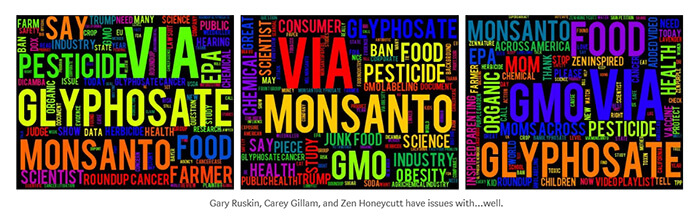
We used the meme-of-the-week @tweetcloudbot to examine what some of the activists spend their time talking about. Hilariously, their fixation about Monsanto is immediately clear. No word on how they are going to transition this hate to Bayer yet — I never saw Bayer come up in the clouds. But let’s have a quick look at their oeuvre:

mem 6 20 18 3

US Right To Know — a group funded in large part by the anti-vaccine Organic Consumers Association — has a particular fixation with Monsanto and glyphosate (Gary Ruskin and Carey Gillam are well paid to do this). Zen Honeycutt, a regular peddler of bad science and low-quality fearmongering testing claims, who was a source of bad claims in Carey Gillam’s Hogwash book, has a similar collection. I actually think the “VIA” is funny. This is part of the echo chamber that spreads the same information around and amplifies it.

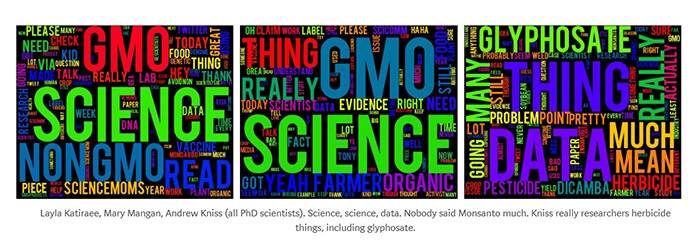
Let’s compare this with the scientists who are regularly shouted down as being Monsanto shills. What do they talk about?

mem 6 20 18 4

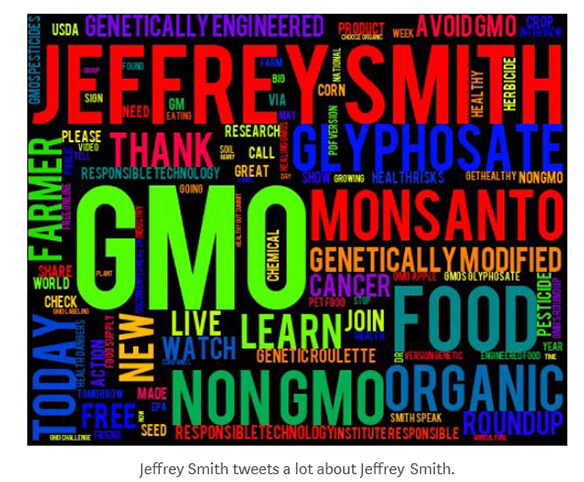
A couple of other amusing entries in this exercise: The Institute for Responsible Technology (sounds impressive, but we nicknamed it the Living Room for Responsible Technology because it’s not really an “institute”. Here’s a helpful graph to see where that sits in credibility.). Run by Jeffrey Smith, a swing dance instructor who has fearmongered for years on GMOs, let’s see what he liked to talk about.

mem 6 20 18 5

In this unscientific overview of the main social media topics of these groups, it is fascinating to see how much time and effort the voices of fearmongering and conspiracy theory are spending on the various issues. It makes me wonder what they could do if they set their focus on constructive discussion of the things they claim to support, rather than trash-talking GMO technology constantly.

But what is perplexing about this: the scicomm arena professionals tell us to provide good stories about our values, and the things we care about (like science and evidence and that sort of stuff). We are trying to do that. We tweet about research, about science projects, about data. But we are not tweeting in a vacuum. We are trying to be heard over the fog of misinformation and fear that paid activists are pushing. We have to spend copious amounts of time un-fogging the misinformation before we can get to discussions of the things we value. Nobody is putting peer-reviewed research on superweeds in the NYT, but they are putting unpublished poor-quality fearmongering from anti-vaxxers up. We’re doing what we can. But we don’t have the resources and mechanisms that paid activists do.

Long-term “solutions remain elusive”.

Mary Mangan PhD is a genomics scientist, with credentials in microbiology, immunology, plant cell biology and molecular biology. Follow her on Twitter @mem_somerville

This article originally appeared at Medium as Anti-science misinformation campaigns are aggressive echo chambers. #Scicomm can’t compete and has been republished here with permission.

Beyond pesticides: Engineered crops that fertilize themselves from air

lead

Nitrogen is required for plant growth, and is a significant input in terms of cost and environmental impact. While plants are literally surrounded by nitrogen, it is present in the atmosphere in an unusable form. Some plants (like legumes) have the ability to fix nitrogen, converting it from a gas into a form the plant can use. The idea of somehow moving this important trait from legumes (or microbes) to grain crops has long been considered a holy grail of plant biotechnology. However, the problem is much more complex, and after decades of research it has not been possible. But a land race of maize deep in the heart of corn’s domestication region, selected and cultivated by Indigenous People, may have solved this problem.

Researchers, led by Dr. Alan Bennett at UC-Davis, identified this type of corn that produces aerial roots that exude a clear mucilage. This carbohydrate-dense liquid hosts nitrogen-fixing bacteria that render atmospheric nitrogen usable by the plant. The hope is that the study of the genes that control the plant’s association with the microbes, and study of the microbial communities, may bring about new technologies to help crop plants be less dependent on supplied nitrogen.

Article in PLoS Biology
Article in The Atlantic

Talking Biotech website, Twitter @TalkingBiotech

Kevin Folta on Twitter @kevinfolta | Facebook: Facebook.com/kmfolta/ | Lab website: Arabidopsisthaliana.com | All funding: Kevinfolta.com/transparency

Paul Vincelli on Twitter @Pvincell | University of Kentucky webpage 

Defining life: If it’s created in a lab, is it really alive?

life
What is life? For much of the 20th century, this question did not particularly concern biologists. Life is a term for poets, not scientists, argued the synthetic biologist Andrew Ellington in 2008, who began his career studying how life began. Despite Ellington’s reservations, the related fields of origins-of-life research and astrobiology have renewed focus on the meaning of life. To recognise the different form that life might have taken 4 billion years ago, or the shape it could take on other planets, researchers need to understand what, in essence, makes something alive.

Life, however, is a moving target, as philosophers have long observed. Aristotle distinguished ‘life’ as a concept from ‘the living’ – the collection of existing beings that make up our world, such as the neighbour’s dog, my cousin and the bacteria growing in your sink. To know life, we must study the living; but the living is always changing across time and space. In trying to define life, we must consider the life we know and the life we don’t know. As the origins-of-life researcher Pier Luigi Luisi at Roma Tre University puts it, there is life-as-it-is-now, life-as-it-could-be and life-as-it-once-was. These categories point to a dilemma that medieval mystical philosophers addressed. Life, they noticed, is always more than the living, making it, paradoxically, permanently inaccessible to the living. Because of this gap between actual life and potential life, many definitions of life focus on its capacity to change and evolve rather than trying to pin down fixed characteristics.

In the early 1990s while advising NASA on the possibilities of life on other planets, the biologist Gerald Joyce, now at the Salk Institute for Biological Studies in California, helped to come up with one of the most widely used definitions of life. It’s known as the chemical Darwinian definition: ‘Life is a self-sustained chemical system capable of undergoing Darwinian evolution.’ In 2009, after decades of work, Joyce’s group published a paper in which they described an RNA molecule that could catalyse its own synthesis reaction to make more copies of itself. This chemical system met Joyce’s definition of life. But nobody wanted to claim that it was alive. The problem was, it hadn’t done anything new or exciting yet. A New York Times article put it this way: ‘Someday their genome may surprise their creator with a word – a trick or a new move in the game of almost life – that he has not anticipated. “If it would happen, if it would do it for me, I would be happy,” Dr Joyce said, adding, “I won’t say it out loud, but it’s alive.”’

life 8 23 18 2

Joyce seeks to understand life by trying to generate simple living systems in the lab. In doing so, he and other synthetic biologists bring new kinds of life into being. Every attempt to synthesise novel life forms points to the fact that there are still more, perhaps infinite, possibilities for how life could be. Synthetic biologists could change the way life evolves, or its capacity to evolve at all. Their work raises new questions about a definition of life based on evolution. How to categorise life that is redesigned, the product of a break in the chain of evolutionary descent?

An origin story for synthetic biology goes like this: in 1997, Drew Endy, one of the founders of synthetic biology and now a professor of bioengineering at Stanford University in California, was trying to create a computational model of the simplest life form he could find: the bacteriophage T7, a virus that infects E coli bacteria. A crystalline head atop spindly legs, it looks like a landing capsule touching down on the Moon as it grabs onto its bacterial host. The bacteriophage is so simple that by some definitions it is not even alive. (Like all viruses, it depends on the molecular machinery of its host cell to replicate.) Bacteriophage T7 has only 56 genes, and Endy thought it might be possible to create a model that accounted for every part of the phage and how those parts worked together: a perfect representation that would predict how the phage would change if any one of its genes were moved or deleted.

Endy built a series of bacteriophage T7 mutants, systematically knocking out genes or scrambling their location in the tiny T7 genome. But the mutant phages conformed to the model only some of the time. A change that should have caused them to weaken would instead have their progeny bursting open E coli cells twice as fast as before. It wasn’t working. Eventually, Endy had a realisation: ‘If we want to model the natural world, we have to rewrite [the natural world] to be modellable.’ Instead of trying to make a better map, change the territory. Thus was born the field of synthetic biology. Borrowing techniques from software engineering, Endy began to ‘refactor’ bacteriophage T7’s genome. He made bacteriophage T7.1, a life form designed for ease of interpretation to the human mind.

Follow the latest news and policy debates on sustainable agriculture, biomedicine, and other ‘disruptive’ innovations. Subscribe to our newsletter.

Phage T7.1 is an example of what one synthetic biologist has called supra-Darwinian life: life that owes its existence to human design, rather than natural selection. Bioengineers such as Endy approach life in dualistic terms: a physical structure on the one hand, a pattern of information on the other. In theory, a perfect representation of life would enable a seamless transition between information and matter, intention and realisation: change some letters of DNA on your computer screen, print out an organism that looks and behaves just as you intended. With this approach, evolution threatens to corrupt the engineer’s blueprint. Preserving one’s biological designs might require making your engineered organisms unable to reproduce or evolve.

In contrast, Joyce’s desire for his molecules to surprise him suggests that the capacity for open-ended evolution – ‘inventiveness, pluripotentiality, open-endedness’ – is the critical criteria of life. In accordance with this idea, Joyce now defines life as ‘a genetic system that contains more bits [of information] than the number that were required to initiate its operation’. But according to this definition, given two identical systems with different histories – one designed and the other evolved – only the latter would be considered alive; the rationally designed system, no matter how complex, would be just a ‘technological artifact’.

Design and evolution are not always opposed. Many synthetic biology projects use a mix of rational design and directed evolution: they construct a host of mutant cells – variations on a theme – and select the ones that work the best. Although Joyce’s new understanding of life still involves evolution, it evokes the abrupt temporality of emergence rather than Darwin’s longue durée. Emergent life fits a culture of disruptive innovation whose ultimate ideal approximates something like the magic of pulling a kidney out of a 3D printer: the enchantment of joining together familiar things with new and surprising results. Design and evolution are also compatible when bioengineers look at genetic diversity as a treasure trove of design elements for future life forms.

For some synthetic biologists, the path to what the mystics called life-beyond-life – life that exceeds the living as we know it – now runs through biological engineering. Endy describes his vocation in terms of a desire to contribute to life by generating new kinds of ‘improbable patterns that continue to thrive and exist’. Joyce imagines life and technology joining forces against the fundamental thermodynamic tendency towards disorder and decay. What new forms life will take, only time will tell.Aeon counter – do not remove

Rebecca Wilbanks is a Hecht-Levi postdoctoral fellow at the Berman Institute of Bioethics, and a postdoctoral fellow in the Department of the History of Medicine at Johns Hopkins University in Baltimore. She is working on her first bookLife’s Imagined Futures’.

A version of this article was originally published on Aeon’s website asIf we made life in a lab, would we understand it differently?and has been republished here with permission

Artificial Intelligence as Ken Kesey: A computer goes on a cross-country novel writing trip

lead

On March 25, 2017, a black Cadillac with a white-domed surveillance camera attached to its trunk departed Brooklyn for New Orleans. An old GPS unit was fastened atop the roof. Inside, a microphone dangled from the ceiling. Wires from all three devices fed into Ross Goodwin’s Razer Blade laptop, itself hooked up to a humble receipt printer. This, Goodwin hoped, was the apparatus that was going to produce the next American road-trip novel.

Using neural networks, he generates poetryscreenplays, and, now, literary travel fiction.

The aim was to use the road as a conduit for narrative experimentation, in the tradition of Kerouac, Wolfe, and Kesey, but with the vehicle itself as the artist.

Along the way, the four sensors—the camera, the GPS, the microphone, and the computer’s internal clock—would feed data into a system of neural networks Goodwin had trained on hundreds of books and Foursquare location data, and the printer would spit out the results one letter at a time.

The machine received its first jolt of inspiration just as soon as Goodwin and his traveling companions fired it up in Brooklyn. It wrote: “It was nine seventeen in the morning, and the house was heavy.” For an opening sentence in a book about the road, it’s apropos, even poignant.

Read full, original post: When an AI Goes Full Jack Kerouac

Nigeria green lights field trials of disease-resistant GMO staple crops

manioka

The Federal Government has granted permits for confined field trials on genetically modified maize, rice, cassava, sorghum and cowpea to ascertain ability to resist insect attack in the country.

Country Coordinator of Open Forum on Agriculture Biotechnology (OFAB), Dr. Rose Gidado, told The Guardian that the permits were granted after in-depth risk assessment, socio-economic considerations, environmental costs, and benefits as well as safety of Nigerians.

According to her, Nigeria as the world leading cassava producer has its estimated national average yield at about 13.63 metric tons per hectare. “This is shortfall as a result of environmental stress and diseases, among others. The deficit can be prevented by planting GM cassava equipped with traits to withstand and resist these factors.”

Biotechnology provides remedies to the challenges encountered in food production. ”According to Gidado, the field trials are aimed at developing plant varieties that will provide high yields at lower cost, by incorporating traits such as resistance to diseases and pests.

Read full, original article: Nigeria: Govt Commences Field Trials On GMO Crops

Viewpoint: Experts must ‘shut down’ junk science on social media before it causes real damage

facebook
[A] new study by the Pew Research Center found over two out of three Americans (68 percent) now get at least some of their news from …. Facebook Inc. and Twitter Inc. Yet …. a majority (57 percent) …. say they expect the news they find there to be largely inaccurate.

Today, in the midst of the Social Media Era, lies in the form of fake news can gain critical mass faster than ever, with potentially dire consequences for public policy and global health.

The prevalence of fake news on social media, and consumers’ willingness to share such stories even while mistrusting their accuracy, is ripe for exploitation by those with nefarious agendas …. [anti-vaccine activist] Robert F. Kennedy Jr., has also branched out to crusading against GMOs by helping win a preliminary $289 million jury decision against Monsanto over …. its best-selling Roundup weed killer product …. much of the argument made by Kennedy and attorneys for the plaintiff, who claimed Roundup caused his cancer, rests upon shaky science.

Social media outlets …. certainly have an obligation to pull fake news stories …. not to be confused with legitimate opinion pieces …. from their sites, but …. [a]t a time when it’s too easy for false information to go viral, scientists, public policy experts and political leaders must help shut down …. these claims before they can morph into actual movements and cause real damage.

Read full, original article: Social Media Is Fueling Anti-Science Agendas

Were ‘crucial contributors’ snubbed in awarding Nobel prize for cancer immunotherapy?

nobel
[I]t’s rare that Nobel announcements don’t produce grumblings about who was left out, and this year was no exception. At least three other scientists were major contributors to the basic research that led to cancer immunotherapy.

[James] Allison won for discovering that a molecule on the surface of the immune system’s T cells, called CTLA-4, acts as a “checkpoint inhibitor” (a term he coined), a biological brake on the T cells, and that jamming the brake (including with an antibody that he developed) can unleash those T cells to fight cancer. [Tasuku] Honjo discovered another such checkpoint, called PD-1, that also keeps T cells from attacking cancer cells.

At an immuno-oncology meeting in New York — where on Monday [Oct. 1] afternoon Allison was greeted like a rock star, with scientists asking for his autograph and requesting selfies — three experts in cancer immunotherapy said they were “shocked” that [other] scientists who were key to the development of checkpoint inhibitors that exploit the PD-1 pathway were overlooked.

The 2018 medicine Nobel is only the latest where the rule of three gives a misleading impression of how science is done. Because it perpetuates the lone genius myth, said Venkatraman Ramakrishnan of Britain’s Medical Research Council, a winner of the 2009 Nobel Prize in chemistry and president of the Royal Society, “the rule of three is inappropriate to 21st-century science.”

Read full, original post: The snub club: Crucial contributors to cancer immunotherapy were excluded from the medicine Nobel

Deep space travelers could face ‘significant’ gastrointestinal damage from radiation

space

Deep-space travel could even cause significant gastrointestinal (GI) damage to astronauts, according to one new study.

Researchers at Georgetown University Medical Center (GUMC) have exposed mice to radiation to simulate how galactic cosmic radiation (GCR) in deep-space will affect future astronauts. Their results suggest that the radiation could cause serious GI damage. Their study even raises concerns about how this radiation could possibly cause stomach and colon tumor growth.

Every three to five days, the top layer of cells in our GI tract is replaced with brand new cells. This process is part of healthy GI function. When this replacement process is disturbed, it can change how we absorb nutrients and even lead to cancer, according to Albert Fornace Jr., co-author of the study.

Additionally, the research team found that the mice exposed to iron radiation produced more senescent cells, which are a type of cell incapable of regular cell division. These cells can slow down the replacement of GI cells, therefore slowing down GI function, cause oxidative stress and even cause serious GI damage.

This harm caused by the radiation appeared to be permanent, according to the statement.

Once they understand the risk better, [researcher Kamal] Datta said, “the goal is to develop protection measures whether we can test some drug or medicine that can prevent all the changes we observe.”

Read full, original post: Deep-Space Could Seriously Damage Astronaut GI Tracts, a New Study Finds

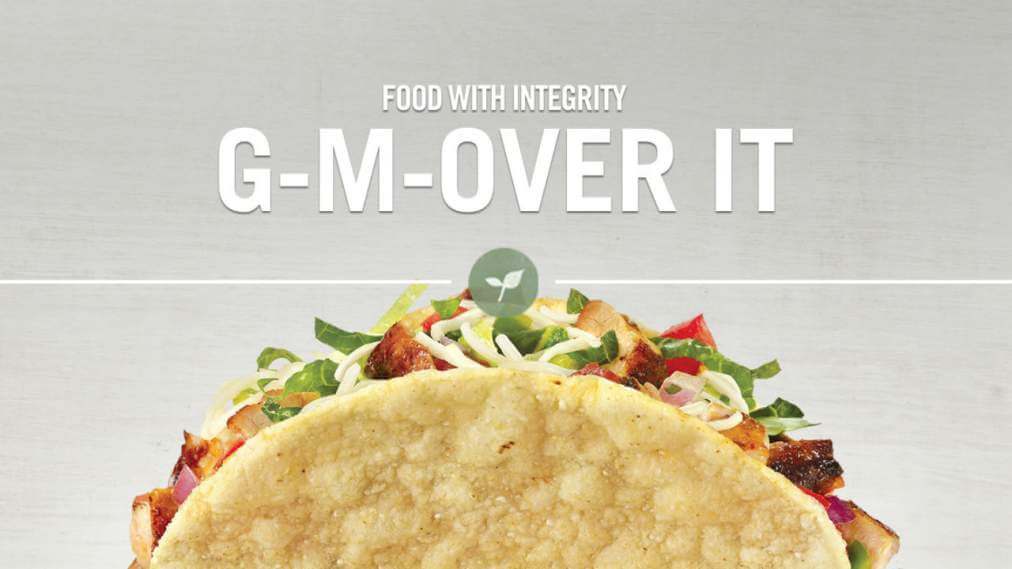
Lawsuit alleging Chipotle falsely advertised non-GMO ingredients headed back to court

chipotle

Reconsidering his previous dismissal, a federal judge has decided to advance a class action accusing Chipotle Mexican Grill of falsely advertising its food as made from only non-GMO ingredients.

U.S. District Judge Haywood Gilliam Jr. said he’d changed his mind in light of Davidson v Kimberly-Clark Corp., a recent case involving supposedly “flushable” toilet wipes. In that case, the Ninth Circuit held that …. it may be possible for a consumer to seek injunctive relief after already buying a product and knowing or suspecting the label or advertising to be false.

The case was originally brought by Colleen Gallagher in August 2015. She claimed …. Chipotle’s tacos, burritos, sour cream and cheese all come from cows fed with genetically modified feed.

Gallagher dropped out of the case in April 2016, and Gilliam dismissed it. But another group of Chipotle customers …. took up the fight and filed another class action later that month, which Gilliam also dismissed for lack of standing.

But on [October 1], Gilliam granted the plaintiffs’ motion for reconsideration and denied Chipotle’s motion for summary judgment. “Plaintiffs have offered sufficient evidence to create a disputed issue of material fact that [they] would not have purchased the Chipotle meat and/or dairy products were it not for the allegedly misleading branding,” he wrote.

Read full, original article: Judge Revives Fight Over Chipotle ‘G-M-Over It’ Ad

Looking for a connection between autism and PTSD

Autism

Having autism can sometimes mean enduring a litany of traumatic events, starting from a young age. And for many, those events may add up to severe and persistent post-traumatic stress disorder (PTSD).

“We know that about 70 percent of kids with autism will have a comorbid psychiatric disorder,” says Connor Kerns, assistant professor of psychology at the University of British Columbia in Vancouver, Canada. Depression, anxiety and obsessive-compulsive disorder are all known to be more common among autistic people than in the general population, but PTSD had largely been overlooked. Until a few years ago, only a few studies had delved into the problem, and most suggested that less than 3 percent of autistic people have PTSD, about the same rate as in typical children. If that were true, Kerns points out, PTSD would be one of the only psychiatric conditions that’s no more common in people with autism than in their typical peers.

One potential explanation, Kerns says, is that, like other psychiatric conditions, PTSD simply looks different in people with autism than it does in the general population.

How PTSD manifests in autistic people can also be unexpected, and can exacerbate autistic traits, such as regression of skills or communication, as well as stereotyped behaviors and speech. Based on these observations, Kerns and her collaborators plan to create autism-specific trauma assessments to test on a larger scale.

Read full, original post: At the intersection of autism and trauma

Diagnosing deadly medieval fever epidemics through ancient DNA

web

Many epidemics of fever ravaged Europe from ancient times through the early 20th century. But one disease stands out in historical accounts because authors describe patients appearing to recover before relapsing into fever again and again.

For years, historians have blamed those epidemics, termed louse-borne relapsing fever (LBRF), on Borrelia recurrentis, a twisting, spiral-shaped bacterium transmitted only by the human body louse.

Although it seems to make frequent and horrible appearances in the historical record, LBRF has been totally invisible in the archaeological record. A new study changes that and provides evidence that B. recurrentis is indeed at fault.

Paleopathologist Meriam Guellil of the University of Oslo and her colleagues managed to assemble a nearly complete B. recurrentis genome from sequences of DNA recovered from the skeleton of a woman buried in a medieval graveyard in Oslo.

That’s not enough to confirm that louse-borne relapsing fever caused all those historical epidemics, but it at least proves that the disease was present in medieval Europe. The real surprise, however, is how the medieval European version of LBRF differs from the modern strains that still impact people living in Ethiopia, Eritrea, Somalia, and Sudan. At some point in its evolutionary history, B. recurrenti appears to have split into two lineages—and they’ve evolved different adaptive strategies, the medieval DNA suggests.

Read full, original post: Ancient DNA reveals the secrets of a devastating European disease

Mushrooms protect honey bee from disease-carrying Varroa mite, study shows

honey bee

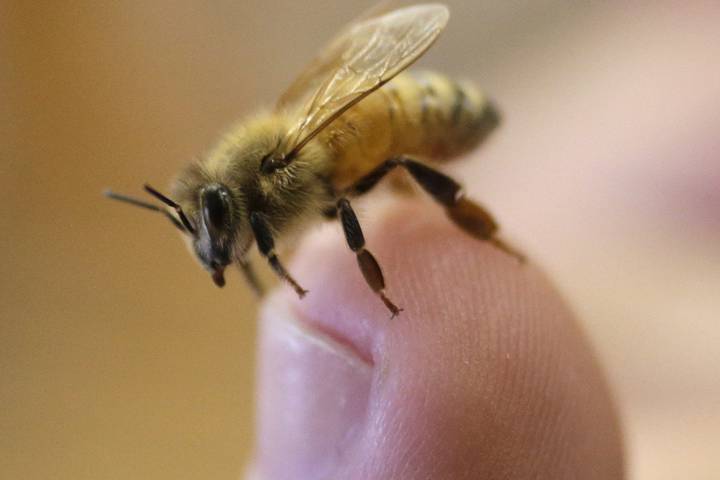
It’s not easy being a bee these days. Apis mellifera, the Western honey bee, is crucial to agriculture worldwide but faces a growing number of pests and pathogens against which beekeepers have few weapons.

But the bees themselves may be showing us the way forward: New research suggests the foraging insects may obtain protection against some viruses by consuming fungi, then returning to the hive to spread its medicinal value.

While the science and economics of saving honey bees can be controversial, no one can deny that the insects are facing a host of threats …. Much of the blame falls on the aptly-named parasitic mite Varroa destructor, which …. has …. been associated with the spread of at least ten viruses that affect honey bees ….

Foraging honey bees, however, have been observed consuming mycelium, the thread-like filaments found on many mushrooms. Like other fungi, mushrooms can produce …. antibacterial and even antiviral compounds. Researchers wondered whether forager bees eating the mycelium and then returning to the hive to share it with other bees might provide some antiviral protection for the entire colony.

To find out, a team cultivated several fungi species known to produce antiviral compounds and fed extracts of their mycelium to honey bees, initially in a lab environment. Several species appeared to reduce the amount of pathogens present.

Read full, original article: Honey Bees May Fight Off Viruses With Help From Fungi

Understanding cancer risk: Why your genetic test results may need another look

genetic testing

The first wave of routine genetics testing has already helped millions of people learn about their hereditary risk for certain diseases like cancer. But a new study published [September 25] in JAMA suggests that as our knowledge of genetics expands, these initial results sometimes need to be revised.

Researchers at the University of Texas Southwestern Medical Center decided to look at the results of over 1.5 million genetic tests [for cancer].

From 2006 to 2018, they found, there were nearly 60,000 amended reports that needed to be issued because an unique genetic variant identified in the initial result had been reclassified as either likely harmless or potentially risky after the test was taken. Overall, around 6.4 percent of the 45,000 unique variants found in these tests (taken from 2006 to 2016) had been reclassified.

“If a variant is reclassified to being pathogenic, then it matters to the patient,” said senior author Theo Ross.

And even in the case of newly identified benign mutations, the amended results can provide a peace of mind. Overall, over 90 percent of unknown mutations in the study were reclassified as benign, while just under 8 percent were reclassified as risky or likely risky. But despite that mostly good news, the team’s findings also highlight just how quickly new research can change our understanding of genetic risk.

Read full, original post: Your Genetic Testing Results Can Change—Here’s Why

Roundup ban? Glyphosate-free farming would mean higher food prices

monsanto roundup

Food production without the use of glyphosate (commonly sold as Roundup) to control weeds, will mean increased food prices.

Glyphosate continues to be in the news because of actual and forecast court cases against Monsanto. This is despite the fact that no scientific research has shown a link to human health issues when glyphosate is used as directed.

An Oxford Economics report for the UK forecast a reduction in area of 20 per cent for wheat grown and 37 per cent for oilseed rape (canola) if glyphosate was banned. In addition, yields on the reduced area would also be reduced: 12 per cent for wheat and 14 per cent for oilseed rape.

Labor productivity would decrease by 10 per cent and EBITDA (earnings before interest, tax, depreciation and amortization) would decrease by 13.9 per cent. This in [New Zealand] where only 25 per cent of farms actually make money from farming….

A report from Germany suggested that ‘where the cultivation of certain crops is no longer profitable, their production would either need to be subsidized, or farmers would need to switch to the cultivation of other crops.’

Loss of competitiveness in food production and the potential to affect global food prices were highlighted because of the knock-on effects on the economy.

Read full, original article: Jacqueline Rowarth: Will consumers pay up for glyphosate-free production?

Europe stands alone in its ‘backward de facto ban’ of agricultural gene editing, European scientists warn

Screen Shot at PM

“We, as vice-chancellors of Swedish universities and higher education institutions, are very critical of a decision by the Court of Justice of the European Union. This decision places the new gene-editing technology on equal footing with the older GMO technology. Scientifically, these technologies clearly differ, have different potentials, possibilities and completely different effects. By limiting the possibility to use this new, precise research tool, possibilities to finding develop new sustainable crops are also limited. This threatens all of Europe’s future food supply as well as the supply of other important biological products and the work with reducing the negative impact agriculture has on the environment.

Gene-editing involves a small, directed change to the plant genome, comparable to a natural mutation. Because of the Court of Justice decision, unnecessary risk assessments must now be made before using this technology. We believe that the negative effects of the decision will be extensive when it comes to research and innovation necessary for the future bioeconomy. The costs involved in obtaining marketing authorisation will be so great that, in practice, it will now be impossible for university researchers and small or medium-sized companies to develop gene-edited crops for the European market.

In practice, classifying gene-edited crops as GMOs means a cultivation ban within EU. This will negatively affect our possibilities to develop future agriculture while also reducing the use of biocides and fertilisers and maintaining crop levels. It will make agricultural development – new types of crops with new, valuable qualities such as drought tolerance, higher nutritional values or plant disease resistance – more difficult. It is remarkable that the decision maintains that random mutations, caused by radioactive radiation or mutagenic chemicals, will be exempted from regulation, while more new, precise methods to achieve the same result, will be regulated.

The court states that the reason for this is that plants which have been mutated with the help of chemicals and radiation have been used for a long time, which means that the methods are considered reliable. It should also be mentioned that the EU has already spent billions on risk research on genetically modified organisms (GMOs) without finding any evidence of risk that can be related to the choice of breeding technology. The court has made an assessment of a directive that is contrary to their own advocate-general’s assessment from January 2018 and the Swedish Board of Agriculture’s assessment from 2015; they said that mutated plants must be processed in the same way, regardless of the method used. Similar assessments have also been made by authorities in, for example, the United States and Japan.

Today, gene-editing in plant breeding meets no obstacles in Africa, America or Asia, where the technology is regarded as very promising, among other things in the work with securing the food supply in regions where starvation is still a general occurrence. It is regrettable that the court has not considered the existing scientific evidence, for example that gene-edited plants contain more precise changes than plants treated with radioactive radiation or mutagenic chemicals. Naturally, this decreases the risk of unwanted plant breeding effects. Despite the fact that the decision references the precautionary principle and the risk of unwanted environmental effects, we can confirm that European biosafety legislation, in this context, counteracts its purpose because it regulates similar crops – with similar risks – differently.

We believe that the precautionary principle should be able to highlight more than one perspective. In this context, we are convinced of the need for modern plant breeding to ensure a secure food supply, develop new biological products and reduce environmental problems in the light of, among other things, climate change. If we are not allowed to use these technologies, there is considerable risk that we will not be able to meet future challenges. Plants are photosynthesis-driven, chemical factories, and a cornerstone in a future bio-based economy is developing plants that produce other utilities than those of today – on fields, within horticultural cultivation, in breeding tanks or closed bioreactors. Swedish university research is ahead in this field, but our projects depend on the molecular technologies that have now been banned through this decision.

Finally, this decision will negatively affect international cooperation with countries which have decided to not regulate gene-edited crops in this way. The EU will be forced to try and regulate import of gene-edited crops from the rest of the world – where they will be grown as “regular crops” – despite that fact that they cannot be distinguished. This will encourage cheating and unfair competition.

Based on this verdict, it is clear that cases of a scientific nature require increased efforts from institutions with knowledge of the area. Public authorities such as the Swedish Board of Agriculture, the Swedish National Food Agency and the European Food Safety Authority (EFSA) are doing excellent work in unison with established science – they could provide guidance before legislation is reformed. Naturally, academic institutions are available to contribute scientific knowledge on, for example, how gene-edited crops differ from conventionally bred crops. Regrettably, our opinions and skills have not yet been utilised, but we hope that a reformed biosafety legislation will be based on academic knowledge. We hope that politicians at national and EU level realise the extensive negative consequences of this decision, and that they quickly develop a new policy within this area that is based on science.”

*Peter Högberg, Vice-Chancellor, Swedish University of Agricultural Sciences (SLU)* *Torbjörn von Schantz, Vice-Chancellor, Lund University* *Stefan Bengtsson, President and CEO, Chalmers University of Technology*

Original article: EU decision threatens necessary plant research

Gender and the brain: Are there hardwired differences between men and women?

men women
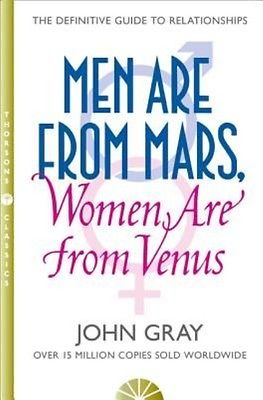
Neurobehavioral differences between men and women have captured the attention of popular culture going back to the 1992 best-seller Men Are from Mars, Women Are from Venus, an advice book by relationship counselor John Gray. Today, the idea that genders are different — not only in terms of hormones, but also in a neurological sense — is picking up considerable momentum in the hard sciences.

But don’t let this lead you to the conclusion that human brains are hardwired one way or another in the same way that genitals and sex chromosomes are. Certainly, having or not having a Y chromosome has a major impact on developments inside the brain. But when it comes to brain anatomy and function, nature and nurture both come into play, just as they do in so many other aspects of human biology.

Gender and the brain

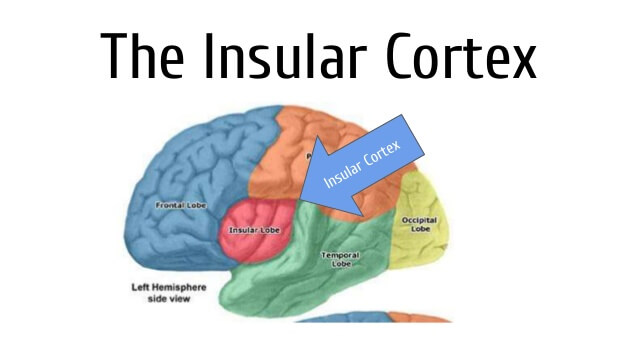
To give you an idea of the level of scientific interest in this area, consider that a search for ‘gender brain differences’ on the biomedical database PubMed pulls up thousands of peer-reviewed publications. Among them is a 2016 UCLA study, published in the journal Frontiers in Neurology, in which researchers used functional magnetic resonance imaging (fMRI) to show that men and women had essentially opposite responses to a physical act known as the Valsalva maneuver (attempted exhalation with mouth and nose closed). The differences were noted in the insular cortex, a region that includes various brain centers involved in emotional and cognitive functions, as well as self-awareness.

Another study, published in November 2016, revealed striking differences in certain parts of the insular cortex between boys and girls who have developed post traumatic stress disorder (PTSD). Researchers found one area, called the anterior circular sulcus, to be larger in boys with PTSD compared to boys without the condition. However, girls showed no such correlation between trauma experience and the size of this brain area.

“The boys and girls were so clearly on different ends of the spectrum,” said Stanford University psychologist and neuroscientist Megan Klabunde, who was the lead author on the study, which utilized another type of MRI called structural MRI (sMRI).

Functional MRI tells neuroscientists about brain activity — to what degree you’re using a particular part of the brain at the moment of testing. Structural MRI reveals pure anatomy — the size or development of a particular region of the brain.
These studies support the idea that sex influences brain anatomy and function to the point that one can predict the following: If you were to rent time on an fMRI of sMRI machine and recruit enough subjects for a range of psychological tests, chances are good that you would come up with a publishable finding related to gender.

But what would such a finding mean in a practical sense? On one hand, it could have implications for devising treatments for men or woman suffering from the same disorder. Consider a commonly prescribed drug such as zolpidem (trade name Ambien),  which is used to help people sleep. It’s available in different dosages for adults, but does not take gender into account, which has caused some problems in the past. This is the case for a lot of drugs that affect the brain, and so it is reasonable that further studies on male-female brain differences could lead to a sea change in treatment approaches.

Are gender and sex the same thing?

Recognizing male-female differences in the brain is only one side of the coin, because we’re talking about brain features assessed on a bell curve. Everyone has an insular cortex. Different insular regions show size and activity differences between individuals, with trends that differ based on a range of factors, including sex and experiences such as trauma. But, importantly, there is overlap among populations that are studied. We noted earlier that the anterior circular sulcus showed no size correlation in girls with PTSD compared with girls with no trauma, while there was a correlation in boys. But everyone has an anterior circular sulcus and it’s bigger in some girls versus others, and in some girls versus some boys.

“There is no one type of male brain or female brain,” says Tel Aviv University’s Daphna Joel, a researcher in behavioral neuroscience. In a study published in the prestigious journal Proceedings of the National Academy of Sciences, Joel and colleagues demonstrated a fairly good mix of brain regions comparing men and women. This mix showed up on 23 to 53 percent of 1,400 brains tested with MRI depending on the particular brain region assessed. The results support the idea that brain ‘gender’ characteristics exist along a spectrum.

Of the 1,400 test subjects, less than 8 percent demonstrated a brain that could be defined as all male or all female based on anatomic properties that have established gender associations. Furthermore, looking at behavior, “Only 0.1% of subjects displayed only stereotypically-male or only stereotypically-female behaviors,” Joel said.

men women

What does Joel mean by a stereotypically male or female behavior? Think of it this way: You might be a male who loves watching football. That’s one stereotypical male feature that says, yes, your brain is male. But you might be a football fan who also loves small children. Does that make you less male? No, but it is a stereotypical female trait. The same argument goes for a woman who loves football. Nearly every person has tendencies of the opposite sex with corresponding brain features that can be measured on MRI. But Joel points out that gender and sex are not the same thing. Sex is biology. If you’re genotype XY and have male genitalia, you are male in terms of sex, but that doesn’t mean that your brain is of male gender. It doesn’t mean it’s female gender either.

Whether you’re male or female, in all likelihood, there is something in your brain that overlaps with the opposite gender, and it’s not perfectly hard wired. Preferences can change, or be influenced by the environment. Lest we go off on a topic that merits an article all to itself, let’s be clear that we’re not venturing into the question about sexual orientation. We’re only talking about features, where it’s safe to say that large segments of the population are a male-female mix.

Does this mean we should ignore physical differences in the male and female brain? Not at all. As stated earlier, there are potential clinical implications. But it may suggest one should take such differences with a healthy grain of salt.

A version of this article originally ran on the GLP on January 25, 2017.

David Warmflash is an astrobiologist, physician and science writer. BIO. Follow him on Twitter @CosmicEvolution

70 percent of consumers confused about GMOs, but may still embrace crop biotech

GMO labeling bill defeated in Canadian parliament wrbm large

To better gauge and understand consumer perceptions of genetically modified organisms (GMOs) …..  a new public survey commissioned by GMO Answers ahead of Get to Know GMOs Month in October found that a majority of Americans aren’t confident that they know what GMOs are, and this lack of knowledge may be driving overall uncertainty and discomfort regarding the impact of GMOs on the environment.

However, it was also found that concern and confusion do not equate to rejection, as nearly the same number of Americans want to learn more about GMOs.

Key findings of the survey included:

–          Nearly 70% of consumers are not confident that they know what GMOs are, and 46% are confused about GMOs and their surrounding health and environment effects.

–          51% are concerned about and 42% are confused about the impact GMOs have on the environment;

–          Roughly 60% of Americans are interested in learning more about GMOs;

–          74% want to learn more about the impact GMOs have on their overall health, and

–          67% are interested in learning more about the overall safety of GMOs.

“It’s clear Americans are confused and misinformed when it comes to GMOs. Yet, contrary to public perceptions, GMOs can actually reduce the environmental impact of farming and have other environmental benefits, such as helping to reduce food waste and improve air quality,” GMO Answers explained.

Read full, original article: Initiative aimed at answering GMO-related questions