Simple urine test for anxiety, depression around the corner

Coping With Anxiety and Depression x

Depression and anxiety are not always easy to detect.

Besides being time consuming and inconvenient, diagnostic criteria are rather subjective. Therefore, an objective and easily detectable biomarker for depression and anxiety would be preferable.

Now, a team of Chinese researchers believe they have discovered one using a urine test.

The researchers began by collecting urine samples from 32 patients suffering from depression and anxiety and from 32 healthy controls who were matched according to age, sex, and body mass index. The urine was analyzed using standard chemistry techniques to determine if differences in the concentrations of various metabolites could be used to discriminate healthy people from patients with depression/anxiety. Indeed, the data showed that they could.

For a test like this to be of any practical use in the laboratory, it cannot test dozens of metabolites. So, the authors narrowed down their list of metabolites to just four: N-methylnicotinamide, aminomalonic acid, azelaic acid and hippuric acid. Using just these four metabolites, the authors had a predictive accuracy of 90% in the validation data set of 32 individuals.

If the authors’ results continue to be confirmed, the next step surely should be commercialization. A quick urine test for general practitioners to screen patients they suspect of suffering from depression and anxiety could be a tremendous boon to public health.

Read full, original post: Urine Test Could Diagnose Depression, Anxiety

Viewpoint: Demand for non-GMO food suggests consumers want ‘easy’ answers to nutrition and health

non gmo whole foods sign

Have you been grocery shopping lately? If so, it probably won’t come as much of a surprise that so-called “free-from” labels are one of the fastest-growing food marketing trends. These food labels focus on what’s not in our food, rather than what is in it.

Why are we more concerned about what’s not in our food than what is in our food?

Unless an eater legitimately has a medical condition prohibiting her from consuming one of these items (Celiac’s disease being the most obvious), we should be more concerned about the nutritional content of food. We should worry about whether we’re eating a balanced diet, not successfully avoiding specific foods, ingredients, or production methods.

As these trends grow, they ultimately start to impact how we farm. If consumers demand GMO-free foods in the marketplace, processors and manufacturers start to make the same demands on farmers.

Unfortunately, our fixation with the free-from labels doesn’t mean we’re making healthier choices …. It’s like buying cigarettes labeled non-GMO because they’re supposedly healthier.

The problem stems from a society always looking for the next best way to solve our dietary and health problems. We want to lose weight, but we don’t want to cut calories …. We want the easy way out. We want the simple solution.

Read full, original article: Farmer’s Daughter: The surge of ‘free-from’ labels in grocery stores

Personal DNA tests challenged for perpetuating ‘false notions’ of ethnic cultures and race

Screen Shot at PM

Genetic-ancestry tests are having a moment. Look no further than Spotify: [Last month], the music-streaming service—as in, the service used to fill tedious workdays and DJ parties—launched a collaboration with AncestryDNA. The partnership creates custom playlists for users based on DNA results they input: Oumou Sangaré for Mali, for example, and Ed Sheeran for England.

First, the accuracy of these tests is unproven (as detailed here and here). But putting that aside, consider simply what it means to get a surprise result of, say, 15 percent German. If you speak no German, celebrate no German traditions, have never cooked German food, and know no Germans, what connection is there, really? Cultural identity is the sum total of all of these experiences. DNA alone does not supersede it.

Listening to 99 Luftballons or rooting for Germany in the World Cup is fairly trivial as these things go. But this wave of marketing campaigns encourages a way of thinking—that you can pick and choose which fractional parts of genetic identity to highlight when it makes for good cocktail-party conversation.

The most charged criticism against genetic-ancestry tests is that they emphasize people’s genetic differences, ultimately reifying race as a meaningful category when it is in fact a social construct. A 2014 study found that when people read a newspaper article about genetic-ancestry tests, their beliefs in racial differences increased.

Read full, original post: Your DNA Is Not Your Culture

Could gene editing overcome ‘squeamishness’ about GMOs and crop biotechnology?

crispr food editing i adapt

Climate change is …. empowering a less familiar food foe: fungal pathogens. Molds and mildews thrive under increased precipitation and high carbon dioxide levels. Fungal pathogens are marching northward at a global average of about 4.3 miles per year, according to a study in Nature Climate Change. Another study published in Nature estimates that crops lost to fungi, and to their oomycete cousins, could feed more than 8 percent of the global population.

Fortunately, there’s a solution that doesn’t require extensive use of agricultural chemicals — but we’ll have to overcome our squeamishness about science. I’m talking about genetically modified organisms, or GMOs. Although GMOs have been greeted skeptically by health-conscious consumers, many of those consumers fail to realize that not all GMOs are created equal.

[R]ecent advances in gene editing technology make it easier than ever to modify plants without introducing genes from other species — say, by snipping out an unwanted gene or by inserting a gene from a different specimen of the same species. Those crops, known as mutagenic organisms, have genomes that are indistinguishable from those that could be developed through conventional selective breeding. Because gene editing can build disease resistance into crops much faster and more accurately than selective breeding can, the technique is better suited to combat the rapid advance of pathogens and insects into new latitudes.

Read full, original article: We Need to Change the Way We Talk About GMOs

Mexico’s new science minister fiercely skeptical of GMO crops and new breeding techniques

maria elena alvarez buylla

In early June, evolutionary developmental biologist Elena Álvarez-Buylla received an out-of-the-blue phone call from the campaign of Andrés Manuel López Obrador, then the front-runner in Mexico’s presidential election, with a question. If López Obrador won, would she consider becoming the next director of the National Council of Science and Technology (Conacyt), the country’s science ministry and primary granting agency?

“I started to have a feeling that I couldn’t say no,” says Álvarez-Buylla, who founded and leads Mexico’s Union of Scientists Committed to Society (UCCS). “It doesn’t matter how big the personal sacrifice is. … This is a unique and historic moment” for Mexico.

Many scientists are delighted that one of their own will lead Conacyt—most of Álvarez-Buylla’s predecessors were career administrators—and that she’ll be the first woman to do so. But critics worry about her opposition to genetically modified (GM) maize, which Álvarez-Buylla fears could spoil the country’s astonishing agricultural biodiversity.

“There’s not a clear boundary” between her research and her activism, says Rodrigo Álvarez Aguilera, a science teacher here and one of the petition’s organizers. Biochemist Luis Herrera Estrella, director of the National Laboratory of Genomics for Biodiversity in Irapuato, says Álvarez-Buylla is “a very good scientist” but calls her views on GM organisms “radical.”

Read full, original article: Mexico’s new science minister is a plant biologist who opposes transgenic crops

Can we afford gene therapy’s million-dollar price tags?

B BV YHEALT M
[4-year-old] Caspian was born with a rare, inherited eye disorder called Leber congenital amaurosis, which results in the progressive deterioration of the retina, the tissue at the back of the eye that detects light and color. He could lose all vision by the time he’s a teenager.

This month Caspian became among the first patients in the country to receive a new gene-therapy treatment called Luxturna.

The therapy entails inserting a functional gene through harmless, virus-like particles into the retinal cells to compensate for the faulty gene causing his disease.

It’s among the most expensive treatments on the market, with a price tag of $850,000 to treat both eyes, raising questions about how the health system will absorb such treatments as they become more common.

The Institute for Clinical and Economic Review, an independent nonprofit that conducts cost-effectiveness analyses on new therapies, concluded in a February analysis that Luxturna’s price exceeds commonly cited thresholds for cost-effectiveness, in part because its long-term benefits remain unknown.

Spark is offering a rebate of up to 20% if the therapy doesn’t work in 30 to 90 days and again 2½ years later, [Spark CEO Jeff] Marrazzo says. It also is offering to pay patient out-of-pocket costs, including copayments. “Of course we’re going to continue to push to get patients more access, but we’re pleased with the start,” he says.

Editor’s note: Full text behind paywall

Read full, original post: High Hopes for a Gene Therapy Come With Fears Over Cost

Russian social media ‘bots’ push GMO-autism link, new report shows

No GMO Flag Russia

Social media accounts sponsored by the Kremlin have whipped up fears about western food and water supplies, analysis shows.

Scores of tweets sent from accounts controlled by Russia have portrayed genetically modified (GM) foods as dangerous, and attacked companies that deal in the technology. Most of the accounts purported to be run by westerners. Experts say that the tweets are part of a bigger campaign to spread disinformation in the West.

Accounts known to have been controlled by a troll farm linked to the Kremlin pushed baseless claims of a link between GM crops and autism.

Dozens of the accounts also stoked unease over the safety of glyphosate, a common weedkiller. One tweet read: “Massachusetts Institute of Technology doctor reveals link between #glyphosate, GMOs and the autism epidemic.” One message suggested that fluoride in water caused cancer.

Renée DiResta, a specialist in disinformation who has advised the US Congress, said that the anti-GM messages were part of a tapestry of disinformation aimed at discrediting accepted science …. Analysis conducted for The Times suggests that discussion of GM online was being manipulated by automated social media accounts, or bots. Ms DiResta collected about 241,000 tweets and retweets from the discussion on Twitter about GMO over 60 days.

Read full, original article: Kremlin bots sow fear in West about GM crops and vaccines

Breast cancer is not ‘one size fits all’: Obesity, alcohol use, inactivity exacerbate risk

Woman receives mammogram t x

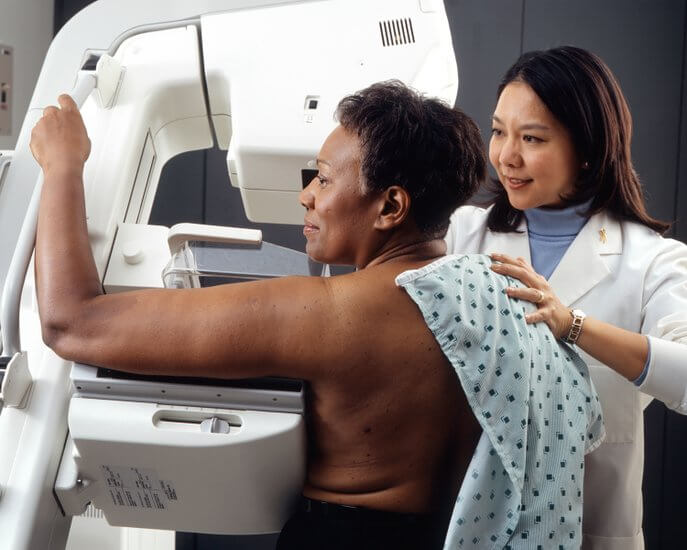
A regular mammogram isn’t enough to battle breast cancer anymore.

Researchers have found that a third of breast cancer cases may have roots in issues like obesity, alcohol use and inactivity.

Hospitals are parlaying that fact into new, personalized assessments that emphasize prevention and healthier life choices, along with other factors that increase or decrease risk. They’re using the results to guide follow-up and recommendations tailored to each woman.

These efforts are part of a wider trend toward personalized medicine. Such programs are too new to show impact on cancer diagnoses. But breast cancer experts say they are low-cost, do no harm and encourage women to live healthier lives. They also give women much-needed prevention guidance beyond their annual reminder to get a mammogram.

Brigham and Women’s Hospital in Boston offers a program called B-Prep—for Breast Cancer Personalized Risk Assessment, Education and Prevention—to women who visit for breast complaints or abnormal tests.

As part of B-Prep, women fill out a survey to evaluate lifestyle, family history and other risk factors and receive a personalized evaluation of their risk with exercise and diet recommendations, free educational sessions and follow-up recommendations.

“We are trying to personalize screening recommendations and risk reduction strategies, not a one-size-fits all approach,” says [breast surgeon] Melissa Pilewskie.

Editor’s note: Full text behind paywall

Read full, original post: A New Push to Lower Your Risk for Breast Cancer

Viewpoint: Europe’s anti-GMO activists copy smear tactics of extremist US organic lobbyists

FOIA
Some bad ideas have originated in America. Reality television, spray-on cheese, pineapple pizza, and deep-fried Hostess Twinkies come to mind. But the most obnoxious of all may be eco-activist campaigners armed with Freedom of Information Act requests, or FOIAs, who pervert the intention of the law in order to undermine sound science, academic scholarship and the free exchange of ideas.

They’re about to make a menace of themselves in Europe.

The eco-activists take an objectively good thing — laws that require transparency of certain kinds of communications — and twist them to harass, smear and intimidate anyone who dares to hold an opinion that’s not in line with their agenda. An agenda, I should add, that is often bought and paid for by special interests.

That’s what Vincent Harmsen, a Dutch activist masquerading as an “investigative journalist,” has done by firing off a flurry of freedom of information demands (known in certain countries as an “access to information request”) to governments and academics across the European Union.

In apparent collaboration with ongoing campaigns by aggressive non-governmental organizations (NGOs) like the Corporate Observatory and the Greenpeace- and organic-industry-linked U.S. Right to Know (USRTK), he asked the representatives to the EU from various nations (e.g, here) for copies of the following:

All correspondence (letters, emails, etc) and minutes of meetings (or any other reports of such meetings) where the EU criteria for the identification of endocrine disrupting chemicals … were discussed between officials of the Permanent Representation of [country’s name] to the EU and representatives of (one or more of) the following companies/organizations…

He goes on to list all the major companies involved in biotechnology.

What they’re really after is any way to link institutions and individuals that stand up for certain kinds of scientific research with corporate boogeymen like agrichemical and biotechnology companies. How do we know? Well, that’s the same tactic that campaigners at California-based NGO U.S. Right to Know have used to spread misinformation about vaccination and genetically engineered foods (obtained from so-called “GMOs”) in the United States.

usrtk 7 11 18

The group was created by the Organic Consumers Association and list Greenpeace activist Charlie Cray among its board members. Its mission is to attack everything and anything that constitutes “competition” to the organic industry — i.e., farmers who take advantage of modern biotechnology to grow crops, the companies that make this possible, and scientists and science communicators who argue for scientifically defensible regulation.

USRTK has abused freedom of information laws to demand that academic institutions across North America turn over the emails of faculty members who have a positive attitude toward modern agricultural technologies.

The group then releases out-of-context excerpts out to smear the work of prominent researchers like the University of Florida biologist Kevin Folta, who has described activists as promoting “a narrative that suggests industry collusion or undue influence, especially with any attempt to connect the faculty member to Monsanto, a company that is the bogeyman favorite of activists.”

Every page of every email requested by USRTK must be examined by attorneys to ascertain whether they are releasable. Professor Folta estimates that the USRTK fishing expedition may have cost his university as much as a million dollars of taxpayers’ money.

 Other eminent academics, such as University of Illinois Professor (Emeritus) Bruce Chassy, University of Oklahoma Law Professor (Emeritus) Drew Kershen, Washington State University nutrition professor Michelle McGuire, University of California Davis animal geneticist Alison van Eenennaam, Cornell University Alliance for Science director Sarah Evanega, science writer extraordinaire Jon Entine have also been targeted.

I, too, have been on the USRTK hit-list since I was a prominent opponent of an unscientific, unwise and probably unconstitutional 2012 California referendum issue that would have required labeling of genetically engineered food. (It was not approved.)

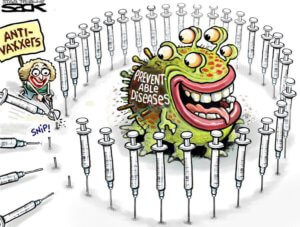
Let’s be clear: None of this is actually about transparency or truth-seeking. British journalist Mark Lynas has tried in vain to get USRTK to come clean on its position on vaccines, a position that reflects that the group’s organic industry financial backers (many of whom sell snake-oil alternatives to pharmaceuticals) also spread disparaging disinformation about those critical life-saving products.
vaccine gmo safety california 8443727

At least in part as a result of these cynical efforts, dangerous and preventable diseases like measles are back, with tens of thousands of cases and dozens of deaths reported across the EU so far this year.

Unsurprisingly, some European institutions like Wageningen University in The Netherlands have challenged Mr. Harmsen’s nuisance requests, citing academic freedom and remonstrating that because they are not public institutions, their researchers are not subject to such mandatory disclosures. Wageningen University is now engaged in defending itself in a lawsuit over the documents, the release of which is seen as a threat to academic freedom.

It’s actually far more than that. It’s an attack on scientific advances and science communication, and it will have ongoing public health repercussions. Anti-vaccine hysteria is killing people, although the scientific evidence of the benefits of vaccines is beyond doubt. Likewise, there’s no credible evidence that genetically modified crops have been deleterious in any way. On the contrary, they have been shown to increase yields, reduce the use of sprayed insecticides, and enhance food security and farmers’ incomes.

Trillions of meals containing ingredients from genetically engineered plants and animals have been consumed, without a single confirmed negative effect on human health or an ecosystem. (Remember that a trillion is 1,000,000,000,000.)

But what is lost amidst the anti-genetic engineering propaganda are the palpable benefits, such as the ability to grow crops with less water, conservation of farmland, decreased release of CO2 into the environment, and less insecticide spraying. When research and development on these products are delayed or prevented, the natural environment and public health suffer.

Why, then, would anyone oppose such advances?  Simple. The successes of genetic engineering — or for that matter, food irradiation and agricultural chemicals, which are also prohibited in organic agriculture — are bad for business if you’re peddling overpriced organic produce, animals, linens, or tobacco. (Yes, you read that right.)  Or if you’re part of the organic industry’s army of paid agents, trolls, and shills, hiding behind a public-interest façade. That’s what this is really about.

Henry I. Miller, a physician and molecular biologist, is a Senior Fellow at the Pacific Research Institute. He was the founding director of the FDA’s Office of Biotechnology. Follow him on Twitter @henryimiller

This article originally ran at the Daily Caller as OPINION: LEGALIZED ECO-BULLYING CROSSES THE POND and has been reprinted here with permission.

Pentagon DARPA program targeting crop losses could turn insects into ‘easily weaponized’ biological army, critics claim

Screen Shot at PM

The Pentagon is studying whether insects can be enlisted to combat crop loss during agricultural emergencies. The bugs would carry genetically engineered viruses that could be deployed rapidly if critical crops such as corn or wheat became vulnerable to a drought.

The program, funded by the Defense Advanced Research Projects Agency (DARPA), has a warm and fuzzy name: “Insect Allies.” But some critics find the whole thing creepy.

A team of skeptical scientists and legal scholars published an article in the journal Science on [October 4] arguing that the Insect Allies program opens a “Pandora’s box” and involves technology that “may be widely perceived as an effort to develop biological agents for hostile purposes and their means of delivery.” A website created by the critics puts their objection more bluntly: “The DARPA program is easily weaponized.”

DARPA’s program manager for Insect Allies, Blake Bextine, pushed back on the Science article, saying the program is solely for peaceful purposes, has been reviewed by government agencies responsible for agricultural safety and has multiple layers of safeguards built into the research protocols, including total containment of the insects.

“I don’t think that the public needs to be worried. I don’t think that the international community needs to be worried,” Bextine told The Washington Post.

Read full, original post: The Pentagon is studying an insect army to defend crops. Critics fear a bioweapon.

Storing movies on DNA pellets? School-bus-sized gene storage machine may help pave the way

catalog hardware render

In a world awash with data, DNA is a hugely compact way to store it. The data on every iPhone, PC, and server rack on the planet could fit in a Jacuzzi’s worth of genetic letters, for example. It’s also incredibly durable: DNA can last for thousands of years so long as it’s kept relatively cool and dry.

Now, one of the fledgling industry’s startups [Catalog] has unveiled plans for its prototype storage device: a hulking school-bus-size machine that could one day convert movies or data archives into invisible pellets of DNA.

The problem is that converting bits into the As, Gs, Cs, and Ts of the genetic code is slow, and it’s a laborious process to retrieve the data. The cost of manufacturing customized DNA is also high, running near a million dollars to store a couple of high-resolution DVDs.

Catalog claims its system is less costly. Instead of synthesizing unique strands of DNA, the process involves involves combining inexpensive, short, premade DNA strands into longer bits of DNA that carry information.

According to [CEO Hyunjun] Park, a single prototype machine will be completed early next year and will be able to write one terabit of data into DNA per day. That’s about as much data as fits on a laptop.

Read full, original post: The DNA data storage machine that’s the size of a school bus

Organic trade group suit challenging Trump’s withdrawal of animal guidelines will go forward

USDA Organic x

A ruling by the U.S. District Court for the District of Columbia will allow a lawsuit by the Organic Trade Association against USDA over its withdrawal of the Organic Livestock and Poultry Practices rule to proceed.

U.S. District Judge Rosemary M. Collyer on [October 4] denied USDA’s petition to dismiss the lawsuit and granted OTA’s request for oral arguments at a date and time to be determined.

The rule, finalized in the waning days of the Obama administration, included new standards for raising, transporting and slaughtering organic animals.

USDA withdrew the rule in March, stating the rule exceeds the agency’s statutory authority under the National Organic Program and could have a negative effect on voluntary participation in the program.

The rule, which was set to go into effect March 20, 2017, was first delayed by a regulatory freeze by incoming President Donald Trump. USDA delayed implementation twice more before announcing in December — after taking public comment — it intended to withdraw the rule, which it did in February.

Read full, original article: Court denies USDA motion to dismiss organic lawsuit

Deep dive for aliens: We’ve only examined a ‘hot tub’ worth of cosmic ocean

davemorrowmilkyway
[A] new study suggests we haven’t exactly taken a deep dive when it comes to hunting for other-worldly life forms. In fact, a new study says we’ve really only examined a “hot tub” worth of our cosmic ocean.

[T]he researchers calculated the amount of space that our telescopes and other signal-detecting devices have analyzed so far. Building on [SETI researcher Jill] Tarter’s work, they added in new channels where might find alien signals and included data from more recent studies like the Breakthrough Listen Initiative, which is surveying the million stars closest to Earth and 100 nearest galaxies. They then compared all of that data with the amount of searching astronomers estimate humans need to do before before concluding there is intelligent life in the universe.

Where Tarter found a glass of water, Wheeler and his co-authors found we’ve examined a cosmic Jacuzzi-worth of space.

That’s because, as Tarter pointed out in a NASA speech on the subject last week, a new generation of telescopes going live soon will help us scan more of the sky more efficiently, and improved artificial intelligence will help us pinpoint just which cosmic hot tubs we should be looking in. In fact, earlier this year Tarter said she believed that humanity would find signs of extraterrestrial life by the end of the century.

Read full, original post: In the Search for Aliens, We’ve Only Analyzed a Small Pool in the Cosmic Ocean

Video: Meet the gene-edited cows that could revolutionize beef production

Gene Editing streched

On July 14, 2018 Genzelle, an Angus calf genetically engineered to withstand Brazil’s high summer temperatures, was born. Cows like Genzelle are cold-weather animals, typically raised in North America because the continent’s less intense climate is more suitable for Angus cattle. When temperatures get too hot, the cows won’t eat and don’t get fat, which creates the “beefy” quality consumers find desirable in steak.

As a result, Brazilian ranchers raise Zebu cattle, which are more suited to the country’s tropical climate. However, the meat they produce is leaner—and tougher to chew. Consumers in Brazil, therefore, pay a premium for Angus beef produced in the US. But thanks to the biotech company Recombinetics, meat eaters in Brazil and elsewhere may soon have access to affordable Angus beef produced from gene-edited cows, bred to tolerate higher summer temperatures.

In this video, Wall Street Journal reporter Jason Bellini speaks with Recombinetics Chief Science Officer Tad Sonstegard about the prospect of gene-edited cows coming to our dinner tables in the near future.

Original video: This Gene-Edited Calf Could Transform Brazil’s Beef Industry

Teaching of evolution under siege in Turkey, Israel and India

Screen Shot at PM

In recent weeks there have been alarming reports from both Israel and Turkey of Charles Darwin’s theory of evolution being erased from school curriculums. In Turkey, this has been blamed on the concept of evolution – which is taught in British primary schools – being beyond the understanding of high school students. In Israel, teachers are claiming that most students do not learn about evolution; they say their education ministry is quietly encouraging teachers to focus on other topics in biology.

This news follows the astonishing statements made by India’s minister for higher education earlier this year. Satyapal Singh claimed Darwin was “scientifically wrong”, and is demanding that the theory of evolution be removed from school curriculums because no one “ever saw an ape turning into a human being”.

It is tempting to shrug off these latest attacks on Darwin’s greatest contribution to natural science. After all, no other scientific theory has attracted the same level of impassioned opposition and detraction – certainly not for more than 150 years. But that would be to miss the particular urgency of improving our scientific understanding of the natural world and how best to protect it for the future.

Read full, original post: The removal of Darwin and evolution from schools is a backwards step

Japan poised to permit gene editing on human embryos by 2019

shutterstock

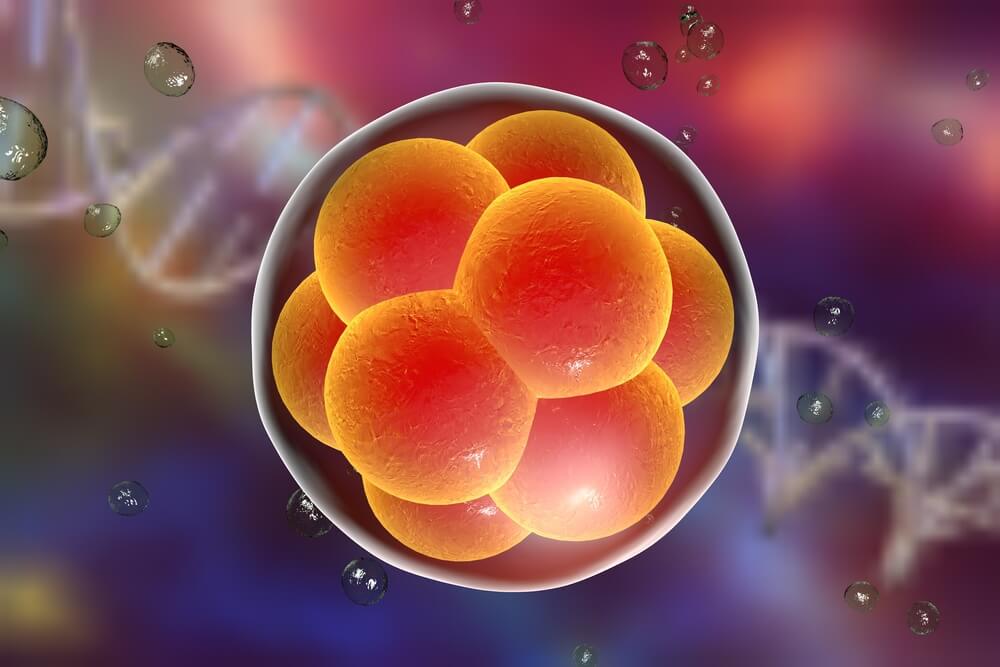
Japan has issued draft guidelines that allow the use of gene-editing tools in human embryos. The proposal was released by an expert panel representing the country’s health and science ministries on 28 September.

Although the country regulates the use of human embryos for research, there have been no specific guidelines on using tools such as CRISPR–Cas9 to make precise modifications in their DNA until now.

Tetsuya Ishii, a bioethicist at Hokkaido University in Sapporo, says that before the draft guidelines were issued, Japan’s position on gene editing in human embryos was neutral. The proposal now encourages this kind of research, he says.

But if adopted, the guidelines would restrict the manipulation of human embryos for reproduction, although this would not be legally binding.

Manipulating DNA in embryos could reveal insights into early human development. Researchers also hope that in the long term, these tools could be used to fix genetic mutations that cause diseases, before they are passed on.

But the editing of genes in human embryos, even for research, has been controversial. Ethicists and many researchers worry that the technique could be used to alter DNA in embryos for non-medical reasons.

Japan’s draft guidelines will be open for public comment and are likely to be implemented in the first half of next year.

Read full, original post: Japan set to allow gene editing in human embryos

Are you an expert or novice? Brain scans can tell the difference

MzAzNTkxNw

To gain new insight into how highly specialized workers learn skills or react to stressful situations, researchers are leveraging advanced scanning technologies to look at what’s happening inside the brain.

In the latest findings, a team of researchers studied surgeons as they performed surgical simulations and found they could identify novice from experienced surgeons by analyzing brain scans taken as the physicians worked.

The researchers, who described their findings [October 3] in the journal Science Advances, said that the part of the brain involved in planning complex behaviors was more active in the novices. Skilled surgeons had more activity in the motor cortex, which is important for movement.

Researchers think such devices could be used to give workers feedback about their performance and to predict who would be a good baseball player or surgeon.

Neural data could offer more objective measures of performance and proficiency than medical-certification boards now use, according to the research team, which included engineers and surgeons. Ultimately, they want to improve the way surgeons are trained, not limit what they can do, they said. A future iteration of their technology could be used to assess comfort levels with certain medical procedures or to help doctors figure out whether they’re rusty on certain skills or too fatigued to operate.

Read full, original post: Brain Scans Can Detect Who Has Better Skills

Ghana set to introduce GMOs for human consumption, regulators say

ghana women

Ghana is now ready to introduce genetically modified …. food onto the market, the Chief Executive Officer (CEO) of the National Biosafety Authority (NBA), Dr Amaning Okoree, has announced. He said the NBA, which is the regulator of the biotechnology industry in Ghana, had put in place the necessary structures to ensure that GMO products that would be released on a commercial basis onto the market were safe for consumption.

“We are ready for any promoter or commercial organisation of biotechnology product that wants to release GMO foods. We have strengthened our capacity to effectively regulate and conduct risk assessment of the product to ensure it is safe for consumption,” he added.

Two main GMO crops — Nitrogen Use Efficient, Water Use Efficient and Salt Tolerant (NEWEST) rice and Bacillus thuringiensis (BT) cowpea — are currently being researched into and cultivated under confinement by the CSIR in Ghana.

The President of the National Farmers Award Winners Association, Mr Davies Korboe, called for a national dialogue on GMOs for a decision to be taken on the way forward.

“People lack information on GMOs and they need more awareness, so that they can make the best decision when they are properly educated,” he said.

Read full, original article: Ghana ready to introduce GMOs —Biosafety Authority

Why are all Roundup-cancer lawsuits filed in the US?

roundup spray

The unique conditions present in the U.S. led to the filing of more than 8,000 court claims alleging the use of glyphosate, popularly known as Roundup, [causes] …. Non-Hodgkin’s Lymphoma (NHL) …. Roundup claims unfailingly depend on the combination of the largely misunderstood 2015 conclusion of the International Agency for Cancer Research (IARC), a susceptible U.S. legal system, mass tort law firms, contingency fee arrangements and self-serving special interest groups.

Initiating a lawsuit for potential Roundup claimants …. is not difficult as there are many “mass tort” law firms specializing in product deficiency and labeling claims willing to file lawsuits with no payment required. Notably, all Roundup claims are filed in the U.S. [and] rely on mass tort law firms and have a symbiotic support network of special interest non-governmental organizations and associations with mass communication capabilities.

“Mass torts” are so named because multiple or mass numbers of plaintiffs are aggregated within court jurisdictions and mass media is also used by the corresponding law firms to obtain more plaintiffs from the ongoing publicity. Contingency fee arrangements allow plaintiffs to undertake a legal claim without payment as law firms receive payment from a winning verdict percentage ranging from 33% to 40% ….

Read full, original article: Roundup Lawsuits: A Uniquely American Sham