As the world heats up, plants face a dilemma — the same tiny holes they have to open to exchange gases also let out water. They can close the holes, called stomata, to stay hydrated in hotter, drier conditions but, in doing so, may miss out on critical carbon dioxide.
The question for …. Stanford University [researchers] is how this dilemma will play out as increasing portions of the world’s plants experience consistently warmer, drier environments …. The answer …. suggests opportunities for engineering plants to withstand climate change ….
…
In a paper published Sept. 6 in Developmental Cell, the researchers worked out which hormone in the plant Arabidopsis thaliana coordinates the number of stomata the plant produces. What’s more, they tweaked the levels of that hormone in the plant — using CRISPR/Cas9 gene editing technology — to get an idea of the extent to which this hormone can increase or decrease the presence of stomata.
…
The researchers used CRISPR/Cas9 gene editing technology to precisely alter single genes in their plants to increase and decrease the cytokinin levels. This technology is very promising to be able to make directed small changes to improve plants’ ability to withstand climate change, said the researchers.
When jurors hear cases, they reasonably expect that they are presented only with reliable scientific information to support their deliberations. Regrettably, this is often not the case. This problem is exacerbated by the fact that one of the worst examples of “junk science” that finds its way into our courts is being funded by American taxpayers.
The International Agency for Research on Cancer, or IARC …. issued a report concluding that glyphosate, the active ingredient in Roundup, is carcinogenic. That report became the basis for a San Francisco jury entering a $289 million jury award against Monsanto ….
…
Closer scrutiny of the IARC process reveals advisement by an “invited specialist,” Christopher Portier …. At the same time Portier worked for the agency, he was paid by the Environmental Defense Fund, an anti-pesticide group. Moreover, Portier received $160,000 from law firms suing over glyphosate ….
…
…. The 1993 decision of the Supreme Court …. in Daubert v Merrell Dow Pharmaceuticals …. requires judges to serve as “gatekeepers” and follow procedures weeding out junk science and not allowing it to reach jurors …. Reasonable rules and procedures based on Daubert are essential to a balanced legal system, and it is the responsibility of the judiciary in the country as well as lawmakers to ensure that junk science does not find its way into our courtrooms.
Dr. [Michael] West is the CEO of AgeX Therapeutics, a biotech company that is developing novel therapeutics to target human aging and age-related degenerative diseases using pluripotent stem cells. Dr. West recently shared some key insights with Editor-in-Chief Kira Peikoff about what’s happening in this exciting space.
1) Pluripotent stem cells have opened the door for the first time in human history to manufacturing young cells and young tissue of any kind.
…
2) Early human development could hold the key to unlocking the mystery of aging.
…
4) The majority of clinical applications are still years away.
…
5) Few, if any, medical interventions are available today that are proven to markedly slow aging – yet. But the Baby Boomers are not necessarily out of luck.
…
6) There is an ethical debate about how far to apply this new science.
…
7) The biggest challenge of intervening in human aging is cultural denial.
…
8) The lifespan for healthy children born today could surpass anything humanity has ever seen.
“It is at least 150 years of age,” West predicts. “I have no doubt, zero doubt, that in the foreseeable future, we’ll hear of a person who has lived to about 150. We know now it’s possible.”
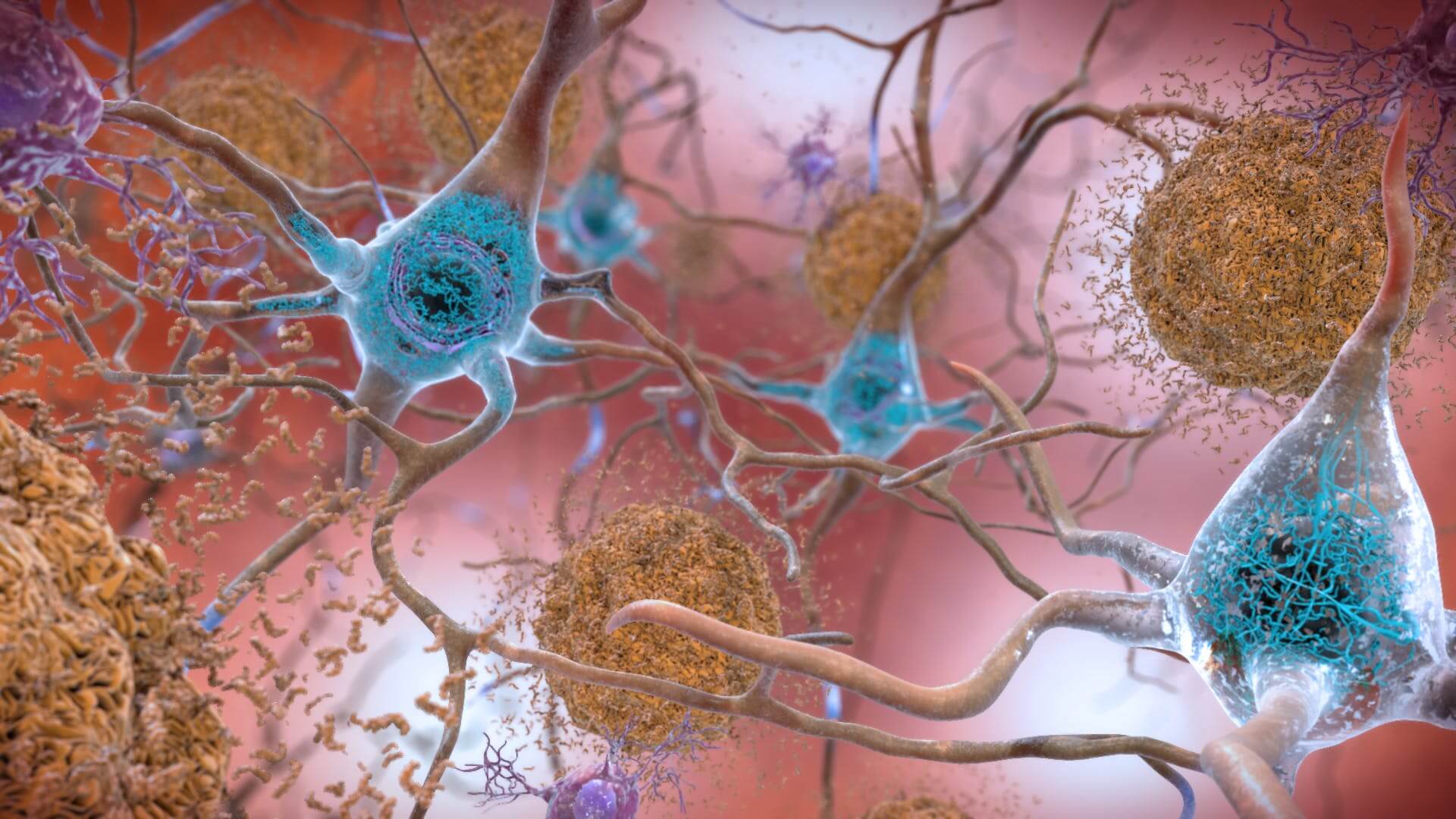
For decades, scientists have suspected that there is a connection between poor sleep and neurodegenerative diseases like Alzheimer’s disease. People with Alzheimer’s often have low quality sleep, and the same thing has been found in animals with the disease. Similarly, older adults who slept for less time, or had poor quality sleep, had higher levels of beta amyloid, a plaque-forming protein linked to Alzheimer’s disease, in the brain.
To date, however, scientists have been uncertain whether poor sleep contributed to the development of Alzheimer’s or if poor sleep was simply another symptom of the disease. In other words, does bad sleep cause a buildup of beta amyloid or does too much beta amyloid cause people to sleep badly?
Sleep risks and Alzheimer’s
Beta amyloid and Tau. NIH IMAGE GALLERY / FLICKR
A study recently published in the Proceedings of the National Academy of Sciences (PNAS) may reveal the answer. In this study, researchers kept people awake all night and measured levels of beta amyloid in the participants’ brains the next day. They then compared these levels to the beta amyloid levels in the same subjects’ brains after they had had a full night of sleep. Researchers found that a single night without sleep causes an increase in the amount of beta amyloid in the human brain. This indicates that poor sleep is likely an important risk factor for the development of Alzheimer’s.
So how were scientists in this study able to measure levels of beta amyloid, a microscopic protein fragment, in the brains of living humans? When doctors need to measure proteins in other tissues like skin, muscles, liver, etc., they simply biopsy a tiny piece of the tissue, usually with little risk to the patient. However, the brain is extremely sensitive, so it is very dangerous to perform a brain biopsy. Any bleeding or swelling in the brain could cause the patient to have a seizure or go into a coma, so a brain biopsy would never be allowed in an experiment. Brain biopsies are generally only used when doctors suspect the patient has a life-threatening condition. So for much of history, scientists who wanted to study proteins in the human brain needed to wait for someone to die and donate their brain to science.
But in recent years, scientists have developed new techniques enabling them to peer inside the living human brain. In this study, researchers used positron emission tomography, also called a PET scan. Researchers injected participants with a special radioactive dye called 18F-florbetaben (FBB). FBB has been designed to stick to beta amyloid, so when FBB enters the brain, it sticks to the beta amyloid floating around. FBB emits a tiny amount of radiation, which is detected by the PET scanner. By determining how much radiation there is and where it’s coming from, scientists can tell how much FBB is in the brain and, by extension, how much beta amyloid there is. Although PET scans do expose participants to some radiation, it is generally considered low-risk: about 2 million PET scans are performed every year in the US alone.
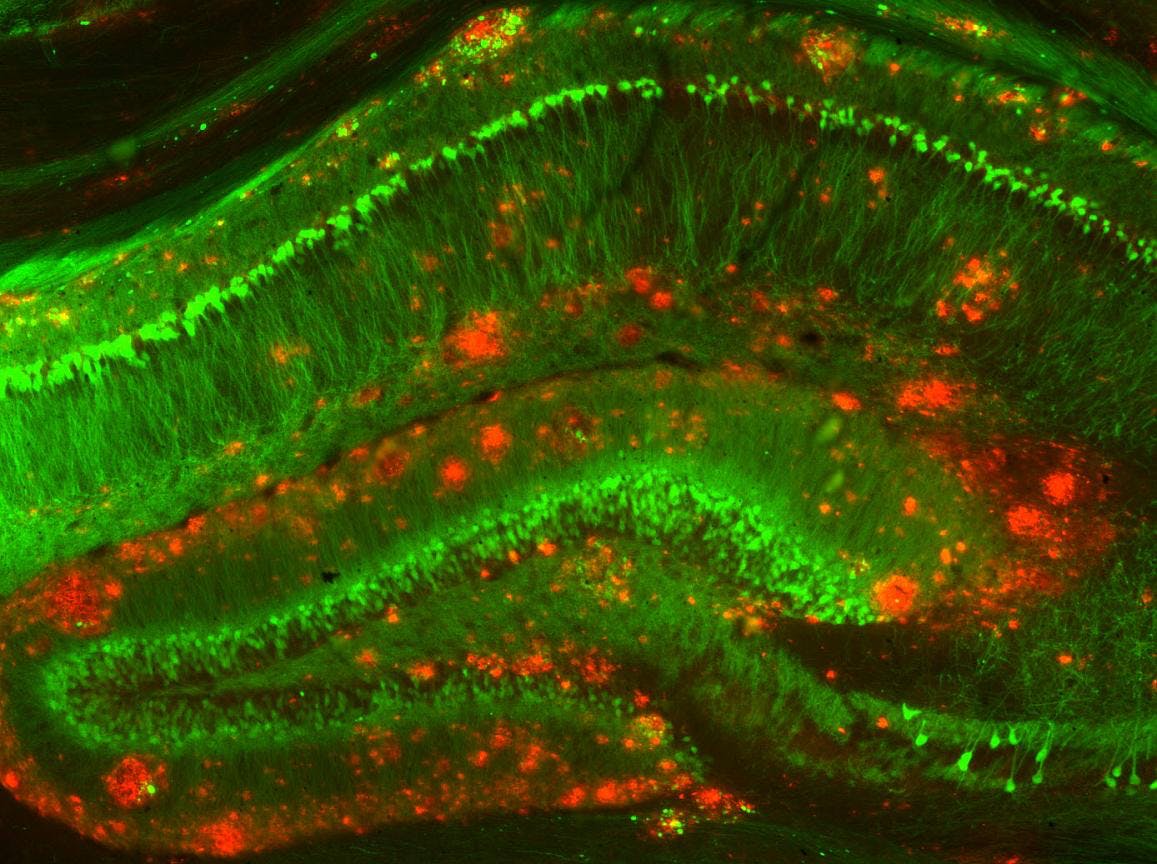
This study, led by researchers from the National Institutes of Health, found that in certain brain areas, beta amyloid levels increased after just one night without sleep. Researchers were particularly interested in the hippocampus, a brain area that is essential for memory and is often damaged in people with Alzheimer’s. Like many other body parts (eyes, hands, feet, lungs, etc.), we have one hippocampus on each side of our body. Weirdly, scientists found that sleep deprivation significantly increased beta amyloid levels in the right hippocampus, but not the left one.
In addition, the researchers only measured beta amyloid levels in the afternoon after a night of sleep deprivation, so they weren’t able to determine how long beta amyloid levels remained high. Future research will have to examine if beta amyloid levels return to normal after a night of good sleep or if the effects of an all-nighter persist for longer lengths of time.
Follow the latest news and policy debates on sustainable agriculture, biomedicine, and other ‘disruptive’ innovations. Subscribe to our newsletter.
Another important question to investigate is why exactly sleep deprivation leads to more beta amyloid in the brain. Although this experiment didn’t attempt to determine mechanisms, a previous study in mice found that sleep deprivation resulted in high levels of beta amyloid in the brain.
Researchers then wanted to know if sleep deprivation caused beta amyloid to be produced faster or if the awake brain just wasn’t as good at getting rid of the extra beta amyloid. To find out, a different group of researchers injected beta amyloid into a mouse’s brain and then measured how quickly it got cleared away.
They found that beta amyloid was cleared from the brain more efficiently during sleep than during wakefulness. Brain cells are bathed in fluid, which circulates throughout the brain to help clear away potentially toxic proteins. During sleep, the space between brain cells increases. This increased space may allow the fluid to flow better, improving its ability to wash proteins like beta amyloid out of the brain.
Mouse model of beta amyloid. NIH IMAGE GALLERY / FLICKR
Another big mystery is the variability in responses to sleep deprivation. On average, sleep deprivation increased brain beta amyloid; however, some participants had very small increases in beta amyloid, while others had much larger increases. Researchers were unable to figure out why this was. The increase in beta amyloid didn’t appear to be associated with the participant’s gender or age or whether they had a certain genetic risk factor for Alzheimer’s (a specific mutation in a gene called APOE).
This study used a fairly small sample size (20 people) and collected limited medical and genetic background data on the participants. Using a larger sample size and collecting more data about the participants may allow future researchers to determine factors that influence why some people have large beta amyloid increases, while others seem to be less susceptible to the effects of sleep deprivation.
Exploring the link between sleep and Alzheimer’s is important, because poor sleep may be one of the few risk factors for Alzheimer’s that individuals can control. Other known risk factors include being female, being Latino or African-American, and having a mutated form of the APOE gene. Future generations may be able to use gene editing to correct mutated APOE genes, but for now, our genes aren’t something that we can control. But we can change our behaviors.
Hannah Thomasy is a PhD candidate at University of Washington Seattle Department of Anesthesiology and Pain Medicine
A federal appeals court has rejected arguments that UC Berkeley has exclusive rights to patents for the powerful CRISPR gene-editing tool, casting a pall over the university’s future earnings from a technique which gives scientists near godlike power: altering the genetic sequences of cells.
On [September 10], the U.S. Court of Appeals for the Federal Circuit in Washington upheld an earlier ruling that patents held for inventions by the Harvard University-affiliated Broad Institute were different than what’s covered by UC’s applications, and do not interfere with each other.
…
[The decision] means that Broad can keep its patents and continue to share the technology with many licensees, most notably Editas Medicine of Cambridge, MA.
In response, “we are evaluating further litigation options,” said Charles F. Robinson of UC’s Office of the President, suggesting an appeal to the U.S. Supreme Court or the full U.S. Court of Appeals for the Federal Circuit.
…
UC contested a dozen CRISPR-based patents held by Broad, saying that their discoveries overlapped. The university has spent millions of dollars on the fight, a cost reimbursed by Berkeley-based biotech startup Caribou Biosciences, which has licensed the tool.
…
“It is time for all institutions to move beyond litigation,” Broad Institute said in an official statement. “We should work together to ensure wide, open access to this transformative technology.”
Through the years that Okanagan Specialty Fruits worked on developing the Arctic apple — a fruit that is genetically modified so it doesn’t brown — company president Neal Carter knew it may be controversial with consumers.
Following the backlash against GMOs in the U.S, Carter told Food Dive the company decided to confront the controversy with transparency. As the apples were poised to hit store shelves last year, Okanagan prepared with a website spelling out the genetic modification for the apples and why. On the packaging, they included an 800-number for consumers to call for more information. And there’s a scannable QR code for the public to get more information.
…
The experience of Arctic apples is not unique. While there is a lot of talk and controversy about consumers being anti-GMO, many food products actually use GMO ingredients. Brands that present themselves as pro-GMO told Food Dive that consumers embrace their products as they are — especially when they explain why they use GMOs and how they make their items better.
“I don’t think it’s uppermost in their minds,” David Lipman, chief science officer of Impossible Foods, told Food Dive. “People are interested in the [GMO] Impossible Burger because it tastes more like meat.”
One of the primary challenges of our time is to enhance global food production and security. Most assessments in agricultural systems focus on plant yield. Yet, these analyses neglect temporal yield stability, or the variability and reliability of production across years.
…
Organic agriculture has, per unit yield, a significantly lower temporal stability (−15%) compared to conventional agriculture. Thus …. future efforts should focus on reducing its yield variability.
…
The estimated yield gap between organic and conventional agriculture in this study (16%) was slightly smaller than the 19% estimated by [other studies]. This is because we only used 41% of the observations (and 34% of the studies). In our analysis we only included comparisons with a minimum of 4 years of observation per crop explaining this lower number. This approach was necessary in order to …. calculate the year-to-year temporal variation, which is necessary for a robust assessment of yield stability.
…
The assessment of yield stability and the resilience of cropping systems to environmental variability should receive increased attention because reliable agricultural production is a key issue in light of the growing world population and enhanced demands for food.
[Adam and Whitney Hayden] waited to find out if today was the day they would learn that the cancer had started growing again.
…
That morning, they had had donuts to celebrate the third birthday of their youngest son, Gideon, who vaguely understood that his dad had a “brain boo-boo” and who was 9 months old when his dad was diagnosed with glioblastoma. …
This was their routine: Every two to three months, they were back in this office, and Dr. Edward Dropcho, a neurologist at Indiana University Health, would tell them whether Adam’s latest MRI showed any cancer activity. …
They couldn’t, however, know when that would be. It could be in three months, or three years, or today. …
Since his diagnosis, he had waded into the world of cancer advocacy, spinning his circumstances into new purpose. But he and Whitney have had to balance that against enduring dreams that might go unrealized, the daily costs of living with cancer, and preserving the family life they had built.
How do you know how to spend the little time you have left when you don’t know how little time that might be?
…
As he met other brain tumor patients, it became even clearer. Many were so far advanced that they couldn’t communicate. He could still speak, and speak well, so he would speak for this new community.
A recent ruling by the Court of Justice of the European Union (CJEU) classifies genome-edited plants as genetically modified organisms (GMOs) and thus subjects them to prohibitive premarket risk evaluations. This decision not only ignores the science of agricultural improvement but almost certainly will impede developments that would enhance the sustainability of agriculture and world food security ….
…
The progress of genetics toward a next generation of crops that can meet the needs of a rapidly warming planet has resulted from the joint effort of scientists in Europe, the United States, and many other countries. The reception of these advances, however, has not been uniform. The same genome-edited potato will now be treated differently in the United States, Australia and Argentina on the one hand, and in all of Europe on the other, even though the basic tenets of genetics and the principles of genome editing are universal.
…
We support the call made by plant scientists at the 2018 International Plant Molecular Biology meeting for an immediate review of the CJEU ruling on plant genome editing. We believe that the benefits of crop improvement, whether through genome editing or other means, should be available to farmers who want them ….
Despite all the excitement surrounding CRISPR editing, researchers have urged caution about moving too fast. Two recent studies have raised concerns that CRISPR may not be as effective as previously thought, and in some cases it may produce unwanted side effects.
The first study showed that when the Cas9 protein — part of the CRISPR system that snips the DNA before correcting the mutation — cuts the DNA of stem cells, it causes them to become stressed and stops them from being edited. While some cells can recover after their DNA has been corrected, other cells could die.
The second study showed that a protein called p53, which is well known for guarding against tumors, is activated by cellular stress. The protein then inhibits CRISPR from editing. Since CRISPR activity causes stress, the editing process may be thwarted before it even accomplishes its task.
…
Additionally, like most technologies, not all editing is accurate. Occasionally, CRISPR targets the wrong sites in the DNA and makes changes that researchers fear could cause disease.
…
Looking forward, it is obvious that the technology has great potential to treat human diseases. The recent studies have revealed new aspects of how CRISPR works that may have implications for the ways in which these therapies are developed.
An EPA official said [September 10th] the agency’s work shows that glyphosate — the herbicide found in Monsanto’s weedkiller Roundup — is not dangerous to humans despite continued public debate about its safety.
“ [T]he agency doesn’t feel that there’s any meaningful risk to human health based on exposure to glyphosate,” Michael Goodis, director of registration division in EPA’s Office of Pesticides, said at a conference hosted by the National Association of Departments of Agriculture. “This is consistent with determinations from other countries and regulatory authorities.”
…
[The EPA’s] 2017 draft risk assessment found that glyphosate is not likely to be carcinogenic. The agency intends to release an interim registration decision for glyphosate in 2019 after reviewing “a considerable number of comments” on that initial assertion, Goodis said.
Scientists have used artificial intelligence to predict how cancers will progress and evolve, which could help doctors design the most effective treatment for each patient.
A team led by the Institute of Cancer Research, London (ICR) and the University of Edinburgh developed a new technique known as Revolver (Repeated evolution of cancer), which picks out patterns in DNA mutation within cancers and uses the information to forecast future genetic changes.
…
But if doctors can predict how a tumour will evolve, they could intervene earlier to stop cancer in its tracks before it has had a chance to evolve or develop resistance, increasing the patient’s chances of survival.
…
Researchers used 768 tumour samples from 178 patients reported in previous studies for lung, breast, kidney and bowel cancer, and analysed the data within each cancer type respectively to accurately detect and compare changes in each tumour.
By identifying repeating patterns and combining this with current knowledge of cancer biology and evolution, scientists could predict the future trajectory of tumour development.
If tumours with certain patterns are found to develop resistance to a particular treatment, this novel methodology could be used to predict if patients will develop resistance in the future.
Civic and mechanical engineering harnessed the principles of physics to erect buildings, cities, and modes of transportation. Chemical engineering exploited the interaction of molecules to create customized chemicals and consumer products.
But biology is the scientific field with perhaps the greatest ultimate potential.
…
[O]nly recently have we been able to arrange and build them ourselves, to create things that could improve society. This new field of scientific engineering — coming to be known as synthetic biology — is becoming one of the fastest-growing areas within all of life sciences. And it will have a rather significant impact on our society at large.
Many are already referring to synthetic biology as “the next IT industry” …. The leader in this exciting new field is Ginkgo Bioworks, which accounts for nearly half of the world’s synthetic DNA output. Hailing from research developed at MIT, Ginkgo’s goal is to produce biology at scale, using machine-learning computations to design customized protein molecules.
That means they’re actually printing the base pairs of DNA — arranged in the proper sequence — to synthetically create living things. One example is their recent joint venture with Bayer to engineer microbiome enzymes for soil, which is helping crops better absorb fertilizer nutrients and produce a better yield.
People who suffer severe epileptic seizures may one day be able to control or even prevent them with an electronic device implanted directly into the brain. An oncoming seizure would trigger the targeted release of a brain-signaling chemical to stop the seizure in its tracks, according to a new study published in Science Advances. The device has only been tested on mice so far, but the results look promising.
…
When a seizure is detected, it uses a tiny ion pump to send a neurotransmitter directly to the source of the seizure, using electric fields to guide the chemical out of the device (and also to control the dosage). This tells the neurons to stop firing and effectively ends the seizure.
…
The researchers found they only needed small doses to prevent seizures in mice, and because the device uses natural neurotransmitters, the brain absorbed them quickly. That combination of lower dosage and swift uptake may offer a distinct advantage over electrical-stimulation brain implants.
…
“The advantage of [targeted] chemical delivery is that the effect on cells is very specific,” [researcher Christopher] Proctor said. “The neurotransmitters used in this study have well-understood effects on cells, and cells already use them to communicate with each other. So, in a sense, we can communicate with cells in their native language.”
British scientists have made a breakthrough that could help safeguard the future of one of the world’s most admired birds – the golden eagle. The majestic king of birds is under threat in some areas, but a study led by the Wellcome Sanger Institute could help them return to those spots.
The work to unravel their genetic code is part of a mission to sequence 25 new genomes of UK species.
…
Scientists selected the golden eagle to have its genome sequenced – to have every letter of its code read and recorded – because of the value of that genetic information to conserve the birds.
Dr Rob Ogden, a conservation biologist from Edinburgh University’s Roslin Institute, who was a lead scientist in the project, explained that this “blueprint for life” would support the management of the species – even helping conservationists to bring back eagles to areas where they have disappeared.
“Having a whole genome for any species is a real game changer,” he said. “It opens up a huge amount of potential research – everything from looking at the health of the bird to the ecology, to how it reproduces – and so this is the beginning of a much bigger journey into golden eagle biology.
“In future, we want to be able to screen wild birds to select the best birds to move around.”
A Trump administration official [recently visited] Africa to promote government acceptance of genetically engineered crops.
Peter Haas, a State Department trade-policy specialist, told a three-day biotechnology conference in South Africa that use of genetically modified organisms (GMO) in agriculture can help meet the continent’s food needs while also fostering improvements in human health.
…
Mr Haas [also travelled] to Ethiopia to discuss adoption of GMO products with African Union officials at AU headquarters in Addis Ababa.
His visit follows a warning in June by US Trade Representative Robert Lighthizer that Washington intends to file cases in international forums against governmental restrictions on GMO imports that are not “science-based.”
…
Scientists are also engineering drought-resistant crop varieties that could enable Kenya and other countries to avoid food shortages.
Smallholders account for a majority of the 18 million farmers worldwide who use genetically modified plants and animals, Mr Haas observed. They “truly see their bottom line and their income increase by the use of these products,” he said.
“Countries that choose to use these end up with higher yields, more nutritious food,” while also expending fewer resources, Mr Haas remarked.
Recent genetic research suggests that Aboriginal Australians have lived on their island continent for at least 50,000 years (with some archaeological evidence pushing this back as far as 65,000 years). But what do such dates actually mean?
While we can readily grasp the half-dozen centuries or so separating us from the English king Richard III, whose remains were genetically identified in 2014, the incredible depth of the Aboriginals’ millennia-long connection to their land is almost inconceivable. Nonetheless, it is worthwhile to try and comprehend the vastness of time that indigenous Australians have resided in a single place. Not only can this provide a more profound understanding of what it is to be human, but it also allows – in this age of rising nationalism – a richer perspective on the very idea of national identity.
One way to appreciate the Aboriginal time scale is to imagine that each of the 52 weeks of a year represents 1,000 years. According to such a calendar, New Year’s Day would mark the point at which the first Aboriginals indisputably settled in Australia. The earliest European explorers, by contrast, arrived much later in the year – on the morning of December 28.This was followed by the major influx of new ‘Australians’ on December 30, only a day before year’s end.
Or, to capture this immensity of time another way, just hop across the Tasman Sea to Australia’s near neighbour, New Zealand (the last major landmass to be discovered by human beings). The sunken valleys of this country’s famed Fiordland – described by writer Rudyard Kipling as ‘the Eighth Wonder of the World’ – were carved by glaciers a mere 20,000 years ago. That’s thirty millennia after the Aboriginals settled their present-day homeland. Here, we are talking of a human presence in Australia that can be measured in geological time.
How, then, does this compare with other peoples’ perceived place of origin or belonging? Staying in New Zealand, the indigenous Maori people’s powerful associations with their homeland are captured in their title tangata whenua (‘people of the land’). Yet on the year-long Aboriginal ‘calendar’ described above, the Maori likely arrived in New Zealand late on Christmas Day.
The ancestral origins of modern ‘English’ New Zealanders (and Australians), meanwhile, is even more recent, with the Anglo-Saxons settling in modern-day England around December 22 – roughly the same time that the Gaelic ‘Scots’ arrived, from Ireland, in the land that now bears their name. Further east, the intrusion of Germanic tribes into western Europe and the initial Slavic migrations into the Balkans occurred only ‘hours’ earlier. In terms of time, therefore, the ‘blood and soil’ ideologies of modern-day European nationalists are mere pinpricks compared with Aboriginal blood-ties to Australia.
Alternatively, we could turn our gaze to the future, to Europe and its inhabitants a thousand years from now (that is, a single ‘week’ on the Aboriginal time scale above). By then, the migrant crisis currently embroiling the continent will likely just linger as a faint genetic signature, the cursory DNA evidence that peoples from North Africa and the Middle East had migrated into Europe, just as countless others had done since Neanderthal times.
Indeed, on our imaginary year-long Aboriginal calendar, Neanderthals themselves were still the dominant human species in Europe well into April; with another branch of the hominin family – the newly discovered Denisovans – similarly flourishing in east Asia at this time. (Meanwhile, yet another hominin – the hobbit-sized H. floresiensis – was likely still living on the Indonesian island of Flores when the ancestors of the Aboriginals passed by, en-route to Australia.)
Follow the latest news and policy debates on sustainable agriculture, biomedicine, and other ‘disruptive’ innovations. Subscribe to our newsletter.
And it is here, with our hominin cousins, that modern genetic techniques are causing chaos to prevailing notions of human evolution and migration. In the past decade alone, for example, human interbreeding with both Neanderthals and Denisovans has been confirmed, with the latest breaking news being the discovery of a ‘hybrid’ human – a young girl with a Neanderthal mother and Denisovan father – amongst the fossils found in a Siberian cave. In contrast, then, to widely-accepted ‘replacement theories’ of a modern human exodus from Africa sweeping aside all existing archaic hominins, it now seems likely that we supplanted our near-relatives as much through mating as through competition.
One theoretical consequence of this new genetic understanding, therefore, involves re-defining the idea of a distinctly modern human race – after all, if our ancestors and Neanderthals and Denisovans could all interbreed, can we really talk about them as separate species? (And who knows what other early humans we may have mated with in those vast areas of the Earth as yet barely surveyed by geneticists and paleoarchaeologists?)
A more concrete consideration of our new found genetic knowledge, however, is whether different human groups in different places acquired different traits through interbreeding with any long-established human-like locals. This is possibly the case, for example, with the modern peoples of the Tibetan Plateau, whose ancestors may have inherited genetic adaptations for high altitude living from Denisovans, 40,000 years or so ago.
And this brings us back to the Aboriginal Australians themselves. They, too, seem to have acquired genes from the Denisovans (and, potentially, another as-yet mysterious hominin species) en-route to what is now Australia. At the time, it was still a single landmass, Sahul, including modern-day Papua New Guinea and Tasmania.
North Queensland Aboriginal tribe from the 1890s.
Interbreeding, founder effects, genetic drift and natural selection itself – all may have had a unique effect on the Aboriginal genome in the 50,000+ years since their ancestors first ventured forth from Africa. And here again, as with the people of Tibet and the Himalayas, recent genetic research reveals evidence of Aboriginals’ physical adaptation to the distinctive Australian environment (such as the temperature extremes of the central desert).
Yet if, over such vast distances of place and time, the interplay between biology and environment could have sculpted the human body in different ways, what about the human mind? Given the odious racism of the recent past, the very idea of possible cognitive differences between different peoples is something to be discussed with the utmost caution; yet, as biologist E.O. Wilson opined in his seminal On Human Nature (1978), “We are not compelled to believe in biological uniformity in order to affirm human freedom and dignity”. The question, then, still stands: Why should our brains be immune from the evolutionary processes that have so evidently affected our physical forms? And in the case of Aboriginals, surely it is not egregious to ask whether their 50 millennia connection to Australia has molded their very perception of the land? (Else, what does it even mean to claim a deep affinity for the land?)
The idea that different human beings perceive the world in different ways has – yet again – been bolstered by genetics; those ‘tetrachromat’ women who carry two different versions of genes for color perception on their X chromosomes, for instance, can see colors that are mere shades to those of us with more typical ‘trichromat’ vision. If nothing else, this example lends some support to the speculation with which aesthetician Denis Dutton concludes his evolutionary account of human creativity, The Art Instinct (2009) – that Aboriginal art shows a uniqueness of perception perhaps brought about by their long isolation in Australia.
And art, of course – like language and cuisine – is one of the most salient features distinguishing one human culture from another. Yet today, while the richness and sheer variety of human cultural practice is increasingly valued and respected, the same cannot be said about humanity’s seemingly equally rich and varied genetic inheritance. Perhaps, though, a greater appreciation of truly human stories like that of the Aboriginal Australians will, through time, bring about a change – one in which we can both marvel at and celebrate our species’ incredible cultural and genetic diversity.
Patrick Whittle has a PhD in philosophy and is a freelance writer with a particular interest in the social and political implications of modern biological science. Follow him on his website patrickmichaelwhittle.com
In July 2015, Michelle (Shelley) McGuire, a nutrition professor and lactation expert then at Washington State University (WSU), was targeted by anti-GMO activists for allegedly colludingwith Monsanto to defend the company’s herbicide Roundup.
39 other independent scientists from public universities all over North America had faced similar accusations for coming out as advocates for crop biotechnology, but McGuire had not jumped into the GMO debate. Rather, she and her research team challenged the popular but unsubstantiated claim that traces of the weed killer glyphosate (the active ingredient in Roundup) were found in breast milk and posed a threat to infants.
The anti-GMO website Sustainable Pulse called McGuire’s work “…. a desperate attempt …. to come up with some data to save …. Roundup …. from public crucifixion.” U.S. Right to Know (USRTK), a virulently anti-biotech group funded by the Organic Consumers Association, labeled her a Monsanto shill and a bad scientist, someone more interested in a paycheck from “big ag” than the health of children—including her own. At a scientific conference last month, McGuire shared new detailsabout the harassment she endured at the hands of anti-GMO activists who saw her research as a serious threat to their efforts to ban glyphosate.
McGuire recounted her story to the Genetic Literacy Project in hopes of communicating an important message to the public. Anti-GMO groups, she said “…. will do and say whatever they have to to get their way, even if it’s a lie. I actually wanted to know if there was glyphosate in human milk, and they tried to take me out because [my] answer wasn’t what they wanted.”
Recap: Moms Across America publicizes faux glyphosate-in-milk study
An image MAA released to help promote their pilot study. Image Credit: Moms Across America
In 2014, Moms Across America(MAA), an anti-GMO, anti-vaccine activist group, published what it claimed was a pilot study, which purportedly showed that the commonly-used herbicide glyphosate was found in breast milk. The group said its study provided evidence that the herbicide bioaccumulates in the human body and as a result could cause“…. endocrine (hormone) disruption, cancer and neurological disorders” in children. The story was widely picked up by the mainstream media, garnering hysterical headlines around the world and promoted by the blogosphere, although it was debunked by the science press.
McGuire contactedMAA founder Zen Honeycutt in May 2014 and requested the underlying data from the study (how the samples were collected, the age and time postpartum of the study subjects and the analytical methods of the study), hoping to evaluate the results. However, she was told MAA hadn’t collected such data.
McGuire then launched her own research project in an attempt to reproduce MAA’s study—but she couldn’t. The preliminary results from her research, which McGuire presented at a Federation of American Societies for Experimental Biology (FASEB) meeting, suggested that “…. glyphosate does not show up in mother’s milk, or is below the detection limit of a very sensitive, newly-developed assay,” as science writer Kavin Senapathy wrote in a 2015 GLP article.
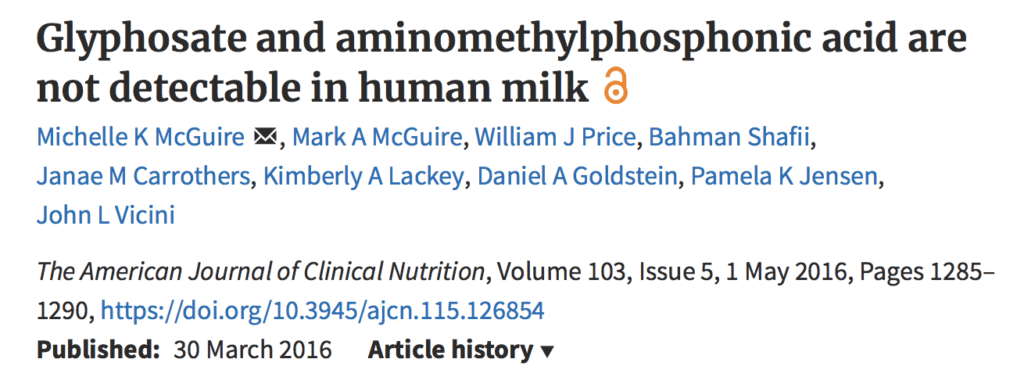
Our data provide evidence that glyphosate and AMPA [the metabolite of glyphosate] are not detectable in milk produced by women living in this region of the US Pacific Northwest. By extension, our results therefore suggest that dietary glyphosate exposure is not a health concern for breastfed infants.
Origins of the controversy
Little did McGuire realize that she had an unintended connection to the flawed MAA study. Back in October 2012, McGuire received an email from a man who identified himself as Gill Rowlands, though the name in the “From” field was “David Rowlands.” Rowlands described himself as a Welsh (Wales) farmer and wanted to know if glyphosate ever made its way into breast milk. McGuire had never investigated the question, because “that’s not my area of research,” she told me on the phone. “I don’t work with pesticides.”
But she thought it was a good question, so she searched PubMed, a research database maintained by the National Institutes of Health, to see if any other scientists had looked for glyphosate in breast milk. She found no studies on the topic. She reported that back to Rowlands.
It turns out the man she was corresponding with was Henry Rowlands, the publisher of Sustainable Pulse, a popular anti-GMO website. Rowlands is an activist who would later arrange the funding and laboratory evaluationfor MMA’s faux glyphosate breast milk pilot study. Rowlands used his father’s email address to contact McGuire.
Not knowing who Rowlands was, McGuire cc’d her husband, a dairy scientist at the University of Idaho (where Shelley McGuire is now a professor) named Mark McGuire, on the email thread with Rowlands. Mr. McGuire studies growth hormone in dairy cattle, and Monsanto had previously funded some of the growth hormone research done in his lab. He reached out to his contacts seeking an answer to Rowlands’ question. The Monsanto researchers, Daniel Goldstein and John Vicini, said the company had never studied glyphosate in breast milk, but they would be interested in looking into it. However, the discussion about a possible study stalled until the spring of 2014.
Meeting with Charles Benbrook
In early 2014, Charles Benbrook, an agricultural economist also then at WSU, contacted McGuire and invited her to have coffee. They had similar research interests, he said. Benbrook is also a well-known critic of Monsanto and much of his research has been fundedby organic food companies. Just like Rowlands, Benbrook wanted to know if glyphosate could get into breast milk. He also asked how McGuire felt about organic farming and what she knew about Monsanto and Roundup.
The meeting was really strange, according to McGuire. “Why are you asking me this?” She said on the phone, recounting the conversation with Benbrook. “But in hindsight we know that all these folks are connected.” McGuire’s observation makes sense in light of the fact that Sustainable Pulse promotesBenbrook’s research. Emails released to the public also provide evidence that Rowlands and Benbrook have corresponded about the environmental impact of glyphosate in their attempt to demonize the herbicide.
When the MAA pilot study was released online that spring, Monsanto reconnected with McGuire and asked her to collaborate on a study to see if glyphosate could be detected in breast milk, with Rowlands copied on the email. At this point, no adequate, long-term independent tests had been undertaken to ensure that glyphosate herbicide formulations were not persistent, bio-accumulative or toxic. Interestingly, MAA requested this sort of validation of their results. In the press release for their pilot study, MAA said it wanted
…. testing [that] would include the outcomes most relevant to children’s health. The U.S. Congress should supply funding for urgently needed long-term independent research on glyphosate herbicide formulations, including their health effects, how they get into the human body ….
Avoiding a conflict of interest
As a lactation specialist at a public university, McGuire was perfectly suited to carry out the study. But there would be accusations that collaborating with Monsanto would bias the results, so she acknowledged that the company gave her and her husband each a $10,000 unrestricted grant, money with no strings attached. “The university research office wouldn’t have signed off on [the grant] otherwise,” McGuire said.
For the study, McGuire collected milk and urine samples from 41 women, and the Monsanto team developed a testing method, called an assay, that was sensitive enough to detect glyphosate in breast milk. A third-party laboratory called Covancethen tested the samples McGuire’s team collected using the assay developed by Monsanto, again to head off accusations that she was paid to produce a study favorable to the company. McGuire added that Covance had “every incentive” to find glyphosate in the milk samples, “because everyone would have started sending them milk samples. They could have had quite the business analyzing milk for glyphosate.”
The lab was unable to detect any glyphosate, however, and McGuire presented these preliminary results at the Montana Federation of American Societies for Experimental Biology (FASEB) meeting in July 2015. But this is where things took a strange turn. “It was a closed scientific meeting, where the abstracts were not publicly available,” McGuire recalled. WSU put out a press release about the research the day McGuire presented the findings, but the brief article from the university did not discuss the “…. full details of the method or the limits of quantification used” for the study, as Sustainable Pulseeagerly pointed out in a blog post published the day after McGuire’s presentation.
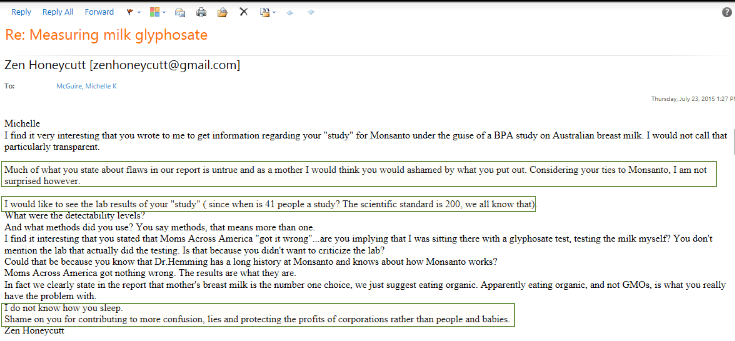
Nonetheless, within an hour of giving her presentation at the meeting, McGuire received several angry calls from MMA’s Zen Honeycutt. Rowlands and Honeycutt also began sending harassing emails to McGuire. “I do not know how you sleep,” Honeycutt wrote in one email. “Shame on you for contributing to more confusion, lies and protecting the profits of corporations rather than people and babies.”
Hacked presentation?
These reactions were disturbing, because Honeycutt and Rowlands were not in attendance and could not have otherwise known about the research results that quickly. McGuire also said the activists had obtained a copy of the Powerpoint presentation she used at the meeting, which she had not released to the public.
The intimate knowledge Honeycutt and Rowlands had about McGuire’s presentation seems to fit into the timeline of events that is already known. She presented the results of her preliminary study on July 23, 2015, and on July 27, 2015, USRTK submitted a FOIA requestto WSU for McGuire’s emails, looking for any interaction she may have had with Monsanto. It was at this point McGuire and her team realized who Henry Rowlands is and why he may have reached out to her in 2012.
Rowlands may have been “fishing for someone to do the [MAA] study,” McGuire speculated. This also could have been why Benbrook arranged to meet with her in early 2014 and asked her how she felt about organic farming and Monsanto.
Call to USRTK
Over the next three years and in 40 installments, WSU sent McGuire’s emails, 12,000 documents in all, to USRTK under the Freedom of Information Act (FOIA). McGuire spent roughly three hours per installment with the lawyers so she could identify which information USRTK legally would have access to. In total, McGuire estimated she spent a month going through emails instead of conducting her research.
Follow the latest news and policy debates on sustainable agriculture, biomedicine, and other ‘disruptive’ innovations. Subscribe to our newsletter.
Hoping to avoid an unjustified scandal for WSU, McGuire called Gary Ruskin, the co-founder of USRTK, when she heard about the extensive FOIA request. “‘I will send you whatever emails you want, but this list is huge,’” she told him. Ruskin told McGuire that he knew she was hiding something and USRTK would find it. “Then he hung up on me,” McGuire recounted. “He was as rude as he possibly could be.”
Fallout at WSU
McGuire said the worst part of the whole affair was how WSU reacted to the accusations MAA, Rowlands and USRTK leveled at her. When the FOIA request first came through, McGuire went to her department head at WSU for input on the situation, explaining that she was unprepared for such a vicious attack.
“What do you expect?” he replied, “Monsanto is a horrible company.” His answer shocked her, because she did not believe it accurately described the company; it was a simplistic generalization about a complex research-based corporation. But McGuire said the situation got worse. She was told by university officials not to rebut the accusations being made against her in public.
It wasn’t an official gag order, but I was asked in no uncertain terms not to speak to anybody …. As academics, we have to engage, because otherwise the public only knows what they read and hear [from activists]. If we’re being encouraged by our universities to keep our mouths shut, then this is just going to get worse.
Cameron J. English is the GLP’s senior agricultural genetics and special projects editor. He is a science writer and podcast host. BIO. Follow him on Twitter @camjenglish
In a study carried out over the summer, a group of volunteers drank a white, peppermint-ish concoction laced with billions of bacteria. The microbes had been engineered to break down a naturally occurring toxin in the blood.
The vast majority of us can do this without any help. But for those who cannot, these microbes may someday become a living medicine.
…
The bacteria are designed to treat a rare inherited disease called phenylketonuria, or PKU. People with the condition must avoid dietary protein in foods such as meat and cheese, because their bodies cannot break down a byproduct, an amino acid called phenylalanine.
As phenylalanine builds up in the blood, it can damage neurons in the brain, leading to delayed development, intellectual disability and psychiatric disorders. The traditional treatment for PKU is a strict low-protein diet, accompanied by shakes loaded with nutritional supplements.
But in experiments on mice and monkeys, Synlogic’s bacteria showed promise as an alternative treatment. On [September 4], company investigators announced positive results in a clinical trial with healthy volunteers.
…
One of the new genes encodes a pump that the bacteria use to suck up phenylalanine around them. A second gene encodes an enzyme that breaks down the phenylalanine into fragments. The bacteria then release the fragments, which get washed out in urine.