Preparing for motherhood: Do the father’s genes play a role?

dad
[A] father may have the ability to dictate a mother’s attentiveness to their offspring—before it’s even born. The paternal genes a fetus carries can impact the maternal brain during pregnancy, priming her to allocate more or less of her time to tending to her kids.

…

[G]enomic imprinting [is] a form of non-genetic inheritance in which both copies of a gene exist, but only one parent’s version is left intact.

…

Previous work by [researcher Rosalind] John’s research group had found that expression of an imprinted gene called Phlda2 in a fetus hinders the growth of hormone-secreting placental cells. These hormones recruit nutrients to support early development.

…

Other researchers had noted that these hormones weren’t just working in the placenta, however. Throughout pregnancy, they were actually spreading throughout the mother’s body and accumulating in her brain—leading John to suspect that they could also be encouraging a mother to care for her young.

…

Manipulating mom’s parenting approach could be yet another way that a father sneakily exerts his influence over the future wellbeing of his child.

…

Even before birth, children communicate their fathers’ intent in a way that sticks. The priorities of male and female don’t always match up—and in a way, imprinting is evolution timidly waving a white flag between the clashing sexes.

Read full, original post: How Dad’s Genes Can Prepare Mom for Parenthood

Reasons to be wary of the ‘untamed wilderness’ of dog DNA tests

dog

The claims that dog DNA-testing companies make can seem all but definitive: One quick cheek swab can not only tell you about the breeds that make up your pooch but also offer it a lifetime of health. …

But three canine genetics experts have hurled cold water on those claims, saying the business of consumer-marketed canine genetics testing is an “untamed wilderness” of weak science, unvalidated outcomes and conflicts of interest.

Their opinion piece, published last week in the journal Nature, says some dog owners are making decisions about euthanasia and serious veterinary treatments based on DNA tests that come with minimal warnings, vague details about tests and no government oversight. The paper calls for standards and guidelines that, the authors say, may need to become law to resolve the problems — especially as the field, with hundreds of thousands of dogs already being tested each year, continues to grow.

…

The commentary sparked debate within the veterinary world. Several industry experts said they agreed with its general premise that there is a problem with the way dog DNA tests are marketed, but they defended what they called decades’ worth of science that has led to today’s tests — when that science is used, in their view, properly.

Read full original post: Don’t use dog DNA tests to make life-or-death decisions for your pet, experts warn

Why autism looks so different in girls

Screen Shot at PM
More than a decade ago, doctors diagnosed Frances Pelphrey with autism. Babbling, speaking her first words, and walking—these and other milestones had come late for Frances. Those clues led to her diagnosis at age 3, but her younger brother, Lowell, was identified as having ASD much younger, at just 16 months, according to Spectrum News.

The Pelphrey children aren’t a unique case as it’s typical for girls to be diagnosed with autism spectrum disorder (ASD) later in life than boys, often after the girl has been misdiagnosed with something else.

As a toddler, Frances was obsessed with American Girl dolls and Disney movies. That sounds rather standard for a female toddler, much different from the stereotypical autistic behavior we see in movie characters like Dustin Hoffman’s in the 1988 film Rain Man—who obsessed over the TV schedule and had a super-human memory.

“[Frances] was very social and a very happy, easy baby,” their father, Yale-New Haven Hospital neuroscientist Kevin Pelphrey noted in an interview with Maia Szalavitz in Scientific American. That’s not typical of ASD, but it’s not uncommon for girls with ASD. It’s also not uncommon for ASD to go unrecognized in girls way into the teenage years and beyond, for a simple reason: a lot of what we know about ASD comes from studies in boys. Because in girls, it manifests differently.

Picking up ASD

dustin-hoffman-rain-man-1ASD is prominent on the radar screen, whether for medical professionals, specialists, or teachers because it’s fairly common. It affects 1 in 68 children in the U.S., and the number of diagnoses is on the rise, with a 30 percent increase over the last couple of years. Although the reasons for this increase are controversial—more children today are diagnosed on the spectrum than ever before. It has been in popular culture for a while too, with Rain Man being the most notable example, but also the 2005 movie Mozart and the Whale. From these famous examples and the prevalence, most of us now have a basic understanding of what ASD looks like but only when it comes to males.

But that standard is slowing changing. ASD diagnostic criteria were updated extensively in the 5th edition of the Diagnostic and Statistical Manual of Mental Disorders (DSM-V, published 2013). The changes allow for a broader number of people to be included, making it easier to make an identify girls on the spectrum as well as others who don’t fit stereotypes of the condition.

Atypical ASD symptoms that may be typical for ASD female

A boy with ASD often stands out in school and other social settings, because he doesn’t follow age-appropriate social norms and doesn’t care about them. He may not form friendships, but isn’t seeking them in the first place.

ASD girls, on the other hand, often attempt to fit in and frequently can make it look as if their relationships are healthy. This is particularly the case when the girl is intelligent. Researchers think that ASD girls can mimic normal behavior, not because they are learning age-appropriate body language or employing other subtle communications, but rather because they can learn to imitate the behavior of their female peers. This can make ASD girls hard to notice at school or in other group settings, but at home, surrounded by family, such children often have meltdowns—as if expending so much effort at school to appear normal that they just have to let it all out at home.

Mis- and disinformation are distorting science and public policy. Subscribe to our Daily and Weekly Digests for incisive coverage of ‘disruptive’ innovations in AI, agricultural biotechnology, food, chemicals, nuclear energy, vaccines, and other disruptive innovations.

ASD girls’ tend to have more friends that are boys because boys’ behavior is less subtle and easier for ASD girls to imitate. In a certain sense, non-ASD males are slightly more ‘autistic’ than non-ASD females. Boys tend to occupy a boundary area near the start of the autism spectrum. Often, rather than being recognized as a possible case of ASD, females in this category often receive diagnoses of other conditions, such as eating disorders (like bulimia nervosa and anorexia nervosa), obsessive-compulsive disorder (OCD), and depression. Things get complicated, because these other disorders, particularly eating disorders, can coexist with ASD.

Women are from Venus and men are from Mars, and so are women with ASD

screen-shot-2016-10-04-at-10-02-10-pmYou can think of the spectrum that we call ASD as running from one extreme represented by an individual whom you rate zero regarding social skills, and mild side of the spectrum merging with people who may meet one or two ASD criteria, but not enough to qualify for an ASD diagnosis.

So while ASD affects more males than females, it may be that the condition is more subtle in girls because they tend to be in the mild part of the spectrum. This is not to say there are no boys in this zone; on the contrary, there are plenty, but many of them might go unrecognized, but for the fact that because of the gender skew the boys are more on the radar screen from the onset. But, also because there are more boys with ASD, there are more of them deeper into the spectrum.

Studies of the brain, such as those using imaging to see which parts of the brain react to various social cues, show that girls with even mild ASD are very different from non-ASD girls. The pathways in the brain that ASD girls use to react to subtle language and body movements are distinct from those that non-ASD girls use for the same reactions. That’s because the reactions are different; they’re forced, not natural. But neurologically, they’re also different from ASD boys, so are they in a category by themselves?

Not really. The brain pathways used by ASD girls for social cues are similar to those of males that do not have ASD. What could this mean? It might mean we could add a new dimension to the concept promoted in the 1992 relationship best-seller Men are from Mars and Woman are from Venus—because it seems that females with ASD might be at home on a planet inhabited by men who are not on the spectrum.

A version of this story originally appeared on the GLP in October 2016.

David Warmflash is an astrobiologist, physician and science writer. BIO. Follow him on Twitter @CosmicEvolution.

Viewpoint: Why saving seeds is an unproductive farming practice that locks in poverty

Screen Shot at AM
The following essay arose as part of a discussion about seed saving and intellectual property that was organized in response to this 2003 article from the Genetic Resource Action International (GRAIN), which was been on the web for years and is often cited as an argument for seed saving:

It’s also a hot issue because the seed industry is working hard to secure legal systems that restrict seed saving by farmers, be it through the World Trade Organisation (WTO), bilateral trade agreements or direct lobbying of governments. PVP or plant breeders’ rights legislation is all about taking power away from farmers to produce and reproduce seeds. And these laws are gaining ground.

Governments caving in to the pressure often say, “Don’t worry, we will protect the rights of the farmers at all cost!” They swear that nothing will prevent farmers from continuing their “traditional” and “historic” practice of conserving, exchanging and further developing seeds. And so they write into their law this “farmers’ privilege”. Yet the fact is, the farmers’ privilege is a legal “yes, but” on seed saving – with the “but” getting bigger by the day.

Country after country that has established a plant variety protection law has progressively made the farmers’ exception more and more restricted. To the point that it becomes meaningless. Why? Because the breeders keep asking for stronger and stronger rights. Tightening the loophole that allows farmers to save seeds is the easiest way to give more power to the breeders.

A lot of people who opine about the current intellectual property issues in modern agriculture are unaware that the patenting of seeds didn’t start with biotech in the 80’s and ’90s. It started in the US with the Plant Patent Act of 1930 with assists from Thomas Edison and Florio LaGuardia. An updated version was passed in 1970 with the Plant Variety Protection Act which allows farmers to save conventional seeds but not to sell them. (you can copy and burn a CD, but you can’t start selling CD’s)

My response to the GRAIN piece was that it raised legitimate concerns, but breeding has become more sophisticated and resource intensive, the seeds add more value, breeders need to be rewarded properly and their rights protected.

The answer in the developing world is for seeds developed by public universities and NGO’s to be released under more permissive licenses, including releasing them into the public domain. I’ve also heard of efforts by NGO’s to buy breeding patents and release them into the public domain. That’s a promising idea. There are a number of grassroots groups doing open source breeding. All to the good.

Anastasia Bodnar also has had seed saving on her mind. She had a two-part post discussing why breeder’s rights are important and a look at market power in the seed industry.

Basil breeding would be cool just as a hobby, and if I was in the business of selling basil, it could potentially be a way to create a niche market for myself. But hey, if I did then go and spend years making careful crosses, then sold my lovely purple Thai basil plants to people, then anyone who wanted more of the basil that I spent years developing could just plant the seeds from them. And there’d be nothing to stop them from selling the plants from those seeds. Unless there was a way for me to protect my invention.

If I was just doing this as a hobby or if I wanted to share my purple Thai basil with the world for free, that’d be great. Yay for sharing seeds! But what if I needed to make money from the basil? What if this was my full time job and I made money because my basil was special and if people just started growing it and giving it away or selling it, this would cut into my market and all of my efforts breeding a special variety would in the end have all been just a waste of time because now I can’t make a living off it. Boo for sharing seeds!

Mis- and disinformation are distorting science and public policy. Subscribe to our Daily and Weekly Digests for incisive coverage of ‘disruptive’ innovations in AI, agricultural biotechnology, food, chemicals, nuclear energy, vaccines, and other disruptive innovations.

Where saving seeds makes economic sense

It occurs to me that there is a deeper issue here. Trying to protect farmers’ right to save seeds only has an economic importance in low productivity systems where the benefits of specialization haven’t kicked in. By and large, modern farmer’s don’t save seed because it isn’t a good use of their time and it would yield an inferior seed. If the pre-breeder’s rights seeds were so great, they would still be around to save and share.

If saving seeds is an economical use of a farmer’s time, that’s a bad sign. Energy and resources should be invested to help them raise productivity going forward rather than a backward looking approach of trying to preserve traditional farming. The right to save seed should be protected, and it’s hard to imagine instances where it won’t be. There may be improved seeds that come with strings attached, but if farmers don’t find those a fair bargain, they should be able to fall back on seed in the public domain or covered by more permissive agreements that allow for seed saving.

The bottom line is that if farmers are mired in such unproductive farming systems that saving and cleaning old seed is an economical use of their time, that should be seen as a sign that they need access to better infrastructure, risk management, non-predatory credit. It shouldn’t be a call to arms to defend low productivity farming.

But saving seed exerts a strong pull on the imagination of pastoral sentimentalists. There is a very appealing parsimony and self sufficiency associated with saving seeds. But in reality it’s a parsimony and self sufficiency forced by bad circumstance, not embraced through the farmer’s individual agency.

[POSTSCRIPT] It was brought to my attention that I gave short shrift to farmers in developing nations that save seed. Farmers in developing nations do save seed, and in some crops, more than I had realize when I wrote this. What I was reacting to in this piece is the tendency of some NGOs in developing countries to focus on shielding subsistence farmers from market forces and over romanticize traditional production, rather than helping them get the tools to integrate and adapt. The focus on seed saving is often a marker for that.

My emphasis is on the distinction between necessity and choice. Farmers in the first world are doing the math in a spreadsheet and making a cost benefit calculation about whether they can get sufficient yields to stay competitive without investing in the latest seeds. What we are talking about in developing nations is farmers saving seed out of necessity, because they can’t afford the seeds that could lift them out of farming at the subsistence level. There is a big difference between having the choice in 2016 between getting one more year out of seed you bought in 2011 and buying need seed and being trapped into saving 19th century seed in 2016.

A version of this story originally appeared on the GLP in December 2016.

Marc Brazeau is the GLP’s senior contributing writer focusing on agricultural biotechnology.  He also is the editor of Food and Farm Discussion Lab. Follow him on Twitter @eatcookwrite.

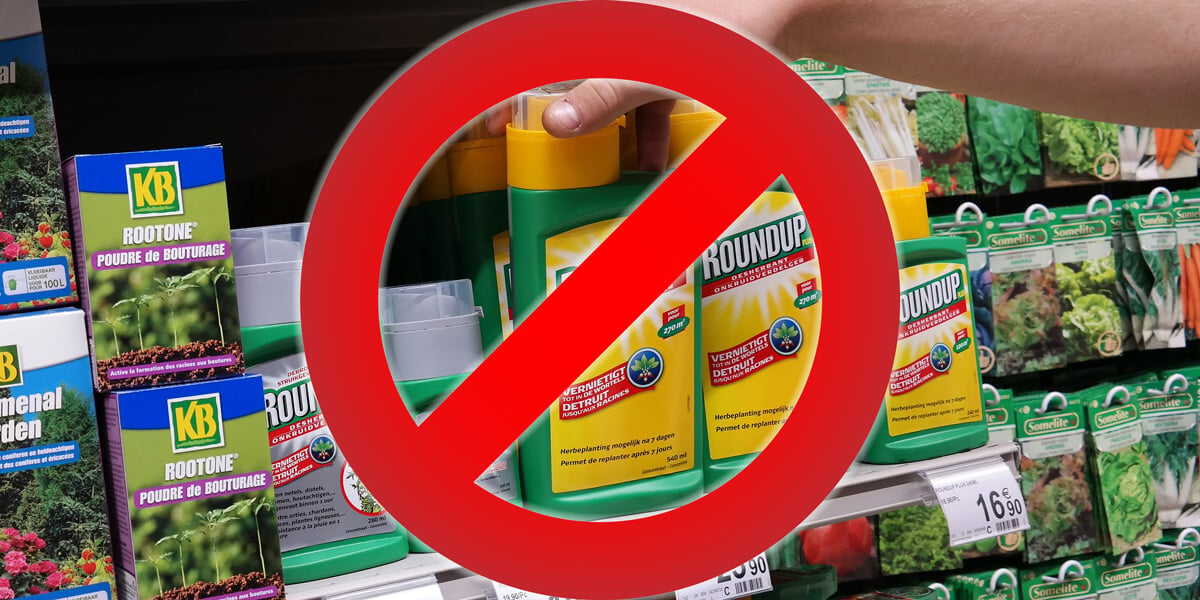
Brazil’s public health agency will appeal judge’s nationwide suspension of glyphosate

Roundup Glyphosate Pesticides

Brazil-based agrochemical companies plan to appeal a ruling suspending the use of best-selling weed killer glyphosate …. an industry spokeswoman said on [August 8th].

Glyphosate, an herbicide widely sprayed on …. crops that have been genetically modified to tolerate it, was suspended in Brazil by a court ruling …. pending a government reevaluation of its toxicity.

Silvia Fagnani, executive director of a pesticide industry group known as Sindiveg, said the appeal in Brazil would be filed [the week of August 13th]. She said Brazilian health agency Anvisa, as well as the Agriculture Ministry, were also going to file separate appeals against the decision  …. Anvisa  …. confirmed the intention to file an appeal in a statement sent to Reuters.

…

[Glyphosate’s] toxicity reevaluation started when new evidence surfaced that [it]…. “could pose [a] danger or risk to human health,” court filings said referring to the Anvisa process.

…

Fagnani said glyphosate is safe and authorized in many countries. She said sale and commercial use should continue in Brazil until the Agriculture Ministry, responsible for registration of agrochemicals, publishes any decision otherwise.

…

“[T]he system of direct planting is based on glyphosate, and it will be a gigantic …. setback (to suspend it),” Brazilian Agriculture Minister Blairo Maggi said.

Read full, original article: Brazil pesticide group to appeal ruling suspending glyphosate weed killer

Counterfeit pesticides in Kenya threaten crop harvests and farmers’ health

insecticide
[Kenya] is losing [millions of dollars] in revenue to unregistered agro-chemicals dealers and counterfeit pesticides, according to [the] Agrochemicals Association of Kenya (AAK) chairperson Patrick Amayunzu.

AAK said counterfeits account for 15 to 20 percent of agrochemicals being distributed in the country, posing a threat to farmers and the environment.

Some of the companies with the fake products are generating labels similar to the genuine ones, especially for the fast moving products, and employing poor marketing practices such as selling from trucks of cars.

Amayunzu said a lot of the pesticides …. are expired, adding that purchase of these products could cost farmers their entire harvest.

…

AAK in collaboration with Crop Life Director International is conducting a risk mitigation workshop for stakeholders …. Agrochemicals dealers have [also] been pushing for self regulation to step up the fight against fake pesticides.

…

AAK has also partnered with Pest Control Product (PCP) Board …. to inspect [the] efficacy of products before they are granted …. licensing in order to mitigate potential harmful effects and counter the loses [of] farmers.

“There is [a] need to collaborate with all stakeholders to train on effective use of pesticides to maximise benefits and minimise risks,” Amayunzu said.

Read full, original article: Counterfeit pesticides cost farmers Sh120bn

Study sparks fresh debate over an old theory on the cause of Alzheimer’s

Alzheimer’s

In the long-running debate over just what causes Alzheimer’s disease, one side looks to have scored a victory with new results with an in-development drug. But there’s enough variation in the data to ensure that the squabbling factions of Alzheimer’s will have plenty to fight about.

At issue is the so-called amyloid hypothesis, a decades-old theory claiming that Alzheimer’s gradual degradation of the brain is caused by the accumulation of sticky plaques. And the new drug is BAN2401, designed by Biogen and Eisai to prevent those amyloid plaques from clustering and attack the clumps that already have.

In data presented [recently], one group of patients receiving BAN2401 saw their amyloid levels plummet, a result that was tied to a significant reduction in cognitive decline compared with placebo.

…

But to skeptics, the trial was laden with confounding details that make it impossible to draw conclusions.

“These results are a mess,” wrote Baird biotech analyst Brian Skorney. “Not so much that they indicate an outright failure of the [amyloid] hypothesis, but they don’t really say anything informative at all.”

…

If amyloid really is the driving factor behind Alzheimer’s, why didn’t each incremental reduction in plaques lead to a corresponding improvement in cognition?

Read full, original post: Alzheimer’s study sparks a new round of debate over the amyloid hypothesis

Differences in brain reward system may explain why autistic people are less interested in socialization

autism

The brain’s system for sensing pleasure and reward shows unusual activation patterns in people with autism, according to an analysis of 13 imaging studies. A second new study points to an altered structure of reward circuits in autism.

The results support the social motivation hypothesis, which holds that people with autism find social interaction less rewarding than other people do. A poorly functioning reward system may leave infants and young children unmotivated to engage with others. As a result, they may get few chances to practice and develop their social skills.

The problem is not limited to social motivation, however. The results of the meta-analysis show that the autism brain also responds uniquely to nonsocial rewards, such as such as winning money or a game.

…

In the meta-analysis, researchers used cutting-edge software that enabled them to combine raw data from multiple imaging studies.

…

The study supports the idea that people with autism may have restricted interests and repetitive behaviors because they are disproportionately rewarding, says Benjamin Yerys, a child psychologist at the Children’s Hospital of Philadelphia, who led the imaging study and also worked on the meta-analysis. Over time, he says, these interests may crowd out more typically rewarding things such as social interaction.

Read full, original post: Reward-system differences may underlie multiple autism features

Blossoming brains—Why some people suddenly become geniuses or musical savants

fd f a d f a bcde c bdee x crop

Savant syndrome comes in different forms. In congenital savant syndrome the extraordinary savant ability surfaces in early childhood. In acquired savant syndrome astonishing new abilities, typically in music, art or mathematics, appear unexpectedly in ordinary persons after a head injury, stroke or other central nervous system (CNS) incident where no such abilities or interests were present pre-incident.

But in sudden savant syndrome an ordinary person with no such prior interest or ability and no precipitating injury or other CNS incident has an unanticipated, spontaneous epiphanylike moment where the rules and intricacies of music, art or mathematics, for example, are experienced and revealed, producing almost instantaneous giftedness and ability in the affected area of skill sets. …technically sudden savant syndrome would be better termed sudden genius.

…

Many people pick up a new skill or hobby, especially later in life. So what is different here?

—The skill has an abrupt onset with no prior interest in or talent for the newly acquired ability.

…

—The new skill is accompanied with an obsessive-compulsive (OCD) component; there is the overpowering need to play music, draw or compute. …

—There is a fear the gift and OCD is evidence of losing one’s mind, and a tendency to hide the new ability from others rather than display it.

Read full, original post: Brain Gain: A Person Can Instantly Blossom into a Savant–and No One Knows Why

Protect your pets: Many agriculturally necessary plants are naturally toxic to animals

milkweed

Not all plants are wholesome for foraging animals.

Certain species of milkweed, for example, that are highly valued as host plants for the dwindling monarch butterfly population, are extremely poisonous to pets and to range animals like sheep, cattle and goats. Even free-ranging chickens aren’t immune. Among potentially toxic poultry pickings are castor beans and certain mushrooms, although chickens don’t eat them as readily as do animals.

…

Some plants, like water hemlock, “can kill a cow in 15 minutes, while others, like buttercups, just leave a burning sensation in their mouths or tongues,” said Donna Foulk, an Extension educator with Penn State University.

Ornamental plants either in or outside the home are frequently toxic, she said.

…

Many weed varieties aren’t toxic unless environmental conditions make them so. “If plants pick up a lot of nitrogens from rain and rapid growth, and animals eat a lot of them, they can die,” said Mark Renz, a University of Wisconsin Cooperative Extension weed scientist.

The problem becomes even more acute during dry weather when pasture grasses go dormant and troublesome but persistent weeds become more enticing as fodder.

Read full, original article: Many plants can be poisonous to pets and livestock

Fighting cancer with help from the body’s internal clock

bioclock

Chi Van Dang generally declines to discuss the science that made him famous.

…

Instead of doing so, Dang [a leading authority on cancer metabolism] uses his soapbox at every research meeting, lecture and blue-ribbon panel to advocate for something else: a simple yet radical tweak to how oncologists administer cancer drugs.

The approach, known as chrono­therapy, involves timing delivery of drugs to minimize side effects while maximizing effectiveness. The idea is to synchronize therapy with the body’s natural 24-hour rhythms — the circadian clock — and striking when cancer cells are most vulnerable or when healthy cells are least sensitive to toxicity (or, ideally, both).

…

It is not an entirely new concept. Some trials in the 1980s and 1990s showed dramatic reductions in toxicities and extended survival times among cancer patients who were treated in a clock-optimized fashion. But mostly “it’s just always been on the fringe,” says Dang. “There weren’t that many card-carrying cancer biologists like me getting into it.”

Until now.

Researchers are finding new ways to administer old drugs and they are devising clever tactics for rewiring aberrant clocks. … Last year, the NCI — the largest funder of cancer research in the world — put out a call for grant applications from scientists seeking to understand how circadian processes affect tumor development and the responses of patients to therapy.

Read full, original post: How to ruin cancer’s day

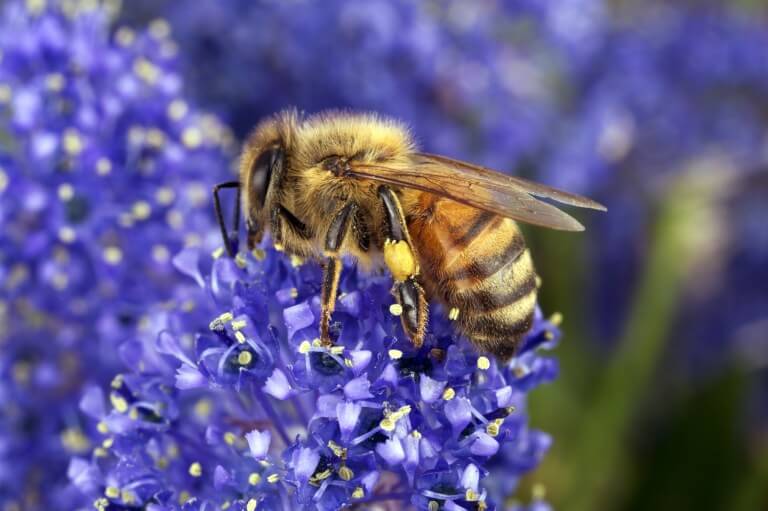
As honeybee population grows, scientists question link between neonicotinoids and bee health

Honey bee

Some argue that an increase in insecticide use and a much-publicized Colony Collapse Disorder [CCD] issue have caused honey bees to become endangered. There are organizations dedicated to “saving the bees,” and many of them have targeted farmers as major culprits in the demise of the honey bee population.

…

Although, the honey bee isn’t on the endangered list, many are still under the impression that they soon will go extinct. Since this species is known for its role in agriculture, the blame is often placed on the industry for Colony Collapse Disorder and pesticide use. This blame is misguided, however, according to many reports.

An extensive analysis done by The Washington Post and published in 2017 show bee numbers sitting at a 20-year high. The research showed that since 2006, when CCD was identified, the number of honeybee colonies has risen, from 2.4 million that year to 2.7 million in 2014.

…

“As for neonicotinoids, the controversial class of insecticides commonly applied as a seed coating, [former Oregon State University professor Michael] Burgett says that despite over a decade of study, it’s still yet to be proven that they’re playing a significant role in honeybee deaths.”

Read full, original article: Are honey bees endangered? Here’s the truth of the matter

Viewpoint: Organic vs GMO debate distracts from real food security issues

BN LO FOODFI P

…. For several years now, GMOs and organic have consumed America’s attention. It isn’t our interest in these topics that is the problem. After all, we do put these foods into our bodies! The problem is that our collective attention is spent so obsessively on these issues that it comes at the expense of everything else. It’s the everything else that has me concerned. We’re fretting over papercuts while we’re hemorrhaging out of our leg.

In our food and agricultural dialogues, too often someone waves around a hot button issue with little impact on the long-run, while issues that really matter lay neglected on the roadside. This happens to sell products, get your ‘click,’ gain political clout or procure your signature or donation. Sometimes it happens because of ignorance.

It isn’t that peripheral issues don’t matter. It’s that other issues matter so much more. If weather changes wrought by climate change destroy crops or we run out of water, we will literally die …. Combined with threats from contamination and climate change, the continued use of large-scale groundwater pumping is unsustainable in many locations and a threat to the long-term viability of regional economies. If we continue unchecked, water shortages will not only raise the prices in our grocery stores significantly, but we may face major food shortages.

Read full, original article: Food Security’s Red Herrings: GMOs and Organic

Ancient worms resurrected after spending more than 32,000 years on ice

nematodes

A team of Russian scientists is lining themselves up to be the opening cast of a John Carpenter film. Earlier this month [July], in the journal Doklady Biological Sciences, they announced they had apparently discovered ancient nematode worms that were able to resurrect themselves after spending at least 32,000 years buried in permafrost. The discovery, if legitimate, would represent the longest-surviving return from the cold ever seen in a complex, multi-celled organism, dwarfing even the tardigrade.

…

After isolating intact nematodes, the scientists kept the samples at 68 degrees Fahrenheit and left them surrounded by food in a petri dish, just to see what would happen. Over the next few weeks, they gradually spotted flickers of life as the worms ate the food and even cloned new family members. …

…

At the same time, the team’s findings could still be a dud. “The biggest issue is the potential for contamination of ‘ancient samples’ with ‘contemporary’ organisms,” [said Robin M. Giblin-Davis, a nematologist and acting director of the Fort Lauderdale Research and Education Center at the University of Florida.]

…

As far as the horror movie scenario goes, there’s no indication these worms would present any danger to people (though some species of nematode can make us sick). Still, if you’re studying long-ago frozen creatures in the Arctic, it’s probably worth stocking a fire-thrower or two.

Read full, original post: Russian Scientists Claim to Have Resurrected 40,000-Year-Old Worms Buried in Ice

Here’s the thing about hallucinations: They’re not ‘categorically good or bad’

hallucinations

As late as the 18th century, hallucinations in their various forms were considered independent diseases or syndromes. In 1821, Alexis Vincent Charles Berbiguier de Terre-Neuve du Thym, a French author and demonologist, published a three-volume book entitled The Imps; or, All the demons are not from the other world, in which he described frequent torments by small mischievous devils. In 1816, Berbiguier became a patient of the French physician Philippe Pinel, a pioneer of psychotherapy.

…The concept that hallucinations were not a disease per se but a “symptom” of different diseases developed in the 19th century after what one leading psychiatrist called a “long and barren” debate. Although hallucinations are now regarded as symptomatic of a number of disorders, they are not themselves necessarily harmful. As a symptom, they can indicate that the brain is not functioning properly, which may lead to other harmful symptoms, but hallucinations are not categorically good or bad.

…

Some people, both those with and without mental illness or a neurological disorder, actually enjoy their hallucinations. People who experience visual hallucinations following a bereavement, for example, can find them comforting.

…

Hallucinations force us to question the very nature of reality. Unlike imagination, hallucinations don’t seem to be of our own creation, are often outside of our control, seem to come from the outside world, and mimic perception.

Read full, original post: Are hallucinations a disease?

Health benefits of hot dog water? Profitable prank illustrates problem with food labels

Festival-goers in Canada recently got the opportunity to buy an innovative new health product: hot dog water. Boasting health benefits and claiming to be “keto compatible” and gluten-free, the water sold for $27 a bottle. The hot dog water turned out to be a joke by a performance artist but the artist earned about $1,500 from the stunt.

Hot dog water might seem completely absurd, but consumers encounter ridiculous labels and marketing gimmicks every time they hit the grocery store. Often, they shell out hard-earned dollars on the products bearing those labels believing they are receiving health benefits.

…

Take Ketel One vodka. Vodka is often made from wheat, which has no GMO version commercially available …. Yet Ketel One ran an entire ad campaign bragging about being 100% GMO free, as if this was something special that set them apart from competitors …. Ketel One’s campaign was the equivalent of saying fresh water is free of sea salt.

…

Other marketing tricks can be slightly harder to decipher, even when the label is regulated by the federal government.

Federal regulations prohibit adding any hormones to pork or chicken. “Hormone-free” claims on these meats are required to subsequently state the rule. But no meat is hormone-free, because hormones are naturally produced by plants and animals.

Read full, original article: Food labels mislead consumers

Selling your DNA in our ‘brave new world’

dna

There are instances when people choose to sell their own blood. Sperm banks transact business based on a different bodily fluid. And it’s not unheard of for those desperate enough to sell an organ, such as a kidney, despite the moral implications.

So, in this realm of being paid for pieces of our own body, what about DNA? We pose this because we’re seemingly on the cusp of a brand new industry hoping to do just that.

Given continued advances with CRISPR and gene editing, as well as many genomics companies such as Ancestry.com and 23andMe gaining widespread acceptance among consumers, this latest scientific innovation is spawning companies seeking to pay individuals for their genetic material, so that they in turn can re-sell it.

The concept powering these so-called “bio-brokers” is to gather personal DNA in such quantities so that it becomes valuable enough for an individual to sell (or rent) his/her genetic data to pharmaceutical companies. Once the pharma operations acquire and catalog enough data, they can use it to aid in disease analysis and drug discovery.

On the West Coast, at least two scientific startups are developing incentives to entice consumers to swab their cheeks and turn over their DNA. The San Francisco-based Nebula Genomics, and Luna DNA located in Solana Beach, north of San Diego, are diving headfirst into this field and trying to figure out what a person’s genetic material is worth.

Nebula’s model is for interested parties to have their entire genome sequenced, and then to be paid for it. How much is it worth? That’s a fair question, but with the market in its infancy that’s still to be determined. Oh, and one other thing: the payment will be in a crypto-currency, like Bitcoin, as Nebula’s graphic sketch shows.

Nebula Model“Thanks to continuous technological advancement,” said Nebula’s co-founder Dennis Grishin, “we have now reached a tipping point where the genomics revolution will spread beyond academic laboratories and affect the lives of millions of people,” speaking to the San Diego Union-Tribune.

One main reason why transactions such as these are even conceivable is because the cost of sequencing the human genome has plummeted since the beginning of the century. As detailed in the accompanying chart (credit: Nebula Genomics), what used to be a stratospheric cost now sits on the opposite side of the scale.

Human Genome Seq Cost 2001-17As for Luna DNA, its approach provides for individuals to share in future revenues that flow back to the firm from pharmaceutical companies, or any other scientific institution that seeks customer data.

“Luna DNA is a community owned database that rewards individuals shares in the database for contributing their DNA and other medical information,” according to a statement on its website. “Shares entitle members to a share in the profits from medical research and discoveries. The proceeds flow back to the community like dividends as researchers pay to access the data for discovery.”

Mis- and disinformation are distorting science and public policy. Subscribe to our Daily and Weekly Digests for incisive coverage of ‘disruptive’ innovations in AI, agricultural biotechnology, food, chemicals, nuclear energy, vaccines, and other disruptive innovations.

By comparison, companies such as Helix, 23andMe and Ancestry do not pay the consumer. The consumer pays those companies for analysis of their genetic makeup and a window into their family history and genealogy.

Meanwhile, the National Institutes of Health has launched “All of Us.” That research program aims to collect DNA from at least one million people in the United States to “serve as a national research resource to inform thousands of studies, covering a wide variety of health conditions,” with the “ultimate goal of accelerating research and improving health.”

All and all, it’s adding up to be a brave new world in the field of personal genetic data. What’s your view? Is privacy a concern, or is that an overblown issue? Please tell us. We’d like to know what you think.

Erik Lief has spent more than 25 years with major media organizations, and he produced news and sports programs for CNBC, CBS News, ESPN, and the Associated Press.

A version of this article was originally published on the American Council on Science and Health website as “Want To Sell Your DNA? 2 Firms Are Buying (Sort Of)” and has been republished here with permission.

Viewpoint: Greenpeace and ‘the awful reality of anti-science activism’

green

The Austrian research portal “Addendum” released a bombshell video regarding the facts, figures, and positions regarding GMO foods. In this report that attempted to explain the reality of both the technology, economic implications and public discourse, the site sat down with both current and former Greenpeace activists, leading them to reveal the awful reality of anti-science activism.

Whoever was under the illusion that organizations the likes of Greenpeace are actual environmentalists who pursue the improvement of human health and biodiversity, will suffer a severe shock from the exchange included in the Addendum video. Sebastian Theissing-Matei, spokesperson for Greenpeace in Austria gave these answers:

Interviewer: In organic shops, I can buy that were produced with radiation of chemicals (sic). Does it make sense to allow one thing, while demonizing the other [GMO foods]?

Theissing-Matei: This is indeed a certain unsharpness which is born historically –  we have to be honest about it.

Interviewer: Shouldn’t Greenpeace also fight against certain types of apples that are being sold in organic shops and that were produced through radiation?

Theissing-Matei: As said, these are types that historically have existed for much longer. There is an unsharpness in the law, no doubt. We always concentrate on the things that are currently political debates.

Interviewer: Should the arguments of Greenpeace not be based on reality, meaning the danger or non-danger and possible utility [of technological progress], and not only on based on what is being discussed in the media?”

Theissing-Matei: We are a political organization. Of course we try to act in the best interest of the environment, but momentarily the political debate is whether or not new methods for genetic modification should be placed under current legislation of genetic modification.

green 8 8 18

Greenpeace has more or less consistently refused to accept grants from governments (including the European Union), which does not endanger any of their funding by that token. It would have to be pointed out that the billion-dollar NGO has, in Europe in particular, benefited from financial support from green political parties, which themselves are entirely government-funded.

As for the political debate that the Austrian Greenpeace spokesperson addresses, it is interesting hearing such a thing from this particular organization. As far back as 1996, Greenpeace was seen protesting the arrival or a transport ship in the harbour of Hamburg, Germany, containing “the first set of genetically modified soybeans in Germany”. The protest had shown its effects: The then German minister for research demanded that producers label all of their foods if they have been genetically modified. So people talk about an issue that Greenpeace raised, and now this is the only topic it can address. Greenpeace is, in a beautiful fashion, fulfilling its own prophecies.

Mis- and disinformation are distorting science and public policy. Subscribe to our Daily and Weekly Digests for incisive coverage of ‘disruptive’ innovations in AI, agricultural biotechnology, food, chemicals, nuclear energy, vaccines, and other disruptive innovations.

By any means, it is one thing to oppose genetically modified food in 1996 than it is more than 20 years later. The recent Nature-published meta-analysis on genetically engineered maize on agronomic, environmental and toxicological traits shows clearly that insect that do not feed off of maize are not effected, and that genetically modified maize shows considerably lower concentrations of cancer-causing mycotoxins. But for Greenpeace, it’s not the scientific evidence that counts, but the fear it can spread as an effective business model. This is confirmed in the same Austrian report, by former Greenpeace activist Ludger Wess, who is now a science writer who was one of the first journalists in Europe to cover the emerging biotechnology and high-tech industries:

“Greenpeace was actually open-minded towards the idea of genetically modified foods. They said: “If it’s true that plants become resistant to insects, then that’s great because we’ll use less insecticides. So we’re for it.”

After getting back from a science-conference on genetically modified maize in 1989, Wess returned to Greenpeace:

I came back, armed with a whole suitcase of papers, and after having a lot of conversations with scientists, and they were all able to defuse my worries. I wasn’t convinced anymore that it would be a danger to human health. I told them [Greenpeace]: we cannot continue to claim that genetically modified foods are bad for human health, it’s simply not true. I was told that Greenpeace would still continue to make that claim, because only if people are in fear over their health or the health of their children, they’ll open their wallets for donations. Everything else, they said, isn’t suitable for campaigns.

Greenpeace has a history of being more interested in publicity than actual constructive debate and informed discussions. Be it violently blocking petrol stations in Luxembourg, aggressively disrupting the work of an oil rig, or even painting a massive roundabout in Berlin yellow, with water-polluting paint, and causing car damages and thousands of euros of cleaning costs: Greenpeace is an attention-seeking, anti-science activist group, that uses the environment as an excuse to propagate it’s illiterate bias against anything that advances human health and nutrition.

Current donors of this organization need to ask themselves the question whether they want to support this self-admitted political organization, which has no regard for the truth.

Bill Wirtz is a policy analyst for the Consumer Choice Center in Washington, DC. Follow him on Twitter @wirtzbill.

Monsanto Roundup trial: First lawsuit alleging glyphosate-cancer link goes to jury

roundup spray

A trial in which a school groundskeeper alleged that his use of Monsanto’s Roundup weed killer caused his terminal cancer will go to a California jury after lawyers for both sides delivered their closing arguments on [August 7th.]

Groundskeeper Dewayne Johnson is one of more than 5,000 plaintiffs across the United States who claim Monsanto’s glyphosate-containing herbicides, including the widely-used Roundup, cause cancer. His case, the first to go to trial, began in San Francisco’s Superior Court of California four weeks ago.

Johnson’s lawyer Brent Wisner on [August 7th] urged jurors to hold Monsanto liable and punish them with a verdict he said would “actually change the world.” Wisner claimed Monsanto knew about glyphosate’s cancer risk, but decided to bury the information.

…

“The message of 40 years of scientific studies is clear: this cancer is not caused by glyphosate,” Monsanto’s lawyer George Lombardi said, according to an online broadcast of the trial by Courtroom View Network.

…

If it finds Monsanto liable, the jury can decide to award punitive damages on top of the more than $39 million in compensatory damages Johnson demanded. The jury is expected to start deliberating on [August 8th].

Read full, original article: First trial alleging Monsanto’s Roundup causes cancer goes to jury