[W]ould colonization of space lead to a dystopia? In a recent article in Futures, which was inspired by political scientist Daniel Deudney’s forthcoming book Dark Skies, I decided to take a closer look at this question. My conclusion is that in a colonized universe the probability of the annihilation of the human race could actually rise rather than fall.
…
Consider what is likely to happen as humanity hops from Earth to Mars, and from Mars to relatively nearby, potentially habitable exoplanets.
…
Space-hopping populations will create their own cultures, languages, governments, political institutions, religions, technologies, rituals, norms, worldviews, and so on. As a result, different species will find it increasingly difficult over time to understand each other’s motivations, intentions, behaviors, decisions, and so on.
…
[P]onder the sorts of weapons that could become available to future spacefaring civilizations. Redirected asteroids (a.k.a., “planetoid bombs”), “rods from God,” sun guns, laser weapons, and no doubt an array of exceptionally powerful super-weapons that we can’t currently imagine.
…
Human beings have made many catastrophically bad decisions in the past. Some of these outcomes could have been avoided if only the decision-makers had deliberated a bit more about what could go wrong—i.e., had done a “premortem” analysis. We are in that privileged position right now with respect to space colonization. Let’s not dive head-first into waters that turn out to be shallow.
Anything calling itself “sleepy time” should be calm and relaxing, right? But there’s not much comfort to be found in the marketing of Celestial Seasonings’ Sleepytime tea.
By including the Non-GMO Project butterfly logo on the product’s packaging, the company confuses consumers into thinking the tea is different from others on the shelf. But here’s the truth…there is not a GM version of this tea’s plant sources in the first place.
…
Celestial Seasonings claims to be committed to transparency and cites it as their reasoning for using a non-GMO label, but we all know better. This label isn’t there to better serve customers or provide more information; it’s there to deceptively differentiate the product from the competition in the name of profits.
[I]n the journal Learning and Behavior, scientists report that the dogs most likely to come to the aid of their owners are those that feel empathy for humans—but not too much. Pooches that must push through doors to reach their distressed people need to both care enough to take action and keep the composure to do so.
…
34 dogs were separated from their owners by a clear plastic door held shut with magnets. The owners were instructed to either make crying noises or hum “Twinkle, Twinkle, Little Star” for up to five minutes.
..
As soon as each trial began, each dog had the opportunity to go to its owner. To [researcher Emily] Sanford’s surprise, regardless of the anguish their owners conveyed, half the dogs pushed through the door to get to their humans’ side.
…
When the researchers turned their focus to the dogs’ anxiety levels, however, they found that the dogs most likely to exhibit heroics were actually less stressed than others. As the experiment began, the dogs who didn’t run to their owners instead spent their time barking, fidgeting and pacing the room, appearing to be overwhelmed by the pressure of the situation.
…
“We think the dogs who opened that door might have been at that sweet spot: they perceived stress, but weren’t so personally distressed that they couldn’t do anything,” Sanford says.
[A] federal district judge presiding over class-action litigation in California [recently] made a troubling decision that will reverberate across the American economy for years.
The class-action lawsuit alleged that agriculture giant Monsanto caused cancer through its flagship product Roundup, which contains the herbicide glyphosate. The ruling by Judge Vincent Chhabria…allowed the case to proceed, yet in the same breath, he discredited the strength of the evidence underlying his own ruling.
In short, Judge Chhabria denied Monsanto’s motion for summary judgment to dismiss, despite his own opinion that the underlying science presented by the plaintiffs is “shaky” at best…
Judge Chhabria identified and acknowledged flaws in an assessment by…the International Agency for Research on Cancer (IARC), that glyphosate is a “probable carcinogen.”
…
Judge Chabria himself wrote, “As IARC takes pains to point out, its decision that a substance is ‘probably carcinogenic to humans’ is a hazard assessment – merely the first step in determining whether the substance currently presents a meaningful risk to human health.”
[T]his case will generate needless public alarm and confusion about a safe and critically important tool for agriculture producers across the world…it’s inappropriate to ask a jury of laypersons to ultimately steer the course of the agricultural industry’s ability to deliver safe and affordable food…
There is no singular cause of mental illness. Any number of things—our genes, environment, and even social mores—play a role in determining whether someone’s mental health will deteriorate to the point of being diagnosable as a disease. But researchers from Johns Hopkins have stumbled onto a possible trigger for manic episodes they didn’t expect to find: beef jerky.
…
[A] strange pattern began popping up among people diagnosed with mania, a state of hyper excitement, arousal, and delusion frequently followed by periods of severe depression in people who have bipolar disorder. Compared to the control group, people with a manic episode reported eating more cured meats such as beef jerky. Overall, they found that people with a recent history of eating cured meat were three times more likely to be hospitalized for mania, even after adjusting for factors like age or socioeconomic status. The same pattern couldn’t be seen with any other type of food eaten.
…
As for how jerky could be triggering mania, [researcher Robert] Yolken suspects it involves the microbial environment, or microbiome, of the gut. In a healthy person, the gut and brain regularly “talk” to one another through hormonal and nerve signals to keep the body regulated, the so-called gut-brain axis.
…
Even if diet plays a role in mental illness risk, it’s only one of many factors that interact in complicated ways we don’t fully understand.
An international team of researchers …. plans to fight HIV using only cereal; namely, rice. In a new paper, they describe how they developed a strain of the plant that produces HIV-neutralizing proteins, and how the resulting rice can be used to prevent the spread of this disease.
[O]ral medication has been developed that can keep an infection at bay for a limited amount of time. However, such treatments are still expensive — prohibitively so for the many areas in third world countries that are struggling under high rates of HIV infection. Compounding the problem is that production of such drugs …. is technologically-intensive and time-consuming ….
Here’s where the rice comes in. The strain engineered by the team synthesizes the same HIV-neutralizing compounds used in oral medication. Once the crop is fully grown, farmers can process the grains to make a topical cream and apply it to their skin — allowing these active compounds to enter the body. The rice plants produce one type of …. antibody and two kinds of proteins that bind directly to the HIV virus …. preventing [it] from interacting with human cells.
…
[T]here’s still work to be done …. The team wants to run an exhaustive battery of tests to ensure that their genetic machinations didn’t introduce genes for unknown …. chemicals in the plants.
The paper …. has been published in the journal Proceedings of the National Academy of Sciences.
In 2011, Sonia Vallabh was handed a genetic report that contained a death sentence. But it also held a map for how to escape. Her body, she learned, harbored a gene mutation, a single wrong letter of DNA in her “prion” gene, that would eventually lead to a rare brain condition called fatal familial insomnia.
…
After the diagnosis of the genetic time bomb, [she and her husband] dropped out of their careers in law and engineering and became scientists dedicated to defusing it. They expect to get PhDs next spring.
Now, after seven years, they think they have found a treatment that can do it. It’s called an antisense drug, a type of mirror-image molecule that, if it reaches the brain, could greatly reduce the amount of the prion protein. That could potentially forestall the mysterious chain reaction of misfolding proteins that characterize prion diseases.
…
Two weeks ago, on their blog, Vallabh announced she and [Eric] Minikel were working with a commercial partner, the California biotech company Ionis, which specializes in antisense compounds. “For the first time, I am optimistic about a specific therapeutic strategy,” she wrote. It’s “plausible” that antisense could treat the disease “in our lifetime.”
…
“The big picture,” [Vallabh] says, “is we are moving much more quickly than anyone could expect due to this beautifully clear genetic blueprint we were handed.”
…. Organic farming and grass feeding are promoted as having some social and environmental benefits compared with conventionally produced red meats. However, are they any healthier?
…
Studies of the bacterial contamination of organic versus conventional meat suggest that organic meat may slightly be more contaminated. However, conventional meat might become more contaminated with antibiotic-resistant bacteria; though the evidence is inconclusive.
..
From a nutritional perspective, some organic meats have the potential to contain more omega-3 fatty acids. This is because organic livestock are more likely to be fed a forage-based diet such as grass, producing slightly higher omega-3 levels …. However, a review of the research found little overall evidence of a difference.
It’s also unclear if these small differences translate into health benefits in the context of a balanced diet.
…
[T]he difference in hormone levels between hormone-fed and hormone-free beef is small. A single consumer would need to eat more than 77 kilograms of beef from a hormone-treated animal in one sitting to get the same level of oestrogen hormone found in one egg. Hormone levels are regulated …. to ensure that they are safe for consumers and not harmful to animals.
…
There may be slight nutritional differences between organic and grass-fed meat compared with non-organic and grain-fed varieties, but based on current evidence it’s unlikely to make a substantial difference to our health.
In Part 1, I described the vendetta by the Russian government’s propaganda apparatus against technologies like fracking and modern genetic engineering techniques applied to agriculture, and the aid the Russians receive from U.S.-based organic industry lobbyists and activists.
We ended Part 1 with the observation that advocacy, which we see in many industries and special-interest groups, is one thing, but character assassination, trolling and intimidation are something else. That crosses the line. We discuss that here.
Overall, the propaganda campaign by more radical elements in the organic industry has achieved impressive gains — if you consider ripping off consumers and character assassination to be positive.
[Editor’s note: This is the second of two articles examining links between Russian propaganda efforts and anti-GMO forces. Read part one.]
Academics Review, a science-oriented nonprofit organization of academic experts, performed a review of hundreds of published academic, industry, and government research reports concerned with consumers’ views of organic products.
It also looked at more than 1,500 news reports, marketing materials, advocacy propaganda, speeches, etc., generated between 1988 and 2014 about organic foods.
Their analysis found that “consumers have spent hundreds of billion dollars purchasing premium-priced organic food products based on false or misleading perceptions about comparative product food safety, nutrition and health attributes,” and that this is due to “a widespread organic and natural products industry pattern of research-informed and intentionally deceptive marketing and paid advocacy.”
Organic advocacy
That advocacy is particularly vile. The organic industry seeks not a level playing field for their products; instead, they try to level the players on the other side. The activists regularly trot out a litany of false accusations about their enemies.
One of the most unlikely and undeserving targets is Stephan Neidenbach, a Maryland middle-school teacher and science communicator who blogs about science and technology. The trolls and character assassins variously tried to get him fired and conducted a campaign of harassment and intimidation against him. Read his chilling account here.
Academics have been a favorite target. An NGO called U.S. Right to Know, or USRTK, has filed harassing Freedom of Information requests for emails and documents of at least a hundred public university faculty and staff members, hoping to find embarrassing snippets that might imply conflicts of interest.
Their efforts to undermine scientists and public policy scholars whose work threatens the Russians’ agenda follow a familiar pattern. In the words of University of Florida plant biologist Kevin Folta, who has been excoriated repeatedly by USRTK for supposedly being a Monsanto sock puppet, the activists “develop a narrative that suggests industry collusion or undue influence, especially with any attempt to connect the faculty member to Monsanto, a company that is the bogeyman favorite of activists.”
Every page of every email requested by USRTK must be examined by attorneys to ascertain whether they are releasable. Professor Folta estimates that the USRTK fishing expedition may have cost his university as much as a million dollars of taxpayers’ money.
The Monsanto factor
Another prominent victim was Peter Phillips, Distinguished Professor of Public Policy at the University of Saskatchewan, whose supposed sin was (surprise!) too close a relationship with Monsanto and allowing the company to influence what he said and wrote.
Other eminent academics, such as University of Illinois Professor (Emeritus) Bruce Chassy and University of Oklahoma Law Professor (Emeritus) Drew Kershen and science writer extraordinaire Jon Entine have also been targeted.
I have been on the USRTK hit-list since I was a prominent opponent of an unscientific, unwise and probably unconstitutional 2012 California referendum issue that would have required labeling of genetically engineered food.
USRTK were proponents of the measure. Paid pro-referendum activists lied effusively about me in the campaign, and some of their more flagrant falsehoods were regurgitated by the New York Times‘ hapless food columnist, Mark Bittman, apparently without any fact-checking.
Fast forward to 2015, when a UN-based agency erroneously categorized the herbicide glyphosate (which Monsanto markets as Roundup) as a “probable carcinogen.” Although Monsanto and I had a long history of mutual antagonism (see this and this, for example) a scientist acquaintance there emailed me and asked if that was something I might write about.
Personal attacks
I responded that I was overwhelmed with various projects but that they should sent me a “high-quality draft,” a poor choice of words by which I meant stuff — other government agencies’ evaluations, scientific studies, as well as the company’s view of the decision. Eventually, they sent me all of that.
When those emails were later released as part of a lawsuit in 2017, a New York Times reporter whom I (along with many in the scientific community) had criticized repeatedly for biased and inaccurate reporting, penned a vindictive hit-piece implying that my op-ed was ghostwritten. The Times article was misleading and incomplete.
Mis- and disinformation are distorting science and public policy. Subscribe to our Daily and Weekly Digests for incisive coverage of ‘disruptive’ innovations in AI, agricultural biotechnology, food, chemicals, nuclear energy, vaccines, and other disruptive innovations.
In a phone conversation — which, of course, is not reflected in the emails — I had told a Monsanto person exactly what arguments and points I wanted to make, and they sent me a rough draft that consisted almost entirely of what I had outlined. I then modified and published it as an op-ed.
In the end, the ideas, opinions and words were my own. (Moreover, the article was in every respect accurate and, for once, reflected the views of both the scientific community and industry.)
Let me be clear: I have authored three books, scores of journal articles and more than a thousand columns for the popular press (including, by the way, for the New York Times) and nobody has ghostwritten any of them.
“Google dead”
The University of Florida’s Kevin Folta has characterized the activists’ goal as leaving “these trusted professors, dietitians and physicians ‘Google Dead’, a state where their online reputation will always drag the anchor of activist derision.”
Kevin Folta. Image credit: UF/IFAS
Professor Folta describes how these campaigns work: “In the case of (University of Saskatchewan Professor) Phillips, US-RTK acquired emails and used Jason Warick from CBC News as a complicit pipeline to media. This way it is not simply (USRTK co-director) Gary Ruskin and his band of industry-financed lackeys slandering scientists on activist websites. Instead, it takes (on) the patina of legitimate research, hard-core gumshoe reporting. It really is a reporter doing the bidding of US-RTK, who is doing the bidding of a handful of organizations, companies, and undisclosed donors paying for the hit.”
New Yorker staff writer Adrian Chen describes what happened to him in 2015 while he was doing background research in St. Petersburg about Russia’s notorious “troll farm,” the Internet Research Agency:
As I conducted my reporting, I was myself the target of an elaborate smear campaign to label me a neo-Nazi sympathizer and U.S. intelligence agent — an early use of the kind of bizarre tactics that have been documented by numerous investigations in both the Russian and Western media, and by the internal investigations of social-media companies.
Thus, American activists and NGOs, paid by the organic agriculture industry and aided by Russia’s propaganda machine, routinely trash, troll and harass scientists, academics, journalists and even middle-school teachers who promote sound science generally and promulgate accurate information about genetic engineering, in particular.
Dezinformatsiya
The character-assassination campaigns present an exquisite irony: USRTK and its ilk accuse their targets of being shills — paid agents of the agribusiness industry who have a conflict of interest — but it is they who are the shills, bought and paid for by the organic and “natural products” industries.
The fake-news-based disinformation campaigns launched by the NGOs and other trolls on subjects from agricultural chemicals and genetic engineering to fracking erode the ability of disinterested observers — the public — to judge what is true and what is not with respect to complex public policy issues.
And it is distressing for those of us being attacked, to say nothing of our friends and families.
As the fellow said in the Mark Twain story, after being tarred and feathered and run out of town on a rail, “If it weren’t for the honor, I’d just as soon have walked.”
However, history is on the side of scientists, science communicators and journalists who tell the truth. In the words of philosophy professor Crispin Sartwell in a Wall Street Journal op-ed, “The power of the Russian intelligence services. . . is considerable, but it does not include the ability to bend the fabric of reality.”
On the other hand, even if we’re not found floating face-down in the Volga, it’s no fun being among the Google Dead.
Henry I. Miller, a physician and molecular biologist, is the Robert Wesson Fellow in Scientific Philosophy and Public Policy at Stanford University’s Hoover Institution and a former trustee of the American Council on Science and Health. He was the founding director of the Office of Biotechnology at the FDA. Follow him on Twitter @henryimiller
When humans’ genetic information (known as the genome) was mapped 15 years ago, it promised to change the world. Optimists anticipated an era in which all genetic diseases would be eradicated. Pessimists feared widespread genetic discrimination. Neither of these hopes and fears have been realised.
The reason for this is simple: our genome is complex. Being able to locate specific differences in the genome is only a very small part of understanding how these genetic variants actually work to produce the traits we see. Unfortunately, few people understand just how complex genetics really is. And as more and more products and services start to use genetic data, there’s a danger that this lack of understanding could lead people to make some very bad decisions.
At school we are taught that there is a dominant gene for brown eyes and a recessive one for blue. In reality, there are almost no human traits that are passed from generation to generation in such a straightforward way. Most traits, eye colour included, develop under the influence of several genes, each with its own small effect.
What’s more, each gene contributes to many different traits, a concept called pleiotropy. For example, genetic variants associated with autism have also been linked with schizophrenia. When a gene relates to one trait in a positive way (producing a healthy heart, say) but another in a negative way (perhaps increasing the risk of macular degeneration in the eye), it is known as antagonistic pleiotropy.
There’s no single gene for eye colour. Image credit: Shutterstock
As computing power has increased, scientists have been able to link many individual molecular differences in DNA with specific human characteristics, including behavioural traits such as educational attainment and psychopathy. Each of these genetic variants only explains a tiny amount of variation in a population. But when all these variants are summed together (giving what’s known as a characteristic’s polygenic score) they begin to explain more and more of the differences we see in the people around us. And with a lack of genetic knowledge, that’s where things start to be misunderstood.
For example, we could sequence the DNA of a newborn child, calculate their polygenic score for academic achievement and use it to predict, with some degree of accuracy, how well they will do in school. Genetic information may be the strongest and most precise predictor of a child’s strengths and weaknesses. Using genetic data could allow us to more effectively personalise education and target resources to those children most in need.
But this would only work if parents, teachers and policymakers have enough understanding of genetics to correctly use the information. Genetic effects can be prevented or enhancedby changing a person’s environment, including by providing educational opportunity and choice. The misplaced view that genetic influences are fixed could lead to a system in which children are permanently separated into grades based on their DNA and not given the right support for their actual abilities.
Mis- and disinformation are distorting science and public policy. Subscribe to our Daily and Weekly Digests for incisive coverage of ‘disruptive’ innovations in AI, agricultural biotechnology, food, chemicals, nuclear energy, vaccines, and other disruptive innovations.
In a medical context, people are likely to be given advice and guidance about genetics by a doctor or other professional. But even with such help, people who have better genetic knowledge will benefit more and will be able to make more informed decisions about their own health, family planning, and health of their relatives. People are already confronted with offers to undergo costly genetic testing and gene-based treatments for cancer. Understanding genetics could help them avoid pursuing treatments that aren’t actually suitable in their case.
It is now possible to edit the human genome directly using a technique called CRISPR. Even though such genetic modification techniques are regulated, the relative simplicity of CRISPR means that biohackers are already using it to edit their own genomes, for example, to enhance muscle tissue or treat HIV.
Biohackers may try to enhance their bodies with altered DNA. Image credit: Shutterstock
Such biohacking services are very likely to be made available to buy (even if illegally). But as we know from our explanation of pleiotropy, changing one gene in a positive way could also have catastrophic unintended consequences. Even a broad understanding of this could save would-be biohackers from making a very costly and even potentially fatal mistake.
When we don’t have medical professionals to guide us, we become even more vulnerable to potential genetic misinformation. For example, Marmite recently ran an ad campaign offering a genetic test to see if you either love or hate Marmite, at a cost of £89.99. While witty and whimsical, this campaign also has several problems.
First, Marmite preference, just like any complex trait, is influenced by complex interactions between genes and environments and is far from determined at birth. At best, a test like this can only say that you are more likely to like Marmite, and it will have a great deal of error in that prediction.
Second, the ad campaign shows a young man seemingly “coming out” to his father as a Marmite lover. This apparent analogy to sexual orientation could arguably perpetuate the outdated and dangerous notion of “the gay gene”, or indeed the idea that there is any single gene for complex traits. Having a good level of genetic knowledge will enable people to better question advertising and media campaigns, and potentially save them from wasting their money.
My own research has shown that even the well-educated amongst us have poor genetic knowledge. People are not empowered to make informed decisions or to engage in fair and productive public discussions and to make their voices heard. Accurate information about genetics needs to be widely available and more routinely taught. In particular, it needs to be incorporated into the training of teachers, lawyers and health care professionals who will very soon be faced with genetic information in their day-to-day work.
Robert Chapman is currently studying for a PhD at Goldsmiths, University of London. His research is looking at what the public knows, thinks and feels about genetics and how they access information about genetic research.
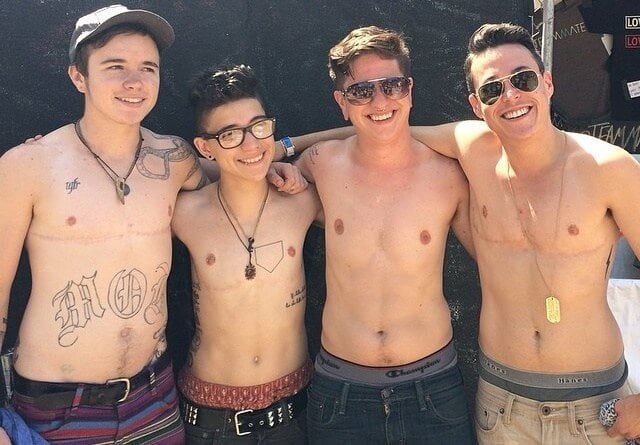
We spoke with … men who transitioned as adults to the bodies in which they feel more comfortable.
…
[T]heir diverse backgrounds provide further insight into how race and ethnicity inform the gender divide in subtle and sometimes surprising ways.
[Trystan Cotten, 50, Berkeley, Calif.]: Life doesn’t get easier as an African American male. The way that police officers deal with me, the way that racism undermines my ability to feel safe in the world, affects my mobility, affects where I go. Other African American and Latino Americans grew up as boys and were taught to deal with that at an earlier age. I had to learn from my black and brown brothers about how to stay alive in my new body and retain some dignity while being demeaned by the cops.
…
[Zander Keig, 52, San Diego]: Prior to my transition, I was an outspoken radical feminist. I spoke up often, loudly and with confidence. I was encouraged to speak up. I was given awards for my efforts, literally — it was like, “Oh, yeah, speak up, speak out.” When I speak up now, I am often given the direct or indirect message that I am “mansplaining,” “taking up too much space” or “asserting my white male heterosexual privilege.” Never mind that I am a first-generation Mexican American, a transsexual man, and married to the same woman I was with prior to my transition.
Here are [some] of the biggest myths spread on social media and in the mainstream media, and some stuff we as farmers are frankly really sick of hearing.
1. GMOs are bad. GMOs are now grown …. around the world and for good reason. They allow us …. to often use fewer and less-toxic chemicals and save crops from disease …
2. “Factory farms” wreck the environment. Feeding 8 billion people and tens of billions of pets and animals will never be perfect, but I wish the people making these claims had even the slightest clue how tough the regulations are. As one example, a local pig farm by me that raises 800,000 pigs per year must …. draw up a “manure management plan,” a very thick book detailing exactly how they’re going to manage it….
…
6. Food safety concerns.6. Food safety concerns. No, your food isn’t drenched in pesticides and, as the saying goes, the dose makes the poison. NO, livestock aren’t “pumped full” of hormones and antibiotics. Yes, everything we eat is regulated and inspected, with some of the highest food safety standards in the world. The USDA and FDA have scores of regulatory and guidance documents that farmers follow to ensure high levels of safety from planting season through harvest and processing.
A European Union court [July 25th] issued a new decision about GMOs. Disappointingly, this decision is likely to further confuse rather than clarify this complex and contentious issue. The court announced that plants whose genomes have been modified with CRISPR technology …. are subject to the EU’s very strict restrictions on genetically modified crops.
“Organisms obtained by mutagenesis are GMOs and are, in principle, subject to the obligations laid down by the GMO Directive.”
…
[T]he EU court recognized that many of our foods have been genetically modified for a long time, and that it might be impractical to remove all of them from our food supply. So they carved out an exception:
“varieties [of plants] obtained by means of mutagenesis techniques which have conventionally been used in a number of applications and have a long safety record are exempt….”
What’s ironic here–though I’m confident that the EU court didn’t mean this–is that by this definition, virtually all of the GMO crops in the U.S. are exempt. You see, we’ve been eating them for decades, and they have a phenomenal safety record.
Cancer patients who use alternative therapies may be more likely to shun conventional treatments and risk their chances of survival, research suggests. A study of 1,290 patients in the US found people who received such therapies often refused life-saving care such as chemotherapy or surgery.
Fewer of them survived five years after starting treatment compared to those on standard care, researchers found.
…
[T]hey were found to be more than twice as likely to die at any point over the course of the nine-year study, as a result of either refusing or delaying standard treatment.
Comparing people who received alternative therapies with those who did not, the report found:
34% refused chemotherapy compared to 3.2%
53% refused radiotherapy compared to 2.3%
7% refused surgery compared to 0.1%
The paper’s authors said it was likely the results for those who used alternative therapies would have been worse were it not for the fact that they were a group that had better cancer survival chances to begin with.
…
Although researchers linked the lower chances of survival to refusing or delaying standard treatments, lead author Dr Skyler Johnson, from Yale School of Medicine, told the BBC it was also possible some alternative therapies could interact with conventional treatments and make them less effective.
The announcement that Supreme Court Justice Anthony Kennedy will retire at the end of [July] and President Trump’s nomination of Brett Kavanaugh to take his place has spurred concern over the future of women’s reproductive options. Not only is the legal status of abortion at stake, but the concept of embryos as “persons” could be decided by the next Supreme Court.
…
Since 1978, more than 8 million babies have been born using in vitro fertilization (IVF) and other assisted reproductive technologies. Couples who never would have conceived due to blocked Fallopian tubes or severely low sperm counts can now have children of their own.
…
The status of preimplantation testing of human embryos is a complex ethical and emotional issue. Some people believe that life begins at fertilization and, since every life has inherent value, we should not “play God” by choosing not to implant some embryos.
…
I side with Dr. Richard Paulson, the former president of the American Society for Reproductive Medicine, who wrote that there is no scientific basis for the concept that life begins at fertilization.
…
Eleven states have introduced “personhood” bills (none have passed) and more than a dozen court cases have been brought on this issue. The outcome of these cases could significantly limit the ability to practice reproductive medicine techniques such as IVF with preimplantation genetic testing.
Imagine that some enterprising souls in the U.S. decide one day that shoes are bad, and begin drumming up support and waging communications campaigns to convince the country to go “Shoe free.”
…
Before long, we start seeing stories in our social media feeds about how thousands of people are being hurt by shoes…
Then the movement starts to catch on, and before long we are seeing signs and packaging labels plastered all over the stores we shop in and on the products we buy (even if they have nothing to do with shoes)…
…
The point of this story? To provide a relatable illustration of what the scientific and agricultural communities have observed with the “Free-From Label Movement” — particularly with the labeling of foods produced with genetically modified crops, or “GMOs.” We now see “Non-GMO” signs and labels everywhere we go — even on products for which there is no GMO alternative (there are only ten GMO crops commercially approved in the U.S.).
[Catherine] St Clair thought she was inquiring about a technical glitch. Her brother—the brother who along with three other siblings had gifted her the DNA test for her birthday—wasn’t showing up right in her family tree. It was not a glitch, the woman on the line had to explain gently, if this news can ever land gently: The man St Clair thought of as her brother only shared enough DNA with her to be a half-sibling. In fact, she didn’t match any family members on her father’s side. Her biological father must be someone else.
…
She looked for support groups. She found none. So, being the type to take things in her own hands, St Clair started a group on Facebook called DNA NPE Friends, where NPE refers to “not parent expected.”
…
In conversations and correspondence with more than two dozen people for this story, I heard of DNA tests that unearthed affairs, secret pregnancies, quietly buried incidents of rape and incest, and fertility doctors using their own sperm to inseminate patients. These secrets otherwise would have—or even did—go the grave.
…
[H]undreds, maybe thousands, of people like St Clair are left to piece together their family histories, containing the fallout of a DNA test however they can. The best help, many have found, is each other.
The USDA plans to double down efforts to work with partners globally towards science-based regulatory approaches. U.S. Secretary of Agriculture Sonny Perdue issued the following statement regarding [the] European Court of Justice (ECJ)[July 25] ruling on newer mutagenesis methods, otherwise known as genome editing.
Government policies should encourage scientific innovation without creating unnecessary barriers…Unfortunately, [July 25th’s] ECJ ruling is a setback in this regard in that it narrowly considers newer genome editing methods to be within the scope of the European Union’s regressive and outdated regulations governing [GMOs].
We encourage the European Union to seek input from the scientific and agricultural communities, as well as its trading partners, in determining the appropriate implementation of the ruling.
…
“The global regulatory treatment of genome-edited agricultural products has strategic innovation and trade implications for U.S. agriculture…In light of the ECJ ruling, USDA will re-double its efforts to work with partners globally towards science- and risk-based regulatory approaches.”
New research shows that Neanderthals were able to start fires using stone tools. The findings, published in the journal Scientific Reports, present the first artefactual evidence for systematic fire production by our extinct close relatives.
Ample evidence from the Middle Paleolithic, which spans 300,000 to 50,000 years ago, has shown that Neanderthals regularly used fire. However, it was unclear whether they collected natural fire, or produced it themselves.
…
In the new study, archaeologist Andrew Sorensen at Leiden University in the Netherlands and his colleagues re-examined some flint tools that had been found at multiple Neanderthal sites across France. Using a technique called microwear analysis, they identified macroscopic and microscopic striations that suggest the flint tools had been repeatedly struck with a hard mineral.
The researchers then conducted an experiment to see if they could produce similar markings on replica flint tools by using them in a number of different tasks, including fire-making via striking with pyrite fragments. They found that not only was it possible to produce sparks by striking the replica flint with pyrite, but the markings produced by this process were the closest match to the markings found on the Neanderthal flint tools.
Taken together, these findings represent strong evidence that Neanderthals systematically used tools to make fire. This in turn has interesting implications for the understanding of Neanderthal cognition.