U.S. investments in biotech fuel Philippine agricultural boom

agriculture philippines

Biotechnology in the Philippines is so important that a new biotechnology center is being built to support the Philippine Department of Agriculture. The project is being funded mainly by the U.S. Agricultural Trade Development and Assistance Act…

…

Biotechnology…allows farmers to be more efficient and environmentally conscious by growing more crops resistant to pests and diseases on less land. This scientific advancement is essential…as almost half of Filipinos work in agriculture and the country is experiencing significant population growth.

…

“The goal of constructing this center is to generate improved technologies, increase productivity, and enhance commercial value of DA’s priority crops such as rice, abaca, coconut, white and yellow corn, cotton, cassava, sweet potato, yam, tomato, and eggplant,” Dr. Roel R. Suralta, head of DA’s Crop Biotechnology Center.

…

Biotechnology in the Philippines increased the agriculture market by $642 million, and 14 climate change resistant rice strains have been created in recent years. The strains in-use now only take 5 to 7 years to breed as opposed to 10 to 12, and such results provide international hope for feeding ever-growing populations and combating a changing climate.

Read full, original article: Importance of US Foreign Aid: Biotechnology in the Philippines

Increased autism risk linked to maternal high blood pressure and diabetes

x autism risks

Children born to women who had diabetes or high blood pressure while pregnant are at an increased risk of autism, two new studies suggest.

Autism has previously been linked to type 2 diabetes and to gestational diabetes — a temporary condition in which a woman develops diabetes during the course of her pregnancy.

One of the new studies confirms these risks and extends the link to type 1, or juvenile, diabetes, the most severe form of the condition. Children born to women with this form have about twice the risk of autism as those born to women who do not have any form of diabetes.

…

They suggest that children born to women with diabetes should be monitored closely for autism, says lead investigator Anny Xiang, director of biostatistics research at Kaiser Permanente Southern California in Pasadena.

In the other study, published in June in JAMA Psychiatry, researchers reviewed 61 reports on the link between developmental conditions and types of high blood pressure, including preeclampsia, a pregnancy complication involving high blood pressure.

Overall, the new work suggests that children whose mothers had preeclampsia have a 50 percent higher risk of autism than controls do.

…

And neither study provides insights into the mechanisms underlying the links. It is possible that genetics underlies the associations, [professor Diana] Schendel says.

Read full, original post: Study ties autism to maternal high blood pressure, diabetes

Ugandan researcher: Western science education a ‘game changer’ for African agriculture

matooke
[Dr. Priver] Namanya, a plant biotechnologist at the National Agricultural Research Laboratories (NARL) in Kawanda, Uganda, has been doing [biotechnology research] for the last 10 years, thanks to the training she received in Australia.

She’s one of hundreds of African scientists, and assorted scientific research projects, to benefit from international collaborations in the highly specialized field of agricultural biotechnology. These partnerships have greatly advanced public sector work on such important food crops as maize, cassava, rice and in the case of Namayana, an East African highland banana known locally as matooke.

…

Since [2010], Namanya and her colleagues at Kawanda, the leading banana research institute in Uganda, have been using genetic engineering to address several challenges affecting the country’s banana production.

She said that biotechnology allows…researchers to do things more efficiently than would [otherwise] be possible…such as successfully adding a gene from a wild banana to the matooke to increase its vitamin A content. The research…is intended to help prevent the many diseases associated with vitamin A deficiency by improving the nutritional value of a food that Ugandan women and children typically eat on a daily basis.

…

Namanya told the Alliance for Science that her stint in [Australia] was a game changer…given the fact that biotechnology was new to Uganda and skills using genetic engineering were badly needed. “It exposed me to advanced technology,” she revealed.

Read full, original article: Africa’s collaborative biotech research bears fruit

What can sexual pleasure teach us about behavioral learning?

How do rats know when their partners are feeling amorous? One way female rats show they’re feeling frisky is to wiggle their ears – or rather, very rapidly shake their head, so that it looks like their ears are moving. So when Mary Holder, a neuroscientist working at the School of Psychology at Georgia Tech, sees lady rats wiggling their ears, she knows they’re ready to mate.

To the casual observer, studying ear wiggling in rats might seem trivial, but rat sex is actually crucial in improving our understanding of sexual behaviors in mammals. This kind of research is harder than it sounds: although rats have been used for decades as models of mammalian diseases and behaviors, they are nocturnal – meaning they engage in sex during the night. So in order to study rats’ sexual behaviors, Holder explains, “We had the rats [in the lab] on a reversed light cycle, so that the lights would go off around 10 or 11 a.m. I would be in a room illuminated by a red light, watching the behaviors. The biggest thing for me was to stay a consistent distance away … to almost become part of the environment.”

This kind of scientific dedication has resulted in interesting discoveries, with implications for human behavior. For example, by observing rats, researchers at Cinvestav Sede Sur and Instituto Nacional de Psiquiatría Ramón de la Fuente in Mexico recently discovered that opioids in the brain don’t just make us feel good during sex – the pleasure we feel might actually be helping us learn.

rats 7 20 18Sex is innately rewarding. The behavior is associated with the activation of opioid receptors in “reward centers” of the brain. Activation of these centers is also a key component to the development of addiction. The process of addiction involves learning to associate some sort of external cue, like a particular environment, with a rewarding outcome, like a high. But this reward-driven process is not just involved in the development of addictive behaviors – it’s also important for the development of both vocalizations and movements. So, strangely, opioids (the reward that makes us feel good) released during sex (the behavioral cue) are therefore well-suited to be involved in behavioral learning.

To examine this process, researchers observed how good male rats were at sex – they counted both how long it took to initiate a sexual interaction and how long it took them to ejaculate. In this case, quick interactions and ejaculations were considered better, since the goal of male rats is to reproduce as much as possible. The scientists watched rats with a lot of sexual experience, rats with no prior sexual experience, and rats that had recently ejaculated. They then examined the densities and distributions of opioid receptors in the rats’ brains and compared the three groups.

Experience and equilibrium

What they found was that opioids released during sex might also help us learn to be better at sex. Unsurprisingly, male rats that were more sexually experienced – those who had copulated five separate times – had gotten better at sex; they had fewer intromissions before copulation and less time-to-ejaculation. Interestingly, this also resulted in differences in their brains. In sexually experienced rats, the majority of opioid receptors were not found on the bodies of cells, but rather on the cell membranes. This means that sex increased the number of receptors that can actually be activated by opioids, allowing for more pleasure during copulation.

Mis- and disinformation are distorting science and public policy. Subscribe to our Daily and Weekly Digests for incisive coverage of ‘disruptive’ innovations in AI, agricultural biotechnology, food, chemicals, nuclear energy, vaccines, and other disruptive innovations.

Weirdly though, sexually experienced rats also had less total opioid receptors in their brains. This is surprising, since opioids are released during sex, and more sex might logically mean more opioids in the brain. However, it’s possible that repeated exposure to opioids might have downregulated, or reduced, the density of opioid receptors in their brains. Fewer receptors might help brain cells process high concentrations of opiods caused by repeated sexual activity, so that that homeostasis – a physiological equilibrium – is maintained.

massive logoResearchers also found differences in opioid receptors between sexually experienced rats that had not recently ejaculated, and those that had recently had sex. Those that had recently ejaculated actually had more opioid receptors on the bodies of their cells, suggesting that changes to opioid receptors can occur rapidly in relation to ejaculation.

Intriguing as these results are, it’s important to note that the researchers couldn’t actually look at rapid changes to opioid receptors within a single rat. The way this study was designed, researchers could only compare between groups of rats, rather than looking at changes within one rat as it gained sexual experience. In contrast, in studies of brain activation in humans, a positron emission topography (PET) scan has allowed researchers to examine changes within the brain of a single individual. PET scans have been used to both study changes in human brain activation with ejaculation and changes to opioid receptors as people were exposed to pain. Additional research that used PET scans of opioid receptors in rats as they increase their sexual experience could provide further insight into the role of opioids in learning to be better at sex.

Even with the study’s limitations, it’s remarkable that opioid receptors differ between more and less sexually experienced rats. That these differences coincide with improvements in male sexual performance suggest that opioids released during sex not only make us feel good, they help us learn to be better at sex. Since a natural reward – in this case, sex – induced changes in the brain, as well as changes in behavior, this study has implications for understanding the role of opioids in learning other reward-driven behaviors.

There have been a few studies on how opioids affect sensory learning and memory formation, but this research suggests an intriguing new idea – that opioids might also be involved in behavioral learning.

Gina Mantica is a biologist at Tufts University. Follow her on Twitter @gina_mantica

A version of this article was originally published on Massive’s website as “Sexual pleasure might help us learn – if rats are any guide” and has been republished here with permission.

Prominent anti-GMO NGOs and organic businesses partnered with Russia to ‘smear’ American agriculture

Putin bans GMO foods Russia Illegal x
It’s no secret that although the Internet has vastly improved our lives in many respects, it has downsides — less interpersonal interaction, more anonymous snarkiness, online harassment and even cyber-stalking.  But arguably worst of all is the amount of purposeful disinformation — fake news — that is promulgated by special interests.

Retired U.S. Army officer, author and former Fox News commentator Ralph Peters calls it “post-modern propaganda“:

No plague in history spread with the speed of internet disinformation.  We live in an age of hyper-charged propaganda, an onslaught of lies more pervasive than any that came before.  Over millennia, propaganda changed minds.  Today, it changes governments and subverts institutions.

[Editor’s note: This is the first of two articles examining links between Russian propaganda efforts and anti-GMO forces. Read part two.]

It’s difficult to stop or correct the promulgation of misinformation, especially when it’s a smear that’s part of a well-financed, highly-organized campaign.  Paid agents cleverly and relentlessly attack not so much the ideas but the people promoting them.

The successful smear is often based on some shred of truth, but these media- and Internet-driven “hit pieces” are designed to obscure the truth. The intricacies of this subject are nicely explicated by journalist Sharyl Attkisson in her book, “The Smear: How Shady Political Operatives and Fake News Control What You See, What You Think, and How You Vote.” 

fake news 2 20 18Smears of American products and individuals via fake news are the stock in trade of propaganda organizations, usually domestic but increasingly foreign as well. Russia leads the pack.

Russia’s propaganda/disinformation campaigns

TV “news channel” RT (formerly Russia Today, which has its roots in Pravda), the Kremlin’s English-language propaganda arm, is the mouthpiece for Russia President Vladimir Putin’s agenda.

A report from the Office of the U.S. Director of National Intelligence (DNI) implicated RT in Russian hacking during the 2016 presidential election. It found that the network uses the internet and social media to conduct “strategic messaging for the Russian government” and that its programming aims “at undermining viewers’ trust of U.S. democratic procedures.”

Fake news about politics, and also about science and technology, is RT‘s trademark, as illustrated by its blatant disinformation attacks on the reporting of news by respected media outlets like the BBC.  And according to the DNI’s’ report, RT became a platform to push anti-fracking disinformation in order to damage the U.S. shale industry.

Opposition to genetic engineering

Genetic engineering in agriculture is a sector that holds intense interest for the Russians. Harkening back to the Lysenkoism catastrophe for agriculture in the Soviet Union, their expertise and current R&D in that area are virtually nil, and there is a ban on genetically engineered organisms from abroad entering the country, so they’ve adopted a strategy of trying to stymie its development elsewhere.

As Dr. Alex Berezow of the American Council on Science and Health pointed out: “RT has never been fond of GMOs (genetically modified organisms), which are largely the result of American innovation. In a 2015 article, RT reported on Russia’s decision to ban GMO food production in Russia. Tellingly, one of the protesters shown in the report is holding a sign that reads, ‘Goodbye America!’ The anti-GMO stance is not based on science or health concerns; instead, it’s based entirely on hurting U.S. agricultural companies.”

A Russia-centered group concocted the bizarre FactorGMO scam, which billed itself at its 2014 launch as “the world’s largest international study on GMO safety,” as though that issue was still in doubt.  The $25 million project has vanished into thin air.  And RT has just released (May 23) a “documentary” film, “The Peril on Your Plate,” a propagandistic screed that presents yet again all the anti-genetic engineering memes and fake news.

Mis- and disinformation are distorting science and public policy. Subscribe to our Daily and Weekly Digests for incisive coverage of ‘disruptive’ innovations in AI, agricultural biotechnology, food, chemicals, nuclear energy, vaccines, and other disruptive innovations.

Stirring up trouble

None of this is surprising. As one of my colleagues, a prominent Russia expert, observed, “Whatever stirs up trouble in the U.S., Russia is ready to help make it worse.”

That brings us to the complementary, well-financed U.S.-based anti-genetic engineering movement, which provides numerous examples of collaboration with Russia on promulgation of fake-news stories and joint campaigns, as described here and here.  The Internet provides a loud and readily available echo chamber for propaganda and trolling.

This syllogism explains the motivation of all the bad actors, here and abroad, for wanting to discredit genetic engineering:

  • The United States is by far the world’s leader in both the development and cultivation of genetically engineered (GE) plants
  • Genetic engineering in agriculture is the most rapidly adopted agricultural technology in history
  • Organic agriculture strictly bans GE plants produced with the most precise and predictable molecular techniques
  • Recent advances in GE plants–higher yields, pest- and disease resistance, drought- and flood-tolerance, improvements in sustainability, traits with appeal to consumers, etc.–are making conventional (i.e., non-organic) agriculture ever-more efficient and superior to organic’s pathetic performance
  • Virtually no development or cultivation of genetically engineered plants takes place in Russia. So Russia seeks to prevent genetic engineering from expanding and succeeding elsewhere

Collusion between U.S. NGOs and Russia?

USRTK, the most aggressive of the anti-genetic engineering NGOs, admits to having received $529,500 since 2014 from the Organic Consumers Association, an advocacy group whose agenda includes a “global moratorium on genetically engineered foods and crops,” and which routinely promulgates fake news about the supposed hazards of genetic engineering.

And according to Dr. Berezow of the American Council on Science and Health, “Ronnie Cummins, the International Director of OCA, is known to propagandize for RT.”  (Cummins is a talking head for RT here and has attacked on those in the scientific community who defend advances in science and technology, including genetic engineering.)

Another six-figure supporter of USRTK is Dr. Bronner’s Family Foundation; Dr. Bronner’s is a large purveyor of various “natural” and organic products, including the “iconic soap of the countercultural 60’s.”

RT 7 12 18USRTK and RT have the same objective, Dr. Berezow suggests:  “USRTK and RT both share a common agenda: To undermine American science and technology for financial gain.  Gary [Ruskin, the co-founder and co-director of USRTK] gets more money from organic activists, and Russia worries less about competing against America’s multinational agriculture companies.  Everybody wins…except, well, Americans.”

There’s more direct evidence of a Russian connection to anti-genetic engineering trolling in the United States.  This story, which claims that Melania Trump has banned genetically engineered foods from the White House and favors organic products, ran on May 30, 2017, on Your News Wire, which is widely considered to be a fake news source linked to Russia.

The author of the article, “Baxter Dmitry,” has penned articles that allege that, among other things, “Sweden Bans Mandatory Vaccinations Over ‘Serious Health Concerns’,” (untrue) and the arrest for “treason” of a “former Hillary Clinton employee” (untrue).

Studies In bias

Much of the genetic engineering article, including some of the quotes attributed to the First Lady, are cribbed verbatim from a 2010 article in Yes! Magazine that had nothing whatever to do with her.

If the involvement of Russia and its notorious troll factories seems a stretch, consider the recent study by two Iowa State University researchers who looked at the source of articles containing the word “GMO” (genetically modified organism) and how genetic engineering was portrayed.  They found that the Russia’s English-language propaganda outlets RT and Sputnik produced more articles containing “GMO” than five other major news organizations — Huffington Post, Fox News, CNN, Breitbart News and MSNBC — combined.

The two Russian outlets accounted for more than half of all the GMO-related articles among the seven sites (RT, 34%; Sputnik, 19%).  “RT and Sputnik overwhelmingly portrayed genetic modification in a negative light,” the researchers wrote. “Among U.S. news organizations, the left-leaning Huffington Post produced the most ‘anti’ articles, followed by CNN. Fox News produced the most neutral or mixed coverage of GMOs.”

Also, they found that RT published “(N)early all articles in which the term GMO appeared as ‘click bait’.”

Pro-Russia activists responded with a bizarre interpretation: They implied that the Iowa State researchers were biased, and that the timing of the study’s release was somehow related to the Russian government’s review of the proposed Bayer-Monsanto merger.

Advocacy, which we see in many industries and special-interest groups, is one thing. But character assassination, trolling and intimidation are something else.  They cross the line. Part 2 will discuss that.

Henry I. Miller, a physician and molecular biologist, is the Robert Wesson Fellow in Scientific Philosophy and Public Policy at Stanford University’s Hoover Institution and a former trustee of the American Council on Science and Health. He was the founding director of the Office of Biotechnology at the FDA. Follow him on Twitter @henryimiller 

This article was originally published at Investor’s Business Daily as “Russia Does Far Worse Than Meddle In Our Elections — It Meddles In Our Science” and has been republished here with permission. 

To revive textile industry, Nigerian government approves its first GMO crops, insect resistant cotton

Nigeriacotton

Several years after [Nigeria’s] textile industry had gone moribund, the Federal Government has concluded plans to resuscitate the sector by supplying…[two varieties of Bt insect resistant] cotton [seeds] to all industries across the country.

Acting Director-General of the National Biotechnology Development Agency (NABDA), Alex Akpa …. said Genetically-Modified cotton has been distributed to no fewer than 1000 large-scale farmers across [Nigeria].

…

“The benefits are enormous. They include job creation and a boost to the economy,” Akpa said. “If we produce excess cotton, we can begin to export because short supply is a problem in many countries.”

…

When asked if the government had not provided enough cotton to farmers, Akpa reiterated that the first recipients were large-scale farmers who can employ no fewer than 150-500 workers, adding that “this is just the beginning and [the] government is committed to increasing [the volume] soon.”

“I think it is a good number to start with, because it will be handled by massive industrial farmers who are fully mechanized and understand the process ….” Akpa added.

Editor’s note: This article was originally published on a Nigerian news site. This summary has been lightly edited for clarity.

Read full, original article: FG moves to revive textile industries

Inside the battle to convince insurers that chronic fatigue syndrome is a legitimate illness

brian vastag mn a e b ad f f
[Reporter Brian Vastag’s career] came to an end in July 2012, when he found himself afflicted by a mysterious and poorly understood illness that ended up sweeping away almost every vestige of his vigorous and productive life. To add insult to injury, he also had to endure a four-year battle with his insurance company to cover his disability claim for the condition he eventually learned was chronic fatigue syndrome.

…

But because there is no widely accepted diagnostic test for chronic fatigue syndrome [many] of the 1 million or more Americans who have it are ridiculed and dismissed as delusional.

…

Prudential refused to believe that Vastag could be so severely disabled, no matter what his doctors and other national experts on ME/CFS stated. With no alternative, Vastag retained two attorneys who specialize in disability issues [and sued Prudential.]

…

[Judge Katharine] Hayden concluded that Prudential had wrongly denied Vastag’s benefits due to its “significant failure to understand the current state of medical knowledge about CFS and its devastating impact.”

…

Vastag’s win against Prudential is a hopeful sign that individuals with ME/CFS, many of whom have been turned down for disability benefits under similar arguments, might finally be gaining the respect, sympathy, and support they have always deserved.

Read full, original post: The medical community is changing its mind on chronic fatigue syndrome. Why aren’t insurers?

Viewpoint: Stonyfield Organic enlisted ‘rapid response team’ of academics to ‘scare people’ about GMOs

stonyfield x

2015 was the peak of the GMO labeling debate. Bills were being thrown around at both the state and federal levels, and millions of dollars was being spent by the organic industry to scare people about biotechnology.

In the middle of it all was dairy mogul Gary Hirshberg of Stonyfield Organic and head of their Just Label It campaign.

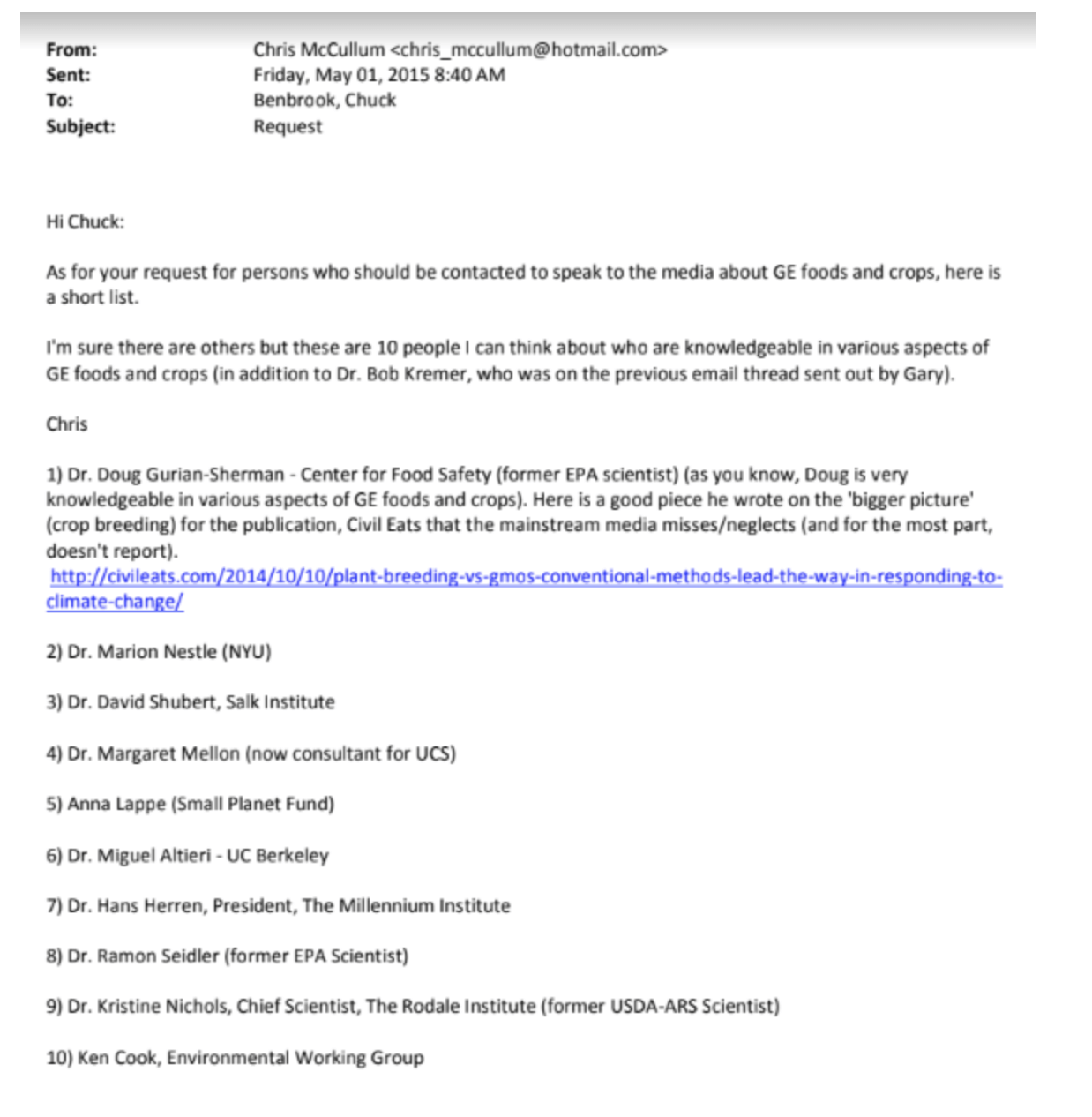
Emails received via a freedom of information act request…reveal his plan for a “rapid response team” so that nothing criticizing the anti-GMO movement would be allowed in the media.

…Screen Shot at PM

Most of these individuals went into overdrive for Hirshberg campaigning for his cause in the press and on social media.

For example, [New York University nutrition professor] Marion Nestle promoted a Just Label It petition on her blog Food Politics while Just Label It added the Environmental Working Group and [food activist] Anna Lappé to their list of “resources”.

Using such academics and activists to spread misinformation has been common for industry for decades…It is… important for journalists to beware of the false balance such industry promoted academics are attempting to portray.

Read full, original article: Meet Stonyfield Organic’s “Rapid Response” team to spread lies about GMOs

Using CRISPR to map human gene functions

maxresdefault x

UC San Francisco scientists have used a high-throughput CRISPR-based technique to rapidly map the functions of nearly 500 genes in human cells, many of them never before studied in detail.

…

“We have a good understanding of the functions of about 1,000 to 2,000 critical human genes that – deservedly – have been very well studied,” said UCSF cancer biologist Luke Gilbert, PhD, one of the new study’s two senior authors. “But that’s less than 10 percent of the 25,000 genes in the human genome. Of the rest, perhaps half have been studied at least a little by someone, and the other half we know next to nothing about.”

…

The approach involves systematically shutting down pairs of genes in individual cells and measuring how the cells respond, which teaches researchers about the relationship between the two genes. In some cases, scientists observe that shutting down either gene in a pair does as much damage to the cell as shutting down both, which suggests that the two genes are part of the same functional system.

…

The researchers showed that their new gene interaction maps captured 80 percent of known functional relationships between the genes being studied, but that the majority of strong interactions revealed by the new data were novel – not catalogued in standard databases of gene function.

Read full, original post: CRISPR-Based Tool Maps Gene Function in Human Cells

Why cancer research should focus more on African genomes

african

In the past, African patients have had poor access to medical advances, even as scientists use them as research subjects. [Researcher Charles] Rotimi worried that genetics might again exploit the 1 billion people in sub-Saharan Africa, ignoring their need for treatments for HIV, tuberculosis, malaria and cancer.

…

[S]cientists came out with a frenzy of discoveries about our DNA that could possibly lead to new treatments for diabetes, cancer, psychiatric illnesses and other serious diseases. But they were drawing from a small slice of the world: Nearly all of the published work was based on populations with European ancestry. By 2009, fewer than 1 percent of the several hundred genome investigations included Africans.

…

[C]ompared with Europeans and Americans, Africans have much better genomes for research, again because of their ancestral age. Over time, as a genetic material is handed down from one generation to the next, SNPs tend to gather in clusters, making them easier for researchers to find. As a consequence, they are more apparent in older genomes.

…

[T]he project, which Rotimi eventually named Human Heredity and Health in Africa, or H3Africa, would do far more than study African genomes: It would be a massive research effort led by African scientists, located in African institutions and directly benefiting the African population. H3Africa would create parity between researchers there and in Europe and North America.

Read full, original post: Cancer Scientists Have Ignored African DNA in the Search for Cures

Advanced breeding could lead to virus-free cassava, saving African staple crop from extinction

cbsd f exlarge

“Cassava is the most important food staple in sub-Saharan Africa,” says Morag [Ferguson], a cassava specialist who [works] with [the International Institute of Tropical Agriculture’s (IITA) Nairobi office]…However…yields can be reduced strongly since the majority of cassava [varieties] are not resistant to some important pests and diseases.

In East Africa, for example, cassava brown streak disease (CBSD) can lead to a brown necrosis which makes the edible roots unmarketable. The disease is caused by at least two viruses and can lead to complete spoilage of the cassava harvest…

…

“Smallholder farmers in East Africa generally use cassava [varieties] that have been selected because they are well liked,” Morag says. “But we may lose those…as very few of them have been properly conserved and are vulnerable to extinction.”

IITA has a protocol for the establishment of virus-free cassava. “It all starts in…a growth chamber,” says Morag. “We place cassava stakes in the chambers under very high heat, around 38°C for four to six weeks and wait until they sprout.” The sustained high heat slows the virus spread in the cassava tissue.

“We can then excise from the stake what we hope will be a clean part of the tissue…The excised…tip is then established in tissue culture.

…

Ultimately our goal is to make virus-free and well-characterized cassava [varieties] from East Africa readily available to anyone anywhere,” says Morag. “None of that can happen until we eliminate the viruses.”

Read full, original article: Securing East Africa’s cassava

10 questions about consumer genetics tests

dna testing

So-called direct-to-consumer DNA testing companies like 23andMe, Ancestry and Helix advertise the ability to reveal your ancestry, inform you of your health status, and even guide you on how to exercise and eat.

…

1. What can you learn from a consumer DNA test?

A little bit of saliva can go a long way. The tests are nearly 100 percent accurate when it comes to telling you who you’re related to. DNA is great at identifying familial relationships like parents, grandparents, aunts, uncles and even second and third cousins. Beyond that, it gets fuzzy.

…

4. What if I find out I have a terrible disease?

Genetic tests don’t diagnose disease — they identify whether you have genes that make you at risk of developing one. If you do have a marker for a disease, the probability of actually developing it varies widely.

…

7. Could employers or insurers get access to my genetic info?

In 2008, Congress passed the Genetic Information Nondiscrimination Act, or GINA, with the intent of protecting people against health-insurer and employer discrimination based on genetic information. The trouble is, GINA has a lot of loopholes. The law doesn’t apply to life-insurance companies, for example. This means that if you took a consumer DNA test, a life insurer could request that data and make coverage decisions based on the findings.

Read full, original post: DNA Testing Unlocks Secrets But Leaves Footprints

Viewpoint: FDA approval of ‘Impossible Burger’s’ key GMO ingredient is a huge step for sustainable food

c dPMkEO USxFCp f a Q

The “clean meat” revolution took a major step forward [on July 23] as the US Food and Drug Administration (FDA) cleared the Impossible Burger’s key ingredient as safe.

Although the Impossible Burger is already available in thousands of burger outlets across the US and Hong Kong, the earlier failure to obtain a “no further questions” assessment from the FDA allowed some activist groups to cast a shadow over the novel meat-replacement product, which uses a genetically engineered ingredient.

…

In contention is “heme,” the protein found in real meat that contains iron and leads to the sizzle and flavor that meat-lovers crave. Heme in the Impossible Burger is made from genetically engineered yeast, and although it is already found in numerous plants and animals some campaigners warned it might not be safe.

…

Yesterday, the FDA sought to put those safety concerns to rest.

“We have no questions at this time regarding Impossible Foods’ conclusion that soy leghemoglobin preparation is GRAS [generally recognized as safe] under its intended conditions of use to optimize flavor in ground beef analogue products intended to be cooked,” the FDA stated in its letter.

…

The Impossible Burger uses about 75 percent less water, generates about 87 percent less greenhouse gases and requires around 95 percent less land than conventional ground beef from cows…Numerous scientific studies have found that beef, particularly pasture-fed beef, is the most environmentally destructive meat available.

Read full, original article: US agency deems Impossible Burger’s key GMO ingredient safe

EPA investigates illegal use of dicamba as it mulls herbicide’s re-approval

Spray drift damage

Despite being banned for in-crop use this summer in Arkansas, dicamba is a suspect in damage to thousands of acres of soybeans and to vegetables, backyard gardens and trees.

Farmers and regulators in other soybean-producing states that have allowed dicamba, even with some restrictions, have reported similar damage this year, a repeat from a year ago.

…

Use of the herbicide on crops has been banned in the state since April 16. … While the complaints this year are still being investigated, Plant Board officials and weed scientists believe some farmers sprayed dicamba illegally in Arkansas well after the April 16 cutoff date because it takes seven to 21 days for dicamba symptoms to show.

…

The inspectors’ visit, which also took them to…Tennessee and Missouri …, was part of the agency’s work in deciding whether to re-register dicamba formulations…. The current two-year registration for those products expires Nov. 9…. EPA representatives are conducting similar tours in other states.

…

Farmers…who used the herbicide praised its effectiveness against pigweed and touted high yields in the fall, but [some] weed scientists…say even the newer formulations of dicamba can “volatilize”…and move to susceptible crops and other vegetation.

The manufacturers said applicator error was mostly to blame and…expanded training sessions to thousands of farmers in states where the new dicamba formulations could still be applied.

Read full, original article: EPA visits fields in Arkansas hurt by dicamba

How bacterial CRISPR defense systems are defeated by suicidal virus attacks

Twilley phages

The natural world abounds with examples of predators that cooperate to take down their prey. And such teamwork also exists at a microscopic scale, among things that some scientists wouldn’t even classify as alive: viruses. Most viruses don’t infect humans; instead, they target bacteria. These viruses [are] known as phages.

…

[B]acteria and phages are locked in an arms race. The bacteria use CRISPR to defang the phages, and the phages use anti-CRISPRs to subvert the bacterial defenses.

…

Adair Borges showed that the slower phages can still win this race—as long as there are enough of them. The first one attacks the bacterium, and is destroyed by CRISPR before it can make enough anti-CRISPR countermeasures. Still, whatever anti-CRISPRs it does manage to make will linger in the bacterium, partly suppressing its immune defenses. The next phages to invade might also be destroyed, but each one weakens the CRISPR defense even further, until finally, the viruses overwhelm their victim.

…

Our own cells can shut down viral genes in a way that’s analogous to CRISPR in bacteria, and several of the viruses that infect us get help from proteins that suppress these defenses. These arms races might help explain why some viruses are more infectious than others.

Read full, original post: How Viruses Cooperate to Defeat CRISPR

Would you watch a movie written and animated by artificial intelligence?

lead

The next time you sit down to watch a movie, the algorithm behind your streaming service might recommend a blockbuster that was written by AI, performed by robots, and animated and rendered by a deep learning algorithm. An AI algorithm may have even read the script and suggested the studio buy the rights.

It’s easy to think that technology like algorithms and robots will make the film industry go the way of the factory worker and the customer service rep, and argue that artistic filmmaking is in its death throes.

…

Just like computers made it so animators didn’t have to draw every frame by hand, advanced algorithms can automatically render advanced visual effects. In both cases, the animator didn’t lose their job.

…

Recently, [Darren] Hendler and his team used artificial intelligence and other sophisticated software to turn Josh Brolin into Thanos for Avengers: Infinity War. More specifically, they used an AI algorithm trained on high-resolution scans of Brolin’s face to track his expressions down to individual wrinkles, then used another algorithm to automatically map the resulting face renders onto Thanos’ body.

…

Hendler foresees a future where creative people get to keep on being creative as they work alongside the time-saving machines that will make their jobs simpler and less mundane.

Read full, original post: Artificial Intelligence Is Automating Hollywood. Now, Art Can Thrive.

India’s new GMO safety rules will follow ‘well established scientific principles’

india shopper

The Food Safety and Standard Authority of India (FSSAI) has initiated work on framing regulations on Genetically Modified (GM) Food.

…

The intended regulations would essentially lay down procedures for safety assessment and approval of foods including imported foods, derived from genetic modification processes based on the internationally well established and accepted scientific principles, procedures and best practices before being approved for food purposes.

…

[T]he FSSAI has also framed draft Food Safety and…labeling and display…Regulations that also specify threshold levels for labeling requirements of GM foods.

These proposed regulations will further bind food businesses to provide appropriate information to the consumers so as to enable them to exercise their informed choice in respect of purchase of foods, including GM foods, should any such foods be approved for manufacture or import in India.

Read full, original article: FSSAI initiates work on framing regulations on Genetically Modified Food

Can a genetic test predict risk of opioid addiction?

opioid addiction
The opioid crisis is an ongoing tragedy, with fatal overdoses costing thousands of lives each year. Although opioids are an essential part of modern medicine, the National Institute on Drug Abuse reports that 8 to 12 percent of people on long-term opioid therapy develop an opioid use disorder. But what if this risk could be mitigated through genetic testing?

Prescient Medicine recently introduced its LifeKit Predict , a gene screening test to determine who is at risk for opioid addiction. The company states that it “can identify with 88 percent specificity that someone may have a risk for opioid dependency” and “provides assurance—with 97 percent sensitivity—that an individual may not have increased genetic risk for opioid dependency.”

Similar claims have been made by Proove Bioscience, which introduced a genetic test in 2016. But a STAT investigation found that “the opioid risk test lacks a firm scientific basis.”

In other words, strong claims require substantial evidence. The idea of a genetic test for opioid addiction risk is appealing given the rising numbers of overdose fatalities. But any such test has to address two key questions: Is is possible in principle? And does it work in practice?

Genes and addiction

The pathway from gene variant to behavior is very complex. Research into genetic factors in opioid addiction has found “evidence for genetic susceptibility to substance use disorders” in twin studies, but non-genetic factors are known to play a role as well.

opioid addiction 7 30 2The National Institute on Drug Abuse states that “genetic factors account for between 40 and 60 percent of a person’s vulnerability to addiction; this includes the effects of environmental factors on the function and expression of a person’s genes.”

Genes thought to be involved include the dopamine receptor genes DRD2, DRD3, and DRD4, as well as the opioid receptor genes OPRM1, OPRD1, and OPRK1. Prescient research  lists a total of 16 gene variants as relevant, pinpointing specific single nucleotide polymorphisms (SNPs) that in combination may elevate the risk of opioid addiction.

But gene testing often finds seemingly pathogenic variants that turn out to have no clinical significance. A person can be a perfect genetic match for a disorder but have no symptoms. So at a clinical level, that person does not have the disorder. Only in a handful of cases does a specific gene variant lead to a precise fate: Huntington’s disease is a textbook example.

Opioid addiction is generally conceived in terms of the biopsychosocial model. As Maia Szalavitz explains in “Unbroken Brain”: “There are three critical elements to it; the behavior has a psychological purpose; the specific learning pathways involved make it become nearly automatic and compulsive; and it doesn’t stop when it is no longer adaptive.”

Thus, a genetic test to identify an increased risk for opioid addiction is plausible in principle. But non-genetic factors make it tricky in practice.

Ready for the real world?

There are at present no clinical studies of efficacy or real-world reports of success or failure rates with Prescient’s LifeKit Predict tool. Prescient acknowledges that “the use of genetic algorithms to determine predictive risk scores is still a relativey [sic] new science. Prospective, longitudinal studies are needed to better definne [sic] the breadth of the test’s importance.”

Prescient derived its predictive model as follows: “Thirty-seven patients diagnosed with prescription opioid or heroin addiction and thirty age and gender matched controls were used to derive the predictive score.” An additional 138 samples were used to calculate sensitivity and specificity.

These terms have precise meanings in statistical analysis, but a simple example captures the essentials. A molar (butterfly) rash is very sensitive for lupus but not very specific. It is rarely seen in any disorder other than lupus, so if a person has it, lupus should be suspected. But it is only seen in about half of people with lupus, so absence of a butterfly rash doesn’t mean you can rule out lupus.

The sensitivity and specificity in the ranges given by Prescient represent a significant risk for false positives and false negatives, potentially limiting the real-world value of this approach. A test that misses too many people at risk of addiction or that tags too many people who are not at risk would not be clinically useful.

opioid 7 30 18 2Yale University professor Joel Gelertner, an expert in genetics and addiction, has expressed skepticism “that the reported predictive power would hold up when applied to larger datasets, and argued that in the absence of better validation, physicians should not use this type of testing.”

Moreover, genetic testing will have to compete against existing tools for opioid risk assessment. The Current Opioid Misuse Measure (COMM-9 ) is a simple and familiar instrument for evaluating opioid addiction risk. And the National Institute on Drug Abuse just introduced “a new scientifically validated, online screening tool designed to assess a patient’s risk for substance misuse and substance use disorder” called TAPS, available online.

The COMM-9 and TAPS are very low cost, easy to use, and give results quickly. By contrast, genetic screening tests are expensive and require weeks to get results. It is not clear at this point if genetic testing offers any advantages over these existing tools.

At present opioid addiction risk is more readily assessed using tools that are already available and understood. Genetic testing like Prescient’s new tool needs to demonstrate reliability in clinical settings before the costs and risks of this approach can be justified. For now it is probably premature to expect this kind of genetic testing to be sufficiently useful to be adopted clinically.

Roger Chriss is a technical consultant in Washington state, where he specializes in mathematics and research.

Even as managed honeybee colonies hit record numbers, another threat to their health is identified: Mystery viruses

bee
The quest to figure out what’s behind honeybee deaths has become as much a political question as a scientific one. Recent data show that honeybee populations have recovered from outbreaks of colony collapse disorder that began to draw attention in 2006. Managed bee colonies continue to grow—globally they are at record numbers. In April, the Sierra Club noted in a blog post:

…honeybees are at no risk of dying off. While diseases, parasites and other threats are certainly real problems for beekeepers, the total number of managed honeybees worldwide has risen 45% over the last half century. “Honeybees are not going to go extinct. says Scott Black, executive director of the Xerces Society. ‘We have more honeybee hives than we’ve ever had….’

Although there is no ‘bee-apocalypse as many environmentalists have claimed, bee health issues are real, and there are many claims being made about the challenges to these important pollinators. Among them:

  • Some critics maintain that CCD continues today and say, mistakenly, that honeybee populations are dropping.
  • Others argue that glyphosate, neonics, genetic engineering or other agricultural technologies are claiming the lives of bees.
  • Beekeeping practices and hive hygiene have been called into question.
  • Others point to the role of Varroa mites.

Now, we can add one more suspect to the list: viruses.

The science blog/news page Science 2.0 recently posted a story entitled “Bees: it’s the viruses that are the problem.” The story pokes at environmental groups that “raise millions of dollars insisting they will get targeted pesticides (e.g. neonicotinoids) banned to save bees that aren’t really in peril,” while, “At the top of the list is not pesticides, it’s nature.”

Specifically, the article cites a recent study at Pennsylvania State University that applied high-throughput next-generation sequencing techniques to discover a host of new viruses that have something to do with Apis mellifera, the European honeybee. They found about 127 “contigs,” new genetic configurations that could translate into distinct viruses, to be exact.

But even the study doesn’t arrive at the same conclusion as the Science 2.0 headline. The Penn State group really was showing that next-generation sequencing is proving to be a valuable technique for uncovering viruses that may have a role in bee health. On other hand, those viruses may just be harmlessly—or at least non-pathologically—in the same environment.

When CCD broke out in the mid-2000s, another group led by Columbia University virologist Ian Lipkin also looked at one type of virus, that had been discovered in Israel and seemed to be associated with colony deaths in Australia and other parts of the world. Responsibly, Lipkin said that this correlation was not cause:

“We haven’t proven this is the cause. It is a candidate for being a trigger for CCD,” Lipkin told Scientific American.

And since those days (which predated what’s now called “NGS”), the field of bee virology is exploding. As for which virus (if any) causes bee deaths? Get in line.

In 2007, about 18 RNA and DNA viruses that impacted honeybees somehow were identified. Since, next generation sequencing techniques have reached even more than the 127 identified by the Penn State study.

Mis- and disinformation are distorting science and public policy. Subscribe to our Daily and Weekly Digests for incisive coverage of ‘disruptive’ innovations in AI, agricultural biotechnology, food, chemicals, nuclear energy, vaccines, and other disruptive innovations.

Common viruses now include: Israeli acute paralysis virus (the one discovered in 2007 by Lipkin’s team), Kashmir bee virus, acute bee paralysis virus, black queen cell virus, deformed wing virus, kakugo virus, Varroa destructor virus-1, sacbrood virus, and slow bee paralysis virus. Researchers all observe that thanks to advanced genetic identification, many more will follow. And no single virus has been uniquely tagged to colony collapse disorder and bee health.

But do they all harm bees?

Probably not. But a few might.

In a recent paper in Current Opinion in Insect Science, Montana State University researchers Alexander McMenamin and Michelle Flennikin observed that one key indicator of impact is the ability to replicate in honey bees. If a virus doesn’t, it isn’t as likely to be harmful to bees. This is due to viral behavior; viruses don’t replicate all by their lonesome. Instead, they invade a host cell and use that cell to reproduce, producing both more viruses and disease.

Some viruses so far have been “passively” associated with honey bees, and don’t replicate in the animal. These include two plant viruses from Spain, the Turnip ringspot virus and Turnip yellow mosaic virus.

Sometimes viruses can only become pathogenic when linked with the right vector. For the honeybee, this was a mix of two aliens: the European honeybee, and Varroa destructor, which originated in Southeast Asia. Distorted wing virus (DWV) is now seen as a major contributor to bee deaths, but only became so once it was transmitted by V. destructor. Before, the virus was associated with non-symptomatic infections in bees.

As more bee-linked viruses are discovered and characterized, and their behavior known (including the ability to attach to a host vector like Varroa), scientists will be able to better predict the ecological conditions that result in bee infection. Until then, it’s a search for about a million needles in a haystack.

Andrew Porterfield is a writer and editor, and has worked with numerous academic institutions, companies and non-profits in the life sciences. BIO. Follow him on Twitter @AMPorterfield.