


Featured in Weekly Newsletter

Why we may need a ‘Noah’s Ark’ of microbes to protect our health in the future
Preserving human microbiomes today, especially the more diverse ones from traditional peoples in developing nations, may provide treatments for diseases ...

Failure of race-based medicine? We aren’t accounting for the unique genetics of biracial and multiracial populations
For several decades in modern medicine history, human race has been used as a constant variable to predict and/or determine ...

Boosting crop yields by using genetic engineering to help plants discard natural toxins
Can you imagine the entire population of the United States, Canada, Mexico, Brazil, the United Kingdom and France going hungry? ...

Cancer and genetics: Why smoking threatens more than just your lungs
Cigarettes smoking causes lung, throat and larynx cancers–which makes sense because those tissues come directly into contact with smoke and ...

Mother Nature? More like ‘Mad Scientist Mama’—creator of chemicals good and bad for humans
Nature is not some sort of cosmic mother figure. On the contrary, nature is composed of diverse biological and physical ...

Breaking the body’s ‘sugar code’ could refine our ability to predict, treat diseases
Key elements of arthritis, cancer, food allergies and aging are trapped within glycans, types of sugar in the human body ...

After successful demonization campaign against herbicide glyphosate, anti-GMO activists and environmental groups take aim at atrazine
In July, the US Environmental Protection Agency issued an extensive report that reviewed decades of science and declared that a ...

Synthetic biology mosquitoes: Pioneering solution emerges to counter fears over using genetic engineering to control Zika
In fall 2015, the biotech company Oxitec planned to release genetically engineered mosquitoes throughout the Florida Keys capable of stopping their ...
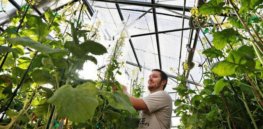
Viewpoint: It’s time to replace our fear-based genetic engineering regulations
In the early 1970s a group of scientists -- none involved in agriculture or food -- raised concerns about the ...

Costs and benefits need to be assessed in weighing bans on glyphosate and neonicotinoids
The continuing debates over whether the herbicide glyphosate or the insecticide class of neonicotinoids (neonics) could—or should—remain available for farmers ...

Sen. Elizabeth Warren controversy: Almost every American has a sliver of Native American ancestry
The reporting on the largest genetic study of American ancestry—claims that Americans are a genetic melting pot of white, black ...

Viewpoint: How anti-GMO activist-journalist Carey Gillam primes the glyphosate litigation pump
The Guardian published an article by Sam Levin and Carey Gillam [on October 7] about the “new era of cancer lawsuits ...

How DNA health screening of pets can lead to tragic consequences
A lack of regulatory scrutiny has left pet owners and their companions vulnerable to misleading marketing and immature science ...
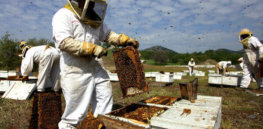
‘Gold standard’ assessing neonicotinoids: Field bee hive studies find pesticides not major source of health issues
Some lab studies but almost no field ones suggest neonicotinoid pesticides are harming bee health. Why is there such a ...
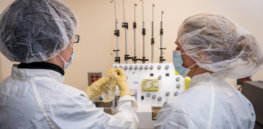
CAR-T cell therapy and the promise of immune cells engineered to fight cancer
The National Cancer Institute estimates that more than 1.7 million people will be diagnosed with cancer this year. To cope ...

Viewpoint: Link between bee death and glyphosate still a ‘far-fetched’ story
Glyphosate is a herbicide, in other words, it is toxic to plants. Its target enzyme is not found in insects ...

Using your body’s internal clock to offset those bad eating habits
When we eat late at night, it disrupts our circadian rhythm. Eating within an 8-12 hour time period could reset ...

Why Ugandan banana breeders say it’s critical to add genetic engineering to their toolbox
Ugandan researchers have been successful at developing robust hybrid bananas through conventional breeding techniques. Yet they see a strong need ...

Cancer will be the ‘single biggest barrier to increasing our life expectancy,’ report says
The number of people around the world who have cancer is "rapidly growing," with 18.1 million new cases and 9.6 ...

Viewpoint: Coffee cancer warning illustrates failure of California’s Prop 65 law
On August 29, the FDA threw its hat into California’s eternal does-or-doesn’t-coffee-cause-cancer fight. “Requiring a cancer warning on coffee, based ...

Earth’s carrying capacity and why the status quo ‘could be collectively suicidal’
The co-founder of the Breakthrough Institute has a cheery vision of the future. If only that vision were plausible ...
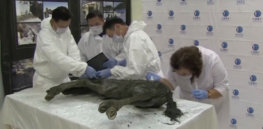
‘Incredibly rare’ extinct Siberian horse to be cloned
Scientists recently extracted an almost perfectly preserved prehistoric baby horse from the permafrost of Siberia’s “Mouth of Hell” crater in Yakutia. At ...
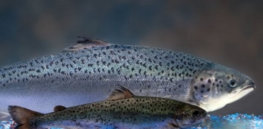
Canada, US embrace AquAdvantage GMO salmon, Brazil and China may be next
Genetically modified salmon firm AquaBounty has found “very enthusiastic” buyers in Canada, according to president and CEO Ronald Stotish. The ...
Viewpoint: EU’s new gene-editing rules show failure of scientific leadership
On 25 July 2018, the Court of Justice of the European Union ruled that plants bred via recent mutagenesis techniques would fall ...

Why the promise of personalized medicine could fall short for minorities
African-Americans are underrepresented in large-scale genetic and neuroscience studies ...

Why those sleepless nights could increase your Alzheimer’s risk
New research suggests bad sleep causes a build-up of plaque associated with Alzheimer’s ...
Despite continued public debate, weed killer glyphosate is safe, EPA says
An EPA official said [September 10th] the agency’s work shows that glyphosate — the herbicide found in Monsanto’s weedkiller Roundup ...
