


Genetic Literacy Project

Nobel laureate Sir Richard Roberts: Uganda will remain trapped by food poverty if its leaders bow to anti-biotech activists
One of the main sources of nutrition for poor Ugandans, bananas, is on the verge of being wiped out by ...
Fighting deadly adverse drug reactions through precision medicine
Lee Tan, a 41-year-old marketing professional and copywriter in Vancouver, Canada, was diagnosed with high blood pressure three years ago ...
Genetically engineered AquaBounty salmon ready for US market, but caught in Congressional ‘sausage grinder’
“Laws, like sausages, cease to inspire respect in proportion as we know how they are made.” The true version of ...

Viewpoint: Rampage movie offers twisted take on CRISPR gene editing
Is a film based on a video game with fleeting mentions of a biotech buzzword compelling sci-fi? No. But I ...
Talking Biotech: How rice became one of the world’s most important food crops
Rice geneticist Susan McCouch: How and where rice was domesticated, and how many varieties are there? ...

Can biotechnology defuse the looming ‘bananapocalypse’?
Scientists have developed GMO bananas resistant to a destructive disease sweeping across the globe. But they may never reach the ...

Analyzing Kevin MacDonald’s ‘Culture of Critique’ and the alt-right’s embrace of anti-Jewish ideology
The biblical commentator Rashi observes that in order for a falsehood to be successful, it has to contain at least ...

Vacation hazard: Your gut bacteria picks up souvenirs, too
When we travel our gut bacteria can pick up antibiotic resistance genes in just two days. What does that mean ...

Frankenfoods? A ‘terrible word’ that could describe more foods than you might realize
What's a Frankenfood? If science matters, it's not food with ingredients whose genes have been precision modified ...

‘Game changer’ for Huntington’s? New genetic treatments on horizon
“It came completely out of the blue,” says James*. They had thought it was his father’s knees that were the ...

Viewpoint: GMO critic Vandana Shiva’s anti-modernity crusade threatens world’s poor
The recently-published “Social Justice Warrior Handbook,” which satirizes people who promote liberal, multicultural, anti-capitalist, anti-globalization, politically correct views, could have ...
How ‘number crunching’ and big data has transformed the study of fossils, evolution
The field of paleobiology has advanced paleontology by using big data to analyze the history of life ...
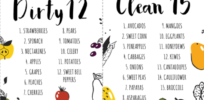
Viewpoint: Environmental Working Group’s Dirty Dozen list highlights ‘meaningless distinctions’ between organic and conventional foods
On April 10, the Environmental Working Group – an NGO funded by big organic marketers – released its annual “Dirty Dozen List” ...

Making sense of the patchwork US regulatory system for genetically engineered crops and animals
The faster-growing genetically engineered AquaAdvantage Salmon took 20 years of regulatory scrutiny to gain approval, while the non-browning gene-silenced Arctic ...

Money magnets: Wall Street enamored by promise of human gene editing, gene therapies
Venture capitalists and investors are pouring money into the genomics sector, seeking to capitalize on breakthroughs in CRISPR gene editing ...
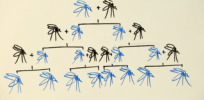
Talking Biotech: How do we decide whether to use gene drives?
Science and technology scholar Jennifer Kuzma: The social and political considerations of using gene drives to combat human diseases, weeds, ...

Strange bedfellows: American Academy of Pediatrics allies with Environmental Working Group, known for anti-science messages
On the subjects of organics and pesticides, the American Academy of Pediatrics finds itself supporting the Environmental Working Group, an ...

25 years of GMO crops: Economic, environmental and human health benefits
Since the first GMO crop was developed in 1994, genetically modified foods have provided countries around the world with economic, ...

We know the placebo effect is biological. Is it also genetic?
We know that the placebo effect is in part biological: expectations of receiving a palliative leads to brain changes. Are ...
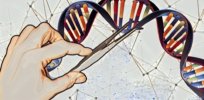
Viewpoint: Why the USDA decided not to over-regulate CRISPR crops—and what it means for agriculture’s future
On 28 March, USDA Secretary Sonny Perdue announced that “USDA does not regulate or have any plans to regulate plants that could ...

Where do we come from? Question grows ever more complicated
It was recently discovered that modern humans are part of the African great apes family, but how did this classification ...

Mood disorders more common in children of first-cousin parents, study finds
Having parents who are first cousins doubles the risk of inheriting a single-gene condition, from 2.5 percent to about 5 ...

‘Natural’ label lawsuits: What you need to know
In the United States, when a food label uses the word “natural,” food companies are frequently the target in litigation ...

Scientists challenge Center for Biological Diversity report claiming monarch butterflies threatened by dicamba herbicide
Dicamba drifts. Apparently, more than expected by a lot of farmers, agriculture officials and manufacturers. But does that mean, as ...

Examining the curious genes behind ‘magic mushrooms’
"One pill makes you larger, and one pill makes you small,” sang Grace Slick in Jefferson Airplane’s classic White Rabbit, conjuring ...

Talking Biotech: The powerful potential—and risks—of CRISPR engineered ‘gene drives’
Evolutionary biologist Fred Gould: 'Gene drives' can be found in nature. Now, scientists want to engineer them to decrease populations ...
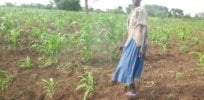
GMO maize could halt devastating fall army worm invasion in Uganda—if it gets approved
Mary Yangi trekked a long journey from South Sudan to Uganda’s West Nile region to settle as a refugee and, ...
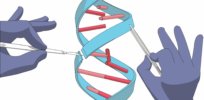
What’s stopping us from using CRISPR to gene edit humans to fight disease?
Emerging clinical applications of CRISPR editing include delivery of CRISPR systems into the body to repair genetic sequences. This is ...
