Are we close to gene therapy in the womb?

gene therapy womb
[Recently] scientists reported that they were able to treat a serious genetic disorder in the womb — in mice. It sounds like science fiction, but this type of treatment may not be far away for humans…

The Verge spoke to New York University bioethicist Arthur Caplan about this trial, the challenges of gene therapy, and why ethics boards will want to take a very close look.

[Verge:] In your opinion, how far away is fetal gene therapy in humans? Are we talking a decade? Two decades?

[Caplan:] I would say 10 years.

…

[Verge:] What about the downsides of the prenatal approach?

[Caplan:] One is that you get a third person involved in terms of the risk of research: the mom. Trying to administer gene therapy around her can put somebody at risk. And until we’re really sure from many more studies, we can’t put moms at risk even if it would help the fetus.

…

[Verge:] What are the considerations we need to think about before this becomes viable?

…

You’ll need close review by ethics committees because if you ask moms, if they’re willing to take a risk to help their child, most moms are probably going to say “yeah.” But they may not be able to process the risk or understand the dangers well.

Read full, original post: Scientists treated a mouse’s genetic disorder in the womb — here’s what’s next

Viewpoint: Activists fret about neonics, but viruses are the real threat to bees

beevirus

While environmentalists raise millions of dollars insisting they will get targeted pesticides (e.g. neonicotinoids) banned to save bees that aren’t really in peril, science is looking at things which do actually put bees at risk.

At the top of the list is not pesticides, it’s nature. An international team has discovered evidence of 27 previously unknown viruses in bees, which could help scientists design strategies to prevent the spread of viral pathogens among these important pollinators.

…

To investigate viruses in bees, a team collected samples of DNA and RNA, which is responsible for the synthesis of proteins, from 12 bee species in nine countries across the world. Next, they used high-throughput sequencing that efficiently detected both previously identified and 27 never-seen-before viruses belonging to at least six new families in a single experiment. Some of the viruses exist in multiple bee species — such as in honey bees and in bumble bees — suggesting that these viruses may freely circulate within different bee populations.

Read full, original article: Bees: It’s The Viruses That Are The Problem

Fighting nature’s ‘computer hackers’ through genetic engineering

PotatoBlight
[T]hrough thousands of years of genetic modification by selective breeding, humans have developed the crops that keep us alive. We have large kernels of grains, plump fruits and nutritious, toxin-free vegetables…

Unfortunately, microbes find our wonderfully productive food plants just as delicious as we do. These pathogens are plant hackers. Just like computer hackers, they’re specialized infiltrators…The methods are the same, too: shut down defenses and access the target’s resources. Once they’re in, plant pathogens eat all they can and reproduce wildly…

…

The most infamous and cunning plant hackers are the oomycetes. The Irish Potato Famine in the 1840s was caused by the oomycete Phytophthora, Greek for “plant destroyer.”

…

Computer hackers rely on exploiting flaws in code to access systems… Oomycetes work the same way…For instance, plant diseases activate natural plant pumps to supply sugar for their own growth. Some oomycetes have lost the capacity to produce critical nutrients, meaning they rely on their plant host to do it for them. Without the plant host susceptibilities, the pathogen would starve before the plant got sick.

My colleagues and I study oomycete disease…We test plants that have been genetically manipulated to turn off individual genes related to nutrient uptake, transport, storage and regulation. We infect these modified plants and look for any that are more resistant than their normal relatives.

Read full, original article: Pathogens attack plants like hackers, so my lab thinks about crop protection like cybersecurity

Video: Inside the quest to truly understand the living cell

micro

“I would be happy to have a rudimentary understanding of a single cell.”

That doesn’t sound like a shocking statement, but coming from a Nobel-prize-winning microscopist who has spent most of his career trying to peer into the tiny powerhouses of life, it really is.

Eric Betzig knows how deep the mystery of the cell goes. He’s been trying to catch it in the act of normal life for decades with his microscopes. But few in this world have actually glimpsed the cell as it really is.

“Much of what we’ve learned has been by looking at cells in isolation, and even if the microscope is non-perturbative, the fact that you ripped the cell out of its normal happy environment means it’s unlikely that you’re seeing it in its native form,” Betzig said during a recent interview in his lab at Janelia Research Campus in Ashburn, Va.

But he’s managed to change that by getting closer to spying the undisturbed cell than nearly anyone. Betzig is, in a way, an inner space astronaut. And what he has seen amazes — and depresses him.

Watch the video [below] to find out just why that is.

Read full, original post: WATCH: The pleasure and pain of seeing inside living cells

What we still need to know about ‘alternative’ meats

fullsizeoutput

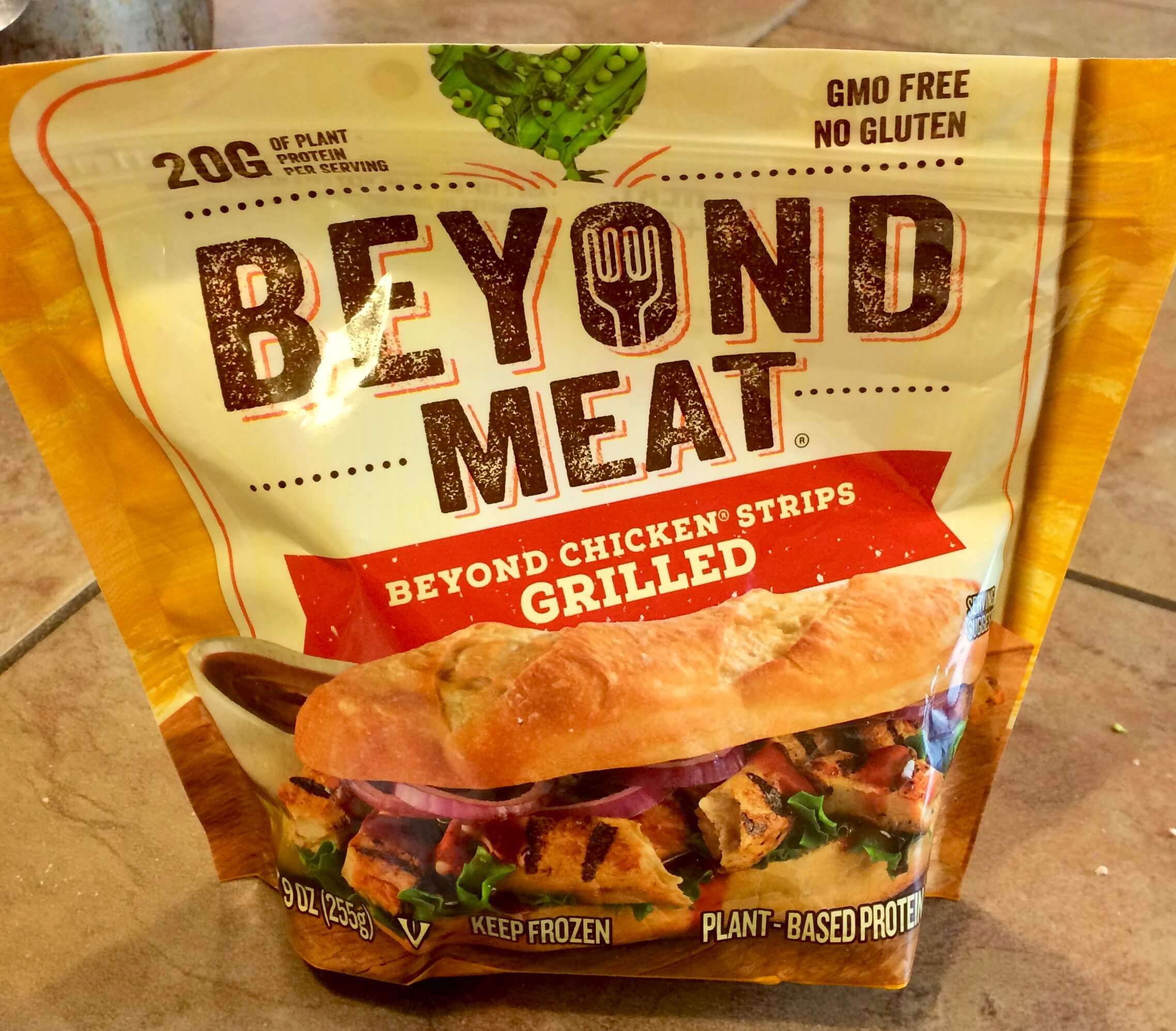
“Alternative Proteins” are a hot topic right now; the media, business and farmers are looking at the future of these products and their potential impact on the animal protein sector. The products fall into two groups: plant-based, which are currently on the market; and “lab grown” or “cultured,” which are derived from animal cells and are still in the development stage…

…

Developing a clear understanding of these products is critical. Both plant-based and cultured products are often promoted as being more sustainable, environmentally friendly, ethical and “pro- animal” than traditionally produced meat. These claims are generally accepted without challenge by interested consumers but have not been subject to rigorous examination.

Particularly regarding cultured products, there are a lot of unanswered questions…We need to know the animal source of the cell lines used and the inputs used in replicating them outside an animal. How are they “fed”? Are antibiotics used, and if not, how can manufacturers be allowed to call these products “clean”?

…

…Since cultured products…have not yet hit the market, there is a question about whether they should be regulated by the FDA or by USDA’s Food Safety and Inspection Service (FSIS). Proponents of the products want them regulated by the FDA. This is not surprising since FDA regulation will give them far less scrutiny in both inspection of the production process and the making of label claims.

Read full, original article: Fake Pork for Breakfast?

Using DNA to reunite immigrant families shows why genetic screening ‘should be widely embraced’

reunification

As the U.S. government struggles to make good on its promise to reunite all 3,000 children and parents who were separated at the border, it would seem like its use of DNA testing would be universally celebrated.

…

Instead, immigrant advocates lambasted the move.

…

Children aren’t qualified to agree to participate in the saliva-collection procedure. Nor can their separated parents give permission on their behalf from afar, obviously — which are violations of international scientific standards of informed consent. And what about children with legitimate non-biological parents or whose parents have already been deported to Central America without them — far away from the nearest spit tube?

But the entrenched opposition also reflects a deep general discomfort about the role of DNA science among immigrant and minority communities.

…

A 2016 study in Public Health Genomics about Latino people’s attitudes regarding genetic testing revealed rampant mistrust: Respondents said they were concerned about doctors using their health information for unauthorized research or health and life insurance companies denying them coverage after learning they were at risk for future diseases.

…

Let’s hope the government will use good science responsibly to bring quick relief to anguished children and parents. Not only does it give us a shot at redemption as a country, it sends a clear message that DNA science should be embraced.

Read full, original post: Why There’s a Deep Cultural Aversion to DNA Testing, Even When It Can Reunite Separated Immigrant Families

Building a better brain model by harnessing the power of AI

brain

Neuroscientists have a lot of data on the brain—we can see it, take pictures of it, study it. But for all the data, the brain’s workings are still relatively unknown.

A new paper published in Nature Methods might help neuroscientists better understand the structure of the brain and how it functions, according to research scientists from Google. A Google team trained an artificial neural network, the kind of AI perfect for automating simple human tasks, to sift through 663 GB of images of a zebra finch’s brain and construct a 3D model of every neuron and synapse.

…

Manually, a neuroscientist would have to look at an image, identify the slices of neurons, and specify each one for the computer to turn into a 3D model. Google estimates it would have taken 100,000 hours to label the entire sample, which was only a 1mm cube. The AI trained for seven days to be able to accomplish the same task.

Google’s algorithm took this process and automated it, looking slice by slice and tracing the neurons through the sample. Though Google wasn’t the first to attempt this automated process, its algorithm is ten times more accurate than previous automated approaches. Jain said that the breakthrough was teaching the AI to trace one neuron structure at a time, rather than trying to trace every neuron in the same at once.

Read full, original post: Google is using AI to see inside the brain like never before

Viewpoint: Not all US farmers are yet being hurt by the tariff trade war with China—but the future is shaky

trade war
Farmers like to say that you can’t count on a harvest until it actually comes in — but I’m ready to announce that this year’s crop of pistachios, which we’ll shake loose in September, could be the best I’ve seen in 20 years of farming them here in California’s San Joaquin Valley.

We’ve enjoyed good weather, with the proper amount of heat during the day and adequate chilling through the wintertime. Water is expensive, but we’re getting enough. And right now, our trees are simply loaded with nuts.

So we’re ready to sell to the world.

Our valley already supplies the U.S. market with virtually all of the pistachios it needs, and we’ve got lots left over. About half my harvest will go abroad.

The only problem is that our biggest export customer, China, just slapped a huge tariff on our product: Chinese consumers who want to buy California pistachios now will have to pay a 40 percent tax, as part of a retaliatory measure in an emerging trade war between China and the United States.

The dispute started earlier this year, when President Trump imposed tariffs on imported steel and aluminum and then broadened the conflict by adding new duties on $50 billion in Chinese products. China shot back with its own protectionist measures, and now my pistachio farm is caught in the crossfire of an unfortunate controversy.

The pistachio tariff essentially will drive us out of the Chinese market. There’s just no way around it. We can’t cut our prices sharply enough to make up the difference.

That’s partly the point. The Chinese don’t want to collect revenue on tariffs as much as they want to hurt American business, in protest of Trump’s policies. Their strategy is to create economic pain in California, which they believe will turn into political pressure on the White House, forcing Trump to rethink his hard line on trade.

I’m always against a trade war-but I’m also hopeful that China’s scheme won’t work out the way Beijing imagines. In fact, our immediate future looks bright.

The United States exports more pistachios than anybody else, nearly 220,000 metric tons last year. Our closest competitor is Iran, at about 144,000 metric tons. Iran, however, will struggle to satisfy China’s huge demand when it peaks around the Chinese New Year.

That’s because this year Iran has suffered a crop disaster: Its pistachio production will plummet by as much as 75 percent, due to weather extremes, water shortages, and soil salinization.

If the Iranians shift their limited output to China, we’ll sell our California pistachios to the customers they abandon. We’ll find new buyers in Europe, India and elsewhere.

Demand for our pistachios is strong. We’re well on our way to selling out this year’s bounty, even though the new tariff means that in recent weeks, we haven’t sold a single nut to China.

The bottom line is that in the short term, despite the trade war, we’ll be okay. The circumstances of pistachio production in 2018 are stacked in our favor.

My worry is what will happen over the long term. If the trade war grinds on and China’s pistachio tariff remains in place, the Chinese may yet hurt us in exactly the way they intend.

Sooner rather than later, this trade war will have to end. Even Trump knows this, as he indicated in April, when he tried to calm the nerves of anxious farmers during the trade war’s opening salvos.

“We’ll make it up to them,” he said. “The farmers will be better off than they ever were. It will take a little while to get there, but it could be very quick, actually.”

I’m willing to give the president a bit of time, but I do plan to hold him to his promise.

Ted Sheely raises pistachios, lettuce, cotton, tomatoes, onions, wheat, wine grapes and garlic on a family farm in the California San Joaquin Valley. He volunteers as a board member for the Global Farmer Network.

This article was originally published at The Hill as Farmers like me are reaping short-term benefit of Trump’s trade war — but we fear long-term cost and has been republished here with permission.

Why are we afraid of synthetic blood?

blood
The idea that blood has a property of the supernatural is as old as humanity. Magical thinking about blood goes way back through ancient history, and probably far back through prehistoric times, and some aspect of that thinking seems to have persisted to modern times. Pagan human sacrifice revolved around blood. A common belief was that the blood had the properties of the person it came from. Christians believe they are consuming the blood of their savior during mass. Several TV programs dealing with vampires have been popular in recent years. Jehovah’s Witnesses, with a worldwide membership of roughly 8 million, prohibits its members from donating or receiving blood products, even when it’s a matter of life and death.

Blood is heavenly and pure—which may explain why Americans are wary about the use of emerging synthetic blood formulations to improve human performance; 63 percent of U.S. adults say they are worried about synthetic blood for enhancement. That’s according to a 2016 Pew poll, and they don’t mean because it would be unfair in athletic competition the way we might think about blood doping, rather, they think blood substitutes could do things like deliver oxygen to tissues more efficiently than natural blood would actually change human society.

That represents a pretty strong preconception, especially given that the principal application coming online for synthetic blood is not going to be enhancement of human physiology, but rather the maintenance of basic physiologic functions; in other words, to save lives, especially in trauma crisis situations.

Replacement of blood: a strange and eventful history

Even before physicians learned about the components that made up blood, they realized that blood was important. South America’s Inca civilization may have attempted blood transfusions, but documented research started in Europe in the the 1600s, after William Harvey figured out that blood circulated in the body through through arteries and veins. Since transfusion often proved fatal, physicians were looking for blood substitutes and were fairly adventurous in that area, trying a range of liquids from cow, goat, and human milk to beer. That didn’t work all that well.

Everything changed in the first decade of the 20th century with the discovery by Karl Landsteiner (University of Vienna), who discovered the ABO blood groups, and Reuben Ottenberg (Mt. Sinai Hospital, New York), who performed the first blood transfusion using cross matching based on those groups. Discoveries later in the century led to the recognition of addition ways to group blood, and ultimately to the blood banking system in use today in which donated blood is separated, and stored and administered, as red blood cells (RBCs), fresh frozen plasma (and similar types of plasma), platelets, and other components. This is called blood component therapy and it has made transfusion of whole blood obsolete, because whole blood has disadvantages. It is acidic, for instance, with too much potassium and ammonia, plus it is depleted in special proteins called clotting factors, which are needed to stop bleeding.

blood 7 26 18 2Thus, after trauma with massive blood loss, patients are infused with packed red blood cells (PRBCs), crystalloid fluids, and fresh frozen plasma (FFP), the latter being rich in clotting factors. In cases when patients’ platelet counts drop below a certain level, which happens in a variety of different medical conditions, patients are infused with platelets, but there’s no reason to give them the RBC component of donated blood, unless they are severely anemic. So essentially, blood component therapy is a mix and match system. That’s important to keep in mind as we consider synthetic blood products.

Rationale for synthetic blood

The current system is always subject to shortages. This problem is due to short shelf lives of red blood cells and other blood components and is exacerbated by the fact that not every donor is compatible with every recipient. Research is underway to convert all blood into type O-negative (the universal donor type), to create O-negative blood from stem cells, and to create it in genetically modified pigs or other non-humans. Those technologies are not completely ready, however, plus with blood donated from humans, or made in pigs, there’s also the potential for unrecognized infectious agents.

Clinical trials are underway, offering the potential for such products to be used to compensate for shortages. But beyond that, certain synthetic blood products under development could actually be better than donated products in certain clinical situations, namely situations in which the problem is not so much that they patient has lost blood, but that blood vessel obstruction prevents oxygen delivery to tissues by the usual oxygen carriers. This emerging capability for enhanced oxygen delivery concerns those who are uncomfortable with therapies that work by improving upon nature, because of their applicability to people who are not sick or injured but simply want to boost their capabilities. This could include athletes, but we might also envision military applications.

Categories of synthetic blood

Products under development today are not synthetic blood in the literal sense, because they don’t do everything that natural blood does. Rather, they perform the blood function that the body requires most urgently, namely delivering oxygen (O2) into tissues, and removing carbon dioxide (CO2). So, technically, they are therapeutic oxygen carriers, but then so are PRBCs; consequently, they can be combined with plasma and other fluids similar to how PRBCs are combined.

There are two main categories of synthetic blood products: There are products that use hemoglobin, or variations of it, to carry O2 and CO2, and there are products that use oxygen-carrying molecules called perfluorocarbons (PFCs). Hemoglobin synthetic blood products include RBCs grown from stem cells in the laboratory. Researchers also are developing hemoglobin that can travel freely in the blood stream free rather than enclosed within RBCs. It’s challenging, because ordinary hemoglobin traveling freely in the blood is toxic to the kidneys, but the hemoglobin is altered in the synthetic products.

blood 7 26 18 3.jpg

Trade-offs

Advantages of hemoglobin-based synthetic blood is that once inside the patient it can function as normal red blood cells. Thus it can substitute for PRBCs that are given during surgery, trauma, or other settings involving  large blood loss. But there also are drawbacks. Just like natural blood, hemoglobin-based synthetic blood requires refrigeration and has a limited shelf life. Also, so far, it’s fairly difficult to produce it in large amounts.

In contrast, PFC blood substitutes have a shelf life up to a year and can be produced in large amounts. The big disadvantage is that the body removes them after just 48 hours, so PFCs are not useful to treat massive blood loss. Instead, their real potential is for treatment of acute, life-threatening conditions where the problem is not blood loss, but a deficiency of O2, or in some cases an excess of other gases. One potential application, for instance, is in ischemic stroke, where part of the brain or spinal cord is starved of O2, because of a clot, or other blockage of a blood vessel. Whereas RBCs travel in the center of blood vessels, making it hard to deliver O2 if there’s a clot, the PFCs can carry O2 through the outer parts of the vessel. Another application under study is decompression sickness (DCS). The standard treatment is hyperbaric oxygen therapy (HBO2), which requires patients to be put into a special chamber. In HBO2, the O2 helps flush out nitrogen (O2) bubbles from the blood, but in addition to carrying O2, PFCs also can take hold of N2. Thus, PFCs might be useful in cases of DCS, either as an adjunct treatment with HBO2, or as an early intervention at the site of the diving accident.

Mis- and disinformation are distorting science and public policy. Subscribe to our Daily and Weekly Digests for incisive coverage of ‘disruptive’ innovations in AI, agricultural biotechnology, food, chemicals, nuclear energy, vaccines, and other disruptive innovations.

Improving on nature

By loading body tissues with O2 and scrounging up N2, PFCs have been under study for potential diving medicine applications, so you can probably imagine that the navies of United States and other nations are major players in the research. Indeed, they are, but this raises another possibility. If a PFC blood substitute is useful for oxygenating tissues in somebody who is injured, or sick, might the military also find uses in people who are not injured?

It turns out that there are many imaginative ideas. Some form of PFC might allow for liquid breathing in which diver’s lungs can function similar to the gills of a fish. It might require some device attached to the diver’s mouth and nose, but oxygen as part of a liquid could be concentrated into much less volume than the in conventional diving tanks. Also, if a Navy SEAL, is diving shallow enough for breath-hold diving and simply needs to remain submerged for a long time, we could imagine a PFC injection used to keep his/her tissues oxygenated. In this way, the SEAL could travel light, without the burden of SCUBA, or other heavy, cumbersome diving equipment.

Then, the technology might make its way into recreational diving, and what comes next? Will mountain climbers use it as they ascend? Will swimmers take an injection, so they don’t need to breath in the midst of their strokes? That would be doping, of course. The same would be true if other land athletes were to inject PFCs, and this is what worries people. Clearly having a tank on your back when you submerge in water, or ascend a mountain, is human enhancement with technology. But for some reason, maybe remnant superstition from the Middle Ages, putting the technology inside the blood seems to freak people out — even of most of the time it will be used for saving lives.

A version of this story originally ran on the GLP on September 19, 2016.

David Warmflash is an astrobiologist, physician and science writer. BIO. Follow him on Twitter @CosmicEvolution.

Science setback? What’s next now that European court rules gene-edited crops are GMOs?

With the European court ruling that CRISPR crops and other gene-edited foods must be treated as classic transgenic GMOs, scientists worry that Europe and the developing world stand to miss out on a new generation of sustainable agriculture.

The ruling by the European Court of Justice (ECJ) is “the death blow for plant biotech in Europe,” said Sarah Schmidt of the Heinrich Heine University of Düsseldorf in Germany in a statement to the Science Media Centre. One of the great advantages to gene editing is that because research and development is so relatively inexpensive as compared to traditional transgenics it’s adoption could democratize research and the development of new agricultural products.

But this ruling will force gene-edited plants to go through a regulatory process that typically costs about $35 million, she said, meaning only large companies will be able to afford to walk the regulatory gauntlet, effectively pricing out universities, nonprofits and small companies which are poised in other countries to lead the gene editing revolution. That then tees up the new technology for attacks from European advocacy groups which will undoubtedly then claim that gene editing is yet another new product of “Big Ag.”

The ruling once again puts the EU at sharp odds with the United States over the future of crop biotechnology. US regulators have taken the position that gene-edited crops don’t pose a problem because they involve no “foreign” genes, and are essentially genetically identical to crops developed through traditional cross-breeding. Gene-edited mushrooms may be available soon, while soybeans, flax, wheat and other crops will enter the US market in coming years.

Last January, Europe appeared set to follow in the footsteps of the US when Michel Bobek, an advisor to ECJ, recommended that gene-edited crops should not face the same stiff regulations as GMOs—as long as they don’t contain foreign DNA. The opinion was hailed by most scientists and farmers. But the ECJ is a political body and not a scientific one, and the full court ignored that 15,000-word opinion to side with advocacy groups and rule that gene-edited crops should face restrictions applied to GMOs in 2001.

“This proves how stupid the European system is for regulating GMOs,” Stefan Jansson, professor of plant physiology at Sweden’s Ümea University told Wired. “Many of us have tried to change things in last 10 years with meager success. When it comes to things like this, people listen to organizations like Greenpeace more than they listen to scientists.”

The ruling will all but shut down the possibility of a new generation of biotech crops in Europe, but the impact of the ruling will echo more harshly elsewhere, particularly in Africa.

“There’s a need in Africa for smaller farmers to secure their food supply and that means creating better crops,” said Nigel Taylor from the Donald Danforth Plant Science Center in St. Louis to Wired. He runs gene-editing cassava breeding projects in Kenya and Uganda to contain brown streak disease. “With climate change and urbanization, it’s important that agriculture can adapt. Gene editing was going to be a powerful tool to achieve that and it’s faced a setback,” Taylor said.

biotech 7 26 18

Gene-edited crops are not ‘GMOs’

Gene editing describes a variety of techniques researchers have developed in recent years to add or delete genes from an organism’s genome. They differ from transgenesis in that gene editing techniques typically don’t involve transferring foreign DNA into an organism’s genome. The plants altered with these new techniques are often called “cisgenic” as a result.

This seemingly minor but significant difference between gene-edited crops and GMOs has been a major point of contention between the vast majority of scientists and European politicians who have passed numerous restrictive laws over the years. When anti-GMO European activists convinced the majority of the EU to ban the cultivation of GMOs, they warned that inserting DNA from distant species into food crops could introduce all sorts of new toxins and allergens into the food supply.

These warnings from anti-GMO groups were always far fetched. But now that scientists have discovered new ways to edit specific genes without using transgenic techniques, the anti-GMO movement has switched tactics. The problem now, they say, is not just the presence of foreign DNA in our food, but genetically modifying food crops in any way.

The activist group GM Watch calls gene-edited crops “GMO 2.0” and celebrated the ECJ’s decision in an editorial published on its website, quoting Mute Schimpf, food and farming campaigner at Friends of the Earth Europe:

These new ‘GMO 2.0’ genetic engineering techniques must be fully tested before they are let…into our food. We welcome this landmark ruling which defeats the biotech industry’s latest attempt to push unwanted genetically-modified products onto our fields and plates.

Washington D.C.-based Friends of the Earth also applauded the ruling. “All products made with genetic engineering, including ones made with gene-editing tools like CRISPR, should be regulated, assessed for health and environmental impacts, and labeled,” said Dana Perls, the organization’s food and agriculture campaigner. The organization’s affiliate in France was part of a coalition of groups that brought the case.

The court was apparently swayed by the arguments made by European anti-GMO groups, stating, “the risks linked to the use of those new techniques/methods of mutagenesis might prove to be similar to those which result from the production and release of a GMO through transgenesis.”

But experts say otherwise. Professor Wendy Harwood, a researcher in the Department of Crop Genetics at the John Innes Centre, told the Science Media Centre there is a flaw in the court’s reasoning.

Older mutagenesis techniques that have a long safety record are exempt from [Europe’s GMO regulations]. The same outcomes can be achieved using newer, faster and more precise mutagenesis methods as using the older techniques. Treating the plants derived in different ways is not a logical approach based on the scientific evidence.

Dr Nicola Patron, head of synthetic biology at the Earlham Institute, added to Hardwood’s criticism:

Humans have used different technologies to induce mutations in plants to increase genetic diversity and improve the agronomic qualities of crops for almost a century; the same outcomes can now be achieved using faster, more efficient and precise mutagenesis methods. In most cases, it will not be possible to determine which technique was used to induce the mutation.

Nick Talbot, deputy vice chancellor, and professor of molecular genetics at the University of Exeter said:

Many modern crop varieties were generated over the last several decades by random mutagenesis in which there was no control on secondary effects.  Precise modern gene editing technologies allow accurate, predictable changes to be made in a genome.  To classify gene edited crops as GMOs and equivalent to transgenic crops is completely incorrect by any scientific definition.

Mis- and disinformation are distorting science and public policy. Subscribe to our Daily and Weekly Digests for incisive coverage of ‘disruptive’ innovations in AI, agricultural biotechnology, food, chemicals, nuclear energy, vaccines, and other disruptive innovations.

Missed opportunities for Europe, developing world

Gene editing already has yielded a variety of scientific and economic benefits. Researchers have used CRISPR-Cas9, for example, to boost yields, fight common plant diseases and engineer crops that can withstand the withering effects of climate change. In fact, the technology is developing so quickly that scientists may soon be able to produce customized seeds for farmers based on the environmental conditions around their farms. These are significant develops in agriculture, and Europe is now risking missing out on them.

“This is a very disappointing outcome, and one that will hinder European innovation, impact and scientific advance,” said Johnathan Napier, a scientist at Rothamsted Research in the U.K. “The classification of genome-edited organisms as falling under the GMO Directive could slam the door shut on this revolutionary technology. This is a backward step, not progress.”

It’s still unclear how individual countries will react to the ECJ’s decision. At least one country, Belgium, has acknowledged that its scientists are running field trials of gene-edited crops, so opposition to the technology is not universal in Europe. Nonetheless, the public remains generally critical of all forms of genetic engineering in agriculture. If history offers any guidance, the situation probably won’t improve in the short term.

The long-term impact in the most food-insecure countries could be even more devastating. The EU is Africa’s largest single trading partner, receiving nearly $16 billion in agriculture and food imports in 2017 from Africa.

I think it might be the fear of the unknown that is driving the recent law,” said Bode Okoloku, a Nigerian-born plant scientist at the University of Tennessee, to Wired. “There are hundreds of millions of small farmers who could have gained from that technology and that is now less likely,”

Cameron J. English is the GLP’s senior agricultural genetics and special projects editor. He is a science writer and podcast host. BIO. Follow him on Twitter @camjenglish

Remnants of ancient society found in Ecuador’s cloud forest

ca fd fe a ebdac b e

In the 1850s, a team of botanists venturing into the cloud forest in the Quijos Valley of eastern Ecuador hacked their way through vegetation so thick they could barely make their way forward. This, they thought, was the heart of the pristine forest.

…

Indigenous Quijo groups had developed sophisticated agricultural settlements across the region, settlements that had been decimated with the arrival of Spanish explorers in the 1500s. In their absence, the forest sprung back. This process of societal collapse and forest reclamation is described in a new study.

…

The study’s researchers found a tiny lake in the valley and dug down into the silt at the bottom, pulling up a plug of sediment that had built up over the last 1000 years—and found evidence of human occupation going back to the very oldest part of the core.

In the oldest layers, scientists found tiny pieces of pollen—swept from the valley and the surrounding forest into the lake by wind—from maize and other plants that only grow in open, airy conditions, which told them that humans were cultivating plants.

…

When the next round of European explorers passed through in the 1850s and 60s, they saw only forest so dense they imagined it had always been untrammeled. But what they saw, [author Nick] Loughlin says, was something that already shifted away from fully “pristine.”

Read full, original post: Traces of Lost Society Found in ‘Pristine’ Cloud Forest

Viewpoint: Here’s how to separate science from marketing hype on food labels

FDA Reading Food Label Woman Grocery Store Nutrition Label Changes x

If your head starts spinning when trying to make healthy and budget-friendly food choices, you’re not alone. Take a look around your local grocery store and you’ll find a slew of confusing terms. Organic. Non-G.M.O. Low-sugar. Superfood.

What does it all mean, and how can a normal human shopper possibly make sense of any of it?

…

Liz Vaknin of the food marketing company Our Name Is Farm said the way food is labeled — you guessed it — aims to get it off the shelf and into our shopping carts.

“The more value you ascribe to a term, the more you identify with it, the more you’re willing to pay for it,” she explained. “Some are useful, some are misleading, and a lot of them are not regulated enough to mean anything.” Take “natural,” for example, she said. The term has been thrown around so much, it barely means anything at all.

“Superfood,” according to Andy Bellatti, a registered dietitian and co-founder of Dietitians for Professional Integrity, is almost equally meaningless. “As I like to say, all plant-based foods are ‘superfoods’ in the sense that they offer fiber, vitamins, minerals and phytonutrients,” he said.

…

“The most important thing is to buy what you and your family [are] realistically going to eat,”[said Alina Zolotareva, a registered dietitian and marketing manager of AeroFarms.]

Read full, original article: The Terms on a Food Label to Ignore, and the Ones to Watch For

How biotechnology can help feed a growing world population

hunger in developing countries

According to the U.N., the world’s population is expected to grow to 9.7 billion in 2050 and further increase to 11.2 billion by 2100. For a lot of developing countries, this rapid population growth makes it more difficult to eradicate poverty and ensure food security. As a result of these concerns, more research is being dedicated to achieving global food security through a common practice known as biotechnology.

…

…Pearl millet is commonly…regarded as a staple food [in Africa and Asia]…but is difficult to produce because it can only grow in dry conditions…Biotechnology methods allow for the transfer of…important…traits to other crops to increase the viability of the transgenic plant, thereby increasing the yield and promoting commercialization in developing countries.

…

Food biotechnology can also improve food security by increasing the nutritional value of food. A common problem in sub-Saharan Africa is vitamin A deficiency, which is a crucial issue for children and pregnant women…Biofortification is defined as a process by which the strength of the nutrients in a given food is enhanced. Biofortification helps to add in nutrients from early stages of production to create a mutated seed that can easily be replicated and distributed, allowing…several countries in Africa are reaching the nutritional target for vitamin A, zinc, iron and many other vitamins through biofortified varieties of maize.

…

Biotechnology is just one way to meet people’s daily without putting future generations at risk of starvation…Ultimately, with continued research in this field, developing countries will have a chance to increase their overall self-sufficiency…

Read full, original article: How Food Biotechnology Is Improving Food Security

Why our earliest memories are often imagined

first steps

If life is but a tapestry, then memory is the thread. But some of those threads may simply be imagined: A new study out [July 17] in Psychological Science suggests that our earliest memories often couldn’t have happened the way we remember them.

…

The researchers behind this new paper studied the responses from more than 6,000 volunteers [who described their first memory]. They found that nearly 40 percent of these volunteers swore they remembered something before the age of two; nearly 15 percent said their first memory happened before the age of one. That might not seem like a big deal, in of itself, except for the fact these memories probably aren’t real.

The vast majority of scientific research, for decades, has found that our brains simply don’t have the ability to process and encode life experiences into long-term memories before the age of three-and-a-half.

…

[I]t’s more likely these implausible memories are an unconscious attempt to narrate our life story. We take bits and pieces of our early life from different sources—a familiar story of our first walk told by our parents or a picture of our crib seen on a family photo—then slowly replace the retelling of these details in our mind with an actual, if fictional memory that intuitively feels right, without ever being aware of it.

Read full, original post: Your Earliest Memory Might Not Have Happened

Expensive tastes? Testosterone linked to quest for status symbols

status

Whether it’s in his choice of top-shelf alcohol at the club, the watch on his wrist or the clothes he wears, a man under the influence of the male sex hormone is going to reach for the product that says to potential mates (and to competitors for those mates), “U can’t touch this.”

…

Researchers from the Wharton School of the University of Pennsylvania gave a supply of gel to 243 men, ages 18 to 55, and asked them to rub it all over their upper body. Some of the gels contained testosterone, others a placebo. Then the researchers asked the subjects to look at pictures and descriptions of five pairs of items — including watches, jeans and jackets — and judge which ones they preferred.

The pairings were carefully composed to present the men with a choice between products that varied on three dimensions: status, power and quality.

…

For those subjects who got the dose of testosterone, status consistently won out over power and quality. But when these men were faced with a choice between powerful and high-quality goods, they showed no clear preferences. Meanwhile, men who got the placebo tended to choose the powerful and high-quality versions.

…

Marketing professionals who pose attractive women on the hoods of expensive cars [have already recognized this.] But now they have scientific evidence to back up their surmises.

Read full, original post: Testosterone boost feeds US men’s hunger for luxury products, study indicates

Video: Inside the quest to improve farm animal welfare by tweaking their genes

New born Frisian red white calf

For nine nerve-racking months beginning in the summer of 2014, Dan Carlson waited for his lab experiments to be born. Carlson and his team at the biotechnology startup Recombinetics had made a small tweak in the genetic code of dairy cattle in an attempt to prevent the animals from growing horns.

…

…Buri and Spotigy, two calves born in April 2015, were free of the telltale bumps that eventually sprout into horns. That meant they would be spared the fate of millions of U.S.-raised cattle, whose horns are destroyed with a hot iron or toxic paste shortly after they’re born or are sheared off when they’re older…The painful procedure is done to prevent the cows from goring one another or their human overseers…

…

People like Carlson can do this work thanks to two methods…that have made gene editing cheaper and easier [ TALEN and CRISPR]. Carlson is now involved in several projects that employ gene editing in animals, including one that keeps pigs from reaching puberty so they need not be castrated.

…

Carlson first became fascinated with genetics…when his father started planting genetically modified corn. “They were taller. They didn’t have any problems standing up. They were essentially the best crop that I ever saw my dad produce,” recalls Carlson…“From that moment on, I was like, ‘This technology is for real. It can really make a difference.’”

Read full, original article: This Man Rewrites the Genetic Code of Animals

We finally have our first smallpox treatment—just in case

ap

Fear of another smallpox pandemic keep you up at night? You’ll be happy to hear the FDA approved tecovirimat (Tpoxx) on [July 13]. It’s the first drug designed to treat the infectious disease, which kills about 30 percent of the people who contract it.

…

Smallpox may no longer exist in the wild, but the virus does still exist in the lab. Right now, we know of at least two labs with sample of smallpox in their freezers, one in Russia and one at the Centers for Disease Control and Prevention (CDC) in Atlanta, Georgia. Other samples could exist elsewhere, and there’s also the possibility that someone could use the latest gene-editing technology to recreate the virus.

Because most smallpox vaccination efforts ended when the disease was officially eradicated in 1980, most people born after that date are not protected against it. That means smallpox has the potential to cause a pandemic if the virus ever makes its way back into the general population.

…

So, if smallpox is still such a threat, why don’t we just keep vaccinating everyone? Well, the smallpox vaccine is dangerous, for one. It has the potential to cause serious, even deadly, side effects.

…

Hopefully no one ever needs to use Tpoxx. But knowing a smallpox treatment exists should help us all sleep a bit better at night.

Read full, original post: The FDA Just Approved a Drug to Keep Us a Little Safer From Another Pandemic

Questioning EU neonics ban: Pesticides are ‘not a curse but a blessing’

someneonicot

Plant protection products and green genetic engineering [tools] are not a curse but a blessing, says Dr. Klaus Schlüter, a Phytopathologist who teaches Botany and Phytomedicine in the Department of Agriculture at Kiel University of Applied Sciences.

Mr Schlüter, many people are afraid of toxic pesticides. Are they right to be afraid?

No, this fear is absolutely unfounded. Presenting modern crop protection products as toxic and dangerous is wrong. Most of the substances authorized in the EU are also non-toxic in concentrated form to humans and animals. This has fundamentally changed the situation over the last 30 years, as until the 1970s there were a great many pesticides that were toxic; that is not the case today.

…

The EU has recently banned three crop protection products, known as neonicotinoids, outdoors because they apparently harm bees. The ban is good news – right?

There was no bee damage as a consequence of proper use in the EU. The often cited damage to bees was due to misuse by some farmers many years ago. However, the EU has set itself the goal of assessing crop protection agents according to the absolute zero-risk principle; that is pretty far from reality. Every pharmacological substance is accompanied by a risk, which is no different in crop protection! …

Editor’s note: This interview was originally published in German. This English summary has been prepared with Google Translate and lightly edited for clarity.

Read full, original article: „Das sind keine Frankenstein-Pflanzen!“

Thinking like mom: Fatherhood makes male brains more maternal

fatherhood

The amount of time bat-eared fox fathers spend monitoring their young is an even bigger predictor of pup survival than maternal investment or food availability. Dads, at least in this species, matter.

But what determines whether a dad will be so devoted? Defining paternal dedication is a fraught field of study, but according to scientists, much of paternal behavior seems to boil down to just a few brain basics.

Because the entry into fatherhood isn’t cued with the same slew of physiological changes that accompany pregnancy and motherhood, the biological and chemical bases of paternal behavior have remained somewhat mysterious. However, recent discoveries show that, across vertebrates, the recipe for a good dad is actually pretty clean-cut: think more like mom. “As males become paternal, [their brains] become more like females’,” says [primate biologist] Toni Ziegler.

These changes include increases in a few hormones that have massive effects on the brain: oxytocin, estrogen, prolactin and vasopressin. Oxytocin, famously nicknamed the “cuddle hormone,” appears to play a well-established role in parent-infant bonding, particularly in the days following birth. For instance, recent research shows that male non-human primates making more oxytocin seem to be more responsive to needy infants.

…

For many mammals, having a nurturing father tends to have long-lasting effects on the physical and behavioral health on kids. In several mammals, male investment increases offspring litter size, survival and sociability.

Read full, original post: This Is Your Brain on Fatherhood