


Food & Ag Features

Billion-year-old microbes could give us new food, fuel sources—if we can figure out how to use them
We can’t afford to let this potential biotech breakthrough go to waste ...
Viewpoint: How a small group of scientists and pliable media created a ‘catastrophe narrative’ that hurts bees and farmers
The scientists who glommed onto the “bee-pocalypse” narrative never bothered to go back and correct the record ...
Podcast: How activists and politicians derailed South Australia’s attempt to embrace GMO crops
Activists in Australia are manipulating politicians with fear and doubt to restrict farmer choice ...
Is there a place for CRISPR gene editing in organic farming? Many farmers say ‘yes’
Denying ourselves these benefits to protect distorted ideas about what's 'natural' is nonsensical ...
Viewpoint: How international anti-biotech activists manipulate year-old Mexican government to block crop GMO innovations
Mexico's leadership should not restrict crop biotechnology based on personal beliefs or scientific misinformation ...

Has modern agriculture ‘tainted’ your Thanksgiving dinner?
The Environmental Working Group knows how to grab headlines with ominous claims about America's food supply. In 2018, the Washington, ...

Viewpoint: Generation Z to environmentalists: If you care about sustainability, embrace GMOs and gene edited crops
It is important that this new generation follow the facts, not just rigid environmental orthodoxy ...
GMOs are ‘substantially equivalent’ to conventional foods. Should they face reduced regulations?
There really is no tension between patenting plants that are also found by the FDA to be substantially equivalent ...
If Africa adopts biotech crops, will anti-GMO Europe retaliate against the continent’s most important trading partner?
How would Europe react if GMO crops became commonplace in Africa? ...
Challenging media narrative about the ‘birds and the bees’—neither faces serious threats from neonicotinoids or other crop chemicals
Discarding this valuable crop protection tool is a questionable strategy ...

Podcast: Epidemiologist Geoffrey Kabat explains how junk science gets published—and how to spot it in the headlines
Bad research can put people's lives at risk, so addressing problems with peer review is essential ...
Anti-GMO forces target New Breeding Techniques (NBTs) despite similarities to conventional crops
The same meritless arguments leveled against GMOs resurface for New Breeding Techniques (NBTs) ...
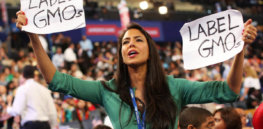
Podcast: How food bullying spreads unjustified fears about GMOs, animal welfare and food safety
We've heard a lot in recent years about the harmful impacts of bullying, especially cyber-bullying aimed at children. But rarely ...
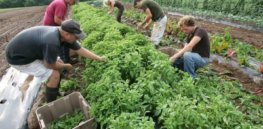
Will CRISPR’s promise force the organic industry to reconsider its opposition to gene-edited crops?
In addition to better nutrition, CRISPR can produce foods with fewer 'inputs' than conventional and organic foods ...
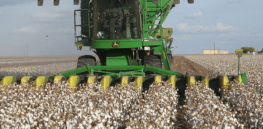
Viewpoint: Intensive ‘industrial’ agriculture boosts farm productivity, promotes environmental sustainability
It's important to be honest about the benefits of farm consolidation if we value keeping food prices low, combating climate ...
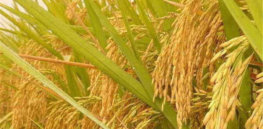
Golden Rice: The GMO crop loved by humanitarians, opposed by Greenpeace
Golden Rice is back in the news as the Philippines and Bangladesh move closer towards approval of the GMO food ...
Eat your veggies! California testing confirms organic and conventional produce well below EPA pesticide limits
Once again, evidence that our food supply is safe and incredibly diverse ...

Viewpoint: Common pesticides unsafe at any dose? Here’s what’s wrong with Brazilian researcher’s ‘unsupported’ claims
Going to national media with unpublished sensationalist claims is not without consequences ...
Viewpoint: World must embrace CRISPR, synthetic biology to boost food production in the face of climate change
New breeding technologies may hold the key to preventing a global “push into poverty.” ...
Global consensus finds neonicotinoids not driving honeybee health problems. Why is Europe determined to ban them?
Why is Europe allowing what has been called 'a bizarrely one-sided piece of politicized science' to determine agricultural policy? ...
Viewpoint: Developing countries need GMO, gene-edited crops to solve food security challenges
With a ballooning population and climate change, genetic engineering is needed now more than ever ...
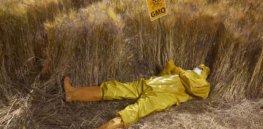
Video: ‘Blood on their hands’—Greens’ resistance to biotechnology blocks sustainable agriculture, climate change innovation, says GLP’s Jon Entine
Green advocacy groups are the single biggest impediment to sustainable agriculture ...
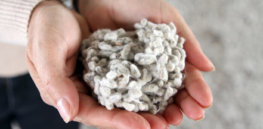
FDA-approved edible cotton seeds show how GMO, CRISPR-edited crops can battle global hunger
We can't eliminate hunger overnight, but this breakthrough cotton variety will combat a lot of needless suffering ...

Podcast: The untold story of Edith Rebecca Saunders—’mother of British plant genetics’
We unearth the story of Edith Rebecca Saunders, co-founder of The Genetics Society and the ‘mother of British plant genetics’ ...
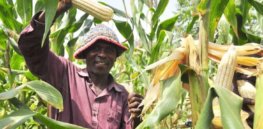
Viewpoint: How agroecology can improve life for Africa’s smallholder farmers
The gravity of the numerous problems faced by smallholders is too great to allow for scientifically promising alternatives like agroecology ...
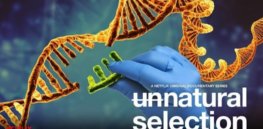
Netflix ‘Unnatural Selection’ gene editing miniseries focuses on extreme examples, ignores potential food sustainability impact of CRISPR
I watched dumbfounded. That is not how genetic engineering works ...
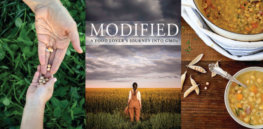
Viewpoint: Documentary ‘Modified’ peddles falsehoods about GMOs, pesticides and ‘corporate control’ of food
"Modified” is an elaborate lie about genetic engineering ...
