“It had to be decided,” he told 20 Minutes , and in this area, there is no in-between. Either you do organic or you do not. And me, I do not believe it anymore ….” But what is the problem …. with organic? It basically boils down to one word: copper, the only organic pesticide allowed. “The vast majority of organic treatments are made from copper,” he says ….
However, copper “still poses a lot of problems, starting with stagnation in the soil,” worries Basil Tesseron, head of the Lafon-Rochet estate in Saint-Estèphe [France]. “It’s a product in the heavy metals category, so it does not evaporate, it builds up in the soil ….
…
Towards a reduction in the use of copper
Moreover, “there is a good chance that Europe will ban this product, having already decided to regulate its use more” anticipates the winemaker, who believes that “the so-called natural products are not always the best”. Pesticide of natural origin, copper is indeed subject to discussions. “Excessive concentrations of copper have adverse effects on the growth and development of most plants, microbial communities and soil fauna,” INRA noted last January , in a scientific report to “reduce use of copper for the protection of biological uses “.
The organic sector is tired of being permanently attacked
Sylvie Dulong, organic viticulturist in Saint-Emilion, and president of the Regional Federation of organic agriculture in Nouvelle-Aquitaine, deplores that her sector is attacked “permanently” and that “we systematically seek to oppose conventional winemakers; it’s not our view of things. ”
She assures that “at the doses at which it is used, copper is not a problem” and although it does not negate the residues in the soil, it considers that “it has nothing to do with the harmful consequences of chemicals. of synthesis.
Editor’s note: This article was originally published in French. This English summary was prepared with Google Translate and edited for clarity.]
Researchers have come forward in support of a recent proposal from The Netherlands Ministry of Infrastructure and the Environment, to amend the EU Directive, on the deliberate release into the environment of genetically modified organisms (GMOs). The move questions whether the current regulatory framework for GMOs is adequate in the light of emerging technologies in the field of genome editing.
…
For many of the products that very developed through genome editing, it is no longer possible to distinguish them from products created through conventional breeding …. The researchers are currently raising this argument with the policymakers ….
One solution being discussed at an EU level is the molecular tagging of genome edited crops, which is a costly and challenging strategy. “[This] would encourage the development of a system of molecular tagging in the process. So the developer should include a molecular tag so that we can trace it,” [says Dennis Eriksson from the Department of Plant Breeding of the Swedish University of Agricultural Sciences].
But [why] would be …. a producer …. invest in something that would actually negatively impact their commercial interests …. These advances in technology are only leading to an intensification in discussions about how enforceable regulation will be in the future. The recent European drought will surely also cause renewed discussions around the benefits that drought-resistant crops created through GM technology could bring ….
In a highly controversial move, the Food and Drug Administration approved an especially powerful opioid painkiller despite criticism that the medicine could be a “danger” to public health. And in doing so, the agency addressed wider regulatory thinking for endorsing such a medicine amid nationwide angst about overdoses and deaths attributed to opioids.
The drug is called Dsuvia, which is a tablet version of an opioid marketed for intravenous delivery, but is administered under the tongue using a specially developed, single-dose applicator. These “unique features” make the medicine well-suited for the military and therefore was a priority for the Pentagon, a point that factored heavily into the decision, according to FDA Commissioner Scott Gottlieb.
Although an FDA advisory committee last month recommended approval, the agency was urged by critics not to endorse the drug because it is 10 times more powerful than fentanyl, a highly addictive opioid.
…
The objections included complaints that Dsuvia has no unique medical benefits and might be easily diverted by medical personnel.
…
“There are very tight restrictions being placed on the distribution and use of this product. We’ve learned much from the harmful impact that other oral opioid products can have in the context of the opioid crisis. We’ve applied those hard lessons as part of the steps we’re taking to address safety concerns for Dsuvia,” [Gottlieb] said.
One year ago, in October 2017, astronomers detected the first confirmed interstellar visitor to our solar system – an asteroid dubbed Oumuamua. The name is Hawaiian for “scout”, as if the asteroid is a messenger from a distant system.
…
[A]stronomers carefully analysing the trajectory of Oumuamua discovered (and published their findings in June 2018) that its acceleration could not be explained entirely by gravity.
…
[Researchers Shmuel Bialy and Abraham Loeb argue] that Oumuamua came within 0.25 AU of the sun and 0.15 AU of the Earth. If this were random, they calculate that stellar systems on average would have to eject 10^15 such objects – which is 100 million times more than projected. I guess that means that our chance encounter with Oumuamua was a 1 in 100 million chance – that’s like winning the interstellar lottery.
…
Bialy and Loeb solve the “intersellar lottery” problem by arguing that Oumuamua might be an alien probe – so it was targeted at us deliberately, perhaps to survey the Earth for signs of life.
…
I have pointed out before than whenever astronomers see something strange, or something they cannot quite explain, someone brings up the alien hypothesis. So far, every time it has turned out that a natural explanation was found. That does not mean that at some point we won’t encounter a genuinely alien phenomenon, it just means that we should be appropriately skeptical and not jump to the alien hypothesis too quickly.
Dennis J. Ventry Jr., a law professor at the University of California, Davis, drew the ire of tax preparation companies like Intuit and H&R Block this summer by criticizing a deal they have to provide a free tax filing service through the Internal Revenue Service. The companies promptly hit back with a …. public records request with the university in July seeking everything Mr. Ventry had written or said about the companies this year ….
[Editor’s note: open records requests are commonly used by anti-GMO groups to harass researchers who study crop biotechnology. See this GLP story for details.]
…
A 2017 analysis of requests filed under the Freedom of Information Act found that “public-oriented inquiries by concerned citizens and their advocates” account for “only a small fraction of the 700,000-plus FOIA requests submitted each year,” wrote David Pozen, a law professor at Columbia University …. “The bulk of requests come from businesses seeking to further their own commercial interests by learning about competitors, litigation opponents or the regulatory environment.”
…
But the sheer scale of the requests in recent years, and their growing use by advocacy groups and business interests to challenge academic work at public universities, has alarmed some experts, who say the commitment to openness embodied by freedom of information laws could be tested.
Nov. 3 marked One Health Day (www.onehealthcommission.org) – an international campaign to recognize the importance of a broad, trans-disciplinary approach to solving global health challenges. The One Health idea recognizes the inextricable interconnections among all people, animals, plants and their shared environment.
As a veterinarian and pork producer, I see these links in many ways, especially in efforts to prevent and treat disease and in work to ensure a safe, stable, efficient and affordable food supply. I also see an obstacle to achieving goals in these areas. Namely, I am concerned by the U.S. Food and Drug Administration (FDA) attempts to claim regulatory oversight of gene edited livestock rather than cede that oversight to the appropriate authorities from the U.S. Department of Agriculture (USDA).
Stone tools unearthed in Saudi Arabia’s inhospitable Nefud Desert indicate that members of our genus Homo had ventured beyond the familiar borders of Africa and the Levant sometime between 300,000 and 500,000 years ago. And according to climate data captured in the bones of animals found at the site, the environment they moved into may not have been that different from the one they left behind in East Africa. That may help anthropologists better understand the role of environment—and the ability to adapt to challenging new landscapes—in shaping human evolution and global expansion.
…
Ancient environmental records in the bones that lay alongside the long-discarded tools suggest that the Nefud was a very different place at the time.
…
The fossilized animals at Ti’s al Ghadah may have something to say on the subject, because the ratios of certain isotopes in their tooth enamel preserve information about the plants they ate and the climate they grew in. Roberts and his colleagues used those chemical signatures to reconstruct an ancient environment that looked surprisingly like the humid savanna of modern East Africa.
…
That means that, during the early pulses of migration out of Africa, the Middle Pleistocene pioneers wouldn’t have faced the challenge of adapting to life in today’s hot, arid desert.
The early generations of transgenic plants focused primarily on increasing productivity, either by reducing pest damage or increasing yields by minimizing the impact of weeds. These have met with fierce opposition from anti-GMO groups and some government quarters (such as Green Party members in European parliaments).
But transgenics and other modifications in medicines (ranging from monoclonal antibodies against melanoma and lung cancer to gene therapies against inherited rare disorders and RNA interference in molecular diagnostics) have not seen the same kind of resistance. Is it possible that transgenics (or even more modern techniques like CRISPR that don’t require genes from other species) directly targeting plant diseases might have an easier time gaining widespread acceptance?
It’s hard to say for certain. But we can look at several efforts in recent years to deal with diseases — those facing humans and the crops we eat. Here’s a brief scorecard, looking at some notable developments:
Win: The papaya harvest in Hawaii was an early victory for genetically modified plants. The Rainbow papaya, introduced in 1998, saved the state’s papaya industry by countering the devastating ringspot disease. Yet, years later, the plant (created by Cornell University scientist Dennis Gonsalves) found itself in the midst of a debate over GMOs in the island state. In 2013, anti-GMO activists successfully pushed for a ban that was ultimately overruled in federal court. The win sparked efforts nationwide for local and state governments to issue their own bans or restrictions on genetic modification in food.
Possible: With banana wilt disease, Ugandan farmers faced devastating losses to their important staple crop from the disease, spread by bacteria. But they also faced false statements from anti-GMO activists, attempting to sway political decisions in the country by claiming that the banana wilt problem had been resolved. The Ugandan government has passed an overall biosafety bill back and forth between President Yoweri Museveni and Parliament, but now the government has promised that approval is imminent. Meanwhile, this video from Cornell University’s Alliance for Science illustrates some of the political and biological issues:
Up in the air: Back in the United States, bacteria known as Candidatus Liberibacter asiaticus is threatening at least 90 percent of Florida’s citrus crop. US citrus is facing several fates: no treatment (because no conventional treatments exist) and quarantine, wait several years for a possible resistant breed, introducing a CRISPR-Cas9 system (still in its research stage), or using a transgene from Arabidopsis to breed trees resistant to greening. Using certain insecticides at the base of growing plants seems to help stave off the disease but has other issues because of the insecticides themselves. Currently, there are no resistant citrus trees available to growers, and citrus greening has been discovered in other states, including California, Georgia, Louisiana, Puerto Rico, South Carolina, Texas and the U.S. Virgin Islands, according to the USDA.
Possible win: Crossing the line between plant and human diseases is not an unusual occurrence. Plants have been used to grow human medicines and supplements for decades. What is new is the emergence of genetic modifications that can influence a plant to cheaply create certain molecules that treat or even prevent disease. One surprise result from an international study showed that three proteins (the 2G12 monoclonal antibody, and griffithsin and cyanovirin-N, both lectins) that are used to stave off the action of HIV-1 could be transgenically engineered to grow in rice. This means that anti-HIV compounds, usually quite expensive, could be grown in a staple already cheaply available to the developing world, where AIDS remains a significant public health threat.
Follow the latest news and policy debates on sustainable agriculture, biomedicine, and other ‘disruptive’ innovations. Subscribe to our newsletter.
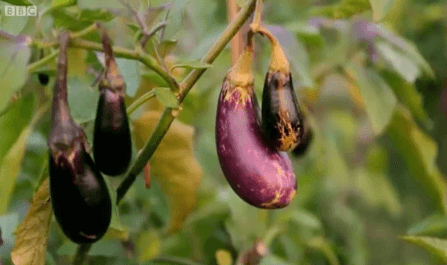
Who knows?: An orphan product that might benefit from GM treatment is wheat. Currently, no transgenic or CRISPR or otherwise genetically tweaked strains of wheat have been approved. And that’s a problem, according to Brande Wulff at the John Innes Center in Norwich, England, and Kanwarpal Dhugga at the International Maize and Wheat Improvement Center, Texcoco, Mexico. In a paper in Science, Wulff and Dhugga argue that “wheat, a worldwide staple food, has become an orphan among genetically modified (GM) crops.” Instead, the insertion of multiple disease-resistance genes, known as a “GM stack,” could help protect against wheat blast, halting the infection’s now rampant spread in Southeast Asia. A possible starting country? Bangladesh, which recently approved eggplant modified to resist insects (with the Bt gene).
Win: Golden Rice almost became a brand for a losing, yet promising, genetic modification that treats disease (in this case, Vitamin A deficiency, a cause of childhood blindness in developing countries in Asia and elsewhere). The transgene efforts fell upon hard times due to technical and productivity issues, as well as fierce opposition from Greenpeace and other anti-GMO, environmental NGOs. However, this year, the FDA and Canadian, Australian and New Zealand authorities declared that Golden Rice was safe enough for use, paving the way for possible uptake elsewhere on the planet (the United States, Canada and other industrial countries don’t suffer from Vitamin A deficiencies and aren’t in need of this type of rice as much as other areas).
Final score: It’s still a long way to the final whistle.
Andrew Porterfield is a writer and editor, and has worked with numerous academic institutions, companies and non-profits in the life sciences. BIO. Follow him on Twitter @AMPorterfield.
More than 1 million women have had genetic testing of BRCA1 and BRCA2, genes in which mutations can dramatically increase the risk for early onset breast and ovarian cancer. But for many women the test results have been ambiguous. That’s because it’s not clear where certain genetic variations are harmless or cause cancer.
BRCA1 was amongst the first cancer predisposition genes discovered, and it has been studied for over 20 years. The gene produces a protein that repairs DNA damage, which might otherwise lead to the formation of tumors. Since its discovery, researchers and clinicians have identified many genetic variations in BRCA1, but for most of these, we are unable to tell whether they impair function of the gene – raising the risk of cancer – or whether they are perfectly harmless.
Our research team works in the emerging field of genomic medicine, which uses an individual’s genetic information to prescribe care. We recognized that such “variants of uncertain significance” limited the utility of genetic testing and the prospects for genomic medicine. We know that problem is likely to get worse, as the number of uncertain variants in BRCA1 and other “medically actionable” genes is expected to grow exponentially as genetic testing is expanded to entire populations.
In a study, we set out to apply CRISPR genome editing to solve the challenge posed by these variants of uncertain significance. CRISPR has tremendous potential because the technology allows researchers like us to tinker with human genes. CRISPR allows us to make very specific changes, “edits” to our DNA – thus the phrase, “genome editing.”
Follow the latest news and policy debates on sustainable agriculture, biomedicine, and other ‘disruptive’ innovations. Subscribe to our newsletter.
Although there are many studies that are attempting to use CRISPR to treat disease, it can also be used to introduce specific mutations into human cells that grow in a dish, for the purposes of studying what effects these mutations have on the cell – for instance, whether or not they cause a gene to malfunction.
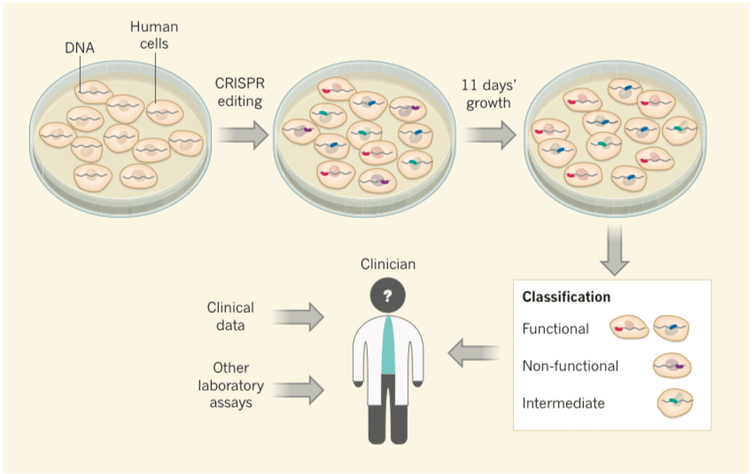
In our study, we used CRISPR genome editing to deliberately engineer some 4,000 different variants of the BRCA1 gene in human cells, nearly all possible variants in the most important regions of this gene. Importantly, the survival of the human cells that we used is dependent on intact function of the BRCA1 gene. As a consequence, the cells containing mutations that disrupted the function of the BRCA1 gene were unable to survive. On the other hand, the cell containing mutations that had no effect on the function of the BRCA1 gene were just fine. Using DNA sequencing, we tracked which mutations were associated with cell death versus cell survival.
When we compared the mutations that caused cell death to variants that are known to increase cancer risk, we noticed that they were the same. This gave us the confidence to say that the behavior of these variants in the cells in the dish was predictive of cancer risk in humans.
The research team first grew human cells in culture. We then used the gene-editing tool CRISPR to create variations in particular regions of the BRCA1 gene. We grew these edited cells for 11 days and then determined which variants had no effect; which ones damaged the BRCA1 protein, making it nonfunctional and resulting in the cells dying; and which ones were intermediate – only moderately impacting cell survival. When we compared these results with clinical data, our laboratory-based measurements matched the effects of the mutations in the patients. Image credit: Findlay, et al., Nature., CC BY-ND
Although scientists have used laboratory assays to test variants in BRCA1 for many years, our work is different for three reasons.
First, we tested many more variants than have ever been tested, including thousands that have never been observed before but almost certainly exist in at least hundreds of living humans.
Second, historically BRCA1 variants have been tested in genes taken “out of context” – specifically, studying only the DNA sequences that encode the BRCA1 protein, rather than the surrounding sequences that regulate how it is expressed. CRISPR allows us, for the first time, to create and test the mutations in the human genome itself.
Finally, for the hundreds of BRCA1 variants seen in patients where we do have a good sense of whether or not they increase risk of breast and ovarian cancer, our predictions based on our CRISPR studies are nearly perfectly accurate. That is, the variants compatible with cell survival in our assay are benign in patients, while the variants that impair cell survival in our assay cause cancer risk. This gives us confidence in our predictions for other variants that have never before been observed but inevitably will be, particularly as more and more women are screened for mutations in this gene.
Because of this strong agreement with “gold standard” data derived from human studies, we predict our results can be used to provide better answers to women with challenging-to-interpret variants in BRCA1. This includes many women that have an elevated risk of cancer, but would previously have been missed by genetic testing. To these women, this knowledge of what their mutations mean may critically inform the medical care that they receive.
Jay Shendure is a professor of Genome Sciences at University of Washington. His work exploits next-generation DNA sequencing which is effectively emerging as a broadly enabling microscope for the measurement of biological phenomena. Follow him on Twitter @JShendure
Greg Findlay is a M.D.-Ph.D. Student in Genome Sciences at University of Washington. Follow him on Twitter @TheNobleDust
Lea Starita is a Research Assistant Professor in the Department of Genome Sciences at the University of Washington and the Co-director of Brotman Baty Advanced Technology Lab. Follow her on Twitter @lea_starita
Make no mistake, the Non-GMO Project isn’t here to sell you safer food, they’re just here to make money on the GMO / Non-GMO distinction. I know this because products with this label can still contain GMO …. Why does “right to know” not apply to the Non-GMO project? If a product they approve for their label has traces of GMO in it, isn’t it your right to know as a consumer? Why does the Non-GMO Project get to play a double standard here?
Women whose children are severely autistic have lower serotonin levels than do those whose children have mild or moderate autism traits, a new study suggests.
Serotonin is a signaling molecule in the nervous system. Nearly one in three people with autism has elevated levels of serotonin in his blood. But it is unclear how serotonin levels relate to an individual’s autism traits.
The new study is the first to link maternal serotonin to autism traits in people: It hints that developmental problems worsen as maternal serotonin declines.
…
[Researcher Jeremy] Veenstra-VanderWeele and his colleagues analyzed data from 181 children and adults with autism aged 3 to 27 years, as well as 119 mothers and 99 fathers of these individuals.
They confirmed autism diagnoses using standard diagnostic tests and used other scales to measure the autistic participants’ adaptive behavior and cognitive skills. A statistical model clustered the scores into three classes of severity: mild, moderate and high. The team also measured serotonin levels in the blood of the people with autism and their parents.
Women whose children score in the severe range have lower levels of serotonin than do those whose children have either mild or moderate features, on average. The study did not find an association between the autistic participants’ severity and their fathers’ serotonin levels or even their own serotonin levels.
American rocket engineers are being urged to push their next Mars mission to the limits of technological performance. Space scientists have told NASA they want the agency to “dream big” to ensure their new robot rover, scheduled for launch in 2020, visits a maximum number of sites to increase chances of uncovering signs of ancient life on Mars.
Rock samples – hopefully bearing fossils – would then be left in caches on the Martian surface, to be collected several years later and returned to Earth in a complex series of robot “sample return” missions costing more than $10bn.
…
US scientists are concentrating on rocks formed in watery environments billions of years ago, when the planet was much more Earthlike. These rocks, as they formed, would have preserved remnants of any life that flourished before the planet’s atmosphere evaporated and its surface water boiled off.
It will be the task of the next, as yet unnamed, Mars rover to drill into promising sediments [and] collect samples.
…
“We will have the strictest quarantine conditions enforced when we collect and store those samples,” said [NASA’s Matthew] Golombek. “It will be worth the effort and expense, however. This is going to be our best chance of finding out if life evolved independently on another world and that life here is not just a lucky accident.”
Germany plans new conditions for pesticide approval and will seek an end date for the use of glyphosate-based weed killers, Environment Minister Svenja Schulze said on [November 6].
…
Chancellor Angela Merkel’s conservatives and their SPD coalition partners agreed in February to limit glyphosate use, with the goal of ending use of products that contain it, but set no timeframe. Schulze, who is from the centre-left Social Democrat (SPD)party, said that “we want to push forward the withdrawal (of glyphosate), including an end date.”
“If other perhaps even more damaging pesticides are used instead of glyphosate, the environment won’t be any better off,” Schulze said, adding that the environment ministry will demand new nature conservation requirements for the approval process. A glyphosate ban would result in more ploughing, and put German farmers at a competitive disadvantage, said Helmut Schramm, head of Bayer CropScience in Germany.
…
Although Schulze said she wants to limit glyphosate use in sensitive areas, such as near water, a ban cannot be imposed until late 2023 when the EU approval runs out.
[MIT grad student Avery] Normandin was surrounded by an entirely different kind of laypeople. These folks — or at least some of them — were hoping to try gene editing for themselves. There was an IT consultant from Hong Kong. There was a former teacher who’d joined a community lab in Southern California. There was a high schooler from Thailand. There was a sculptor from Baltimore, who’d recently started exploring biomaterials.
…
They’d all flocked to the Massachusetts Institute of Technology for a three-day summit of biohackers from around the world.
…
Now Normandin was going to give the beginners among them an insider’s look into how [CRISPR] actually works. He’d envisioned leading the group through an experiment on E. coli, but as he explained later, “I never want researchers — at any level — to be ‘driving blind.’ Context is crucial!”
…
“That’s a gross, globular protein,” he said, drawing a blob to represent the bacteria’s enzymatic weapon.
“I’m kind of lost,” said the former teacher.
“Come closer,” Normandin replied. “You’re going to draw it for us. Here’s a marker.”
…
Normandin erased the whiteboard with his hands, marker staining his fingers blue and green. He started drawing some genomes from scratch. “Gosh, this is the hardest thing I’ve ever done,” he said, smiling.
Taking a monthlong break from pot helps clear away young people’s memory fog, a small study suggests. The results show that not only does marijuana impair teenagers’ and young adults’ abilities to take in information, but that this memory muddling may be reversible.
…
The team recruited 88 Boston-area youngsters ages 16 to 25 years old who reported using marijuana at least once a week, and offered 62 of them money to quit for a month.
…
Along with regular drug tests, participants underwent attention and memory tests. Tricky tasks that required close monitoring of number sequences and the directions and locations of arrows revealed that, over the month, young people’s ability to pay attention didn’t seem to be affected by their newfound abstinence.
But former users’ memories were affected, and quickly. Just a week into the experiment, the abstainers performed moderately better on memory tests than they had at the beginning of the study. Young people who continued using marijuana didn’t improve on the memory test. One particular aspect of memory, the ability to take in and remember lists of words, seemed to drive the overall improvement.
Cannabis is probably impairing young people’s ability to handle new information, the results suggest. But there’s good news here, [neuropsychologist Randi] Schuster says. “From these data, we think that at least some of that impairment is not permanent,” she says. “It’s not set in stone.”
A green revolution—the increase in agricultural yields seen in most parts of the poor world apart from Africa since the 1960s—is unlikely to succeed if government is obstructive. “Government is the most important partner,” says Boaz Keizire of the Alliance for a Green Revolution …. “but in Africa it is the weakest link.”
Ideally, governments would pay for public goods, such as research and roads, and regulate markets lightly but fairly. Too often in Africa, they fail at these basic tasks. In Uganda, for instance, the market is so awash with understrength bags of fertilizer and feeble seeds that farmers are reluctant to invest in them. Many are also unable to get their crops to the market because of bad roads.
…
Robert Bates and Steven Block of Harvard and Tufts universities think that democracy improves policies by giving rural farmers more of a say. It does not always work out that way. In Malawi politicians use wasteful subsidies to win votes. By contrast, in authoritarian Ethiopia the government worked to avert the rural discontent that fed rebellions against its communist predecessors ….
Yet Ethiopia is not a model to emulate …. its development agents “do everything” from tax collection to mobilizing locals to attend meetings and vote for the ruling party, sighs an agricultural expert. They are part of an oppressive system of state control ….
[W]hen I first heard about genetic engineering when visiting my eventual graduate school home, I was really excited about the possibility of being able to add specific characteristics to crop plants that would help them to resist insects, diseases and weeds. To me, this was the perfect solution to a crisis in farming that would be beneficial not only to farmers, but also to human health — fewer chemicals, better health.
The first GE plants had new characteristics that made them resistant to environmental conditions. One of the very first improved crops through genetic engineering saved the papaya industry in Hawaii.
…
Another example of how GE can help the environment (and farmers and consumers) is through control of insects. Organic farmers use a bacterium to combat insects by sprinkling the bacterium on the leaves of their plants. Genetic Engineers took this a few steps further by taking the bacterium’s genes (called Bt genes) that kill insects and putting them directly into the plant ….
[S]cientists can make the plant resistant to their most damaging predators. Bt genes in corn, cotton, soybeans and eggplant (as well as other traits) have removed 6 million tons of pesticides from the environment …. Again, we are all winners — the farmers, the consumers and the environment.
The appendix, a once-dismissed organ now known to play a role in the immune system, may contribute to a person’s chances of developing Parkinson’s disease.
…
[Researcher Viviane] Labrie’s team analyzed health records from a national registry of Swedish people, some of whom were followed for as many as 52 years. That long observation time was key: People have their appendix removed most often in their teens or 20s but, on average, don’t develop Parkinson’s disease until their 60s.
…
For people without an appendix, the incidence of Parkinson’s disease was 1.6 per 100,000 people per year compared with about 2 per 100,000 per year for those with the organ. Removing the appendix was associated with a 19 percent drop in the risk of developing Parkinson’s disease.
…
The team discovered alpha-synuclein clumps in 46 of the [appendix] samples — from both old and young patients — similar to those seen in the brains of Parkinson’s patients. The clumped protein has been found in other areas of the gut, and past research suggests that it’s possible for the protein to travel along the main nerve that connects the gut to the brain.
If the clumped protein in the appendix turns out to jump-start the disease, Labrie said, “preventing excessive alpha-synuclein clump formation in the appendix, and its departure from the gastrointestinal tract, could be a useful new form of therapy.”
In 2017, over 100,000 acres of canola was grown in Montana, according to the United States Department of Agriculture …. [M]ost of us consume canola oil in some form every day.
“Yeah canola it’s in our everyday lives,” says Cargill Agronomist Keith Horton. “Right now our biggest customer is McDonald’s. So if you go to any McDonald’s in the United States all the fry oil is Cargill fry oil.
…
Cargill has ten different research plots of canola growing across [Montana]. About 80 acres total …. [T]he company has realized Montana’s potential for the crop, and plans to have at least half a million acres for commercial use.
In late July, we visited one of those plots [where] researchers are able to cram in 300 different hybrids to study. Once researchers pick out the best canola hybrid, they will add an omega-3 trait for fish food, which in turn, will take the pressure off bait fish living in our oceans. Long story short …. Montana’s canola fields can help save our oceans.
“And to give you an example, we can replace 1.7 million pounds of the feeder fish with 160 acres of our canola,” says Horton. So while Cargill continues to quietly develop and research the foods we eat every day, new biotechnology is starting to make its way into Montana’s frontier.
Read full, original article: The New Frontier: From Golden Arches to Sea Floors