3 reasons Mars colonization might be a bad idea

Screen Shot at AM

I wanted to look at the case against Mars; three reasons humans should leave the red planet alone.

[T]he first argument against human travel to Mars: contamination. If humans do eventually land on Mars, they would not arrive alone. They would carry with them their earthly microbes. Trillions of them. There is a real risk that some of these microbes could find their way onto the surface of Mars and, in doing so, confuse – perhaps irreversibly so – the search for Martian life.

Of course, one easy way to minimise the risk of contamination is to send robots to Mars instead of humans – the second argument against a manned trip to Mars.

Robots have several inherent advantages. They are much cheaper than humans because they don’t require a vast support infrastructure to provide things like water, food and breathable air.

The most polarising issue in the Mars debate is arguably the tension between those dreaming of a second home and those prioritising the one we have now.

The billions – if not trillions – of dollars needed to colonise Mars could, for example, be better spent investing in renewable forms of energy to address climate change.

And of course, if we have not figured out how to deal with problems of our own making here on Earth, there is no guarantee that the same fate would not befall Mars colonists.

Read full, original post: The case against Mars colonization

Family ties: Searching for autism origins in the genes of unaffected siblings

siblings

Scientists have historically focused on studying a “quartet” of two biological parents and two autistic children. Yet more recent research calls for learning more about the unaffected siblings – particularly girls.

“We want to know, ‘Is there a reason they don’t have a diagnosis?’” says Alycia Halladay, chief science officer at the Autism Science Foundation.

The puzzling part, she says, is that some sisters carry the same genetic mutations as their siblings but won’t develop the symptoms associated with autism.

The advantage of looking at siblings is that they share 50 percent of the autistic child’s genes, explains Stephen Scherer, director of the Center for Applied Genomics at the Hospital for Sick Children in Toronto. His group has sequenced more than 4,000 families, including one with six children on the spectrum. “If the unaffected sibling has the same mutation but doesn’t have autism, it suggests the mutation isn’t involved in the family’s autism,” he says. Or researchers have to figure out the complex interplay of forces that might activate certain genes, whether those are diet, events in the womb—or as in cases of unaffected sisters, female hormones. “We see genetics as a bag of tricks to get into the understanding of new pathways,” he says. “These little clues that often come from siblings are what will push our research forward.”

Read full, original post: Siblings Could Shed Light on Roots of Autism

DNA test could help people with severe food allergies avoid peanuts

peanut allergy child

For people with severe peanut allergies, eating even minuscule amounts of the legume can trigger anaphylaxis — a life-threatening condition characterized by dizziness, breathing difficulties and, sometimes, loss of consciousness. Now, researchers have developed a sensitive new test to detect trace amounts of peanuts in foods using the peanuts’ DNA. They report their results in [the] Journal of Agricultural and Food Chemistry.

People with known allergies are usually careful to avoid foods containing peanuts, but small amounts sometimes contaminate foods that don’t list peanuts as an ingredient. Scientists have developed several methods to detect peanut allergens in foods; however, most of these test for proteins that can be destroyed during food processing. In contrast, DNA is typically more stable than proteins.

The team designed a [test] to detect three short DNA sequences found in peanut chloroplasts [where photosynthesis occurs]. By targeting the three regions at once, the researchers had greater confidence that the results were specific for peanut chloroplast DNA. They spiked six different foods, which varied from blueberry muffins to tomato salsa, with small amounts of the legume. The assay detected peanut in all of the foods over a broad range of spiked amounts, with a detection limit of about 1 part per million (ppm), compared with 10 to 50 ppm for previous PCR assays targeting nuclear genes.

Read full, original article: DNA-based method detects trace amounts of peanut in foods

Viewpoint: Anti-GMO activists copy negative rhetoric of politicians to win public support

politician speech

There is a reason that political campaigns run negative advertising–it works. This close to a national election you’ve probably seen plenty of negative television commercials.

Even though we consistently hear voters are opposed to the negative advertising, it still works. We’re natural skeptics. Once a little nugget of information is put in our head, it stays there …. The same concept works for phone banks, mailings, and bumper stickers …. empirical evidence shows they work.

But we can see examples of negative campaigning working in agriculture too …. The constant barrage of attacks on modern agriculture prop up certain narratives. We use too many hormones. We spray too many pesticides. We mess too much with DNA. We’re destroying the environment. We’re polluting the water. We’re creating toxic products. The negative campaigns work by planting little nuggets of doubt into consumers’ minds. So when they think “modern agriculture” they start to associate it with “bad.” The age of social media has made it even easier to spread this narrative.

[I]t is important to call out negative messaging and offer the other side of the story. It might seem like it’s falling on deaf ears, but the acquiescence by silence is even louder. We have to provide the alternative narrative, even if we don’t have the resources of the other side.

Read full, original article: Negative Political Advertising Parallels with Food Marketing

Repairing paralysis? ‘Growth cocktail’ shows promise for severed nerves

What are the Chances of Recovering from Paralysis
[R]esearchers have coaxed nerve cells to span the divide of a complete spinal cord injury. Their findings, described August 29 in Nature, are specific to only one kind of nerve cell and much work remains before a means of reconnection reaches patients, but the results make an impression.

The research team knew a certain type of nerve cell sometimes helps restore signaling from the spinal cord in partial spinal cord injury. Even when all direct connections to the brain are ruined, these cells can help sustain limited walking function.

They then turned to a set of chemicals that promote nerve cell growth and trigger production of a well-known structural protein called laminin, widely used in tissue engineering as a scaffold.

[S]uccess came from delivering these chemicals to the propriospinal neurons using laminin as a support material, along with chemical lures to draw regenerating axons to the right place. The team finally coaxed what [neurobiologist Mark Anderson] calls “an unprecedented amount” of the neuron fibers to bridge the gap.

“Now we understand what it takes,” he says, referring to the trifecta of axon growth factors, laminin and chemical bait placed along the path to lure the axon. A long-term goal stemming from these results is to figure out how to take their complex, three-part protocol and make it something useful for patient care.

Read full, original post: Growth Cocktail Helps Restore Spinal Connections in the Most Severe Injuries

Europe’s restrictions on gene-edited crops may cause ‘exodus’ of biotech scientists

brain drain immigration skilled educated

Plant scientists have reacted with shock, even anger, to the July decision by the European Court of Justice (ECJ) on gene editing. The court ruled that any gene edited plant was a genetically modified organism (GMO) and fell under onerous 2001 EU regulations.

Researchers are now warning that the …. ruling could cripple European funding for Crispr–Cas9 gene editing in crop science. This ruling ‘will have a profound impact on the academic research community in the EU’, says Maurice Moloney, chief executive of the Global Institute for Food Security in Canada. ‘Europe will be the laughing stock of innovation in food and agriculture in the next decade.’

‘It is like abandoning a scalpel in favour of a shotgun for surgery,’ warns Holger Puchta, a plant biochemist at the Karlsruhe Institute of Technology, Germany. ‘Europe is uncoupling itself from the biggest revolution biology has seen in the last 30 years.’

Many plant scientists also expect an exodus of talent from Europe to North America. ‘Jobs for modern plant biotechnology will dry up in Europe. This is a fatal development for the academic labs,’ Puchta says. ‘If prospects are so bad, nobody will be interested any more to join plant labs, unless they are prepared to leave Europe afterwards.’

Read full, original article: Crispr-edited crop research could be crippled by European court ruling

Could artificial intelligence protect the world from humanity’s ‘shortsightedness’?

artificial intelligence feature

There are fears that tend to come up when people talk about futuristic artificial intelligence — say, one that could teach itself to learn and become more advanced than anything we humans might be able to comprehend.

But some artificial intelligence experts don’t think those fears are well-founded. In fact, highly-advanced artificial intelligence could be better at managing the world than humans have been.

[H]umans are pretty terrible at making choices that are good for us in the long term. People have carved away rainforests and other ecosystems to harvest raw materials, unaware of (or uninterested in) how they were contributing to the slow, maybe-irreversible degradation of the planet overall. But a sophisticated artificial intelligence system might be able to protect humanity from its own shortsightedness.

The time to create international agreements, ethics boards, and regulatory bodies across governments, private companies, and academia? It’s now. Putting these institutions and protocols in place would reduce the odds that a hostile government, unwitting researcher, or even a cackling mad scientist would unleash a malicious AI system or otherwise weaponize advanced algorithms.

With these rules and safeguards in place, we will be much more likely to usher in a future in advanced AI systems live harmoniously with us, or perhaps even save us from ourselves.

Read full, original post: Advanced Artificial Intelligence Could Run The World Better Than Humans Ever Could

Could a fake surgery really make you feel better?

Screen Shot at AM

Did you know that ‘sham’ surgeries occur? These are surgical procedures that are designed to fool the patient into thinking that he or she has actually undergone a real surgery—‘under the knife’ as it were—but typically all that is done is a small incision is made in the skin at the surgical site and then the opening is closed.

It’s a placebo surgery – the next realm of understanding more about the effect of expectation on healing. The existence of a persistent placebo effect in the human condition is one that has a strong neuroscientific component, a sociological element, and physiopsychological (how the brain is influenced by, and influences the body) and neurovisceral aspects (these are interconnections between the brain and the body).

For a drug treatment to be approved by the FDA (or any other international regulatory agencies), that treatment must be superior in efficacy to placebo. But as I’ve described before, the placebo effect is powerful and directional—showing improvements out of the placebo groups that directionally match the actual drug treatment group. And this is the case in virtually every drug trial.

Taking the idea of the placebo beyond just drug treatments (do I ‘feel’ better after taking this pill?), sham surgeries have been performed as proxies for placebo. These are just what their name suggests—fake surgeries, which have recoveries and outcomes which have in some cases been no different from the actual surgical interventions.  Sham knee surgeries have been as effective as ‘real’ knee surgeries, and even some real surgeries have, when in competition with placebo, caused worse outcomes.

An example of this is renal denervation, a surgical ablation procedure that targets renal arteries. It was initially considered by many of the experts in the field to be a treatment that would transform hypertension for millions of patients. And much of the anecdotal data seemed positive in favor of the surgery. Then a trial (called SYMPLICITY HTN-3) where renal ablation was challenged against placebo showed that it was no better.

There are questions arising now about the effect of ablation on atrial fibrillation, and whether the surgical procedure actually improves outcomes better than placebo or better than no treatment (not doing it). There is more than one way to approach this ablation, and a recent review of cryo-balloon ablation for atrial fibrillation against radiofrequency ablation (an existing technique) led the authors to conclude (emphasis added):

“Two years’ results after pulmonary vein isolation using the second-generation CB in patients with persistent AF are promising. The clinical success rate appears to be similar to the reported success rates of radiofrequency ablation for the treatment of persistent AF.”

What does this actually mean? This procedure failed in 22 out of 50 patients. This is 44%. The Agency for Healthcare Research and Quality (AHRQ) reviewed 3,471 citations and didn’t find enough evidence regarding the safety or efficacy of cryoablation, and so determined:

  • It was not possible to draw conclusions in the Medicare population.
  • Moderate level evidence that RF ablation was superior to medical therapy for enhancing freedom from recurrence of atrial arrhythmia in the general population, but reablation [needing to have the surgery repeated] was common.
  • No impact on all-cause mortality [no fewer people died].
  • No firm conclusions regarding health-related quality of life due to heterogeneity across studies [still an open question if quality of life was improved at all because of ablation surgery for atrial fibrilliation].
Follow the latest news and policy debates on sustainable agriculture, biomedicine, and other ‘disruptive’ innovations. Subscribe to our newsletter.

John Mandrola, MD, Clinical Electrophysiologist at Baptist Medical Associates in Louisville, Kentucky observed that while a Canadian research study showed changes in the ratio of asymptomatic versus symptomatic atrial fibrillation after ablation, “We are doing something with this procedure. The question is, would it be more effective than a sham procedure—especially if those judging its success were not ablation doctors?” So in this case, placebo surgeries may have the same outcomes as a procedure practiced hundreds of thousands of times in patients—all of whom were presumably expecting more of the treatment than what the placebo effect could offer them.

How can sham surgeries work? Bigness. In the same way that placebo pills and other modalities make people get better, the clinical evaluation, workup, stress and travel of surgery day, surgical prep, etc. all make for an almost unbeatable set of placebo-instituting conditions. And with some of the data which exist, sham surgeries perform better in the patients’ minds than a drug treatment that’s a comparator for the same condition. Again, the magnitude of the expectation.

A version of this article originally appeared on the GLP on Aug. 31, 2016.

Ben Locwin is a behavioral neuroscientist and astrophysicist with a masters in business, and a researcher on the genetics of human disease. BIO. Follow him on Twitter @BenLocwin

Here’s what electricity can teach us about pesticide safety

pesticide

Many people may find it difficult to imagine how a pesticide could ever be safe. To understand how that is possible, it is helpful to make the comparison with something more familiar: electricity.

It is hard to envision modern life without electricity. As much as we enjoy and need this source of energy, it involves some hazards. Electricity can, and sometimes does, cause injury or death.  Yet overall, we think of using electricity as a reasonably safe aspect of our lives.

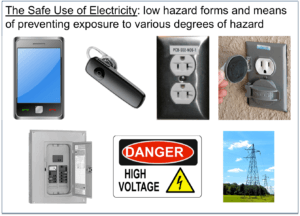
Safety can’t be precisely defined. What we perceive as safe is something where the benefits more than offset the minimal risks. We can enjoy electricity’s benefits with little risk through two main strategies: 1) using low-hazard forms of electricity and 2) keeping ourselves from being exposed to hazardous forms of electricity.
the-safe-use-of-electricity

Low-hazard approach

Increasingly, we power the devices central to our lifestyles with forms of electricity that are practically non-hazardous. The prime examples would be our cell phones, Bluetooth devices, or portable music players that run on low-voltage, direct current electricity which is nearly incapable of causing us harm.  That same, low-hazard approach plays an important role in pesticide safety.

In the middle of the last century, a number of the early pesticides in use were chemicals that were quite toxic to mammals, and thus to humans. The U.S. began to seriously address the issue with the establishment of the U.S. Environmental Protection Agency (EPA) in 1970. Soon, the truly dangerous pesticides were removed from the market or their use was greatly restricted.

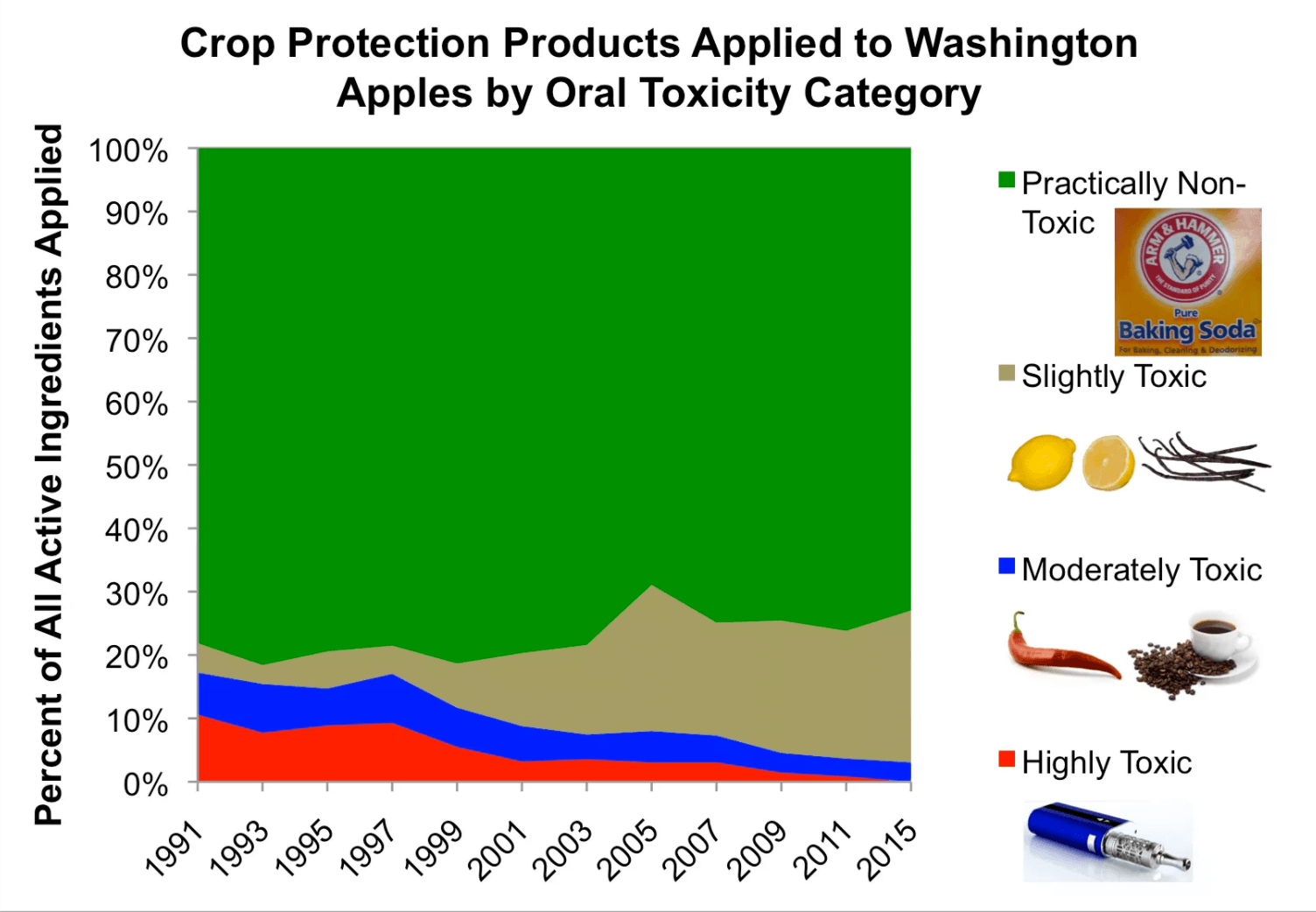
Since then, billions of dollars have been spent on the discovery, testing and regulatory review of new, far less toxic pesticide options. In the charts below, I’ve examined the toxicity of crop protection materials that have been used through looking at historical U.S. Department of Agriculture (USDA) data on Washington State apples and California pesticide reporting data from all crops in 2013. In these charts, the toxicity is based on feeding studies with rats or mice, which is used as an indicator of potential toxicity to humans. Other measures of toxicity have similar trends.
screen-shot-2016-12-15-at-8-30-34-am

The EPA has four toxicity categories to classify the acute hazards of pesticide products. For use in apple orchards, the data show that pesticides from EPA Category I, Highly Toxic, were never more than 10% of the total pesticides used and that their use has steadily declined. These would be pesticides as toxic as the nicotine that is sold for e-cigarettes. Only 0.2% of the pesticides applied to California crops in 2013 were in this category.

EPA Category II, Moderately Toxic, includes materials with toxicity in the same range as the capsaicin in hot peppers or the caffeine in coffee – familiar and even sought-after natural chemicals in our diets. That category represents very limited use on apples today, and only 18% of what growers applied in California apple orchards in 2013.

The pesticide use category that has grown is termed Slightly Toxic (EPA Category III). Toxicity for crop protection materials in this category is in the same range as the citric acid in a lemon or the vanillin in a vanilla bean.

The largest category of pesticides applied to apples and other crops today is Practically Non-Toxic for mammalian consumption (EPA Category IV). Comparing this to our use of electricity, we can see that low hazard is a major strategy through which we minimize pesticide risk.

To understand how something that is designed to kill or otherwise control a pest could be non-hazardous, consider the example of chocolate which has a flavor ingredient that we humans love but which can be toxic to our pet dogs. Chemicals can have different effects on different species. Scientists use the terms specificity and mode of action to describe how chemicals have their specific effects. With modern pesticides, the mode of action is normally the inhibition of some specific enzyme that is important to the viability of the pest. If the enzyme is inhibited by the pesticide, the pest might stop eating, stop growing and/or die.

That enzyme often isn’t one that even exists in humans and other animals ourselves or in other groups of organisms unlike the pest. A modern insecticide usually only affects enzymes that are found in insects or even a few kinds of insects. A modern herbicide might only inhibit an enzyme that is needed for the growth of plants. A modern fungicide inhibits an enzyme in a pathway of enzymes that is found in certain fungi. While all of these products should still be handled with a reasonable degree of caution, they are, like the electricity that powers our cell phones, low hazard and thus low risk. We can feel safe about their use.

Follow the latest news and policy debates on sustainable agriculture, biomedicine, and other ‘disruptive’ innovations. Subscribe to our newsletter.

Limiting exposure risk when there is a hazard

We still need the more hazardous forms of electricity (such as the 120 volt alternating current) for needs like lighting, heat, air conditioning etc. To minimize risk, we’ve developed safe guards such as systems of insulated wiring, childproof plugs, circuit breakers and GFCI outlets to keep us from being exposed to that hazard. Where we need 220 volt service, we have even more ways to avoid exposure. To be connected to the grid we need the extremely hazardous, high-voltage electricity coming to us from wherever it is generated. The high-power transmission lines are designed to make it unlikely that anyone will be exposed to that extremely hazardous form of electricity.

Some pesticides that we need to manage certain pests represent a possible hazard to mammals, like humans, or sometimes to other non-target organisms like birds, fish amphibians or aquatic invertebrates. The safe use of these pesticides is all about limiting exposure. For all pesticides used in agriculture, anyone who is directly involved in the mixing or application of the chemical must follow specific requirements regarding protective clothing and equipment. For low-hazard materials, that might just be gloves, closed shoes and a dust mask. For something that could be a significant human hazard, those restrictions would include a respirator and a protective whole-body TYVEC™ suit.

Restrictions can also dictate how soon after an application anyone can re-enter a treated field (re-entry interval or REI). For low-hazard pesticides, that time period can be a few hours or less. For more hazardous pesticides, the REI can be a number of days. For pesticides that are hazardous to fish or other aquatic organisms, restrictions mandate how close applicators can apply them to waterways. Similarly, for pesticides that are hazardous to bees or other pollinators, restrictions control when applicators can apply them relative to bloom times and/or times of the day when bees and other pollinators are working.

For all pesticides, the EPA conducts an extensive risk assessment and uses that information to set up a detailed set of restrictions designed to prevent the existence of any residues of concern to consumers by the time the crop is harvested. The details of this system are discussed in another post titled, Do I Need to be Concerned about Pesticide Residues on and in My Food?

The moral of this story: Just like electricity, pesticides can be used in a way that meets our need for clean, productive farming while giving us a comfortable and functional level of safety.

A version of this article originally appeared on the GLP on Dec. 15, 2016.

This article originally appeared on the Putting Pesticides in Perspective blog under the title “How Can Pesticides Be Safe?” and has been republished with permission from the author. 

Steve Savage is an agricultural scientist and consultant whose previous employers include Colorado State University and DuPont. Follow him on his blog, Applied Mythology, or Twitter @grapedoc

 

Memphis Meats vice president says traditional agriculture ‘required’ for success of lab-grown meat

Screen Shot at AM

Start-up company Memphis Meats says that in the future, consumer meat products won’t start in a pasture or a feedlot. Rather, they will start in its laboratories.

The company has gained attention over the last two years by showcasing lab-grown poultry and meatballs, and it vows to have cost-competitive commercial products within 10 years. It has also made a splash by securing venture capital funding from meat industry giants Cargill and Tyson Foods.

Successful Farming magazine recently interviewed Eric Schulze, Memphis Meats’ vice president of product and regulation, by email about the company’s progress and future plans.

SF: Have you had interaction or conversations with traditional meat industry, including farmers who see you as competitors? 

ES: We’ve had many good conversations with folks at all levels of the existing meat supply chain …. We have striven to create a diverse coalition of folks who …. can all unite around a common goal: feeding 9.5 billion people by 2050. Members of the conventional meat industry are a crucial part of that coalition.

SF: Do you see your business as working with traditional farmers, or are they competitors?

ES: We …. absolutely envision partnerships with food and agricultural producers of all stripes. Traditional agriculture is required to source the best muscle cells from high-quality, healthy animals.

Read full, original article: LAB-GROWN MEAT PUSHES FORWARD

Living with hemophilia: When patients with genetic disorders don’t want to be cured

hemophilia

Jeff Johnson is 40 years old, and for all 40 of those years, he has been living with hemophilia. The genetic disorder prevents blood from properly clotting, which, if untreated, can cause uncontrollable bleeding. Yet, Johnson says, he does not want a cure. He grew up with hemophilia, went to summer camp with kids with hemophilia, and forged some of his closest relationships within the community.

In two conversations, we spoke about his experience growing up with hemophilia, his sense of identity, and his hopes for his newborn baby girl. The interview has been lightly edited and condensed for clarity.

Zhang: You’ve been talking about some of the challenges of living with hemophilia. So why are you personally not interested in a cure?

[Johnson:] I am hemophilia. I don’t have it. I am hemophilia. So when they come to me and say, “We’ve got a genetic cure for hemophilia,” to me, that’s just as weird as if you said you’ve got a genetic cure on the horizon for your left foot. This is really who I am.

Zhang: Did you think about the possibility of passing hemophilia to your kids?

I’m educated, I work in the community, I would feel confident handling my daughter’s hemophilia. It doesn’t bother me. Whether she does or she doesn’t, I know we can have a full, thriving life with hemophilia.

Read full, original post: The Patients Who Don’t Want to Be Cured

Why is ‘party drug’ ketamine such a powerful treatment for depression?

Ketamine Jonah M

In recent years, the party drug and anesthetic ketamine has been embraced as a rapidly-acting, if still off-label, medication for some cases of depression and suicidal ideation that don’t respond to other treatments. But there’s still much we don’t understand about how it actually works so quickly to treat the crippling disorder. A new study released [August 29] out of Stanford University suggests that at least some of ketamine’s mojo relies on the same brain receptors that opioid painkillers activate.

The researchers started with 12 volunteers who had treatment-resistant depression, and gave them ketamine infusions. Some volunteers, however, were randomly given an additional dose of naltrexone—an opioid that can block and reverse the effects of opioids—while others were only given an extra boost of a saline solution.

Mirroring other ketamine studies, many volunteers in the saline placebo group quickly experienced relief from their depression, with more than half reporting at least a 90 percent reduction in their symptoms in the first three days post-infusion. But there was no improvement in those who had gotten naltrexone at the same time.

[B]etter understanding the complex nature of ketamine and opioids can only help us create new depression treatments. That might involve developing drugs that work on different receptors at once like ketamine, as well as drugs that can safely activate opioid receptors without triggering addiction.

Read full, original post: Scientists May Have Unlocked the Secret of How Ketamine Treats Depression So Quickly

Farmers say Europe’s neonicotinoid pesticide bans put their crops at risk

e

In April [2018], the EU introduced a ban on outdoor use of three neonicotinoids – clothianidin, imidacloprid and thiamethoxam – which will come into effect on December 19.

The new French [ban] goes further still, banning their use in greenhouses as well as outdoors and covering thiacloprid and acetamiprid too.

…. French farming union FNSEA has joined forces with six other groups to warn ‘producers need solutions before any prohibitions’.

In a statement, the coalition said: “Once again, these decisions, not accompanied by substitution proposals, will accentuate the distortions of competition with European and non-European producers.

This concern about replacing domestic production with imports from countries where neonicotinoids are still used was echoed by [U.K. National Farmers Union] deputy president Guy Smith.

“This really brings home the importance of insecticides when it comes to growing healthy crops, but what it also reminds us is that one key result of the EU-UK neonicotinoid ban is it simply sucks in more protein imports from parts of the world such as North and South America, where there is no political appetite to ban neonics.

Read full, original article: NFU issues warning on losing insecticides as France bans all five neonics

Skeptoid podcast: GMO food labels fuel public fear of biotechnology

GettyImages

Should foods be labeled based upon their content (like ingredient lists do now), or upon the process by which they were made (as the GMO labeling proponents propose)? One describes what you’re buying, but the other describes the idea behind it. It is purely an ideological question.

When consumers see a label, their behavior is altered. But how? …. Thankfully we have solid science characterizing these effects ….Labeling …. reduces consumer purchases of certain products, which alters the fortunes of certain manufacturers, which changes their buying habits, which changes the economic landscape of the farms, and thus changes what crops they can plant.


In 2014, Dr. Juanjuan Zhang, an economist and marketing strategist at MIT, conducted a study to determine how just the idea of labeling affects public perception …. merely the suggestion that mandatory labeling is being considered caused people to rate the product as 37% more unsafe …. There was no information about what such labeling would look like or say; it was nothing more than the idea of labeling. That’s all it takes to persuade people that a product is dangerous.

Original podcast episode: The Effects of Mandated GMO Labeling

Were Neanderthals wiped out by icy climate change?

About 40,000 years ago, Neanderthals began disappearing from Europe, but exactly why they died out is a mystery.

Researchers propose a new hypothesis this week that suggests our bipedal brethren weren’t equipped to stand a cold spell that accompanied two long periods of extended climate change that took place around the time the species began its decline.

[T]he new palaeoclimate records show that a particularly cold, dry period began about 44,000 years ago and lasted 1,000 years. Another cold dry period began, 40,800 years ago, lasting about 600 years. It was cold enough that average temperatures dropped to below zero, creating year-round permafrost.

Those climate disruptions correspond to the archaeological record, which shows that at the same time Neanderthals began to disappear from the Danube River Valley.

The double-dose of super-cold weather likely radically changed the environment, transforming the open woodlands of central Europe into Arctic-like steppes.

So why did Neanderthals die out during these climate shifts while modern humans survived? The researchers suggest that because Neanderthals relied heavily on protein from large game animals they had trouble adapting when climate change impacted populations of those animals. Homo sapiens, on the other hand, were more adaptive, eating a variety of plants, fish and meat, meaning they could survive on the cold steppe.

Read full, original post: Climate Change Likely Iced Neanderthals Out Of Existence

Scientists aim to engineer genetic defense system against deadly grapevine disease

leafroll

A new discovery by Washington State University scientists could help grape growers roll back a devastating virus that withers vines and shrivels harvests.

Named for how it curls the leaves of infected plants, grapevine leafroll disease costs growers millions of dollars in lost vines and productivity. Until now, no one has been able to replicate one of the main culprits behind the disease, a virus called grapevine leafroll-associated virus 3 — leafroll 3, for short.

For the first time, researchers in WSU’s Department of Plant Pathology have found a way to clone leafroll 3, opening the door for experiments and treatments to protect valuable Washington vineyards.

The …. team is now working to see if they can infect a grapevine with the virus. Once the team understands how the virus and its genes create symptoms of disease, they can create defenses against them, such as an inoculant, or make a designer virus to deliver genes that help plants resist disease.

“It’s a test tube copy of the virus,” said WSU researcher Naidu Rayapati. “Now, we can use reverse genetics — working backwards by seeing how it expresses its genes physically — to find out how it works.”

Read full, original article: WSU Scientists Clone Virus To Help Stop Overwhelming Grape Disease

80 percent of Americans prefer organic produce, but are they healthier for it?

Organic Produce

A whopping 82.3 percent of American households stock up on organic food …. But what if everything we know—or think we know—about the supposed chemical-free practices are just popular misconceptions? Are these organic facts actually false? To debunk these widespread myths, we spoke to retired chemist Richard Sachleben, PhD

1. Organic Foods are More Nutritious

Health concerns are a major driver of buying organic foods, as three-quarters of American adults reported buying organic foods several times [in August]. However, “…. I am not aware of any good scientific data showing that organic produce is more nutritious than conventionally raised produce,” Sachleben admits. A systematic review in the Annals of Internal Medicine …. found that there’s no conclusive evidence that supports that organic foods are significantly more nutritious than conventional foods.

2. Organic Farming is Better For the Environment

…. Sachleben says …. “On average, most studies show that organic farming produces about 80 percent lower yields than conventional farming growing similar crops.” …. Where the climate is favorable to a specific crop and the crop isn’t as demanding on the soil, organic yields can be comparable to conventional. However, when the environment is less than ideal or the soil is not suited for that specific crop, conventional agriculture trumps organic.

Read full, original article: 4 ‘Facts’ About Organic Food That Are Actually False

Why cognitive inequality demands our attention

c f aa bccf f a b b
[April 28, 1996, Martin Bryant used] two rifles and a shotgun stashed inside a sports bag on the passenger seat of his car to perpetrate the worst massacre in modern Australian history. By the time it was over, 35 people were dead and a further 23 were left wounded.

[T]he most notable and concrete fact of Bryant’s psychological condition was his extremely low IQ of 66—well within the range for mental disability.

Clearly, being born with a low IQ is sufficient to set one up for an unlucky and unhappy life. But could low IQ have contributed to—not explain, but be a factor in—the massacre committed by Martin Bryant?

Martin Bryant’s life, characterized by loneliness, depression, and numerous frustrated attempts at making friends, is replete with examples that follow this pattern. Clearly, his actions mark him as an extreme outlier among those with low IQ—but his troubled life experiences are distressingly representative. Four in 30 children in classrooms across America are made to compete with their peers for grades and university places in spite of low IQ and with little success. And, like them, Bryant found society’s ‘normal’ to be simply unobtainable.

Pretending that those burdened with low IQ are just lazy, or lack the appropriate motivation, is a way of absolving ourselves of responsibility to help them.

Read full, original post: The Dangers of Ignoring Cognitive Inequality

Wearable robotic ‘exoskeletons’ merge humanity and machinery

ford eksovest

Ever since the appearance of the power loader in the sci-fi classic Aliens, the idea that powered exoskeletons could let workers carry superhuman weights has enticed executives in heavy industry. Recent developments suggest the idea might finally be moving into the real world.

The idea behind exoskeletons, or wearable robotics, seems like a no-brainer. Marry the power of mechanical robotics with the ready-made smarts and adaptability of humans, removing the need to develop sophisticated AI to control your robots.

Earlier this month, Ford announced that it plans to roll out the use of exoskeletons made by Ekso Bionics at 15 facilities worldwide after successful trials in the US.

The EksoVest is a completely unpowered mechanical frame that simply helps support workers’ arms when they’re held over their heads for long periods of time.

But considering the device costs in the region of only $5,000, that’s not bad, particularly when the cost of rehabilitating a worker’s injured shoulder can cost up to $100,000. And it’s a sign that these devices might be making the transition from high-tech curiosity to a genuinely useful product.

Amid the panic around the prospect of humans being replaced by machines in a host of jobs, it’s reassuring to see signs that we may in fact be teaming up with robots rather than competing against them.

Read full, original post: Are Exoskeletons About to Go Mainstream?