


Genetic Literacy Project

Talking Biotech: Why is the government not funding research into the most nutritious foods?
Journalist Helena Bottemiller-Evich explores the health impact of the government's meager research support for fruits, vegetables and nuts ...

Epigenetics Around the Web: Epigenetics and health in 2030, botched vitamin B cure, and more
This week’s features: Vitamin B still won't protect you from air pollution, and epigenetics and the city of 2030. Plus, ...

GMO corn that resists cancer-causing aflatoxin showcases biotech’s life-saving potential
The creation of GM corn that neutralizes a cancer-causing toxin is a game-changer for human health. The method could be ...

Genetic Literacy Project’s Top 6 Stories for the Week – April 17, 2017
How ‘human bees’, biotechnologists and Gates Foundation are rescuing the African cassava staple | Isaac Ongu Should Trump scrap USDA’s National ...
Will organic community embrace gene editing if it restores ancient crops?
Precision genetic engineering techniques could bring back beneficial genes from wild relatives of crops without using foreign genes. The concept ...

Are we ready to welcome intelligent robots into the human family?
Artificial intelligence (AI) may become so advanced that some computer minds achieve consciousness and self-awareness. Would these machines be granted ...

Are we ready, without professional help, to decide what to do when our genes tell us we have a potential disorder?
The FDA's decision to allow 23andMe to offer consumers disease screening has triggered a debate over whether the public is ...

Should Trump scrap USDA’s National Organic Program?
Federal subsidizing of organics has health as well as economic consequences. Many consumers now believe that organic food is healthier, ...
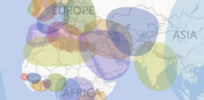
DNA test limits: Current direct-to-consumer tests provide only a glimpse into our ancestry
In a recent story that made headlines, a woman’s DNA test showed she was a descendant of a lost tribe ...

Agricultural biotechnology regulations are a mess — Here’s how Trump can unshackle innovation
For ideological or political reasons unsupported by data, and drawing on risk paradigms decades out of date, the US imposes ...
Epigenetics Around the Web: No, income inequality does not cause epigenetic changes, botching Lamarck, and more
A psychology professor claims that income inequality is causing epigenetic changes and a Huffington Post article on climate change and ...

Glowing trees, no more colonoscopies and other wonders of synthetic biology
Synthetic biology offers the opportunity to create a wide array of novel life forms, products and approaches to medicine -- ...

How ‘human bees’, biotechnologists and Gates Foundation are rescuing the African cassava staple
Neither conventional breeding nor genetic engineering alone can solve the viruses threatening Africa's key crop. Add some Gates' funding and ...

Genetic Literacy Project’s Top 6 Stories for the Week – April 10, 2017
This year’s flu vaccine has been 50% effective, and that’s not shabby | Ben Locwin ‘Rape gene’? Law and Order SVU episode ...

Talking Biotech: Florida neurosurgeon Duane Mitchell on how genetic engineering opens doors in cancer fight
Neuroscientist Duane Mitchell discusses genetically enhancing T-cells and other cutting edge cancer immunotherapies ...
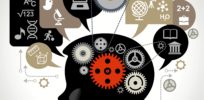
Seeing patterns that aren’t there? Understanding how the brain forms opinions — And implications for science
Humans have a natural inclination to 'order the world,' our minds imposing familiar patterns on the chaos of life. Could ...
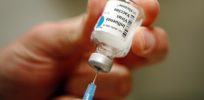
This year’s flu vaccine has been 50% effective, and that’s not shabby
This season's vaccine was more effective than those of the previous two years at reducing influenza-related hospitalizations ...

Does National Institutes of Health fund ‘scientifically questionable’ European cancer groups?
The NIH and top official Linda Birnbaum face questions from a Congressional oversight committee about US funding of European cancer ...

Time to amend human embryo research ’14-day rule’?
The rule that cuts off research on human embryos at 14 days gestation is based on an arbitrary time limit ...

Was the EPA right not to ban the crop pesticide chlorpyrifos?
The EPA decision allowing farmers to continue using the popular pesticide chlorpyrifos has drawn both praise and scorn, each side ...

Scientists challenge Center for Biological Diversity report claiming wild bees near extinction
An environmental group's report grabbed headlines for claiming 1 in 4 wild bee species is at risk of extinction. Many ...

‘Rape gene’? Law and Order SVU episode muddies genetic literacy waters
A popular television show delivers a questionable message on genetic determinism and the the issue of why some men resort ...
Epigenetics Around the Web: No, Dr. Sarah Gottfried, we can’t control genes with lifestyle tweaks, and more
This week’s features: An MD is pushing pseudoscience to sell her new book and a word of caution about epigenetics ...

New York Times’ Danny Hakim claimed GMOs haven’t increased crop yields; Here’s why he’s wrong
In October 2016, Danny Hakim of the New York Times wrote that GMOs hadn't fulfilled their promise of increased yields ...

Talking Biotech: What environmental hazards remain from accidental release of GMO grass seeds?
Oregon State's Carol Mallory-Smith says transgene flow from Roundup Ready bentgrass to non-GMO grass species offers lessons for regulators ...

Genetic Literacy Project’s Top 6 Stories for the Week – April 2, 2017
Do GMOs cause allergies? No, but being an anti-GMO parent just might contribute | David Warmflash Epigenetics Around the Web: Avoid Craigslist ...

Farmer’s view: Celebrities embrace organic cotton over GMOs, but is it more sustainable?
Emma Watson wants people to buy the latest fashions made with organic cotton. Would that be more sustainable than clothes ...

Born killer or normal mind? Genes, brain scans and mental health
What's a normal mind? Do brain scans provide any insight? The answer is stranger than you think ...
