


Genetic Literacy Project

Talking Biotech: Corn genetic expert Wisconsin’s John Doebley on creating higher yields
University of Wisconsin geneticist John Doebley on creating higher yielding modern hybrid corn ...

Genetic Literacy Project’s Top 6 Stories for the Week, November 14, 2016
From this past week, here are the #GLPTop6 among many great stories on human and agriculture genetics around the world ...

Regrowing limbs? Gene map of how lizards regrow tails offers insight to human regenerative medicine
Geneticists have mapped the process by which the green anole lizard can regrow a functional tail. This process may offer ...

Scientists’ ‘Open Letter’ to NY Times’ Public Editor brightlines Danny Hakim’s ‘misleading’ GMO article
Seven prominent scientists and academicians from around the world challenge the New York Times' ethics editor to correct the public ...

Could glyphosate cause other health problems even if it’s not carcinogenic?
GMO skeptics have raised health concerns about glyphosate beyond claims, proven unfounded, that they cause cancer. Here is what the ...

Myth busting on ‘contamination’: GMO farms’ halo effect often protects organic farms
Some organic farmers worry that their farms can be ‘contaminated’ by modified crops grown nearby. But no organic farmers in ...

Are flu shots effective? Your genetics determine how the immune system responds
Not all people are the same in terms of how well a vaccine works. The research also suggests a tactic ...

Does the herbicide glyphosate cause cancer? The GLP does a deep dive into the science
Glyphosate--an herbicide pioneered by Monsanto but now off patent--has emerged as a proxy for critics of crop biotechnology and intensive ...

One family’s story of misdiagnosis reveals harsh reality: DNA tests aren’t perfect
Personal genetic tests and precision medicine are becoming increasingly popular tools but caution is appropriate. The technology is still evolving ...

Questions about wisdom of early mammograms raise stakes for genetic profiling
Conflicting screening recommendations are sure to confuse women — which raises the importance of factoring in genetic factors in risk ...

European scientist: WHO’s IARC faces scrutiny over glyphosate cancer designation
One of the World Health Organization's cancer research bodies faces increasing criticism because of its questionable categorizations of numerous safe ...

Nebraska agronomist Don Lee, Journey of a Gene co-creator, on how genetic engineering can address crop disease
University of Nebraska's Don Lee, co-developer of 'Journey of a Gene', on how genetic engineering can address crop disease ...

Genetic Literacy Project’s Top 6 Stories for the Week, November 7, 2016
From this past week, here are the #GLPTop6 among many great stories on human and agriculture genetics around the world ...

Why there is no male version of ‘the pill’
The search for an effective male contraceptive drug has experienced a setback. An ethics committee prematurely ended a clinical trial ...

How to save Monarch butterflies? Banning glyphosate and planting milkweeds won’t help
According to activists, the decline of the Monarch butterfly population is primarily due to the over application of the popular ...

Humans would not exist if viruses hadn’t intervened in our evolution
Viruses are parasites that cause a number of devastating diseases: AIDS, cervical cancer, the flu. They have led to a ...

Viewpoint: The New York Times’ front-page screwup on ‘GMOs’
This article originally appeared at Forbes and has been republished here with permission of the author. The New York Times ...

Human hibernation: How it can change the world of medicine
Many films and shows feature human hibernation as a means to help astronauts travel deep into space. While this could ...
Has WHO’s IARC cancer agency, partly funded by US, outlived its usefulness?
The International Agency for Research on Cancer has come under fire from scientists, regulators, and journalists for recently concluding that ...

Why Danny Hakim’s New York Times GMO exposé misleads
An agricultural economist analyzes the New York Times' takedown of GMO crops ...

Could the boom in personal genomics backfire?
The science behind personalized medicine is moving fast. Scientists are circumspect, start-ups are enthusiastic, and if we’re not careful, over-hype ...

Strawmen and selective statistics: Did The New York Times botch its critique of GMO crops?
An opinion piece maintaining that the current generation of GMO crops has under delivered in yield and led to increased ...

Genetic Literacy Project’s Top 6 Stories for the Week, October 31, 2016
From this past week, here are the #GLPTop6 among many great stories on human and agriculture genetics around the world ...

CRISPR-Cas9 is hot but it’s not the only way to edit a genome
Despite its growing track record and huge potential, CRISPR-Cas9 genome editing may not be the magic bullet for all applications ...

Does first-ever epigenetics-based test to assess male fertility rely on flawed science?
In as many as 40% of cases, the man is the sole cause or a contributing cause of a couple's ...

GMO advocate at faux Monsanto tribunal: My registration canceled and I was forcibly removed
Just before the Monsanto Tribunal began, David Zaruk held an event entitled Voice of Farmers, featuring talks from four farmers ...
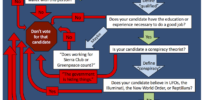
A voting guide for 2016 for those who care about science
Conflicted about this year's elections? Still on the fence about your candidates? Do you care about science? This graphic from ...

Viewpoint: PTA fails science, history, economics and common sense
This article originally appeared at Forbes and has been republished here with the author's permission. Kids of a certain age ...
