


Featured in Weekly Newsletter

How animal memories can be harnessed in the quest to treat Alzheimer’s
Alzheimer's trials are notoriously disappointing. The discovery that rats have episodic memory means researchers can test drugs before they move ...

No ‘gay gene’: Massive study finds no specific genetic predictors for sexual behavior, preferences
The once-prevailing concept of a “gay gene” dictating sexual orientation has been put to rest in a powerhouse study ...

Education, politics, religion may have no impact on our acceptance of GMOs
A study examining the public's 2006 views on GMOs offers a glimpse into the evolution of the ongoing debate over ...
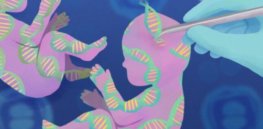
We can identify ‘bad’ genes. Why can’t we use CRISPR gene editing to get rid of them?
Gene therapy 2.0 using CRISPR to knock out harmful genes sounds is a great idea--if and when it works. But ...

Podcast: Overlooked women in science, Huntington’s disease and witch trials. The best of Genetics Unzipped
Kat Arney selects her favourite stories from the first 20 episodes of the Genetics Unzipped podcast ...

Viewpoint: False equivalency: When journalism’s quest for balance goes awry—science says climate change, vaccines have only one side
On matters of science, a well‐meaning desire to present all views equally can be a Trojan horse for damaging falsehoods ...

How ‘alien genetics’ would change our understanding of life, biology and evolution
While we await our first contact with alien life, scientists investigate possible scenarios for extraterrestrial biology ...

How our bodies protect cancer and why this could be key to better chemotherapy treatments
Tumors resist chemotherapy with help from a surprising source: nearby normal cells. Researchers are developing workarounds ...

CRISPR breathing new life into wheat and other crops—can it avoid GMO controversy?
The food industry is hopeful the new gene-editing technology can help create new crop variants without running into the activist ...

Game of chance: What role does pure ‘bad luck’ play in developing cancer?
Two-thirds of the gene mutations that cause cancer are due to random chance, according to a new study. But environmental ...

Viewpoint: Produce is sugary, GMO ‘poison’? Scientific American embraces long-debunked food safety tropes
The lies and distortions start early in this appalling Scientific American article -- and they keep going to the end ...

Are we reaching the limits of human life expectancy?
With life expectancies steadily rising in most countries, high quality care is essential for aging populations ...

Restaurants struggling to keep up with demand for Impossible Burger, alternative ‘meats’
There is no better illustration of the pent-up demand for alternatives to meat ...

Viewpoint: Plants could give us new treatments for cancer, HIV and other diseases if we had better ‘pharming’ regulations
Study suggests that proteins could be obtained from genetically engineered tobacco plants at 1/1,000th the cost of current methods ...

Viewpoint: Organic food movement ‘shoots itself in the foot’ by rejecting CRISPR gene editing
By making rejection of technology part of their 'brand,' organic food producers may put themselves at a severe competitive disadvantage ...

‘We simply don’t yet know enough’: International commission urges caution with human germline editing
Using CRISPR in a heritable way raises the stakes exponentially ...

We’re unlikely to cure Alzheimer’s with CRISPR. But the gene-editing tool could play a crucial role.
Nearly 6 million Americans live with Alzheimer’s disease without solid treatment options ...

Viewpoint: Our favorite Cavendish banana may be heading towards extinction—Scientists say only a biotech solution, blocked by anti-GMO activists, can save it
Shall we just resign ourselves to the eventual demise of the banana, or take steps to save it? ...

Viewpoint: Why the Non-GMO Project label is little more than a marketing tool that deceives consumers
The presence of a Non-GMO Project seal of approval doesn't really tell consumers anything about their food ...

Following approval of GMO crops, Nigeria sets sights on other biotech advances, including gene editing and synthetic biology
Africa's most populous nation has achieved significant strides in biotechnology ...

Podcast: Francis Galton: Brilliant scientist—and eugenics pioneer. How do we address his racist legacy?
Geneticist Dr Kat Arney explores how Francis Galton's eugenic ideas led directly to some of the 20th century's worst atrocities ...

Podcast: Has sickle cell disease met its match in CRISPR gene editing?
Dr. Brenda Eustace, director of discovery research at Vertex, joins plant geneticist Kevin Folta to discuss this promising treatment ...

Viewpoint: Why science hasn’t given us a cure for cancer: We’re still ‘trying to understand it’
Each permutation of cancer requires a different approach, therapy, or method of management ...

How a one-time CRISPR shot could obliterate lower back pain
CRISPR may be able to block back pain by dampening the immune system’s cytokine signals ...

Podcast: Food 5.0—GMOs, robots and the future of farming with agronomist Robert Saik
The high efficiency of modern agriculture has a downside: most consumers don't know the first thing about farming ...

Viewpoint: Pouring greed on an ethical fire—Questionable ‘litigation finance’ scam funds glyphosate-cancer lawsuit mill
Greed is being poured on an ethical fire ...

‘GMOs are banned in Europe’ and 3 other popular biotech crop myths busted
“What do you wish people knew about GMOs that would completely surprise them?" ...
